
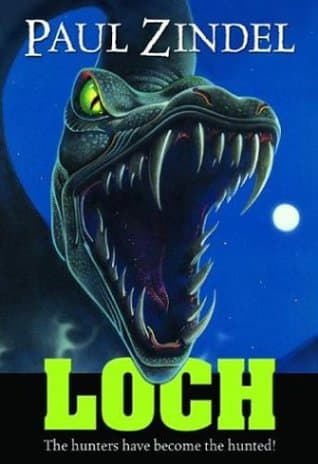
Synopsis
Covers the whole plot, including the ending.
- Difficulty
- Easy
- Pacing
- Fast
- Mood
- Suspenseful, Adventurous, Compassionate, Threatening
- Read it if
- You enjoy creature features, eco-thrillers, or stories about protecting misunderstood animals, with a young protagonist.
- Skip it if
- You prefer hard science fiction over fantastical elements or don't enjoy stories where animals are in peril.
Loch Plot Summary
Covers the whole plot, including the ending.
The Expedition Begins
Loch, a sensitive teenager, his younger sister, Zaidee, and their father, Dr. Thompson, arrive at a remote lake community in Vermont. They are part of a scientific expedition funded and led by Anthony Cavenger, a powerful publishing mogul obsessed with proving plesiosaurs exist. Cavenger wants to capture and exploit these creatures for fame and profit. Dr. Thompson, a marine biologist, reluctantly participates, hoping to study the creatures scientifically, but he conflicts with Cavenger's aggressive methods. The initial days are uneventful, marked by tension between Cavenger's crew and the locals, who are wary of the outsiders.
First Contact and Tragedy
During a routine sonar sweep, the expedition makes a shocking discovery: a massive water beast, later identified as a plesiosaur, erupts from the lake's depths. The sudden appearance surprises everyone. A freelance photographer, eager for a shot, gets too close and is violently attacked and killed by the creature. This horrifying event proves the plesiosaurs exist and fuels Cavenger's determination. He sees the tragedy as a chance to intensify his efforts, mobilizing his crew with more aggressive tactics and equipment, much to Dr. Thompson's dismay. Dr. Thompson advocates for caution and understanding.
Loch's Discovery of a Baby
Disturbed by the violent encounter and the expedition's escalating aggression, Loch explores the lake alone. He ventures into a secluded cove, away from Cavenger's technology. He discovers a baby plesiosaur, small and seemingly lost. Instead of fear, Loch feels a connection with the creature. He observes its behavior, realizing it is not a mindless monster but a vulnerable, sentient being. This encounter shifts Loch's perspective. He questions the expedition's premise and understands that the adult plesiosaurs might only attack out of fear or to protect their young, not malice.
The Plesiosaurs' Defensive Nature
Loch continues to observe the baby plesiosaur and its interactions with the adult creatures. He sees several instances where the larger plesiosaurs act with clear protective instincts, especially when Cavenger's boats or crew approach too closely to their suspected nesting grounds. The attacks, while terrifying, appear to be defensive responses to perceived threats against their young or their territory, not unprovoked aggression. This reinforces Loch's conviction that the creatures are misunderstood and not the bloodthirsty monsters Cavenger portrays them to be. He tries to tell his father this, but Cavenger's influence and general fear make it difficult for his perspective to be taken seriously.
Cavenger's Escalation
Unfazed by the dangers, Anthony Cavenger escalates his capture efforts. He brings in more sophisticated and destructive equipment, including powerful nets, tranquilizer guns, and even attempts to use explosives to flush out the creatures. His methods become reckless, risking his own crew, the locals, and his scientific staff. Dr. Thompson objects, warning of ecological damage and increased danger, but Cavenger dismisses his concerns, prioritizing his own agenda. The lake community becomes a battleground between man and nature, with the plesiosaurs becoming more agitated and reactive to the constant harassment.
Zaidee's Encounter
Zaidee, Loch's younger sister, often wanders off, drawn by curiosity. During one of her explorations near the lake's edge, she encounters a plesiosaur. Initially terrified, she realizes the creature does not intend to harm her. It seems to observe her before retreating. This experience, though frightening, further solidifies the family's growing belief that the plesiosaurs are not evil. Zaidee's innocent perspective adds another layer to understanding that these creatures are capable of more than aggression, hinting at complex intelligence and perhaps even curiosity.
Loch's Plan to Protect the Creatures
Convinced the plesiosaurs are misunderstood and facing destruction at Cavenger's hands, Loch feels he must act. He realizes that simply observing is no longer enough. He develops a daring plan to protect the creatures, aiming to lead them away from Cavenger's traps and perhaps even out of the lake. This plan involves considerable risk, not just to himself but potentially to his family and friends. He confides in his father and Zaidee, who, despite their fears, are swayed by Loch's conviction and his deep empathy for the creatures.
The Climax: A Desperate Rescue
The climax unfolds as Cavenger prepares to deploy his most lethal capture device. Loch puts his plan into action, using his knowledge of the lake and the plesiosaurs' behavior to lure them away from danger. This involves navigating treacherous waters, evading Cavenger's boats, and directly confronting the enraged mogul. His father, Dr. Thompson, and Zaidee assist him, creating diversions and trying to sabotage Cavenger's efforts. The confrontation is intense and dangerous, with explosions and near-misses. Loch's bravery and quick thinking are tested as he tries to guide the plesiosaurs to safety, risking his life against Cavenger's ruthless pursuit.
Escape and Sacrifice
Through sheer determination and understanding, Loch guides the plesiosaurs towards a hidden underwater passage or an alternative route out of the immediate danger zone. The escape is fraught with peril, as Cavenger's forces are relentless. An adult plesiosaur, possibly the mother of the baby Loch encountered, makes a protective maneuver, drawing attention away from the escape route, possibly sacrificing itself or sustaining injuries to ensure the safety of the others. Loch sees this act of parental devotion, reinforcing his belief in their intelligence and capacity for care.
Aftermath and Resolution
Cavenger's expedition is thwarted, his destructive plans foiled by Loch's bravery and his family's efforts. The plesiosaurs, or at least a significant portion of them, escape the immediate threat and retreat into the deeper, undisturbed parts of the lake or perhaps migrate through an unknown passage. While not all mysteries are solved, the creatures are safe, for now. Cavenger is defeated and humiliated, his ruthless pursuit ending in failure. Loch, though exhausted, feels a sense of accomplishment and peace, having risked everything to protect a species that others sought to exploit. The family leaves the lake with a deeper understanding of nature and a bond forged through shared peril.
Loch Characters
Loch Thompson
Protagonist
A sensitive and empathetic teenager who forms a unique bond with the plesiosaurs.
Loch is an observant and thoughtful teenager, often preferring quiet contemplation to the boisterous activities of his peers. He possesses a deep empathy for animals and a natural curiosity about the natural world. Unlike his father, who approaches the plesiosaurs from a scientific standpoint, Loch connects with them on an emotional level, seeing them as sentient beings rather than mere specimens. He is initially hesitant but finds courage and determination when he realizes the creatures are in danger, becoming their unlikely protector. His quiet nature belies a strong moral compass and a surprising capacity for bravery.
Relationships: Dr. Thompson (Son-father; initially, Loch feels his father is too passive but later gains his support and respect.); Zaidee Thompson (Older brother-younger sister; protective, supportive, and shares a deep bond.); Anthony Cavenger (Antagonist; Loch actively opposes Cavenger's destructive agenda.)
Dr. Thompson
Supporting
Loch's father, a marine biologist torn between scientific ethics and Cavenger's demands.
Dr. Thompson is a marine biologist with a genuine passion for understanding aquatic life. He is initially drawn to Cavenger's expedition by the rare opportunity to study plesiosaurs, but he is constantly at odds with Cavenger's unethical and dangerous methods. He represents the conflict between pure scientific inquiry and commercial exploitation. While he prioritizes data and observation, he is ultimately swayed by his son's moral conviction and the undeniable evidence of the creatures' sentience. He struggles with asserting himself against Cavenger but eventually supports Loch's radical plan.
Relationships: Loch Thompson (Father-son; initially, there's a slight disconnect, but they grow closer through their shared mission.); Zaidee Thompson (Father-daughter; loving and protective.); Anthony Cavenger (Subordinate-boss; a strained and conflict-ridden professional relationship.)
Zaidee Thompson
Supporting
Loch's younger sister, whose innocent perspective provides key insights into the creatures.
Zaidee is Loch's younger sister, characterized by her youthful curiosity, fearlessness, and innocent perspective. She is less burdened by the scientific or ethical complexities that plague the adults, allowing her to approach the plesiosaurs with a sense of wonder rather than fear. Her direct, non-threatening encounter with a plesiosaur helps to further convince Loch and their father that the creatures are not inherently malicious. She provides emotional support and often acts as a source of quiet wisdom or unexpected bravery, sometimes unknowingly guiding the narrative with her simple observations.
Relationships: Loch Thompson (Younger sister-older brother; looks up to Loch and shares his empathetic view.); Dr. Thompson (Daughter-father; loving and close.)
Anthony Cavenger
Antagonist
A ruthless publishing mogul obsessed with exploiting the plesiosaurs for profit and fame.
Anthony Cavenger is the wealthy and unscrupulous publishing mogul funding the expedition. He is driven by an insatiable hunger for fame, power, and profit, seeing the plesiosaurs not as living creatures but as a means to achieve sensational headlines and financial gain. He is manipulative, arrogant, and utterly devoid of empathy, willing to sacrifice anyone or anything to achieve his goals. His methods are aggressive, dangerous, and unethical, putting him in direct opposition to Loch and his family. He represents the destructive force of human greed and exploitation against nature.
Relationships: Loch Thompson (Antagonistic; Loch is Cavenger's primary obstacle.); Dr. Thompson (Boss-subordinate; a deeply strained and conflict-ridden professional relationship based on Cavenger's exploitation of Dr. Thompson's expertise.); His Crew (Employer-employee; views them as expendable tools to achieve his objectives.)
Sampson
Supporting
A local elder who holds traditional knowledge of the lake and its legends.
Sampson is an elderly local resident of the lake community, steeped in the folklore and history of the area. He represents the wisdom of tradition and a deep, respectful connection to nature. He is initially wary of Cavenger's expedition, sensing their destructive intentions, and provides a counterpoint to the scientific and commercial perspectives. He offers subtle warnings and insights to Loch and his family, drawing on generations of local knowledge about the lake and its mysterious inhabitants. He understands that some things are best left undisturbed.
Relationships: Loch Thompson (Mentor-mentee; offers guidance and wisdom to Loch.); Anthony Cavenger (Oppositional; views Cavenger as an intrusive and dangerous outsider.)
Plesiosaurs (general)
Mentioned
The ancient, intelligent aquatic creatures inhabiting the lake.
The plesiosaurs are depicted as large, ancient aquatic reptiles, initially perceived as terrifying monsters by most. However, through Loch's observations, they are revealed to be intelligent, social creatures with strong familial bonds. They are not inherently aggressive but become so when their territory or young are threatened. Their existence is the central mystery and driving force of the plot. They represent the untamed power and mystery of nature, and the conflict arises from humanity's attempt to dominate and exploit them.
Relationships: Loch Thompson (Mutual respect and protection; Loch becomes their advocate.); Anthony Cavenger (Prey-hunter; Cavenger relentlessly pursues them.)
Baby Plesiosaur
Supporting
A young plesiosaur whose vulnerability sparks Loch's protective instincts.
The baby plesiosaur is a smaller, more vulnerable version of the adult creatures that Loch encounters in a secluded cove. Its innocent and seemingly lost demeanor immediately disarms Loch, causing him to see the plesiosaurs not as threats but as living beings deserving of protection. This specific encounter is crucial in shifting Loch's perspective and motivating his subsequent actions. The baby plesiosaur serves as a symbol of innocence and the inherent value of life, regardless of species, and its safety becomes a primary driver for Loch's plan.
Relationships: Loch Thompson (Protector-protected; Loch feels a strong bond and responsibility for it.); Adult Plesiosaurs (Offspring-parent; its presence signifies the existence of a family unit.)
The Locals
Mentioned
The residents of the lake community, wary of the expedition's presence.
The local residents of the isolated lake community are initially portrayed as suspicious and unwelcoming towards Cavenger's expedition. They have lived alongside the legends of the lake monsters for generations, holding a quiet respect for the unknown. They are concerned about the disruption and potential danger brought by the outsiders. While not actively involved in the main conflict, their initial wariness and eventual fear contribute to the atmosphere of tension and highlight the clash between traditional respect for nature and modern exploitation.
Relationships: Anthony Cavenger (Antagonistic; they view him as an unwelcome and dangerous intruder.); Loch Thompson (Neutral to slightly supportive; they observe Loch's actions with quiet interest.)
Loch Themes
Man vs. Nature
This central theme explores humanity's destructive impulse to dominate and exploit nature versus nature's inherent value and resilience. Cavenger embodies exploitation, seeing plesiosaurs as objects for profit and fame, leading to reckless endangerment of both the creatures and his crew. Loch, in contrast, represents a harmonious approach, recognizing the creatures' right to exist and their capacity for sentience. The story portrays the consequences of human arrogance through escalating violence and ecological disruption caused by Cavenger's methods, culminating in Loch's struggle to save the creatures from annihilation.
“He saw the monsters not as living beings, but as a path to glory, a headline, a fortune.”
Empathy and Understanding
Empathy drives the narrative. Loch's ability to empathize with the plesiosaurs is crucial. While others see terrifying monsters, Loch observes their behavior, particularly the baby plesiosaur, and realizes they are defensive, not malicious. This empathy allows him to bridge the gap between human and animal, understanding their motivations and devising a plan to save them. The contrast between Loch's compassionate understanding and Cavenger's cold, exploitative view highlights empathy's power as a moral compass and a tool for true connection and preservation.
“They weren't just beasts; they were a family, protecting their own, just like us.”
Coming of Age and Moral Courage
Loch's journey is a coming-of-age story about moral courage. He begins as a passive observer, but the escalating threat to the plesiosaurs forces him to confront his fears and act. He stands up against the powerful and dangerous Anthony Cavenger, risking his own life and challenging the adults around him. This transformation from a quiet teenager to a heroic protector demonstrates his moral conviction and the strength found in defending what is right, even when faced with overwhelming opposition. His actions prove that age does not dictate the capacity for bravery and ethical leadership.
“He knew he couldn't just stand by and watch. Some things were worth fighting for, no matter the cost.”
The Dangers of Greed and Exploitation
Anthony Cavenger embodies unchecked greed and exploitation. His relentless pursuit of the plesiosaurs is driven solely by the desire for fame and profit, without regard for the creatures' well-being, the environment, or human lives. His actions lead to violence, destruction, and near-catastrophe. The theme highlights how avarice corrupts judgment and blinds individuals to ethical considerations, ultimately leading to failure and humiliation. The story is a cautionary tale about the destructive consequences when commercial interests override moral responsibility.
“Cavenger saw only dollar signs and headlines, not the lives he was endangering.”
Plot Devices & Literary Techniques
Misunderstood Monster Trope
Initial perception of creatures as dangerous monsters, later revealed to be complex and defensive.
This device is central to the plot, as the plesiosaurs are initially presented as terrifying, dangerous beasts, especially after the photographer's death. However, through Loch's unique perspective and observations, particularly of the baby plesiosaur, their true nature is revealed. They are not inherently evil but act defensively, protecting their young and territory from perceived threats. This subversion of the monster trope generates empathy for the creatures and underscores the theme of understanding versus fear, challenging the audience's initial assumptions.
The Naive/Innocent Witness
A character (Loch, Zaidee) whose unbiased view reveals truth.
Loch, and to a lesser extent Zaidee, embody the naive/innocent witness. Unlike the adults, who are swayed by fear, scientific ambition, or greed, Loch approaches the plesiosaurs without preconceived notions. His open-mindedness allows him to observe their behavior objectively and form an empathetic connection. Zaidee's direct, non-threatening encounter further solidifies this perspective. This device highlights how innocence can cut through complexity and reveal simple truths, often providing a moral compass for the narrative and influencing the actions of other characters, like Dr. Thompson.
Environmental Catalyst
The unique lake environment and its hidden depths as the setting for discovery and conflict.
The secluded lake itself acts as a major plot device. Its mysterious depths harbor the ancient plesiosaurs, making it the perfect stage for discovery and conflict. The lake's isolation allows the creatures to survive undetected for so long, and its complex underwater geography provides both sanctuary for the plesiosaurs and challenges for Cavenger's expedition. The lake is not just a backdrop; it's an active element, influencing character movements, providing hidden passages, and ultimately becoming a battleground for the clash between human ambition and natural preservation.
Moral Dilemma
The conflict between scientific advancement/profit and ethical responsibility.
The story presents a clear moral dilemma through Dr. Thompson's character and the overall conflict. Is it right to exploit rare species for scientific study or commercial gain, even if it endangers them? Dr. Thompson grapples with this, torn between his scientific curiosity and his growing ethical concerns about Cavenger's methods. Loch's actions resolve this dilemma by unequivocally choosing ethical responsibility and the preservation of life over exploitation, forcing the other characters and the audience to consider their own stance on humanity's relationship with the natural world.
Loch Quotes
“There are some things in this world that are best left undisturbed, even if they are beautiful.”
“Fear is a funny thing. It can make you do things you never thought you'd do, both good and bad.”
“The loch had its own secrets, and it guarded them with a silence that could make you shiver.”
“Sometimes, the most amazing things are hidden right in front of your eyes.”
“You can't just take what you want from nature without expecting it to fight back.”
“The water was so dark, it felt like it could swallow you whole.”
“There's a difference between being brave and being foolish.”
“We're not just dealing with animals; we're dealing with something ancient.”
“The whispers of the loch seemed to follow them, even when they were far away.”
“It's hard to believe in something you can't see, but sometimes, you have to.”
“The world is full of wonders, if you just know where to look.”
“Sometimes, the most dangerous things are the ones you don't understand.”
“The silence of the forest at night was different from any other silence. It was alive.”
“We were intruders in their world, and they were letting us know it.”
Quiz
10 questions on the plot and the characters. Each answer comes with a short explanation.
Question 1
What is the primary goal of Loch's father and Anthony Cavenger's expedition?
- To discover new species of fish.
- To track and prove the existence of lake monsters.
- To map the uncharted depths of the lake.
- To find sunken treasure.
Show answer
B. To track and prove the existence of lake monsters. The expedition's main purpose is to track lake monsters, with Anthony Cavenger specifically wanting to prove the legends are fact.
Question 2
Who is Anthony Cavenger and what is his profession?
- He is a marine biologist and Loch's father's colleague.
- He is a ruthless publishing mogul and Loch's father's boss.
- He is a local sheriff concerned about the lake's safety.
- He is an environmental activist trying to protect the lake.
Show answer
B. He is a ruthless publishing mogul and Loch's father's boss. Anthony Cavenger is described as a ruthless publishing mogul and the boss of Loch's father.
Question 3
What event signals the first confirmed appearance of a 'hideous water beast'?
- A boat capsizes during a storm.
- A fisherman reports a strange sighting.
- A water beast explodes out of the water, killing a photographer.
- Loch finds a strange fossil on the lake shore.
Show answer
C. A water beast explodes out of the water, killing a photographer. The first confirmed appearance occurs when a water beast explodes out of the water, resulting in the death of a photographer attempting to capture a picture.
Question 4
What specific type of prehistoric creature are the lake monsters identified as?
- Ichthyosaurs
- Mosasaurus
- Plesiosaurs
- Megalodons
Show answer
C. Plesiosaurs The book explicitly states that Loch encounters a baby 'plesiosaur' and refers to the creatures as 'prehistoric creatures'.
Question 5
What crucial realization does Loch make about the plesiosaurs' behavior?
- They are attracted to loud noises.
- They only attack when threatened.
- They are nocturnal hunters.
- They are drawn to human food.
Show answer
B. They only attack when threatened. Loch's key realization is that the monsters 'only attack when threatened', which changes his perspective on them.
Question 6
What is the central ethical dilemma or theme explored through Loch's actions?
- The conflict between scientific advancement and personal ambition.
- The responsibility of humans towards unknown or misunderstood species.
- The dangers of exploring uncharted territories.
- The importance of family loyalty in times of crisis.
Show answer
B. The responsibility of humans towards unknown or misunderstood species. Loch's decision to risk his life to save the creatures, after realizing they only attack when threatened, highlights the theme of human responsibility towards misunderstood species.
Question 7
What personal risk does Loch take to protect the prehistoric creatures?
- He risks losing his father's trust.
- He risks his life and the lives of his family and friends.
- He risks being expelled from the expedition.
- He risks damaging valuable scientific equipment.
Show answer
B. He risks his life and the lives of his family and friends. The synopsis explicitly states that Loch 'risks his life—and the lives of his family and friends—to save the prehistoric creatures'.
Question 8
Why is it particularly significant that Loch encounters a 'baby plesiosaur'?
- It proves the plesiosaurs are much older than previously thought.
- It suggests the creatures are breeding in the lake, indicating a population.
- It shows that baby plesiosaurs are more aggressive than adults.
- It helps Loch understand their feeding habits.
Show answer
B. It suggests the creatures are breeding in the lake, indicating a population. Encountering a baby plesiosaur implies that there is a breeding population in the lake, not just isolated individuals, making their survival more critical.
Question 9
How does the initial perception of the plesiosaurs by the secluded lake community contrast with Loch's later understanding?
- The community sees them as guardians, while Loch sees them as nuisances.
- The community views them as a tourist attraction, while Loch fears them.
- The community sees them as terrifying monsters, while Loch realizes they are defensive.
- The community is indifferent, while Loch is fascinated.
Show answer
C. The community sees them as terrifying monsters, while Loch realizes they are defensive. The text states the plesiosaurs 'terrorize the secluded lake community', implying fear and hostility, while Loch later understands they 'only attack when threatened'.
Question 10
What recognition did 'Loch' receive from the American Library Association (ALA) in 1995?
- Best Book for Young Adults
- Notable Children's Book
- Quick Pick for Reluctant Young Adult Readers
- Outstanding Book for the College Bound
Show answer
C. Quick Pick for Reluctant Young Adult Readers The book was a '1995 Quick Pick for Reluctant Young Adult Readers (ALA)'.
Loch FAQ
What is the central premise of 'Loch'?
The story follows Loch and his sister, Zaidee, as they join their paleontologist father on a scientific expedition to a remote lake in Vermont to track legendary lake monsters. Their father's boss, the ruthless publishing mogul Anthony Cavenger, funds the expedition, hoping to capture proof of the creatures for profit, leading to a dangerous confrontation when the plesiosaurs are finally encountered.
Who is Anthony Cavenger and what is his motivation?
Anthony Cavenger is a powerful and unscrupulous publishing mogul who finances the expedition to find the lake monsters. His primary motivation is not scientific discovery but rather to exploit the creatures for sensational headlines and massive profits, showing little regard for their well-being or the safety of others.
How does the initial encounter with the plesiosaurs unfold?
During a routine exploration, a photographer attempting to capture an image of the elusive creatures is attacked and killed by a 'hideous water beast' that erupts from the lake. This violent incident marks the first undeniable proof of the plesiosaurs' existence and immediately establishes them as a dangerous threat to the community.
What is Loch's unique realization about the plesiosaurs' behavior?
Unlike the adults who perceive the plesiosaurs as inherently evil monsters, Loch discovers that they are not malicious by nature. He realizes they only attack when they feel threatened or provoked, particularly when their young are in danger, suggesting a defensive rather than aggressive instinct.
What significant risk does Loch take by the end of the book?
Loch ultimately risks his own life, along with the safety of his family and friends, to protect the prehistoric creatures from destruction. He attempts to bridge the understanding between humans and the plesiosaurs, advocating for their survival against those who wish to harm or exploit them.
What is the significance of the 'baby plesiosaur' encounter for Loch?
Loch's encounter with a baby plesiosaur is a pivotal moment, humanizing the 'monsters' for him. This interaction allows him to see the creatures as vulnerable beings, fostering empathy and cementing his belief that they are not inherently evil, but rather misunderstood and defensive.
Are there any clues about the plesiosaurs' origins or long-term survival in the lake?
The book implies that the plesiosaurs have been living in the secluded lake for a very long time, possibly due to unique geological or environmental conditions that allowed them to survive undetected. While specific origins aren't deeply explored, their existence points to a hidden ecosystem maintained by the lake's isolation.
How does Zaidee, Loch's sister, contribute to the plot?
Zaidee often serves as a grounding presence or a voice of reason, but also shares in the danger and the discoveries. Her perspective, sometimes more cautious than Loch's, highlights the different ways individuals react to the extraordinary and the terrifying, and she often supports Loch's efforts to protect the creatures.
What role does the scientific expedition play beyond finding the monsters?
The expedition, ostensibly scientific, quickly becomes a moral battleground. It serves to expose the conflict between genuine scientific curiosity and the ruthless commercial exploitation of nature, as exemplified by Dr. Cavenger's agenda versus the more ethical approach of Loch's father.
How does Loch's age and perspective influence his actions?
As a young adult, Loch is more open-minded and less jaded than the adults around him, allowing him to connect with the baby plesiosaur and see beyond the initial fear. His youthful idealism and strong sense of justice drive him to protect the creatures, even when faced with significant danger and adult opposition.
What psychological impact does the initial attack have on the lake community?
The brutal death of the photographer by a plesiosaur instills widespread fear and a desire for retribution within the secluded lake community. This fear quickly escalates into a mob mentality, driving the community to view the creatures as pure threats that must be eliminated, rather than understood.
How does Anthony Cavenger's character embody a specific human flaw?
Anthony Cavenger embodies unchecked greed and a lust for power, demonstrating how these flaws can blind an individual to ethical considerations and the value of life, both human and animal. His actions are driven solely by profit and fame, highlighting the corrupting influence of ambition.
What is the psychological journey Loch undergoes regarding the plesiosaurs?
Loch's journey begins with apprehension, like others, but quickly evolves through curiosity and empathy. His direct interaction with the baby plesiosaur transforms his fear into understanding and a fierce protective instinct, leading him to advocate for the creatures against human aggression.
Is the book primarily an environmental allegory?
Yes, 'Loch' can be strongly interpreted as an environmental allegory. It critiques humanity's tendency to exploit unknown species for profit and fear-monger against nature, while advocating for empathy, understanding, and conservation, suggesting that true monsters are often human.
What broader message does the contrast between Loch and Cavenger convey?
The stark contrast between Loch's empathetic, protective stance and Cavenger's exploitative, destructive approach conveys a powerful message about human responsibility towards the natural world. It highlights the choice between coexistence and domination, and the consequences of each.
How does the 'secluded lake community' contribute to the story's themes?
The seclusion of the lake community heightens the sense of isolation and vulnerability, making the plesiosaur threat feel more immediate and inescapable. It also allows the narrative to explore how a closed community reacts to an external, frightening force, often resorting to fear-driven solutions.
What might the plesiosaurs symbolize in the context of the story?
The plesiosaurs can symbolize the misunderstood wildness of nature, ancient secrets, or even marginalized groups that are feared and persecuted simply because they are different or unknown. Their existence challenges human assumptions about control and knowledge, urging for a more respectful interaction with the unknown.
Does the book offer a definitive resolution to the conflict between humans and plesiosaurs?
While Loch's actions provide a temporary reprieve and a chance for the plesiosaurs' survival, the book likely leaves the long-term resolution open to interpretation. It suggests that ongoing vigilance and a change in human perspective are necessary for true coexistence, rather than a final, absolute victory.
About the author

Paul Zindel was an American author known for his contributions to young adult fiction. His notable works include "The Pigman," which explores themes of friendship and loss, and "Loch," a story that combines adventure with elements of fantasy. Zindel's writing often reflects the complexities of adolescence and human relationships.
Similar books
- A Wrinkle in Time
Madeleine L'Engle
4.0 (1.1M) average on GoodreadsFantasyFeatures young protagonists on an extraordinary adventure with fantastical elements.
- Jurassic Park
Michael Crichton
4.0 (803k) average on GoodreadsThrillerInvolves prehistoric creatures and the dangers they pose, with a focus on scientific exploration gone awry.
- Hatchet
Gary Paulsen
3.7 (309k) average on GoodreadsChildren'sA young protagonist facing extreme challenges in the wilderness.
- Angels & Demons
Dan Brown
3.9 (2.7M) average on GoodreadsThrillerA Harvard symbologist races through Rome's ancient sites, deciphering cryptic clues to unmask the Illuminati and stop a vengeful plot to destroy the Vatican with a stolen antimatter weapon.
- Gone Girl
Gillian Flynn
4.1 (2.3M) average on GoodreadsThrillerA wife's sudden disappearance on her fifth anniversary reveals a web of lies and psychological warfare, exposing the secrets within a seemingly perfect marriage.
- The Girl on the Train
Paula Hawkins
3.9 (2.1M) average on GoodreadsThrillerA woman’s fascination with a seemingly perfect couple she watches from her daily train commute leads her into a dark investigation when she witnesses something that shatters their idyllic image.





Enjoyed the summary?
A summary gives you the shape of the book. The book itself has the detail, the examples and the voice.
Find Loch on AmazonAs an Amazon Associate, BookBrief earns from qualifying purchases. How we're funded