
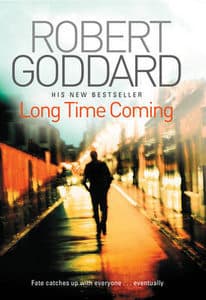
Synopsis
Covers the whole plot, including the ending.
- Difficulty
- Medium
- Pacing
- Moderate
- Mood
- Intriguing, Suspenseful, Conspiratorial, Mysterious, Atmospheric
- Read it if
- You enjoy intricate historical thrillers with a strong mystery element, multiple twists, and a blend of charming rogues and dangerous secrets spanning decades.
- Skip it if
- You prefer fast-paced, action-heavy thrillers without much historical detail or a complex, slow-burn plot.
Long Time Coming Plot Summary
Covers the whole plot, including the ending.
A Ghost from the Past
Stephen Swan, an ordinary Englishman, is shocked to learn his uncle, Eldritch Swan, whom the family believed died in the London Blitz, is alive. Eldritch has just been released from an Irish prison after 38 years. Eldritch, now an old man, contacts Stephen, who is initially skeptical. Eldritch explains his long imprisonment came from a false charge and begins to tell a complex story about his past in Antwerp before World War II. Stephen is drawn into his uncle's account, which hints at stolen art, secret dealings, and a hidden history Eldritch wants to uncover, or perhaps use.
Antwerp, 1939: The Diamond Dealer and the Picassos
Eldritch's story takes Stephen back to 1939 Antwerp, where a younger Eldritch worked for Max Lazard, a wealthy Jewish diamond merchant. Lazard, expecting the Nazi invasion, was arranging to secure his assets, including a significant collection of Picasso paintings. Eldritch describes the tension and fear in the city as war approached, and his role in Lazard's affairs, which gave him close knowledge of the family's valuables and escape plans. This historical setting establishes the initial mystery around the Picassos and sets the stage for the long-unsolved puzzle Eldritch now wants to resolve, or profit from.
The Disappearance and the Betrayal
As the Germans advanced, Eldritch was to help Max Lazard's family escape Antwerp and secure their valuables. Amid the chaos of the evacuation, the Picasso paintings mysteriously vanished. Eldritch claims he was betrayed and framed for the paintings' theft and Lazard's murder, leading to his arrest and decades-long imprisonment in Ireland. He maintains his innocence, portraying himself as a victim of circumstance and a conspiracy. Stephen struggles to accept this version of events, given his uncle's charming but manipulative nature, questioning Eldritch's every word.
The American Heiress: Rachel Banner
Stephen meets Rachel Banner, a beautiful and determined American woman. Rachel reveals she is a descendant of Max Lazard and believes she is the rightful heir to the missing Picasso paintings. She has been investigating their disappearance independently and is convinced her family was wronged. Rachel seeks both the paintings' return and justice for her ancestors. Her arrival adds a new dynamic, as Stephen finds himself caught between his enigmatic uncle and this compelling woman, whose interests seem to align with Eldritch's quest, but whose motivations are clearly different.
A Web of Deceit and Danger
As Stephen, Eldritch, and Rachel investigate the Picasso mystery, they quickly realize powerful and dangerous forces are still active, determined to keep the truth hidden. They face intimidation, surveillance, and direct threats, suggesting the original conspiracy went far beyond simple wartime theft. The trio finds themselves in dangerous situations, indicating the secret behind the paintings' disappearance is linked to something far more sinister than just money. This increase in danger forces Stephen to confront the reality that his uncle’s story, however exaggerated, has a dangerous core of truth.
The Hunt for Clues
Following Eldritch's fragmented memories and Rachel's careful research, the trio travels across Europe, visiting sites connected to Max Lazard and the wartime events. They uncover old documents, interview hesitant witnesses, and assemble a clearer picture of the 1939 events. Each discovery brings them closer to the truth but also puts them in greater danger. Stephen feels increasingly drawn to Rachel, while also growing more wary of Eldritch's changing story and manipulative ways, unsure of his uncle's ultimate goals.
The True Nature of the Conspiracy
The investigation uncovers a shocking truth: the Picasso paintings were not just stolen art, but a cover for a much larger, more harmful operation involving the smuggling of gold and other valuable assets by high-ranking individuals connected to the Nazi regime, aided by corrupt officials. Max Lazard, unknowingly or unwillingly, became involved in this scheme. The paintings' theft was a diversion, and Eldritch's framing was a way to silence a potential witness and protect the true perpetrators of this vast wartime criminal enterprise. This revelation changes everything, turning a simple art theft into a complex international conspiracy.
The Unmasking of the Mastermind
Through their dangerous journey, Stephen, Eldritch, and Rachel identify the mastermind behind the wartime conspiracy – a figure who, against all odds, is still alive and holds significant power. This individual has carefully covered their tracks for decades, ensuring the truth about the gold smuggling and Eldritch's framing remained hidden. The revelation of this person's identity is a shocking turning point, as it becomes clear their adversary is not a ghost from the past, but a real and present danger, capable of extreme measures to protect their secrets.
A Dangerous Confrontation
The pursuit ends in a tense and dangerous confrontation with the mastermind. Stephen, Eldritch, and Rachel find themselves fighting for their lives, as the conspirator and their remaining associates try to eliminate them and permanently bury the truth. The encounter is full of peril, testing their resourcefulness and courage. The long-held secrets are about to be exposed, but at a potentially deadly cost. During this confrontation, Eldritch’s true nature and motives are fully tested, revealing his ultimate loyalty, or lack thereof.
Justice, or the Illusion Thereof
After the confrontation, the immediate danger lessens, but justice remains elusive. While some truths are exposed and certain perpetrators are identified, the full extent of the wartime conspiracy and its decades-long cover-up may never be completely resolved. The fate of the Picassos, and the gold they hid, might also remain uncertain. Stephen is left to deal with his uncle's complex legacy, the sacrifices made, and the bittersweet reality that justice, especially after so long, often involves compromises and leaves lasting scars. His relationship with Rachel is also deeply changed by the shared ordeal.
Principal Figures
Stephen Swan
Protagonist
An ordinary man drawn into a dangerous historical mystery by his enigmatic uncle.
Stephen is a seemingly unassuming Englishman leading a quiet life until his uncle Eldritch re-emerges. He is initially skeptical and cautious, possessing a strong moral compass that often clashes with Eldritch's more opportunistic nature. He is intelligent and perceptive, able to discern the nuances of his uncle's manipulative charm while still being drawn into his story. As the mystery unfolds, Stephen demonstrates growing courage and resourcefulness, becoming more proactive in the face of danger.
Relationships: Eldritch Swan (Nephew to Eldritch; initially suspicious, later a reluctant accomplice and protector.); Rachel Banner (Romantic interest; ally in uncovering the truth.)
Eldritch Swan
Antagonist/Supporting
Stephen's charming, devious, and manipulative uncle, recently released from prison after decades.
Eldritch is a complex and morally ambiguous character. He is charming and charismatic, capable of spinning elaborate tales, but also highly manipulative and self-serving. He spent nearly four decades in an Irish prison for a crime he claims he didn't commit, making him both a victim and a potential rogue. His true motivations are often shrouded in mystery – is he genuinely seeking justice, or is he primarily driven by revenge and personal gain? His past as a diamond dealer's assistant in wartime Antwerp is central to the plot.
Relationships: Stephen Swan (Uncle to Stephen; uses Stephen to further his goals.); Rachel Banner (Initially an uneasy ally, later a partner in uncovering the Lazard family's fate.); Max Lazard (Former employer; his fate is central to Eldritch's story.)
Rachel Banner
Supporting
An intelligent and determined American woman seeking justice for her family's lost inheritance.
Rachel is a strong-willed and intelligent American, a descendant of Max Lazard, the Antwerp diamond dealer. She is driven by a deep sense of injustice and a desire to reclaim her family's legacy, specifically the missing Picasso paintings. Rachel is meticulous in her research and unwavering in her pursuit of the truth, often providing the factual backbone to Eldritch's more anecdotal accounts. She is initially wary of Eldritch and Stephen but becomes a crucial ally, developing a romantic connection with Stephen.
Relationships: Stephen Swan (Romantic interest; ally in uncovering the truth.); Eldritch Swan (Uneasy ally; shares a common goal regarding the Lazard family's legacy.)
Max Lazard
Mentioned
A wealthy Jewish diamond dealer in pre-WWII Antwerp, whose missing Picasso collection drives the plot.
Max Lazard is a pivotal figure in Eldritch's past, though he is only present through Eldritch's recollections and Rachel's research. He was a successful Jewish diamond merchant in Antwerp, possessing a valuable collection of Picasso paintings. As the Nazi threat loomed, he sought to secure his assets and his family's safety. His disappearance and the vanishing of his paintings are the central mystery that propels the narrative. He represents the many victims of wartime atrocities and the profound losses suffered.
Relationships: Eldritch Swan (Former employer.); Rachel Banner (Ancestor.)
The Mastermind (Unnamed)
Antagonist
The powerful, unseen architect of the wartime conspiracy and decades-long cover-up.
This character is the shadowy, powerful figure behind the original wartime conspiracy involving the Picassos and the hidden gold. They are ruthless, cunning, and have managed to evade justice for decades, maintaining their influence and power. Their identity is a closely guarded secret, gradually revealed throughout the story, and they represent the enduring evil and corruption that can persist long after historical events. They are willing to resort to extreme violence to protect their past.
Relationships: Eldritch Swan (Framed Eldritch for their crimes.); Stephen Swan (Threatens Stephen's life to maintain secrecy.); Rachel Banner (Threatens Rachel's life to maintain secrecy.)
The Irish Prison Authorities (Mentioned)
Mentioned
The system that incarcerated Eldritch Swan for decades.
While not individual characters, the Irish prison authorities represent the institutional framework that held Eldritch Swan captive for 38 years. Their role highlights the potential for miscarriages of justice and the long-lasting consequences of legal errors or political machinations. Their existence is a constant reminder of Eldritch's lost decades and the initial injustice that set the entire plot in motion. They are a symbol of the system that failed Eldritch, whether he was truly innocent or not.
Relationships: Eldritch Swan (Incarcerated Eldritch Swan.)
Nazi Officials/Collaborators (Mentioned)
Mentioned
The historical figures whose actions initiated the wartime chaos and illicit dealings.
These are the historical figures and forces that created the context for Max Lazard's plight and the disappearance of the Picassos. They represent the overarching threat of World War II and the corrupting influence of power, facilitating the illicit activities that form the core of the conspiracy. While not directly interacting with the present-day characters, their past actions are the catalyst for the entire mystery, driving the motivations of both victims and perpetrators.
Relationships: Max Lazard (Persecuted Max Lazard and his family.)
Themes & Insights
The Elusive Nature of Truth and Justice
The novel constantly questions what 'truth' is and if true justice can ever be achieved, especially after decades. Eldritch's story is manipulative, Rachel's pursuit is driven by family legacy, and Stephen struggles to tell reality from fiction. The overall conspiracy shows that justice was deliberately blocked for powerful individuals. The resolution often feels incomplete, leaving characters and readers to understand that some wrongs can never be fully corrected, and 'justice' is often an illusion in a corrupt world, as Eldritch's long and unjust imprisonment highlights.
“But in this tale of revenge and redemption, justice is the ultimate illusion.”
The Enduring Shadow of History
The events of World War II, specifically the Nazi invasion of Belgium and the flight of refugees, cast a long, dark shadow over the present. The missing Picasso paintings and the underlying conspiracy are direct results of wartime chaos and greed. The novel shows how past atrocities and hidden secrets continue to influence lives and cause dangerous conflicts nearly forty years later. The characters constantly uncover fragments of a traumatic past that refuses to stay buried, showing how history shapes individual destinies and national stories.
“Some secrets, once buried, refuse to stay down, clawing their way back to the surface decades later.”
Deception and Manipulation
Deception is a central part of the story, mainly shown by Eldritch Swan, whose charming but unreliable storytelling forces Stephen and the reader to constantly question his motives and the truth of his claims. The entire plot is built on layers of deception, from Eldritch's initial framing to the elaborate cover-up of the real wartime conspiracy. Characters often manipulate one another for personal gain or to protect their secrets, creating a web of mistrust Stephen must navigate, making it hard to know who is truly trustworthy.
“Eldritch had a way of weaving a story that made you want to believe him, even when every instinct screamed otherwise.”
Identity and Legacy
The characters are deeply connected to their identities and the legacies they inherit or try to reclaim. Rachel Banner is driven by her family's legacy and the desire to honor her ancestors by recovering their lost art. Eldritch's identity has been shaped by his long imprisonment and his past in Antwerp, and he seeks to reclaim his name or at least a significant part of his lost life. Stephen, too, finds his own identity challenged and redefined as he becomes involved in his uncle's dangerous past, discovering a hidden family history that changes his perception of himself and his lineage.
“He carried the weight of a past he hadn't lived, a legacy of betrayal and loss that now, inexplicably, was his own.”
Plot Devices & Literary Techniques
Unreliable Narrator
Eldritch Swan's shifting and manipulative recounting of past events.
Eldritch Swan serves as a prime example of an unreliable narrator. His charm, evasiveness, and self-serving nature mean that Stephen, and by extension the reader, can never be entirely sure if he is telling the full truth, distorting facts, or outright fabricating elements of his story. This device creates suspense and forces constant re-evaluation of the plot, as new information emerges that contradicts or complicates Eldritch's earlier accounts. It highlights the theme of the elusive nature of truth and adds layers of mystery to the historical events.
MacGuffin
The valuable Picasso paintings that drive the initial search and conceal a deeper secret.
The Picasso paintings initially function as a classic MacGuffin. While highly valuable and the ostensible focus of the search for Rachel and Eldritch, their true significance lies not in their artistic or monetary value, but in what they represent and what they conceal. They are the catalyst that brings the characters together and propels the plot, but the real stakes quickly become far greater than just the art itself. They are a cover for a much larger, darker wartime conspiracy involving hidden gold and illicit dealings, making them a crucial but ultimately secondary objective.
Flashbacks and Oral History
Eldritch's detailed recollections of his time in Antwerp during WWII.
The novel heavily relies on Eldritch's detailed, albeit potentially embellished, flashbacks to the period leading up to and during the Nazi invasion of Antwerp. These oral histories provide the historical context for the mystery, immersing the reader in the tense atmosphere of 1939 and detailing Eldritch's interactions with Max Lazard and the events surrounding the disappearance of the Picassos. This device allows the past to unfold gradually, piecing together fragments of memory and experience, often contrasted with later discovered evidence.
The Long-Lost Relative
The sudden reappearance of Eldritch Swan, believed dead for decades.
The sudden reappearance of Eldritch Swan, after nearly four decades of being presumed dead, serves as the primary inciting incident. This device immediately injects mystery and intrigue into Stephen's life, forcing him to confront a hidden family history. It creates a powerful emotional hook and sets the stage for the unraveling of a decades-old secret, as Eldritch's return directly links the present-day characters to the historical events that drive the plot.
Long Time Coming Quotes
“The past, it seemed, was never really past. It just lay in wait, like a sleeping dog, ready to wake and bite when you least expected it.”
“There are some secrets that refuse to stay buried, no matter how deep the grave.”
“He had learned long ago that the most dangerous lies were often those closest to the truth.”
“Justice, he thought, was a fickle mistress, sometimes blind, sometimes seeing too much.”
“Every decision, however small, cast a ripple across the waters of time, altering the currents in ways one could never foresee.”
“The darkness within people, he knew, was often more terrifying than any shadow that fell from the sky.”
“Hope was a fragile thing, easily shattered, but sometimes, just sometimes, it was all you had left.”
“History was not just a collection of facts; it was a living, breathing entity, capable of reaching out and grabbing you.”
“He often wondered if true peace was merely the absence of immediate danger, or something far more profound.”
“Trust, once broken, was like a shattered mirror; you could try to piece it back together, but the cracks would always show.”
“The truth, like a river, always found a way to the sea, no matter how many dams were built against it.”
“Sometimes the greatest courage wasn't in fighting, but in enduring.”
“He had learned that the most convincing disguises were often not clothes or masks, but carefully crafted personas.”
“The weight of what might have been could be heavier than the burden of what was.”
Quiz
10 questions on the plot and the characters. Each answer comes with a short explanation.
Question 1
What is the primary reason Stephen Swan is shocked by the news of his uncle, Eldritch Swan?
- Eldritch had been living in America for decades.
- Stephen believed Eldritch had died in the Blitz.
- Eldritch had become a world-renowned artist.
- Eldritch was a complete stranger to Stephen.
Show answer
B. Stephen believed Eldritch had died in the Blitz. The book states Stephen is amazed when he hears his uncle, Eldritch, whom he thought had been killed in the Blitz, is actually alive.
Question 2
How long had Eldritch Swan been imprisoned in Ireland before his release?
- Approximately ten years
- Nearly two decades
- Close to four decades
- Over fifty years
Show answer
C. Close to four decades The synopsis explicitly states that Eldritch Swan has been locked away in an Irish prison for nearly four decades.
Question 3
What valuable items disappeared that were connected to Eldritch's work at an Antwerp diamond dealer?
- A collection of rare antique diamonds
- A trove of Picasso paintings
- Important wartime intelligence documents
- A large sum of gold bullion
Show answer
B. A trove of Picasso paintings Eldritch's story begins with his work for an Antwerp diamond dealer who possessed 'a trove of Picassos' which later disappeared.
Question 4
What is Stephen's initial perception of his uncle Eldritch?
- He finds him to be consistently honorable and trustworthy.
- He views him as naive and easily manipulated.
- He finds him by turns devious, charming, and brazen.
- He sees him as a frail, broken old man.
Show answer
C. He finds him by turns devious, charming, and brazen. The text describes Stephen's perception of his uncle as 'by turns devious, charming, and brazen,' indicating a complex and shifting impression.
Question 5
Who is Rachel Banner and what is her connection to the missing Picassos?
- She is a detective investigating the theft of the paintings.
- She is an American woman who may have inherited the Picassos.
- She is a rival art dealer trying to acquire the paintings.
- She is Eldritch's former lover who knows their location.
Show answer
B. She is an American woman who may have inherited the Picassos. Stephen meets Rachel Banner, described as a beautiful American, 'who may have inherited the Picassos' and seeks justice for her family.
Question 6
What is Rachel Banner's primary motivation regarding the Picassos?
- To sell them quickly for personal profit.
- To donate them to a museum.
- To ensure justice is done for her family.
- To use them as leverage against Eldritch.
Show answer
C. To ensure justice is done for her family. Rachel Banner 'is determined to see justice done for her family,' indicating her primary motivation.
Question 7
The story takes place against the backdrop of what major historical event?
- The end of the Cold War
- The Great Depression
- The dawn of World War II
- The post-war economic boom of the 1950s
Show answer
C. The dawn of World War II Eldritch's tale 'begins at the dawn of World War II,' establishing the historical context.
Question 8
What thematic statement does the synopsis make about 'justice' in this tale?
- Justice is always ultimately served.
- Justice is the ultimate illusion.
- Justice is easily achieved through revenge.
- Justice is irrelevant to the characters' goals.
Show answer
B. Justice is the ultimate illusion. The synopsis states, 'But in this tale of revenge and redemption, justice is the ultimate illusion,' highlighting a central theme.
Question 9
What danger do Eldritch, Stephen, and Rachel face together?
- Financial ruin due to Eldritch's past mistakes.
- Legal prosecution for their involvement with the Picassos.
- Fighting for their lives against sinister forces.
- A moral dilemma about the true ownership of the paintings.
Show answer
C. Fighting for their lives against sinister forces. The text states that Eldritch, Stephen, and Rachel 'soon find themselves fighting for their lives—against sinister forces still guarding a secret that must never be revealed.'
Question 10
What is the nature of the 'sinister forces' that Eldritch, Stephen, and Rachel are fighting against?
- They are rival art collectors seeking the Picassos.
- They are government agents from World War II.
- They are guarding a secret that must never be revealed.
- They are family members of the original diamond dealer.
Show answer
C. They are guarding a secret that must never be revealed. The synopsis reveals these sinister forces are 'still guarding a secret that must never be revealed,' implying their dangerous nature stems from protecting this secret.
Long Time Coming FAQ
What is the central mystery that Stephen Swan investigates in 'Long Time Coming'?
Stephen Swan investigates the mystery surrounding his uncle Eldritch Swan, who he believed died in the Blitz but is revealed to have been imprisoned in Ireland for nearly four decades. The core of the mystery involves Eldritch's past as an Antwerp diamond dealer's employee and the disappearance of a trove of Picassos during World War II, which Eldritch claims to know about.
Who is Eldritch Swan and what is his initial role in the plot?
Eldritch Swan is Stephen's uncle, presumed dead for decades but suddenly released from an Irish prison. He serves as the catalyst for the entire plot, drawing Stephen into a complex tale of wartime intrigue, lost art, and long-held secrets, presenting himself as a victim with crucial information about the missing Picassos.
How does Rachel Banner become involved with Stephen and Eldritch?
Rachel Banner is an American woman who may have inherited the disappeared Picassos, making her a key figure in the mystery. She seeks justice for her family, whose lives were impacted by the paintings' disappearance, and her quest intertwines with Stephen's investigation into Eldritch's past and the art's whereabouts.
What is the significance of the Picassos in the story?
The Picassos are not just valuable art; they are the central MacGuffin and the ultimate prize, representing the hidden secret and the source of conflict. Their disappearance during World War II is the inciting incident that connects Eldritch's past, Rachel's family, and the sinister forces still guarding the secret, driving much of the narrative.
What kind of dangers do Stephen, Eldritch, and Rachel face?
Stephen, Eldritch, and Rachel face grave dangers from 'sinister forces' who have guarded the secret of the Picassos for decades and will stop at nothing to keep it buried. These forces are ruthless, indicating that the trio's lives are at risk as they delve deeper into the mystery, suggesting a network of powerful and dangerous individuals.
Are there any clues early on that Eldritch Swan might be an unreliable narrator?
Yes, Stephen finds his uncle 'by turns devious, charming, and brazen,' which immediately signals Eldritch's potential for manipulation. His decades-long imprisonment for unspecified reasons also raises suspicion about the veracity of his account of the wartime events and his role in the Picassos' disappearance.
How does the setting of Antwerp during WWII contribute to the mystery?
Antwerp during WWII, a major port city subject to Nazi occupation, provides a backdrop of chaos and opportunity for illicit dealings and the disappearance of valuable assets like the Picassos. This historical context allows for a plausible scenario where art could be stolen, hidden, or used for political or financial gain by various parties, making the mystery more complex.
What is the true nature of the 'sinister forces' guarding the secret?
The 'sinister forces' are implied to be a powerful and ruthless organization or individuals who benefited from the Picassos' disappearance or were involved in their original theft, possibly with wartime connections. Their continued existence and willingness to kill to protect their secret suggest a deep-seated conspiracy with far-reaching influence, extending into the present day.
Is there a generational aspect to the 'revenge and redemption' theme?
Yes, the theme of 'revenge and redemption' spans generations, with Eldritch's past actions and imprisonment impacting Stephen, and Rachel seeking justice for her family's historical grievances related to the Picassos. This generational reach suggests that the consequences of wartime events echo through decades, affecting new characters in the present.
How does Stephen Swan's initial perception of his uncle evolve throughout the novel?
Stephen initially perceives Eldritch with a mixture of shock and suspicion, as his uncle re-enters his life from the dead. As he gets caught up in Eldritch's story, Stephen likely grapples with conflicting emotions, moving from a desire for truth to potentially questioning Eldritch's motives and trustworthiness, leading to a complex and evolving relationship.
What is the psychological impact of Eldritch's decades of imprisonment on his character?
Eldritch's decades of imprisonment likely left him with deep psychological scars, possibly making him hardened, manipulative, or even detached from conventional morality. His 'devious' and 'brazen' qualities could be coping mechanisms or indicators of how his long confinement has shaped his personality and his approach to the world.
How does the concept of 'justice as the ultimate illusion' affect the characters' motivations?
The concept of 'justice as the ultimate illusion' profoundly affects the characters by suggesting that their pursuits of truth and retribution might be futile or lead to morally ambiguous outcomes. This theme could drive Rachel to extreme measures in her quest for justice, and force Stephen to confront the moral complexities of Eldritch's past and present actions, blurring the lines between right and wrong.
What role does love play in Stephen's decision-making amidst the danger?
Stephen falls in love with Rachel Banner, which significantly complicates his decision-making by adding an emotional stake to the dangerous pursuit of the truth. His love for Rachel likely drives him to protect her, but also binds him more deeply to the perilous quest, potentially making him take greater risks or make compromises he wouldn't otherwise consider.
To what extent is Eldritch Swan a sympathetic character, despite his deviousness?
Eldritch Swan's sympathy is likely a complex matter; while he is described as devious, his decades of wrongful imprisonment (if his story is true) could elicit pity. Readers might sympathize with his plight as a victim of historical injustice, even if his methods or character are questionable, creating an ambiguous moral portrait.
Is 'Long Time Coming' suggesting that historical truths are inherently subjective or difficult to ascertain?
'Long Time Coming' strongly suggests that historical truths are subjective and difficult to ascertain, especially when viewed through the lens of individual narratives and long-held secrets. Eldritch's story, the missing Picassos, and the phrase 'justice is the ultimate illusion' all point to the idea that definitive, objective truth about past events can be elusive and manipulated.
How does the title 'Long Time Coming' reflect the themes of the novel?
The title 'Long Time Coming' aptly reflects several themes: Eldritch's return after decades of absence, the long-delayed revelation of wartime secrets, and Rachel's prolonged quest for justice for her family. It emphasizes the enduring impact of past events and the slow, arduous process of uncovering truths that have been buried for generations.
What is the ultimate 'secret that must never be revealed' and why is it so dangerous?
The ultimate 'secret that must never be revealed' likely pertains not just to the location of the Picassos, but to the full truth of their disappearance, including who was truly responsible, the extent of their illicit dealings, and perhaps the identities of powerful individuals involved. It is dangerous because its revelation could expose a long-standing conspiracy, ruin reputations, or even implicate currently influential figures, making its guardians ruthless in their efforts to suppress it.
Does the book imply a critique of how history is recorded or remembered?
Yes, by presenting Eldritch's 'resurrection' and his alternative account of events presumed settled by history (his death in the Blitz), the book implicitly critiques how history is recorded and remembered. It suggests that official narratives can be incomplete or fabricated, and that personal stories, even if unreliable, can challenge accepted truths, highlighting the fallibility of historical accounts.
About the author

Robert Goddard is a British author known for his fiction, particularly in the thriller genre. His notable works include "Long Time Coming," which explores themes of revenge and justice, and "Into the Blue," a suspenseful narrative involving a mysterious disappearance. Goddard's storytelling often combines intricate plots with rich character development.
Similar books
- The Pillars of the Earth
Ken Follett
4.3 (649k) average on GoodreadsFantasyEpic scope, historical detail, and a compelling narrative spanning generations.
- The Da Vinci Code
Dan Brown
3.9 (1.9M) average on GoodreadsThrillerArt-related mystery, historical conspiracy, and a race against time.
- Eye of the Needle
Ken Follett
4.2 (129k) average on GoodreadsThrillerWWII espionage, high stakes, and a web of deceit.
- Angels & Demons
Dan Brown
3.9 (2.7M) average on GoodreadsThrillerA Harvard symbologist races through Rome's ancient sites, deciphering cryptic clues to unmask the Illuminati and stop a vengeful plot to destroy the Vatican with a stolen antimatter weapon.
- Gone Girl
Gillian Flynn
4.1 (2.3M) average on GoodreadsThrillerA wife's sudden disappearance on her fifth anniversary reveals a web of lies and psychological warfare, exposing the secrets within a seemingly perfect marriage.
- The Girl on the Train
Paula Hawkins
3.9 (2.1M) average on GoodreadsThrillerA woman’s fascination with a seemingly perfect couple she watches from her daily train commute leads her into a dark investigation when she witnesses something that shatters their idyllic image.





Enjoyed the summary?
A summary gives you the shape of the book. The book itself has the detail, the examples and the voice.
Find Long Time Coming on AmazonAs an Amazon Associate, BookBrief earns from qualifying purchases. How we're funded