
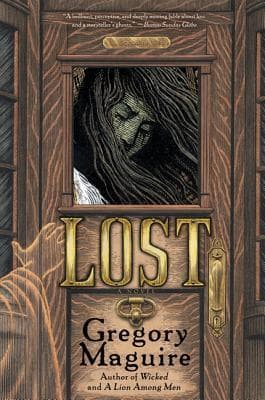
Synopsis
Covers the whole plot, including the ending.
- Difficulty
- Medium
- Pacing
- Moderate
- Mood
- Atmospheric, Suspenseful, Mysterious, Dark, Literary
- Read it if
- You enjoy gothic mysteries with literary allusions, psychological depth, and a blend of historical and supernatural elements.
- Skip it if
- You prefer fast-paced thrillers or straightforward ghost stories without complex literary layers and ambiguity.
Lost Plot Summary
Covers the whole plot, including the ending.
Arrival at Weatherall Walk
Winifred 'Winnie' Rudge, a writer known for a successful astrology book, arrives in London from the United States. She plans to write a new novel about a woman haunted by Jack the Ripper. She goes to Weatherall Walk, a nineteenth-century rowhouse her great-great-grandfather once owned, where her stepcousin and old friend, John Comestor, lives. She expects to stay with him but finds his flat empty, stripped of furniture, and smelling unsettling. Unconnected wires hang from the walls, and the space feels abandoned. There is no sign of John, and Winnie immediately feels an unnerving presence, hinting at a deeper mystery.
The Unsettling Presence
As Winnie tries to settle into John's desolate flat, strange things happen. Objects move on their own, cold spots appear, and she feels watched. She blames some of it on the old house, but cannot ignore the strong feeling of a ghost. This presence makes her wonder if John simply left or if something worse happened. The house itself seems to resist her, adding to her growing dread and the mystery of John's whereabouts and Weatherall Walk's history.
Encountering Allegra
Winnie contacts Allegra, John's former girlfriend, hoping for information about his disappearance. Allegra is defensive, evasive, and clearly holds a grudge against John. She offers no useful details about his whereabouts or recent activities, instead showing resentment over their breakup. Her unhelpfulness deepens Winnie's suspicion that John's vanishing is not simple, and that Allegra might be hiding information, whether intentionally or due to her own feelings about John.
Mrs. Maddingly's Peculiarities
Winnie meets Mrs. Maddingly, the cat-obsessed downstairs neighbor, who first seems eccentric but harmless. As Winnie continues her investigation, Mrs. Maddingly's behavior becomes more bizarre. She makes cryptic remarks, seems overly protective of her many cats, and shows a strange interest in the house's history and its past residents. Her growing oddity suggests she might know more about John's disappearance or the ghostly activity, or perhaps she herself is affected by the house's atmosphere.
The Family Legend of Scrooge
While researching her family's history, Winnie discovers a long-held legend: her great-great-grandfather, who owned Weatherall Walk, supposedly inspired Charles Dickens's Ebenezer Scrooge as a child. This adds another layer of history and potential ghostly meaning to the house. The idea that such a spirit might linger makes Winnie wonder if the ghost she feels is this ancestor, or something older and more tied to the building's past.
The Ripper Manuscript
In John's flat, Winnie finds fragments of a manuscript he was writing. To her surprise, it also concerns Jack the Ripper, exploring similar themes of haunting and unsolved mysteries, eerily like her own planned novel. This overlap feels more than coincidental, suggesting a deeper link between John's disappearance, the house's history, and the serial killer. It makes Winnie wonder if John's research led him to a dangerous truth or if the Ripper's spirit is involved in the haunting.
Visions and Nightmares
As Winnie investigates, the ghostly presence intensifies, bringing vivid nightmares and unsettling waking visions. She sees fleeting figures, hears disembodied voices, and feels chilling sensations that make her question her sanity. These manifestations are not just frightening; they seem to convey fragmented messages or clues, drawing her further into the house's secrets. The line blurs between her imagination, her past traumas, and the real supernatural activity, making her question what is real.
The House's Influence
Through her experiences, Winnie begins to understand that Weatherall Walk is not just haunted by spirits, but that the house itself is a sentient, malevolent entity. It feeds on the emotions, memories, and unresolved conflicts of its residents, past and present. The building seems to manipulate perceptions, amplify fears, and manifest its own dark will. This realization shifts Winnie's focus from finding John to understanding and confronting the insidious nature of the house, which appears to be the true antagonist, trapping and consuming those within its walls.
John's Fate Revealed
By piecing together John's research, deciphering clues from the house, and confronting Mrs. Maddingly, Winnie uncovers the tragic truth of John's disappearance. John, driven by his obsessions and the house's influence, succumbed to its power. He did not just leave; he became absorbed by the house, his spirit trapped within its fabric, a victim of its hunger for life and memory. This discovery is a devastating blow, confirming Winnie's worst fears and solidifying the house's malevolent nature.
Confronting the Past
As the house's influence peaks, Winnie must confront not only the ghosts of Weatherall Walk but also her own past. The house, sensing her weaknesses, brings up personal traumas and unresolved issues, showing them in terrifying ways. Her experiences with the house become a mirror, forcing her to face her fears, guilt, and her own 'lost' self. This internal struggle becomes as important as the external mystery, as she realizes that to overcome the house's hold, she must first confront her own psychological demons.
The Battle for Deliverance
Knowing John's fate and the house's malevolent nature, Winnie fights for her own freedom. This is not a physical fight, but a psychological and spiritual one, where she must assert her will against the house's influence. She tries to break free from its manipulative illusions and emotional drains, refusing to become another victim. This struggle is about reclaiming her agency and identity, ensuring she does not suffer John's fate, and finding a way to liberate herself from the house's power.
A Precarious Resolution
Winnie escapes Weatherall Walk, but she is changed. She has faced deep personal fears and seen the terrifying reality of a sentient, parasitic house. While she physically leaves, the experience leaves a lasting mark, and the house's power is not truly defeated, only avoided. She achieves an uncertain resolution, understanding that some mysteries remain unsolved and some evils endure. The ending suggests that while she survived, the house continues its dark work, and Winnie carries the echoes of her experience, forever altered by the spectral drama she encountered.
Principal Figures
Winifred 'Winnie' Rudge
Protagonist
A writer haunted by past success and a new, terrifying mystery.
Winnie is an American writer struggling to move beyond the commercial success of a mass-market astrology book. She arrives in London seeking inspiration for a new novel about a woman haunted by Jack the Ripper, a theme that eerily parallels her unfolding reality. Intelligent, observant, and initially skeptical, she is gradually forced to confront the supernatural. Winnie is driven by a desire for intellectual validation and a subconscious need to resolve her own internal 'lost' feelings, which the house ultimately forces her to face.
Relationships: John Comestor (Stepcousin and old friend, whose disappearance Winnie investigates.); Allegra (John's ex-girlfriend, whom Winnie seeks for information but finds unhelpful.); Mrs. Maddingly (Eccentric downstairs neighbor, a source of cryptic clues and increasing strangeness.)
John Comestor
Supporting/Mentioned
Winnie's missing stepcousin, whose fate is central to the mystery.
John is Winnie's stepcousin and an old friend who mysteriously disappears from his London flat. He was working on his own manuscript about Jack the Ripper, a thematic link to Winnie's project. John is portrayed as intelligent but perhaps overly obsessive, prone to getting lost in his research. His absence drives the initial plot, and his ultimate fate serves as a chilling warning about the house's insidious power, revealing him as a victim rather than an active character.
Relationships: Winifred Rudge (Stepcousin and old friend, catalyst for Winnie's arrival and investigation.); Allegra (Ex-girlfriend, whose bitterness hints at John's past complexities.)
Allegra
Supporting
John's resentful ex-girlfriend, unhelpful in Winnie's search.
Allegra is John Comestor's former girlfriend. She is portrayed as bitter, resentful, and unhelpful when Winnie attempts to question her about John's disappearance. Her aggressive demeanor and unwillingness to cooperate suggest unresolved emotional issues regarding John, and possibly a deeper knowledge or suspicion she is unwilling to share. She serves as an early obstacle for Winnie, highlighting the human complexities and interpersonal dramas that exist alongside the supernatural mystery.
Relationships: John Comestor (Ex-boyfriend, relationship ended poorly, leaving her bitter.); Winifred Rudge (Interrogated by Winnie about John's whereabouts, but remains uncooperative.)
Mrs. Maddingly
Supporting
The eccentric, cat-obsessed downstairs neighbor with cryptic insights.
Mrs. Maddingly is the elderly downstairs neighbor in Weatherall Walk, known for her numerous cats and increasingly eccentric behavior. Initially appearing as a quirky local, she gradually becomes more unsettling, offering cryptic remarks and displaying an unusual connection to the house's history and its spectral inhabitants. She seems to be both a victim and a conduit for the house's influence, blurring the lines between sanity and madness. Her observations, though often veiled, provide Winnie with crucial, if unsettling, clues.
Relationships: Winifred Rudge (Neighbor who provides cryptic information and becomes a source of dread.); John Comestor (Neighbor who likely witnessed aspects of his decline.)
Winnie's Great-Great-Grandfather
Mentioned
The historical owner of Weatherall Walk, rumored inspiration for Ebenezer Scrooge.
Winnie's great-great-grandfather is a historical figure connected to the house, Weatherall Walk. Family legend claims he was the childhood inspiration for Charles Dickens's Ebenezer Scrooge, suggesting a legacy of curmudgeonly or perhaps dark character. His past ownership of the house adds a layer of historical weight and potential ghostly significance, as Winnie wonders if his spirit might be the malevolent presence she feels. He represents the deep, intertwined history of the Rudge family and the enigmatic house.
Relationships: Winifred Rudge (Ancestor whose history Winnie uncovers, adding to the house's mystery.)
The House (Weatherall Walk)
Antagonist
A sentient, malevolent entity that feeds on its inhabitants.
Weatherall Walk is not just a setting but a character in itself, functioning as the primary antagonist. It is an ancient London rowhouse with a long, complex history, and it is revealed to be a sentient, parasitic entity. The house feeds on the emotions, memories, and unresolved conflicts of its inhabitants, past and present, manifesting as spectral activity and psychological manipulation. It traps and absorbs individuals, making them 'lost' within its walls, and its influence is insidious and pervasive.
Relationships: Winifred Rudge (Its target, attempting to consume her and her memories.); John Comestor (Its victim, absorbed into its fabric.)
Themes & Insights
The Nature of Being 'Lost'
The theme of being 'lost' appears in many ways: Winnie's feeling lost in her career and identity, John's literal disappearance into the house, and the ghosts lost between worlds. The house feeds on these feelings, amplifying them to consume its victims. For example, John's obsession with the Ripper and his internal struggles make him vulnerable to becoming 'lost' within Weatherall Walk. Winnie avoids this by confronting her own 'lost' self. The book explores being lost physically, spiritually, and psychologically.
“At the flat in Weatherall Walk there was no milk in the fridge, no ice in the tiny freezer unit.... Unconnected wiring threaded from walls, and a smell of lazy drains, something rotting, unfurled from the sewer all the way up to this flat.”
The Intertwining of Past and Present
The novel explores how historical events and past lives continue to affect the present. The family legend of Winnie's great-great-grandfather inspiring Scrooge, the ghost of Jack the Ripper, and the age of Weatherall Walk all suggest the past is never truly gone. The house acts as a center for these historical echoes, blurring the lines between past and present. Winnie's own past traumas are also drawn into this, showing how personal history, like collective history, shapes current experiences and fears, making the haunting both personal and historical.
“Could it be the ghostly remains of Jack the Ripper? Or a phantasm derived from a more arcane and insidious origin?”
The Power of Storytelling and Imagination
As a writer, Winnie's profession and imagination are central. Her novel idea about a woman haunted by Jack the Ripper ironically mirrors her reality, suggesting the powerful, almost prophetic, nature of storytelling. The novel questions whether the supernatural elements are entirely external or partly products of Winnie's mind, amplified by the house. This theme shows how narratives—family legends, historical accounts, and personal stories—shape perception and can even create reality, blurring the lines between fiction and fact within the haunting. Her ability to create stories is both her strength and a weakness.
“Gripped by inspiration and desperation alike, Winnie finds herself the unwilling audience for a drama of specters and shades, some from her family's peculiar history and some from her own unvanquished past.”
The Insidious Nature of Isolation
Isolation is a common theme, making characters vulnerable and increasing the house's power. Winnie arrives in London alone, John disappears without a trace, and Mrs. Maddingly lives a solitary life with her cats. This isolation makes them susceptible to the house's manipulations, as they have fewer external connections to reality. The house thrives on separating its residents from the outside world, making them more dependent on its influence. This theme emphasizes how a lack of connection can lead to psychological fragility, making individuals easier prey for malevolent forces, whether supernatural or internal.
“Winnie wrenched open a window. But no sign of John?”
Plot Devices & Literary Techniques
The Sentient House
Weatherall Walk as a living, malevolent entity.
The house, Weatherall Walk, functions as a sentient antagonist, rather than merely a haunted location. It actively draws characters in, feeds on their emotions and memories, and traps them within its walls, making them 'lost.' This device allows the setting to become a character with its own motives and will, blurring the lines between the environment and the supernatural forces at play. It elevates the conflict beyond a simple ghost story, creating a pervasive, inescapable sense of dread.
The Unreliable Narrator/Perception
Winnie's subjective experiences blur reality and imagination.
Winnie's experiences in Weatherall Walk are often presented through her subjective perception, making it difficult to discern what is truly supernatural versus what might be her imagination or psychological distress. Her background as a writer, prone to flights of fancy, contributes to this ambiguity. This device keeps the reader questioning the nature of the haunting and Winnie's sanity, heightening the suspense and emphasizing the psychological impact of the events. It also forces the reader to consider the power of the mind in shaping reality.
Intertextuality/Allusion
References to literary works and historical figures enrich the narrative.
The novel employs intertextuality through its explicit references to Charles Dickens's 'A Christmas Carol' (via the Scrooge family legend) and the historical figure of Jack the Ripper. These allusions not only ground the story in a recognizable cultural context but also add layers of thematic depth, linking the narrative to established tales of haunting, morality, and unsolved mysteries. This device enriches the story by inviting readers to draw parallels and contrasts with these well-known narratives, deepening the sense of historical and literary resonance within the haunting.
The Doppelgänger Motif
Winnie's novel mirroring John's research and her own reality.
The uncanny resemblance between Winnie's planned novel (a woman haunted by Jack the Ripper) and John's unfinished manuscript on the same subject, alongside the actual haunting Winnie experiences, creates a powerful doppelgänger motif. This device suggests a mirroring of fates or obsessions, indicating that Winnie might be treading a dangerously similar path to John. It heightens the stakes for Winnie, as she sees her own potential 'lost' future reflected in John's disappearance, pushing her to confront the mystery more directly.
Lost Quotes
“Perhaps all the good things that happen in the world are the result of some divine accident.”
“The past is a foreign country; they do things differently there.”
“It's never too late to have a happy childhood.”
“One cannot simply walk into Mordor, nor can one simply walk out of a bad dream.”
“Sometimes the only way to find yourself is to get a little lost.”
“The world is full of magic things, patiently waiting for our senses to grow sharper.”
“Fear makes strangers of people who would be friends.”
“Every journey begins with a single step, but sometimes that step is into a very deep hole.”
“Truth is a stubborn beast. It might hide, but it rarely disappears entirely.”
“Home is not a place, it's a feeling. And sometimes, you have to build that feeling yourself.”
“The greatest stories are often the ones we tell ourselves, even if they aren't entirely true.”
“Even the smallest creature can change the course of the future.”
“One doesn't have to be a hero to do heroic things. Just brave enough to try.”
“The world keeps turning, whether you're ready for it or not.”
Quiz
10 questions on the plot and the characters. Each answer comes with a short explanation.
Question 1
Upon arriving at John Comestor's flat in Weatherall Walk, what is the initial state of the apartment?
- It is meticulously clean and well-stocked with food.
- It is empty, with furniture covered and books removed, smelling of lazy drains.
- It is filled with John's belongings, but appears to have been ransacked.
- It is undergoing renovations, with workers present and new furniture arriving.
Show answer
B. It is empty, with furniture covered and books removed, smelling of lazy drains. The text states, 'At the flat in Weatherall Walk there was no milk in the fridge, no ice in the tiny freezer unit.... The better furniture was hung over with drop cloths, the leather-bound books evacuated from their shelves.... Unconnected wiring threaded from walls, and a smell of lazy drains, something rotting, unfurled from the sewer all the way up to this flat.' This indicates an empty, neglected, and somewhat disheveled state.
Question 2
What is Winifred Rudge's primary reason for traveling to London?
- To visit her stepcousin John Comestor.
- To investigate the disappearance of her great-great-grandfather.
- To jump-start a new novel about a woman haunted by Jack the Ripper's ghost.
- To escape the success of her astrology book and relax.
Show answer
C. To jump-start a new novel about a woman haunted by Jack the Ripper's ghost. The synopsis clearly states, 'Winifred Rudge, a bemused writer struggling to get beyond the runaway success of her mass-market astrology book, travels to London to jump-start her new novel about a woman who is being haunted by the ghost of Jack the Ripper.'
Question 3
Which of the following is NOT one of the potential origins for the ghostly presence in John's apartment, as suggested in the text?
- The spirit of Winnie's great-great-grandfather, a potential inspiration for Ebenezer Scrooge.
- The ghostly remains of Jack the Ripper.
- A phantasm derived from an arcane and insidious origin.
- The spirit of Charles Dickens himself, seeking inspiration.
Show answer
D. The spirit of Charles Dickens himself, seeking inspiration. The text lists three possibilities: her great-great-grandfather, Jack the Ripper, or an arcane/insidious origin. Charles Dickens's spirit is not mentioned as a possibility for the haunting.
Question 4
What is Winnie's previous literary success that she is struggling to move beyond?
- A historical fiction novel about Victorian London.
- A mass-market astrology book.
- A collection of ghost stories.
- A biography of Charles Dickens.
Show answer
B. A mass-market astrology book. The synopsis states Winnie is 'struggling to get beyond the runaway success of her mass-market astrology book.'
Question 5
How does John Comestor's erstwhile girlfriend, Allegra, react to Winnie's investigation?
- She is eagerly helpful, providing many clues.
- She is aggressively unhelpful.
- She is absent and cannot be reached.
- She is frightened and avoids Winnie.
Show answer
B. She is aggressively unhelpful. The text mentions, 'John's erstwhile girlfriend, Allegra, is aggressively unhelpful.'
Question 6
The rowhouse where John Comestor's flat is located has a historical connection to Winnie's family. What is it?
- It was once owned by John Comestor's great-great-grandfather.
- It was the childhood home of Charles Dickens.
- It was once owned by Winnie's great-great-grandfather.
- It was the site of a famous Jack the Ripper murder.
Show answer
C. It was once owned by Winnie's great-great-grandfather. The description states the apartment is 'in the nineteenth-century rowhouse once owned by Winnie's great-great-grandfather.'
Question 7
What literary work is explicitly referenced for its 'dark overtones' that echo in 'Lost'?
- Frankenstein
- Dracula
- A Christmas Carol
- Jane Eyre
Show answer
C. A Christmas Carol The final sentence of the synopsis states, 'In the spirit of A. S. Byatt's Possession, with dark overtones echoing from A Christmas Carol, Lost presents a rich fictional world that will enrapture Gregory Maguire's eager audience.'
Question 8
What is the specific family legend associated with Winnie's great-great-grandfather?
- He was a famous detective who hunted Jack the Ripper.
- He was Charles Dickens's childhood inspiration for Ebenezer Scrooge.
- He was a renowned astrologer whose predictions always came true.
- He mysteriously disappeared from his London home without a trace.
Show answer
B. He was Charles Dickens's childhood inspiration for Ebenezer Scrooge. The text asks, 'Could it be the spirit of this ancestor, who, family legend claims, was Charles Dickens's childhood inspiration for Ebenezer Scrooge?'
Question 9
Beyond the mystery of John's disappearance and the ghostly presence, what other elements contribute to Winnie's internal 'drama'?
- Her struggles with a new romance and financial difficulties.
- Her unwilling audience for specters and shades from her family's history and her own unvanquished past.
- Her attempts to reconcile with Allegra and Mrs. Maddingly.
- Her efforts to publish a new astrology book.
Show answer
B. Her unwilling audience for specters and shades from her family's history and her own unvanquished past. The synopsis states, 'Winnie finds herself the unwilling audience for a drama of specters and shades, some from her family's peculiar history and some from her own unvanquished past.' This highlights her personal involvement beyond the immediate mystery.
Question 10
What is the defining characteristic of John's downstairs neighbor, Mrs. Maddingly, as described in the synopsis?
- She is a reclusive gardener.
- She is a cat-obsessed woman who is growing stranger by the day.
- She is a nosy busybody who offers too much information.
- She is a kind old woman who helps Winnie with her investigation.
Show answer
B. She is a cat-obsessed woman who is growing stranger by the day. The text describes her as 'his downstairs neighbor, the cat-obsessed Mrs. Maddingly, is growing stranger by the day.'
Lost FAQ
What brings Winifred Rudge to London at the beginning of 'Lost'?
Winifred Rudge travels to London to find inspiration and jump-start her new novel, which is about a woman haunted by the ghost of Jack the Ripper. She is also trying to move beyond the success of her previous mass-market astrology book.
What immediate mystery does Winnie encounter upon arriving at John Comestor's flat?
Upon her arrival, Winnie finds John Comestor's flat in disarray, with drop cloths, evacuated books, and unconnected wiring. More alarmingly, John himself has disappeared, and a ghostly presence seems to have taken over his apartment.
Who are some of the key supporting characters Winnie interacts with during her investigation?
Winnie encounters John's unhelpful erstwhile girlfriend, Allegra, who seems to know more than she lets on. She also deals with the increasingly strange, cat-obsessed downstairs neighbor, Mrs. Maddingly, whose behavior becomes a point of concern.
What are the primary theories regarding the identity of the ghostly presence in John's apartment?
The novel presents several theories for the haunting: it could be the spirit of Winnie's great-great-grandfather, rumored to be Charles Dickens's inspiration for Ebenezer Scrooge; the ghost of Jack the Ripper, related to Winnie's novel; or a more arcane and insidious phantasm.
How does Winnie's own past influence her experience with the supernatural events?
Winnie's unvanquished past plays a significant role, as the drama of specters and shades she encounters includes elements from her own personal history. This personal connection makes her an 'unwilling audience' and deepens her engagement with the haunting.
What is the significance of the rowhouse's history to Winnie's family?
The nineteenth-century rowhouse was once owned by Winnie's great-great-grandfather. This ancestral connection is crucial because family legend claims he was the childhood inspiration for Charles Dickens's Ebenezer Scrooge, linking the haunting to her lineage and literary history.
How does the 'unconnected wiring' and 'smell of lazy drains' in John's flat hint at deeper issues?
The disarray and foul smells in John's flat—unconnected wiring, rotting smells from the sewer—serve as early sensory clues. They suggest not just neglect but a deeper disturbance, foreshadowing the unsettling supernatural events and the metaphorical 'rot' within the family's history.
What is the potential connection between Winnie's Ripper novel and the actual haunting?
Winnie's ongoing novel about a woman haunted by Jack the Ripper creates a meta-narrative layer. It suggests that her fictional work might be inadvertently attracting or manifesting a similar spectral presence, blurring the lines between her imagination and reality.
How does Mrs. Maddingly's cat obsession contribute to the atmosphere of the novel?
Mrs. Maddingly's cat obsession, coupled with her growing strangeness, contributes to the novel's unsettling atmosphere. Her peculiar behavior and potential insight (or delusion) regarding the building's hidden inhabitants or energies add to the sense of uncanny mystery.
How does Winnie's struggle with her previous astrology book success affect her current mental state?
Winnie's struggle to move beyond the runaway success of her astrology book indicates a deep desire for literary legitimacy and a fear of being pigeonholed. This internal pressure makes her vulnerable to seeking intense inspiration, potentially blurring her perception of reality and fantasy.
Analyze Allegra's 'aggressively unhelpful' behavior from a psychological perspective.
Allegra's 'aggressively unhelpful' stance could stem from various psychological motivations: guilt over John's disappearance, a desire to hide her own involvement, fear of the supernatural events, or even jealousy towards Winnie. Her defensiveness suggests a deep-seated emotional conflict.
In what ways does Winnie's 'desperation' fuel her investigation into John's disappearance and the haunting?
Winnie's desperation, driven by her stalled writing career and concern for John, pushes her deeper into the mystery. This desperation might make her more susceptible to believing in the supernatural or more willing to confront dangerous truths, blurring the line between rational inquiry and wishful thinking.
How does the novel explore the concept of inherited trauma or historical influence through the family's connection to Ebenezer Scrooge?
The family legend of Winnie's ancestor inspiring Ebenezer Scrooge suggests a legacy of miserliness or emotional coldness that might manifest as a haunting. This connection explores how historical figures and family traits can cast long shadows, influencing subsequent generations and contributing to a 'haunted' lineage.
What is the significance of the title 'Lost' in relation to the characters and themes?
The title 'Lost' has multiple layers of meaning: John Comestor is physically lost; Winnie is lost in her career and potentially her grip on reality; the ghosts are lost souls; and the characters are lost in a labyrinth of family history and supernatural events. It encapsulates themes of disorientation and unresolved pasts.
How does 'Lost' echo 'A Christmas Carol' beyond the Scrooge connection?
Beyond the direct ancestor connection, 'Lost' echoes 'A Christmas Carol' through its exploration of past transgressions haunting the present, the potential for redemption or reckoning with one's history, and the use of spectral visitations to force a character to confront uncomfortable truths about themselves and their lineage.
Is the ghost in John's apartment a single entity, or could it be a manifestation of multiple presences or even Winnie's own psyche?
The novel deliberately leaves the ghost's identity ambiguous, suggesting it could be multiple entities (ancestor, Ripper) or even a manifestation of Winnie's subconscious anxieties and creative struggles. This ambiguity allows for a deeper exploration of the blurred lines between external haunting and internal psychological states.
What is the role of the 'rich fictional world' in 'Lost' as mentioned in the synopsis?
The 'rich fictional world' refers to the novel's intricate blend of historical detail, literary allusions (Dickens, Byatt), and supernatural elements. This dense layering creates a deeply immersive experience that blurs the lines between reality and fiction, inviting readers to delve into its complex narrative and thematic depths.
How does the book balance its 'Children's' and 'Young Adult' classifications with its 'dark overtones' and complex themes?
The book likely balances these classifications by presenting its dark themes and complex psychological elements through a narrative lens accessible to younger readers, perhaps focusing on the mystery and adventure aspects while subtly introducing deeper interpretations. The 'dark overtones' are present but perhaps not overtly graphic, allowing for a broader appeal.
What might be the ultimate lesson or realization Winnie gains by the end of her ordeal?
Winnie's ultimate lesson might involve confronting her own unvanquished past, accepting the complexities of her family history, and perhaps finding a new, more authentic voice for her writing. Her ordeal likely forces her to reconcile with personal and ancestral 'ghosts' to move forward.
About the author

Gregory Maguire is an American author known for his works of fiction that often reimagine classic tales. He is best known for "Wicked: The Life and Times of the Wicked Witch of the West," which explores the backstory of the Wicked Witch from "The Wizard of Oz." Other notable works include "Confessions of an Ugly Stepsister," "A Lion Among Men," "Out of Oz," and "Lost."
Similar books
- Possession
A.S. Byatt
4.3 (13k) average on GoodreadsRomanceFeatures academic mystery, literary exploration, and interconnected pasts.
- The Haunting of Hill House
Shirley Jackson
3.8 (162k) average on GoodreadsThrillerExplores psychological horror and the unreliable nature of perception within a haunted house.
- The Name of the Star
Maureen Johnson
3.9 (48k) average on GoodreadsFantasy"The Name of the Star" also features a young American protagonist in London encountering a historical serial killer (the 'Shades of London' Ripper), but it leans more heavily into urban fantasy and a faster-paced mystery. Johnson's approach is more direct and action-oriented, with a clearer supernatural framework, making it potentially more accessible to a broader YA audience. Maguire's "Lost" is more introspective and literary, delving deeper into psychological torment and the ambiguity of the supernatural, offering a richer, albeit more demanding, reading experience.
- A Great and Terrible Beauty
Libba Bray
3.8 (208k) average on GoodreadsFantasyBray's "A Great and Terrible Beauty" shares "Lost's" gothic atmosphere and focus on a young woman discovering hidden powers and dark secrets within an institutional setting. However, Bray's series explicitly embraces a magical realism framework with a strong emphasis on female empowerment and secret societies. "Lost" is less about overt magic and more about the psychological haunting and the blurred lines between reality and delusion, making it a more unsettling and less fantastical journey compared to Bray's more overtly supernatural and romanticized gothic.
- Harry Potter and the Sorcerer's Stone
J.K. Rowling
4.5 (7M) average on GoodreadsFantasyRescued from a miserable life under the stairs, an orphaned boy discovers he's a wizard destined for a magical school, where he uncovers a dangerous secret tied to the dark wizard who murdered his parents.
- The Hunger Games
Suzanne Collins
4.3 (6.4M) average on GoodreadsFantasyIn a future where children fight to the death on live television, Katniss Everdeen volunteers for the arena, turning a death sentence into a fight for survival and a spark of rebellion.





Enjoyed the summary?
A summary gives you the shape of the book. The book itself has the detail, the examples and the voice.
Find Lost on AmazonAs an Amazon Associate, BookBrief earns from qualifying purchases. How we're funded