
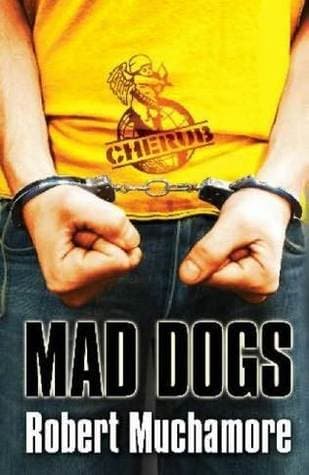
Synopsis
Covers the whole plot, including the ending.
- Difficulty
- Easy
- Pacing
- Fast
- Mood
- Gritty, Suspenseful, Action-packed, Realistic
- Read it if
- You enjoy fast-paced spy thrillers with a young protagonist, realistic danger, and a focus on infiltration and intelligence gathering.
- Skip it if
- You prefer fantasy or sci-fi over contemporary espionage, or are uncomfortable with themes of drug dealing and gang violence.
Mad Dogs Plot Summary
Covers the whole plot, including the ending.
A New Mission for James
James Adams, a CHERUB agent, gets a new assignment from his controller, Ewart. He must infiltrate the Mad Dogs, a London gang led by Julian "Mad Dog" Lennon. Police struggle to get information on the gang's operations and a growing turf war with a rival group, the KOTL (Kings of the London). James's job is to go undercover as 'Jez,' a street kid wanting to join the gang. He needs to gather information to help police dismantle their organization and stop more violence. He trains intensely for street life and gang culture, including fighting and navigating the criminal world.
Infiltrating the Mad Dogs
James, as Jez, infiltrates the Mad Dogs' territory in South London. He initially struggles to gain acceptance, facing suspicion from members like Kyle and the ambitious Rat. He proves himself by doing petty crimes and showing loyalty. He catches the eye of Julian Lennon's second-in-command, Dave. James observes the gang's structure, drug dealing, and constant fear of rival gangs and police. He learns about Julian's temper and the Mad Dogs' strict hierarchy, realizing the immense danger if his cover is exposed.
Rising Through the Ranks
As James proves himself, he gains trust, especially from Dave, who sees him as reliable. He participates in more serious crimes, including drug runs and intimidating rival gang members. This deeper involvement helps him gather significant information on the Mad Dogs' supply chains, safe houses, and plans to expand territory. He also learns about internal gang politics, especially tension between Dave and Kyle. James records all information, sending it to CHERUB headquarters through secure channels, giving police actionable intelligence.
The Turf War Escalates
The turf war between the Mad Dogs and the KOTL reaches a critical point. Both gangs engage in retaliatory attacks, leading to stabbings, muggings, and shootings. James finds himself in these violent clashes, forced to participate to maintain his cover. During one brutal confrontation, he sees the devastating effects of gang violence. The conflict makes his mission more dangerous, as police need information quickly to prevent more bloodshed, pressuring James to deliver crucial intelligence, even if it means taking greater risks.
Julian's Paranoia and a New Target
Julian "Mad Dog" Lennon's paranoia grows as the turf war rages, making him more unpredictable. He suspects informants among his members, putting James on edge. Julian also targets innocent people who cross him, showing his ruthless nature. James sees Julian's cruelty when he orders a brutal beating of someone suspected of disloyalty, making James question his deep cover's morality. Pressure mounts as CHERUB pushes James for information on Julian's network and his true power source. They believe he is more than a street-level gang leader.
Uncovering a Larger Conspiracy
Through observation and eavesdropping, James discovers that Julian Lennon is not an independent gang leader. A larger, more sophisticated criminal organization supplies and supports him. This group provides the Mad Dogs with drugs and weapons, fueling their operations. James realizes the mission is more complex than first thought. Dismantling the Mad Dogs alone might not stop the larger threat. He focuses on gathering intelligence about this network, seeking names, locations, and communication methods to expose their operations.
A CHERUB Agent in Danger
James's cover is almost blown when a detail about his past or a slip of the tongue makes some Mad Dogs, especially Kyle, suspicious. He faces interrogation and physical threats. Using his CHERUB training, James talks his way out of immediate danger, but the incident leaves him shaken and aware of the constant threat to his life. This near-exposure forces him to take extreme precautions and makes him wonder how long he can maintain his facade without a fatal mistake.
The Final Push
With police preparing their move, James must gather one final, critical piece of evidence. This involves infiltrating a secure location where the Mad Dogs store cash and drugs, or identifying a key meeting between Julian and his suppliers. He takes a significant risk, putting himself in extreme danger to get the proof. He successfully gets the evidence, including details about the larger criminal network. This gives police irrefutable information to launch a raid and dismantle the Mad Dogs, as well as target higher-level criminals.
The Raid and Aftermath
Based on James's intelligence, police launch a massive, coordinated raid on the Mad Dogs' operations, including safe houses and drug stashes. Julian Lennon and many key gang members, including Dave and Kyle, are arrested. James, still undercover, extracts himself from the chaos without suspicion. The mission is a success. The Mad Dogs are dismantled, and the turf war ends. James reflects on his traumatic experiences, the moral ambiguities of his actions, and the lasting impact of his time in the gang. He knows he helped save lives but also saw suffering.
Return to CHERUB Campus
After the mission, James returns to the CHERUB campus. He undergoes debriefing and psychological evaluation, as his street experiences have taken a toll. He struggles to readjust to campus life, haunted by the violence and moral compromises he made. His friends, like Kerry and Lauren, try to help him. But James carries the burden of his undercover identity and the lives he witnessed. The mission, though successful, gives him a deeper understanding of humanity's dark side and the sacrifices of a CHERUB agent.
Principal Figures
James Adams
Protagonist
A highly skilled CHERUB agent tasked with infiltrating a dangerous gang.
James is a seasoned CHERUB agent, known for his resourcefulness, resilience, and ability to adapt to challenging situations. He is brave and loyal to CHERUB's mission, but also deeply thoughtful and often struggles with the moral implications of his undercover work. His past experiences have hardened him, yet he retains a strong sense of justice. He is driven by a desire to prove himself and make a difference, even if it means putting himself in extreme danger.
Relationships: Julian 'Mad Dog' Lennon (Undercover target/adversary); Dave (Gang member, his immediate superior during the mission); Kyle (Suspicious gang member, rival); Ewart (CHERUB mission controller/mentor); Kerry Chang (Close friend/fellow agent); Lauren Adams (Sister/fellow agent)
Julian 'Mad Dog' Lennon
Antagonist
The ruthless and unpredictable leader of the Mad Dogs gang.
Julian is a charismatic but extremely violent and paranoid individual who rules the Mad Dogs with an iron fist. He is cunning and ruthless, willing to do whatever it takes to maintain his power and expand his territory. His erratic behavior and quick temper make him a constant threat to anyone who crosses him, including his own gang members. He is driven by greed, power, and a deep-seated distrust of everyone around him, making him a formidable and dangerous target for James.
Relationships: James Adams (as Jez) (Unwittingly employs James into his gang); Dave (Second-in-command/loyal subordinate); Kyle (Gang member/subordinate)
Dave
Supporting
Julian Lennon's loyal second-in-command in the Mad Dogs.
Dave is a pragmatic and experienced member of the Mad Dogs, serving as Julian's trusted second-in-command. He is less volatile than Julian but equally committed to the gang's operations. He is responsible for managing many of the day-to-day activities and is instrumental in bringing new recruits, like James, into the fold. Dave is initially suspicious of James but eventually comes to trust him, providing James with valuable access and information. He is a key figure in the gang's hierarchy and a significant source of intelligence for James.
Relationships: Julian 'Mad Dog' Lennon (Leader/subordinate); James Adams (as Jez) (Superior to James within the gang)
Kyle
Supporting
A suspicious and aggressive member of the Mad Dogs gang.
Kyle is a younger, more aggressive member of the Mad Dogs who harbors deep suspicion towards newcomers. He is driven by a desire for respect and status within the gang, often clashing with others, including James. Kyle is quick to violence and constantly looking for opportunities to prove himself to Julian. His distrust and volatile nature make him a constant threat to James's cover, as he is the most likely to question James's authenticity and expose him.
Relationships: James Adams (as Jez) (Rival/suspicious gang member); Julian 'Mad Dog' Lennon (Leader/subordinate)
Ewart
Supporting
James's CHERUB mission controller.
Ewart is a seasoned CHERUB mission controller who oversees James's operation. He is professional, meticulous, and deeply concerned with the success of the mission and the safety of his agents. Ewart provides James with guidance, support, and critical intelligence from CHERUB headquarters. He acts as James's lifeline to the outside world, offering both strategic advice and emotional support when James is struggling with the pressures of his undercover role. He represents the authority and resources of the CHERUB organization.
Relationships: James Adams (Mission controller/agent)
Rat
Mentioned
A younger, ambitious member of the Mad Dogs.
Rat is a younger, impressionable member of the Mad Dogs gang. He looks up to the older members and is eager to prove himself. He represents the younger generation drawn into gang life. While not a central figure, he interacts with James and provides a glimpse into the motivations and vulnerabilities of those caught in the criminal underworld.
Relationships: James Adams (as Jez) (Fellow gang member)
Kerry Chang
Supporting
James's close friend and fellow CHERUB agent.
Kerry is one of James's closest friends and a highly capable CHERUB agent. While not directly involved in the Mad Dogs mission, she provides emotional support to James before and after his assignment. She understands the pressures and dangers of CHERUB work, having experienced similar challenges. Her presence on campus offers James a sense of normalcy and a trusted confidante, highlighting the importance of friendship and camaraderie within the CHERUB organization.
Relationships: James Adams (Close friend/fellow agent)
Lauren Adams
Supporting
James's younger sister and fellow CHERUB agent.
Lauren is James's younger sister and also a CHERUB agent. She looks up to James but also challenges him. Like Kerry, she provides a touchstone of family and normalcy for James, reminding him of his life outside the dangerous missions. Her concern for James's well-being underscores the emotional toll that these missions take on the agents and their loved ones.
Relationships: James Adams (Brother/sister, fellow agent)
Themes & Insights
The Psychological Cost of Undercover Work
The novel explores the mental toll deep-cover infiltration takes on a young agent. James must adopt a violent, morally ambiguous persona, committing minor crimes and seeing brutal acts to maintain his cover. This deception and exposure to violence leave him shaken and struggling to readjust to normal life. Scenes where James questions his identity or has nightmares after the mission show the psychological impact of living a lie and engaging with the criminal underworld.
“You don't just switch off 'Jez' like a light. He's still there, under my skin.”
The Nature of Gang Violence and Poverty
The book shows the brutal realities of gang life, driven by turf wars, drug dealing, and the search for power in impoverished areas. It illustrates how young people, like Rat, get drawn into this cycle of violence, often with devastating results. The constant threat of stabbings, muggings, and retaliatory attacks highlights gang culture's futility and destructive nature. The novel suggests socioeconomic factors contribute to gangs, showing them as a complex social issue, not just a criminal one.
“On the streets, respect wasn't given, it was taken. And if you didn't take it, someone would take it from you.”
Morality and Ethics in Espionage
James often grapples with his mission's ethical dilemmas. He must participate in illegal activities, deceive those who trust him (like Dave), and witness horrific acts without intervention to maintain his cover. The novel asks how far an agent should go to achieve their goal and if the ends always justify the means. James's internal conflict over his actions, especially when he must allow certain crimes to happen, shows the moral tightrope CHERUB agents walk.
“Every lie I told, every crime I helped with, felt like a scar on my soul.”
Identity and Deception
Identity is a central theme, as James must shed his CHERUB persona and become 'Jez,' a hardened street kid. He learns to mimic speech, mannerisms, and attitudes alien to his true self. The constant need for deception blurs the lines between his real and undercover identities, making it hard to distinguish between them. This struggle with identity is a key part of the psychological toll, as James fears losing himself in the character he created.
“Jez wasn't just a name; he was a whole new person I had to become, and sometimes I worried he was becoming me.”
Plot Devices & Literary Techniques
Undercover Infiltration
The primary method for gathering intelligence, where the protagonist assumes a false identity to join a target group.
This device is central to the entire plot. James Adams adopts the persona of 'Jez' to infiltrate the Mad Dogs gang. This allows the narrative to explore the inner workings of the criminal organization from a first-person perspective. It creates constant tension as James must maintain his deception, participate in illegal activities, and navigate dangerous social dynamics without revealing his true purpose. The success of the mission hinges entirely on James's ability to convincingly portray his false identity and gain the trust of dangerous individuals.
The Turf War
A violent conflict between rival gangs that drives much of the immediate danger and plot progression.
The escalating turf war between the Mad Dogs and the KOTL serves as a constant backdrop of violence and urgency throughout the story. It not only provides the initial impetus for CHERUB's involvement (to prevent further bloodshed) but also creates numerous dangerous situations for James. He is forced to participate in gang skirmishes, witness brutal acts, and constantly fear for his life, which heightens the stakes and pushes the plot forward by demanding quicker intelligence gathering from James.
The Double Agent Paradox
The protagonist must appear loyal to the target group while secretly working against them, creating moral and practical dilemmas.
James operates under the classic double agent paradox. He must actively assist the Mad Dogs in their criminal enterprises, gain their trust, and appear to be one of them, all while secretly gathering information to bring them down. This creates profound moral conflicts for James, as he is complicit in crimes and deception. It also generates suspense, as any slip-up could lead to his immediate exposure and potentially death. This device explores the psychological strain of betraying trust, even for a greater good.
Mad Dogs Quotes
“The only difference between a madman and a genius is success.”
“You can never truly escape your past. It always finds a way to catch up.”
“Sometimes, the biggest monsters aren't under your bed, but inside your head.”
“Trust is a weapon. Use it wisely, or it will be used against you.”
“The truth is rarely simple. It's usually a tangled mess of lies and half-truths.”
“Even the strongest chains can be broken with enough will.”
“Fear makes people do terrible things. And sometimes, it makes them do brave things too.”
“The world isn't black and white. It's a thousand shades of grey.”
“Every secret has a shelf life. Eventually, it spoils.”
“It's not about how hard you hit, but how hard you can get hit and keep moving forward.”
“Sometimes, the only way to save someone is to let them go.”
“A good plan is only as good as the information it's built upon.”
“The silence can be louder than any scream when you're waiting for an answer.”
“You don't fight fire with fire. You fight it with water, or better yet, a well-placed extinguisher.”
Quiz
10 questions on the plot and the characters. Each answer comes with a short explanation.
Question 1
What is the primary advantage CHERUB agents have over adult spies?
- They have access to advanced technology that adults do not.
- They are physically stronger and faster than most adults.
- Adults never suspect that teens are spying on them.
- They are immune to legal consequences due to their age.
Show answer
C. Adults never suspect that teens are spying on them. The book description explicitly states, 'Adults never suspect that teens are spying on them,' highlighting their crucial advantage.
Question 2
What is James's role in the mission involving the British underworld gangs?
- He is the mission controller, coordinating other agents.
- He is tasked with gathering intel by infiltrating the most dangerous gang.
- He provides technological support and surveillance from a remote location.
- He is responsible for negotiating peace between the warring gangs.
Show answer
B. He is tasked with gathering intel by infiltrating the most dangerous gang. The synopsis states, 'James has the contacts to infiltrate the most dangerous gang of all…' indicating his direct involvement in gathering intelligence.
Question 3
What kind of items are CHERUB agents explicitly stated NOT to use on missions?
- Disguises and fake IDs.
- Gadgets or weapons.
- Vehicles and communication devices.
- Money and forged documents.
Show answer
B. Gadgets or weapons. The description clearly states that CHERUB agents 'spy on terrorists, hack into crucial documents, and gather intel on global threats—all without gadgets or weapons.'
Question 4
What specific event triggers the need for police information in the British underworld setting?
- A major drug bust by the police.
- Two gangs starting a turf war, leading to violence.
- A high-profile kidnapping by one of the gangs.
- An internal power struggle within the most dangerous gang.
Show answer
B. Two gangs starting a turf war, leading to violence. The synopsis states, 'When two of them start a turf war, violence explodes onto the streets. The police need information fast...' directly linking the turf war to the police's need for intel.
Question 5
How does CHERUB maintain the secrecy and effectiveness of its agents?
- They operate in foreign countries where their identities are unknown.
- Their agents are all under seventeen and 'do not exist' for official purposes.
- They use advanced cloaking technology to remain invisible.
- All agents undergo plastic surgery to alter their appearance.
Show answer
B. Their agents are all under seventeen and 'do not exist' for official purposes. The description states, 'CHERUB agents... all under the age of seventeen. For official purposes, these agents do not exist,' which is key to their operational secrecy.
Question 6
What is the overarching theme presented by the CHERUB organization's existence and methods?
- The corruption of adult authority figures.
- The exploitation of youth for dangerous government operations.
- The importance of technological advancement in espionage.
- The ethical dilemmas of international diplomacy.
Show answer
B. The exploitation of youth for dangerous government operations. The premise of highly trained children under 17 being sent on dangerous, gadget-free missions, where they 'do not exist,' strongly suggests a theme of youth exploitation for government ends.
Question 7
Considering the 'no gadgets or weapons' rule, what does this imply about the primary skills CHERUB agents rely on?
- Advanced martial arts and physical combat.
- Their ability to blend in, observe, and manipulate social situations.
- Expertise in code-breaking and digital forensics.
- Extensive knowledge of international law and diplomacy.
Show answer
B. Their ability to blend in, observe, and manipulate social situations. Without gadgets or weapons, and relying on their age for disguise, agents must primarily use their wits, observational skills, and social manipulation to gather intel and infiltrate.
Question 8
What is the primary motivation for CHERUB to use children as agents instead of adults?
- Children are more easily controlled and less likely to betray the agency.
- Adults never suspect children of spying, making them uniquely effective for infiltration.
- Children are cheaper to train and maintain than adult agents.
- Children possess superior physical endurance compared to adults.
Show answer
B. Adults never suspect children of spying, making them uniquely effective for infiltration. The core advantage highlighted is that 'Adults never suspect that teens are spying on them,' making this the fundamental reason for using child agents.
Question 9
Given the description, what is the most significant moral or ethical challenge inherent in the CHERUB program?
- The risk of agents developing psychological trauma from their missions.
- The potential for agents to misuse their training for personal gain.
- The difficulty of maintaining secrecy in a digital age.
- The financial cost of training and supporting young agents.
Show answer
A. The risk of agents developing psychological trauma from their missions. Sending children into 'extremely dangerous job[s]' without official existence and exposing them to 'terrorists' and 'dangerous gang[s]' creates a high likelihood of psychological trauma, making it a significant ethical challenge.
Question 10
What does the phrase 'For official purposes, these agents do not exist' imply about the legal and social standing of CHERUB agents?
- They are granted diplomatic immunity in all countries.
- They are essentially stateless, with no legal identity or protection if caught.
- They are registered as foreign exchange students to maintain cover.
- Their existence is classified, but they still have basic human rights.
Show answer
B. They are essentially stateless, with no legal identity or protection if caught. If agents 'do not exist' for official purposes, it means they lack legal identity and protection, making them vulnerable if their cover is blown or they are apprehended.
Mad Dogs FAQ
What is the central conflict that initiates the plot of 'Mad Dogs'?
The central conflict in 'Mad Dogs' revolves around a violent turf war erupting between two major British gangs: the Mad Dogs, led by Julian Thompson, and the KMM, led by Leon Tarasov. This escalating violence and the subsequent police need for intelligence directly lead to CHERUB's involvement and James Adams' mission.
Who is the primary CHERUB agent protagonist in 'Mad Dogs' and what is his main objective?
The primary CHERUB agent protagonist is James Adams. His main objective is to infiltrate the Mad Dogs gang, gather intelligence on their operations and the turf war with the KMM, and ultimately help the police bring down the gang's leadership and restore order.
How does James Adams initially gain access and build trust within the Mad Dogs gang?
James initially gains access by posing as a troubled youth seeking involvement with the gang. He builds trust through a combination of calculated risks, demonstrating loyalty by participating in minor criminal activities, and using his CHERUB training to appear tough and reliable, impressing members like Julian Thompson's younger brother, Rat.
What role does Lauren Adams play in the mission, and how does she assist James?
Lauren Adams plays a crucial supporting role, initially providing remote intelligence and later going undercover herself to assist James. She helps by monitoring communications, conducting surveillance, and ultimately infiltrating the KMM to gather parallel intelligence, creating a dangerous and complex dual-infiltration scenario.
What is the ultimate outcome for the Mad Dogs and KMM gangs by the end of the book?
By the end of the book, both the Mad Dogs and KMM gangs are significantly disrupted. Julian Thompson, the leader of the Mad Dogs, is arrested, and many of his key lieutenants are also taken into custody. Similarly, Leon Tarasov and the KMM suffer heavy losses and arrests, effectively dismantling their operations and ending the turf war.
What subtle hints are given about the previous CHERUB mission James undertook before 'Mad Dogs'?
There are subtle hints about James's previous mission, 'The Dealer,' specifically his involvement with drug trafficking and the trauma associated with it. He displays a noticeable aversion to drug-related activities and exhibits a more hardened, sometimes cynical, demeanor, suggesting the lasting psychological impact of his prior experiences.
How does the author use the character of Rat (Kevin Thompson) to reveal deeper aspects of gang life beyond violence?
The author uses Rat to show the vulnerability and often coerced nature of younger gang members. Rat's initial hero-worship of James, his desire for approval, and his eventual disillusionment with his brother Julian, highlight the complex family dynamics and the false promises of power that draw individuals into gang life.
Are there any CHERUB agents from previous books who make a cameo or have a significant background impact?
While no other primary CHERUB agents from previous books have significant on-page roles during the 'Mad Dogs' mission, the presence and guidance of mission controllers like Zara Asker and Meryl Spencer connect it to the wider CHERUB universe. These characters provide continuity and remind readers of the established CHERUB operational structure.
What is the significance of the 'no gadgets or weapons' rule for CHERUB agents in the context of this mission?
The 'no gadgets or weapons' rule is crucial as it forces James to rely solely on his wits, training, and social manipulation skills. It heightens the tension and danger, emphasizing the vulnerability of the young agents and making their infiltration more believable to the criminals who would be suspicious of advanced tech.
How does James's past experience with his own difficult childhood influence his approach to infiltrating the Mad Dogs?
James's past experience with his own difficult, pre-CHERUB childhood, including his time in care homes and involvement in petty crime, gives him a unique understanding and empathy for the youths drawn into gangs. This background allows him to more authentically portray a troubled kid and connect with characters like Rat, aiding his infiltration.
Discuss the psychological toll the mission takes on James, particularly regarding his moral compass.
The mission takes a significant psychological toll on James as he is forced to participate in criminal activities and witness brutal violence. His moral compass is tested as he walks a fine line between maintaining his cover and preventing harm, leading to internal conflict and moments of self-doubt about the nature of his work.
How does Lauren's undercover experience with the KMM differ psychologically from James's with the Mad Dogs?
Lauren's experience with the KMM differs psychologically as she is initially in a more passive, observational role, acting as a 'girlfriend' to a KMM member. While still dangerous, her role requires a different kind of emotional manipulation and resilience compared to James's more active and violent participation within the Mad Dogs, which focuses more on physical intimidation and direct involvement.
What psychological techniques does James employ to manipulate gang members and gain their trust?
James employs several psychological techniques, including mirroring behavior, feigning loyalty, playing on their desire for respect and fear of disrespect, and selectively revealing 'vulnerabilities' to appear more human. He also uses calculated acts of bravery and aggression to establish himself as someone not to be trifled with, thus earning their begrudging respect.
To what extent is Julian Thompson a truly 'mad dog' or a product of his environment and circumstances?
Julian Thompson is presented as a complex character, arguably a product of his environment. While he exhibits extreme violence and ruthlessness, his motivations stem from a desire for power, respect, and control within a deprived community. His actions, though brutal, often reflect a warped sense of loyalty and a desperate attempt to maintain his position, rather than pure unadulterated madness.
How does 'Mad Dogs' explore the theme of family, both biological and chosen, within the context of gangs and CHERUB?
'Mad Dogs' deeply explores the theme of family. Within gangs, there's a twisted sense of chosen family, like Julian and Rat, often leading to betrayal. Conversely, CHERUB agents like James and Lauren, though not biological siblings, represent a strong, loyal chosen family, highlighting the contrast between destructive and supportive bonds.
Is the ending of 'Mad Dogs' a true victory, considering the ongoing nature of gang crime and the impact on agents?
The ending is a tactical victory in terms of dismantling the specific gangs involved and ending the immediate turf war. However, it's not a complete triumph over gang crime itself, which is presented as an endemic issue. The personal cost to agents like James and Lauren, who endure significant trauma, also complicates the idea of a 'true victory,' suggesting that such missions are always a trade-off.
What ethical dilemmas does CHERUB face by sending minors into such dangerous and morally ambiguous situations?
CHERUB faces significant ethical dilemmas by deploying minors into dangerous and morally ambiguous situations. Agents are exposed to violence, forced to commit crimes, and endure psychological trauma, raising questions about child exploitation, long-term mental health, and the morality of using children as tools for intelligence, despite the perceived greater good.
How does the book balance the thrilling action with the underlying social commentary on poverty and crime?
The book skillfully balances thrilling action with social commentary by grounding the high-stakes missions in realistic urban settings plagued by poverty and lack of opportunity. The gang members aren't just faceless villains; their backstories hint at systemic issues, making the action feel more impactful while subtly critiquing the societal conditions that breed such crime.
In what ways does James's character development in 'Mad Dogs' set him up for future challenges in the series?
James's character development in 'Mad Dogs' sees him becoming more hardened, cunning, and morally conflicted, but also more resilient. His exposure to extreme violence and the difficult choices he makes prepare him for even more complex and ethically challenging missions, hinting at a darker, more mature trajectory for his character in subsequent books.
About the author
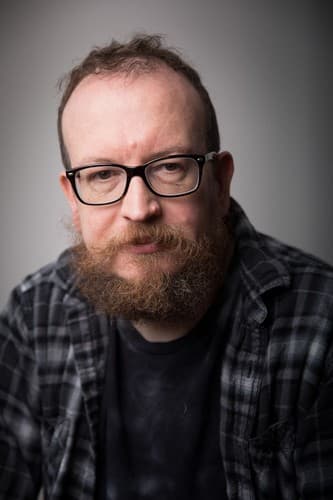
Robert Muchamore is a British author known for his works of fiction, particularly in the young adult genre. His notable books include "The Killing," "Mad Dogs," and "The General," which often explore themes of adventure and conflict. Muchamore's writing is characterized by engaging narratives that resonate with a younger audience.
Similar books
- Artemis Fowl
Eoin Colfer
3.9 (496k) average on GoodreadsFantasyFocuses on clever young operatives navigating complex criminal underworlds.
- Angels & Demons
Dan Brown
3.9 (2.7M) average on GoodreadsThrillerA Harvard symbologist races through Rome's ancient sites, deciphering cryptic clues to unmask the Illuminati and stop a vengeful plot to destroy the Vatican with a stolen antimatter weapon.
- Gone Girl
Gillian Flynn
4.1 (2.3M) average on GoodreadsThrillerA wife's sudden disappearance on her fifth anniversary reveals a web of lies and psychological warfare, exposing the secrets within a seemingly perfect marriage.
- The Girl on the Train
Paula Hawkins
3.9 (2.1M) average on GoodreadsThrillerA woman’s fascination with a seemingly perfect couple she watches from her daily train commute leads her into a dark investigation when she witnesses something that shatters their idyllic image.
- The Da Vinci Code
Dan Brown
3.9 (1.9M) average on GoodreadsThrillerA symbologist and a cryptologist race through European landmarks, deciphering ancient codes and uncovering a conspiracy that could rewrite the foundations of Christianity.
- The Guest List
Lucy Foley
3.8 (1.3M) average on GoodreadsThrillerOn a remote Irish island, a glamorous wedding descends into a deadly whodunnit when a guest is found murdered, trapping everyone with their secrets as a storm rages.





Enjoyed the summary?
A summary gives you the shape of the book. The book itself has the detail, the examples and the voice.
Find Mad Dogs on AmazonAs an Amazon Associate, BookBrief earns from qualifying purchases. How we're funded