

Synopsis
Covers the whole plot, including the ending.
- Difficulty
- Medium
- Pacing
- Moderate
- Mood
- Dark, Ironic, Thought-provoking, Morally complex
Measure for Measure Plot Summary
Covers the whole plot, including the ending.
The Duke's Departure and Angelo's Rise
Duke Vincentio of Vienna announces he will leave the city, giving control to his deputy, Angelo, a man known for severe piety and strict morals. Vincentio claims he needs to travel but secretly stays in Vienna, disguised as a friar named Lodowick, to watch Angelo's rule and the city's condition. He believes his own loose enforcement of laws caused moral decline and wants to see if Angelo's strictness can reform the people. Escalus, an older, more moderate counselor, is appointed to help Angelo, but Angelo quickly takes charge and ignores Escalus's pleas for leniency.
Claudio's Condemnation
Angelo, determined to prove his strictness and reform Vienna, immediately targets Claudio, a young man who impregnated his fiancée, Juliet, before marriage. Even though they plan to marry and are legally 'contracted,' Angelo uses an old, unused law against fornication, sentencing Claudio to public execution the next day. This harsh judgment shocks the city, showing Angelo's unforgiving nature. Claudio's friend, Lucio, a witty but talkative man, is horrified by the severity and decides to find help for Claudio, knowing his sister, Isabella, is about to join a convent.
Isabella's Plea
Lucio visits Isabella, a virtuous novice about to take her vows, to tell her about Claudio's situation and beg her to speak to Angelo. Initially hesitant because of her humility and sacred calling, Isabella eventually agrees, driven by love for her brother. She goes to Angelo, passionately arguing for mercy, emphasizing that humans make mistakes and that forgiveness is divine. Angelo, at first unyielding, starts to feel a strange, strong attraction to Isabella's purity and words, which he struggles to reconcile with his strict moral image. He dismisses her, telling her to return the next day.
Angelo's Temptation
When Isabella returns, Angelo reveals his true, corrupt intentions. He tells her he will spare Claudio's life only if she gives up her virginity to him. Isabella is horrified and outraged by this offer, seeing it as a monstrous twisting of justice and morality. She firmly refuses, saying she would rather see her brother die than sacrifice her honor. Angelo, confident in his power and her inability to expose him without incriminating herself, dismisses her, leaving her in despair. He believes his reputation is unassailable and that no one would believe her accusations against him.
Isabella Informs Claudio
Distraught, Isabella visits Claudio in prison to tell him about Angelo's vile proposal. She expects him to support her decision to protect her chastity. Claudio is at first resigned to his fate, but as Isabella describes the horror of Angelo's demand, a flicker of hope for life makes him waver. He begins to beg Isabella to sacrifice her honor, arguing that a momentary stain is better than death. Isabella is disgusted by his cowardice and selfishness, fiercely scolding him and declaring she would rather he die than she commit such a sin. The disguised Duke Vincentio overhears their talk.
The Duke's Intervention: The Bed Trick
The disguised Duke Vincentio, having overheard Isabella and Claudio, steps in to offer Isabella a solution. He reveals that Angelo was once engaged to a virtuous lady named Mariana but abandoned her when her dowry was lost at sea, claiming a flaw in her reputation. The Duke proposes a 'bed trick': Isabella should agree to Angelo's demand, but Mariana, still in love with Angelo, will secretly take Isabella's place in the dark. This plan aims to satisfy Angelo's lust, protect Isabella's virtue, and prove Angelo's hypocrisy, leading to his downfall and Mariana's restoration.
The Deception and Angelo's Duplicity
Isabella agrees to the Duke's plan and arranges to meet Angelo. Mariana, disguised and veiled, takes Isabella's place in the tryst. The bed trick works, with Angelo believing he has slept with Isabella. However, Angelo, fearing exposure and determined to cover his tracks, immediately breaks his promise. He sends orders to the prison for Claudio to be executed at once, demanding his head be sent to him, intending to eliminate any potential witness or source of future blackmail. The Provost, the prison keeper, is troubled by this sudden, cruel order.
The Provost's Dilemma and the Duke's Rescue
The Provost, knowing the Duke's original intention was mercy and troubled by Angelo's sudden harshness, hesitates to execute Claudio. He receives a letter from Angelo demanding Claudio's head by 4 AM. The disguised Duke, aware of Angelo's betrayal, intervenes. A pirate named Ragozine, who looks very much like Claudio, has died in prison of a fever. The Duke tells the Provost to send Ragozine's head to Angelo instead of Claudio's, saving Claudio's life while still fulfilling Angelo's demand for a head, thus buying more time to expose Angelo publicly. Claudio is kept hidden.
The Duke's Return and Public Accusations
The Duke, having arranged his 'return' to Vienna, prepares for a public hearing. He tells Isabella to publicly accuse Angelo, promising to support her claims. Isabella, Mariana (also veiled), and the disguised Duke (still in his friar's habit) await the Duke's arrival. When the Duke appears in his true identity, Isabella bravely steps forward to accuse Angelo of attempted sexual extortion and betrayal of justice. Angelo strongly denies the charges, confident that Isabella has no proof and that her story will be seen as madness. Mariana then steps forward, revealing her identity and the bed trick, further implicating Angelo.
Angelo's Exposure and Punishment
The Duke, still pretending to investigate thoroughly, at first acts as if he disbelieves Isabella and Mariana, even having the disguised Friar Lodowick (himself) arrested for slander. Lucio, unaware that the friar is the Duke, slanders the Duke, further digging his own grave. Eventually, the Duke reveals his true identity, shocking everyone, especially Angelo. Faced with undeniable evidence and the Duke's direct knowledge, Angelo confesses his guilt. The Duke sentences Angelo to marry Mariana and then to death, mirroring Claudio's original sentence, to show that justice is served according to the 'measure for measure' principle.
Mercy and Resolutions
Mariana, deeply in love, pleads with Isabella to speak for Angelo's life, and Isabella, showing great mercy, eventually does. The Duke, having tested their compassion, pardons Angelo, allowing him to live with Mariana. He then reveals that Claudio is alive, much to Isabella's joy and astonishment, and reunites him with Juliet. As the play ends, the Duke, having restored order and shown his wisdom, proposes marriage to Isabella, acknowledging her virtue and her role in exposing corruption. Lucio is punished for his slanders by being forced to marry a prostitute he impregnated. The play ends with a series of marriages and a renewed sense of justice and order in Vienna.
Measure for Measure Characters
Duke Vincentio
Protagonist
The disguised ruler of Vienna who orchestrates events.
Duke Vincentio is the wise but seemingly indecisive ruler of Vienna. He believes his lenient rule has led to moral decay, so he feigns departure, entrusting power to Angelo and disguising himself as Friar Lodowick to observe and manipulate events. He is philosophical, cunning, and ultimately benevolent, seeking to reform his city and its corrupted officials without resorting to overt tyranny. His disguise allows him to gain insight into the true nature of his subjects and administer justice with a hidden hand.
Relationships: Angelo (Deputy and subject); Isabella (Subject and object of affection); Lucio (Subject and source of gossip); Escalus (Counselor)
Angelo
Antagonist
The outwardly virtuous but inwardly corrupt deputy.
Angelo is the Duke's deputy, appointed to enforce strict laws. He is initially presented as a man of unblemished virtue, severe piety, and unwavering moral rectitude, earning him a reputation for incorruptibility. However, when faced with the temptation of Isabella's purity, his repressed desires surface, revealing a profound hypocrisy and lust for power. He is cold, calculating, and ruthless, willing to sacrifice others to maintain his reputation and satisfy his base desires. His fall from grace is central to the play's exploration of hypocrisy and human nature.
Relationships: Duke Vincentio (Ruler and manipulator); Isabella (Object of lust); Mariana (Betrothed and victim of abandonment); Claudio (Victim of his judgment)
Isabella
Protagonist
The virtuous novice nun who defends her chastity and brother.
Isabella is a young, intelligent, and deeply virtuous woman about to enter a convent. She is fiercely devoted to her chastity and spiritual purity, seeing it as more valuable than life itself. When her brother Claudio is condemned, she courageously confronts Angelo, demonstrating eloquence and moral conviction. Her steadfast refusal to sacrifice her honor, even for her brother's life, highlights her unwavering principles. She is initially rigid in her morality but ultimately demonstrates compassion and forgiveness, especially when pleading for Angelo's life.
Relationships: Claudio (Brother); Angelo (Tempter and antagonist); Duke Vincentio (Protector and suitor); Lucio (Messenger and advocate)
Claudio
Supporting
The young gentleman condemned to death for fornication.
Claudio is a young gentleman of Vienna who is condemned to death by Angelo for impregnating his fiancée, Juliet, before their marriage. He is a sympathetic figure, caught in the grip of Angelo's harsh new regime. While he initially accepts his fate, the fear of death makes him waver, leading him to momentarily encourage Isabella to sacrifice her honor. He represents the common man caught in the crosshairs of strict law enforcement and highlights the human fear of mortality. He is ultimately saved by the Duke's intervention.
Relationships: Isabella (Sister); Juliet (Fiancée); Angelo (Judge and condemner); Lucio (Friend)
Lucio
Supporting
A witty, gossipy, and dissolute gentleman of Vienna.
Lucio is a flamboyant, gossipy, and somewhat dissolute gentleman of Vienna. He acts as a messenger and commentator, often providing comic relief with his cynical observations and loose tongue. He is initially sympathetic to Claudio and persuades Isabella to plead for her brother. However, his tendency to slander and spread rumors, particularly about the Duke while he is disguised as a friar, ultimately leads to his own comeuppance. He embodies the moral laxity that the Duke initially sought to correct.
Relationships: Claudio (Friend); Isabella (Acquaintance and object of persuasion); Duke Vincentio (Unwitting slanderer)
Mariana
Supporting
Angelo's abandoned betrothed, who participates in the bed trick.
Mariana is a virtuous woman who was betrothed to Angelo but was abandoned by him when her dowry was lost at sea. She still harbors deep affection for Angelo despite his cruel treatment. She lives in isolation, mourning her lost love. Her willingness to participate in the Duke's 'bed trick' plan, taking Isabella's place to sleep with Angelo, demonstrates her enduring love and desire for restoration. She plays a crucial role in exposing Angelo's hypocrisy and ultimately marries him, demonstrating forgiveness and loyalty.
Relationships: Angelo (Betrothed and husband); Isabella (Ally in exposing Angelo); Duke Vincentio (Benefactor)
Escalus
Supporting
An old, wise, and moderate counselor.
Escalus is an older, experienced, and moderate counselor appointed by the Duke to assist Angelo in governing Vienna. He represents reason, temperance, and a more humane approach to justice, often trying to persuade Angelo towards leniency. He is a foil to Angelo's harshness and inflexibility, embodying the wisdom that comes with age and experience. Despite his efforts, Angelo largely disregards his advice, highlighting Angelo's unchecked authority. Escalus remains loyal and serves as a moral compass within the administration.
Relationships: Duke Vincentio (Ruler and trusted advisor); Angelo (Co-administrator)
Provost
Supporting
The humane keeper of the prison.
The Provost is the keeper of the prison in Vienna. He is a compassionate and humane man, caught between his duty to enforce Angelo's harsh orders and his own sense of justice and mercy. He shows kindness to Claudio and Juliet and is deeply troubled by Angelo's cruel command for Claudio's immediate execution. He is ultimately instrumental in the Duke's plan, assisting in the substitution of Ragozine's head for Claudio's, demonstrating his loyalty to a higher moral authority than Angelo's. He represents the potential for good within a corrupt system.
Relationships: Claudio (Prisoner); Duke Vincentio (Disguised superior); Angelo (Superior)
Juliet
Supporting
Claudio's pregnant fiancée.
Juliet is Claudio's pregnant fiancée, who is also imprisoned for fornication. She is a minor character but serves to humanize Claudio's predicament and highlight the harshness of Angelo's law. She is portrayed as sorrowful and repentant, accepting her fate with humility. Her pregnancy makes Claudio's condemnation particularly poignant, as it threatens not only his life but the future of their unborn child. She is ultimately reunited with Claudio.
Relationships: Claudio (Fiancée)
Measure for Measure Themes
Justice vs. Mercy
This is the play's main conflict, shown through Angelo's strict law enforcement versus the Duke's more balanced approach. Angelo represents strict, unyielding justice, demanding the letter of the law even when mercy might be better. The Duke, however, eventually argues for balance, suggesting that true justice needs compassion and understanding of human flaws. The play questions whether absolute justice, without mercy, is truly fair, and ultimately argues for a kinder, more restorative form of government.
“Hark how I'll bribe you: good my lord, turn back. / I have a brother is condemn'd to die: / I do beseech you, let it be your brother.”
Hypocrisy and Corruption of Power
The play examines how power corrupts and how outward virtue can hide inner depravity. Angelo, initially seen as a model of moral uprightness, quickly succumbs to his own lust and hypocrisy once given absolute authority. His actions show the dangerous gap between public image and private vice, demonstrating that even seemingly virtuous people can be corrupted by unchecked power. The Duke's disguise helps him expose this hypocrisy, showing that true leadership requires moral integrity, not just a facade.
“O, what a tangled web we weave when first we practice to deceive!”
Chastity and Sexual Morality
Chastity is a main theme, especially through Isabella's character. Her firm commitment to her virginity, even at the cost of her brother's life, shows the extreme value placed on female purity in the play's society. The play explores the double standards of sexual morality, where male transgressions (Claudio's fornication, Angelo's attempted rape) are treated differently from female virtue. It questions society's obsession with female chastity and its potential to be exploited or become a weapon for the powerful, while also celebrating Isabella's principled stand.
“More than our brother is our chastity.”
Appearance vs. Reality
The theme of appearance versus reality is central to the Duke's disguise and Angelo's deception. The Duke's fake departure and his role as Friar Lodowick allow him to observe the true state of his city and the true character of his subjects, without their public performances. Angelo's virtuous exterior hides a corrupt and lustful interior, proving that outward appearances can be very misleading. The play constantly challenges the audience to look beyond surface presentations and consider the characters' underlying truths and motivations, exposing how easily deceit can flourish.
“Hence shall we see, / If power change purpose, what our seemers be.”
Governance and Leadership
The play looks at different styles of governance and a ruler's responsibilities. The Duke's initial laxity caused moral decay, leading to his experiment with Angelo's strictness. Angelo's tyrannical application of law, without mercy, proves disastrous. The Duke's eventual return and his method of uncovering corruption show a more enlightened form of leadership—one that is observant, manipulates for good, and ultimately aims for restorative justice. The play suggests that effective governance requires a balance of authority, wisdom, and compassion, rather than extreme leniency or severity.
“Lord Angelo is precise; / Stands at a guard with envy; scarce confesses / That his blood flows, or that his appetite / Is more to bread than stone.”
Plot Devices & Literary Techniques
Disguise
The Duke's hidden identity as Friar Lodowick.
The Duke's disguise as Friar Lodowick is the primary plot device. It allows him to move freely among his subjects, gather intelligence firsthand, and manipulate events without revealing his true identity or authority. This enables him to test Angelo's character, uncover his hypocrisy, and orchestrate the 'bed trick' and other interventions necessary to save Claudio and restore justice. The disguise functions as a tool for dramatic irony, as the audience is privy to the Duke's true role while other characters remain ignorant, leading to moments of tension and revelation.
The Bed Trick
Mariana's substitution for Isabella in a sexual encounter with Angelo.
The 'bed trick' is a classic Shakespearean device where one character secretly takes the place of another in a pre-arranged sexual encounter, usually in the dark. In 'Measure for Measure,' Mariana, Angelo's abandoned betrothed, replaces Isabella, satisfying Angelo's lust while preserving Isabella's chastity. This device is crucial for exposing Angelo's hypocrisy and ensuring justice without Isabella having to compromise her principles. It also serves to reunite Mariana with Angelo, albeit under coerced circumstances, highlighting themes of manipulation and conditional forgiveness.
The Head Trick
Substitution of a dead pirate's head for Claudio's.
The 'head trick' is a secondary but vital plot device orchestrated by the disguised Duke. When Angelo demands Claudio's head after the bed trick, the Duke arranges for the head of a recently deceased pirate, Ragozine, who resembles Claudio, to be sent to Angelo instead. This deception saves Claudio's life, buys the Duke more time to expose Angelo publicly, and further highlights Angelo's ruthless desire to cover his tracks. It also demonstrates the Duke's cunning and his commitment to ensuring justice without unnecessary loss of life.
Dramatic Irony
The audience's superior knowledge of the Duke's true identity.
Dramatic irony is pervasive throughout the play, largely due to the Duke's disguise. The audience is constantly aware of the Duke's true identity and his manipulative role, while most characters remain ignorant. This creates tension, suspense, and often dark humor, especially when characters like Lucio unwittingly slander the Duke to his face. This device allows the audience to anticipate revelations and appreciate the Duke's strategic genius, while also highlighting the characters' blindness to the true forces at play.
Quiz
10 questions on the plot and the characters. Each answer comes with a short explanation.
Question 1
What is the primary setting of Shakespeare's "Measure for Measure"?
- A royal palace
- A city-state
- A rural village
- A remote island
Show answer
B. A city-state The play is set in a city-state that the Duke governs.
Question 2
Who is temporarily put in charge of governing the city-state?
- Claudio
- Isabella
- Angelo
- The Duke
Show answer
C. Angelo The Duke deputizes Angelo to enforce the laws more rigorously in his absence.
Question 3
Why is Claudio condemned to death?
- He stole from the state.
- He committed murder.
- He impregnated Juliet before their marriage.
- He challenged Angelo to a duel.
Show answer
C. He impregnated Juliet before their marriage. Claudio is condemned to death for the offense of pre-marital sexual relations, leading to pregnancy.
Question 4
What is Isabella's initial intention when she pleads for her brother's life?
- To accuse Angelo of corruption.
- To offer herself in exchange for Claudio's life.
- To argue for the leniency of the law.
- To join the convent permanently.
Show answer
C. To argue for the leniency of the law. Isabella, who is entering a convent, initially pleads for her brother's life based on mercy or legal interpretation, not as a bargaining chip for sexual favors.
Question 5
What does Angelo attempt to extort from Isabella?
- Money
- Political favors
- Sexual favors
- Information about the Duke
Show answer
C. Sexual favors Angelo attempts to extort sex from Isabella in exchange for sparing her brother's life.
Question 6
In what way does the Duke interfere in the events after leaving Angelo in charge?
- He returns immediately to resume his rule.
- He sends secret messages to Angelo.
- He disguises himself and observes.
- He sends Isabella to negotiate with Angelo.
Show answer
C. He disguises himself and observes. The Duke, in disguise, eavesdrops on events, including Isabella's conversation with Claudio.
Question 7
How does the Duke offer to help Isabella?
- By pardoning Claudio directly.
- By revealing Angelo's corruption publicly.
- By offering to ally himself with her against Angelo.
- By arranging for Isabella to escape the city.
Show answer
C. By offering to ally himself with her against Angelo. The Duke, disguised, offers Isabella his support and proposes an alliance against Angelo.
Question 8
What societal or moral themes are explored in "Measure for Measure" based on the provided summary?
- The nature of justice, hypocrisy, and sexual morality.
- The challenges of international diplomacy.
- The economic impact of trade on a city-state.
- The development of artistic patronage.
Show answer
A. The nature of justice, hypocrisy, and sexual morality. The summary highlights the strict enforcement of laws, the corruption of a figure in power, and the conflict between sexual morality and justice, pointing to themes of justice, hypocrisy, and morality.
Question 9
The phrase "Measure for Measure" itself suggests a principle of:
- Mercy and forgiveness above all.
- Retaliation and equal punishment.
- Progressive reform and societal change.
- Arbitrary rule and unchecked power.
Show answer
B. Retaliation and equal punishment. The title "Measure for Measure" directly alludes to the biblical principle of "an eye for an eye, a tooth for a tooth," implying a system of reciprocal justice or punishment.
Question 10
Considering Isabella's situation, what complex moral dilemma does she face?
- Whether to reveal her own secret desires.
- Whether to sacrifice her chastity to save her brother's life.
- Whether to betray the Duke's trust.
- Whether to join Angelo's administration.
Show answer
B. Whether to sacrifice her chastity to save her brother's life. Isabella is placed in a profound moral quandary where she must choose between preserving her virtue and saving her brother's life, a central conflict of the play.
Measure for Measure FAQ
What is Shakespeare's Measure for Measure about?
Measure for Measure is a dark comedy that explores themes of justice, mercy, hypocrisy, and sexual morality. It centers on the strict enforcement of laws by the deputy Angelo, leading to a crisis when Claudio is condemned for premarital sex and his sister Isabella must navigate a morally complex situation to save him.
Who are the main characters in Measure for Measure?
The key characters include the Duke Vincentio, who leaves the city in Angelo's charge; Angelo, the strict and hypocritical deputy; Isabella, the virtuous novice nun pleading for her brother; and Claudio, who is condemned for his relationship with Juliet.
What is the central conflict in Measure for Measure?
The central conflict arises when Angelo, tasked with enforcing strict morality, condemns Claudio to death for fornication. Isabella's plea for her brother's life leads to Angelo's corrupt attempt to extort sexual favors from her in exchange for Claudio's freedom.
What does the title 'Measure for Measure' mean?
The title refers to the biblical principle 'an eye for an eye, a tooth for a tooth,' suggesting that people should be judged by the same standards they apply to others. The play examines how this principle is applied, or fails to be applied, by its characters.
Is Measure for Measure a tragedy or a comedy?
Measure for Measure is often categorized as a 'problem play' or a dark comedy. While it contains elements of tragedy, such as the potential death of a character and the exploration of severe moral dilemmas, it ultimately concludes with resolutions that lean towards comedy, albeit with a somewhat unsettling tone.
What are the main themes in Measure for Measure?
Key themes include justice versus mercy, the corrupting nature of power, hypocrisy (especially religious and sexual), the nature of law, and the complexities of human sexuality and morality.
What is the significance of the Duke's disguise in Measure for Measure?
The Duke disguises himself as a friar to observe the city and its inhabitants, particularly Angelo's rule, without revealing his identity. This allows him to gather information and eventually intervene in the unfolding events, testing the integrity of his subjects.
How does Measure for Measure compare to other Shakespearean comedies?
Unlike lighter comedies, Measure for Measure delves into darker, more serious moral and social issues. It challenges audience expectations by presenting uncomfortable truths about power, justice, and human fallibility, making it a more complex and debated work.
What is the moral lesson of Measure for Measure?
The play doesn't offer a simple moral lesson but rather prompts reflection on the difficulties of applying absolute justice and the necessity of mercy. It highlights the dangers of hypocrisy and the corrupting influence of unchecked power.
Who is Angelo in Measure for Measure?
Angelo is a Puritanical and seemingly upright nobleman appointed by the Duke to govern Vienna. He is characterized by his rigid adherence to the law and his deep hypocrisy, as he succumbs to lust and attempts to abuse his power when presented with an opportunity.
About the author
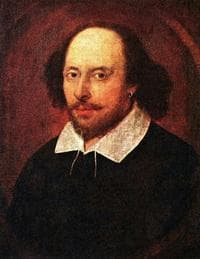
William Shakespeare was an English playwright, poet and actor. He is widely regarded as the greatest writer in the English language and the world's pre-eminent dramatist. He is often called England's national poet and the "Bard of Avon". His extant works, including collaborations, consist of some 39 plays, 154 sonnets, three long narrative poems, and a few other verses, some of uncertain authorship. His plays have been translated into every major living language and are performed more often than those of any other playwright. Shakespeare remains arguably the most influential writer in the English language, and his works continue to be studied and reinterpreted.
Similar books
- The Crucible
Arthur Miller
3.6 (323k) average on GoodreadsHistorical FictionArthur Miller's 'The Crucible' shares with 'Measure for Measure' a critical examination of mass hysteria, false accusations, and the abuse of power under the guise of moral righteousness. Both plays depict societies where fear and rigid dogma lead to unjust condemnations and the persecution of the innocent. John Proctor's struggle against the corrupt court in Salem echoes Claudio's plight and Isabella's fight for justice. While 'The Crucible' is a more direct allegory for McCarthyism, both works powerfully illustrate how individual integrity is tested and often crushed by an unyielding and hypocritical authority, highlighting the dangers of unchecked power and moral absolutism.
- Nineteen Eighty-Four
George Orwell
4.2 (5.5M) average on GoodreadsFictionWinston Smith dreams of truth and rebellion in a world where Big Brother watches all, but he confronts the terrifying power of a regime that controls not just actions, but thoughts.
- The Frozen River
Ariel Lawhon
4.4 (600k) average on GoodreadsFictionIn 1789 Maine, a heroic midwife's diary helps her expose a murder and get justice in a town that wants to silence her.
- A Man Called Ove
Fredrik Backman
4.4 (569k) average on GoodreadsFictionA stubborn widower, who lives by strict rules, finds his quiet world changed by a lively new family next door, making him face his past and find happiness in human connection.
- The Art of Racing in the Rain
Garth Stein
4.2 (452k) average on GoodreadsFictionThrough the eyes of Enzo, a wise and observant dog, a race car driver's family navigates a journey of love, loss, and resilience, learning that life's most important lessons often come in the curves, not just on the straightaways.
- The Colour of Magic
Terry Pratchett
4.0 (425k) average on GoodreadsFictionOn a discworld hurtling through space on the back of a giant turtle, an inept wizard and his naive, walking-luggage-toting tourist embark on a chaotic, belief-fueled journey to the very edge of their flat planet, encountering dragons that only exist if you believe in them.






Enjoyed the summary?
A summary gives you the shape of the book. The book itself has the detail, the examples and the voice.
Find Measure for Measure on AmazonAs an Amazon Associate, BookBrief earns from qualifying purchases. How we're funded