

Synopsis
Covers the whole plot, including the ending.
- Difficulty
- Medium
- Pacing
- Moderate
- Mood
- Atmospheric, Reflective, Social Commentary, Melancholy
- Read it if
- You enjoy character-driven literary fiction with multiple perspectives, exploring themes of class, politics, and post-colonial society.
- Skip it if
- You prefer fast-paced plots with clear-cut heroes and villains, or dislike ambiguous endings.
Miramar Plot Summary
Covers the whole plot, including the ending.
Mariam's Arrival and Amir Wagdi's Introduction
Amir Wagdi, a retired and disillusioned journalist from Cairo, arrives at the Pension Miramar in Alexandria, seeking refuge from the changing political landscape of post-revolutionary Egypt. He is a former Wafdist and intellectual, critical of Nasser's regime. He quickly settles into his routine, observing the eccentric collection of guests who reside there. Among them are Mansour Bahy, a young, ambitious socialist; Hosni Allam, a wealthy, womanizing landowner; and Sarhan el-Beheiry, a pragmatic but opportunistic student. Wagdi is particularly drawn to the pension's owner, Madame Mariana, a Greek woman who has seen better days, and the young, beautiful peasant girl, Zohra, who works as a servant.
Zohra's Background and Appeal
Zohra, a young, uneducated but spirited peasant girl from a village in the Fayoum, arrived at the Miramar after fleeing an arranged marriage to an older man. She sought independence and a new life in the city, working as a maid at the pension. Her innocence, beauty, and strong will captivate the male residents, each of whom sees in her something different – a symbol of purity, an object of desire, or a project for their political ideals. Madame Mariana, though initially wary, develops a maternal affection for Zohra, while the men begin to subtly compete for her attention and affection, each believing they can offer her a better future.
Hosni Allam's Perspective and Pursuit
The narrative shifts to Hosni Allam, a wealthy young man from an old landowning family, dispossessed by the revolution. His perspective reveals his superficiality and his preoccupation with women and pleasure. He sees Zohra as another conquest, initially offering her clothes and money, and later proposing marriage, primarily to spite the other men and assert his dwindling social status. He recounts his past exploits and his disdain for the new socialist order, clinging to the remnants of his former life. His interactions with Zohra are characterized by a sense of entitlement and a lack of genuine understanding of her aspirations.
Sarhan el-Beheiry's Ambition and Deception
Sarhan el-Beheiry, a student from a humble background, presents his version of events. He is a calculating and opportunistic individual, a member of the Socialist Youth organization, but driven primarily by personal ambition. He sees Zohra as a means to an end. Marrying her would provide him with a stable home and a respectable image, which he believes is important for his political and professional advancement. He pretends to share her simple values and promises her a secure future, all while secretly pursuing other women and manipulating the pension's residents. His narrative highlights his hypocrisy and his self-serving nature.
Mansour Bahy's Ideals and Frustration
Mansour Bahy, a young, fervent socialist and journalist, offers his account. He genuinely believes in the revolution's ideals and sees Zohra as a symbol of the oppressed masses who need upliftment and education. He attempts to teach her to read and write, hoping to empower her. However, his idealism is often overshadowed by his own frustrations with the slow pace of change and the corruption he perceives around him. He struggles with his personal desires for Zohra, conflicting with his ideological commitment to her liberation, leading to internal conflict and a sense of helplessness.
The Competing Proposals
The competition for Zohra intensifies as Hosni Allam, Sarhan el-Beheiry, and Mansour Bahy each, in their own way, propose marriage to her. Hosni offers her wealth and a life of comfort, albeit one devoid of genuine affection. Sarhan promises stability and a respectable future, cloaking his opportunism in socialist rhetoric. Mansour, driven by a mix of genuine affection and ideological conviction, offers her education and a partnership based on shared ideals. Zohra, while flattered and confused, navigates these proposals with a surprising degree of clarity, understanding the underlying motives of each man. The growing tension among the men becomes palpable within the confined space of the Miramar.
Zohra's Choice and Sarhan's Deception
After much deliberation, Zohra makes her choice, opting for Sarhan el-Beheiry, believing his promises of a stable future and a home. She is drawn to his apparent seriousness and his connection to the new socialist movement, which she perceives as progressive. However, her choice is based on a fundamental misunderstanding of Sarhan's true character. Unbeknownst to Zohra, Sarhan is secretly involved with other women and views their marriage primarily as a stepping stone for his own ambitions. His deception and manipulative nature are gradually revealed, leading to a sense of unease among the other residents.
The Unraveling of Sarhan's Lies
Sarhan's web of lies begins to unravel. His other relationships come to light, particularly his engagement to a wealthier woman, exposing his duplicity to Zohra and the other residents. Zohra is devastated by the betrayal, her dreams of a stable future shattered. The disillusionment among the pension's inhabitants grows, particularly for Mansour Bahy, who feels his socialist ideals have been mocked, and for Amir Wagdi, who sees Sarhan's actions as a microcosm of the moral decay he perceives in post-revolutionary society. The atmosphere in the Miramar becomes increasingly charged with resentment and despair.
The Confrontation and Theft
Following the exposure of his deceit, a heated confrontation erupts between Sarhan and the other residents, particularly Mansour and Hosni. Feeling cornered and desperate, Sarhan commits a final act of betrayal: he steals a significant sum of money from Madame Mariana, money she had saved for her retirement. This act not only financially cripples Mariana but also signifies a complete moral collapse, confirming the residents' worst suspicions about him. The theft further solidifies Zohra's heartbreak and the general sense of despair that permeates the pension.
Tragedy Strikes: Sarhan's Death
The escalating tension culminates in tragedy. Sarhan el-Beheiry is found dead, stabbed to death in the streets of Alexandria. The circumstances surrounding his death are initially unclear, adding to the mystery and the sense of impending doom within the Miramar. The residents are left to grapple with the shock and the implications of his demise, each reflecting on their interactions with him and the role they might have played, directly or indirectly, in the chain of events that led to his murder. The police investigation casts a shadow over the pension, further isolating its inhabitants.
The Aftermath and Zohra's Resilience
In the aftermath of Sarhan's death, the residents of the Miramar are left to confront their own failings and the harsh realities of their lives. The police investigation creates an atmosphere of suspicion and fear. Madame Mariana is left financially ruined, and the men are forced to confront their own disillusionment. Zohra, despite her heartbreak and the loss of her illusions, demonstrates remarkable resilience. She refuses to be defined by the men's actions or the tragedy. She resolves to continue her pursuit of independence and education, embodying a quiet strength that contrasts sharply with the despair of the others. She leaves the Miramar, determined to forge her own path.
Amir Wagdi's Final Reflections
Amir Wagdi, having witnessed the entire tragic saga unfold, offers his final reflections. He sees the events at the Miramar as a microcosm of the larger societal changes and moral decay gripping Egypt in the wake of the revolution. He laments the loss of integrity, the rise of opportunism, and the unfulfilled promises of the new era. He admires Zohra's unwavering spirit and her determination to survive and thrive, seeing her as the only true hope amidst the widespread disillusionment. He remains at the Miramar, a solitary observer, his cynicism deepened but his humanity subtly touched by Zohra's strength.
Principal Figures
Zohra
Protagonist
A resilient peasant girl seeking independence in the city.
Zohra is a young, uneducated but strong-willed peasant girl from the Fayoum who flees an arranged marriage to seek a new life in Alexandria. She works as a maid at the Pension Miramar. Her beauty, innocence, and quiet determination make her the object of desire and projection for the various male residents. Despite her lack of formal education, she possesses an innate wisdom and a clear understanding of her own desires, contrasting sharply with the confused and disillusioned men around her. She is driven by a deep desire for freedom, self-improvement, and a stable, respectable future.
Relationships: Amir Wagdi (object of paternalistic admiration); Hosni Allam (object of superficial desire); Sarhan el-Beheiry (object of romantic interest and eventual betrayal); Mansour Bahy (object of ideological and romantic interest); Madame Mariana (employer and maternal figure)
Amir Wagdi
Narrator/Observer
A disillusioned former journalist and intellectual, critical of the new regime.
Amir Wagdi is an elderly, retired journalist and a former Wafdist politician. He is the first narrator and serves as the primary observer of the events at the Pension Miramar. Deeply disillusioned with the Nasser regime and the direction of post-revolutionary Egypt, he embodies the fading intellectual class. He is cynical, observant, and intellectual, often offering philosophical commentary on the moral and political decay he perceives. He develops a paternalistic affection for Zohra, seeing in her a purity and resilience that he finds lacking in others and in the new generation.
Relationships: Zohra (paternal admiration); Hosni Allam (disdain for his superficiality); Sarhan el-Beheiry (distrust and eventual condemnation); Mansour Bahy (complex, sometimes critical, understanding of his idealism); Madame Mariana (long-standing tenant-owner relationship, with mutual respect)
Hosni Allam
Supporting/Antagonist
A wealthy, hedonistic former landowner clinging to past glories.
Hosni Allam is a young, wealthy man from a prominent landowning family, dispossessed by the revolution. He is superficial, hedonistic, and profoundly cynical about the new socialist order. He spends his days pursuing women, gambling, and lamenting the loss of his family's prestige and wealth. He sees Zohra as another object of desire, initially offering her financial support and later proposing marriage out of a mix of genuine attraction, boredom, and a desire to assert his fading dominance. He represents the decadent remnants of the old aristocracy.
Relationships: Zohra (object of desire and attempted conquest); Amir Wagdi (object of Wagdi's disdain); Sarhan el-Beheiry (rival for Zohra's affection, antagonistic); Mansour Bahy (ideological opponent, rival for Zohra's affection)
Sarhan el-Beheiry
Antagonist
An ambitious and opportunistic student, a member of the Socialist Youth.
Sarhan el-Beheiry is a young student from a humble background, a member of the Socialist Youth organization. He is ambitious, cunning, and deeply opportunistic, using his political affiliations as a means to personal advancement. He sees Zohra as a path to a stable, respectable life, proposing marriage while secretly maintaining relationships with other women for financial or social gain. His narrative reveals his hypocrisy and self-serving nature, making him the most morally ambiguous and ultimately destructive character among Zohra's suitors. He embodies the corruption and opportunism that can fester within new political systems.
Relationships: Zohra (romantic interest and victim of his deception); Amir Wagdi (object of Wagdi's distrust); Hosni Allam (rival for Zohra's affection, antagonistic); Mansour Bahy (ideological rival and eventual accuser); Madame Mariana (employer, whom he ultimately robs)
Mansour Bahy
Supporting
A fervent socialist journalist, idealistic yet frustrated.
Mansour Bahy is a young, idealistic journalist and fervent socialist, deeply committed to the principles of the Egyptian Revolution. He genuinely believes in empowering the working class and sees Zohra as a symbol of the people he wishes to uplift. He attempts to educate her and offers her a future based on shared ideals. However, his idealism is often tempered by frustration with the realities of the new regime, including corruption and the slow pace of change. He struggles with his personal desires for Zohra, which sometimes conflict with his ideological convictions, making him a complex and somewhat tragic figure.
Relationships: Zohra (object of romantic and ideological interest); Amir Wagdi (intellectual sparring partner, sometimes critical); Hosni Allam (ideological opponent, rival for Zohra's affection); Sarhan el-Beheiry (ideological ally turned bitter rival and accuser)
Madame Mariana
Supporting
The aging Greek owner of the Pension Miramar, clinging to her past.
Madame Mariana is the aging Greek proprietor of the Pension Miramar. A relic of Alexandria's cosmopolitan past, she struggles to maintain her pension and her dignity in the face of dwindling fortunes and the changing social landscape of post-revolutionary Egypt. She is a compassionate but practical woman, often caught in the middle of her residents' squabbles. She develops a maternal affection for Zohra and is ultimately a victim of Sarhan's betrayal, losing her life savings. She represents the fading glories of an older, more diverse Egypt.
Relationships: Zohra (employer and maternal figure); Amir Wagdi (long-standing tenant-owner relationship, with mutual respect); Sarhan el-Beheiry (tenant, who ultimately betrays and robs her)
Themes & Insights
Disillusionment with the Egyptian Revolution
The novel portrays the widespread disillusionment with the Nasserite revolution and its unfulfilled promises. Each character, particularly Amir Wagdi, reflects on the moral decay, corruption, and loss of ideals that followed the initial revolutionary fervor. Hosni Allam mourns the loss of the old order, while Mansour Bahy grapples with the gap between socialist ideals and reality. Sarhan el-Beheiry embodies the opportunism that thrives in such an environment. The Miramar itself is a microcosm of a nation struggling to define its identity post-revolution, where grand visions have given way to personal grievances and a sense of stagnation. This theme is central to Wagdi's constant internal monologues.
“What revolution is this, that has turned everything upside down, leaving us to grasp at shadows?”
The Search for Identity and Belonging
Each character at the Miramar, in their own way, searches for identity and a place in the rapidly changing Egyptian society. Zohra seeks to forge an independent identity beyond her peasant origins and an arranged marriage. Amir Wagdi struggles to find meaning in his retirement and the new political landscape. Hosni Allam clings to the identity of a bygone aristocratic era. Sarhan el-Beheiry manipulates his identity to achieve social mobility. Mansour Bahy tries to align his personal identity with his socialist ideals. The pension, a transient space, highlights this collective search, showing the characters' rootlessness and their attempts to define themselves in a shifting world.
“I want to be someone, not just a girl from the village.”
Gender and Power Dynamics
The novel explores the complex power dynamics between men and women, particularly through the male residents' pursuit of Zohra. Zohra, despite her lack of formal power, exerts significant influence due to her beauty and resilience. The men attempt to control her through financial offers (Hosni), ideological guidance (Mansour), or deceptive promises of marriage (Sarhan). However, Zohra ultimately resists being defined or controlled by them, demonstrating her agency. The story highlights how women, even in seemingly subservient roles, can challenge and expose the weaknesses of patriarchal structures. Her choice, and later her heartbreak, are central to this dynamic.
“They all wanted to possess her, but she belonged only to herself.”
Truth and Perspective
Miramar employs a Rashomon-like narrative structure, presenting the same events from the differing perspectives of four male narrators. This highlights the subjective nature of truth and how personal biases, desires, and ideological leanings shape individual perceptions of reality. Each narrator's account reveals more about themselves than about objective facts, showing their motivations, hypocrisies, and self-deceptions. The reader is left to piece together a fragmented understanding of what 'actually' happened, underscoring the elusiveness of a single, definitive truth, especially in a politically charged and morally ambiguous environment. This multi-perspectival approach is central to the novel's thematic depth.
“Each man sees what he wishes to see, even when looking at the same thing.”
Plot Devices & Literary Techniques
Multiple First-Person Narrators
The story is told from the alternating perspectives of four male residents.
The novel uses a multiple first-person narration technique, with the story of Zohra and the Miramar residents being recounted by Amir Wagdi, Hosni Allam, Sarhan el-Beheiry, and Mansour Bahy, each in their own voice. This 'Rashomon effect' allows for a nuanced exploration of the subjective nature of truth and how individual biases, desires, and political affiliations color perception. It forces the reader to critically evaluate each account, revealing the characters' inner lives, their self-deceptions, and the complexities of their motivations, rather than presenting a single, authoritative version of events.
The Pension Miramar as a Microcosm
The boarding house symbolizes post-revolutionary Egyptian society.
The Pension Miramar functions as a microcosm of Egyptian society in the late 1960s. Its diverse inhabitants – the disillusioned intellectual (Wagdi), the remnants of the old aristocracy (Hosni), the opportunistic new generation (Sarhan), the frustrated socialist (Mansour), the fading cosmopolitan past (Mariana), and the hopeful peasant (Zohra) – represent different social classes, political ideologies, and generations struggling to adapt to the post-revolutionary era. The conflicts and interactions within the confined space of the pension mirror the larger societal tensions, unfulfilled promises, and moral ambiguities of the nation at large.
Symbolism of Zohra
Zohra embodies the hopes and vulnerabilities of the Egyptian people.
Zohra, the young peasant girl, functions as a powerful symbol throughout the novel. To the men, she represents various things: purity, a blank slate for their ideologies, an object of desire, or a means to an end. More broadly, she symbolizes the common Egyptian people – uneducated but resilient, full of potential, and caught between conflicting forces and promises. Her journey from the village to the city, her quest for independence, her vulnerability to exploitation, and her ultimate resilience reflect the struggles and aspirations of a nation in transition, searching for its own identity and future amidst political and social upheaval.
Miramar Quotes
“Life is a game, and the only way to win is to play it with all your heart.”
“The past is a foreign country; they do things differently there.”
“Hope is a good breakfast, but it is a bad supper.”
“The greatest tragedy in life is not that men perish, but that they cease to love.”
“A man's true character comes out when he's drunk.”
“We are all prisoners of our own illusions.”
“The only way to deal with an unfree world is to become so absolutely free that your very existence is an act of rebellion.”
“Memory is a double-edged sword; it can bring joy and sorrow in equal measure.”
“The future is always uncertain, but that doesn't mean we shouldn't strive for a better one.”
“Every revolution devours its own children.”
“Silence can be more eloquent than words.”
“The greatest prison people live in is the fear of what other people think.”
“To understand life, you must understand death.”
Quiz
10 questions on the plot and the characters. Each answer comes with a short explanation.
Question 1
Which city is the primary setting for the novel 'Miramar'?
- Cairo
- Alexandria
- Luxor
- Aswan
Show answer
B. Alexandria The novel 'Miramar' is explicitly set in Alexandria, Egypt, in the late 1960s.
Question 2
What is Zohra's primary motivation for fleeing her family and coming to Alexandria?
- To pursue higher education
- To escape an arranged marriage
- To find her estranged mother
- To become a famous singer
Show answer
B. To escape an arranged marriage Zohra, a beautiful peasant girl, fled her family to escape an arranged marriage, which is a key detail of her background.
Question 3
What narrative technique does Naguib Mahfouz employ in 'Miramar' to retell the same sequence of events?
- Stream of consciousness
- First-person perspective from a single narrator
- Multiple perspectives, similar to Akira Kurosawa's 'Rashomon'
- Omniscient third-person narration
Show answer
C. Multiple perspectives, similar to Akira Kurosawa's 'Rashomon' The novel retells the same sequence of events from the perspective of four different residents, specifically compared to Akira Kurosawa's 'Rashomon'.
Question 4
Which of the following best describes the general state of the residents of Pension Miramar, aside from Zohra?
- United in their post-revolutionary goals
- Flourishing and optimistic about the future
- Floundering and grappling with post-revolutionary life
- Indifferent to the political changes in Egypt
Show answer
C. Floundering and grappling with post-revolutionary life The residents are described as an assortment of radicals and aristocrats 'floundering in the wake of the Egyptian revolution,' indicating their struggle with the new reality.
Question 5
What kind of residents populate the Pension Miramar, creating a microcosm of post-revolutionary Egypt?
- Exclusively foreign diplomats and tourists
- A mix of radicals and aristocrats
- Only former military officers
- Primarily uneducated peasants like Zohra
Show answer
B. A mix of radicals and aristocrats The description states the Miramar's residents include 'an assortment of radicals and aristocrats,' highlighting the diverse social strata present.
Question 6
What quality is attributed to Zohra that sets her apart from the other residents of the Miramar?
- Her extensive formal education
- Her lack of interest in politics
- Her clear sense of purpose and wants
- Her wealthy family background
Show answer
C. Her clear sense of purpose and wants It is stated that 'the uneducated but strong-willed Zohra is the only one among them who knows what she wants,' contrasting her with the floundering residents.
Question 7
What is the primary catalyst for the 'jealousies and conflicts' among the Miramar's residents?
- Disputes over property ownership of the pension
- Political disagreements between the residents
- Competition for the attention of the young servant Zohra
- Arguments about the quality of the pension's food
Show answer
C. Competition for the attention of the young servant Zohra The story 'centers on the guests of the Pension Miramar as they compete for the attention of the young servant Zohra,' making her the focus of the conflicts.
Question 8
How does the novel portray the complexity of post-revolutionary Egyptian life?
- By focusing solely on the successes of the new government
- Through a nuanced portrait woven from multiple, conflicting perspectives
- By presenting a simple, unified view of society
- By avoiding any mention of political or social changes
Show answer
B. Through a nuanced portrait woven from multiple, conflicting perspectives The use of multiple perspectives 'weav[es] a nuanced portrait of the intricacies of post-revolutionary Egyptian life,' directly addressing the complexity.
Question 9
What is the eventual outcome hinted at for the situation spiraling among the residents?
- A peaceful resolution and reconciliation
- An economic boom for the pension and its residents
- Violence and tragedy
- Zohra achieving a high political office
Show answer
C. Violence and tragedy The text states that 'As the situation spirals toward violence and tragedy,' indicating a grim outcome for the unfolding events.
Question 10
What broader societal issue in Egypt, beyond individual character struggles, does Zohra's story implicitly highlight?
- The stability of traditional arranged marriages
- The challenges faced by women and peasants seeking autonomy in a changing society
- The ease with which individuals can escape their social class
- The decline of the hotel and pension industry
Show answer
B. The challenges faced by women and peasants seeking autonomy in a changing society Zohra, a peasant girl fleeing an arranged marriage and striving for her own desires, embodies the struggles of marginalized individuals seeking agency in a rapidly transforming post-revolutionary Egypt.
Miramar FAQ
What is the central conflict in 'Miramar' and how does Zohra embody it?
'Miramar' centers on the clash between the old aristocratic order and the new revolutionary ideals in post-1952 Egypt. Zohra, a young peasant girl fleeing an arranged marriage, embodies this conflict as her simple yet determined pursuit of self-improvement and independence highlights the stagnation and moral decay of the educated male residents, all of whom project their own desires and ideologies onto her.
Who are the four primary narrators, and what makes their perspectives unique?
The four primary narrators are Amer Wagdi, a retired Wafdist journalist; Mansour Bahi, a cynical, corrupt former feudalist; Sarhan al-Beheiry, a young, ambitious socialist journalist; and Tolba Bey Marei, an aging, disillusioned royalist. Each offers a subjective account of events at Pension Miramar, revealing their personal biases, political affiliations, and unfulfilled desires, particularly concerning Zohra and the state of Egypt.
How does the 'Rashomon' style narrative structure contribute to the novel's themes?
The 'Rashomon' style, where the same events are retold from four different perspectives, emphasizes the subjective nature of truth and the difficulty of historical understanding in post-revolutionary Egypt. It highlights how personal biases, political ideologies, and individual desires distort perception, preventing a unified understanding of Zohra's character and the broader societal changes.
What role does Pension Miramar itself play in the narrative?
The Pension Miramar serves as a microcosm of post-revolutionary Egyptian society, housing characters from various political and social strata. It acts as a liminal space where the old order lingers and the new struggles to find its footing, reflecting the broader national paralysis and the characters' inability to adapt or move forward, all under the watchful, yet often misinterpreting, eyes of its residents.
What is Zohra's ultimate fate, and how does it reflect the novel's broader commentary on women in society?
Zohra's fate is left somewhat ambiguous, as she leaves the Miramar after the tragic events, having gained some education and independence but still facing an uncertain future. Her journey reflects the precarious position of women in a patriarchal society, where even strong-willed women like her struggle to escape traditional constraints and are often exploited or misunderstood by men, despite their own ambitions.
Are there any subtle indications of Zohra's true feelings or intentions that contradict the narrators' perceptions?
Zohra's true feelings are often glimpsed through her actions rather than direct statements, such as her consistent pursuit of education with Wagdi, her pragmatic decision to work, and her eventual rejection of both Sarhan and Mansour. These actions subtly reveal her self-possession and clear goals, contrasting sharply with the romanticized or objectified versions presented by the male narrators.
What is the significance of the recurring motif of the sea and Alexandria?
The sea and Alexandria represent a lost past, a fading glory, and a sense of timelessness for the older narrators like Wagdi and Tolba Bey. For Zohra, however, Alexandria represents opportunity and escape from rural constraints. The sea, in particular, symbolizes both freedom and an indifferent vastness, mirroring the characters' isolation and the overwhelming changes sweeping Egypt.
How does the novel subtly criticize both the Wafdist past and the Nasserist present?
The novel criticizes the Wafdist past through Amer Wagdi's nostalgia and disillusionment, showing its ultimate failure to achieve true social justice. It criticizes the Nasserist present through Sarhan's hypocrisy and corruption, Mansour's cynicism, and the general sense of moral decay and stagnation, suggesting that the revolution failed to deliver on its promises and merely replaced one form of oppression with another.
Is there a 'correct' version of events regarding the conflict between Sarhan and Mansour, or is it left entirely ambiguous?
The novel deliberately leaves the 'correct' version of the conflict between Sarhan and Mansour ambiguous, as each narrator presents a self-serving account. While there are converging details about the violence and its aftermath, the motivations and exact instigators remain clouded by personal bias, highlighting the novel's central theme that truth is often elusive and subjective, particularly in politically charged situations.
How does Amer Wagdi's character represent the 'conscience' of the novel, despite his limitations?
Amer Wagdi, as the elder and a former journalist, often attempts to understand and moralize the events around him, making him the closest to a 'conscience.' However, his perspective is also limited by his nostalgia for the past, his paternalistic view of Zohra, and his ultimate inability to intervene effectively, showing that even well-intentioned observers can be trapped by their own biases and powerlessness.
Analyze Sarhan al-Beheiry's psychological motivations for his actions, particularly concerning Zohra.
Sarhan al-Beheiry is driven by a complex mix of ambition, insecurity, and a desire for power, masked by his socialist rhetoric. His pursuit of Zohra is less about genuine affection and more about asserting his dominance, fulfilling his sexual desires, and proving his 'revolutionary' masculinity, even as he exploits her vulnerability and ultimately betrays his own stated ideals.
How does Mansour Bahi's cynicism and corruption reflect a specific psychological response to the revolution?
Mansour Bahi's profound cynicism and corruption are a psychological defense mechanism developed in response to the revolution, which stripped him of his wealth and status. He retaliates by embracing moral decay, believing that all ideals are hollow and all people are inherently selfish. His predatory pursuit of Zohra is an attempt to regain a sense of power and control in a world where he feels dispossessed.
What psychological impact does Zohra have on the male residents of Miramar, and why her specifically?
Zohra acts as a catalyst for the male residents, projecting their desires, anxieties, and unfulfilled dreams onto her. Her youth, beauty, peasant background, and fierce independence make her a blank slate onto which they can project their political ideologies (Sarhan), their lost past (Tolba Bey), their paternalistic desires (Wagdi), or their cynical exploitation (Mansour). She forces them to confront their own moral failings.
To what extent is Zohra a symbol rather than a fully developed character, and does this diminish her impact?
While Zohra undeniably functions as a powerful symbol of the new Egypt, the peasantry, and female agency, she is also presented as a character with her own distinct will and goals, particularly through her actions and quiet determination. Her symbolic weight is enriched by her individual struggle, and her less 'developed' inner monologue compared to the male narrators actually amplifies her symbolic power, as she remains largely uncorrupted by their projections.
Is 'Miramar' ultimately a pessimistic or optimistic novel about Egypt's future?
'Miramar' leans towards a pessimistic outlook, particularly regarding the immediate post-revolutionary period, as it portrays moral decay, corruption, and the failure of both old and new ideologies. However, Zohra's survival and her continued pursuit of education offer a glimmer of hope, suggesting that genuine progress might come from the resilient, uncorrupted grassroots, rather than the established political classes.
How does Mahfouz use the setting of Alexandria, rather than Cairo, to enhance the novel's themes?
Alexandria, with its historical cosmopolitanism and its fading European influences, provides a melancholic backdrop that enhances the themes of loss, transition, and cultural crossroads. Unlike Cairo, the political heart, Alexandria symbolizes a more personal, nostalgic decline for the older characters and a place of both opportunity and anonymity for Zohra, emphasizing the individual's struggle within broader national changes.
What is the significance of the novel's ending, particularly Zohra's departure from the Miramar?
Zohra's departure from the Miramar signifies her rejection of the stagnant, corrupt world of the male residents and her assertion of independence. It represents a hopeful, albeit uncertain, step towards a future where she defines her own destiny, contrasting with the moral and physical entrapment of the men left behind. Her exit suggests that the true 'future' of Egypt lies outside the disillusioned intellectual circles.
Does the novel offer any clear judgments on the different political ideologies represented by the characters?
The novel largely refrains from offering explicit judgments, instead presenting a nuanced critique through the characters' actions and their consequences. It implicitly criticizes the Wafdist past for its ineffectiveness, the Nasserist socialism for its hypocrisy and corruption, and the royalist past for its irrelevance. Mahfouz suggests that all these ideologies, when embodied by flawed individuals, fail to serve the true needs of the people.
About the author

Naguib Mahfouz Abdelaziz Ibrahim Ahmed Al-Basha was an Egyptian writer who won the 1988 Nobel Prize in Literature. Mahfouz is regarded as one of the first contemporary writers in Arabic literature, along with Taha Hussein, to explore themes of existentialism. He is the only Egyptian to win the Nobel Prize in Literature. He published 35 novels, over 350 short stories, 26 screenplays, hundreds of op-ed columns for Egyptian newspapers, and seven plays over a 70-year career, from the 1930s until 2004. All of his novels take place in Egypt, and always mentions the lane, which equals the world. His most famous works include The Cairo Trilogy and Children of Gebelawi. Many of Mahfouz's works have been made into Egyptian and foreign films; no Arab writer exceeds Mahfouz in number of works that have been adapted for cinema and television. While Mahfouz's literature is classified as realist literature, existential themes appear in it.
Similar books
- The Yacoubian Building
Alaa Al Aswany
3.7 (18k) average on GoodreadsLiterary FictionAlaa Al Aswany's The Yacoubian Building (2002) is often compared to Mahfouz's works for its panoramic view of contemporary Egyptian society, particularly its exploration of corruption, hypocrisy, and social stratification in post-Mubarak Egypt. Like Miramar, The Yacoubian Building employs a multi-character narrative, but it follows a larger ensemble cast whose lives intersect within a single apartment building, offering a broader cross-section of society rather than the confined, subjective perspectives of Miramar's lodgers. While Miramar subtly critiques the legacy of Nasserism, The Yacoubian Building offers a more explicit and often graphic depiction of the moral decay and political oppression under the later Mubarak regime. Both novels excel at using a limited setting (the pension vs. the building) to reflect the wider societal malaise, but Al Aswany's work is generally more direct and less reliant on the internal psychological monologues that define Miramar.
- Nineteen Eighty-Four
George Orwell
4.2 (5.5M) average on GoodreadsFictionWinston Smith dreams of truth and rebellion in a world where Big Brother watches all, but he confronts the terrifying power of a regime that controls not just actions, but thoughts.
- The Frozen River
Ariel Lawhon
4.4 (600k) average on GoodreadsFictionIn 1789 Maine, a heroic midwife's diary helps her expose a murder and get justice in a town that wants to silence her.
- A Man Called Ove
Fredrik Backman
4.4 (569k) average on GoodreadsFictionA stubborn widower, who lives by strict rules, finds his quiet world changed by a lively new family next door, making him face his past and find happiness in human connection.
- The Art of Racing in the Rain
Garth Stein
4.2 (452k) average on GoodreadsFictionThrough the eyes of Enzo, a wise and observant dog, a race car driver's family navigates a journey of love, loss, and resilience, learning that life's most important lessons often come in the curves, not just on the straightaways.
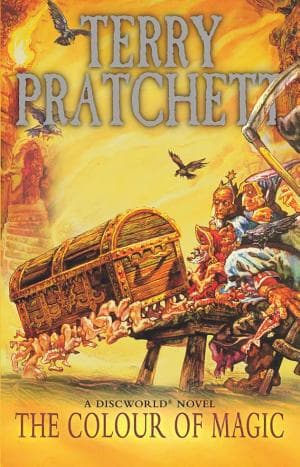
- The Colour of Magic
Terry Pratchett
4.0 (425k) average on GoodreadsFictionOn a discworld hurtling through space on the back of a giant turtle, an inept wizard and his naive, walking-luggage-toting tourist embark on a chaotic, belief-fueled journey to the very edge of their flat planet, encountering dragons that only exist if you believe in them.





Enjoyed the summary?
A summary gives you the shape of the book. The book itself has the detail, the examples and the voice.
Find Miramar on AmazonAs an Amazon Associate, BookBrief earns from qualifying purchases. How we're funded