

Synopsis
Covers the whole plot, including the ending.
- Difficulty
- Medium
- Pacing
- Moderate
- Mood
- Atmospheric, Brooding, Introspective, Suspenseful
- Read it if
- You love intricate, character-driven mysteries with a strong sense of place and complex psychological depth, featuring a classic detective duo.
- Skip it if
- You prefer fast-paced, action-heavy thrillers or straightforward whodunits without extensive character backstories and village politics.
Missing Joseph Plot Summary
Covers the whole plot, including the ending.
A Winter Holiday Turns Tragic in Winslough
Deborah and Simon St. James travel to Winslough, Lancashire, for a winter holiday, hoping to improve their marriage. They plan to visit Vicar Robert Gibson, a former schoolmate of Simon's. Upon their arrival, they learn of Gibson's death. The initial police investigation, led by Constable David Sydeham, calls the death an accident, caused by digitalis poisoning from a foxglove leaf in Gibson's herbal tea. Juliet Spence, a local homeopathic healer and the vicar's close friend, prepared the tea. Simon, a forensic scientist, immediately suspects the quick ruling and lack of thoroughness, especially noting Sydeham's close relationship with Juliet. This prompts him to contact his friend, Detective Inspector Thomas Lynley, to investigate further.
Lynley and Havers Begin Their Investigation
Detective Inspector Thomas Lynley and Detective Sergeant Barbara Havers arrive in Winslough, a remote village, to conduct an unofficial investigation into Robert Gibson's death. They find a community reluctant to speak, protective of its secrets, and wary of outsiders. Juliet Spence, who prepared the fatal tea, maintains her innocence and is distressed by the indirect accusation. As Lynley and Havers investigate, they discover the vicar was a complex man, involved in various community activities and personal relationships. They learn about his close friendship with Juliet, his recent engagement to Maggie Thorley, and his role as a mentor to several local teenagers, including Jamie Thorley, Maggie's younger brother.
Uncovering the Vicar's Secret Life
As Lynley and Havers continue their investigation, they uncover details of Robert Gibson's past. They learn about an event years prior: the death of a young boy named Joseph, who was in Gibson's care during a school trip. Joseph drowned under unclear circumstances, and the incident deeply affected Gibson, leading him to leave his teaching career and become a vicar, seeking to make amends. This past tragedy connects several characters in the present. The investigators also learn about Gibson's difficult relationship with his mother, Mrs. Gibson, who deeply resents Juliet Spence, believing she was too close to her son and somehow responsible for his death.
Juliet Spence's Troubled History
Juliet Spence becomes a central figure in the investigation, and her past is closely examined. Lynley and Havers discover that Juliet was previously married to Giles and they had a son, Adam, who died in a house fire. This personal tragedy, along with the breakdown of her marriage, brought Juliet to Winslough, where she sought comfort and a new start as a homeopathic healer. Her deep connection with Robert Gibson, based on shared grief and understanding of loss, becomes clear. The investigators consider if her past trauma could be a motive, or if someone is framing her by using her history.
Maggie Thorley and Jamie's Complicated Lives
Lynley and Havers focus on Maggie Thorley, Gibson's fiancée, and her younger brother, Jamie. Maggie, a quiet and seemingly innocent young woman, expresses her deep love for Robert and her grief over his death. However, her brother Jamie is different. He is a troubled teenager with a history of misbehavior, including arson and cruelty to animals, and he resented Gibson, believing the vicar was manipulating his sister. Jamie's erratic behavior and known dislike for Gibson make him a person of interest. The investigators also learn about the Thorleys' difficult family life, marked by their father's absence and their mother's struggles.
The Poison and the Means
Simon St. James, using his forensic expertise, carefully examines the details of the poisoning. He confirms that the digitalis came from a foxglove leaf, but questions how it could have ended up in Gibson's tea without Juliet's knowledge. Lynley, meanwhile, focuses on the practical aspects of the crime. He discovers that a foxglove plant grew near the vicarage and it would have been easy for someone to pick a leaf and put it into the tea preparation. The investigation also considers if the poison was introduced earlier and took effect later, making it harder to pinpoint the exact moment or perpetrator.
The Community's Secrets Unravel
As the investigation progresses, the close-knit community of Winslough slowly reveals its secrets. Lynley and Havers discover that many villagers had reasons, both small and significant, to dislike or resent Robert Gibson. Some thought he was too involved, others felt he was judgmental, and still others held old grudges. The close relationships between characters, such as Constable Sydeham's protectiveness of Juliet, and Mrs. Gibson's dislike of her, show a complex network of loyalties and resentments. The investigators also learn about Gibson's attempts to help Jamie Thorley, which Jamie often resisted and suspected.
A Second Death and Heightened Tensions
The investigation takes a darker turn with a second death in Winslough. This event, which initially seems like a suicide, further complicates the case and increases pressure on Lynley and Havers. The second victim has connections to both Robert Gibson and the earlier tragedy involving Joseph, suggesting a deliberate attempt to silence someone or cover up a deeper conspiracy. This development leads Lynley to believe that the deaths are not isolated incidents but part of a plan, forcing him to re-evaluate all evidence and suspect everyone in the small community. The villagers become even more guarded, fearing for their safety and suspicious of each other.
The Truth About Joseph's Death
Through careful investigation and interviews, Lynley and Havers finally uncover the truth behind Joseph's death years ago. Joseph did not drown accidentally but was murdered by Jamie Thorley. Jamie, even as a young boy, showed disturbing tendencies and killed Joseph out of cruelty. Robert Gibson, knowing the truth and wanting to protect Jamie's mother, Maggie's mother, had covered up the murder, allowing it to be ruled an accident. This act of protection had haunted Gibson for years and led him to become a vicar, seeking redemption. This revelation changes the focus of the current murders.
The Motive and the Killer Revealed
Maggie Thorley is revealed as Robert Gibson's killer. She had discovered Gibson's long-held secret about Jamie murdering Joseph and his cover-up. Maggie, deeply disturbed by her brother's past and Gibson's involvement, decided to kill Gibson to prevent him from ever revealing the truth, which would destroy her family. She carefully planned the poisoning, using her knowledge of the vicarage and local plants. Maggie also orchestrated the second death to eliminate someone getting too close to the truth. Her innocent appearance hid a cunning and desperate mind, driven by loyalty to her brother and a desire to protect her family's reputation. The investigation concludes with Maggie's arrest, ending the complex web of secrets and murder in Winslough.
Principal Figures
Detective Inspector Thomas Lynley
Protagonist
Aristocratic Scotland Yard detective, investigating the Winslough murders.
Lynley is a titled aristocrat and a highly intelligent, perceptive detective from Scotland Yard. He is called upon by his friend Simon St. James to unofficially investigate the death of Vicar Robert Gibson. Despite his aristocratic background, Lynley is deeply committed to justice and possesses a keen understanding of human nature. He is often frustrated by the insular nature of rural communities and the secrets they keep, but he patiently uncovers the truth. His personal life is marked by a complex relationship with Lady Helen Clyde, and he often acts as a foil to Barbara Havers' more working-class sensibilities.
Relationships: Detective Sergeant Barbara Havers (professional partner, often clashing but deeply reliant on each other); Simon St. James (close friend and confidante); Deborah St. James (friend, subject of some of his personal concern)
Detective Sergeant Barbara Havers
Protagonist
Lynley's working-class partner, bringing a pragmatic and cynical perspective to the investigation.
Barbara Havers is a working-class detective sergeant whose sharp intellect is often overshadowed by her unkempt appearance and abrasive manner. She is fiercely loyal to Lynley but frequently challenges his methods and aristocratic assumptions. Havers possesses a strong sense of justice and empathy for the victims, often seeing through the facades presented by suspects. Her personal life is fraught with difficulties, including caring for her elderly parents, which adds to her often-grumpy exterior. Despite her cynicism, she is a diligent investigator and plays a crucial role in uncovering the village's hidden truths.
Relationships: Detective Inspector Thomas Lynley (professional partner, often clashing but deeply reliant on each other)
Simon St. James
Supporting
Forensic scientist and Lynley's friend, whose suspicions initiate the investigation.
Simon St. James is a brilliant forensic scientist, Lynley's oldest and closest friend, and Deborah's husband. He is meticulous, analytical, and possesses an unwavering commitment to truth and justice. His own past trauma, including a debilitating injury, has given him a keen understanding of suffering. He is the first to suspect foul play in Robert Gibson's death due to his scientific acumen and observation of local constable Sydeham's bias. Simon provides crucial forensic insights throughout the investigation, often working in tandem with Lynley and Havers, and is deeply concerned about the state of his marriage to Deborah.
Relationships: Deborah St. James (wife, their marriage is strained at the start of the book); Detective Inspector Thomas Lynley (close friend and confidante)
Deborah St. James
Supporting
Simon's wife and a photographer, struggling with her marriage and drawn into the mystery.
Deborah St. James is a talented photographer and Simon's wife. She is intelligent, sensitive, and often feels overshadowed by Simon's brilliance and past trauma. At the start of the novel, she is struggling with the growing distance in her marriage and is seeking a fresh perspective. She is drawn into the Winslough mystery through Simon and Lynley, often observing the villagers with her artistic eye, providing unique insights into their characters and emotions. Her presence allows for a more personal, less clinical view of the unfolding tragedy, and she often acts as a sounding board for Simon's theories.
Relationships: Simon St. James (husband, their marriage is strained at the start of the book); Detective Inspector Thomas Lynley (friend)
Robert Gibson
Victim
The deceased vicar of Winslough, whose complex past and present relationships are central to the mystery.
Robert Gibson is the vicar of Winslough, whose death from apparent accidental poisoning sets the entire plot in motion. He is revealed to be a man burdened by a dark secret from his past: the death of a young boy named Joseph, who drowned under his care years ago. This event led him to abandon his teaching career and become a vicar, seeking atonement. Gibson is portrayed as a charismatic yet troubled figure, deeply involved in the lives of his parishioners, often acting as a mentor, particularly to troubled youths like Jamie Thorley. His recent engagement to Maggie Thorley and his close friendship with Juliet Spence complicate his public image.
Relationships: Juliet Spence (close friend, confidante); Maggie Thorley (fiancée); Jamie Thorley (mentor, protector (of a secret)); Mrs. Gibson (mother, strained relationship)
Juliet Spence
Suspect/Supporting
Homeopathic healer, close friend of the vicar, and initial suspect in his poisoning.
Juliet Spence is a local homeopathic healer and a close friend of Robert Gibson, having prepared the herbal tea that led to his death. She is a compassionate and outwardly serene woman, but carries the deep trauma of losing her own son, Adam, in a house fire years prior, which also ended her marriage to Giles. Her shared experience of grief with Gibson created a profound bond between them. She is initially the prime suspect due to her proximity to the poisoning and her knowledge of herbs, but she maintains her innocence. Her quiet strength and vulnerability make her a sympathetic figure, despite the suspicion surrounding her.
Relationships: Robert Gibson (close friend, confidante); Constable David Sydeham (friend, he is protective of her); Giles (ex-husband)
Maggie Thorley
Antagonist
Robert Gibson's fiancée and the eventual reveal of the killer.
Maggie Thorley is a young, seemingly quiet and devoted woman, recently engaged to Vicar Robert Gibson. She works at the local shop and appears to be genuinely grieving his death. However, beneath her demure exterior lies a fierce protectiveness of her younger brother, Jamie, and a deep-seated fear of their family's past being exposed. Her love for Robert is complicated by the secret he holds about Jamie. Maggie is ultimately revealed to be a cunning and ruthless killer, driven by a desperate desire to protect her brother from the consequences of his past actions and to safeguard her family's reputation, even if it means committing murder.
Relationships: Robert Gibson (fiancée, victim); Jamie Thorley (younger brother, whom she fiercely protects); Mrs. Thorley (mother)
Jamie Thorley
Supporting
Maggie's troubled younger brother, who harbors a dark secret from his childhood.
Jamie Thorley is Maggie's younger brother, a troubled and often volatile teenager with a history of destructive behavior, including arson and animal cruelty. He is deeply resentful of Robert Gibson, believing the vicar was interfering in his life and manipulating his sister. Jamie is revealed to be the true killer of Joseph years ago, a secret that Robert Gibson had protected. His psychopathic tendencies, though subtle, are a crucial element in understanding the motivations behind the current murders. He is a complex character, simultaneously a victim of his own nature and a perpetrator of immense harm, unknowingly protected by his sister's desperate actions.
Relationships: Maggie Thorley (older sister, fiercely protective); Robert Gibson (mentor, disliked by Jamie, protector of his secret); Joseph (victim of Jamie's childhood cruelty)
Constable David Sydeham
Supporting
Local constable whose initial investigation is flawed by personal bias.
Constable David Sydeham is the local police officer in Winslough responsible for the initial investigation into Robert Gibson's death. He is portrayed as well-meaning but ultimately incompetent and biased, particularly in his protectiveness of Juliet Spence, whom he clearly cares for. His quick ruling of Gibson's death as accidental is what first raises Simon St. James's suspicions and leads to Lynley's involvement. Sydeham's limited perspective and his inability to see beyond the surface of the close-knit community highlight the challenges of investigating complex crimes in rural areas.
Relationships: Juliet Spence (friend, protective of her)
Mrs. Gibson
Mentioned
Robert Gibson's mother, who harbors resentment towards Juliet Spence.
Mrs. Gibson is Robert Gibson's mother, a woman deeply grieving her son's death and holding a strong, almost irrational, resentment towards Juliet Spence. She believes Juliet was too close to Robert and implicitly blames her for his death, even if accidental. Her grief and anger manifest as a barrier to the investigation, as she is uncooperative and suspicious of outsiders. Her character represents the possessive nature of maternal love and the difficulty some parents have in accepting their children's independent relationships.
Relationships: Robert Gibson (son, deeply mourned); Juliet Spence (object of her resentment)
Themes & Insights
Guilt, Redemption, and Atonement
This theme is central to Robert Gibson's character. He became a vicar to make amends for his part in covering up Joseph's murder. His life is an ongoing act of seeking forgiveness, which eventually leads to his own death. The theme also touches on Juliet Spence's grief and her search for meaning after her son's death, and Maggie Thorley's twisted sense of guilt and protection, leading her to commit further crimes to 'redeem' her family from exposure.
“He had sought to redeem himself through service, but some sins, it seemed, could not be absolved.”
The Nature of Evil and Psychopathy
The novel explores the nature of evil through Jamie Thorley. As a child, he committed murder without remorse. His tendencies, hidden beneath a troubled youth, are the cause of the initial tragedy and the later murders. The story examines how such evil can develop within a community and how others, out of misguided love or protection, can become involved in its concealment, leading to more destruction.
“Some darkness, Lynley mused, was not born of circumstance but was inherent, a twisted core within the soul.”
Secrets and Their Destructive Power
The entire plot depends on the impact of long-held secrets within the seemingly peaceful village of Winslough. Robert Gibson's secret about Joseph's death, Juliet's past trauma, and the Thorley family's desperate attempts to hide Jamie's true nature all show how secrets can harm relationships, warp lives, and lead to violence. The investigation uncovers these buried truths, revealing the community's fragile foundations.
“A secret was a poison, Lynley thought, slowly seeping into every corner of a life, eventually corrupting everything it touched.”
Love, Loyalty, and Obsession
Various forms of love and loyalty, both healthy and destructive, drive many characters' actions. Maggie Thorley's intense, obsessive love and loyalty for her brother Jamie lead her to commit murder. Juliet Spence's deep love for her lost son and her friendship with Robert Gibson are central to her character. Constable Sydeham's unspoken affection for Juliet influences his professional judgment. The novel explores the line between protective love and dangerous obsession, and how these emotions can blind individuals to truth and morality.
“Love, in its most twisted form, could be the most dangerous weapon of all.”
The Insularity of Rural Communities
Winslough shows how insular communities work. Outsiders are viewed with suspicion, and community members protect their own, often at the expense of justice. The villagers' reluctance to speak, their ingrained loyalties, and their collective silence about past events make Lynley and Havers' investigation difficult. This theme highlights how close-knit communities can become places for secrets and how local biases can hinder the search for truth.
“The village had its own rules, its own silent pacts, and outsiders were not welcome to disturb them.”
Plot Devices & Literary Techniques
The Closed-Circle Mystery
Confines the suspects to a small, isolated community.
The novel employs the classic closed-circle mystery format, limiting the pool of suspects to the inhabitants of the remote village of Winslough. This device heightens the tension and suspicion, as everyone knows everyone else, and hidden connections and resentments are gradually exposed. The isolation of the setting, particularly in the winter landscape, reinforces the sense of entrapment and the idea that the killer must be one of their own, forcing Lynley and Havers to delve deeply into the community's intricate web of relationships and secrets.
Retrospective Unveiling of Past Trauma
Gradual revelation of a past tragedy that motivates present crimes.
The narrative slowly unveils a significant past trauma – the death of the boy Joseph years ago – which acts as the foundational event for the subsequent murders. This device creates suspense as the investigators piece together fragments of information, understanding that the present crimes are deeply rooted in unresolved historical events. The gradual revelation of this past trauma not only provides motive but also offers insight into the characters' long-standing emotional burdens and their desperate attempts to cope or conceal.
The Unreliable Witness/Narrator (Community)
The collective silence and misdirection of the villagers.
While not a single unreliable narrator, the community of Winslough collectively acts as an unreliable 'witness' to the events. Villagers offer incomplete information, misdirect, or remain silent, either out of loyalty, fear, or a desire to protect their own secrets. This device forces Lynley and Havers to constantly question what they are told and to look beyond superficial appearances, highlighting the difficulty of extracting truth from a community determined to guard its privacy and its past.
Forensic Science as a Catalyst
Simon St. James's expertise drives the initial suspicion and provides key evidence.
Simon St. James's role as a forensic scientist is crucial. His immediate suspicion of the initial 'accidental' ruling, based on his scientific knowledge of poisons and crime scenes, is the catalyst for Lynley's involvement. Throughout the investigation, Simon provides precise forensic analysis and insights, challenging assumptions and guiding the direction of the inquiry. This device grounds the mystery in scientific reality, adding credibility to the unfolding plot and contrasting with the emotional and psychological aspects of the crime.
Missing Joseph Quotes
“There’s a difference between wanting to know something and being prepared for what you learn.”
“The truth, like any potent poison, has a way of working through the system, no matter how slowly.”
“Grief was a country no one wanted to visit, but once there, it was hard to leave.”
“Secrets had a way of festering, of poisoning everything around them, even the innocent.”
“Sometimes the most monstrous acts are committed by those who believe they are doing good.”
“The past was never truly dead; it merely lay dormant, waiting for the right moment to awaken and wreak havoc.”
“There was a certain cruelty in hope, especially when it was false.”
“People saw what they wanted to see, believed what they wanted to believe, regardless of the evidence.”
“Love, in its purest form, was also its most dangerous.”
“Every family had its ghosts, some more restless than others.”
“The silence could be as telling as any spoken word, if you only knew how to listen to it.”
“It was impossible to truly know another person, not even someone you loved.”
“Forgiveness was not a single act but a continuous process, often more for the forgiver than the forgiven.”
“The weight of expectation could crush a person more effectively than any physical blow.”
Quiz
10 questions on the plot and the characters. Each answer comes with a short explanation.
Question 1
Where do Deborah and Simon St. James go for their holiday at the beginning of the book?
- The Scottish Highlands
- The Lake District
- Lancashire
- The Yorkshire Dales
Show answer
C. Lancashire Deborah and Simon St. James travel to Lancashire for their holiday, hoping to mend their marriage, only to find the vicar they intended to visit dead.
Question 2
What is the initial ruling regarding the vicar's death?
- Suicide
- Accidental poisoning
- Heart attack
- Murder by unknown assailant
Show answer
B. Accidental poisoning The inquest initially rules the vicar's death as accidental poisoning, a conclusion that Simon St. James finds unsatisfactory.
Question 3
Which character does Simon St. James call in to investigate the vicar's death?
- Inspector Isabelle Ardery
- Detective Sergeant Barbara Havers
- Detective Inspector Thomas Lynley
- Superintendent Malcolm Webberly
Show answer
C. Detective Inspector Thomas Lynley Simon, being unsatisfied with the local investigation, contacts his long-time friend Detective Inspector Thomas Lynley to look into the case.
Question 4
What is the name of the village where the vicar resided and died?
- Haworth
- Winslough
- Darrowby
- Aidensfield
Show answer
B. Winslough The story unfolds in the rural village of Winslough, where the vicar's death and the subsequent investigation take place.
Question 5
What is the primary reason Simon St. James suspects foul play despite the initial ruling?
- He found a suspicious note left by the vicar.
- He knew the vicar personally and believed him to be too careful for such an accident.
- He was unsettled by the close association between the investigating constable and the woman who served the deadly meal.
- He witnessed a heated argument between the vicar and a parishioner shortly before the death.
Show answer
C. He was unsettled by the close association between the investigating constable and the woman who served the deadly meal. Simon's suspicion is primarily raised by the apparent conflict of interest involving the local constable and the woman who prepared the meal that poisoned the vicar.
Question 6
Which of these themes is central to the mystery in 'Missing Joseph'?
- Political corruption in rural governance
- The impact of industrialization on traditional communities
- Dark, complex relationships and hidden pasts within a close-knit community
- Supernatural occurrences in a desolate landscape
Show answer
C. Dark, complex relationships and hidden pasts within a close-knit community The book description explicitly states that Lynley and St. James uncover 'dark, complex relationships' in the rural village, which are key to the motive and unfolding of the mystery.
Question 7
What is the state of Deborah and Simon's marriage at the beginning of the book?
- They are happily married and looking forward to their holiday.
- They are considering divorce due to irreconcilable differences.
- There is a growing rift and tension that they hope to heal during their holiday.
- They are newly engaged and celebrating their upcoming wedding.
Show answer
C. There is a growing rift and tension that they hope to heal during their holiday. The book states they took a holiday 'hoping to heal the growing rift in their marriage,' indicating significant marital strain.
Question 8
How does the setting of 'barren countryside' and 'bleak news' contribute to the mood of the novel?
- It suggests a lighthearted escape from urban life.
- It creates an atmosphere of desolation and foreboding, mirroring the dark events.
- It highlights the beauty of nature as a contrast to human suffering.
- It implies a simpler, less complicated life for the characters.
Show answer
B. It creates an atmosphere of desolation and foreboding, mirroring the dark events. The description of the setting as 'barren countryside' and the immediate 'bleak news' sets a somber, ominous tone that aligns with the mystery and complex human tragedies that unfold.
Question 9
The book description mentions relationships that bring men and women together with 'passion, with grief, or with the intention to kill.' What does this foreshadow about the nature of the crime and its motives?
- The crime will be purely random and without personal motive.
- The murder is likely rooted in deep emotional connections and intense personal histories.
- The investigation will focus on financial gain as the primary motive.
- The crime is part of a larger, organized criminal enterprise.
Show answer
B. The murder is likely rooted in deep emotional connections and intense personal histories. This statement strongly suggests that the motives behind the crime will be deeply personal and emotionally charged, stemming from intense relationships rather than external factors like money or organized crime.
Question 10
What is the significance of the phrase 'Missing Joseph' as the book's title, considering the brief description provided?
- It refers to a missing religious artifact from the local church.
- It likely hints at a missing person central to the dark relationships and the vicar's death, whose absence or past actions are crucial.
- It's a metaphor for the missing faith in the community.
- It's a reference to a local legend about a lost shepherd.
Show answer
B. It likely hints at a missing person central to the dark relationships and the vicar's death, whose absence or past actions are crucial. Given the themes of 'dark, complex relationships' and the uncovering of secrets, a title like 'Missing Joseph' strongly implies that a character named Joseph, or someone linked to that name, is central to the mystery, perhaps through their disappearance or a hidden past connected to the crime.
Missing Joseph FAQ
What is Missing Joseph about?
Missing Joseph follows Deborah and Simon St. James on a winter holiday in Lancashire, intended to mend their strained marriage. Their plans are disrupted when the local vicar, Joseph Tey, dies from apparent accidental poisoning. Unconvinced by the official ruling, Simon enlists Detective Inspector Thomas Lynley to investigate the tight-knit village of Winslough, uncovering a web of dark secrets, forbidden loves, and long-held resentments that suggest murder.
Why should I read Missing Joseph?
You should read Missing Joseph for its intricate plotting, deep psychological character studies, and atmospheric setting. Elizabeth George masterfully weaves a complex mystery that goes beyond a simple whodunit, exploring the emotional toll of secrets and the devastating impact of past events on present lives, all while providing significant development for the St. James and Lynley characters.
What is the background/setting of Missing Joseph?
The story is set in the isolated, rural village of Winslough in Lancashire during the stark winter months. The bleak, often snow-covered landscape mirrors the emotional desolation and hidden darkness within the community. The setting plays a crucial role in enhancing the sense of claustrophobia and the deep-seated nature of the village's secrets.
What are the most memorable quotes?
While specific quotes aren't provided in the summary, Elizabeth George's writing is known for its detailed descriptions and insightful observations into human nature. Readers often remember passages that highlight the internal struggles of characters like Deborah and Simon, or Lynley's astute deductions about the hidden lives in Winslough.
What writing style does the author use?
Elizabeth George employs a rich, detailed, and often literary writing style. She uses extensive descriptions of settings and characters' internal states, crafting a slow-burn narrative that delves deeply into motivations and psychological complexities. Her prose is elegant and precise, building suspense through meticulous unfolding of clues and emotional truths.
What minor details add significant meaning?
The repeated motif of the winter landscape and its starkness subtly reinforces the emotional coldness and hidden dangers within Winslough. Minor details about the villagers' daily routines and their subtle reactions to Joseph Tey's death, initially dismissed, later prove crucial to understanding the timeline and motives behind the murder.
What are some subtle foreshadowing moments?
Subtle foreshadowing includes the initial 'accidental' poisoning ruling, which raises Simon's suspicions due to the constable's unusual closeness to the woman who served the meal, hinting at a deeper conspiracy. Also, the strained dynamics between Deborah and Simon early on foreshadow the emotional truths they must confront as the investigation progresses.
What unexpected character connections exist?
The book reveals a shocking, long-standing connection between the deceased vicar, Joseph Tey, and several key villagers, including Barbara Havers and the woman accused of serving the poison. These relationships are often rooted in past tragedies, forbidden love, and a shared secret that binds them together in unexpected ways.
What are unspoken character motivations?
Many characters in Winslough are driven by unspoken motivations stemming from deeply buried grief, unrequited love, and a desire to protect long-held secrets, especially those concerning Joseph Tey's past. For instance, the woman who served the meal has motivations far more complex than simple negligence, tied to a tragic event from years ago.
What psychological complexities do characters exhibit?
Characters like Deborah St. James grapple with feelings of inadequacy and resentment towards Simon, while Simon struggles with his own emotional reticence. The villagers, particularly those involved with Joseph Tey, exhibit profound guilt, denial, and a collective psychological need to preserve their carefully constructed illusions, even at the cost of truth.
What are the major emotional turning points?
A major emotional turning point for Deborah and Simon occurs as they confront the cracks in their marriage, forced to communicate openly about their fears and desires amidst the murder investigation. For the villagers, the revelation of Joseph Tey's true past and the circumstances surrounding his death shatters their carefully maintained peace, forcing them to face their collective guilt and complicity.
How do relationship dynamics evolve?
The relationship between Deborah and Simon undergoes significant strain and eventual mending as they navigate the investigation and their personal issues. The dynamics between Lynley and Havers also evolve, with Lynley's compassion for Havers' struggles deepening. The relationships among the villagers, initially appearing harmonious, unravel to reveal deep-seated resentments, forbidden affections, and destructive loyalties.
Which parts remain ambiguous or open-ended?
While the central mystery of Joseph Tey's death is solved, the long-term consequences for the surviving villagers, particularly how they will rebuild their lives and community after such devastating revelations, are left somewhat open-ended. The emotional healing for Deborah and Simon is also depicted as an ongoing process rather than a fully resolved state.
What are controversial scenes or decisions?
A controversial aspect might be the moral ambiguity surrounding some characters' decisions to protect the truth, even after a murder has occurred, highlighting the complex ethical dilemmas faced by individuals caught in a web of community secrets. The initial ruling of accidental death, despite Simon's immediate doubts, also raises questions about investigative integrity.
Missing Joseph ending explained: how it ends & what it means
Missing Joseph concludes with Lynley and St. James uncovering that Joseph Tey's death was indeed murder, not an accident. The killer is revealed to be a woman driven by a desperate attempt to protect a secret from her past, specifically a tragic event involving Tey and another villager years prior. The ending signifies the devastating power of unaddressed grief and hidden truths, and for Deborah and Simon, it marks a tentative step towards repairing their fractured marriage, having faced and acknowledged their own vulnerabilities.
About the author

Elizabeth George is an American author known for her mystery novels, particularly those featuring Inspector Lynley. Her notable works include "A Great Deliverance," "Careless in Red," "Playing for the Ashes," "For the Sake of Elena," "With No One as Witness," and "Missing Joseph." George's writing often explores complex characters and intricate plots within the crime genre.
Similar books
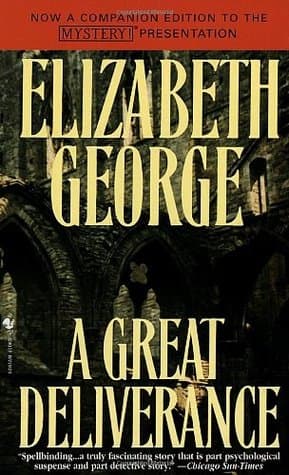
- A Great Deliverance
Elizabeth George
4.0 (40k) average on GoodreadsThrillerFirst book in the Lynley series, shares similar complex character work and village mystery structure.
- Gaudy Night
Dorothy L. Sayers
4.2 (23k) average on GoodreadsHistorical FictionFeatures a detective duo (Harriet Vane and Lord Peter Wimsey) solving a mystery in an academic setting with deep character exploration.
- Angels & Demons
Dan Brown
3.9 (2.7M) average on GoodreadsThrillerA Harvard symbologist races through Rome's ancient sites, deciphering cryptic clues to unmask the Illuminati and stop a vengeful plot to destroy the Vatican with a stolen antimatter weapon.
- Gone Girl
Gillian Flynn
4.1 (2.3M) average on GoodreadsThrillerA wife's sudden disappearance on her fifth anniversary reveals a web of lies and psychological warfare, exposing the secrets within a seemingly perfect marriage.
- The Girl on the Train
Paula Hawkins
3.9 (2.1M) average on GoodreadsThrillerA woman’s fascination with a seemingly perfect couple she watches from her daily train commute leads her into a dark investigation when she witnesses something that shatters their idyllic image.
- The Da Vinci Code
Dan Brown
3.9 (1.9M) average on GoodreadsThrillerA symbologist and a cryptologist race through European landmarks, deciphering ancient codes and uncovering a conspiracy that could rewrite the foundations of Christianity.




Enjoyed the summary?
A summary gives you the shape of the book. The book itself has the detail, the examples and the voice.
Find Missing Joseph on AmazonAs an Amazon Associate, BookBrief earns from qualifying purchases. How we're funded