

Synopsis
Covers the whole plot, including the ending.
- Difficulty
- Medium
- Pacing
- Slow
- Mood
- Atmospheric, Reflective, Melancholy, Introspective
- Read it if
- You appreciate stream-of-consciousness narratives, psychological depth, and exquisite literary prose that explores the inner lives of characters in a single day.
- Skip it if
- You prefer fast-paced plots, clear linear narratives, or find introspection and philosophical musings less engaging than external action.
Mrs Dalloway Plot Summary
Covers the whole plot, including the ending.
A Morning in Westminster
On a beautiful June morning in 1923, Clarissa Dalloway, a fifty-two-year-old society woman, walks through Westminster to buy flowers for her evening party. As she moves through the busy London streets, she feels connected to the city and its people, a feeling she values despite her often superficial social life. Her thoughts turn to her youth, especially her summers at Bourton, a country estate. She remembers her affection for Sally Seton and the marriage proposal from Peter Walsh, a passionate young man whom she chose not to marry, instead marrying the more stable Richard Dalloway. Clarissa considers her past choices and the person she has become, feeling both satisfied and vaguely dissatisfied with her life.
Peter Walsh's Return
Meanwhile, Peter Walsh, Clarissa's former suitor and long-time friend, returns to London after years in India. He is on his way to see Clarissa, feeling a mix of anticipation, resentment, and lingering love. Peter is a romantic and somewhat impractical man with a complex emotional history with Clarissa. When he arrives at her house, he finds her in the middle of party preparations. Their reunion is charged with unspoken history and regret. Peter criticizes Clarissa's social life and her marriage to Richard, restarting old arguments and highlighting the basic differences in their personalities and life views that led to their separation years ago. He is still deeply affected by her, constantly fidgeting with a penknife, a symbol of his unresolved emotions.
Septimus Warren Smith's Torment
At the same time as Clarissa's morning, Septimus Warren Smith, a young World War I veteran with severe shell shock, is experiencing deep mental distress. He sits in Regent's Park with his Italian wife, Rezia, who is desperate to help him. Septimus is tormented by horrifying hallucinations, believing he talks to his dead friend Evans and sees trees burning. He feels immense guilt for his inability to feel and for Evans's death, and he feels completely detached from the world. His doctors, Dr. Holmes and Sir William Bradshaw, offer little understanding or effective treatment, dismissing his suffering and recommending forced rest and separation from Rezia, which only worsens his despair and isolation.
The Dalloways' Marriage and Richard's Visit
Richard Dalloway, Clarissa's husband and a Member of Parliament, has lunch with Lady Bruton and Hugh Whitbread. He plans to tell Clarissa he loves her, a rare and important gesture for him. After lunch, he buys roses and returns home to Clarissa. However, when he sees her, he cannot say his feelings, instead just handing her the flowers. Clarissa understands his unspoken affection but also feels a familiar distance in their relationship. She reflects on their marriage, which, while stable, lacks the intense passion she experienced, or imagined, with Peter or Sally. She values the space and independence Richard gives her, contrasting it with Peter's more demanding nature, but she also acknowledges an emotional reserve between them.
Septimus's Despair and Sir William Bradshaw
Septimus's condition continues to worsen under the 'care' of Sir William Bradshaw, a renowned psychiatrist known for his rigid approach. Bradshaw believes in 'proportion' and 'conversion,' advocating strict control over patients' lives, often isolating them from loved ones. He insists that Septimus be sent to a country asylum for complete rest, removing him from Rezia's care and denying him any control. Septimus feels trapped and misunderstood; his vivid, terrifying visions contrast sharply with the doctors' dismissive diagnoses. Rezia, though desperate, feels powerless against the medical establishment, watching her husband slip further into his illness.
Lady Bruton's Luncheon and Hugh Whitbread
Lady Bruton hosts a lunch attended by Richard Dalloway and Hugh Whitbread, among others. The conversation covers social pleasantries, minor topics, and the upcoming party. Hugh Whitbread, a charming but somewhat superficial man, represents the conventionality and class consciousness that Clarissa often feels restricted by. Clarissa herself is not there, but her party is discussed, showing its importance in her social world. The scene highlights the social connections and obligations that define the lives of Clarissa's acquaintances, revealing the subtle power dynamics and unspoken rules of their upper-class London society. It also hints at these individuals gathering later at Clarissa's party.
Septimus's Suicide
Facing the threat of being institutionalized and separated from Rezia by Sir William Bradshaw, Septimus reaches a breaking point. He feels violated by the doctors' intrusion into his mind and their lack of understanding. As Dr. Holmes approaches his flat, Septimus, in a desperate act of rebellion and a desire to protect his inner world from further invasion, throws himself from the window onto the railings below. His death is a tragic result of his mental anguish and society's failure, especially the medical establishment, to understand and treat his war trauma with compassion. Rezia is left alone, devastated by her husband's death.
The Party Begins
As evening falls, Clarissa's party begins. Guests arrive, including her old friends Peter Walsh and Sally Seton (now Lady Rosseter), who have not seen each other in years. The gathering is a small representation of Clarissa's social world, with politicians, artists, and society figures. Clarissa, as the hostess, moves among her guests, making connections and ensuring everyone is entertained, yet she often feels detached from the event she planned. The party is her offering to the world, a way to bring people together and create shared experiences, despite her internal struggles with identity. Peter watches her, still captivated, while Sally enjoys reconnecting with old friends.
Sally Seton's Return
Sally Seton, Clarissa's lively and unconventional friend from Bourton, arrives at the party. Now Lady Rosseter, she is married with five sons, her youthful wildness softened by domesticity. Her reunion with Clarissa and Peter is full of nostalgia and unspoken memories of their past. Sally represents a different path Clarissa could have taken, a life of less convention and more passionate freedom. She still has a lively spirit and a sharp eye, engaging in animated conversations and reflecting on how time has changed their lives and friendships. Her presence at the party stirs a mix of fondness, regret, and a re-evaluation of past choices for both Clarissa and Peter.
The News of Septimus's Death
Late in the evening, Sir William Bradshaw and Lady Bradshaw arrive at the party, bringing news of Septimus Warren Smith's suicide. Clarissa, at first annoyed by their late arrival and the somber topic, retreats to a small room to absorb the information. She feels a deep connection to Septimus, a stranger whose death resonates with her own anxieties about life, death, and social pressures. She understands his act not as madness, but as a desperate attempt to protect something sacred within himself from the world's invasive forces. His death makes her confront her own mortality and the superficiality of her social life, leading to introspection and empathy.
Clarissa's Epiphany
Alone in the small room, Clarissa thinks about Septimus's death. She imagines his leap as an escape, a defiant act against oppression. She understands his suffering and the violation he felt from those who tried to 'cure' him. In this moment, she realizes that his death is, in a strange way, an affirmation of life, a sacrifice that allows others, including herself, to continue living. She sees a connection between his desperate act and her own vulnerability and the constant struggle to maintain one's identity. This thought brings her a strange peace and a renewed appreciation for life's preciousness and danger, strengthening her resolve to embrace her existence, however imperfect.
The Party Continues
After her moment of introspection, Clarissa returns to her party. She re-enters the social activity with a renewed sense of purpose. The news of Septimus's death, rather than casting a shadow, has deepened her understanding of life and human connection. She looks at her guests with fresh eyes, seeing their individual struggles and joys. Peter Walsh, still observing her, feels her presence intensely, recognizing the unique essence of Clarissa that has always captivated him. The party continues, a mix of conversations, laughter, and unspoken emotions, all held together by Clarissa's subtle influence. The novel ends with Peter's intense perception of Clarissa, highlighting her lasting appeal and impact on those around her.
Mrs Dalloway Characters
Clarissa Dalloway
Protagonist
A society hostess grappling with her past and present identity.
Clarissa Dalloway is a fifty-two-year-old London socialite, wife of Richard Dalloway, and mother to Elizabeth. She is elegant, charming, and deeply concerned with appearances and the success of her parties, which she sees as her offering to the world. Beneath her composed exterior, Clarissa is highly sensitive and introspective, constantly evaluating her life choices, particularly her marriage to Richard over the passionate Peter Walsh. She feels a profound connection to life and the city but also a sense of isolation and a vague dissatisfaction with her own existence. She is drawn to beauty and moments of intense feeling.
Relationships: Richard Dalloway (Husband, providing stability and space, but lacking intense emotional intimacy.); Peter Walsh (Former suitor and lifelong friend; represents passion and an alternative life path.); Sally Seton (Intimate childhood friend; a symbol of youthful freedom and passion.); Elizabeth Dalloway (Daughter; Clarissa feels a mix of maternal love and a slight distance, recognizing Elizabeth's growing independence.)
Peter Walsh
Supporting
Clarissa's old suitor, a romantic and critical figure still in love with her.
Peter Walsh is a passionate, critical, and somewhat melancholic man who has just returned to London from India. He was Clarissa's suitor in their youth and remains deeply in love with her, despite her marrying Richard. Peter is prone to introspection and self-pity, constantly analyzing his life and the decisions that led him to his current state. He carries a penknife, a symbol of his nervous energy and unresolved emotions. He is critical of Clarissa's conventional life but also profoundly drawn to her, representing the road not taken for Clarissa and the enduring power of first love.
Relationships: Clarissa Dalloway (Former suitor and lifelong friend; deeply in love with her, critical yet captivated.); Sally Seton (Childhood friend; shares a nostalgic bond and understanding of their past with Clarissa.)
Septimus Warren Smith
Supporting
A WWI veteran suffering from severe shell shock, a tragic mirror to Clarissa's inner life.
Septimus Warren Smith is a young World War I veteran suffering from extreme shell shock (PTSD). He is haunted by the death of his friend Evans and experiences vivid hallucinations, paranoia, and a profound inability to feel. Septimus represents the devastating psychological cost of war and society's failure to understand and treat mental illness. His inner world is one of intense suffering and poetic sensitivity, which stands in stark contrast to the dismissive and dehumanizing approach of his doctors. He becomes a symbolic figure whose tragic death profoundly impacts Clarissa, though they never meet.
Relationships: Rezia Warren Smith (Wife; his sole source of comfort and connection, desperate to help him.); Dr. Holmes (Dismissive doctor; fails to understand or properly treat Septimus.); Sir William Bradshaw (Authoritarian psychiatrist; seeks to control and institutionalize Septimus, embodying the oppressive forces of society.)
Rezia Warren Smith
Supporting
Septimus's Italian wife, struggling to cope with his mental illness and the indifference of others.
Lucrezia 'Rezia' Warren Smith is Septimus's young Italian wife. She is devoted to him and deeply distressed by his deteriorating mental state. Rezia is a practical, loving, and somewhat naive woman who desperately tries to help Septimus, but her efforts are often thwarted by his illness and the unhelpful advice of his doctors. She feels isolated and overwhelmed by the burden of his suffering, longing for their earlier, happier life. Rezia represents the collateral damage of war, as she watches her husband disappear into his illness and experiences her own profound loneliness and grief.
Relationships: Septimus Warren Smith (Husband; deeply in love with him, but heartbroken and exhausted by his illness.)
Richard Dalloway
Supporting
Clarissa's stable and conventional husband, a Member of Parliament.
Richard Dalloway is Clarissa's husband and a Member of Parliament. He is a practical, kind, and somewhat reserved man who provides Clarissa with security and social standing. While he loves Clarissa, he struggles to express his deepest emotions, often communicating through actions rather than words. He represents the conventional, stable, and somewhat emotionally distant aspect of Clarissa's life, contrasting with the passionate intensity of Peter Walsh. He is well-respected in his political circles but remains somewhat oblivious to Clarissa's deeper internal struggles.
Relationships: Clarissa Dalloway (Husband; provides stability and comfort, but with an emotional reserve.); Elizabeth Dalloway (Father; a loving but somewhat distant parent.)
Sally Seton (Lady Rosseter)
Supporting
Clarissa's free-spirited childhood friend, now a wife and mother.
Sally Seton was Clarissa's passionate and unconventional childhood friend, with whom Clarissa shared a deep, almost romantic, bond at Bourton. She was daring, smoked cigars, and challenged social norms. Now Lady Rosseter, she is married with five sons, and while her youthful fire has been somewhat tamed by domesticity, she still retains a lively spirit and an independent mind. Her reappearance at Clarissa's party evokes powerful memories of youth, freedom, and the paths not taken for Clarissa and Peter. She represents a different kind of life, one less constrained by social expectations.
Relationships: Clarissa Dalloway (Intimate childhood friend; a source of deep affection and shared memories.); Peter Walsh (Childhood friend; shares a nostalgic bond and understanding of their past with Clarissa.)
Elizabeth Dalloway
Supporting
Clarissa's quiet and independent daughter.
Elizabeth Dalloway is Clarissa and Richard's seventeen-year-old daughter. She is quiet, earnest, and somewhat detached from her mother's social world. Elizabeth is interested in politics and social work, particularly with her history tutor, Miss Kilman, and seems poised to forge her own path, distinct from her mother's. She embodies a younger generation with different aspirations and a more practical outlook, suggesting a future where women might have more career opportunities beyond the domestic sphere. Clarissa sees Elizabeth as beautiful and independent, sometimes feeling a slight distance from her.
Relationships: Clarissa Dalloway (Daughter; Clarissa feels love but also a slight distance due to Elizabeth's independence.); Richard Dalloway (Father; a loving but somewhat distant parent.); Miss Kilman (History tutor and mentor; Elizabeth is drawn to her intellect and passion for social justice.)
Sir William Bradshaw
Antagonist
A renowned and authoritarian psychiatrist who embodies societal repression.
Sir William Bradshaw is a highly respected psychiatrist who treats Septimus Warren Smith. He is presented as a figure of authority, control, and convention, believing in 'proportion' and 'conversion' as the keys to mental health. Bradshaw represents the oppressive forces of society and the medical establishment's failure to understand or empathize with genuine psychological suffering. He imposes his will on his patients, often isolating them and denying their individuality, ultimately contributing to Septimus's tragic demise. His rigid worldview is contrasted sharply with the fluid, subjective experiences of characters like Clarissa and Septimus.
Relationships: Septimus Warren Smith (Doctor; his authoritarian and uncomprehending approach worsens Septimus's condition.); Lady Bradshaw (Wife; subservient to his authority, reflecting his need for control.)
Mrs Dalloway Themes
The Nature of Time and Memory
Woolf explores how past and present exist together in the human mind, blurring the lines between what was and what is. Clarissa's day is often marked by vivid memories of Bourton, her youth, and her relationships with Peter Walsh and Sally Seton. These memories are not just recollections but active forces shaping her current feelings and decisions, such as her ongoing thoughts about her marriage choices. The novel's stream-of-consciousness style allows for smooth transitions between different time periods, showing how memory shapes identity and creates a rich, layered internal world for each character, highlighting the subjective experience of time.
“What she liked was simply life. 'That's what I like,' she thought; 'the high things and the low things, the good things and the bad things, the old things and the new things. And the things that will never happen.'”
Social Class and Expectations
The novel shows the rigid social structures and expectations of post-World War I London society, especially among the upper classes. Clarissa's party itself is a display of social standing and a way to maintain her position in this hierarchy. Characters like Lady Bruton and Hugh Whitbread represent the conventionality and snobbery of this world, while Clarissa often feels limited by its demands. Septimus's suffering, in contrast, highlights the gap between the privileged and those marginalized, particularly in the lack of compassionate care he receives. The pressure to conform to social roles, whether as a wife, a politician, or a 'sane' person, is a constant force.
“She had the oddest sense of being herself invisible; unknown; there being no more marrying, no more having of children, but only this astonishing and perpetual experience of being herself.”
The Impact of War and Trauma
World War I affects the novel deeply, most clearly through Septimus Warren Smith. His severe shell shock, hallucinations, and inability to feel are direct results of his wartime experiences. The novel criticizes society's failure to acknowledge and treat such trauma, as Septimus is dismissed and driven to suicide by the uncomprehending medical establishment. The war also subtly affects other characters; Peter Walsh reflects on its changes, and Clarissa, though not on the front lines, feels its lingering presence in London's altered mood. Septimus's story reminds readers of the hidden casualties of conflict.
“He was not Septimus now. He was a pioneer, a explorer, a man who had gone where no man had gone before.”
Love, Marriage, and Relationships
Woolf explores the complexities of different types of love and the compromises in marriage. Clarissa's choice between the passionate Peter Walsh and the stable Richard Dalloway is a central part of her reflections. Her marriage to Richard offers comfort and independence but lacks deep emotional intimacy, while her past connection with Sally Seton suggests a deep, almost romantic, bond. The novel questions whether true intimacy is possible in conventional marriage and examines the unspoken feelings and distances that exist even between loving partners, such as Richard's inability to directly tell Clarissa he loves her. Rezia's devotion to Septimus highlights the burden of unconditional love in the face of mental illness.
“She felt like a nun who has forsworn the world. For by living with Richard she had become a woman, and a woman who had to be, what she was, a wife.”
The Self and Society
A main theme is the tension between a person's inner world and society's demands. Clarissa constantly navigates this divide, presenting a composed social facade while experiencing a rich, complex internal life. Septimus's tragedy results directly from society's inability to tolerate or understand his unique inner torment, leading to his alienation and destruction. The novel suggests that society, through its conventions and institutions (like the medical system or social expectations), often stifles individuality. Characters like Peter Walsh and Sally Seton also struggle to find authentic self-expression within social limits, reflecting on how their younger, more rebellious selves have been shaped or subdued.
“She felt very young; at the same time unspeakably ancient. She knew very well that she was not a lady, but a woman.”
Plot Devices & Literary Techniques
Stream of Consciousness
A narrative technique that mirrors the continuous flow of thoughts, feelings, and memories.
Woolf employs stream of consciousness to immerse the reader directly into the subjective experiences of her characters. The narrative moves seamlessly from one character's mind to another, often without clear transitions, reflecting the associative nature of thought. This technique allows for deep psychological insight, revealing characters' unexpressed desires, fears, and memories as they perceive the world around them. It blurs the line between internal monologue and external reality, creating a rich, multi-layered tapestry of perspectives that emphasizes the private, often unspoken, dimensions of human experience, as seen in Clarissa's and Septimus's internal monologues.
Free Indirect Discourse
A narrative mode that blends the narrator's voice with a character's thoughts and speech.
Free indirect discourse is crucial to Woolf's narrative style, allowing her to convey characters' inner thoughts and feelings without explicit quotation marks or introductory phrases like 'she thought' or 'he said.' This technique creates a sense of intimacy and immediacy, making the reader feel directly privy to the characters' minds. It also enables subtle shifts in perspective, as the narrator's voice can blend with a character's, creating ambiguity and a richer psychological portrait. For example, when Clarissa is walking, her observations of London and her internal reflections often merge, making it difficult to separate objective description from her subjective experience.
Symbolism (The Party)
Clarissa's evening party serves as a central symbol for her identity and connection.
Clarissa's party is more than just a social event; it is a profound symbol of her identity, her life's work, and her attempt to connect with the world. She sees it as her 'offering,' a way to bring people together and create beauty and meaning. The party represents her public self, the carefully constructed facade she presents to society, but also her deep desire for connection and her fear of isolation. It serves as a microcosm of London society, bringing together diverse characters and allowing for moments of both superficial interaction and profound revelation, particularly when the news of Septimus's death infiltrates its boundaries, forcing Clarissa to confront deeper truths.
Juxtaposition (Clarissa and Septimus)
The parallel lives of Clarissa and Septimus highlight contrasting responses to life's pressures.
Woolf masterfully uses the juxtaposition of Clarissa Dalloway's and Septimus Warren Smith's lives to explore themes of sanity, madness, and societal pressures. Though they never meet, their stories run parallel throughout the day, often experiencing similar sensations or thoughts at the same time (e.g., the passing car, the sky). Clarissa, a privileged socialite, represents a successful adaptation to societal demands, albeit with a lingering sense of internal dissatisfaction. Septimus, a war veteran, embodies a complete breakdown under these same pressures. Their parallel narratives highlight the fragility of the human mind and the arbitrary line between 'normalcy' and 'madness,' culminating in Clarissa's empathetic understanding of Septimus's suicide.
Mrs Dalloway Quotes
“Mrs. Dalloway said she would buy the flowers herself.”
“What a lark! What a plunge!”
“She had the oddest sense of being herself invisible; unseen; unknown.”
“It was awful, he cried, awful, awful! And he would have cried, awful, awful, over and over again, but the very word (which was not awful to him at all) prevented him.”
“She felt like a nun who has left the world and feels absolutely pure, and when she goes out she is not sure whether she has done the right thing.”
“For having lived in Westminster – how many years now? over twenty, – one feels even in the midst of the traffic, or waking at night, Clarissa was positive, a particular hush, or solemnity; an indescribable pause; a suspense before Big Ben strikes.”
“Fear no more, says the heart, committing its burden to some sea, which it deeply feels, for it belongs to that sea, and will flow away, and give itself to the waves.”
“She had to break with it, all this romance and all this nonsense.”
“It was Virginia Woolf's idea that one should write of ordinary life. I want to write of the people who live in the ordinary world.”
“The world has been so terrible to him.”
“She would not say of any one in the world now that they were this or were that.”
“She always felt a little like a nun. She had a passion for women.”
“Death was an attempt to communicate, people feeling the impossibility of reaching the centre which, mystically, evaded them; closeness drew apart; rapture faded, one was alone.”
“She felt somehow very like him—the young man who had killed himself. She felt glad that he had done it; thrown it away.”
“For there she was.”
Quiz
10 questions on the plot and the characters. Each answer comes with a short explanation.
Question 1
What is Clarissa Dalloway's primary activity on the day the novel takes place?
- Attending a political rally
- Preparing for her evening party
- Visiting her sister in the countryside
- Writing a memoir
Show answer
B. Preparing for her evening party The novel opens with Clarissa going out to buy flowers for her party, which is the central event of her day.
Question 2
Which character unexpectedly visits Clarissa Dalloway in the morning and asks her an important question?
- Richard Dalloway
- Sally Seton
- Peter Walsh
- Hugh Whitbread
Show answer
C. Peter Walsh Peter Walsh, an old suitor, arrives from India and visits Clarissa, asking her if she is happy.
Question 3
What does Clarissa Dalloway often reflect upon regarding her past relationship with Peter Walsh?
- Her regret at not marrying him
- Her relief at escaping his overbearing nature
- Her confusion about his sudden departure to India
- Her indifference to his romantic advances
Show answer
A. Her regret at not marrying him Clarissa frequently revisits her decision to marry Richard over Peter, often questioning whether she made the right choice and feeling a sense of loss.
Question 4
What significant event occurs involving Septimus Warren Smith towards the end of the novel?
- He attends Clarissa's party and has a profound conversation with her.
- He is committed to a mental asylum.
- He commits suicide by jumping from a window.
- He unexpectedly recovers from his shell shock and finds peace.
Show answer
C. He commits suicide by jumping from a window. Septimus, suffering from severe shell shock, commits suicide to escape the doctors who wish to institutionalize him. His death profoundly affects Clarissa when she hears about it.
Question 5
Which of the following best describes a major thematic concern in 'Mrs Dalloway'?
- The pursuit of social justice and political reform.
- The exploration of individual consciousness and the subjective nature of time.
- The conflict between scientific progress and religious faith.
- The rise and fall of the British Empire.
Show answer
B. The exploration of individual consciousness and the subjective nature of time. Woolf's novel is a prime example of stream-of-consciousness, delving into the inner lives, thoughts, and memories of her characters, making individual consciousness a central theme.
Question 6
What is the significance of Big Ben's chimes throughout the novel?
- It symbolizes the unchanging nature of London society.
- It marks the passage of linear time, contrasting with the fluid internal time of the characters.
- It represents the imminent arrival of a major political figure.
- It serves as a warning of impending danger for the characters.
Show answer
B. It marks the passage of linear time, contrasting with the fluid internal time of the characters. Big Ben's chimes provide a constant, external, objective measurement of time, highlighting the contrast with the characters' subjective experiences and memories.
Question 7
How does Clarissa Dalloway feel about the Prime Minister attending her party?
- She is deeply impressed and feels validated by his presence.
- She finds him rather dull and representative of the societal expectations she sometimes resents.
- She is anxious about making a good impression on him for political reasons.
- She is unaware he is attending until he arrives.
Show answer
B. She finds him rather dull and representative of the societal expectations she sometimes resents. While she hosts the party, Clarissa often feels a sense of detachment and even mild disdain for the conventional figures like the Prime Minister, seeing them as part of the superficiality of her social world.
Question 8
What does Clarissa Dalloway ultimately conclude about Septimus Warren Smith's death?
- She views it as a tragic waste of a young life, unrelated to her own existence.
- She feels personally responsible for his suffering, despite never having met him.
- She sees it as an act of defiance, a preservation of self, and a reflection of her own 'terrible beauty' of life.
- She dismisses it as a morbid interruption to her party's success.
Show answer
C. She sees it as an act of defiance, a preservation of self, and a reflection of her own 'terrible beauty' of life. When Clarissa hears of Septimus's death, she doesn't dismiss it. Instead, she identifies with his struggle for self-preservation and sees his death as a profound, if tragic, assertion of individuality against oppressive forces, resonating with her own sense of the 'danger' of living.
Question 9
Which specific detail about Clarissa's youth at Bourton is frequently recalled and symbolizes her connection to Sally Seton?
- Their shared love for gardening.
- The moment Sally kissed her on the lips.
- Their secret visits to London theaters.
- Their arguments about politics with Peter Walsh.
Show answer
B. The moment Sally kissed her on the lips. Clarissa often remembers the intense, almost romantic moment when Sally kissed her, signifying a youthful passion and freedom that she associates with Sally.
Question 10
What is the primary function of the 'stream of consciousness' narrative technique in 'Mrs Dalloway'?
- To provide a clear, linear account of plot events.
- To allow the reader direct access to the characters' unfiltered thoughts, memories, and sensations.
- To emphasize the objective reality of the external world.
- To create suspense through withheld information.
Show answer
B. To allow the reader direct access to the characters' unfiltered thoughts, memories, and sensations. Stream of consciousness is Woolf's signature technique, designed to immerse the reader in the subjective, often non-linear, flow of characters' internal experiences.
Mrs Dalloway FAQ
What is the central event of Mrs. Dalloway and over what period does it unfold?
The novel centers around Clarissa Dalloway's preparations for a high-society party she is hosting that evening. The entire narrative unfolds over a single day in June 1923, following Clarissa and other characters through London from morning until late at night.
Who is Richard Dalloway and what is his relationship with Clarissa?
Richard Dalloway is Clarissa's husband, a Member of Parliament. While he deeply loves Clarissa, their relationship is characterized by a certain emotional distance, and he struggles to express his deepest feelings, particularly when he fails to tell her he loves her directly.
Who is Peter Walsh and what role does he play in Clarissa's day?
Peter Walsh is an old suitor and friend of Clarissa's who returns to London after years in India. His unexpected visit and his proposal of marriage, which Clarissa refused in her youth, stir up a flood of memories and 'what ifs' for her throughout the day.
Who is Septimus Warren Smith and how does his story intersect with Clarissa's?
Septimus Warren Smith is a shell-shocked World War I veteran suffering from severe PTSD and hallucinations. Though he never meets Clarissa, his tragic suicide at the end of the day is brought to her attention at her party, profoundly affecting her and making her reflect on life's fragility.
What is the significance of Big Ben chiming throughout the novel?
Big Ben's chimes serve as a constant, insistent reminder of the relentless passage of time, marking the hours of the single day and emphasizing the characters' mortality and the fleeting nature of life. It anchors the stream-of-consciousness narrative to a tangible reality.
How does the symbol of the 'party' function beyond a mere social gathering for Clarissa?
For Clarissa, the party is a profound act of creation and connection, a way to 'bring people together' and make sense of her scattered self. It's her artistic expression, her contribution to the world, and a means to momentarily defy the isolation she often feels.
What is the implied connection between Clarissa Dalloway and Septimus Warren Smith, despite their never meeting?
Woolf intricately links Clarissa and Septimus through their shared sensitivity and profound awareness of life's beauty and terror, and their struggles with societal expectations. Septimus's death, though distant, resonates deeply with Clarissa, almost as if he is an alter ego embodying the darker aspects of her own 'dangerous' feelings about life.
What does Miss Kilman represent in her interactions with Elizabeth Dalloway and Clarissa?
Miss Kilman, Elizabeth's history tutor, represents a form of zealous, resentful piety and intellectual superiority, coupled with a deep-seated bitterness. She embodies a stark contrast to Clarissa's social graces, fostering a possessive, almost suffocating affection for Elizabeth and a strong dislike for Clarissa's superficiality.
How does Clarissa Dalloway grapple with the concept of identity and self throughout the day?
Clarissa constantly questions her own identity, feeling fragmented and defined by others' perceptions or her past choices. She oscillates between embracing her social role as Mrs. Dalloway and longing for the independent, passionate Clarissa she once was, often feeling a profound sense of anonymity and 'being nobody in particular.'
Analyze Peter Walsh's psychological state upon his return to London.
Peter Walsh is characterized by a blend of romantic idealism, unresolved longing, and a perpetual sense of failure and restlessness. He remains deeply attached to Clarissa, frequently indulging in self-pity and romantic fantasies, while simultaneously criticizing her life choices and struggling to find true contentment himself.
What psychological impact does the war have on Septimus Warren Smith, and how is it portrayed?
The war utterly shatters Septimus's psyche, leaving him with severe PTSD, vivid hallucinations (particularly of his dead friend Evans), and a profound detachment from reality. Woolf portrays his suffering through his distorted perceptions, paranoia, and inability to feel, highlighting the devastating mental toll of conflict.
How does Clarissa's relationship with Sally Seton in her youth inform her present-day psychology?
Her youthful, intense, and emotionally charged relationship with Sally at Bourton Hall represents a period of uninhibited passion and authentic connection for Clarissa. These memories resurface throughout the day, highlighting a suppressed part of her sexuality and a longing for the freedom and emotional depth she feels she lost in her marriage and societal role.
Is 'Mrs. Dalloway' primarily a celebration of London society or a critique?
The novel offers a complex perspective. While it beautifully captures the vibrancy and interconnectedness of London life, it also subtly critiques the superficiality, class divisions, and restrictive nature of high society. Clarissa herself often feels stifled by its expectations, and the contrast with Septimus's suffering highlights its limitations.
What is Woolf's perspective on sanity and madness as depicted through Septimus?
Woolf challenges conventional definitions of sanity, suggesting that Septimus's 'madness' is a logical, albeit extreme, response to the trauma of war and society's inability to understand or treat him. The novel implies that those deemed 'sane,' like Dr. Bradshaw, are often more detached and destructive in their rigid systems.
How does the novel explore themes of time and memory?
Time is fluid in the novel, with the present constantly interweaving with the past through characters' memories and stream of consciousness. The relentless ticking of Big Ben underscores chronological time, while memory allows characters to revisit and reinterpret their lives, highlighting how the past shapes the present.
To what extent is Clarissa Dalloway a 'tragic' figure?
Clarissa is arguably a tragic figure in the sense that she experiences a profound sense of unfulfilled potential and missed opportunities, particularly regarding her youthful passions and her choice of husband. While she finds joy in her present, there's an underlying melancholy about the roads not taken and the parts of herself she feels she sacrificed.
What is the significance of the novel's stream-of-consciousness narrative style?
The stream-of-consciousness style allows Woolf to delve deeply into the characters' inner lives, revealing their unfiltered thoughts, memories, and emotions. This technique creates a rich, subjective portrayal of reality, connecting seemingly disparate individuals and moments through their shared internal experiences of London.
How does the motif of water (e.g., waves, the sea) contribute to the novel's themes?
Water imagery frequently appears, symbolizing fluidity, change, and the unconscious mind. Clarissa often feels like a 'wave,' connecting to others and dissolving back into herself, reflecting her struggle with identity and the ebb and flow of life and memory. It also hints at the vast, uncontrollable forces of existence.
About the author
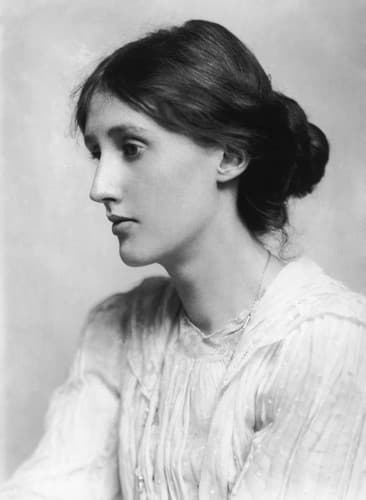
Adeline Virginia Woolf was an English writer. She is considered one of the most important modernist 20th-century authors and a pioneer in the use of stream of consciousness as a narrative device.
Similar books
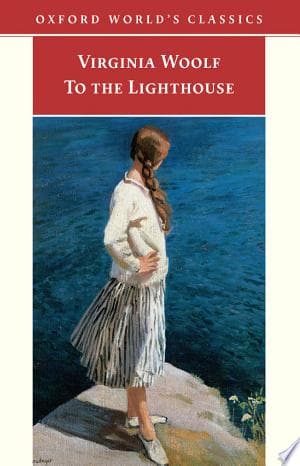
- To the Lighthouse
Virginia Woolf
3.8 (133k) average on GoodreadsLiterary FictionExplores family dynamics and the passage of time through a similar stream-of-consciousness style and rich psychological depth.
- Ulysses
James Joyce
3.7 (111k) average on GoodreadsLiterary FictionA modernist classic that also chronicles a single day in a city, using stream-of-consciousness to delve into characters' minds.
- A Room With a View
E.M. Forster
3.9 (152k) average on GoodreadsHistorical FictionOffers a detailed look into the social conventions and inner turmoil of early 20th-century English society, albeit with a more traditional narrative.
- A Passage to India
E.M. Forster
3.7 (70k) average on GoodreadsHistorical FictionBoth novels critique societal structures, but Mrs Dalloway and A Passage to India differ significantly in their narrative approach. Forster's novel uses a more traditional third-person omniscient narrator and a clear, event-driven plot to explore themes of colonialism, cultural misunderstanding, and alienation. Woolf, in contrast, largely abandons traditional plot in favor of an intense focus on the internal, subjective experience through stream of consciousness. While Forster examines large-scale social and political dynamics, Woolf delves into the intricate, often melancholic, inner lives of individuals within a specific social context, making her work more experimental and introspective.
- Nineteen Eighty-Four
George Orwell
4.2 (5.5M) average on GoodreadsFictionWinston Smith dreams of truth and rebellion in a world where Big Brother watches all, but he confronts the terrifying power of a regime that controls not just actions, but thoughts.
- The Frozen River
Ariel Lawhon
4.4 (600k) average on GoodreadsFictionIn 1789 Maine, a heroic midwife's diary helps her expose a murder and get justice in a town that wants to silence her.




Enjoyed the summary?
A summary gives you the shape of the book. The book itself has the detail, the examples and the voice.
Find Mrs Dalloway on AmazonAs an Amazon Associate, BookBrief earns from qualifying purchases. How we're funded