
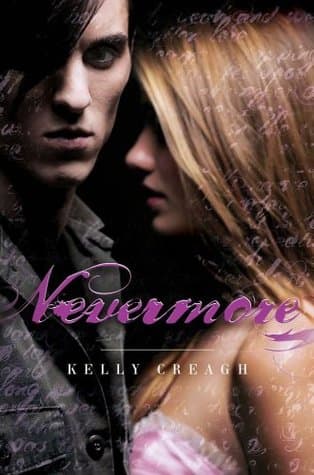
Synopsis
Covers the whole plot, including the ending.
- Difficulty
- Medium
- Pacing
- Variable
- Mood
- Dark, Romantic, Suspenseful, Atmospheric, Eerie
- Read it if
- You enjoy dark, romantic thrillers with a strong supernatural element and literary allusions, especially to Edgar Allan Poe.
- Skip it if
- You dislike horror elements, possessive ex-boyfriends, or stories with a somewhat slower build-up before the main action.
Nevermore Plot Summary
Covers the whole plot, including the ending.
An Unlikely Pairing and a Mysterious Journal
Isobel Lanley, a popular cheerleader, is upset when her English teacher, Ms. Crabtree, assigns her to work with Varen Nethers, the school's Goth outcast, on a poetry project. The assignment is due on the day of the important football game against the rival team, adding to Isobel's frustration. Varen is distant and uninterested in collaborating. During a study session at his house, Isobel finds strange, almost illegible writing in Varen's journal. Intrigued by the cryptic text and Varen's unusual behavior, she starts to wonder about the mysterious boy, sparking an unexpected curiosity despite her initial reluctance.
First Forays into the Dream World
As Isobel and Varen continue their project, Isobel becomes more drawn to Varen's perspective and Edgar Allan Poe's unsettling poetry. She starts having vivid, disturbing dreams and waking visions, often featuring images from Poe's works, especially 'The Raven.' Varen, sensing her connection to the dream world, cautiously begins to open up, explaining that his journal entries are not just writing, but a way to shape and enter a shared subconscious realm. Isobel's initial doubt slowly turns into fascination as the lines between reality and dream blur, making her question her perception of the world.
The Growing Rift and the Allure of the Otherworld
Isobel's growing connection with Varen and her focus on the dream world start to strain her relationships with her boyfriend, Brad, and her best friends, Gwen and Dani. Brad becomes increasingly possessive and jealous of Varen, leading to frequent arguments. Isobel makes excuses to be with Varen, prioritizing their project and her understanding of his world over her social life. The 'real world' feels dull compared to the dangerous alternate reality Varen introduces her to, further isolating her and pushing her closer to Varen.
Encountering the Nightmare: Ligeia
Varen tells Isobel that the dream world is not just a shared space for creativity, but also a battleground against malevolent entities called 'Nightmares' that feed on emotions and can manipulate reality. They encounter a powerful and seductive Nightmare embodying Ligeia from Poe's story. Ligeia tries to lure Varen, preying on his weaknesses and past trauma. Isobel, despite her fear, feels she needs to protect Varen, using her own developing abilities to influence the dreamscape. This encounter confirms the danger of their explorations and the true risks involved.
Unveiling Varen's Past and the Source of the Nightmares
As dangers grow, Varen reluctantly tells Isobel about his family's long history with the dream world and the tragedy that befell his mother, who became lost within it. He explains that his father, Mr. Nethers, also has the ability but chose to suppress it after his wife's disappearance. Varen believes his mother is not truly gone but trapped, and he wants to find her. This revelation explains Varen's reclusive nature and his deep understanding of the dream world, adding depth to his character and increasing Isobel's empathy for him.
Brad's Intervention and Betrayal
Brad, increasingly suspicious and angry about Isobel's relationship with Varen, follows them and confronts Varen in a fit of rage. His physical interference, combined with his strong negative emotions, accidentally creates a rift in the dream world, allowing a powerful Nightmare to gain more influence in their waking reality. This act of jealousy not only isolates Isobel further from her former life but also puts her and Varen in greater peril, showing the dangerous results of unchecked emotions and blurring boundaries between worlds.
The School's Descent into Nightmare
The Nightmare, now stronger due to Brad's actions and the students' collective anxieties, begins to infest the school. Hallways become gothic corridors, classrooms become eerie reflections of Poe's tales, and students experience vivid, terrifying hallucinations. The football game, meant to be normal, turns into a chaotic and frightening event as players and spectators are affected. Isobel and Varen realize the Nightmare is trying to merge the dream world with reality, threatening to consume everyone within its dark story, and they must act quickly to stop it.
The Battle for Varen's Mind
Varen, overwhelmed by the Nightmare's power and his own internal struggles, begins to give in, his mind becoming a battleground. Isobel, realizing he is slipping away, bravely enters his deepest, most personal dreamscape. Here, she confronts the Nightmare directly, which has taken a form that preys on Varen's greatest fears and guilt, particularly concerning his mother. Isobel must use her courage, her growing understanding of the dream world, and her strong connection with Varen to pull him back from the edge of oblivion, facing her own fears in the process.
Confronting the Master Nightmare
Within Varen's mind, Isobel discovers the true identity of the dominant Nightmare: it is the distorted essence of Varen's mother, trapped and corrupted within the dream world for years. The 'Ligeia' entity was a manifestation of this larger, more personal horror. This Nightmare has been feeding on Varen's grief and his desire to find her, twisting his love into a tool for its own power. Isobel realizes that to save Varen, she must not only defeat the Nightmare but also help Varen accept the reality of his mother's fate.
The Power of Words and Love
Using her knowledge of the dream world and the power of language, Isobel confronts the Nightmare, not with violence, but with truth and emotion. She reminds Varen of who he is and the love they share, using their shared experiences and the beauty of words to counteract the Nightmare's influence. By helping Varen accept the past and embrace their bond, Isobel weakens the Nightmare's hold. Together, they manage to sever the corrupted connection, freeing Varen from its grasp and restoring order to the dream world, though the scars remain.
Aftermath and New Beginnings
With the Nightmare defeated, the dream world's influence recedes from the school, leaving only vague, unsettling memories for most. Isobel and Varen emerge changed by their ordeal. Their relationship is stronger, built on shared trauma and deep understanding. Isobel has grown from a cheerleader into a brave, insightful young woman, while Varen has found a companion who truly understands him. The novel ends with them facing a new, uncertain future, knowing the dream world still exists, but now they are better equipped to navigate its complexities, together.
Nevermore Characters
Isobel Lanley
Protagonist
A popular cheerleader who discovers a hidden world and her own inner strength.
Isobel is initially presented as a typical high school cheerleader: popular, image-conscious, and with a possessive boyfriend. She values her social standing and is uncomfortable with anything that deviates from the norm. However, beneath her superficial exterior lies a deep well of empathy, curiosity, and untapped courage. She is drawn to Varen's mystery despite her initial apprehension and possesses a surprising sensitivity to the dream world. Her journey forces her to confront her preconceived notions and embrace a reality far stranger than she ever imagined, ultimately revealing her as a strong, resilient individual.
Relationships: Varen Nethers (Developing romantic and deep spiritual bond; partners in exploring the dream world.); Brad (Possessive boyfriend; their relationship deteriorates as Isobel changes.); Gwen (Best friend; their friendship is strained by Isobel's new focus.); Dani (Friend; her friendship is strained by Isobel's new focus.)
Varen Nethers
Love Interest/Co-Protagonist
An enigmatic, Goth outcast with a deep connection to a terrifying dream world.
Varen is the school's resident Goth, aloof, sarcastic, and seemingly detached from his peers. He is burdened by a family legacy tied to the dream world and a personal tragedy involving his mother. Despite his cold exterior, he is deeply sensitive and protective, especially of Isobel once he realizes her connection to his world. He communicates through his art and writing, which are not merely creative expressions but tools for navigating and shaping the dreamscape. His intelligence and vulnerability are slowly revealed as he allows Isobel into his carefully constructed emotional walls.
Relationships: Isobel Lanley (Developing romantic and deep spiritual bond; partners in exploring the dream world.); Mr. Nethers (Father; strained relationship due to his father's suppression of their shared abilities and Varen's mother's disappearance.); Varen's Mother (Mother; believed lost in the dream world, her fate is a driving force for Varen.)
Brad
Antagonist (initially)/Supporting
Isobel's possessive and jealous boyfriend who struggles with her changing priorities.
Brad is Isobel's popular, athletic boyfriend, representing the 'normal' world she initially inhabits. He is possessive and insecure, struggling to understand or accept Isobel's growing fascination with Varen and the strange events surrounding her. His jealousy and anger lead him to confront Varen, inadvertently exacerbating the threat of the Nightmare. While not inherently evil, his inability to adapt and his controlling nature make him an obstacle to Isobel's growth and a catalyst for dangerous events, highlighting the contrast between the superficial and the profound.
Relationships: Isobel Lanley (Boyfriend; their relationship is strained and ultimately ends due to his jealousy and her changing focus.)
Gwen
Supporting
Isobel's best friend, who struggles to understand Isobel's new interests.
Gwen is Isobel's loyal best friend, part of her cheerleading squad and social circle. She represents the normalcy and superficiality that Isobel begins to leave behind. Gwen is supportive but ultimately unable to comprehend the strange events Isobel experiences, leading to a growing distance between them. She tries to pull Isobel back into their familiar world, often with good intentions, but her lack of understanding highlights Isobel's increasing isolation and the uniqueness of her journey.
Relationships: Isobel Lanley (Best friend; their friendship is strained by Isobel's new focus.)
Ms. Crabtree
Supporting
Isobel and Varen's English teacher, an unwitting catalyst for their connection.
Ms. Crabtree is the English teacher who assigns Isobel and Varen their fateful poetry project. She is a strict but fair educator, primarily serving as a plot device to bring the two protagonists together. While she remains unaware of the supernatural events unfolding, her choice of Edgar Allan Poe's works for the assignment provides the thematic and symbolic framework for the dream world, making her an accidental architect of the unfolding mystery. Her role is largely functional in initiating the main plot.
Mr. Nethers
Supporting
Varen's father, who has suppressed his own connection to the dream world after a family tragedy.
Mr. Nethers is Varen's distant and often stern father. He possesses the same ability to interact with the dream world as Varen but has actively suppressed it since the disappearance of his wife, Varen's mother, believing it to be the cause of her demise. His reluctance to discuss the past creates a rift with Varen and leaves Varen feeling isolated in his pursuit of answers. He represents the danger of denying one's true nature and the weight of past trauma, eventually offering some guidance to Isobel.
Relationships: Varen Nethers (Father; strained relationship due to his past trauma and Varen's pursuit of his mother.); Varen's Mother (Wife; her disappearance in the dream world deeply affected him.)
Ligeia (Nightmare)
Antagonist
A seductive and powerful Nightmare manifestation within the dream world.
Ligeia is one of the primary antagonistic forces in the dream world, taking the form of a beautiful but malevolent woman inspired by Poe's story. She preys on Varen's vulnerabilities, particularly his grief and loneliness, attempting to lure him deeper into the Nightmare's control. She embodies temptation and the insidious nature of the dream world's dangers, acting as a pawn or extension of the larger, more personal Master Nightmare. Her presence highlights the seductive and dangerous allure of the corrupted dreamscape.
Relationships: Varen Nethers (Antagonistic; attempts to corrupt and control him.); Master Nightmare (A manifestation or extension of the Master Nightmare.)
Master Nightmare (Varen's Mother)
Antagonist
The ultimate antagonist, revealed to be the corrupted essence of Varen's lost mother.
The Master Nightmare is the overarching antagonist, the source of the widespread fear and the entity attempting to merge the dream world with reality. It is revealed to be the trapped and corrupted essence of Varen's mother, twisted by years of isolation and feeding on the emotions within the dreamscape. It exploits Varen's desire to find her, using his love and guilt against him. Its tragic origin makes it a complex villain, representing the devastating consequences of being lost in the dream world and the ultimate horror of a loved one becoming a source of terror.
Relationships: Varen Nethers (Mother (corrupted); attempts to consume him.); Mr. Nethers (Wife (corrupted); her fate is the source of his trauma.)
Nevermore Themes
The Power of Imagination and Words
The novel explores how imagination and words, especially poetry, can shape reality. Varen's journal entries literally create a dream world, and Edgar Allan Poe's works become living landscapes and characters within this realm. Isobel's initial doubt gives way to understanding as she sees how language can create and destroy, heal and harm. The story's climax relies on Isobel using her own words and shared stories to fight the Nightmare, showing that words hold immense power, capable of both creation and destruction, depending on their intent and the emotions they carry. This theme is central to the narrative, as the dream world itself is a construct of subconscious thoughts and expressions.
“Words are power. Words can hurt, or they can heal. They can create, or they can destroy. They can make you laugh, or they can make you cry.”
Identity and Self-Discovery
Isobel's journey is one of self-discovery. Initially defined by her social status as a cheerleader and her relationship with Brad, she confronts who she is when she enters Varen's world. She sheds her superficial concerns, embraces her connection to the dreamscape, and discovers inner strength and courage. Her transformation involves challenging societal expectations and finding her own voice and purpose outside of what others define for her. This theme is also reflected in Varen, who, through Isobel, begins to heal from his past and embrace a less isolated identity.
“You can’t stay in the shallow end forever. Sometimes you have to dive in and see how deep it goes.”
The Blurring of Reality and Illusion
A core theme is the boundary between what is real and what is imagined. As Isobel explores Varen's world, her perception of reality becomes fractured. The dream world bleeds into the waking world, appearing as hallucinations, transformed environments, and physical dangers. This blurring challenges the characters, especially Isobel, to question their senses and trust their intuition. The novel suggests that reality is not as fixed as we perceive it, and that the mind, through imagination and belief, can influence what is real, making the 'most frightening realities those of the mind.'
“Dreams are just stories we tell ourselves when we’re asleep. But sometimes… sometimes they bleed into the waking world.”
Love, Loss, and Grief
The novel explores the impact of love, loss, and unresolved grief. Varen is driven by the loss of his mother, who he believes is trapped in the dream world, and his inability to process this grief makes him vulnerable to the Nightmare. His father, Mr. Nethers, also suffers from this unresolved loss, leading him to suppress his abilities. Isobel's growing love for Varen becomes a powerful force against the Nightmare, showing how genuine connection can combat the destructive power of sorrow. The climax involves confronting the twisted manifestation of Varen's mother, highlighting how grief, when unaddressed, can become a monstrous entity.
“Grief is a monster. It can twist you, change you, make you do things you never thought you would.”
The Dangers of Obsession and Possessiveness
The destructive nature of obsession and possessiveness is clear through Brad's character. His jealousy over Isobel's relationship with Varen and his inability to accept her changing interests lead him to confront Varen, accidentally empowering the Nightmare. His actions show how unchecked negative emotions can have tangible and dangerous consequences, not just for the individuals involved but for the wider environment. This contrasts with the evolving, healthy connection between Isobel and Varen, which is built on understanding and mutual respect rather than control.
“Jealousy is a poison. It eats away at you until there’s nothing left but bitterness.”
Plot Devices & Literary Techniques
The Journal
Varen's notebook, which acts as a gateway and tool for shaping the dream world.
Varen's journal is more than just a diary; it is a central magical artifact. The cryptic script within its pages is not merely writing but a means of manifesting and manipulating the dream world. It serves as a literal and metaphorical bridge between the conscious and subconscious, reality and illusion. Isobel's discovery of it is the initial catalyst for her involvement, and its entries provide clues and insights into the dangers and rules of the dreamscape. Its power underscores the theme of words as creation.
Edgar Allan Poe's Works
The poetry and stories of Poe, which provide the thematic and atmospheric foundation for the dream world.
Poe's works are not just a literary reference; they are an integral part of the plot and setting. The assigned English project centers on Poe, and his dark, gothic themes, characters, and imagery directly manifest within the dream world. 'The Raven,' 'Ligeia,' and other tales provide the framework for the Nightmares and the terrifying aesthetics of the corrupted dreamscape. This device grounds the supernatural elements in a recognizable literary context, enhancing the sense of dread and mystery while also highlighting the power of narrative.
The Dream World/Nightscape
A shared subconscious dimension where thoughts and fears manifest.
The dream world is a parallel dimension that exists alongside reality, accessible to those with the ability to perceive and influence it. It is a fluid, mutable landscape where emotions and narratives take on physical form. It acts as both a source of danger, due to the malevolent Nightmares that feed on fear and grief, and a canvas for creativity and connection. This device allows for the exploration of psychological themes in a tangible way, making internal struggles external and creating a highly visual and atmospheric setting for the story's conflicts.
The Nightmare Entities
Malevolent beings within the dream world that feed on negative emotions.
The Nightmare entities are the primary antagonists of the story, personifying fear, grief, and other negative emotions. They are not merely monsters but intelligent, manipulative beings that exploit the characters' vulnerabilities. The 'Ligeia' entity and the ultimate Master Nightmare (Varen's corrupted mother) demonstrate how these beings can be both seductive and terrifying, blurring the lines between external threat and internal struggle. They serve to externalize the psychological battles faced by Varen and Isobel.
Nevermore Quotes
“I wished she’d never been born, but I never wished she were dead.”
“Some things, when they’re lost, can never be found again.”
“The line between sanity and madness is a very thin one, and sometimes, it’s invisible.”
“Fear is a powerful tool, even when it’s imagined.”
“There are some doors that, once opened, can never truly be closed.”
“The past is never truly gone; it just waits for the right moment to reappear.”
“Sometimes, the greatest monsters are the ones we create ourselves.”
“Love, even in its darkest forms, can be a prison.”
“Silence can be a scream, if you listen closely enough.”
“The truth is a tricky thing. It can set you free, or it can destroy you.”
“Hope is a dangerous thing, but sometimes, it’s all we have.”
“Every story has a villain, but sometimes, the villain isn’t who you expect.”
“The shadows hold more secrets than the light ever will.”
“To truly understand someone, you must walk in their nightmares.”
Quiz
10 questions on the plot and the characters. Each answer comes with a short explanation.
Question 1
What is the initial English project that forces Isobel Lanley and Varen Nethers to work together?
- A research paper on American literature
- A presentation on the Romantic poets
- A comparison of modern and classic thrillers
- A project focused on Edgar Allan Poe
Show answer
D. A project focused on Edgar Allan Poe Isobel and Varen are paired for an English project that ultimately involves the works of Edgar Allan Poe, which becomes central to the story's supernatural elements.
Question 2
What does Isobel initially discover in Varen's journal that piques her interest?
- Intricate scientific diagrams
- Beautifully drawn sketches of landscapes
- Strange, unsettling writing
- Love poems dedicated to another girl
Show answer
C. Strange, unsettling writing Isobel's curiosity is first sparked when she finds strange writing in Varen's journal, which hints at the dream world he is creating.
Question 3
How does Varen initially react to being paired with Isobel for the project?
- He is enthusiastic and friendly.
- He is indifferent but polite.
- He makes it clear he'd rather not have anything to do with her.
- He is shy and avoids eye contact.
Show answer
C. He makes it clear he'd rather not have anything to do with her. The synopsis states that Varen, cold, aloof, sardonic, and sharp-tongued, makes it clear he'd rather not have anything to do with Isobel.
Question 4
What genre of stories come to life in the dream world Varen creates?
- Classic fairy tales
- Epic fantasy sagas
- The terrifying stories of Edgar Allan Poe
- Modern psychological thrillers
Show answer
C. The terrifying stories of Edgar Allan Poe The dream world Varen creates through his notebook pages brings the terrifying stories of Edgar Allan Poe to life.
Question 5
What is a key theme explored as Isobel gets deeper into Varen's world?
- The importance of academic success
- The power of dreams and words
- The dangers of social isolation
- The struggle for athletic achievement
Show answer
B. The power of dreams and words The synopsis highlights that Isobel discovers 'dreams, like words, hold more power than she ever imagined,' indicating this as a key theme.
Question 6
How does Isobel's relationship with her existing friends and boyfriend change as she spends more time with Varen?
- She becomes closer to them, sharing her new experiences.
- She maintains her old relationships while building a new one with Varen.
- She is steadily pulled away from them.
- They become increasingly interested in Varen's world too.
Show answer
C. She is steadily pulled away from them. The synopsis states that Isobel is 'steadily pulled away from her friends and her possessive boyfriend' as she ventures deeper with Varen.
Question 7
What is the ultimate danger Varen faces that Isobel must save him from?
- Academic failure due to the project
- Being consumed by the shadows of his own nightmares
- Rejection from his peers for his unusual interests
- A physical illness related to his lack of sleep
Show answer
B. Being consumed by the shadows of his own nightmares The goal is for Isobel to 'find a way to reach Varen before he is consumed by the shadows of his own nightmares,' indicating this as the central threat.
Question 8
What specific characteristic is attributed to Isobel's boyfriend?
- He is supportive
- He is possessive
- He is humorous
- He is intellectual
Show answer
B. He is possessive The synopsis describes Isobel's boyfriend as 'possessive,' highlighting a specific trait of his character.
Question 9
The synopsis implies that 'the most frightening realities are those of the mind.' What literary device or theme does this statement primarily suggest?
- Foreshadowing of a physical danger
- A focus on psychological horror and internal conflict
- The importance of objective truth over subjective experience
- A warning against overthinking and anxiety
Show answer
B. A focus on psychological horror and internal conflict This statement directly points to a focus on psychological elements, where mental states and perceptions create the most terrifying realities, aligning with psychological horror.
Question 10
What is Isobel's initial role or activity mentioned that contrasts with her later involvement in Varen's world?
- She is a member of the debate team.
- She is a cheerleader.
- She is a star athlete in track and field.
- She is a diligent student focused on her grades.
Show answer
B. She is a cheerleader. The synopsis begins by identifying Isobel as a 'cheerleader,' setting up her character before she becomes deeply involved with Varen and the darker themes.
Nevermore FAQ
What is the central conflict Isobel faces at the beginning of 'Nevermore'?
Isobel, a popular cheerleader, is initially horrified when she is assigned to work with the cold and sardonic Varen Nethers on an English project. This project is due on the day of a crucial rival game, adding stress to her already busy life and forcing her into an unwanted partnership with a social outcast.
How does Isobel first become intrigued by Varen Nethers?
Isobel's interest in Varen is sparked when she discovers strange, unsettling writing in his journal. This cryptic content piques her curiosity, leading her to look past his aloof exterior and begin to see him as an enigmatic figure worth understanding.
What role do Edgar Allan Poe's stories play in the narrative?
Edgar Allan Poe's stories are central to the plot, as Varen Nethers has created a 'dream world' through the pages of his notebook where these terrifying tales come to life. Isobel is steadily drawn into this realm, experiencing the horrors of Poe's works as if they were real.
How does Isobel's relationship with her friends and boyfriend change as she spends more time with Varen?
As Isobel becomes more deeply involved with Varen and his dream world, she finds herself increasingly pulled away from her established social circle and her possessive boyfriend, Brad. Her priorities shift, and her previous life begins to unravel, causing friction and isolation.
What is the ultimate danger Isobel must confront to save Varen?
Isobel discovers that Varen is being consumed by the shadows of his own nightmares, which manifest through the dream world he created. She must find a way to reach him and pull him back from this mental abyss before he is entirely lost to the terrifying realities of his mind, as his very life depends on her intervention.
Are there specific Poe stories that are most prominently featured or referenced in Varen's dream world?
While the book references various Poe elements, the atmosphere and specific scenarios often draw heavily from classics like 'The Raven,' 'The Tell-Tale Heart,' and 'The Pit and the Pendulum.' The sense of impending doom, psychological torment, and the macabre are pervasive throughout Varen's creation.
What is the significance of the 'strange writing' Isobel finds in Varen's journal?
The strange writing in Varen's journal is not merely creative fiction; it's the gateway to his subconscious and the literal manifestation of his dream world. It serves as the physical link between his internal struggles and the external reality Isobel experiences, blurring the lines between the two.
Does the book imply a supernatural element, or is Varen's world purely psychological?
The book skillfully blurs the line, suggesting that while Varen's world originates from his mind and psychological state, its impact on Isobel and the perceived reality within it feels tangibly real and potentially supernatural. The power of words and belief makes the psychological manifest as if it were external.
How does Isobel's initial perception of Varen evolve throughout the story?
Initially, Isobel views Varen as an annoying, cold outcast. However, as she delves into his world, her perception shifts to one of fascination, concern, and ultimately, deep affection and understanding. She moves from judging his exterior to recognizing the vulnerable, complex person beneath.
What psychological vulnerabilities make Varen susceptible to creating and being consumed by his dream world?
Varen's isolation, his deep immersion in dark literature, and likely underlying psychological distress make him vulnerable. His creative outlet, the journal, becomes a coping mechanism that spirals into a self-destructive escape, reflecting his internal struggles and fears.
How does Isobel's journey into Varen's mind reflect her own psychological growth?
Isobel's journey forces her to confront her own superficiality, her reliance on external validation, and her fear of the unknown. By facing the horrors of Varen's mind, she develops courage, empathy, and a deeper understanding of herself and the complexities of human experience, maturing beyond her cheerleader persona.
What is the psychological impact of the 'dream world' on Isobel?
The dream world profoundly impacts Isobel, blurring her sense of reality and causing her to question her sanity. It isolates her from her friends and boyfriend, forcing her to rely on her own strength and intuition, and ultimately changing her perspective on life and death.
Is the ending definitive, or does it leave room for interpretation regarding the true nature of Varen's world?
The ending often maintains a degree of ambiguity, allowing readers to interpret whether Varen's world was a purely psychological construct, a shared delusion, or truly a manifestation of a powerful, perhaps supernatural, connection. This ambiguity reinforces the theme of the mind's power.
How does the book use the themes of reality vs. illusion?
The book constantly blurs the lines between reality and illusion, making readers question what is truly happening. Varen's dream world feels terrifyingly real to Isobel, challenging her perception of her 'normal' life and suggesting that the realities of the mind can be just as potent as external events.
What message does 'Nevermore' convey about the power of words and imagination?
'Nevermore' powerfully conveys that words and imagination hold immense, even dangerous, power. Varen's written words literally create a world, demonstrating how deep immersion in fiction can shape one's reality and consciousness, for both good and ill.
What is the significance of the title 'Nevermore'?
The title 'Nevermore' is a direct reference to Edgar Allan Poe's famous poem 'The Raven,' a central inspiration for the book. It encapsulates the pervasive sense of dread, loss, and the inescapable nature of Varen's dark world, suggesting a point of no return for those who enter it.
How does the book explore the concept of love and sacrifice?
The book explores love through Isobel's growing feelings for Varen, which compel her to make significant sacrifices. She risks her social standing, her safety, and potentially her sanity to venture into his dangerous mind, demonstrating that true love involves profound selflessness and a willingness to face fear for another.
Is there a moral or lesson about judging others based on appearance or social status?
Absolutely. Isobel's initial disdain for Varen based on his 'outcast' status is challenged and ultimately reversed. The story teaches that true understanding comes from looking beyond superficial appearances and social labels to engage with a person's inner world, no matter how dark or unconventional it may seem.
Similar books
- Fallen
Lauren Kate
4.1 (2k) average on GoodreadsFantasyFeatures a forbidden romance between a 'normal' girl and a mysterious, dark boy with supernatural connections.
- Shiver
Maggie Stiefvater
4.0 (2k) average on GoodreadsFantasyExplores a dark, atmospheric romance with supernatural elements and a focus on intense character connection.
- The Raven Boys
Maggie Stiefvater
4.0 (270k) average on GoodreadsFantasyWhile both "Nevermore" and "The Raven Boys" feature an unlikely pairing drawn into a supernatural mystery with strong atmospheric elements, Creagh's novel leans more heavily into gothic horror and direct literary homage to Poe. Stiefvater's series, conversely, delves into Welsh mythology and a more contemporary fantasy setting, focusing on a quest-driven narrative with a larger ensemble cast and less direct literary inspiration. Both excel at world-building and character relationships, but "Nevermore" prioritizes psychological dread and the power of ancient literary curses, whereas "The Raven Boys" explores magic, destiny, and the search for ancient kings.
- Miss Peregrine's Home for Peculiar Children
Ransom Riggs
3.9 (977k) average on GoodreadsFantasyBoth "Nevermore" and "Miss Peregrine's Home for Peculiar Children" incorporate elements of historical fiction and supernatural mystery, with protagonists drawn into hidden worlds. However, Riggs's novel utilizes found vintage photographs to drive its narrative and establish its unique atmosphere, focusing on a hidden community of 'peculiar' children and time loops. Creagh's "Nevermore," by contrast, constructs its mysterious world through literary references and shared dreams, directly engaging with the psychological horror of Poe. While both evoke a sense of the uncanny, "Nevermore" is more deeply rooted in literary gothic tradition, whereas Riggs's work crafts a distinct, photographically-inspired fantasy.
- Angels & Demons
Dan Brown
3.9 (2.7M) average on GoodreadsThrillerA Harvard symbologist races through Rome's ancient sites, deciphering cryptic clues to unmask the Illuminati and stop a vengeful plot to destroy the Vatican with a stolen antimatter weapon.
- Gone Girl
Gillian Flynn
4.1 (2.3M) average on GoodreadsThrillerA wife's sudden disappearance on her fifth anniversary reveals a web of lies and psychological warfare, exposing the secrets within a seemingly perfect marriage.



Enjoyed the summary?
A summary gives you the shape of the book. The book itself has the detail, the examples and the voice.
Find Nevermore on AmazonAs an Amazon Associate, BookBrief earns from qualifying purchases. How we're funded