

Synopsis
Covers the whole plot, including the ending.
- Difficulty
- Medium
- Pacing
- Variable
- Mood
- Mysterious, Suspenseful, Philosophical, Dark, Mind-bending
- Read it if
- You enjoy mind-bending mysteries with a speculative twist, complex character dynamics, and a blend of thriller, fantasy, and sci-fi elements.
- Skip it if
- You prefer straightforward narratives without paradoxes, or find stories about collective decision-making under duress too stressful.
Neverworld Wake Plot Summary
Covers the whole plot, including the ending.
The Wincroft Reunion and the Stranger's Arrival
One year after her boyfriend Jim's death, Beatrice Hartley goes back to Wincroft, a secluded seaside estate, for a reunion with her five former Darrow-Harker friends: Whitley, Lindsay, Martha, Kipling, and Cannon. The mood is tense, full of unspoken sadness and doubt about Jim's death. Beatrice hopes to find out what happened. As the night goes on, a man, later called the 'Sentinel,' arrives. He tells them they are in a 'Neverworld Wake' – a time loop where they will relive the same day until they decide who among them will be 'unwoken,' meaning erased from existence forever, letting the others return to normal time. The friends must face their past and what really happened to Jim.
Initial Confusion and Distrust
At first, the friends do not believe him, thinking it is a joke. But as the day resets repeatedly, they realize their situation is real. Each 'wake' brings the same events, conversations, and impossible choice. Trust among the group, already weak after Jim's death, breaks down more. Beatrice, still grieving and unsure about Jim's last moments, grows more suspicious of her friends' roles. She watches their reactions and inconsistencies, looking for clues about the Neverworld and the night Jim died. The group tries to escape the loop, but nothing works, confirming the Sentinel's claims.
The First Unwaking and Escalating Tensions
Under great pressure from the Sentinel and the stress of the repeating day, the group makes their first 'unwaking' decision. After a heated argument and accusations, one friend is chosen and erased. This traumatic event destroys their remaining hopes and makes them face their harsh reality. The unwaking affects them deeply, not just in numbers but in their minds. Beatrice, especially, feels the weight of the decision and becomes more determined to understand the Neverworld's rules and why they are trapped, believing it connects to Jim.
Unraveling Jim's Past and Secrets
As the wakes continue, Beatrice starts to find disturbing truths about Jim. Through flashbacks, shared memories, and the honesty brought by their situation, she learns Jim had a secret life and was involved in darker things than she thought. He was interested in death and could manipulate people. She finds out he had secretly filmed his friends, including private moments, and used the footage for his art projects, crossing ethical lines. This discovery upsets Beatrice, forcing her to rethink the boy she loved and their seemingly perfect friendship. The group's shared guilt about their involvement or ignorance of Jim's actions starts to surface.
The Sentinel's True Nature and the Neverworld's Purpose
Beatrice confronts the Sentinel, asking for answers about the Neverworld. She learns the Neverworld is not random but a place designed to process shared guilt. The Sentinel says he is a 'Sentry,' a guardian of this place, and that the Neverworld starts when a group shares responsibility for a big wrong, especially one involving a death. The unwaking is a way to make amends, to balance things. He explains their Neverworld began because of their actions and inactions around Jim's death, and their 'wake' will not end until the person most responsible for the harm is unwoken.
The Truth About Jim's Death
Through broken memories, confessions, and insights from reliving the day, Beatrice puts together the full story of Jim's death. She finds it was not a simple accident but a series of events caused by Jim's manipulation and the friends' desperate reactions. Jim had planned a dangerous 'performance art' piece, involving a cliff dive, to film their reactions. But things went wrong. She learns that while no one directly killed Jim, their shared actions, fear, attempts to hide the truth, and overall unhealthy dynamic led to his death and the cover-up. Each friend had a piece of the puzzle, and their combined secrets created the Neverworld.
The Final Reckoning and Beatrice's Decision
As the friends decrease through unwakings, Beatrice realizes she also has a lot of responsibility for Jim's death, not just as his girlfriend but as someone who enabled his darker side and did not step in. The Sentinel states the Neverworld needs the 'unwaking' of the person who caused the most harm. Beatrice understands that while Jim's death was sad, the biggest harm was the shared silence and complicity that followed, and that she, who loved him most, was also the most blind. She realizes the 'unwaking' is not just punishment, but about acknowledging the truth and letting the others move on.
The Sacrifice and the Return
In an act of self-sacrifice and acceptance of her role in the tragedy, Beatrice chooses to be unwoken. She understands that by accepting her guilt and being erased, she fulfills the Neverworld's purpose and frees her friends from the loop. She has found her answers and made peace with Jim's death and her part in it. The Sentinel accepts her decision. The story then shows the remaining friends waking up in the 'real world,' free from the Neverworld. They do not remember Beatrice or the Neverworld, but they feel a subtle, unexplainable sense of peace and resolution, letting them finally move forward, untouched by the past.
A Life Unlived, A Life Remembered
As Beatrice is unwoken, her mind slowly fades, her existence disappearing. She feels a deep peace, knowing she saved her friends. Though they no longer remember her, her sacrifice and the lessons from the Neverworld subtly change their lives for the better. The book ends with thoughts on memory, existence, and the effects of choices, even those made in a forgotten place. Beatrice's story shows that even if one is forgotten, their actions can still shape the world and the lives of those they loved, giving her journey a bittersweet end.
Principal Figures
Beatrice Hartley (Bee)
Protagonist
Jim's girlfriend, seeking answers about his death and her own identity.
Beatrice is the central character, driven by an intense need to understand the circumstances of Jim's death and her role in it. Initially naive and deeply in love with Jim, she slowly uncovers his darker side and the complexities of their friendship group. She's intelligent and observant, which aids her in piecing together the truth within the Neverworld. Her journey is one of profound self-discovery, confronting grief, guilt, and the disillusionment of lost innocence. Ultimately, she makes the ultimate sacrifice for her friends.
Relationships: Jim (Boyfriend, complex and manipulative); Whitley (Best friend, co-conspirator in secrets); Lindsay (Friend, initially distant, later a confidante); Martha (Friend, often overlooked); Kipling (Friend, often quiet and observant); Cannon (Friend, often defensive and aggressive); Sentinel (Guide/Judge in the Neverworld)
Jim
Catalyst/Antagonist (posthumous)
Beatrice's deceased boyfriend, a manipulative artistic genius.
Jim is the catalyst for the entire Neverworld Wake. Though deceased, his actions and character are central to the plot. He is portrayed as a brilliant, charismatic artist with a dark, manipulative streak, obsessed with capturing 'truth' through invasive and ethically questionable means, including secretly filming his friends. His death, initially believed to be an accident, is revealed to be a complex event influenced by his own recklessness and the reactions of his friends. His legacy forces the group to confront their collective guilt and secrets.
Relationships: Beatrice (Girlfriend, subject of his art/manipulation); Whitley (Friend, often complicit in his schemes); Lindsay (Friend, often at odds with him); Martha (Friend, often overlooked by him); Kipling (Friend, observant of his nature); Cannon (Friend, rival/foil to him)
Whitley
Supporting
Beatrice's best friend, fiercely loyal but harboring secrets.
Whitley is Beatrice's closest friend among the group, often acting as her confidante. She is stylish, sharp-witted, and fiercely protective of their group's image. However, she also harbors deep secrets related to Jim's projects and the night of his death, often acting as an enabler for Jim's more questionable artistic endeavors. Her loyalty to Beatrice is tested by the revelations in the Neverworld, forcing her to confront her own complicity and the true nature of their friendship.
Relationships: Beatrice (Best friend); Jim (Friend, collaborator in his art); Lindsay (Friend, often antagonistic); Martha (Friend); Kipling (Friend); Cannon (Friend)
Lindsay
Supporting
The group's quiet observer, often a voice of reason.
Lindsay is initially portrayed as quiet and somewhat detached from the group's inner circle, though still a part of it. She is observant and intelligent, often providing a more grounded perspective. She struggles with her own guilt and the pressure of the Neverworld, eventually opening up about her insights into Jim's manipulative nature and the group's dynamics. She represents a moral compass in some ways, often questioning the group's actions and motivations.
Relationships: Beatrice (Friend, later confidante); Jim (Friend, often disagreed with him); Whitley (Friend); Martha (Friend); Kipling (Friend); Cannon (Friend)
Martha
Supporting
The group's gentle, often overlooked member.
Martha is characterized by her gentleness and quiet demeanor. She often feels overlooked or less significant within the dynamic of the popular group. Her vulnerability and desire for acceptance make her susceptible to the group's pressures and Jim's influence. Her revelations in the Neverworld often highlight the emotional toll of their collective secrets and the subtle ways individuals can be harmed within a toxic environment. Her arc focuses on finding her voice and acknowledging her own pain and complicity.
Relationships: Beatrice (Friend); Jim (Friend, often overlooked by him); Whitley (Friend); Lindsay (Friend); Kipling (Friend); Cannon (Friend)
Kipling
Supporting
The intellectual and artistic friend, often detached.
Kipling is the intellectual of the group, often more concerned with philosophical ideas and artistic expression than social dynamics. He is observant and insightful, often providing analytical perspectives on their situation and Jim's character. His detachment can make him seem cold, but he cares deeply for his friends. His struggle in the Neverworld involves reconciling his intellectual understanding of their situation with the emotional weight of their choices and his own role in Jim's life.
Relationships: Beatrice (Friend); Jim (Friend, intellectual peer/rival); Whitley (Friend); Lindsay (Friend); Martha (Friend); Cannon (Friend)
Cannon
Supporting
The volatile and defensive friend, struggling with anger.
Cannon is the most volatile and aggressive member of the group, often quick to anger and defensiveness. He struggles with his own guilt and insecurities, which manifest as hostility towards his friends and the Sentinel. He had a complex relationship with Jim, marked by rivalry and unspoken tension. His revelations in the Neverworld often involve confronting his anger and admitting his part in the events leading to Jim's death, particularly his desire to protect the group's reputation.
Relationships: Beatrice (Friend); Jim (Friend, rival); Whitley (Friend); Lindsay (Friend); Martha (Friend); Kipling (Friend)
The Sentinel
Antagonist/Guide
The mysterious figure who explains and enforces the rules of the Neverworld.
The Sentinel is a mysterious, enigmatic figure who appears to the friends at Wincroft. He acts as the arbiter and explainer of the Neverworld Wake, informing them of their predicament and the impossible choice they must make. He is neither benevolent nor malevolent, but a neutral enforcer of the Neverworld's rules, designed to process collective guilt. He provides cryptic clues and pressures the group, ultimately guiding them towards the truth about Jim's death and their collective responsibility. He represents the overarching force of judgment and cosmic balance.
Relationships: Beatrice (Adversary/Guide); The Friends (Overseer/Judge)
Themes & Insights
Guilt and Collective Responsibility
The main idea is about shared guilt and how a group's actions or lack of action can lead to a sad outcome. The Neverworld Wake is a place for this shared fault. Each friend has a piece of the puzzle about Jim's death, and their inability to face the truth together traps them. The 'unwaking' makes them acknowledge their individual and group responsibility, ending with Beatrice's sacrifice to free the others.
“We're all complicit. That's the point of the Neverworld, isn't it? To make us see what we did, what we allowed.”
Memory, Truth, and Perception
The novel explores how unreliable memory is and how truth can be seen differently. Each 'wake' lets characters re-examine past events, showing new details and views. Beatrice's first idea of Jim and their friendship breaks apart as the truth comes out. The Neverworld makes them face the difference between what they remember, what they believed, and what actually happened, showing how self-deception and selective memory can hide uncomfortable facts. The unwaking itself is the final removal of memory and existence.
“Memory isn't a single thing. It's a collage, a thousand tiny pieces of truth and fiction, all glued together to make a story you can live with.”
Identity and Self-Discovery
Beatrice's journey is about finding herself. Trapped in the Neverworld, she loses her false ideas about her past, her friends, and especially Jim. She faces her own complicity, her ability to love and enable, and finally, her identity beyond her relationship with Jim. The extreme pressure of the Neverworld forces each character to drop their pretenses and show their true selves, leading to deep self-reflection and, for some, a new understanding of who they are and what they value.
“Who are you when everything you thought you knew about yourself, about the people you loved, is a lie?”
The Nature of Art and Ethics
Jim's character brings up the idea of art and its ethical limits. His 'art' often involves manipulation, invading privacy, and not caring about others' feelings, blurring the lines between creation and exploitation. The novel asks how far an artist should go for their vision and their responsibilities to their subjects. Jim's actions show how art can be destructive, not just transformative, and the moral compromises made by those around an 'artistic genius.'
“He didn't just make art. He made us part of it, whether we wanted to be or not. He consumed us.”
Friendship and Betrayal
Friendship bonds are severely tested and redefined in the Neverworld. The initial idealization of their 'cool kids' group slowly falls apart as secrets, resentments, and betrayals appear. The forced choice of unwaking each other reveals how fragile their loyalty is and how deep their hidden dislikes run. The theme explores how easily friendships can become unhealthy, built on unspoken truths and mutual enabling, and how real connection can only happen through honesty and accountability, even if it costs a lot.
“We were supposed to be a team. A family. But all we did was keep secrets from each other, even from ourselves.”
Plot Devices & Literary Techniques
The Neverworld Wake
A purgatorial time loop for collective guilt.
The Neverworld Wake is the central plot device, a supernatural phenomenon that traps the six friends in a repeating 24-hour cycle at Wincroft. It acts as a literal and metaphorical purgatory, forcing the characters to confront their collective guilt and individual roles in Jim's death. The repeated day, with its subtle variations and opportunities for new revelations, allows for a deep exploration of the characters' memories, secrets, and true natures. The 'unwaking' mechanism, where one person is erased from existence, serves as the ultimate consequence and a forced act of atonement, driving the narrative's tension and moral dilemmas.
Unreliable Narration (Beatrice's Perspective)
The story is filtered through Beatrice's evolving understanding of events.
The entire narrative is told from Beatrice's first-person perspective, making her memories and interpretations central to the story. Initially, her grief and idealized view of Jim and their friendship color her perception. As the Neverworld progresses, and she uncovers more truths, her perspective shifts, forcing the reader to re-evaluate earlier scenes and dialogues. This device creates suspense and mirrors Beatrice's own journey of discovery, as she grapples with the unreliability of her own memories and the lies she told herself.
Flashbacks and Recursive Storytelling
Repeated scenes and memories reveal new layers of truth.
The Neverworld's looping nature inherently creates a recursive storytelling structure. Each 'wake' is a repetition, but it's not identical; the characters' knowledge and focus change, leading to new observations and revelations. Additionally, the narrative uses traditional flashbacks to Jim's life and the events leading up to his death. These flashbacks, often triggered by specific moments in the looping day, gradually fill in the gaps and expose the full, complex truth, allowing the reader to piece together the mystery alongside Beatrice.
The Wincroft Estate
A symbolic setting for shared memories and confinement.
Wincroft, the secluded seaside estate, serves as more than just a setting; it's a symbolic space. It's a place of shared happy memories from their past, making its current function as a prison for their collective guilt deeply ironic. The isolation of the estate reinforces their confinement within the Neverworld, cutting them off from the outside world and forcing them to confront only each other and their past. Its decaying grandeur mirrors the deterioration of their friendships and the hidden rot beneath their polished exteriors.
Neverworld Wake Quotes
“There’s a word for people who are always wanting more, who are hungry for anything that will make them feel alive. We call them dreamers.”
“The past is a foreign country; they do things differently there.”
“Most people don’t want to be free. They just want to be safe.”
“Every story is a ghost story, if you think about it. We’re all just trying to bring something back from the dead.”
“Truth, like beauty, is in the eye of the beholder. And sometimes, the beholder is blind.”
“We are all just stories in the end, and when we are gone, only the stories remain.”
“Fear is a choice. You can choose to let it consume you, or you can choose to fight back.”
“How much of what we remember is real, and how much is just the story we tell ourselves?”
“The greatest prison we build is the one in our own minds.”
“There’s a difference between living and just existing.”
“Sometimes the most important things are the ones we can’t see, the ones that exist only in the spaces between.”
“The world is a stage, and we are merely players. But what if the play never ends?”
“Regret is a poison that eats at you from the inside out.”
“Every ending is just a new beginning, if you’re brave enough to see it.”
Quiz
10 questions on the plot and the characters. Each answer comes with a short explanation.
Question 1
What is the name of the seaside estate where Beatrice and her friends reunite one year after graduation?
- Blackwood Manor
- Wincroft
- Darrow-Harker Hall
- The Lighthouse Inn
Show answer
B. Wincroft The book explicitly states that Beatrice returns to 'Wincroft - the seaside estate where they spent so many nights'.
Question 2
Who was Beatrice's boyfriend and the 'creative genius' whose death is central to the plot?
- Cannon
- Whittaker
- Jim
- Kiel
Show answer
C. Jim The synopsis clearly states, 'Then the shocking death of Jim - their creative genius and Beatrice's boyfriend - changed everything.'
Question 3
What impossible situation does the mysterious man announce to Beatrice and her friends?
- They are trapped in a dream sequence.
- They must solve a series of riddles to escape the house.
- Time has become stuck for them, snagged on a splinter.
- One of them is a ghost and doesn't know it.
Show answer
C. Time has become stuck for them, snagged on a splinter. The mysterious man tells them 'time for them has become stuck, snagged on a splinter that can only be removed if the former friends make the harshest of decisions.' This introduces the core concept of the Neverworld Wake.
Question 4
What is Beatrice's primary motivation for returning to Wincroft?
- To rekindle old friendships.
- To sell the estate.
- To get to the bottom of the dark questions about Jim's death.
- To escape her current problems.
Show answer
C. To get to the bottom of the dark questions about Jim's death. The synopsis states Beatrice is 'hoping she'll get to the bottom of the dark questions gnawing at her about Jim's death.' This unresolved mystery is her driving force.
Question 5
The 'harshest of decisions' the friends must make is implied to be related to what central theme of the Neverworld Wake?
- Choosing who among them is truly loyal.
- Deciding who is responsible for Jim's death.
- Making sacrifices to break the time loop.
- Forgetting their past to move forward.
Show answer
C. Making sacrifices to break the time loop. The 'splinter' can only be removed if they 'make the harshest of decisions,' implying a difficult choice or sacrifice is required to escape their predicament, which is the core of the Neverworld Wake.
Question 6
Before the Neverworld Wake begins, how long has passed since Jim's death?
- A few months
- One year
- Two years
- Several years
Show answer
B. One year The book states, 'One year after graduation, Beatrice is returning to Wincroft,' and Jim's death occurred before graduation, making it approximately one year since his death.
Question 7
What is the primary genre combination that best describes 'Neverworld Wake' based on the provided information?
- Romance and Historical Fiction
- Thriller, Fantasy, Mystery, Science Fiction, Young Adult
- Biography and Self-Help
- Classic Literature and Drama
Show answer
B. Thriller, Fantasy, Mystery, Science Fiction, Young Adult The provided book information explicitly lists these genres: 'Thriller, Fantasy, Mystery, Science Fiction, Young Adult.'
Question 8
What does the 'splinter' in time, mentioned by the mysterious man, most likely represent metaphorically within the story's context?
- A physical object that needs to be found.
- An unresolved past event or decision holding them back.
- A curse placed upon the Wincroft estate.
- A secret society controlling their fate.
Show answer
B. An unresolved past event or decision holding them back. The 'splinter' snagging time implies an interruption or error. Given Beatrice's quest for answers about Jim's death and the need for 'harshest decisions,' it metaphorically points to an unresolved issue from their past that prevents them from moving forward in time.
Question 9
The phrase 'time for them has become stuck, snagged on a splinter' suggests a narrative device commonly found in which subgenre of fantasy/sci-fi?
- Parallel universes
- Dystopian futures
- Time loop/Groundhog Day scenarios
- Space opera
Show answer
C. Time loop/Groundhog Day scenarios The concept of time being 'stuck' or repeating for a specific group of characters is the defining characteristic of a time loop or 'Groundhog Day' scenario, a common trope in science fiction and fantasy.
Question 10
What distinguishes the initial reunion at Wincroft, prior to the mysterious man's arrival?
- It is a lively party filled with laughter and joy.
- It is described as a 'haze of stilted jokes and unfathomable silence'.
- They immediately begin investigating Jim's death together.
- A heated argument breaks out among the friends.
Show answer
B. It is described as a 'haze of stilted jokes and unfathomable silence'. The synopsis explicitly describes the initial reunion as 'a haze of stilted jokes and unfathomable silence,' indicating the unresolved grief and tension among the friends before the Neverworld Wake truly begins.
Neverworld Wake FAQ
What is Neverworld Wake about?
Neverworld Wake follows Beatrice Hartley and her five best friends who, a year after graduating from Darrow-Harker School and the mysterious death of her boyfriend Jim, find themselves trapped in a time loop. They are informed by a mysterious man that time has become 'stuck' for them, and they must make an impossible decision to escape, all while Beatrice tries to uncover the truth about Jim's death.
Why should I read Neverworld Wake?
You should read Neverworld Wake for its intricate blend of mystery, thriller, and sci-fi elements, wrapped in a compelling 'Groundhog Day' style narrative. It offers deep character exploration, a constantly evolving puzzle, and a high-stakes emotional journey as Beatrice confronts grief, guilt, and the nature of reality to uncover a dark truth.
What is the background/setting of Neverworld Wake?
The primary setting is Wincroft, a secluded seaside estate where Beatrice and her friends spent their formative years and where Jim died. After the mysterious man arrives, the friends become trapped in a recursive 'Neverworld Wake,' reliving the same day in various altered states, which serves as a surreal and increasingly dangerous backdrop for their quest.
What are the most memorable quotes?
While the book doesn't have widely circulated iconic quotes, its strength lies in atmospheric descriptions and philosophical ponderings on memory and truth. Passages often highlight the unsettling nature of their predicament, such as 'Every day was the same. Every day was different.' and reflections on how 'The past is a story we tell ourselves.'
What writing style does the author use?
Marisha Pessl employs a rich, evocative, and often literary writing style, blending vivid imagery with a propulsive, mystery-driven plot. She uses intricate metaphors and detailed descriptions to build a strong sense of atmosphere and psychological tension, making the reader question reality alongside the characters.
What minor details add significant meaning?
The recurring symbols of the 'splinter' in time and the 'Neverworld Wake' itself are crucial, hinting at the artificiality and fragility of their reality. Subtle shifts in the friends' memories or reactions during repeated loops, which only Beatrice fully notices, underscore the manipulative nature of their predicament and the unreliability of perception.
What are some subtle foreshadowing moments?
Early mentions of Jim's 'creative genius' and his unique perspective on reality subtly foreshadow his deeper connection to the Neverworld. Also, the casual dismissals or inconsistencies in the friends' recollections of Jim's death in the initial loops hint that their collective memory is flawed or actively suppressed, preparing for later reveals.
What unexpected character connections exist?
The most significant unexpected connection is between Jim, Beatrice's deceased boyfriend, and the creation or control of the Neverworld itself. It's revealed that Jim, in his genius, was deeply involved with the technology or concept that traps them, making his death and their current predicament intimately linked to his past endeavors.
What are unspoken character motivations?
Beyond their stated desire to escape, characters like Cannon and Whitley harbor unspoken guilt and secrets regarding Jim's death, influencing their actions and reluctance to fully cooperate. Additionally, Beatrice's deepest unspoken motivation is not just to solve Jim's death, but to somehow 'save' him or prevent what happened, driven by profound grief.
What psychological complexities do characters exhibit?
Beatrice grapples with intense grief, survivor's guilt, and a desperate need for truth, often blurring the lines of her own sanity within the Neverworld. Her friends exhibit varying degrees of denial, resentment, and the psychological toll of reliving trauma, leading to fractured trust and volatile emotional states as the loops progress.
What are the major emotional turning points?
A major turning point is when Beatrice realizes the true nature of the Neverworld and that her friends are not fully aware of the loops, shifting her from shared investigation to a more isolated, desperate quest. Another is when long-held secrets about Jim's death are finally revealed, forcing Beatrice and the others to confront their roles and complicity.
How do relationship dynamics evolve?
Initially, the friends' dynamics are strained by Jim's death and unspoken resentments. As they're trapped in the Neverworld, their relationships are tested, revealing hidden animosities, betrayals, and deep-seated loyalties. Beatrice's relationship with each friend evolves from a shared past to one fraught with suspicion and the desperate need for collective survival.
Which parts remain ambiguous or open-ended?
The exact 'rules' and full capabilities of the Neverworld technology, particularly its creator's ultimate intentions beyond the initial stated purpose, remain somewhat ambiguous. The lingering question of whether escaping the Neverworld truly 'resets' everything or if there are lasting psychological imprints on the survivors is also open to interpretation.
What are controversial scenes or decisions?
The central controversial decision is the 'harshest decision' the friends must make to escape the Neverworld, which involves sacrificing one of their own. This ethical dilemma forces them to confront their deepest fears and loyalties, sparking intense debate among readers about the morality and necessity of such a choice.
Neverworld Wake ending explained: how it ends & what it means
The ending reveals that Jim, in his genius, was the architect of the Neverworld, a sophisticated simulation designed to help them confront their guilt over his accidental death. Beatrice ultimately makes the impossible choice, allowing them to escape the loop. It means confronting the truth, accepting loss, and finding a path forward, albeit forever changed by their experience within the artificial reality.
Similar books
- Before I Fall
Lauren Oliver
3.9 (295k) average on GoodreadsFantasyFeatures a protagonist reliving the same day, unraveling a mystery about death and friendship.
- The Invisible Life of Addie LaRue
V.E. Schwab
4.5 (17k) average on GoodreadsFantasyExplores themes of memory, existence, and making a deal with a mysterious entity, though in a different genre context.
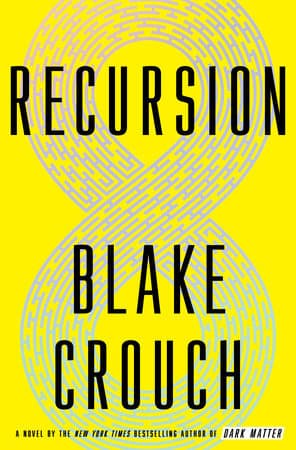
- Recursion
Blake Crouch
4.2 (109k) average on GoodreadsThriller"Recursion" by Blake Crouch (2019) also explores themes of memory and time loops but with a more grounded and scientifically rigorous approach to its science fiction elements. Crouch's novel offers a more cohesive and plausible explanation for its reality-bending premise, making its narrative feel more internally consistent compared to the somewhat fantastical and less explained mechanics of the 'Wake' in Pessl's book. While both are thrillers, Crouch's focuses more on the scientific implications and personal stakes within a global catastrophe, whereas Pessl's is more contained and character-focused on a smaller group.
- One of Us Is Lying
Karen M. McManus
4.0 (216k) average on GoodreadsThriller"One of Us Is Lying" by Karen M. McManus (2017) is a Young Adult mystery that, like "Neverworld Wake," centers on a group of students suspected of murder. However, McManus's novel is a more straightforward and character-driven whodunit, excelling in its exploration of high school dynamics and the individual motivations of its suspects. While Pessl's book attempts a broader thematic scope with its fantasy and sci-fi elements, McManus delivers a more focused and ultimately more satisfying resolution to its core mystery through meticulous character development and a less convoluted plot. McManus's strength lies in making each suspect feel distinct and integral to the unfolding investigation, a depth that is sometimes lacking in Pessl's supporting cast.
- Angels & Demons
Dan Brown
3.9 (2.7M) average on GoodreadsThrillerA Harvard symbologist races through Rome's ancient sites, deciphering cryptic clues to unmask the Illuminati and stop a vengeful plot to destroy the Vatican with a stolen antimatter weapon.
- Gone Girl
Gillian Flynn
4.1 (2.3M) average on GoodreadsThrillerA wife's sudden disappearance on her fifth anniversary reveals a web of lies and psychological warfare, exposing the secrets within a seemingly perfect marriage.





Enjoyed the summary?
A summary gives you the shape of the book. The book itself has the detail, the examples and the voice.
Find Neverworld Wake on AmazonAs an Amazon Associate, BookBrief earns from qualifying purchases. How we're funded