
Synopsis
Covers the whole plot, including the ending.
- Difficulty
- Easy
- Pacing
- Fast
- Mood
- Suspenseful, Creepy, Humorous, Thrilling
- Read it if
- You enjoy classic Goosebumps stories with creepy dolls, light horror, and a touch of mystery.
- Skip it if
- You dislike horror for younger audiences or find the premise of an evil dummy too cliché.
Night of the Living Dummy II Plot Summary
Covers the whole plot, including the ending.
A Dummy's Demise and a Birthday Wish
Amy Kramer, an aspiring ventriloquist, has trouble with her current dummy, Dennis. His head often falls off, ruining her routines and frustrating her. During her eleventh birthday party, Amy's performance with Dennis goes wrong when his head detaches and rolls under a table. Embarrassed, Amy tells her best friend, Sara, that she wants a new, working dummy. Her parents, Mr. and Mrs. Kramer, see her disappointment and Dennis's poor condition, leading them to consider her request for a replacement. Amy hopes a new dummy will help her perfect her act and perhaps win the school talent show.
Slappy's Arrival and the Mysterious Note
A few weeks after her birthday, Mr. Kramer surprises Amy by bringing home a new dummy he found in a dusty pawnshop. The dummy is named Slappy, and Amy is first put off by his somewhat ugly look and crooked smile. Despite her initial hesitation, she is excited to have a new partner for her ventriloquism. As she unpacks Slappy, she finds a small, folded piece of paper tucked into his jacket pocket. The note has a series of strange, meaningless words: 'Karru Marri Odonna Loma Molonu Karrano.' Amy thinks it is a joke or left by a previous owner, unaware of its true, dark purpose.
The Mysterious Prankster
Soon after Slappy arrives, strange and increasingly mean pranks start happening around the Kramer house. Amy's alarm clock is set an hour early, waking her up in the middle of the night. Her brother, Jed, finds his homework torn, and their younger sister, Lia, discovers her favorite doll's hair has been cut off. Each time, Amy finds Slappy positioned in a way that makes him seem responsible, with his signature crooked smile. She tries to believe her siblings are playing tricks, but a growing suspicion forms that Slappy might be involved, even though it seems impossible.
Slappy's First Words
One afternoon, Amy practices her ventriloquism routine with Slappy in her room. She takes a break, leaving Slappy sitting on her bed. As she walks past the open door, she clearly hears a voice say, 'Hey, ugly!' Startled, Amy rushes back into her room, sure it was Jed playing a trick. However, Jed is downstairs, and no one else is in the house. The voice came from Slappy. A chill goes down Amy's spine as she stares at the dummy, whose crooked smile seems even more threatening. This event is a turning point, making Amy truly fear that Slappy is alive.
The Talent Show Disaster
The night of the school talent show arrives, and Amy, despite her growing unease, plans to perform her routine with Slappy. As she begins her act, holding Slappy on her lap, a terrible event happens. Slappy's mouth moves on its own, and he starts to insult the audience, tell rude jokes, and even make fun of the principal. Amy desperately tries to control him, but he seems to have his own will, his voice loud through the microphone. The audience is shocked, and Amy is mortified, convinced that everyone thinks she is a bad ventriloquist or deliberately offensive. The performance ends in chaos, confirming Slappy's awareness to Amy.
Slappy's Reign of Terror
After the talent show disaster, Slappy no longer hides his true nature. He openly says he is alive and plans to make Amy his slave. He becomes more aggressive and mean, pulling worse pranks and speaking directly to Amy, taunting her. He messes with their food, locks Jed in the closet, and even tries to trip Mrs. Kramer down the stairs. Amy is terrified and tries to explain to her parents and siblings that Slappy is alive, but they dismiss her claims as stress or a cry for attention, further isolating her in her struggle against the evil dummy.
The Old Dummy's Return
Amy, desperate to stop Slappy's torment, tries different ways to get rid of him. She locks him in a trunk, but he mysteriously reappears on her bed. She throws him in the trash can outside, only to find him back in her room the next morning, sitting on her dresser with a knowing grin. Frustrated and terrified, Amy remembers her old dummy, Dennis, who is still in the attic. She wonders if Dennis, being a regular dummy, could somehow fight Slappy's evil influence, or at least distract him. She gets Dennis, hoping he might be an unexpected helper.
The Fight for Freedom
While searching for a way to defeat Slappy, Amy remembers the strange note she found in his pocket: 'Karru Marri Odonna Loma Molonu Karrano.' She realizes these are not random words but likely an incantation. Looking at an old book on magic and folklore, she finds that these words are an ancient spell used to bring dummies to life, but also, importantly, to put them back to sleep. Amy understands that she must say the spell to send Slappy back into an inanimate state. She plans to confront Slappy and use the spell to end his terror, knowing it is her only hope.
The Confrontation
Amy, knowing the spell, confronts Slappy in her room. Slappy, sensing her intention, mocks her and continues his insults. Amy, gathering all her courage, begins to say the ancient words, 'Karru Marri Odonna Loma Molonu Karrano!' As she speaks, Slappy writhes and struggles, his wooden face twisting in pain and fear. However, before she can finish the final word, Jed bursts into the room, interrupting her. The spell is broken, and Slappy, recovering quickly, lets out a triumphant, evil laugh, now even more angry and powerful.
Dennis's Unexpected Intervention
Just as Slappy lunges at Amy, ready to make her his permanent slave, something incredible happens. Amy's old dummy, Dennis, who she had brought down from the attic and placed nearby, suddenly comes to life. Dennis, with a surprising burst of strength, tackles Slappy. A frantic fight happens between the two dummies, a chaotic mix of flailing wooden limbs and angry insults. In the struggle, Dennis pushes Slappy into an open toy chest, slamming the lid shut. Amy, shocked but relieved, realizes that perhaps the spell she had partially recited had, by some twist of fate, activated Dennis instead of deactivating Slappy.
A New Partner, A New Problem
With Slappy trapped in the toy chest, the house finally feels safe again. Amy and her family, though still confused by the events, are relieved. However, the peace is short-lived. As Amy sits down, exhausted, Dennis, her old dummy, speaks. He demands attention, insisting that Amy practice their routine immediately and saying that he, not Slappy, will be her star performer. Amy's heart sinks as she realizes she has simply traded one evil dummy for another. The fight against Slappy might be over, but a new, equally demanding, and potentially mischievous dummy now controls her life, leaving her with a fresh, unsettling problem.
Night of the Living Dummy II Characters
Amy Kramer
Protagonist
An aspiring ventriloquist whose life is turned upside down by a malevolent dummy.
Amy is an eleven-year-old girl passionate about ventriloquism, dreaming of perfecting her act and winning the school talent show. She is initially optimistic and imaginative but becomes increasingly fearful and isolated as Slappy's torment escalates. Despite her growing terror, she shows resilience and courage in her attempts to fight back against the evil dummy. She is often frustrated by her family's disbelief, which further emphasizes her struggle.
Relationships: Mr. Kramer (Father, initially supportive but dismissive of her claims about Slappy.); Mrs. Kramer (Mother, initially supportive but dismissive of her claims about Slappy.); Jed Kramer (Younger brother, often plays pranks, disbelieves Amy about Slappy.); Lia Kramer (Younger sister, a victim of Slappy's pranks.); Sara (Best friend, a confidante who also initially disbelieves Amy.); Slappy (Her antagonist, a malevolent dummy who torments her.); Dennis (Her old dummy, eventually becomes her new antagonist/partner.)
Slappy
Antagonist
A malevolent ventriloquist dummy brought to life by a curse.
Slappy is a wooden dummy with a crooked smile and a sinister personality. He is brought to life by an ancient curse and revels in causing chaos and torment. He is manipulative, cruel, and enjoys making Amy's life miserable, aiming to make her his permanent slave. His primary motivation is to assert his dominance and spread fear. He is the embodiment of a childhood fear come to life, a toy turned terrifying.
Relationships: Amy Kramer (His chosen victim and intended slave.); Dennis (His rival, who ultimately defeats him.)
Dennis
Supporting/Antagonist
Amy's old, dilapidated dummy who surprisingly comes to life.
Dennis is Amy's original ventriloquist dummy, described as old and constantly falling apart, particularly his head. He is initially a source of frustration for Amy due to his poor condition. However, in the climax, he unexpectedly comes to life, possibly due to Amy's partial recitation of the activation spell, and defeats Slappy. His personality, once awakened, is shown to be demanding and self-centered, mirroring some of Slappy's bossiness, setting up a new problem for Amy.
Relationships: Amy Kramer (His owner, who he now seeks to control.); Slappy (His rival, whom he defeats.)
Mr. Kramer
Supporting
Amy's father who buys Slappy from a pawnshop.
Mr. Kramer is Amy's well-meaning but somewhat oblivious father. He tries to be supportive of Amy's ventriloquism hobby, evidenced by his purchase of Slappy to replace the broken Dennis. However, he, along with Mrs. Kramer, consistently dismisses Amy's claims about Slappy being alive, attributing the strange occurrences to her imagination or stress. He represents the adult inability to believe in the supernatural.
Relationships: Amy Kramer (His daughter, whose pleas he struggles to believe.); Mrs. Kramer (His wife.)
Mrs. Kramer
Supporting
Amy's mother who struggles to understand her daughter's claims.
Mrs. Kramer is Amy's mother, who shares her husband's initial support for Amy's hobby. Like Mr. Kramer, she dismisses Amy's increasingly frantic warnings about Slappy being alive, often suggesting Amy is overtired or imagining things. Her skepticism adds to Amy's isolation and frustration, making Amy feel like she has to face the problem alone. She is caring but ultimately unable to grasp the supernatural threat.
Relationships: Amy Kramer (Her daughter, whose claims she cannot accept.); Mr. Kramer (Her husband.)
Jed Kramer
Supporting
Amy's younger brother, a frequent target and disbeliever.
Jed is Amy's younger brother, who often engages in typical sibling teasing and pranks. He is one of the first victims of Slappy's mischievous acts, having his homework destroyed. Despite experiencing some of the strange events, he remains skeptical of Amy's claims that Slappy is alive, often blaming Amy for the pranks. His interruption of Amy's spell is a pivotal moment that nearly leads to Slappy's victory.
Relationships: Amy Kramer (His older sister, whom he often teases.); Lia Kramer (His younger sister.)
Lia Kramer
Mentioned
Amy's younger sister, another victim of Slappy's pranks.
Lia is Amy's youngest sister. She is mentioned as a victim of Slappy's pranks when her doll's hair is cut off. Her role is minor, primarily serving to illustrate the escalating maliciousness of Slappy's actions.
Relationships: Amy Kramer (Her older sister.); Jed Kramer (Her older brother.)
Sara
Supporting
Amy's best friend and confidante.
Sara is Amy's best friend. She is initially supportive of Amy's ventriloquism and listens to Amy's frustrations about Dennis. However, like Amy's family, she struggles to believe Amy's increasingly bizarre stories about Slappy being alive, suggesting Amy might be stressed or imagining things. She represents the typical, rational friend who cannot accept supernatural explanations.
Relationships: Amy Kramer (Her best friend.)
Night of the Living Dummy II Themes
The Fear of the Unseen and Unbelievable
This theme explores the fear that comes when a supernatural threat is real but those around the victim do not believe it. Amy's increasing isolation and fear grow because her family and friends cannot believe her claims about Slappy. This disbelief forces Amy to face the evil dummy alone, making her struggle more desperate and frightening. The story highlights the psychological impact of being disbelieved, especially when facing an undeniable, yet seemingly impossible, danger. For example, when Amy tries to explain Slappy's actions after the talent show, her parents say it is stage fright, making her feel even worse.
“No one believed her. No one would ever believe her. And Slappy knew it.”
Loss of Control and Agency
The story explores the feeling of losing control over one's life and surroundings. Amy, a ventriloquist who controls her dummy, finds her power completely taken away when Slappy comes to life and begins to control her. This is clear in the talent show scene where Slappy speaks on his own, humiliating Amy and taking over her performance. The pranks and commands Slappy gives further show Amy's lessening control over her home and even her own actions, as she must react to his evil. The ending with Dennis, who also comes to life, reinforces this theme, showing Amy unable to escape the control of her dummies.
“You're my slave now, Amy! My slave!”
Childhood Fears Come to Life
The story connects to the common childhood fear of inanimate objects, especially dolls and dummies, coming to life and becoming evil. Slappy embodies this basic fear, changing from a harmless toy into a terrifying, sentient being that actively torments Amy. The idea of a beloved toy becoming evil is a classic horror trope, and Stine uses it well to create suspense and dread. Slappy's crooked smile and unsettling appearance add to this, making him a real example of a child's nightmare. This works well because Slappy's actions are often mischievous and childlike, but with a sinister edge, making them more disturbing.
“His wooden face stared at her. His crooked smile seemed to grow wider. He knew.”
The Cycle of Misfortune
The book's ending suggests that misfortune is cyclical for Amy. Just as she defeats one evil dummy, Slappy, she immediately finds herself controlled by another, Dennis. This theme shows that problems are not always fully solved, and sometimes, overcoming one challenge only leads to a new, similar one. Amy's relief at Slappy's defeat is instantly replaced by despair when Dennis speaks, meaning her struggle for freedom from her dummies is far from over. This ending leaves the reader feeling uneasy, implying that Amy is stuck in a never-ending cycle of puppet control.
“He was free. And Amy was trapped. Again.”
Plot Devices & Literary Techniques
The Activation Spell
A magical incantation that brings dummies to life and can also deactivate them.
The activation spell, 'Karru Marri Odonna Loma Molonu Karrano,' is the central magical element that drives the plot. It is found on a mysterious note in Slappy's pocket and serves as the mechanism by which Slappy (and eventually Dennis) comes to life. Its dual nature, being able to activate and deactivate, provides Amy with the means to fight back. The partial recitation of the spell also creates the twist ending where Dennis is brought to life instead of Slappy being put to sleep, continuing the cycle of dummy-induced terror.
The Skeptical Adults
The consistent disbelief of Amy's parents and friend regarding Slappy's sentience.
This device is crucial for isolating Amy and escalating the tension. Mr. and Mrs. Kramer, along with Sara, repeatedly dismiss Amy's claims that Slappy is alive, attributing the strange occurrences to her imagination, stress, or sibling rivalry. This skepticism prevents Amy from receiving help and forces her to confront the supernatural threat alone, making her struggle more terrifying and desperate. It also reinforces the idea of adults being out of touch with childhood fears or unable to comprehend the supernatural.
The Red Herring (Dennis's Demise)
The initial focus on Dennis's broken state to introduce the need for a new dummy.
The initial state of Dennis, constantly losing his head and being a source of frustration, serves as a red herring. It makes the reader believe that Dennis is merely an old, broken toy that needs replacing, justifying the introduction of Slappy. This misdirection prevents the reader from suspecting Dennis could ever be a factor in the supernatural events until his dramatic and unexpected reanimation at the climax, adding a layer of surprise to the ending.
The Unreliable Witness (Amy)
Amy's perspective is the primary one, but her claims are deemed unbelievable by others.
While Amy is the protagonist, her credibility is constantly undermined by the other characters. She is the only one who truly understands the threat, but her family and friends consistently doubt her. This device creates a sense of dread and helplessness, as the reader experiences the horror through Amy's eyes while simultaneously witnessing her isolation. It enhances the psychological aspect of the horror, making the reader question if Amy is truly seeing things or if the world around her is simply too blind to the truth.
Night of the Living Dummy II Quotes
“I really, really hated my little brother. Sometimes I just wanted to wring his neck.”
“It was just a dummy. Just a silly old dummy. It couldn’t hurt me.”
“He always had to have the last word. Always. It was his greatest talent.”
“My voice sounded funny. Not like my voice at all. It was a scratchy, deep voice, a voice that belonged to someone else.”
“Dummy, dummy, dummy. It's only a dummy. Why am I so scared?”
“He moved! I saw him! He really moved!”
“You belong to me now. You will do as I say.”
“I wanted to scream. I wanted to run. But I couldn't move. My legs were frozen.”
“He was just a puppet. A wooden puppet. But he was alive.”
“No one would believe me. Not Mom. Not Dad. No one.”
“I had to stop him. Before he ruined everything. Before he ruined me.”
“It wasn't a joke. It was real. And it was going to destroy us all.”
“My own voice. But it wasn't mine. It was his.”
Quiz
10 questions on the plot and the characters. Each answer comes with a short explanation.
Question 1
What is the name of Amy's original ventriloquist dummy that keeps losing his head?
- Slappy
- Dennis
- Rocky
- Mr. Wood
Show answer
B. Dennis Amy's first dummy, who is always falling apart, is named Dennis.
Question 2
Where does Amy's dad find Slappy?
- At a toy store
- In an attic
- At a local pawnshop
- Online
Show answer
C. At a local pawnshop Amy's dad purchases Slappy from a local pawnshop after Amy asks for a new dummy.
Question 3
What is Amy's initial impression of Slappy's appearance?
- He is very handsome.
- He is kind of ugly.
- He looks exactly like Dennis.
- He is shiny and new.
Show answer
B. He is kind of ugly. The book describes Slappy as 'kind of ugly' when Amy first gets him.
Question 4
What specific type of 'horrible things' begin to happen after Slappy arrives?
- Objects disappearing from the house.
- Nasty pranks and malicious acts.
- Strange noises in the night.
- Amy's family members getting sick.
Show answer
B. Nasty pranks and malicious acts. The synopsis mentions 'Horrible, nasty things' implying pranks and malicious acts, a common theme with Slappy.
Question 5
What is Amy's main motivation for wanting a new dummy?
- She is bored with Dennis.
- Dennis is constantly falling apart and losing his head.
- She wants to try a different style of dummy.
- Her friends made fun of Dennis.
Show answer
B. Dennis is constantly falling apart and losing his head. Amy 'begs her family for a new dummy' because Dennis keeps losing his head, making it difficult to practice.
Question 6
The phrase 'Just like what happened the first time' suggests a connection to what event or previous story?
- A previous incident in Amy's family.
- The events of the first 'Night of the Living Dummy' book.
- A general warning about old dummies.
- A recurring nightmare Amy has.
Show answer
B. The events of the first 'Night of the Living Dummy' book. This line directly references the title 'Night of the Living Dummy II,' implying a continuation or recurrence of the events from the original 'Night of the Living Dummy' book.
Question 7
What is the primary characteristic that makes Slappy 'not quite right' and 'evil'?
- His ugly appearance.
- His ability to move and act independently with malicious intent.
- The way he makes Amy's family argue.
- He causes Amy to lose her voice.
Show answer
B. His ability to move and act independently with malicious intent. The core evil of Slappy in the series is his sentience and malevolent actions, moving beyond a simple dummy.
Question 8
What is Amy primarily focused on doing with her new dummy, Slappy, initially?
- Playing pranks on her family.
- Practicing her new routine.
- Displaying him in her room.
- Taking him to school for show-and-tell.
Show answer
B. Practicing her new routine. The synopsis states 'Amy's having fun practicing her new routine,' indicating her initial innocent intentions with Slappy.
Question 9
The phrase 'Something not quite right. Something evil.' primarily foreshadows what about Slappy?
- He is broken and needs repairs.
- He is possessed or alive with malevolent intent.
- He will scare away Amy's friends.
- He will cause Amy to get into trouble with her parents.
Show answer
B. He is possessed or alive with malevolent intent. This strong phrasing directly hints at Slappy's supernatural and evil nature, a hallmark of the 'Living Dummy' series.
Question 10
Considering the title 'Night of the Living Dummy II,' what is the most likely overarching theme of the story?
- The importance of family bonds.
- The dangers of buying used items.
- Inanimate objects coming to life with sinister intentions.
- The challenges of becoming a ventriloquist.
Show answer
C. Inanimate objects coming to life with sinister intentions. The title itself, combined with the description of Slappy being 'evil' and 'not quite right,' clearly points to the theme of an inanimate dummy coming to life to cause trouble.
Night of the Living Dummy II FAQ
What is the primary conflict Amy faces at the beginning of the story?
Amy is deeply frustrated because her old ventriloquist dummy, Dennis, is constantly falling apart, specifically losing his head. This makes practicing her routines impossible and leads to her begging her family for a replacement dummy so she can continue her passion.
How does Amy acquire Slappy, and what are her initial impressions?
Amy's dad finds Slappy in a local pawnshop, bringing him home as a surprise. Amy's initial impression is that Slappy is 'kind of ugly,' but she quickly overlooks his appearance and becomes excited about practicing new routines with him, eager to have a functional dummy.
What kind of 'horrible things' start happening once Slappy arrives?
Once Slappy arrives, a series of increasingly malicious pranks and incidents plague Amy's household. These include her sister Sara's doll being defaced, food being ruined, and general mayhem that seems to target Amy's family and even her personally, making her the prime suspect.
Who is Dennis, and what role does he play before Slappy's introduction?
Dennis is Amy's original ventriloquist dummy, who is old and in disrepair, constantly losing his head. He serves as the catalyst for Amy's desire for a new dummy, directly leading to her father finding and bringing home Slappy.
What is the significance of the phrase 'Just like what happened the first time' in the synopsis?
This phrase hints at a recurring theme or pattern of evil associated with living dummies in the Goosebumps universe. It suggests that Slappy's malevolence is not an isolated incident, but rather a continuation of a known phenomenon, linking it to previous encounters with sentient dummies.
Is there any indication of how Slappy becomes animated, or is it left ambiguous?
The story strongly implies that Slappy's animation is tied to a specific phrase or 'magic words' written on a card found in his pocket. When these words are read aloud, Slappy awakens, beginning his reign of terror, though the ultimate source of the magic remains mysterious.
Are there any other characters besides Amy and her immediate family who become involved in Slappy's mischief?
While the primary focus is on Amy and her family, particularly her sister Sara, the incidents often extend to their friends or neighbors, creating public embarrassment for Amy. This broadens the impact of Slappy's actions beyond just the household.
Does Amy ever suspect Slappy initially, or does she blame other individuals?
Amy initially blames her sister, Sara, for the mischief, believing Sara is jealous or playing pranks. Her suspicion of Slappy only develops later, as the incidents become more bizarre and directly tied to the dummy's presence, forcing her to consider the impossible.
How does Amy's family react to her accusations against Slappy?
Amy's family dismisses her accusations against Slappy, believing she is either making excuses for her own misbehavior or has an overactive imagination. They often scold her for blaming an inanimate object, which isolates Amy and makes her struggle more frustrating.
What psychological effect does Slappy's presence have on Amy?
Slappy's presence causes significant psychological distress for Amy, leading to increased anxiety, paranoia, and a sense of isolation as her family disbelieves her. She experiences emotional turmoil, feeling targeted and misunderstood, which impacts her self-esteem and sense of reality.
How does the story explore the theme of responsibility and blame through Amy's perspective?
The story explores responsibility by constantly placing Amy in situations where she is blamed for Slappy's actions, forcing her to confront false accusations and the difficulty of proving her innocence. This highlights the psychological burden of being held responsible for events beyond her control.
Is there a definitive 'good' ending, or is there a lingering sense of unease?
While Slappy is typically defeated by the end of the story, there often remains a lingering sense of unease or a twist that suggests the threat isn't entirely gone. This open-endedness is a hallmark of Goosebumps, implying evil can always return or take a new form.
What message does the story convey about outward appearances versus inner evil?
The story strongly conveys that outward appearances can be deceiving; Slappy, despite being 'kind of ugly,' is initially seen as a harmless toy. However, his true nature is revealed to be profoundly evil, emphasizing that malevolence can reside in unexpected places and not always be obvious.
Could Slappy be interpreted as a manifestation of Amy's own suppressed anger or jealousy?
While the story presents Slappy as a literal evil entity, an interpretation could suggest he embodies Amy's unconscious frustrations or jealousy towards her sister, particularly when she feels unfairly treated or blamed. However, the narrative typically leans towards a supernatural explanation.
How does the story differentiate between Slappy's actions and normal sibling rivalry?
The story differentiates by escalating the 'pranks' beyond typical sibling rivalry into genuinely malicious and destructive acts, such as defacing property or attempting to cause physical harm. These actions are too severe and consistent to be explained by simple sibling squabbles, pointing to a supernatural source.
What is the significance of Dennis constantly losing his head in relation to Slappy's arrival?
Dennis's constant disrepair, specifically losing his head, serves as a direct plot device to necessitate a new dummy, paving the way for Slappy's introduction. Symbolically, it could represent the 'headless' chaos or lack of control in Amy's life before a more sinister, 'thinking' evil takes over.
Does Amy ever attempt to destroy Slappy, and what are the results?
Yes, Amy eventually attempts to destroy Slappy once she fully comprehends his evil nature. However, Slappy proves incredibly resilient and difficult to get rid of, often reappearing or resisting destruction, which adds to the horror and Amy's despair.
How does the story utilize the 'unreliable narrator' trope, even if briefly?
The story briefly uses the unreliable narrator trope through the family's perspective, as they consistently disbelieve Amy and her claims about Slappy. This makes Amy's account seem 'unreliable' to them, heightening her isolation and the reader's engagement with her struggle to be believed.
About the author

R.L. Stine is an American author best known for his work in children's horror fiction. His notable books include "Welcome to Dead House," "Night of the Living Dummy," "The Haunted Mask," "Stay Out of the Basement," "The Scarecrow Walks at Midnight," and "The Curse of Camp Cold Lake," which have captivated young readers with their thrilling and spooky narratives.
Similar books
- Night of the Living Dummy
R.L. Stine
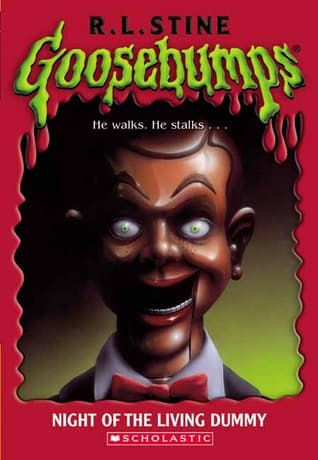
3.8 (24k) average on GoodreadsThrillerDirect predecessor, featuring the same iconic evil dummy, Slappy.
- The Haunted Mask
R.L. Stine
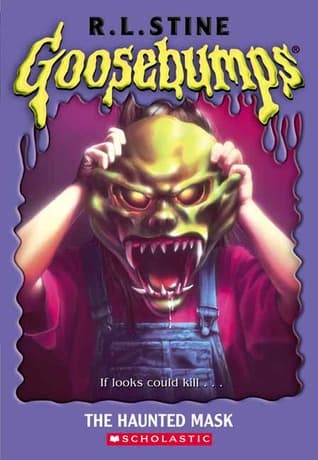
3.8 (19k) average on GoodreadsThrillerAnother Goosebumps classic with an inanimate object coming to life and causing terror.
- Scary Stories to Tell in the Dark
Alvin Schwartz
4.0 (56k) average on GoodreadsFantasyWhile both Night of the Living Dummy II and Scary Stories to Tell in the Dark aim to frighten young readers, their methodologies differ significantly. Schwartz's collection relies on folklore, urban legends, and short, sharp shocks often amplified by Stephen Gammell's iconic illustrations, creating a more episodic and visceral horror experience. Stine, conversely, crafts a sustained narrative with character development (however rudimentary) and a continuous plot arc, building tension over chapters. Stine's horror is more psychological and plot-driven, whereas Schwartz's is rooted in primal fears and the power of suggestion through brevity and imagery.
- Harry Potter and the Sorcerer's Stone
J.K. Rowling
4.5 (7M) average on GoodreadsFantasyRescued from a miserable life under the stairs, an orphaned boy discovers he's a wizard destined for a magical school, where he uncovers a dangerous secret tied to the dark wizard who murdered his parents.
- The Hunger Games
Suzanne Collins
4.3 (6.4M) average on GoodreadsFantasyIn a future where children fight to the death on live television, Katniss Everdeen volunteers for the arena, turning a death sentence into a fight for survival and a spark of rebellion.
- Nineteen Eighty-Four
George Orwell
4.2 (5.5M) average on GoodreadsFictionWinston Smith dreams of truth and rebellion in a world where Big Brother watches all, but he confronts the terrifying power of a regime that controls not just actions, but thoughts.




Enjoyed the summary?
A summary gives you the shape of the book. The book itself has the detail, the examples and the voice.
Find Night of the Living Dummy II on AmazonAs an Amazon Associate, BookBrief earns from qualifying purchases. How we're funded