
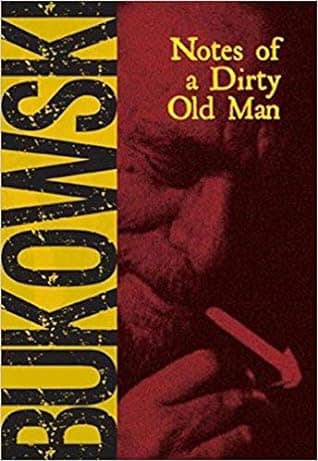
Synopsis
Covers the whole plot, including the ending.
- Difficulty
- Easy
- Pacing
- Variable
- Mood
- Gritty, Cynical, Bleak, Absurdist, Confessional
- Read it if
- You appreciate raw, confessional, and darkly humorous prose about the underbelly of society, with a focus on a writer's chaotic life.
- Skip it if
- You prefer polite narratives, positive protagonists, or are sensitive to explicit language, misogyny, and descriptions of alcoholism.
Notes of a Dirty Old Man Plot Summary
Covers the whole plot, including the ending.
The Writer's Life, Unfiltered
The collection begins with the narrator, Henry Chinaski, dealing with the ordinary and often strange parts of his life as a struggling writer. He describes his small apartment, his constant money problems, and his reliance on alcohol. This section sets the tone, showing a raw look at a life on the edge of society. Chinaski often gets letters and visits from odd fans, would-be collaborators, and misguided do-gooders, whom he treats with amusement, contempt, and sometimes, grudging tolerance. He details his writing process, which often involves heavy drinking and late-night sessions at his typewriter, producing the 'Notes' that make up the book.
Encounters with the Absurd
Chinaski's life has many strange encounters. A 'madman' from Vine Street in Hollywood, calling himself 'King Arthur,' wants to help him write his column, a suggestion Chinaski dismisses with his usual cynicism. A doctor, a former psychiatrist, offers to 'help' him after reading his column, but Chinaski sends him away. These interactions show Chinaski's isolation and his resistance to conventional help. He often finds himself in situations where others project their own desires or delusions onto him, strengthening his view of humanity's strangeness and his own outsider status. These stories show the bizarre characters in his Los Angeles life.
The Daily Grind of Poverty
Throughout the stories, Chinaski's financial instability is a constant theme. He often describes trying to find enough money for rent, food, and, most importantly, alcohol. This often means taking on low-paying jobs or waiting for checks from his writing, which are rarely large or on time. He tells of pawning his things, borrowing money, and living paycheck to paycheck. This struggle is shown not as a tragedy, but as an unavoidable part of his chosen life. His lack of concern for material wealth, beyond basic survival, is clear, but the constant pressure of poverty shapes his daily decisions and interactions.
Women and Relationships
Chinaski's interactions with women are a central, though often chaotic, part of his life. He describes a series of short, intense, and often troubled relationships. These women include struggling artists, barflies, and more 'respectable' people drawn to his raw honesty. His relationships involve heavy drinking, passionate arguments, and a general lack of traditional romantic feeling. He often shows women as both a source of comfort and annoyance, reflecting his complicated views on intimacy and commitment. These encounters are rarely sentimental, instead offering a stark and often misogynistic portrayal of sexual and emotional dynamics.
The Bar as a Sanctuary and Battleground
Bars are a constant setting in Chinaski's world, both a refuge and a stage for his often-confrontational interactions. He spends hours drinking, watching, and talking with other patrons. These places are where many of his relationships begin and end, and where he often finds inspiration for his writing. The bar environment is a small version of society, full of lonely people, alcoholics, and dreamers. Chinaski often gets into fights, both verbal and physical, in these settings, showing his aggressive personality and his dislike for hypocrisy. The bar is where he feels most at home, yet also most exposed.
Writing as a Compulsion
Amid the drinking, fighting, and general mess, Chinaski's dedication to writing stays constant. He sees writing not as a job but as an unavoidable drive, a way to process his experiences and understand the world. He often writes late at night, fueled by alcohol and cigarettes, producing his raw columns. He describes the struggle of finding his voice and the satisfaction of putting his thoughts on paper, even when he doubts their worth. This commitment to his art is perhaps the most stable part of his otherwise unstable life, serving as his main way of expressing himself and connecting to the world.
The Horse Races and Gambling
Horse racing is another important part of Chinaski's life, representing both a brief hope for money and another way to self-destruct. He spends much time and his little money studying racing forms and placing bets. While he sometimes wins small amounts, these are always temporary, and he inevitably loses his earnings, reinforcing his cycle of poverty. The racetrack is a place of both excitement and despair, mirroring the ups and downs of his own life. It is a futile pursuit, yet one he cannot give up, perhaps for the illusion of control it offers.
Reflections on Society and Art
Throughout the collection, Chinaski mixes his personal stories with cynical and often harsh critiques of mainstream society, art, and the literary world. He shows contempt for pretense, fakery, and the selling of art. He often mocks academic critics and established writers, arguing that true art comes from lived experience and raw honesty, not intellectual posturing. His observations are often misanthropic, reflecting his belief that most people are deluded or hypocritical. These philosophical asides provide insight into his worldview and his role as an outsider artist.
Physical and Mental Decline
The stories do not avoid showing the physical and mental cost of Chinaski's heavy drinking and chaotic life. He describes hangovers, illnesses, and the general wear and tear on his body. There are moments of despair and self-hatred, though he often quickly hides these with humor or more drinking. Despite the decline, there is an underlying resilience, a refusal to completely give in. This unflinching portrayal of decline adds realism and vulnerability to his tough exterior, hinting at the deeper costs of his chosen path.
Moments of Fleeting Beauty
Despite the widespread cynicism and bleakness, there are occasional glimpses of beauty or unexpected tenderness in Chinaski's world. These might come from a shared moment with a woman, a well-written line, or a brief appreciation of nature. These moments are rare and often quickly overshadowed by his usual routine, but they show the complexity of his character. They suggest that beneath the tough exterior, he still has a capacity for observation and appreciation, even if his life mainly consists of the opposite. These brief instances offer a contrast to the prevailing nihilism.
The Purgatory of the Post Office
While not the main focus of 'Notes of a Dirty Old Man,' some stories or references in the collection mention Chinaski's past and occasional work at the post office, a recurring setting in Bukowski's larger work. He describes the mind-numbing routine, the oppressive bureaucracy, and the dehumanizing aspects of the job. These experiences contrast sharply with his life as a writer, highlighting the struggle between needing a steady income and his desire for artistic freedom. The post office represents a kind of purgatory, a necessary evil he endures to support his true calling.
The Dirty Old Man Persona
Throughout the collection, Chinaski actively creates and strengthens his persona as the 'dirty old man.' He enjoys his outsider status, his crude language, and his refusal to follow societal norms. This persona is both a defense mechanism and a true reflection of his identity. He uses it to provoke, to entertain, and to create a distinct literary voice. The title itself acknowledges this self-aware embrace of his image, suggesting defiance against judgment and a celebration of his own unconventional wisdom, however rough it may be. He is both the observer and the observed, the subject and the author of his own myth.
Notes of a Dirty Old Man Characters
Henry 'Hank' Chinaski
Protagonist
A cynical, alcoholic, and prolific writer based in Los Angeles.
Henry Chinaski is the alter ego of Charles Bukowski, a hard-drinking, womanizing, and perpetually broke writer living in the underbelly of Los Angeles. He is driven by an insatiable need to write, viewing it as his only true purpose. Chinaski is fiercely independent, deeply cynical, and often misanthropic, yet possesses an undeniable wit and a raw honesty that attracts both admirers and detractors. He is a keen observer of human nature, particularly its darker aspects, and expresses his disdain for societal hypocrisy and pretension. His life is a chaotic cycle of drinking, writing, gambling, and tumultuous relationships.
Relationships: Various Women (Fleeting, passionate, often tumultuous and alcohol-fueled romantic/sexual relationships.); Fans/Readers (Often unsolicited and bizarre interactions; Chinaski is generally dismissive or bemused by their attempts to connect or 'help' him.); Bar Patrons (Often confrontational, sometimes comradely, relationships formed in the shared space of drinking.)
The Women in Chinaski's Life
Supporting
A rotating cast of lovers, barflies, and fleeting companions.
These women are often depicted through Chinaski's subjective and sometimes misogynistic lens. They are typically strong-willed, often damaged, and share Chinaski's penchant for heavy drinking and unconventional lifestyles. They represent different facets of his emotional and sexual life, from brief flings to more intense, though still unstable, partnerships. While their individual stories are rarely deeply explored, they serve as catalysts for Chinaski's experiences and reflections, often bringing both passion and conflict into his otherwise solitary existence. They are rarely given names, often identified by their first names or a defining characteristic.
Relationships: Henry Chinaski (Romantic, sexual, often volatile and short-lived; characterized by mutual attraction, arguments, and shared drinking.)
King Arthur (The Madman)
Mentioned
An eccentric fan who wants to collaborate with Chinaski.
A self-proclaimed 'madman' living on Vine Street in Hollywood who contacts Chinaski, expressing admiration for his column and offering to help him write. He is an example of the unusual and often delusional individuals who are drawn to Chinaski's raw literary output. King Arthur represents the more bizarre and intrusive aspects of Chinaski's public persona, highlighting the strange interactions that come with being a controversial writer. Chinaski quickly dismisses his offer, finding him more of a nuisance than a potential collaborator.
Relationships: Henry Chinaski (A fan/would-be collaborator relationship that Chinaski quickly rejects.)
The Psychiatrist
Mentioned
A doctor who offers unsolicited help to Chinaski.
A former psychiatrist who, after reading Chinaski's column, comes to his door offering to 'help' him. This character represents the conventional world's attempts to 'fix' Chinaski, to pathologize his lifestyle and experiences. Chinaski immediately recognizes the futility and presumptuousness of such an offer, sending the doctor away. This interaction underscores Chinaski's fierce independence and his rejection of therapeutic interventions, asserting that his life, however messy, is his own to live and understand.
Relationships: Henry Chinaski (A brief, unsolicited offer of help from the doctor, which Chinaski dismisses.)
The Long Distance Operator from Newburgh, N.Y.
Mentioned
A concerned fan who sends money to Chinaski.
A distant admirer who, touched by Chinaski's writing, sends him money with the request that he stop drinking beer and eat well. This character represents the more compassionate, albeit still naive, side of Chinaski's readership. Her gesture is an act of kindness, but also a misunderstanding of Chinaski's deeply ingrained habits and his embrace of his own chosen path. Chinaski acknowledges her gesture with a mix of bemusement and perhaps a touch of cynical appreciation, but her advice goes unheeded.
Relationships: Henry Chinaski (A distant admirer/benefactor whose kindness is noted but whose advice is not followed.)
The Gypsy and His Wife
Supporting
Uninvited guests who drink with Chinaski.
A couple brought to Chinaski's door by a 'bum off the road.' They join Chinaski in drinking and conversation late into the night. These characters represent the transient, often unusual individuals who drift into and out of Chinaski's life, reflecting the spontaneous and unpredictable nature of his social interactions. Their presence adds to the chaotic atmosphere of Chinaski's home, illustrating his openness to unexpected company, even if it means further disruption to his already unstructured existence.
Relationships: Henry Chinaski (Shared drinking and conversation as unexpected guests.)
Notes of a Dirty Old Man Themes
The Artist as an Outsider
Chinaski consistently places himself outside mainstream society, rejecting conventional norms, jobs, and relationships. His art comes from this marginalization, offering an unfiltered view of life from the edges. He scorns academic literary circles and commercial success, believing true art comes from raw experience and honesty. This theme appears in his dismissal of the psychiatrist and 'King Arthur,' and his constant struggle against the expectation to conform, as seen in his refusal to hold a steady, 'respectable' job, preferring the uncertainty of a writer's life.
“I was a man who thrived on solitude; without it I was a half-dead thing, a mere shadow of myself.”
Alcoholism and Self-Destruction
Alcohol is always present in Chinaski's life, acting as both a muse and a destructive force. It fuels his writing, numbs his pain, and helps his social interactions, but also adds to his poverty, health problems, and troubled relationships. The stories clearly show the physical and emotional cost of heavy drinking, but Chinaski rarely wants to change, seeing it as a key part of his identity and creative process. This is clear in his bar scenes and his rejection of the Newburgh operator's plea to stop drinking, showing his deep reliance.
“Drinking is an emotional thing. It's a lot of fun. It's a lot of fun when you're young and you're healthy and you're getting away with it. But as you get older, it's not so much fun anymore.”
The Search for Authenticity
Chinaski constantly seeks and values authenticity in himself and others, while despising pretense and hypocrisy. He removes social niceties to show the raw, often ugly, truth of human existence. His writing style is a direct expression of this search, avoiding elaborate prose for direct, visceral descriptions. This theme is clear in his disdain for 'respectable' society, his preference for other outcasts, and his brutal honesty in detailing his own flaws and struggles, rejecting any romanticized self-portrayal.
“The problem with the world is that the intelligent people are full of doubts, while the stupid ones are full of confidence.”
Love, Sex, and Misogyny
Chinaski's relationships with women are central, marked by intense passion, frequent conflict, and a general misogyny. He often objectifies women and shows them through a cynical, sometimes brutal, lens. Yet, there are also moments of vulnerability and a search for connection, however brief or troubled. These relationships are rarely romanticized, instead offering a stark and often uncomfortable look at the dynamics of sex and intimacy in a life without conventional sentiment, highlighting the raw, animalistic aspects of human connection.
“Some people never go crazy, what truly horrible lives they must lead.”
Plot Devices & Literary Techniques
First-Person Narrative (Chinaski's Voice)
The stories are told directly through the raw, unfiltered perspective of Henry Chinaski.
This device is crucial to the collection's impact. By immersing the reader directly into Chinaski's mind, Bukowski creates an intimate, immediate, and often uncomfortable experience. The voice is characterized by its cynicism, profanity, dark humor, and brutal honesty. This narrative choice allows for subjective observations and personal anecdotes to dominate, shaping the reader's perception of events and characters exclusively through Chinaski's unique, often misanthropic, lens. It establishes a strong, distinctive authorial presence that is synonymous with the Bukowski style.
Episodic Structure
The book is a collection of loosely connected vignettes, columns, and short stories.
Rather than a single overarching plot, 'Notes of a Dirty Old Man' is comprised of numerous standalone pieces. This episodic structure mirrors the chaotic, unstructured nature of Chinaski's life, where events unfold without a clear trajectory or resolution. Each 'note' or story offers a glimpse into a particular moment, interaction, or reflection, allowing Bukowski to explore various themes and experiences without being constrained by a traditional narrative arc. This device emphasizes the cyclical and repetitive aspects of Chinaski's existence, rather than linear progression.
Autobiographical Fiction
The stories blur the line between author Charles Bukowski's life and his fictional alter ego.
This device is fundamental to Bukowski's work. 'Notes of a Dirty Old Man' is deeply rooted in Bukowski's own experiences, with Henry Chinaski serving as a thinly veiled stand-in. This gives the collection a powerful sense of authenticity and rawness, as readers are led to believe they are getting an unvarnished look into the author's real life. The blending of fact and fiction lends credibility to the often extreme situations and cynical observations, making the 'notes' feel like genuine dispatches from a lived, rather than invented, reality, enhancing the confessional tone.
Stream of Consciousness / Colloquial Language
The narrative often reflects Chinaski's immediate thoughts and uses everyday, informal speech.
Bukowski employs a writing style that mimics the spontaneous flow of thought and uses language that is conversational, often crude, and devoid of literary pretension. Sentences are frequently short and direct, reflecting Chinaski's no-nonsense approach to life. This device creates a sense of immediacy and realism, making the reader feel as though they are listening to Chinaski speak directly. It also reinforces the theme of authenticity, as the language itself resists artificiality and academic formality, aligning with Chinaski's disdain for intellectualism.
Notes of a Dirty Old Man Quotes
“The free soul is rare, but you know it when you see it—basically, because you feel good, very good, when you are near or with them.”
“We are here to unlearn the teachings of the church, the state, and our educational system. We are here to drink beer. We are here to kill war. We are here to laugh at the odds and live our lives so well that Death will tremble to take us.”
“The problem with the world is that the intelligent people are full of doubts, while the stupid ones are full of confidence.”
“An intellectual is a man who says a simple thing in a hard way; an artist is a man who says a hard thing in a simple way.”
“I was an agoraphobic who'd never heard of agoraphobia.”
“A man's work is nothing but this slow trek to rediscover, through the detours of art, those two or three great and simple images in whose presence his heart first opened.”
“Genius might be the ability to say a profound thing in a simple way.”
“The less you have, the more free you are.”
“Show me a man who lives alone and has a cat and I will show you a man who is not afraid of death.”
“Sometimes you just have to pee in the sink.”
“I didn't care for people. I didn't care for anything.”
“The greatest moments of my life were when I was alone.”
“Alcohol is the only way to endure the world.”
“We are all going to die, all of us, what a circus! That alone should make us love each other but it doesn't. We are terrorized and flattened by trivialities, we are eaten up by nothing.”
Quiz
10 questions on the plot and the characters. Each answer comes with a short explanation.
Question 1
What is the primary occupation or role of the narrator, Hank Chinaski, in 'Notes of a Dirty Old Man'?
- A novelist
- A newspaper columnist
- A university professor
- A bar owner
Show answer
B. A newspaper columnist The excerpt explicitly mentions 'I hear from a madman who calls himself 'King Arthur' and lives on Vine Street in Hollywood and wants to help me write my column,' indicating the narrator is a columnist.
Question 2
What does the long-distance operator from Newburgh, N.Y. send the narrator, and what is her request?
- A letter of admiration, asking him to write more love stories
- A bottle of whiskey, asking him to share it with his friends
- Money, asking him to give up drinking beer and to eat well
- A book of poetry, asking him to review it
Show answer
C. Money, asking him to give up drinking beer and to eat well The text states, 'A long distance operator from Newburgh, N.Y. sends me money. She wants me to give up drinking beer and to eat well.'
Question 3
How does the narrator react when a doctor, who used to be a psychiatrist, offers to help him?
- He welcomes the doctor and discusses his problems
- He sends the doctor away
- He asks the doctor for a prescription
- He invites the doctor for a drink
Show answer
B. He sends the doctor away The narrator explicitly states, 'A doctor comes to my door: 'I read your column and think I can help you. I used to be a psychiatrist.' I send him away . . .'
Question 4
What does the recurring motif of people coming to the narrator's door primarily suggest about his public persona or the nature of his writing?
- He is a reclusive writer who avoids social interaction.
- His writing creates a strong, often unconventional, connection with his readership.
- He is a celebrity who enjoys the attention of fans and paparazzi.
- He is struggling financially and relies on visitors for support.
Show answer
B. His writing creates a strong, often unconventional, connection with his readership. The line 'People come to my door—too many of them really—and knock to tell me Notes of a Dirty Old Man turns them on' indicates his writing resonates deeply and uniquely with readers, drawing them to him personally.
Question 5
Beyond the long-distance operator, what other specific type of visitor is mentioned as bringing people to the narrator's home for conversation and drinks?
- A former college classmate
- A literary agent
- A bum off the road, who brings a gypsy and his wife
- A local politician seeking an endorsement
Show answer
C. A bum off the road, who brings a gypsy and his wife The text states, 'A bum off the road brings in a gypsy and his wife and we talk . . . . drink half the night.'
Question 6
What is the implied tone of the narrator's description of the constant stream of visitors?
- Excited and flattered by the attention
- Annoyed and slightly overwhelmed, but also somewhat accustomed to it
- Indifferent and detached from their intentions
- Fearful and wary of potential danger
Show answer
B. Annoyed and slightly overwhelmed, but also somewhat accustomed to it The phrase 'People come to my door—too many of them really—and knock to tell me Notes of a Dirty Old Man turns them on' suggests a feeling of being overwhelmed ('too many of them really') while still engaging with some, like the bum and gypsies, indicating a nuanced, accustomed annoyance.
Question 7
What specific detail about 'King Arthur' from Vine Street in Hollywood is mentioned, indicating his interest in the narrator?
- He wants to interview the narrator for a documentary.
- He wants to help the narrator write his column.
- He wants to challenge the narrator to a poetry duel.
- He wants to sell the narrator ancient artifacts.
Show answer
B. He wants to help the narrator write his column. The text explicitly states, 'I hear from a madman who calls himself 'King Arthur' and lives on Vine Street in Hollywood and wants to help me write my column.'
Question 8
The narrator's interaction with the psychiatrist ('I send him away . . .') most strongly highlights which of the following thematic elements often found in Bukowski's work?
- A deep trust in established authority figures and professional help.
- A preference for conventional societal norms and expectations.
- A rejection of conventional solutions and a cynical view of 'help' from the establishment.
- An openness to exploring new perspectives and self-improvement.
Show answer
C. A rejection of conventional solutions and a cynical view of 'help' from the establishment. Sending the psychiatrist away, despite the offer of 'help,' demonstrates a characteristic Bukowski cynicism towards professional intervention and a preference for his own, often unconventional, way of life.
Question 9
Considering the title 'Notes of a Dirty Old Man' and the nature of the visitors, what characteristic is most likely shared by the narrator and his readership?
- A shared background in academia and intellectual pursuits.
- An affinity for the unconventional, the raw, and the anti-establishment.
- A strong desire for social conformity and traditional values.
- A common interest in high society and glamorous lifestyles.
Show answer
B. An affinity for the unconventional, the raw, and the anti-establishment. The title 'Dirty Old Man,' the mention of 'bums' and 'gypsies,' and the 'madman' King Arthur, along with readers being 'turned on' by the column, all point to an audience drawn to the raw, unfiltered, and unconventional aspects of life, mirroring the narrator's persona.
Question 10
The repeated mention of visitors offering advice or expressing concern (like the operator's request to stop drinking beer) suggests a tension between the narrator's lifestyle and what other force?
- His desire for fame and recognition.
- The expectations of a more 'normal' or 'healthy' existence, as perceived by others.
- His financial struggles and inability to support himself.
- His creative block and inability to produce new content.
Show answer
B. The expectations of a more 'normal' or 'healthy' existence, as perceived by others. The operator sending money and asking him to 'give up drinking beer and to eat well,' and the psychiatrist offering 'help,' both represent external pressures or expectations for the narrator to adopt a more conventional, healthier lifestyle, which often conflicts with his chosen path.
Notes of a Dirty Old Man FAQ
What is the overarching premise of 'Notes of a Dirty Old Man'?
'Notes of a Dirty Old Man' is a collection of semi-autobiographical columns and short stories penned by Charles Bukowski, primarily featuring his alter ego, Henry Chinaski. It details Chinaski's gritty, often squalid existence in Los Angeles, exploring themes of alcoholism, poverty, sex, and the mundane struggles of a writer on the fringes of society. The book offers a raw, unfiltered glimpse into the underbelly of American life through Chinaski's cynical and often darkly humorous perspective.
Who is Henry Chinaski, and how does he represent Bukowski?
Henry Chinaski is Charles Bukowski's enduring literary alter ego, serving as the central protagonist for much of his fiction, including 'Notes of a Dirty Old Man.' Chinaski embodies Bukowski's own experiences as a struggling writer, alcoholic, and outsider, reflecting his disdain for conventional society, his pursuit of fleeting pleasures, and his brutal honesty. While fictionalized, Chinaski's voice and many of his exploits directly parallel Bukowski's own life and worldview.
What kind of 'people' typically come to the narrator's door in the book, as mentioned in the synopsis?
The narrator, often implied to be Chinaski/Bukowski, attracts a motley assortment of individuals to his door. These include fans who express their admiration for his column, drifters like the 'bum off the road' with a gypsy couple, and even those offering unsolicited help, like the former psychiatrist. This influx of varied characters highlights the narrator's unconventional appeal and the magnetic pull of his raw writing.
What is the significance of the long-distance operator from Newburgh, N.Y. sending money?
The long-distance operator from Newburgh, N.Y., sending money to the narrator, along with advice to 'give up drinking beer and to eat well,' represents the unexpected connections and concern his writing sometimes elicits from strangers. It shows that despite his 'dirty old man' persona, his work resonates with some readers on a deeply personal level, even inspiring a desire to care for his well-being, however misguided.
How does the narrator react to the former psychiatrist offering help?
The narrator's reaction to the former psychiatrist is characteristic of his anti-establishment and self-sufficient nature: 'I send him away.' This dismissal underscores Chinaski's deep distrust of conventional authority and therapy, preferring to confront his demons on his own terms rather than seeking professional intervention. It reinforces his identity as an outsider who rejects societal norms and solutions.
Is there a recurring motif of animals, particularly cats, in the stories, and what do they symbolize?
Yes, cats are a recurring motif in Bukowski's work, including 'Notes of a Dirty Old Man,' often depicted as the narrator's companions and silent observers. They symbolize a sense of peace, innocence, and unadulterated affection in Chinaski's otherwise chaotic and often cruel world. Unlike humans, cats offer unconditional companionship without judgment, providing a rare source of solace for the hardened protagonist.
What is the subtle irony in the character 'King Arthur' wanting to help Chinaski write his column?
The subtle irony in 'King Arthur' wanting to help Chinaski write his column lies in the clash between the mythological grandeur of 'King Arthur' and the gritty, unromantic reality of Chinaski's writing and life. It highlights the absurdity of some of the people who gravitate towards Chinaski, often deluded or eccentric themselves, and underscores Chinaski's unique position as a reluctant magnet for society's outcasts.
Are there any subtle references to other writers or literary figures within the text?
While Bukowski often expressed disdain for academic literature, 'Notes of a Dirty Old Man' contains subtle, often cynical, references to other writers. He might mock celebrated authors or literary conventions, implicitly positioning himself as an antithesis to mainstream literary culture. These references are usually brief and serve to reinforce his own unique, anti-intellectual artistic stance.
How does Chinaski's financial struggle impact his psychological state and interactions?
Chinaski's perpetual financial struggle deeply impacts his psychological state, fostering a pervasive sense of anxiety, desperation, and resentment towards the affluent. This struggle often dictates his choices, leading him to accept demeaning jobs or exploit situations for money, and colors his interactions with suspicion and a cynical view of human nature. It reinforces his identity as a marginalized figure.
What role does alcohol play in Chinaski's coping mechanisms and creative process?
Alcohol serves as both a destructive force and a complex coping mechanism for Chinaski. It blurs the harsh realities of his life, providing temporary escape from poverty, loneliness, and existential dread. While often leading to self-destructive behavior, Bukowski also suggested that alcohol could sometimes loosen inhibitions, allowing for a raw, unfiltered creative flow, though its overall impact is undeniably detrimental.
How does Chinaski's cynicism protect him, and what are its psychological costs?
Chinaski's cynicism acts as a protective shield, guarding him against disappointment and the perceived hypocrisy of the world. By expecting the worst from people and situations, he insulates himself from emotional vulnerability. However, the psychological cost is profound isolation, an inability to form deep, trusting connections, and a pervasive sense of bitterness that often leads to self-sabotage and unhappiness.
What is the underlying motivation for Chinaski's frequent sexual encounters?
Chinaski's frequent sexual encounters are driven by a complex mix of motivations: a primal need for connection, albeit fleeting; an escape from loneliness and existential ennui; and a raw assertion of his own vitality in a world that often diminishes him. These encounters are rarely about love or deep intimacy, but rather about immediate gratification and a temporary sense of validation.
Can 'Notes of a Dirty Old Man' be considered a critique of the American Dream?
Yes, 'Notes of a Dirty Old Man' can be strongly interpreted as a scathing critique of the American Dream. Through Chinaski's experiences of poverty, exploitation, and disillusionment despite his artistic talent, the book exposes the underbelly of American society where the promise of upward mobility and happiness is often a cruel illusion for many. It highlights the forgotten, the marginalized, and the failed.
Is there a redemptive arc for Chinaski, or does he remain static in his 'dirty old man' persona?
For the most part, Chinaski remains largely static in his 'dirty old man' persona within this collection. While he endures various trials and tribulations, his core cynicism, self-destructive habits, and worldview persist. Any moments of fleeting happiness or insight are typically overshadowed by a return to his familiar patterns, suggesting a lack of conventional redemptive arc in favor of a brutally honest portrayal of unchanging human nature.
How does Bukowski challenge conventional notions of masculinity through Chinaski?
Bukowski challenges conventional notions of masculinity by presenting Chinaski as an anti-hero who eschews traditional markers of success, responsibility, and emotional stoicism. Chinaski is often drunk, unemployed, vulnerable to women, and openly expresses fear and self-loathing, yet he possesses a raw authenticity and resilience. This portrayal deconstructs the idealized strong, silent male, revealing a more complex and flawed reality.
What is the significance of the book's title, 'Notes of a Dirty Old Man'?
The title 'Notes of a Dirty Old Man' is significant as it directly reflects the raw, unpolished, and often offensive nature of the columns and stories within. It embraces the persona of an aging, unconventional writer who is unafraid to expose the unpleasant truths of life, sex, and human behavior without filter or apology. It sets expectations for a provocative and unvarnished reading experience.
How does Bukowski use humor, particularly dark humor, in the book?
Bukowski extensively uses dark humor in 'Notes of a Dirty Old Man' as a crucial coping mechanism and a satirical tool. He finds humor in the grotesque, the absurd, and the tragic aspects of his existence—poverty, failed relationships, and self-inflicted misery. This dark humor allows Chinaski to maintain a degree of detachment and resilience, preventing his grim reality from becoming entirely overwhelming, while also mocking societal conventions.
About the author
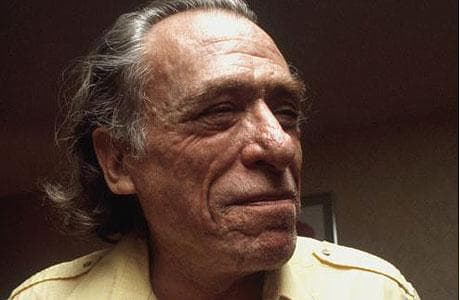
Charles Bukowski was a prolific German-American poet and novelist, often celebrated for his raw, autobiographical style. His notable works include 'Notes of a Dirty Old Man,' 'Factotum,' and 'Ham on Rye,' which vividly depict the gritty realities of working-class life and his own struggles with alcohol and poverty. Bukowski's unflinching prose and anti-establishment themes have cemented his status as a counter-culture icon.
Similar books
- Factotum
Charles Bukowski
3.9 (61k) average on GoodreadsThrillerShares the same protagonist, Henry Chinaski, and explores his experiences with menial jobs and alcoholism.
- Nineteen Eighty-Four
George Orwell
4.2 (5.5M) average on GoodreadsFictionWinston Smith dreams of truth and rebellion in a world where Big Brother watches all, but he confronts the terrifying power of a regime that controls not just actions, but thoughts.
- The Frozen River
Ariel Lawhon
4.4 (600k) average on GoodreadsFictionIn 1789 Maine, a heroic midwife's diary helps her expose a murder and get justice in a town that wants to silence her.
- A Man Called Ove
Fredrik Backman
4.4 (569k) average on GoodreadsFictionA stubborn widower, who lives by strict rules, finds his quiet world changed by a lively new family next door, making him face his past and find happiness in human connection.
- The Art of Racing in the Rain
Garth Stein
4.2 (452k) average on GoodreadsFictionThrough the eyes of Enzo, a wise and observant dog, a race car driver's family navigates a journey of love, loss, and resilience, learning that life's most important lessons often come in the curves, not just on the straightaways.
- The Colour of Magic
Terry Pratchett
4.0 (425k) average on GoodreadsFictionOn a discworld hurtling through space on the back of a giant turtle, an inept wizard and his naive, walking-luggage-toting tourist embark on a chaotic, belief-fueled journey to the very edge of their flat planet, encountering dragons that only exist if you believe in them.






Enjoyed the summary?
A summary gives you the shape of the book. The book itself has the detail, the examples and the voice.
Find Notes of a Dirty Old Man on AmazonAs an Amazon Associate, BookBrief earns from qualifying purchases. How we're funded