
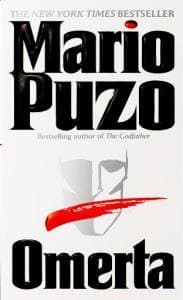
Synopsis
Covers the whole plot, including the ending.
- Difficulty
- Medium
- Pacing
- Moderate
- Mood
- Gritty, Strategic, Suspenseful, Dark
- Read it if
- You love classic mob stories with a focus on strategy, loyalty, and the internal struggles of a criminal empire, and appreciate a protagonist who operates with quiet, deadly intelligence.
- Skip it if
- You dislike violence, complex criminal plots, or stories where the line between good and evil is heavily blurred.
Omerta Plot Summary
Covers the whole plot, including the ending.
Don Aprile's Murder and Astorre's Return
The novel opens with the assassination of Don Raymonde Aprile, the last great American Mafia Don, while he is having dinner with his family and close associates. The shooting, by a masked gunman, causes shockwaves in the underworld and the legitimate world where the Aprile children, Nicole, Valerie, and Marc, live their lives. FBI agent Kurt Cilke, who has investigated the Aprile family for years, is assigned to the case. Astorre Viola, Don Aprile's adopted nephew who has lived a quiet life raising horses in Sicily, is summoned by the family to attend the funeral and take his place as the new head of the family. Astorre, though seemingly mild-mannered, has a deep sense of loyalty and a hidden understanding of the Don's plans.
Astorre Assesses the Family and the Threat
Upon his arrival in New York, Astorre Viola is greeted by the Aprile children and the family's consigliere, Timmona Love. While the children focus on their grief and their legitimate careers — Nicole as a film producer, Valerie as a lawyer, and Marc as a professor — Astorre quietly observes the situation. He understands that the Don's murder was not random but a challenge to the family's power. He learns about the Don's legitimate holdings, particularly his involvement in the global drug trade through a pharmaceutical company, and the wealth he accumulated. Astorre, under his unassuming exterior, starts to figure out the motives and people behind his uncle's death, all while appearing to be a simple horse breeder.
The FBI's Investigation and Cilke's Dilemma
FBI Agent Kurt Cilke, an investigator with a personal connection to the Aprile case, leads the federal investigation into Don Aprile's murder. He knows about the Don's past and the family's move into legitimate businesses. Cilke is in a difficult position, as he had a secret arrangement with Don Aprile to protect the Don's legitimate interests in exchange for information and peace. This arrangement now puts him at risk, especially with the murder drawing scrutiny. He also deals with internal political pressure and the incompetence of some local NYPD detectives, including the corrupt duo of Detective Monteleone and Detective Corrupto, who care more about personal gain than justice.
Astorre's Strategic Silence and Subtle Moves
Astorre Viola continues to play the role of the quiet, unassuming nephew. He attends meetings, listens, and offers seemingly naive suggestions, all while gathering information. He identifies key figures within the Aprile organization, such as Timmona Love, and assesses their loyalty and capabilities. He also learns about the Don's hidden fortune, stored in Swiss bank accounts, and the complexities of the legitimate drug trade operation. Astorre's patience is a key part of his strategy, letting his enemies make mistakes while he prepares his counter-attack. He avoids direct confrontation, choosing subtle manipulations and intelligence gathering.
The Emergence of a New Enemy: Steel Rubenstein
The investigation, by both the FBI and Astorre's own inquiries, starts to point to a new adversary: Steel Rubenstein, a ruthless South American drug kingpin. Rubenstein, who had partnered with Don Aprile in the legitimate pharmaceutical business, is suspected of orchestrating the Don's murder to take over the entire operation and remove competition. He is a man of wealth and power, operating freely in both the legitimate and criminal worlds. His ambition and disregard for traditional Mafia codes make him a dangerous and unpredictable enemy, setting the stage for a clash with Astorre.
Nicole's Involvement and Vulnerability
Nicole Aprile, the film producer, initially tries to distance herself from the family's criminal past. However, her father's will and the ongoing investigation force her to become more involved. She learns about the family's legitimate pharmaceutical business and its connection to the drug trade, which disturbs her. Her growing involvement makes her a target for Steel Rubenstein, who sees her as a way to gain control of the Aprile assets. Nicole's vulnerability and her desire to protect her family, despite her dislike for the criminal underworld, put her in a difficult position, forcing Astorre to act to ensure her safety.
Astorre's First Retaliation and Display of Power
After assessing the situation and confirming Steel Rubenstein's involvement, Astorre Viola orchestrates his first act of calculated vengeance. He targets Rubenstein's key lieutenants and assets, showing a ruthless efficiency that hides his earlier quiet demeanor. These actions are not just revenge but strategic moves to destabilize Rubenstein's empire and send a clear message. Astorre uses his network and his understanding of the underworld, learned from Don Aprile, to carry out these operations with precision. This marks a turning point, showing Astorre as a force capable of protecting the Aprile legacy.
The Confrontation with the Corrupt Detectives
The corrupt NYPD detectives, Monteleone and Corrupto, continue to bungle the murder investigation, mainly for their own financial gain. They extort money and provide misinformation, further complicating matters for both the FBI and Astorre. Astorre, seeing their harmful influence, decides to deal with them directly. He sets up a meeting that exposes their corruption and ensures their removal from the case, neutralizing a local threat and clearing the path for his larger plans. This incident further solidifies Astorre's control and shows his willingness to remove obstacles, no matter their position.
The Final Showdown and Rubenstein's Downfall
Astorre Viola plans and executes the final confrontation with Steel Rubenstein. He uses deception, strategic alliances, and direct action to dismantle Rubenstein's drug empire and eliminate him. Astorre uses information about Rubenstein's weak points and exploits his greed and arrogance. The climax involves a series of orchestrated events that lead to Rubenstein's downfall, ensuring that the Don's killer is brought to justice and the Aprile family's legitimate businesses are secured. Astorre's actions show his mastery of the 'Omerta' code, combining loyalty, intelligence, and ruthless efficiency.
Astorre's Legacy and the Aprile Children's Future
With Steel Rubenstein eliminated and the Aprile family's financial empire protected, Astorre Viola solidifies his position as the new Don. He ensures that the Aprile children, Nicole, Valerie, and Marc, can pursue their legitimate lives without further threats. He secures their inheritance and the fortune left by Don Aprile, ensuring the family's continued prosperity and influence. Astorre, having fulfilled his duty and avenged his adoptive father, embraces his destiny as the guardian of the Aprile legacy, embodying the spirit of Omerta and the world of the Mafia, in a more modern, subtle form.
Omerta Characters
Astorre Viola
Protagonist
Don Aprile's adopted nephew, trained to inherit and protect the family legacy.
Astorre Viola is the adopted nephew of Don Raymonde Aprile, raised in Sicily and seemingly a simple horse breeder. Beneath his unassuming, gentle exterior lies a sharp mind, unwavering loyalty, and a ruthless capacity for violence, all honed by Don Aprile's secret training. He embodies the old-world Mafia code of Omerta, prioritizing family honor and justice above all else. Astorre is patient, observant, and highly strategic, capable of orchestrating complex acts of revenge while maintaining a facade of innocence. He represents the transition from the old Dons to a new, more subtle era of organized crime, focused on legitimate business but ready to enforce the code when necessary.
Relationships: Don Raymonde Aprile (Adoptive father and mentor); Nicole Aprile (Cousin, whom he protects and eventually falls in love with); Valerie Aprile (Cousin); Marc Aprile (Cousin); Timmona Love (Consigliere and loyal family associate)
Don Raymonde Aprile
Supporting/Catalyst
The last great American Mafia Don, whose murder sets the plot in motion.
Don Raymonde Aprile is the patriarch of the Aprile family and the last of the powerful 'old school' Dons. He is a man of immense intellect, foresight, and ruthless charm, who successfully transitioned his family's wealth into legitimate businesses, primarily pharmaceuticals. Despite his criminal past, he cultivated an image of respectability. His greatest legacy is his carefully planned succession, training Astorre Viola in secret to protect his family and avenge his death. His murder is the central catalyst for the novel's plot, and his presence is felt throughout the story through his past actions and Astorre's adherence to his teachings.
Relationships: Astorre Viola (Adoptive son and chosen successor); Nicole Aprile (Biological daughter); Valerie Aprile (Biological daughter); Marc Aprile (Biological son); Timmona Love (Loyal consigliere)
Nicole Aprile
Supporting
Don Aprile's daughter, a successful film producer drawn into the family's dangerous legacy.
Nicole Aprile is Don Aprile's eldest daughter, a successful and independent film producer living a seemingly legitimate life. She initially tries to distance herself from her family's criminal ties but is drawn back in by her father's murder and the revelations about his business empire. She is intelligent, strong-willed, and initially wary of Astorre, but eventually comes to trust and fall in love with him. Her vulnerability as a target for Steel Rubenstein highlights the dangers of her family's legacy and provides Astorre with a personal motivation to protect her.
Relationships: Don Raymonde Aprile (Father); Astorre Viola (Cousin, then lover and protector); Valerie Aprile (Sister); Marc Aprile (Brother)
Kurt Cilke
Antagonist/Supporting
A conflicted FBI agent investigating Don Aprile's murder, bound by a secret deal.
Kurt Cilke is a seasoned FBI agent leading the investigation into Don Aprile's murder. He is intelligent and dedicated, but also compromised by a secret, long-standing arrangement with Don Aprile, where he received protection and information in exchange for turning a blind eye to certain activities. This deal puts him in a moral and professional dilemma, forcing him to navigate the complex world of the Mafia while maintaining his integrity as a law enforcement officer. Cilke represents the blurred lines between law and crime, and the difficult choices made in the pursuit of a greater, albeit sometimes ambiguous, good.
Relationships: Don Raymonde Aprile (Confidante and secret informant/benefactor); Astorre Viola (Antagonist in the investigation, but also a figure of respect)
Steel Rubenstein
Antagonist
A ruthless South American drug lord seeking to dominate the global drug trade.
Steel Rubenstein is the primary antagonist, a powerful and ambitious South American drug kingpin. He is a new breed of criminal, operating outside the traditional Mafia codes, driven solely by greed and a desire for absolute control over the global drug trade. Rubenstein is responsible for orchestrating Don Aprile's murder, believing it would allow him to seize the Don's legitimate pharmaceutical empire. He is cunning, brutal, and without honor, making him a dangerous adversary for Astorre. His character represents the modern, transnational face of organized crime, contrasting sharply with the old-world values Astorre embodies.
Relationships: Don Raymonde Aprile (Former business partner, then victim); Astorre Viola (Arch-nemesis)
Timmona Love
Supporting
Don Aprile's loyal consigliere and a trusted advisor to Astorre.
Timmona Love is Don Aprile's long-standing consigliere, a man of unwavering loyalty, wisdom, and discretion. He is a link to the old world, deeply respected by the family and knowledgeable about all its affairs, both legitimate and illegitimate. After the Don's death, he becomes Astorre's most trusted advisor, helping him navigate the complexities of the family's operations and providing crucial insights. Timmona Love embodies the traditional values of loyalty and counsel within the Mafia structure, serving as a steady hand amidst chaos.
Relationships: Don Raymonde Aprile (Consigliere and close friend); Astorre Viola (Consigliere and trusted advisor)
Valerie Aprile
Supporting
Don Aprile's daughter, a successful lawyer who remains somewhat detached.
Valerie Aprile is Don Aprile's middle daughter, a successful lawyer. She is intelligent and driven, having carved out a respectable career in the legal field. While she grieves her father, she is less directly involved in the family's criminal affairs than Nicole, maintaining a more detached perspective. She represents the Aprile children's successful integration into legitimate society, yet she is still bound by the family name and its legacy.
Relationships: Don Raymonde Aprile (Father); Nicole Aprile (Sister); Marc Aprile (Brother); Astorre Viola (Cousin)
Marc Aprile
Supporting
Don Aprile's son, a university professor uninterested in the family business.
Marc Aprile is Don Aprile's son, a university professor. He is the most academically inclined of the children and the least interested in the family's criminal past or present. He represents the complete rejection of the Mafia lifestyle, preferring a life of intellect and academia. His character highlights the Don's success in allowing his children to pursue legitimate paths, even as he secretly prepared Astorre to maintain the family's true power.
Relationships: Don Raymonde Aprile (Father); Nicole Aprile (Sister); Valerie Aprile (Sister); Astorre Viola (Cousin)
Detective Monteleone
Supporting/Antagonist
A corrupt NYPD detective hindering the investigation for personal gain.
Detective Monteleone is one of the two corrupt NYPD detectives assigned to Don Aprile's murder case. He is driven by greed and a desire to exploit the situation for personal profit, rather than solving the crime. His incompetence and willingness to be bought make him an obstacle to justice and a minor antagonist for Astorre. He represents the institutional corruption that exists within the system, contrasting with the more organized and principled, albeit criminal, world of Astorre.
Relationships: Detective Corrupto (Corrupt partner); Astorre Viola (Target of Astorre's manipulation)
Omerta Themes
Legacy and Succession
The central theme is Don Aprile's planning for his legacy and the succession of power. He prepares Astorre Viola, not one of his biological children, to inherit the family's true power and responsibility, ensuring its survival and avenging his death. This theme looks at chosen family versus bloodline, and how a patriarch's foresight affects future generations. Astorre's actions are almost entirely about fulfilling the Don's unspoken will, showing the lasting power of a carefully built legacy.
“He was a man who loved his family, but he loved honor more. And Astorre would give him the honor he deserved.”
Omerta and Honor
The code of Omerta, or silence and honor, is central to the story. While Don Aprile's children live legitimate lives, Astorre embodies this code, seeking justice for his adoptive father's murder through traditional, violent means. The theme looks at the tension between this old code of honor and modern legal systems. Astorre's actions come from deep loyalty and a commitment to avenging a wrong, showing that for some, honor is more important than legality and personal safety. The silence kept by those loyal to the Aprile family shows this code.
“Omerta was not just a word, it was a way of life, a code that bound men more tightly than any chain.”
The Blurring Lines Between Legitimate and Illegitimate Business
Mario Puzo explores how organized crime adapted to modern times by investing in legitimate businesses, especially pharmaceuticals. Don Aprile moved his empire successfully, making it hard for law enforcement like Kurt Cilke to prosecute. This theme shows the growing sophistication of criminal groups and the moral issues when illegal profits fund legal ventures. Steel Rubenstein's attempt to take these legitimate assets further shows how these worlds are connected, where power and money flow easily between them, making it hard to tell good from bad.
“The Don had taught him that the true power lay not in the guns, but in the money. And the money was now legal.”
Justice and Vengeance
The novel is about Astorre's quest for justice and vengeance for Don Aprile's murder. This theme looks at the difference between legal justice, pursued by the FBI, and the personal, often violent, justice sought within the Mafia. Astorre's actions are a deliberate and systematic removal of his enemies, not just for revenge but to restore the family's honor and secure its future. The story suggests that in certain worlds, vengeance is a necessary form of justice, upholding a different kind of moral order.
“He would make them pay. Not with money, but with blood. That was the Omerta.”
Identity and Belonging
Astorre's character arc is tied to his identity as Don Aprile's chosen successor, even though he is adopted. He deals with his role as a quiet horse breeder versus the ruthless enforcer he was trained to be. The Aprile children also struggle with their identity—successful professionals tied to a criminal lineage. This theme explores how one's family history, by blood or by choice, shapes who they are and where they belong, forcing characters to confront their heritage and accept or reject the expectations placed upon them.
“He was Astorre Viola, the horseman. But he was also Astorre Aprile, the Don's chosen son.”
Plot Devices & Literary Techniques
The Unseen Hand of the Don
Don Aprile's meticulous plans and influence guide the plot even after his death.
Despite being murdered in the opening scene, Don Raymonde Aprile's presence and influence permeate the entire novel. His carefully laid plans for succession, his hidden wealth, and his secret training of Astorre Viola dictate the actions and motivations of many characters. This device creates a sense of the Don's enduring power and foresight, making him a posthumous puppet master. Astorre's entire mission is to execute the Don's unspoken will, demonstrating the long reach of a powerful patriarch even from beyond the grave, and adding a layer of mystery to the unfolding events.
The 'Innocent' Protagonist Façade
Astorre's quiet, unassuming demeanor masks his true capabilities and intentions.
Astorre Viola's initial portrayal as a simple, gentle horse breeder from Sicily is a deliberate façade. This narrative device lulls both the reader and the antagonists into underestimating him, making his eventual reveals of ruthless intelligence and strategic violence more impactful. It allows him to gather information, observe his enemies, and plan his moves without drawing suspicion. This contrast between his outward appearance and his inner strength is a classic Puzo trope, highlighting the deceptive nature of power and the element of surprise in the underworld.
The Legitimate Business Front
The pharmaceutical company serves as a cover and source of immense wealth for the Aprile family.
The pharmaceutical company, initially a legitimate venture, serves as a crucial plot device that blurs the lines between legal and illegal activities. It is the source of the Aprile family's immense wealth and a key target for Steel Rubenstein, driving much of the conflict. This device highlights the evolution of organized crime, demonstrating how traditional criminal families adapted by investing in seemingly respectable industries, thereby complicating law enforcement's efforts and creating new vulnerabilities and opportunities for power struggles.
The Moral Dilemma of Agent Cilke
FBI Agent Cilke's secret past deal with Don Aprile creates internal conflict and plot complications.
FBI Agent Kurt Cilke's secret arrangement with Don Aprile is a significant plot device. It introduces a moral and ethical dilemma for a law enforcement officer, creating internal conflict and complicating the official investigation. This device highlights the nuanced and often compromised reality of fighting organized crime, where lines between good and evil are blurred. Cilke's compromised position provides narrative tension and allows for a deeper exploration of the complex relationships between the law and the underworld, influencing his decisions and actions throughout the story.
Omerta Quotes
“Omertà, the code of silence, was more than just a tradition; it was the very air they breathed, the unseen force that held their world together.”
“There are some men who don't deserve to be killed. There are some men who don't deserve to live.”
“The greatest trick the devil ever pulled was convincing the world he didn't exist. The greatest trick a good don ever pulled was convincing the world he was just an ordinary businessman.”
“Loyalty was a currency, more valuable than gold in their world, and betrayal was the quickest path to ruin.”
“Every man has a price, but some men pay it with their soul.”
“Revenge is a dish best served cold, but justice, sometimes, needs to be immediate and fiery.”
“He understood that fear was a tool, but respect was a foundation.”
“The past is never dead. It's not even past.”
“In their world, trust was a luxury, and suspicion a necessity.”
“A man who cannot protect his family is no man at all.”
“Power doesn't corrupt. It reveals.”
“Money was just a way of keeping score. The real game was power.”
“There are no accidents in this life, only consequences.”
“He knew that silence could be a weapon, a shield, and sometimes, a tomb.”
Quiz
10 questions on the plot and the characters. Each answer comes with a short explanation.
Question 1
Who was Astorre Viola to Don Raymonde Aprile?
- His biological son
- His adopted 'nephew'
- His chief enforcer
- A rival crime boss
Show answer
B. His adopted 'nephew' The text explicitly states that Astorre Viola was Don Raymonde Aprile's adopted 'nephew,' a loyal family member to his children.
Question 2
What was Astorre Viola's perceived main interest by the FBI?
- Running the family's legitimate businesses
- Studying law enforcement tactics
- Riding his horses
- Gambling and women
Show answer
C. Riding his horses The book description mentions that to the FBI, Astorre was a man who 'would rather ride his horses than do Mob business,' indicating their underestimation of him.
Question 3
Where was Astorre Viola adopted by Don Aprile?
- New York City
- Sicily
- Miami
- Naples
Show answer
B. Sicily The text specifies that Don Aprile 'had adopted Astorre Viola many years before in Sicily,' establishing his origins.
Question 4
What event triggers the primary conflict and Astorre's rise to power?
- Astorre's decision to leave the family business
- The kidnapping of Don Aprile's children
- Don Aprile's death by murder
- A major drug bust by the FBI
Show answer
C. Don Aprile's death by murder The description clearly states, 'Now his time has arrived. The Don is dead, his murder one bloody act in a drama of ambition and deceit,' indicating this is the catalyst.
Question 5
What was Don Aprile's secret plan for Astorre Viola?
- To send him to college to become a lawyer
- To use him as a decoy for the FBI
- To train him carefully to eventually take over the family
- To have him marry into a rival family for an alliance
Show answer
C. To train him carefully to eventually take over the family The text reveals, 'no one suspected how he had carefully trained him ... and how, while the Don's children claimed respectable careers in America, Astorre Viola waited for his time to come.' This implies a long-term succession plan.
Question 6
What is a key difference between Don Aprile's biological children and Astorre Viola?
- The children are older than Astorre.
- The children pursued 'respectable careers' while Astorre was groomed for the family business.
- The children live in Sicily, and Astorre lives in America.
- The children were unaware of their father's true activities.
Show answer
B. The children pursued 'respectable careers' while Astorre was groomed for the family business. The summary contrasts the children who 'claimed respectable careers in America' with Astorre who 'waited for his time to come,' implying he was being prepared for the family's true legacy.
Question 7
Which group is NOT explicitly mentioned as being involved in the 'drama of ambition and deceit' following Don Aprile's murder?
- A South American Mob kingpin
- An FBI agent
- Corrupt politicians
- Two crooked NYPD detectives
Show answer
C. Corrupt politicians The text lists 'deadly compromises made by an FBI agent,' 'greed of two crooked NYPD detectives,' and 'frightening plans of a South American Mob kingpin.' Corrupt politicians are not specifically mentioned.
Question 8
What is the central theme suggested by Astorre's destiny and the title 'Omerta'?
- The struggle for legitimate business success in a corrupt world.
- The unbreakable code of silence and loyalty within the Mafia.
- The conflict between old-world traditions and modern American values.
- The pursuit of personal freedom against family obligations.
Show answer
B. The unbreakable code of silence and loyalty within the Mafia. Omerta is the Mafia's code of silence. Astorre's 'destiny' being 'in his blood' after years of training and loyalty strongly points to the theme of an inherited, unspoken duty to the family's criminal enterprise.
Question 9
How does the author characterize Don Raymonde Aprile?
- As a ruthless tyrant feared by all.
- As the last great American Don, a strategic and secretive leader.
- As a benevolent figure who sought to legitimize his family.
- As a weak leader whose power was already waning.
Show answer
B. As the last great American Don, a strategic and secretive leader. The text refers to Aprile as 'the last great American Don' and highlights his careful, secret training of Astorre, suggesting a powerful, strategic, and somewhat enigmatic figure.
Question 10
What does the phrase 'this moment is in his blood' signify for Astorre Viola?
- He is literally related to Don Aprile by blood.
- He has a genetic predisposition for violence.
- His long-standing training and inherited loyalty have prepared him for his predestined role.
- He is about to commit a particularly bloody act of revenge.
Show answer
C. His long-standing training and inherited loyalty have prepared him for his predestined role. This phrase, combined with the earlier mention of Don Aprile 'carefully train[ing] him' and Astorre 'wait[ing] for his time to come,' emphasizes that his ascendancy is not just a chance event but the culmination of years of preparation and a deep, ingrained sense of duty to the family's legacy.
Omerta FAQ
What is "Omerta" about?
"Omerta" is about Astorre Viola, the adopted 'nephew' of the last great American Don, Raymonde Aprile. After Aprile's assassination, Astorre, who has been quietly trained for years, must navigate a treacherous world of enemies including a ruthless South American mob boss, corrupt law enforcement, and ambitious rivals, to claim his destiny and uphold the family's legacy, all while maintaining the code of silence.
Why should I read "Omerta"?
You should read "Omerta" for its intricate plot of power, loyalty, and betrayal within the criminal underworld, reminiscent of Puzo's classic 'Godfather' themes. It offers a compelling look at the transition of power, the clash between old-world honor and new-world ruthlessness, and the psychological depth of characters like Astorre Viola as he steps into a role he was secretly groomed for.
What is the background/setting of "Omerta"?
The story primarily unfolds in the contemporary American criminal underworld, particularly New York, but its roots are deeply embedded in Sicilian tradition and the legacy of Don Raymonde Aprile. The narrative contrasts the old-school omerta code with modern organized crime's global reach and the corrupting influence of power on law enforcement.
What are the most memorable quotes?
While specific quotes aren't provided in the summary, Puzo's style often features poignant lines about loyalty, family, and the nature of power, such as 'He never asked for a favor that he did not return a hundredfold' or 'Never hate your enemies, it affects your judgment.' These types of expressions often define the moral code of characters like Astorre and Don Aprile.
What writing style does the author use?
Mario Puzo employs a direct, authoritative, and often elegiac prose style, characteristic of his other crime novels. He balances gritty realism with a sense of grandeur and tragedy, focusing on character psychology, intricate plotting, and the moral ambiguities inherent in the world of organized crime, making for a gripping and immersive reading experience.
What minor details add significant meaning?
The detail of Don Aprile adopting Astorre Viola in Sicily years ago, seemingly without clear reason to his children or the FBI, is crucial. It signifies the Don's long-term, secret succession plan, revealing Astorre's true importance and the depth of Aprile's foresight, setting up the entire premise of Astorre's rise.
What are some subtle foreshadowing moments?
The FBI's dismissal of Astorre as merely a horse enthusiast, combined with the Don's children pursuing 'respectable careers,' subtly foreshadows Astorre's hidden capabilities and the underestimation of his true role. This misdirection by the Don and Astorre himself sets the stage for his eventual, unexpected emergence as the true heir.
What unexpected character connections exist?
The most significant unexpected connection is Astorre Viola's deep, hidden link to Don Aprile, not just as an adopted nephew but as a carefully trained successor. This bond, concealed from nearly everyone, drives the entire plot and defines Astorre's destiny, revealing a profound and secret mentorship.
What are unspoken character motivations?
Astorre Viola's unspoken motivation is a profound sense of loyalty and duty to Don Aprile, extending beyond mere familial ties to a sacred trust to uphold the family's honor and power. This deep-seated commitment drives his actions, even when they appear ruthless, as he fulfills the Don's silent wishes.
What psychological complexities do characters exhibit?
Astorre Viola exhibits the complexity of a man torn between a desire for a peaceful life (indicated by his love for horses) and an inherited, deeply ingrained sense of duty and power. He embodies the psychological struggle of maintaining an honorable code in a world increasingly devoid of it, balancing ruthlessness with a stoic sense of justice.
What are the major emotional turning points?
The assassination of Don Aprile serves as the primary emotional turning point, shattering the established order and forcing Astorre Viola to abandon his quiet existence. This event ignites his purpose and triggers his transformation into the active enforcer of the family's legacy, marking the shift from passive observation to decisive action.
How do relationship dynamics evolve?
The relationship dynamics evolve from an initial perception of Astorre as a peripheral family member to his emergence as the central figure of power and authority, challenging the FBI's assumptions and the expectations of the Don's biological children. His interactions shift from quiet observation to commanding respect and fear from allies and enemies alike.
Which parts remain ambiguous or open-ended?
The summary suggests ambiguity around the full extent of Don Aprile's long-term plan and how much Astorre was truly aware of his ultimate destiny versus simply being prepared. The specific methods and moral compromises Astorre must make to achieve his goals also leave room for reader interpretation regarding the 'justice' he dispenses.
What are controversial scenes or decisions?
While not detailed in the summary, Puzo's novels often feature controversial decisions where characters must choose between brutal violence and strategic manipulation to protect their interests or uphold their code. Astorre's journey will undoubtedly involve such choices, especially when dealing with corrupt law enforcement and a ruthless South American kingpin, likely leading to morally gray actions.
"Omerta" ending explained: how it ends & what it means
Based on the summary, the ending of "Omerta" likely sees Astorre Viola successfully claiming his destiny and solidifying his position as the new Don, or at least the true enforcer of the Aprile legacy. It signifies the triumph of the old-world code of 'omerta' and loyalty over modern greed and betrayal, with Astorre fulfilling the meticulously laid plans of Don Aprile, ensuring the family's continued power and honor.
About the author
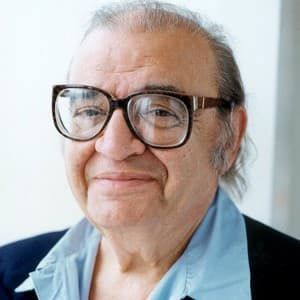
Mario Francis Puzo was an American author and screenwriter. He wrote crime novels about the Italian-American Mafia and Sicilian Mafia, most notably The Godfather (1969), which he later co-adapted into a film trilogy directed by Francis Ford Coppola. He received the Academy Award for Best Adapted Screenplay for the first film in 1972 and for Part II in 1974. Puzo also wrote the original screenplay for the 1978 Superman film and its 1980 sequel. His final novel, The Family, was released posthumously in 2001.
Similar books
- The Godfather
Mario Puzo
4.4 (335k) average on GoodreadsThrillerShares a similar thematic focus on family, loyalty, power, and the criminal underworld, with a strategic protagonist.
- Casino
Nicholas Pileggi
4.0 (5k) average on GoodreadsBiographyOffers an inside look into the operations and brutal realities of the Mafia in a legitimate business setting.
- American Pastoral
Philip Roth
3.9 (65k) average on GoodreadsLiterary FictionWhile not strictly crime fiction, Roth's American Pastoral (1997) offers a powerful counterpoint in its exploration of the American Dream's unraveling and the insidious nature of violence and societal change. Unlike Omerta's focus on an established criminal empire, Roth delves into how seemingly legitimate lives can be violently disrupted. American Pastoral is lauded for its literary depth and psychological realism, contrasting with Omerta's more genre-driven narrative, though both tackle the disillusionment inherent in American life.
- Angels & Demons
Dan Brown
3.9 (2.7M) average on GoodreadsThrillerA Harvard symbologist races through Rome's ancient sites, deciphering cryptic clues to unmask the Illuminati and stop a vengeful plot to destroy the Vatican with a stolen antimatter weapon.
- Gone Girl
Gillian Flynn
4.1 (2.3M) average on GoodreadsThrillerA wife's sudden disappearance on her fifth anniversary reveals a web of lies and psychological warfare, exposing the secrets within a seemingly perfect marriage.
- The Girl on the Train
Paula Hawkins
3.9 (2.1M) average on GoodreadsThrillerA woman’s fascination with a seemingly perfect couple she watches from her daily train commute leads her into a dark investigation when she witnesses something that shatters their idyllic image.




Enjoyed the summary?
A summary gives you the shape of the book. The book itself has the detail, the examples and the voice.
Find Omerta on AmazonAs an Amazon Associate, BookBrief earns from qualifying purchases. How we're funded