

Synopsis
Covers the whole plot, including the ending.
- Difficulty
- Medium
- Pacing
- Fast
- Mood
- Dark, Suspenseful, Intense, Gripping
- Read it if
- You enjoy dark, high-stakes thrillers with a brilliant, sadistic killer and a detective under immense pressure.
- Skip it if
- You are sensitive to graphic violence, torture, or themes of public participation in murder.
One by One Plot Summary
Covers the whole plot, including the ending.
The First Broadcast
Detective Robert Hunter, an LAPD homicide detective, receives an anonymous call with a private web address. Logging in, Hunter sees a live broadcast of a victim being tortured. The caller, 'The Director,' forces Hunter to choose between 'fire' or 'water' for the victim's death. Despite Hunter's attempts to stall and alert his partner, Carlos Garcia, The Director uses the chosen method, and the victim is murdered live. This event starts a cat-and-mouse game between Hunter and the killer.
The Second Victim and Public Participation
Before Hunter and Garcia make much progress on the first case, Hunter gets another call and web address. This time, The Director has made the murder a 'reality show' where the public votes on the victim's torture and death. A new victim, a young man, is shown, and the live stream gains viewers who do not know the grim reality. Hunter is again forced to watch the horror as public votes decide the victim's suffering. The LAPD and FBI try to trace the broadcast, but The Director's technical skill makes him untraceable.
Uncovering a Pattern
As more victims are broadcast and murdered, Hunter and Garcia work to identify them and find connections. At first, the victims seem random, from different backgrounds with no clear links. But Hunter starts to notice patterns in the killer's methods and the victims' pasts. They find that all victims, despite varied public lives, held dark secrets or had done morally questionable acts that were never brought to justice. This changes the investigation from random killings to a planned series of executions.
The Killer's Motive Revealed
Hunter and Garcia, with forensic psychologist Dr. Stacy Miller, look deeper into the victims' lives. They find that each victim had committed a serious crime—from financial fraud causing suicides to child abuse—but had avoided prosecution due to legal loopholes, had cases dismissed, or were never suspected. The Director, it becomes clear, sees himself as a vigilante, delivering a distorted form of justice. This motive adds a disturbing layer to the case, as the killer is not just a psychopath, but someone with a clear, though warped, agenda.
The Director's Technical Prowess
Throughout the investigation, The Director shows great technical skill. He uses encrypted networks, constantly changes IP addresses, and employs advanced routing, making it impossible for LAPD and FBI cyber units to find his location. Each time they get close, he vanishes, leaving no digital trace. This technical superiority frustrates Hunter and Garcia, meaning they cannot simply trace the killer. They realize they must outthink him, focusing on psychological aspects and physical evidence, not just the digital trail.
A Personal Connection
As the murders continue, Hunter feels The Director's actions are personal, aimed at him. The anonymous calls, direct challenges, and how the killer seems to anticipate Hunter's moves suggest a deeper connection than just a random detective on the case. Hunter reviews his past cases, looking for anyone who might hold a grudge or have a reason to plan such a revenge plot against him. This personal element adds great pressure to Hunter, forcing him to face his professional history.
The Clues in the Broadcasts
Hunter refuses to be a passive observer, carefully re-watching every broadcast for subtle clues the killer might have left or embedded. He notices recurring symbols, camera angles, and background music, which he believes are not random. These elements, though small, start to form a narrative that helps Hunter build a psychological profile of The Director. He thinks the killer is leaving a 'signature' or a message in the broadcasts, meant for Hunter to decode.
The Trap is Set
Based on his analysis of the killer's pattern, motive, and profile, Hunter predicts where The Director might strike next. He realizes the killer seeks revenge, an audience, and a final confrontation. Hunter, with Garcia and the FBI, plans to lure The Director into the open. They use media and carefully placed information to make the killer believe his ultimate target is within reach, hoping to draw him to a specific location where they can finally catch him.
The Confrontation
Hunter's trap works, and The Director reveals himself, leading to a tense and brutal confrontation. The killer is someone with a personal connection to a past case Hunter handled, a case where justice, in the killer's eyes, was not served. The showdown happens in a remote, prepared location, mirroring the killer's setups for his broadcasts. Hunter, pushed to his limits, uses his intelligence and skills to outmaneuver The Director, ending the live murder reality show.
Aftermath and Resolution
The Director is captured, stopping the online murders. The public is shocked by the revelations, and the ethics of the 'reality show' are debated. Hunter and Garcia, though successful, are deeply affected by the trauma they witnessed and the choices they made. The case leaves a mark on Hunter, forcing him to grapple with justice, vengeance, and the dark parts of human morality. The ending provides closure but acknowledges the lasting psychological impact of the ordeal.
Principal Figures
Detective Robert Hunter
Protagonist
A brilliant but tormented LAPD Homicide Detective.
Robert Hunter is the lead detective in the LAPD's Homicide Special Section. Known for his exceptional intelligence, keen observational skills, and a deeply analytical mind, he often sees patterns where others don't. He carries the weight of past cases, which has made him somewhat of a loner, but he is fiercely dedicated to justice. He is haunted by the horrors he witnesses and is constantly pushed to his psychological limits by the killer's games. His personal connection to the case makes it intensely challenging.
Relationships: Detective Carlos Garcia (Partner and close friend); The Director (Nemesis and psychological tormentor)
Detective Carlos Garcia
Supporting
Hunter's loyal and steadfast partner.
Carlos Garcia is Robert Hunter's long-standing partner. He is a grounded, pragmatic detective who often acts as a foil to Hunter's more intense and analytical personality. While not as brilliant as Hunter, Garcia is incredibly dedicated, reliable, and provides crucial emotional support and practical assistance throughout the investigation. He is deeply concerned for Hunter's well-being and is unwavering in his commitment to catching the killer. His presence provides a much-needed anchor for Hunter.
Relationships: Detective Robert Hunter (Partner and close friend)
The Director
Antagonist
The elusive and technologically sophisticated serial killer.
The Director is the anonymous, highly intelligent, and technologically adept killer who orchestrates the live murder reality show. He possesses a deep understanding of human psychology, using it to manipulate both his victims and the public. His motive stems from a twisted sense of justice, targeting individuals he believes have escaped punishment for their crimes. He is meticulous in his planning, ruthless in his execution, and takes pleasure in taunting Hunter, suggesting a personal vendetta or a desire for recognition. His identity is meticulously hidden until the climax.
Relationships: Detective Robert Hunter (Obsessive target and psychological opponent); Victims (Subjects of his 'justice')
Dr. Stacy Miller
Supporting
Forensic psychologist assisting the LAPD.
Dr. Stacy Miller is a highly respected forensic psychologist brought in by the LAPD to help profile The Director. She provides crucial insights into the killer's motivation, psychological state, and potential background, helping Hunter and Garcia understand the 'why' behind the horrific acts. Her expertise is invaluable in deciphering the killer's patterns and predicting his next moves. She maintains a professional yet empathetic demeanor, offering a different perspective to the often-brutal reality of the investigation.
Relationships: Detective Robert Hunter (Professional colleague); Detective Carlos Garcia (Professional colleague)
Captain Frank Miller
Supporting
Head of the Homicide Special Section.
Captain Frank Miller is Hunter and Garcia's superior officer. He is a by-the-book leader who is under immense pressure from both the LAPD brass and the public as the 'One by One' murders gain notoriety. While sometimes frustrated by Hunter's unconventional methods, he ultimately trusts Hunter's instincts and provides the necessary resources and support, albeit with constant oversight. He represents the institutional challenges and public relations nightmares faced by law enforcement during such a high-profile case.
Relationships: Detective Robert Hunter (Superior officer); Detective Carlos Garcia (Superior officer)
FBI Agent Sarah Chen
Supporting
Lead FBI cyber-crimes agent.
Agent Sarah Chen is the lead FBI agent brought in to assist the LAPD with the technical aspects of tracing The Director's broadcasts. She is highly skilled in cyber forensics and digital tracking, but even her expertise is challenged by the killer's advanced methods. She works closely with Hunter and Garcia, providing crucial technical information and leading the federal efforts to shut down the live streams and locate the source. Her frustration grows as The Director consistently evades their digital dragnet.
Relationships: Detective Robert Hunter (Professional colleague); Detective Carlos Garcia (Professional colleague)
The Victims
Mentioned
Individuals targeted by The Director for their unpunished past crimes.
The victims are a diverse group of individuals, each with a hidden past involving a serious crime for which they were never legally held accountable. From a corrupt businessman to a child abuser, their identities are slowly revealed by Hunter and Garcia. They are not merely props in The Director's game but serve to highlight his twisted ideology of 'justice.' Their horrific deaths on live broadcast are central to the plot, fueling the urgency of the investigation and the moral dilemmas presented by the killer.
Relationships: The Director (Perpetrator and executioner)
Themes & Insights
Justice vs. Vengeance
This theme is central to the novel, exploring the blurred lines between seeking justice and enacting personal vengeance. The Director believes he is delivering justice to those who escaped the legal system, but his methods are vengeful and barbaric. Hunter struggles with this, understanding the frustration with legal loopholes but opposing the killer's vigilante actions. The public's participation in the 'vote' shows how easily people can be swayed by the appeal of swift, brutal retribution, as votes consistently favor extreme torture.
“What is justice when the law fails to deliver it? And who decides what is truly just?”
The Dark Side of Technology and Social Media
The novel looks at how technology, especially the internet and social media, can be used for horrific purposes. The 'live murder reality show' shows how easily anonymity can be kept online and how a depraved act can become a spectacle for mass viewing. It highlights the voyeuristic nature of some online communities and the dangerous power of collective anonymity, where individuals feel brave enough to vote for torture and death without direct consequence. Law enforcement's inability to trace The Director highlights the challenges of advanced digital obfuscation.
“The internet is a vast ocean, Detective. And in its depths, anything is possible, and no one can hear you scream.”
Moral Compromise and Psychological Trauma
Hunter and Garcia are repeatedly forced into morally difficult positions, witnessing horrors and making impossible choices under pressure. Hunter's psychological strength is tested as he is forced to be a direct participant in the killer's games. The theme explores the lasting impact of trauma on individuals, and how even those dedicated to upholding the law can be scarred by the darkness they encounter. The victims' pasts also force Hunter to confront the reality that sometimes 'justice' is elusive, and the system is imperfect, adding to his internal conflict.
“To catch a monster, sometimes you have to look into the abyss. But what if the abyss looks back?”
The Nature of Evil
The novel explores the many sides of evil, presenting it not just as random acts of violence but as calculated, ideologically driven terror. The Director's actions are carefully planned, stemming from a warped sense of morality rather than pure psychosis. This raises questions about what makes up evil—is it the act itself, the intention behind it, or the societal conditions that allow it to grow? The public's participation in the voting mechanism further explores how ordinary people can contribute to evil when hidden by anonymity and distance.
“Evil isn't always a deranged maniac in a dark alley. Sometimes, it's a calm voice, a clear purpose, and an audience.”
Plot Devices & Literary Techniques
The Live Broadcast
The central mechanism for the killer's crimes and public engagement.
The live broadcast is the primary plot device, serving as the medium through which The Director commits his murders and engages with Hunter and the public. It creates immediate urgency and high stakes, as victims are tortured and killed in real-time. This device also allows for the 'reality show' element, involving public voting, which introduces a chilling social commentary on voyeurism and collective responsibility. The technical challenges of tracing the broadcast drive a significant portion of the police investigation.
Forced Participation
Hunter is compelled to make choices that directly impact the victims.
This device forces Detective Hunter into a moral quandary, making him an unwilling participant in the killer's gruesome games. By compelling him to choose between 'fire or water,' or to simply watch, The Director aims to psychologically torture Hunter and implicate him in the crimes. This personalizes the conflict for Hunter, making it more than just another case and adding immense emotional and psychological pressure, driving his relentless pursuit of the killer.
The Unpunished Crimes
The past misdeeds of the victims provide the killer's twisted justification.
The revelation that each victim had committed a serious, unpunished crime serves as the core motivation for The Director. This plot device adds a layer of moral ambiguity to the killer's actions, making him a 'vigilante' rather than a random murderer. It challenges the reader's perception of justice and allows for exploration of the legal system's failures, while simultaneously condemning the killer's barbaric methods. It also provides the key for Hunter to profile and ultimately track down The Director.
The Cat-and-Mouse Game
The ongoing psychological and tactical battle between Hunter and The Director.
This classic thriller device drives the narrative forward, creating constant tension and suspense. The Director constantly taunts Hunter, setting traps and revealing clues, while Hunter uses his intellect to anticipate the killer's moves and decipher his motives. It's a battle of wits that extends beyond physical pursuit, encompassing psychological manipulation and strategic planning. This dynamic elevates the conflict from a simple police procedural to a deeply personal and intellectual confrontation.
One by One Quotes
“He didn't kill her for revenge. He didn't kill her for money. He killed her because he enjoyed it.”
“The human mind is a terrifying place when it breaks.”
“Every victim tells a story, if you know how to listen.”
“There are monsters in this world, and sometimes, they wear human faces.”
“The past always catches up, one way or another.”
“Fear is a powerful weapon, and some people wield it with terrifying precision.”
“Sometimes, the most obvious answer is the one we refuse to see.”
“He wasn't just taking lives; he was taking pieces of the soul of the city.”
“The silence of the dead is often louder than the screams of the living.”
“Justice isn't always about what's right; sometimes it's about what's left.”
“Every choice has a ripple effect, especially the ones made in darkness.”
“He lived in the shadows, but his darkness touched everything it encountered.”
“You can't outrun your demons, not when they're inside you.”
“The puzzle pieces were there, scattered, waiting for someone to put them together.”
Quiz
10 questions on the plot and the characters. Each answer comes with a short explanation.
Question 1
What is the initial choice Detective Robert Hunter is forced to make by the killer?
- To identify the victim's name or not
- To choose between 'fire or water' for the victim's torture
- To reveal his partner's location or not
- To arrest a suspect or let them go
Show answer
B. To choose between 'fire or water' for the victim's torture The killer's first interaction with Hunter involves a chilling choice: 'Fire or water?', which dictates the method of the victim's torture.
Question 2
What is the nature of the killer's 'show' that Hunter is forced to watch?
- A pre-recorded documentary about past crimes
- A live, interactive broadcast of a victim being tortured and murdered
- A series of riddles and puzzles leading to the killer's location
- A simulated crime scene investigation
Show answer
B. A live, interactive broadcast of a victim being tortured and murdered Hunter logs onto a private broadcast where he is forced to witness a live torture and murder, specifically devised for his eyes.
Question 3
Who is Hunter's partner in the LAPD's Homicide Special Section?
- Detective Miller
- Detective Thompson
- Detective Garcia
- Detective Evans
Show answer
C. Detective Garcia The synopsis explicitly mentions 'Hunter and his partner Garcia' as they begin their investigation.
Question 4
What makes the killer's second 'game' different from the first, according to the synopsis?
- The killer targets only law enforcement officials.
- The killer introduces a new torture method, involving animals.
- It becomes a live murder reality show where anyone can cast the deciding vote.
- The killer starts demanding a ransom for the victims.
Show answer
C. It becomes a live murder reality show where anyone can cast the deciding vote. The synopsis states that for the second victim, 'the killer has upgraded his game into a live murder reality show, where anyone can cast the deciding vote.'
Question 5
What is the primary obstacle faced by the LAPD and FBI in tracing the killer's transmission?
- Lack of proper electronic tracing equipment
- The killer is an amateur and uses untraceable methods.
- The killer is no amateur and has covered his tracks from start to finish.
- International jurisdiction issues prevent immediate action.
Show answer
C. The killer is no amateur and has covered his tracks from start to finish. The synopsis clearly states, 'this killer is no amateur, and he has covered his tracks from start to finish,' making tracing difficult.
Question 6
What is Detective Robert Hunter's specific role or section within the LAPD?
- Robbery-Homicide Division
- Forensics Unit
- Homicide Special Section
- Cybercrimes Unit
Show answer
C. Homicide Special Section The first sentence of the synopsis identifies Hunter as being from 'the LAPD's Homicide Special Section.'
Question 7
What is the overarching theme introduced by the killer's actions in 'One by One'?
- The futility of justice in a corrupt system.
- The power of technology to enable public participation in extreme violence and moral compromise.
- The psychological toll of police work on detectives.
- The importance of teamwork in solving complex cases.
Show answer
B. The power of technology to enable public participation in extreme violence and moral compromise. The killer's use of 'private broadcast' and later a 'live murder reality show, where anyone can cast the deciding vote' highlights the theme of technology enabling public involvement in morally extreme acts.
Question 8
The killer's initial communication to Hunter is described as an anonymous call asking him to do what?
- Meet at a secret location.
- Go to a specific web address.
- Deliver a package to a drop-off point.
- Solve a complex cryptographic puzzle.
Show answer
B. Go to a specific web address. The synopsis states, 'Detective Robert Hunter... receives an anonymous call asking him to go to a specific web address - a private broadcast.'
Question 9
What psychological pressure does the killer explicitly place on Hunter regarding his participation?
- He threatens Hunter's family if he doesn't comply.
- He states that Hunter must participate, and refusal is simply not an option.
- He promises to stop the killings if Hunter agrees to a public debate.
- He tries to bribe Hunter with information about other criminals.
Show answer
B. He states that Hunter must participate, and refusal is simply not an option. The text explicitly states, 'the caller doesn't want Detective Hunter to just watch, he wants him to participate, and refusal is simply not an option.'
Question 10
What implication does the phrase 'this killer is no amateur' have for the investigation?
- The killer is likely a former police officer.
- The investigation will be straightforward due to the killer's inexperience.
- The killer's actions are meticulously planned and executed, making him difficult to trace and apprehend.
- The killer is seeking fame and recognition for his crimes.
Show answer
C. The killer's actions are meticulously planned and executed, making him difficult to trace and apprehend. The phrase 'this killer is no amateur, and he has covered his tracks from start to finish' directly implies that the killer is highly skilled and methodical, posing a significant challenge to law enforcement.
One by One FAQ
What is the core premise of 'One by One'?
Detective Robert Hunter is forced to participate in a series of live-streamed tortures and murders, where an unknown killer makes him choose the method of death for the first victim. The killer then escalates to a 'reality show' format, allowing the public to vote on the victims' fates, all while taunting Hunter directly.
Who are the main protagonists of the story?
The primary protagonist is Detective Robert Hunter, an intelligent and psychologically scarred homicide detective. His partner, Detective Carlos Garcia, plays a crucial supporting role, often providing a grounded perspective and assisting in the intense investigation.
How does the killer initially involve Detective Hunter?
The killer sends Hunter an anonymous call with a web address, forcing him to log onto a private broadcast. There, Hunter is presented with a choice: 'Fire or water?' to determine how the first victim will be tortured and murdered live, with refusal not being an option.
What is the 'live murder reality show' aspect of the plot?
After the initial private broadcast, the killer upgrades his game to a public 'reality show.' He streams the torture of subsequent victims online, allowing anyone with internet access to cast a deciding vote on the method of their death, turning murder into a perverse form of entertainment.
What is the LAPD's and FBI's initial response to the killer's broadcasts?
The LAPD, specifically Hunter's Homicide Special Section, and the FBI immediately pool resources to electronically trace the transmissions. However, the killer is highly skilled in covering his digital tracks, making it extremely difficult for them to locate the source or identify him.
What is the significance of the killer's focus on 'one by one'?
The title 'One by One' reflects the killer's methodical approach to selecting and eliminating victims individually, often with a specific, twisted purpose related to his overall vendetta or message. It emphasizes the isolated, targeted nature of each murder.
Are there any specific clues about the killer's identity or motive early in the investigation?
Early clues are subtle and often psychological, focusing on the killer's meticulous planning and the personal taunts directed at Hunter. The methods of torture and the victims chosen begin to hint at a deeper, possibly revenge-driven, motive connected to past events or individuals.
How does the killer manage to avoid detection despite the joint LAPD/FBI efforts?
The killer employs advanced hacking techniques, multiple proxies, and possibly pre-programmed systems to broadcast from untraceable locations. He also meticulously cleans up any digital footprints, demonstrating a high level of technical expertise and planning beyond that of an amateur.
Is there a connection between the victims, or are they random?
Initially, the victims appear random, but as Hunter and Garcia delve deeper, they uncover a hidden connection. The killer carefully selects his victims based on a shared past event or a specific criterion that ties them to his overarching motive, which is slowly revealed.
How does being forced to make choices affect Detective Hunter psychologically?
Hunter is deeply tormented by being forced to choose a method of death, as it makes him feel complicit in the murders. This experience dredges up past traumas and guilt, pushing him to his psychological limits and intensifying his personal vendetta against the killer.
What role does public participation play in the killer's psychological manipulation?
The public's participation in voting amplifies the killer's psychological impact by demonstrating the ease with which society can be desensitized to violence and even revel in it. It also isolates Hunter, showing him that the evil is not just the killer's but also, in a way, humanity's.
How does Detective Garcia support Hunter emotionally and professionally during this ordeal?
Garcia acts as Hunter's anchor, providing practical investigative support and emotional stability. He challenges Hunter's darker impulses, offers a sounding board for theories, and reminds him of their shared humanity amidst the horrific events, preventing Hunter from completely succumbing to despair.
Does the killer exhibit signs of psychopathy or sociopathy?
The killer displays strong signs of psychopathy, including a lack of empathy, manipulative behavior, grandiose self-perception, and a profound disregard for human life. Their meticulous planning and desire to control and torment Hunter further support this diagnosis.
What is the killer's ultimate goal beyond just murdering victims?
Beyond murder, the killer's ultimate goal is to expose a perceived injustice, exact revenge on specific individuals, and profoundly scar Detective Hunter. They aim to make Hunter complicit and to force society to confront its own morbid fascination with violence, making a grand, terrifying statement.
How does the book explore the dark side of internet culture and reality TV?
The book starkly explores the dark side of internet culture by showcasing how anonymity and accessibility can enable extreme violence and public participation in it. It satirizes reality TV by escalating its voyeuristic nature to the ultimate horrific extreme: live murder for entertainment and votes.
Is the killer's motive justifiable from any perspective, even if their actions are not?
While the killer's methods are unequivocally horrific, the book might present a backstory or grievance that, from a certain skewed perspective, could be understood as a profound injustice. This doesn't justify the murders but can provide insight into the deep-seated rage driving the killer.
What moral dilemmas does 'One by One' present to the reader?
'One by One' forces readers to confront uncomfortable questions about complicity, the ethics of online anonymity, and the human capacity for voyeurism and cruelty. It challenges whether one would participate, or merely watch, if confronted with such a 'show.'
Similar books
- The Collector
John Fowles
3.9 (29k) average on GoodreadsThrillerFeatures a captor who torments his victim, exploring psychological manipulation.
- The Silence of the Lambs
Thomas Harris
4.2 (464k) average on GoodreadsThrillerInvolves a brilliant serial killer and a detective's intense pursuit.
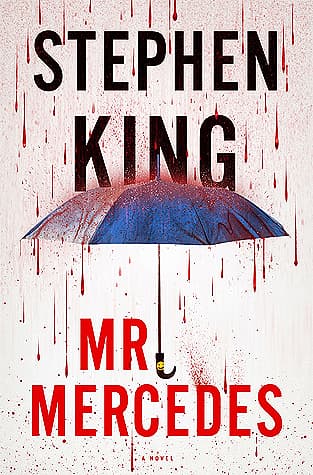
- Mr. Mercedes
Stephen King
4.0 (241k) average on GoodreadsThrillerA cat-and-mouse game between a detective and a deranged killer with a public platform.
- Angels & Demons
Dan Brown
3.9 (2.7M) average on GoodreadsThrillerA Harvard symbologist races through Rome's ancient sites, deciphering cryptic clues to unmask the Illuminati and stop a vengeful plot to destroy the Vatican with a stolen antimatter weapon.
- Gone Girl
Gillian Flynn
4.1 (2.3M) average on GoodreadsThrillerA wife's sudden disappearance on her fifth anniversary reveals a web of lies and psychological warfare, exposing the secrets within a seemingly perfect marriage.
- The Girl on the Train
Paula Hawkins
3.9 (2.1M) average on GoodreadsThrillerA woman’s fascination with a seemingly perfect couple she watches from her daily train commute leads her into a dark investigation when she witnesses something that shatters their idyllic image.





Enjoyed the summary?
A summary gives you the shape of the book. The book itself has the detail, the examples and the voice.
Find One by One on AmazonAs an Amazon Associate, BookBrief earns from qualifying purchases. How we're funded