

Synopsis
Covers the whole plot, including the ending.
- Difficulty
- Medium
- Pacing
- Moderate
- Mood
- Suspenseful, Dark, Chilling, Tense
- Read it if
- You enjoy psychological thrillers with a focus on institutional settings, unreliable memories, and uncovering long-buried family secrets.
- Skip it if
- You prefer fast-paced action over slow-burn psychological tension, or are sensitive to themes of child murder and mental health institutions.
One for Sorrow Plot Summary
Covers the whole plot, including the ending.
A New Patient at Crowmont
Leah Smith, a nurse at Crowmont Hospital, is assigned to Isabel Fielding. Seven years earlier, at age fourteen, Isabel was convicted of murdering six-year-old Maisie Earnshaw. Maisie was found dead and disfigured in a duck pond, with Isabel nearby, covered in the victim's blood. Despite the crime, Leah treats Isabel as a patient, not just a criminal. Leah has her own difficult past, including losing her daughter, Chloe. She approaches Isabel with a professional but open mind, wanting to understand her new patient.
First Impressions and Growing Doubts
As Leah works with Isabel, she finds the young woman gentle, quiet, and artistic. Isabel spends time drawing and seems truly sorry, though she has only vague memories of Maisie's death. This gentle nature conflicts with the brutal crime she was convicted of, making Leah question the official story. Leah watches how other nurses treat Isabel. Some doubt Isabel's innocence, while others treat her like any other patient. Leah's initial professional distance begins to fade as she feels more connected to Isabel's vulnerability.
James Gorden's Investigation
Leah finds a true-crime blog by James Gorden about Maisie Earnshaw's murder and Isabel Fielding's conviction. To Leah's surprise, James Gorden believes Isabel is innocent and was framed. His blog points out inconsistencies in the original investigation, suspicious behavior from the Fielding family, and possible reasons for someone else to have committed the crime. James's analysis deepens Leah's suspicion that there is more to Isabel's case. She starts looking for more information, both from Isabel and outside sources, to check James's claims.
The Fielding Family's Secrets
Leah starts to look into the Fielding family, Isabel's adoptive parents, and their background. She learns Isabel was adopted by Mr. and Mrs. Fielding, who also had an older biological son, Daniel. The family seemed tense. Leah finds clues of a troubled past in the home, including Mr. Fielding's controlling behavior and Mrs. Fielding's passivity. Daniel, Isabel's adoptive brother, is particularly unsettling, acting possessive and somewhat aggressive toward Isabel, even during visits. These discoveries raise more red flags for Leah, suggesting the Fielding home might have been more difficult than presented at the trial.
Isabel's Fragmented Memories
With Leah's kind care, Isabel slowly starts to open up and share broken memories of the day Maisie died. These memories are mixed up and often triggered by certain things. They show fear and confusion, not cold-blooded murder. Isabel remembers arguments, feeling trapped, and seeing other people involved, but the details are still unclear and scary for her. Leah carefully writes down these memories, putting together the pieces, hoping to help Isabel remember everything that happened that day and prove her innocence.
Collaboration with James Gorden
Moved by her belief, Leah takes a risk by secretly contacting James Gorden. She shares her observations of Isabel and the inconsistencies she found. James gives her more details from his research, including old police reports, witness statements, and family backgrounds. Their work becomes a secret operation. Leah provides information from inside Crowmont, and James uses his skills to investigate leads outside. They discuss ideas and suspects, strengthening their belief that Isabel was framed and the real killer is still free, possibly within the Fielding family.
Daniel Fielding's Disturbing Behavior
Daniel Fielding, Isabel's adoptive brother, becomes important to Leah's investigation. During his visits to Crowmont, his interactions with Isabel are disturbing. He acts possessive and makes veiled threats. He tries to control what Isabel says and discourages her from remembering the past. Leah sees his quick temper and manipulative ways, which match James Gorden's research. Daniel's behavior gets worse, making Leah increasingly wary of him. She becomes convinced he knows key information, or worse, was involved in Maisie's murder or the cover-up.
A Breakthrough in Isabel's Memory
In a careful therapy session, Leah uses a specific trigger – a drawing Isabel made of a distinct object – to help Isabel remember a deeply hidden memory. The breakthrough is painful: Isabel remembers seeing Daniel, her adoptive brother, near the duck pond with Maisie. She recalls a struggle, Maisie's cries, and Daniel's violent actions. This memory confirms Leah and James's suspicions. Isabel's recollection is still incomplete, but Daniel as the person who did it is clear and chilling, placing him at the scene and connecting him to Maisie's death.
Confrontation and Danger
With Isabel's recovered memory and James's evidence, Leah decides to confront Daniel Fielding. She sets up a meeting, hoping to get a confession or more proof. However, Daniel is clever and unstable. The confrontation quickly becomes heated, with Daniel growing aggressive and threatening. He realizes Leah knows too much, and his calm appearance starts to break. Leah finds herself in a dangerous situation, trapped with a man who has already committed a terrible crime and is desperate to keep his secrets hidden, putting both her and Isabel's lives at risk.
The Truth Revealed
During the intense confrontation, Daniel confesses to Maisie Earnshaw's murder. He reveals his twisted obsession with Isabel, his jealousy of Maisie's attention, and how he set up the scene to frame Isabel. He admits to disfiguring Maisie's body to make it look like a more disturbed killer did it, believing Isabel's fragile mind would make her an easy target. He explains how he tricked his parents into believing Isabel was guilty and made sure the police focused only on her. The confession is brutal and chilling. It confirms Leah's worst fears and shows how evil Daniel is and how much the Fielding family helped cover it up.
Resolution and Aftermath
Leah escapes Daniel and alerts the police, who arrest him. With Daniel's confession and the evidence Leah and James gathered, Isabel's conviction is overturned. She is finally free after years of unfair imprisonment. The Fielding parents face investigation for their part in covering up Daniel's crime and framing Isabel. Isabel begins the long process of healing and adjusting to life outside Crowmont, with Leah's support. Leah, having brought justice to Isabel and faced her own past pain, finds some peace and closure. She dedicates herself to helping others and honoring her lost daughter, Chloe.
One for Sorrow Characters
Leah Smith
Protagonist
A dedicated psychiatric nurse haunted by her past.
Leah is a compassionate and observant psychiatric nurse at Crowmont Hospital. She is deeply empathetic, driven by a strong sense of justice, and committed to her patients, viewing them as individuals beyond their crimes. Leah is haunted by the tragic death of her own young daughter, Chloe, which informs her empathy for Isabel and her determination to seek the truth. Her personal trauma makes her particularly sensitive to injustice and the suffering of children, fueling her relentless pursuit of Isabel's innocence. She is intelligent, brave, and willing to take risks for what she believes is right.
Relationships: Isabel Fielding (Nurse-patient; becomes a protective, maternal bond); James Gorden (Collaborator and ally in the investigation); Chloe (Deceased daughter, a source of profound grief and motivation)
Isabel Fielding
Central Figure
A young woman wrongly convicted of murder, gentle and artistic.
Isabel was convicted at age fourteen for the murder of six-year-old Maisie Earnshaw and has spent seven years in a high-security psychiatric facility. She is portrayed as gentle, quiet, and artistic, often drawing to express herself. Isabel suffers from fragmented memories of the traumatic event, which contributes to her perceived guilt and her own confusion. She is vulnerable and has been deeply scarred by her experiences, both the crime itself and her subsequent incarceration. Her innocence is the central mystery of the story, and her journey involves slowly recovering her repressed memories.
Relationships: Leah Smith (Patient-nurse; Leah becomes her primary advocate and protector); Daniel Fielding (Adoptive brother and abuser/murderer); Mr. and Mrs. Fielding (Adoptive parents, complicit in her framing)
Daniel Fielding
Antagonist
Isabel's manipulative and violent adoptive brother, the true killer.
Daniel is Isabel's older adoptive brother and the true murderer of Maisie Earnshaw. He is cunning, manipulative, and possesses a deeply disturbing, possessive obsession with Isabel. Daniel is volatile and aggressive, capable of extreme violence and deception. He orchestrated Maisie's murder to frame Isabel, fueled by jealousy and a desire to control her. He actively works to suppress Isabel's memories and intimidate anyone who questions her guilt. His charming facade hides a psychopathic nature, making him a formidable and dangerous antagonist.
Relationships: Isabel Fielding (Adoptive brother; abusive, obsessive, and ultimately her framer and tormentor); Mr. and Mrs. Fielding (Biological son; manipulates them into complicity); Maisie Earnshaw (Victim of his murder)
James Gorden
Supporting
A dedicated true-crime blogger investigating Isabel's case.
James Gorden is a true-crime blogger who has extensively researched Maisie Earnshaw's murder and Isabel Fielding's conviction. He is intelligent, meticulous, and possesses a strong conviction that Isabel is innocent and was framed. James is dedicated to uncovering the truth, using his blog as a platform to highlight inconsistencies in the original investigation. He becomes Leah's crucial ally on the outside, providing research and insights that complement her observations within Crowmont. He is persistent and unafraid to challenge established narratives.
Relationships: Leah Smith (Collaborator and ally in the investigation); Isabel Fielding (Advocate for her innocence)
Maisie Earnshaw
Mentioned
The six-year-old victim whose murder drives the plot.
Maisie Earnshaw is the six-year-old girl whose brutal murder seven years prior is the central event of the story. Her death led to Isabel Fielding's conviction. Though she is never seen alive, her memory and the horrific nature of her death loom over the entire narrative, serving as the catalyst for Leah's investigation and Isabel's suffering. The details of her murder are slowly unraveled throughout the book, revealing the true perpetrator and the depth of the tragedy.
Relationships: Isabel Fielding (Her murder led to Isabel's false conviction); Daniel Fielding (Her murderer)
Mr. Fielding
Supporting
Isabel's controlling adoptive father, complicit in the cover-up.
Mr. Fielding is Isabel's adoptive father. He is portrayed as a stern, controlling, and somewhat emotionally distant man who, along with his wife, was manipulated by Daniel into believing Isabel was guilty. He appears concerned with maintaining appearances and protecting his biological son, Daniel, even at Isabel's expense. His role is one of passive complicity in Isabel's framing and subsequent imprisonment, failing to question Daniel's narrative or protect Isabel.
Relationships: Isabel Fielding (Adoptive father; failed to protect her and believed Daniel's lies); Daniel Fielding (Biological son; protected him at Isabel's expense); Mrs. Fielding (Wife; shares complicity)
Mrs. Fielding
Supporting
Isabel's passive adoptive mother, swayed by Daniel.
Mrs. Fielding is Isabel's adoptive mother. She is depicted as more passive and easily influenced than her husband, primarily swayed by her biological son Daniel's manipulations. She shows some signs of emotional distress but ultimately prioritizes Daniel and the family's reputation over Isabel's well-being. Her character highlights the insidious nature of familial manipulation and the devastating impact of parental blindness. She is complicit through her inaction and her acceptance of Daniel's false narrative.
Relationships: Isabel Fielding (Adoptive mother; failed to protect her); Daniel Fielding (Biological son; was manipulated by him); Mr. Fielding (Husband; shares complicity)
One for Sorrow Themes
The Nature of Truth and Perception
The novel shows how manipulation, bias, and selective memory can hide the truth. Isabel's conviction comes from shaky evidence and a twisted story. Her gentle nature in Crowmont challenges Leah's and the reader's first ideas. Isabel's broken memories and different accounts show how personal memory is and how easily it can be changed or forgotten. Leah's journey is about removing layers of lies to find the real truth. It shows how persistence and empathy can cut through careful deceptions, as seen when Isabel finally remembers Daniel at the pond.
“'They see what they want to see, don't they? What's easiest to believe.”
Justice and Injustice
A main theme is the deep unfairness Isabel Fielding faces, wrongly convicted and jailed for a crime she did not do. The story criticizes flaws in the justice system and how easily a vulnerable person can be blamed. Leah's constant search for truth is a fight for justice, not just for Isabel but also for Maisie, whose real killer went unpunished. The theme also touches on the injustice of family betrayal, where Isabel's adoptive parents protect their biological son over truth and their adopted daughter's freedom. The climax, with Daniel's confession, shows justice winning.
“Seven years. Seven years of her life, stolen for a crime she didn't commit.”
Grief, Trauma, and Healing
Both Leah and Isabel carry deep emotional pain. Leah is troubled by her daughter Chloe's death. This pain influences her empathy and her drive to save Isabel. Isabel suffers from the trauma of Maisie's murder, her false conviction, and keeping her memories hidden. The story explores the lasting effects of trauma, including fragmented memory and emotional shutdown. Leah's kind approach helps Isabel start to deal with her trauma and remember the truth, showing how support and understanding are important for healing. By bringing justice to Isabel, Leah also finds some peace for her own unresolved sadness.
“The past never really leaves you, does it? It just waits for the right moment to surface.”
The Dark Side of Family
The novel shows the Fielding family as deeply troubled and betraying. Instead of being a safe place, it causes Isabel's trauma and injustice. Daniel's obsession and violent acts against Maisie, along with his manipulation of his parents to frame Isabel, show the darkest parts of family relationships. The parents' involvement, even if from manipulation and a desire to protect their son, highlights how family ties can blind people to terrible truths and allow injustice. The theme points out that evil can exist within the closest circles.
“Family. Sometimes it's the people closest to you who can hurt you the most.”
Plot Devices & Literary Techniques
Unreliable Memory
Isabel's fragmented and repressed memories obscure the truth.
Isabel's inability to fully recall the events of Maisie's murder serves as a primary plot device. Her fragmented memories create ambiguity around her guilt and force Leah to piece together the truth. This device builds suspense as the reader, alongside Leah, questions Isabel's innocence and struggles to differentiate between genuine amnesia, trauma-induced repression, or deliberate obfuscation. The gradual recovery of these memories is crucial for the plot's progression, revealing shocking truths and ultimately leading to Isabel's exoneration.
The Sympathetic Protagonist's Personal Trauma
Leah's past grief informs her empathy and drive to seek justice.
Leah's personal trauma—the death of her own daughter, Chloe—serves as a powerful motivator and shapes her character. While not directly related to Isabel's case, it provides Leah with a profound capacity for empathy and a fierce determination to protect vulnerable children and seek justice for the wronged. This device makes Leah a more relatable and compelling protagonist, explaining her willingness to take risks and her deep emotional investment in Isabel's fate, distinguishing her from a purely professional observer.
Red Herring Suspects
Initial evidence and family dynamics point towards multiple potential culprits.
The narrative expertly employs red herrings, particularly by initially focusing on Isabel's perceived guilt and the general dysfunction within the Fielding family. The reader is led to suspect various members of the Fielding household or even other individuals mentioned in James Gorden's blog, before the true killer is revealed. This device maintains suspense and misdirection, making the ultimate revelation of Daniel as the murderer more impactful and surprising, while also highlighting how easily initial impressions and circumstantial evidence can mislead investigations.
Clandestine Investigation
Leah and James conduct a secret, unofficial inquiry.
The fact that Leah, a nurse, and James, a blogger, conduct a secret, unofficial investigation outside the bounds of official channels is a key plot device. This creates a sense of urgency, danger, and moral ambiguity, as Leah risks her job and freedom to uncover the truth. Their collaboration highlights the failures of the original police investigation and emphasizes the theme of seeking justice when the official system has failed. This secrecy also builds tension, as they operate under the radar of the authorities and the true killer.
One for Sorrow Quotes
“The past is never really gone. It just waits for the right moment to ambush you.”
“Sometimes the most dangerous monsters are the ones who look the most ordinary.”
“Grief is a strange beast. It can make you do things you never thought yourself capable of.”
“Silence can be louder than any scream when you're waiting for the truth.”
“Trust is a fragile thing. Once broken, it's almost impossible to put back together.”
“Every secret has a shelf life. Eventually, it spoils.”
“There's a fine line between protection and obsession.”
“Memory is a trickster. It can hide what you don't want to see and invent what isn't there.”
“The truth doesn't always set you free. Sometimes, it just locks you in a different cage.”
“Darkness isn't just the absence of light; it's a presence all its own.”
“You can run from your past, but you can't outrun the shadows it casts.”
“Sometimes the most dangerous place is inside your own head.”
“The quiet ones are often the ones you need to watch the closest.”
“Revenge is a dish best served cold, but it leaves an even colder taste in your mouth.”
“Home isn't always where the heart is. Sometimes it's where the haunting begins.”
Quiz
10 questions on the plot and the characters. Each answer comes with a short explanation.
Question 1
What is the name of the high-security psychiatric facility where Leah Smith works?
- Blackwood Asylum
- Crowmont Hospital
- St. Jude's Institute
- Maplebrook Clinic
Show answer
B. Crowmont Hospital The book explicitly states that Leah Smith works at Crowmont Hospital, a high-security psychiatric facility.
Question 2
What was the age of Maisie Earnshaw when she was found murdered?
- Seven years old
- Six years old
- Five years old
- Eight years old
Show answer
B. Six years old The synopsis states that 'Seven years ago, six-year-old Maisie Earnshaw was found face down in a duck pond'.
Question 3
What was Isabel Fielding's age when she was convicted of Maisie Earnshaw's murder?
- Thirteen
- Fifteen
- Fourteen
- Sixteen
Show answer
C. Fourteen The text clearly states, 'Isabel--at age fourteen, found covered in Maisie's blood--was convicted of murder.'
Question 4
What is Leah Smith's initial professional stance regarding all offenders at Crowmont Hospital?
- They are all dangerous individuals.
- They are patients first and foremost.
- They are beyond rehabilitation.
- They deserve no sympathy.
Show answer
B. They are patients first and foremost. The synopsis states, 'To nurse Leah Smith, no matter what, all offenders are patients first and foremost.'
Question 5
Where was Maisie Earnshaw's body found?
- In a nearby forest
- In a deserted building
- Face down in a duck pond
- In her own backyard
Show answer
C. Face down in a duck pond The text specifies, 'six-year-old Maisie Earnshaw was found face down in a duck pond, her body mutilated.'
Question 6
Who else, besides Leah, suspects Isabel Fielding's innocence?
- A detective named Inspector Davis
- Maisie Earnshaw's parents
- True crime blogger James Gorden
- Another nurse at Crowmont Hospital
Show answer
C. True crime blogger James Gorden The synopsis mentions, 'True crime blogger James Gorden thinks Isabel is innocent too.'
Question 7
What is Leah's initial impression of Isabel Fielding's character, despite the alleged crime?
- She seems manipulative and dangerous.
- She presents as sweet and gentle.
- She appears withdrawn and hostile.
- She is clearly unremorseful.
Show answer
B. She presents as sweet and gentle. As Leah spends time with Isabel, 'she comes to know her as a young woman with a sweet, gentle nature, someone she could never see as a murderer.'
Question 8
What is the central ethical dilemma Leah faces as she investigates Isabel's case?
- Whether to report Isabel's family to the authorities.
- If her own troubled past is influencing her professional judgment.
- Deciding if she should reveal her suspicions to the media.
- Balancing patient confidentiality with her desire for justice.
Show answer
B. If her own troubled past is influencing her professional judgment. The core question posed by the book is, 'But is Leah letting her own troubled past taint her judgement as she grows closer to her patient?'
Question 9
What specific act of violence was committed against Maisie Earnshaw, besides being found in a pond?
- She was strangled.
- Her body was mutilated.
- She was shot.
- She was poisoned.
Show answer
B. Her body was mutilated. The synopsis states, 'six-year-old Maisie Earnshaw was found face down in a duck pond, her body mutilated.'
Question 10
What is the primary motive Leah begins to suspect regarding Isabel's conviction?
- That Isabel confessed under duress.
- That the police mishandled the evidence.
- That members of the Fielding family framed Isabel.
- That another patient at Crowmont was the real killer.
Show answer
C. That members of the Fielding family framed Isabel. Leah 'begins to suspect members of the Fielding family of framing Isabel as a young girl'.
One for Sorrow FAQ
What is the central premise of 'One for Sorrow'?
The book centers on Leah Smith, a nurse at Crowmont Hospital, who becomes convinced her patient, Isabel Fielding, was wrongly convicted of the brutal murder of six-year-old Maisie Earnshaw seven years prior. Leah investigates to uncover the truth behind Isabel's conviction, questioning if a young girl was framed.
Who is Isabel Fielding and what was she convicted of?
Isabel Fielding was convicted at age fourteen for the murder of six-year-old Maisie Earnshaw. Maisie was found mutilated in a duck pond, and Isabel was discovered covered in Maisie's blood, leading to her conviction and confinement in Crowmont Hospital.
Who is Leah Smith and what role does she play?
Leah Smith is a dedicated nurse at Crowmont Hospital who is assigned to Isabel Fielding. Despite the horrific nature of Isabel's alleged crime, Leah develops a bond with her patient and begins to suspect Isabel's innocence, driving the investigation into the past murder.
What prompts Leah to doubt Isabel's guilt?
Leah initially approaches Isabel professionally but, through spending time with her, comes to know her as sweet and gentle. This stark contrast to the brutal crime Isabel was convicted of makes Leah question how such a person could commit such an act, leading to her suspicions.
Who is James Gorden and how does he connect to the case?
James Gorden is a true crime blogger who also believes Isabel Fielding is innocent. His independent investigation runs parallel to Leah's, suggesting that there are external voices questioning the original verdict and providing potential external validation for Leah's suspicions.
What is the significance of the 'duck pond' in Maisie's murder?
The duck pond is the location where six-year-old Maisie Earnshaw's body was discovered, mutilated. It serves as a grim focal point for the original crime scene and a key piece of evidence in Isabel's conviction, potentially holding hidden clues to the real killer.
How does Leah's 'troubled past' influence her judgment?
The synopsis explicitly asks if Leah is 'letting her own troubled past taint her judgement.' This suggests her personal history might make her overly empathetic, prone to seeing innocence where none exists, or driven by a desire for justice that clouds her objectivity regarding Isabel.
Are there other potential suspects besides Isabel mentioned?
The synopsis hints that Leah 'begins to suspect members of the Fielding family of framing Isabel.' This directly implicates other members of Isabel's own family as potential perpetrators or conspirators in the murder and subsequent cover-up, shifting suspicion away from Isabel.
What is Crowmont Hospital's role in the story?
Crowmont Hospital is a high-security psychiatric facility where Isabel Fielding is confined. It serves as the primary setting for Leah's interactions with Isabel and the initial catalyst for Leah's investigation, providing a controlled environment that contrasts with the chaos of the murder.
How does the author use the 'sweet, gentle nature' of Isabel to create suspense?
The description of Isabel as 'sweet and gentle' creates a strong dissonance with the brutal murder she was convicted of. This contrast fuels Leah's doubt and the reader's own uncertainty, making them question how such a person could commit such a crime, thus building psychological suspense.
What kind of 'mutilation' did Maisie Earnshaw suffer?
The synopsis states Maisie Earnshaw's body was 'mutilated.' This detail implies a particularly violent and disturbing aspect to the murder, suggesting a potential motive beyond simple anger and adding to the horror and gravity of the crime Isabel was accused of committing.
Is the title 'One for Sorrow' symbolic, and if so, how?
'One for Sorrow' is the first line of a traditional magpie nursery rhyme, often associated with bad omens or sadness. It could symbolize the sorrow of Maisie's death, Isabel's lost childhood, or the potential tragedy of Leah's misjudgment, foreshadowing the book's themes of loss and hidden truths.
How does the book explore the theme of 'innocence lost'?
The book explores 'innocence lost' through Isabel, who was convicted at age fourteen and potentially 'unjustly robbed of her childhood.' It also touches on Maisie, a six-year-old whose innocence was violently taken, and potentially Leah, whose own past may have cost her some innocence.
What is the central debate or question the reader is left to ponder?
The central debate is whether Isabel Fielding is truly innocent or if Leah Smith's judgment is clouded by her own past. Readers are left to question if a young woman was framed, or if Leah is making a dangerous mistake by trusting a convicted murderer.
How does the 'blood' found on Isabel connect to the mystery?
Isabel was 'found covered in Maisie's blood,' which was a crucial piece of evidence leading to her conviction. The mystery lies in how that blood got there if she is innocent, suggesting a frame-up or a more complex scenario that needs to be uncovered.
What role does the 'Wall Street Journal bestselling author' status play?
The author's status as a 'Wall Street Journal bestselling author' and previous success with 'Silent Child' suggests a proven track record in psychological thrillers. This implies a certain quality of writing, complex plotting, and character depth, setting reader expectations for a compelling narrative.
Could Isabel's 'sweet, gentle nature' be a manipulative facade?
Given the psychological thriller genre, it's a strong possibility that Isabel's 'sweet, gentle nature' could be a manipulative facade. This would align with the theme of Leah's potentially 'tainted judgment,' adding a layer of ambiguity and danger to Leah's investigation and Isabel's true character.
Similar books
- The Silent Patient
Alex Michaelides
4.1 (507k) average on GoodreadsThrillerFeatures a therapist working with a patient accused of a shocking crime, set in a psychiatric facility.
- Then She Was Gone
Lisa Jewell
4.0 (209k) average on GoodreadsThrillerExplores a past disappearance/murder and the protagonist's quest for the truth years later.
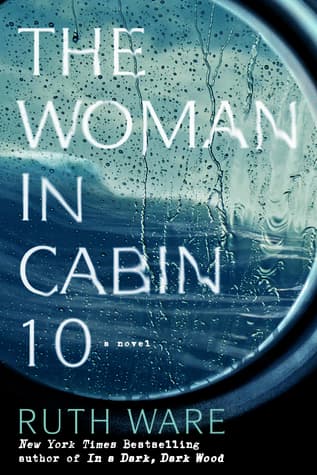
- The Woman in Cabin 10
Ruth Ware
3.7 (375k) average on GoodreadsThrillerBoth books utilize an unreliable narrator whose perceptions are questioned. Ware's protagonist, Lo Blacklock, is constantly doubting her own sanity and observations in a confined setting. Denzil's Isabel, while also struggling with memory, has her internal struggle complemented by an external investigator, providing a more balanced perspective for the reader. Ware's novel focuses more on isolation and gaslighting, while Denzil's delves into family secrets and institutional intrigue.
- Angels & Demons
Dan Brown
3.9 (2.7M) average on GoodreadsThrillerA Harvard symbologist races through Rome's ancient sites, deciphering cryptic clues to unmask the Illuminati and stop a vengeful plot to destroy the Vatican with a stolen antimatter weapon.
- Gone Girl
Gillian Flynn
4.1 (2.3M) average on GoodreadsThrillerA wife's sudden disappearance on her fifth anniversary reveals a web of lies and psychological warfare, exposing the secrets within a seemingly perfect marriage.
- The Girl on the Train
Paula Hawkins
3.9 (2.1M) average on GoodreadsThrillerA woman’s fascination with a seemingly perfect couple she watches from her daily train commute leads her into a dark investigation when she witnesses something that shatters their idyllic image.





Enjoyed the summary?
A summary gives you the shape of the book. The book itself has the detail, the examples and the voice.
Find One for Sorrow on AmazonAs an Amazon Associate, BookBrief earns from qualifying purchases. How we're funded