

Synopsis
Covers the whole plot, including the ending.
- Difficulty
- Medium
- Pacing
- Moderate
- Mood
- Suspenseful, Dark, Mysterious, Unsettling
- Read it if
- You enjoy psychological thrillers with unreliable narrators, family secrets, and a strong sense of impending danger.
- Skip it if
- You prefer fast-paced action over slow-burn mystery and character-driven suspense.
Only Daughter Plot Summary
Covers the whole plot, including the ending.
The Imposter's Desperate Act
The story begins with an unnamed protagonist, a young woman with a history of petty crime and a difficult relationship with her mother, arrested for shoplifting. Facing jail time and a broken probation, she makes a quick decision. She tells the police detective, Sergeant Miller, that she is Rebecca Winter, a sixteen-year-old girl who disappeared eleven years ago from Smithton. The real Rebecca Winter's disappearance was a well-known cold case, and the imposter, remembering old news reports, sees this as her only escape. This lie starts a chain of events that will change her life and the lives of the Winter family.
A New Identity and a Familiar Home
After her claim, the imposter is released into the care of the Winter family. She is surprised by their immediate acceptance and the emotional reunion with a mother and father she does not know. Living in Rebecca's childhood bedroom, she starts to learn details of the missing girl's life. She learns about Rebecca's twin younger brothers, Tom and Nick, her best friend, Chrissy, and her crush, Liam. The imposter studies old photos, yearbooks, and Rebecca's diary, trying to convincingly be her new persona. Despite the family's kindness, an underlying tension and strangeness appear, making her question the true circumstances of Rebecca's disappearance.
Flashbacks to the Real Rebecca's Last Summer
Throughout the imposter's story, chapters are included that detail the real Rebecca Winter's life in the summer of 2003, just before she vanished. These flashbacks show Rebecca as a typical teenager: working at a fast-food restaurant, liking Liam, and shoplifting with Chrissy. However, disturbing events begin to happen to her: unexplained blackouts, a feeling of being watched, and the discovery of blood in her bed. Rebecca initially thinks these are from stress or her period, but they become more sinister, hinting at a darker force. These parallel stories slowly come together, showing the truth behind Rebecca's fate.
Sergeant Miller's Skepticism and Growing Suspicion
Sergeant Miller, the detective who handled Rebecca's original missing person case, doubts the imposter's identity. He compares her statements with the original case files, looking for differences. He visits her often, asking detailed questions about Rebecca's childhood memories, specific events, and people. His persistent questioning and the imposter's near-slips create constant tension. Miller's dedication to finding the real Rebecca, or the truth of her disappearance, threatens the imposter's new life, forcing her to investigate Rebecca's past further to keep up her act.
Uncovering Rebecca's Secret Life
As the imposter looks deeper into Rebecca's belongings, especially her diary, she uncovers a more complex and troubled side to the missing girl. She learns that Rebecca was deeply in love with Liam, an older boy, and that their relationship was not innocent, marked by manipulation and control. The diary also suggests strained family dynamics and secrets the Winters wanted to hide. The imposter realizes that Rebecca's life was not as perfect as the family said, making her question not only what happened to Rebecca but also the true nature of the people she is now living with. This discovery changes her perspective from just impersonating Rebecca to actively investigating her disappearance.
The Confrontation and the Confession
The imposter confronts Chrissy, Rebecca's best friend, about the inconsistencies she has found in Rebecca's diary and the unsettling atmosphere around the family. Under pressure, Chrissy reveals a piece of information: Rebecca was secretly pregnant. This explains the blood in the bed and the blackouts Rebecca experienced, linking them to a desperate attempt to deal with the pregnancy. Chrissy also confesses that Liam was the father and that he was controlling. This discovery changes the entire direction of the imposter's investigation, pointing towards a much darker reason for Rebecca's disappearance than first thought.
Liam's Dark Influence and the Family's Complicity
The imposter now understands that Liam's relationship with Rebecca was abusive and that he was involved in her pregnancy. She also realizes that the Winter family, especially Rebecca's mother, knew more. The family's overprotective nature and their willingness to accept the imposter start to seem less like grief and more like an attempt to maintain an image. The imposter suspects that the family, trying to protect their reputation and their daughter, might have helped cover up the circumstances around Rebecca's pregnancy and disappearance, possibly even involving Liam in their plans.
The Truth About the Real Rebecca's Fate
By putting together diary entries, Chrissy's confession, and her own observations, the imposter reconstructs the night Rebecca disappeared. Rebecca, scared and alone, tried to end her pregnancy herself after Liam refused to help her. This led to serious problems. Her mother found her in a critical state and, trying to hide the scandal and protect Rebecca from Liam, tried to take her to a secluded cabin. However, Rebecca died on the way from complications of the failed abortion. The parents, wanting to protect their daughter's memory and their family's reputation, buried her body and made up the story of her disappearance.
Confrontation and Resolution
With the full truth, the imposter confronts the Winter parents. Faced with the evidence and her questions, they confess to their actions: burying Rebecca's body and keeping the lie for eleven years. Sergeant Miller, who has been building his own case against the imposter, also arrives, now understanding the full extent of the family's deception. The imposter, having brought justice and closure to Rebecca, finds her own redemption. She is arrested for her initial deception but has, in a strange turn of events, solved a cold case and given Rebecca Winter a voice.
A Future Forged in Truth
Afterward, the imposter faces legal consequences for impersonating Rebecca Winter, but she does so with purpose and a clear conscience. The Winter family faces their own consequences, and the truth about Rebecca's death comes out. The imposter, no longer burdened by her past or her adopted identity, feels a change within herself. She has found a sense of belonging and meaning in solving Rebecca's mystery. While her future is uncertain, it is one built on truth, not lies, offering hope for a genuine new beginning, free from the shadows of her past and Rebecca's.
Principal Figures
The Imposter (aka 'Bec')
Protagonist
A young woman who assumes the identity of a missing teenager to escape legal trouble.
Initially unnamed, the protagonist is a troubled young woman with a history of petty crime, a strained relationship with her mother, and a deep-seated desire for acceptance and a stable home. She is resourceful, intelligent, and observant, quickly adapting to her new identity as Rebecca Winter. Her initial motivation is self-preservation, but as she delves into Rebecca's life, she develops a genuine curiosity and empathy for the real missing girl. She is driven by a need to uncover the truth, which ultimately leads to her own self-discovery and a path towards redemption.
Relationships: Sergeant Miller (adversarial, then mutually respectful); Rebecca's Mother (Karen) (complex, initially accepting then confrontational); Rebecca's Father (Steve) (complex, initially accepting then confrontational); Chrissy (initially cautious, then confiding best friend)
Rebecca Winter
Central Figure (through flashbacks and memory)
The sixteen-year-old girl who mysteriously disappeared eleven years prior.
Rebecca is revealed through her diary entries, the memories of her family and friends, and the imposter's investigation. In 2003, she was a seemingly typical teenager: working at a fast-food joint, shoplifting with her best friend Chrissy, and harboring a deep, complicated crush on an older boy, Liam. Beneath this facade, she was vulnerable, secretly pregnant, and caught in a manipulative relationship. Her story is one of a young girl facing immense pressure and making desperate choices, ultimately leading to her tragic and hidden death. Her absence fuels the entire narrative.
Relationships: Liam (abusive, manipulative boyfriend); Chrissy (best friend, confidante); Karen Winter (mother, overprotective); Steve Winter (father, complicit in cover-up)
Sergeant Miller
Antagonist/Supporting
The skeptical detective investigating Rebecca Winter's disappearance.
Sergeant Miller is a dedicated and astute detective who has been haunted by the cold case of Rebecca Winter's disappearance for over a decade. He is a man of integrity, driven by a genuine desire for truth and justice. His skepticism regarding the imposter's claim is unwavering, and he relentlessly probes her with questions, looking for inconsistencies. He acts as a constant threat to the imposter's charade but also serves as an unwitting ally in her quest to uncover the real story, pushing her to dig deeper. He represents the unwavering force of the law and truth.
Relationships: The Imposter (adversarial, investigator-suspect); Karen Winter (professional, then accusatory); Steve Winter (professional, then accusatory)
Karen Winter
Supporting/Antagonist
Rebecca's overprotective and grief-stricken mother.
Karen is portrayed as a woman consumed by grief over her missing daughter, but her initial warmth towards the imposter masks a deeper, more complicated truth. She is fiercely protective of her family's image and Rebecca's memory, to the point of complicity in a major cover-up. She is manipulative and controlling, subtly guiding the imposter's understanding of Rebecca's past to align with the family's fabricated narrative. Her actions are driven by a misguided love and a desperate desire to prevent further scandal and pain.
Relationships: The Imposter (maternal, then confrontational); Steve Winter (husband, co-conspirator); Rebecca Winter (daughter, subject of her protection and deception)
Steve Winter
Supporting/Antagonist
Rebecca's quiet and seemingly supportive father.
Steve is the quieter, less overtly emotional parent compared to Karen. He appears supportive and kind to the imposter, but his silence and avoidance of certain topics hint at his complicity in the cover-up. He is a man who goes along with his wife's decisions, driven by a desire for peace and to protect his family from scandal, even if it means burying a terrible truth. His character highlights the theme of collective family deception and the lengths parents will go to protect their children, however misguidedly.
Relationships: The Imposter (paternal, then confrontational); Karen Winter (wife, co-conspirator); Rebecca Winter (daughter, subject of his protection and deception)
Chrissy
Supporting
Rebecca's best friend, who holds a vital secret.
Chrissy was Rebecca's closest confidante and best friend in 2003. She is initially wary of the imposter, recognizing that something is amiss, but eventually warms to her. Chrissy carries the heavy burden of knowing a crucial piece of information about Rebecca's last days – her secret pregnancy and the identity of the father. Her loyalty to Rebecca and her fear of exposure keep her silent for years, but her conscience eventually leads her to reveal the truth to the imposter, becoming a key turning point in the investigation.
Relationships: Rebecca Winter (best friend); The Imposter (initially cautious, then confiding friend)
Liam
Supporting/Antagonist (through flashbacks)
Rebecca's older, manipulative boyfriend.
Liam is the older boy Rebecca was infatuated with in 2003. He is revealed through Rebecca's diary and Chrissy's testimony to be controlling, manipulative, and ultimately responsible for Rebecca's secret pregnancy. He represents the dangerous influence of an older, predatory figure on a vulnerable teenager. His refusal to take responsibility for the pregnancy and his abusive behavior are central to the tragic events leading to Rebecca's death, though he never physically appears in the present timeline.
Relationships: Rebecca Winter (abusive, manipulative boyfriend); Chrissy (known acquaintance)
Tom Winter
Supporting
One of Rebecca's younger twin brothers.
Tom, along with his twin Nick, was a young child when Rebecca disappeared. As an adult, he is initially welcoming and a bit naive about the 'return' of his sister. He embodies the innocence of the family's lie, genuinely believing the imposter is his sister. His presence highlights the emotional impact of Rebecca's disappearance on her younger siblings and the depth of the family's deception.
Relationships: The Imposter (brotherly, then disillusioned); Nick Winter (twin brother)
Nick Winter
Supporting
One of Rebecca's younger twin brothers.
Nick is the other twin brother of Rebecca, similar to Tom in his initial acceptance and emotional attachment to the imposter. He represents the younger generation of the Winter family, who have grown up with the absence of their sister as a defining family tragedy. His interactions with the imposter further illustrate the emotional weight of the family's secrets and the impact of Rebecca's disappearance on all family members.
Relationships: The Imposter (brotherly, then disillusioned); Tom Winter (twin brother)
Themes & Insights
Identity and Self-Discovery
The novel looks at how identity is created and seen, by oneself and by others. The imposter, initially nameless and without a clear sense of self, takes on Rebecca Winter's identity to escape. Through this, she uncovers Rebecca's true self and starts to form her own identity, recognizing her detective skills and moral compass. Living another's life makes her confront who she truly is and what she values, leading to a more honest sense of self.
“Maybe I wasn't Rebecca Winter, but I was something. I was the person who found her.”
Truth vs. Deception
At its core, the novel studies lies and the search for truth. The entire story starts with the imposter's initial lie, which then reveals a much larger, decade-long deception by the Winter family. The story contrasts the initial, desperate lie of the imposter with the calculated, protective lies of the family, exploring why each was told. The narrative shows how secrets can grow and harm, and how the truth, no matter how hard, brings a form of freedom and justice, even for the dead.
“Lies, like secrets, were heavy things. They weighed you down until you couldn't breathe.”
Family Secrets and Protection
The Winter family's actions come from a strong desire to protect their daughter's reputation and their family's standing, even if it means burying her and living a lie for eleven years. This theme explores the darker side of parental love and how far a family will go to maintain a normal appearance and protect their children from scandal. It shows how secrets, even those meant to be loving, can destroy a family and cause deeper pain than the truth ever could.
“They hadn't just lost a daughter; they'd buried a secret, and that secret was still alive, festering.”
Memory and the Past's Influence
The novel moves between the present-day imposter's investigation and Rebecca's past experiences, showing how the past continues to affect the present. Memories, both real and made up, are important in establishing the imposter's identity and uncovering Rebecca's fate. The story shows how collective memory can be changed and how individual memories, like those in Rebecca's diary, hold the key to hidden truths. The past is not just gone; it actively influences the characters' actions and reasons.
“The past wasn't dead; it was just waiting for someone to dig it up.”
Vulnerability and Exploitation
Rebecca Winter's story shows how vulnerable a teenage girl can be to manipulation and exploitation. Her love for Liam, an older and controlling boyfriend, leads to her secret pregnancy and desperate actions. The story suggests how society often fails to protect young, impressionable girls from predatory figures and how the shame of teenage pregnancy can push individuals to extreme measures. Rebecca's fate is a reminder of the dangers of unchecked power and the pressures placed on young women.
“She was just a girl, in love with the wrong boy, making the wrong choices.”
Plot Devices & Literary Techniques
Dual Narrative / Interweaving Timelines
Alternating chapters between the imposter's present investigation and Rebecca's past experiences.
The novel uses a dual narrative structure, with chapters alternating between the unnamed imposter's present-day experiences living as Rebecca Winter and flashbacks to the real Rebecca Winter's life in the summer of 2003, leading up to her disappearance. This device slowly reveals critical information from the past, building suspense and allowing the reader to piece together the truth alongside the imposter. It creates a sense of foreboding in Rebecca's timeline and adds urgency to the imposter's investigation, showing how the past directly informs the present mystery.
Unreliable Narrator
The imposter's perspective is inherently biased and built on deception.
The primary narrator, the imposter, is inherently unreliable because her entire existence within the story is a lie. She is constantly fabricating details, observing others with a critical eye, and trying to maintain a false identity. This unreliability creates suspense and forces the reader to question every piece of information, mirroring Sergeant Miller's skepticism. It also highlights her internal struggle and vulnerability, as she juggles her invented persona with her growing desire for the truth. Her journey is one of moving from unreliability to a more genuine perspective.
Rebecca's Diary
A physical artifact providing direct access to the real Rebecca's thoughts and secrets.
Rebecca Winter's diary serves as a crucial plot device, acting as a direct window into the real Rebecca's inner life, thoughts, and secrets. It provides the imposter (and the reader) with unfiltered, first-person accounts of Rebecca's experiences, her relationship with Liam, and her secret pregnancy. The diary's contents contradict the sanitized version of Rebecca presented by her family, making it an indispensable tool for the imposter's investigation and a catalyst for uncovering the truth. It represents the authentic voice of the missing girl.
The Missing Person Trope
The central mystery revolves around the disappearance of a young girl.
The novel utilizes the classic missing person trope as its central mystery. The disappearance of Rebecca Winter eleven years prior provides the catalyst for the entire plot. This trope immediately establishes a sense of intrigue, tragedy, and a compelling question: what happened to her? The imposter's claim to be Rebecca breathes new life into a cold case, drawing in the detective and the family, and setting the stage for the gradual unveiling of a much darker truth behind the initial disappearance.
Only Daughter Quotes
“I am the only daughter. The one who survived.”
“In this town, secrets are buried deeper than the dead.”
“Every family has its ghosts, but ours are more real than most.”
“The truth is a shadow that follows you, even when you think you've outrun it.”
“She was the mirror I never wanted to look into.”
“Fear is a language we all understand, but silence is the dialect of this place.”
“You can't trust memories; they're just stories we tell ourselves to make sense of the chaos.”
“Sometimes the only way to find yourself is to lose everything else.”
“The past isn't a place you can visit; it's a ghost that haunts your present.”
“In the end, we are all just stories waiting to be told.”
“Loneliness is a room with no doors, and I've been living in it for years.”
“The line between victim and survivor is thinner than you think.”
“Some questions are better left unanswered, but I've never been good at leaving things alone.”
“Home is where the hurt is, and I can't seem to escape either.”
Quiz
10 questions on the plot and the characters. Each answer comes with a short explanation.
Question 1
In what year did sixteen-year-old Rebecca Winter disappear?
- 2001
- 2003
- 2005
- 2010
Show answer
B. 2003 The book opens by stating that Rebecca Winter disappeared in 2003, which sets the timeline for the events that follow.
Question 2
What was Rebecca doing during her summer break before she disappeared?
- Traveling abroad with her family
- Working at a fast-food restaurant and shoplifting with her best friend
- Attending summer school to improve her grades
- Volunteering at a local animal shelter
Show answer
B. Working at a fast-food restaurant and shoplifting with her best friend The book describes Rebecca's summer activities as including working at a fast-food restaurant, having a crush on an older boy, and shoplifting with her best friend, which establishes her teenage life before her disappearance.
Question 3
What ominous signs did Rebecca experience before her disappearance?
- Receiving threatening letters and phone calls
- Blood in her bed, blackouts, and a feeling of being watched
- Vandalism of her family's home and car
- Strange dreams about being kidnapped
Show answer
B. Blood in her bed, blackouts, and a feeling of being watched The book mentions specific eerie occurrences like blood in the bed, periods of blackouts, and a sensation of being watched, hinting at the danger Rebecca was in before she vanished.
Question 4
Why does the imposter initially claim to be Rebecca Winter?
- She is a long-lost relative seeking inheritance
- She is desperate after being arrested and sees it as an escape
- She suffers from amnesia and genuinely believes she is Rebecca
- She is a journalist investigating the cold case
Show answer
B. She is desperate after being arrested and sees it as an escape The imposter is described as a young woman who is desperate after being arrested, leading her to falsely claim she is the missing Rebecca Winter to avoid her own troubles.
Question 5
What does the imposter realize about Bec's family and friends as she takes over her life?
- They are all involved in a cult that Rebecca escaped from
- They are not as they seem and may be hiding secrets about Rebecca's disappearance
- They have moved on completely and don't care about Rebecca anymore
- They are planning to expose the imposter immediately
Show answer
B. They are not as they seem and may be hiding secrets about Rebecca's disappearance As the imposter integrates into Rebecca's life, she discovers that the welcoming family and enthusiastic friends have hidden depths and secrets, suggesting they might know more about the disappearance than they let on.
Question 6
How does the imposter's situation evolve as she investigates Rebecca's life?
- She becomes a suspect in a new murder case
- She realizes the person who took Rebecca is still at large and she is in danger
- She falls in love with Rebecca's former crush and decides to stay permanently
- She uncovers that Rebecca faked her own disappearance
Show answer
B. She realizes the person who took Rebecca is still at large and she is in danger While delving into Rebecca's past, the imposter uncovers clues that lead her to believe the kidnapper is still active, putting her own life at risk as she impersonates Rebecca.
Question 7
What role does the detective play in the story?
- He is the imposter's ally who helps her uncover the truth
- He is investigating the case and the imposter must dodge him to maintain her deception
- He is revealed to be Rebecca's biological father
- He is the one who originally kidnapped Rebecca
Show answer
B. He is investigating the case and the imposter must dodge him to maintain her deception The detective is actively investigating Rebecca's disappearance and the imposter's claim, forcing the imposter to avoid him to prevent her true identity from being exposed.
Question 8
What is a key theme explored through the imposter's experience in Rebecca's life?
- The importance of family loyalty above all else
- The dangers of technology and social media in modern society
- The fragility of identity and the secrets hidden beneath surface appearances
- The inevitability of fate and predestination
Show answer
C. The fragility of identity and the secrets hidden beneath surface appearances The book delves into themes of identity, as the imposter assumes Rebecca's life and uncovers hidden truths, highlighting how people and situations are not always what they seem.
Question 9
How does the imposter's investigation into Rebecca's disappearance affect her perception of her own safety?
- She feels increasingly secure as she gains the family's trust
- She becomes paranoid and realizes she is in imminent danger from the still-active kidnapper
- She decides to confess her identity to the police for protection
- She believes the danger has passed since Rebecca has been missing for so long
Show answer
B. She becomes paranoid and realizes she is in imminent danger from the still-active kidnapper As the imposter learns more about Rebecca's case, she connects the dots to understand that the threat is ongoing, leading to a heightened sense of peril and urgency.
Question 10
What does the imposter's ability to seamlessly integrate into Rebecca's life suggest about the Winter family?
- They are gullible and easily deceived by strangers
- They are so desperate for Rebecca's return that they overlook inconsistencies
- Their outward warmth masks deeper complexities and possible involvement in Rebecca's fate
- They have completely forgotten Rebecca and are just pretending to care
Show answer
C. Their outward warmth masks deeper complexities and possible involvement in Rebecca's fate The ease with which the imposter is accepted hints at the family's hidden motives or secrets, suggesting they might be complicit or know more than they admit, adding layers to the mystery.
Only Daughter FAQ
What is 'Only Daughter' about?
The novel follows an imposter who, after being arrested in 2014, claims to be Rebecca 'Bec' Winter, a teenager who vanished in 2003. She infiltrates Bec's family and social circle, only to discover that Bec's disappearance was not random and that the real perpetrator remains a threat, putting her own life at risk as she investigates.
Why should I read 'Only Daughter'?
It's a gripping psychological thriller that explores themes of identity, deception, and family secrets through dual timelines. The tension builds as the imposter uncovers unsettling truths about Bec's past while navigating the suspicious detective and the eerie dynamics of the Winter household.
What is the background/setting of 'Only Daughter'?
The story alternates between 2003, when sixteen-year-old Bec experiences ominous events like blackouts and blood in her bed in her suburban Australian town, and 2014, where the imposter assumes Bec's identity in the same community, now haunted by the unsolved disappearance.
What are the most memorable quotes?
Key quotes include the imposter's reflection, 'I am not Bec Winter, but I am becoming her,' highlighting her dangerous immersion, and Bec's diary entry, 'Someone is watching me, but I don't know who,' which foreshadows the lurking threat. These lines emphasize the themes of identity and paranoia.
What writing style does the author use?
Anna Snoekstra employs a dual-narrative structure with alternating chapters between Bec's 2003 perspective and the imposter's 2014 viewpoint. The prose is taut and suspenseful, using short, impactful sentences to build tension and unreliable narration to keep readers guessing.
What minor details add significant meaning?
The blood in Bec's bed and her blackouts in 2003 are initially dismissed but later revealed as clues to her manipulation by someone close. Similarly, the imposter's careful study of Bec's old photos and diaries underscores her precarious role and the hidden dangers in the Winter family.
What are some subtle foreshadowing moments?
Bec's feeling of being watched and her shoplifting escapades with her best friend hint at the community's darker undercurrents. In 2014, the detective's persistent questions and the family's overly welcoming behavior foreshadow the imposter's realization that she is not safe.
What unexpected character connections exist?
It is revealed that Bec's best friend and the older boy she crushed on are intertwined in the events leading to her disappearance. The imposter discovers that these connections run deeper than she imagined, implicating multiple people in Bec's circle in the mystery.
What are unspoken character motivations?
The imposter is driven by a desperate need for escape and belonging, leading her to risk assuming Bec's identity. Bec's parents, while outwardly grieving, harbor secrets about their daughter's life that motivate their acceptance of the imposter, masking their guilt or involvement.
What psychological complexities do characters exhibit?
The imposter grapples with impostor syndrome and paranoia as she inhabits Bec's life, while Bec's mother displays a mix of denial and manipulation, clinging to the replacement daughter to avoid facing painful truths. These layers add depth to the thriller's emotional core.
What are the major emotional turning points?
Key moments include the imposter's first realization that Bec's family is hiding something, her discovery of Bec's diary revealing the blackouts, and the climax where she confronts the truth about Bec's fate, forcing her to choose between survival and exposing the secrets.
How do relationship dynamics evolve?
Initially, the imposter forms tentative bonds with Bec's family and friends, but as she investigates, these relationships become strained and suspicious. The detective's role shifts from investigator to potential ally or threat, mirroring the imposter's growing isolation and danger.
Which parts remain ambiguous or open-ended?
The exact identity of Bec's abductor and the full extent of the family's knowledge are left somewhat ambiguous, allowing readers to speculate. The imposter's ultimate fate and whether justice is served for Bec are also open to interpretation, adding to the novel's lingering unease.
What are controversial scenes or decisions?
The imposter's decision to steal Bec's identity and the family's quick acceptance of her without solid proof spark debate about morality and desperation. Scenes where the imposter risks her life to uncover the truth, while endangering others, highlight ethical gray areas in the pursuit of justice.
'Only Daughter' ending explained: how it ends & what it means
The climax reveals that Bec was targeted by someone within her trusted circle, and the imposter narrowly escapes a similar fate. The ending implies that while some truths are uncovered, the perpetrator may not face full consequences, leaving themes of unresolved trauma and the fragility of identity lingering for readers.
About the author

Anna Snoekstra is a contemporary fiction author known for her gripping psychological thrillers. Her debut novel, 'Only Daughter,' was lauded for its intricate plot and compelling narrative, establishing her as a notable voice in the genre. Snoekstra's work often explores dark themes and complex characters, drawing readers into suspenseful and thought-provoking stories.
Similar books
- The Girl on the Train
Paula Hawkins
3.9 (2.1M) average on GoodreadsThrillerFeatures an unreliable female protagonist entangled in a mystery with dark secrets.
- Gone Girl
Gillian Flynn
4.1 (2.3M) average on GoodreadsThrillerExplores complex psychological themes, a missing person, and hidden truths within relationships.
- Angels & Demons
Dan Brown
3.9 (2.7M) average on GoodreadsThrillerA Harvard symbologist races through Rome's ancient sites, deciphering cryptic clues to unmask the Illuminati and stop a vengeful plot to destroy the Vatican with a stolen antimatter weapon.
- The Da Vinci Code
Dan Brown
3.9 (1.9M) average on GoodreadsThrillerA symbologist and a cryptologist race through European landmarks, deciphering ancient codes and uncovering a conspiracy that could rewrite the foundations of Christianity.
- The Guest List
Lucy Foley
3.8 (1.3M) average on GoodreadsThrillerOn a remote Irish island, a glamorous wedding descends into a deadly whodunnit when a guest is found murdered, trapping everyone with their secrets as a storm rages.
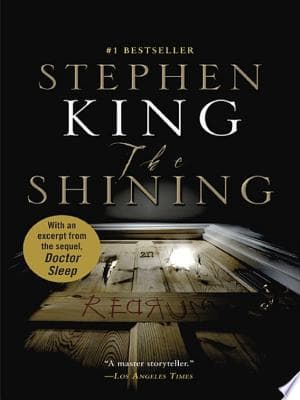
- The Shining
Stephen King
4.2 (1.1M) average on GoodreadsThrillerA recovering alcoholic accepts a caretaking job at a snow-bound, haunted hotel, where his son's psychic abilities reveal the sinister forces that drive him to madness and terrorize his family.





Enjoyed the summary?
A summary gives you the shape of the book. The book itself has the detail, the examples and the voice.
Find Only Daughter on AmazonAs an Amazon Associate, BookBrief earns from qualifying purchases. How we're funded