
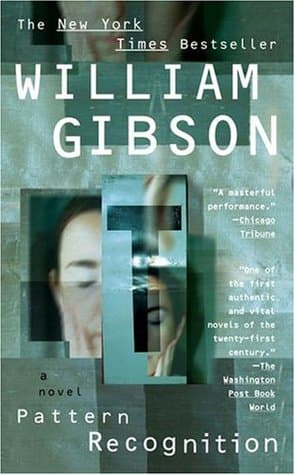
Synopsis
Covers the whole plot, including the ending.
- Difficulty
- Medium
- Pacing
- Moderate
- Mood
- Atmospheric, Suspenseful, Melancholy, Thought-provoking, Urban
- Read it if
- You enjoy tech-savvy thrillers with a strong sense of atmosphere, explore themes of internet culture, grief, and the elusive nature of art, and appreciate William Gibson's signature blend of cyberpunk's legacy with contemporary realism.
- Skip it if
- You prefer fast-paced, action-heavy thrillers, are looking for clear-cut answers to every mystery, or dislike books with a focus on brand analysis and internet subcultures.
Pattern Recognition Plot Summary
Covers the whole plot, including the ending.
The Ghost in the Machine
Cayce Pollard, a freelance 'coolhunter' with a unique sensitivity to brands and a phobia of logos, is in London for a project. She still deeply grieves the presumed death of her father, Win Pollard, who vanished on 9/11. Her current client, Hubertus Bigend of Blue Ant, an advertising agency, offers her a side project: to find the creator of mysterious, beautiful video clips appearing on the internet, known as 'Flicker.' These clips have a cult following, and Bigend wants to understand their commercial potential. Cayce, interested by the clips' look and the mystery, agrees to take on the assignment, which involves exploring the online communities obsessed with Flicker.
Digital Intrusion and a Warning
Soon after Cayce accepts Bigend's assignment, her borrowed London apartment is broken into. Nothing is stolen, but her computer has been tampered with, and a file for the Flicker project was accessed. This incident, along with a warning from Damien Pease, one of Bigend's associates, suggests her investigation is attracting unwanted attention and might be more dangerous than she thought. The break-in reminds her of her father's past as a security expert and the threats he might have faced, making Cayce more cautious but also more determined.
Online Communities and Real-World Contacts
Cayce spends time in the online forums for Flicker, watching discussions and theories about the clips. She learns about the subculture that has formed, with its own language and rules. She contacts several key members, especially 'Parkaboy,' a seemingly knowledgeable figure in the community. Through these talks, Cayce starts to understand Flicker's global reach and the strong emotional connection its viewers feel, confirming that the creator, whoever they are, has an extraordinary artistic vision.
Tokyo and the Trail of the Source
Following a lead that suggests the Flicker creator might be linked to someone in Tokyo, Cayce travels to Japan. There, she continues her research, meeting local contacts and exploring the city's tech and art scenes. Her investigation narrows, suggesting the creator might be a reclusive and perhaps troubled person. Tokyo's atmosphere is both exciting and unsettling, as Cayce feels she is getting closer to the mystery's core, but also more exposed to the hidden forces that seem to protect Flicker's anonymity.
The Russian Connection and a New Ally
The trail leads Cayce to Moscow, a city with its own mysteries and dangers. Here, she meets Stella, a woman who admires Flicker and has a personal connection to its creator. Stella, a complex and somewhat fragile character, becomes an unexpected ally for Cayce. Through Stella, Cayce learns more about the creator's background, their reasons, and the emotional toll making Flicker has taken on them, revealing a story more personal than a simple marketing stunt.
Unveiling the Creator: Tôru
In Moscow, Cayce finally meets Tôru, the reclusive Japanese artist who makes Flicker. Tôru is a sensitive, almost childlike person, burdened by a personal tragedy that is the emotional center of his work. His art is not a planned commercial project but a raw expression of grief and memory. Cayce realizes that Bigend's commercial interest in Flicker completely misses the point of Tôru's creation, which is a personal and healing act, not something to be sold.
The Shadowy Figures
As Cayce digs deeper, she uncovers a network of people and groups manipulating Tôru and trying to control his art. These include figures like Voytek, a manipulative art dealer, and others who see Flicker as a source of power or profit. Cayce realizes that her initial assignment from Bigend was only a small part of a larger, more sinister game, where Tôru's vulnerability is being used by those who do not truly appreciate his art.
A Father's Echoes
Throughout her journey, Cayce finds subtle links between her investigation into Flicker and her father, Win Pollard's, past as a security expert. She realizes that some of the shadowy figures manipulating Tôru might have also met her father. These echoes of Win's life, especially his intelligence work and his ability to protect others, deeply affect Cayce, making her feel closer to him even in his absence and strengthening her resolve to protect Tôru.
The Truth of September 11th
A key moment happens when Cayce learns the truth about her father's death on 9/11. She finds out that Win Pollard was not just a victim but was on a secret mission related to a rogue intelligence operation. His final actions were an attempt to prevent a greater disaster, sacrificing himself. This discovery gives Cayce a deep sense of closure, changing her grief into a deeper understanding of her father's character and his commitment to justice and protection.
Protecting Tôru and the Art
With the truth about Tôru's creation and her father's past revealed, Cayce acts decisively. She works with Stella and others who care about Tôru to protect him from Voytek's manipulative schemes and other exploiters. Her goal is not to sell Flicker, but to keep Tôru safe and preserve his art. She understands that Flicker's true value is its authenticity and the emotional connection it creates, not its potential for profit or control.
The Resolution and Future
By the end, Cayce helps Tôru escape from those who would use him, leaving him with people who appreciate his art without trying to control it. The journey has allowed Cayce to process her grief for her father and accept his complex legacy. She returns to London, her understanding of the world, brands, and human connection changed. She finds a new purpose, no longer just a 'coolhunter' but someone with a stronger ethical compass, ready to navigate the complexities of information and influence.
Principal Figures
Cayce Pollard
Protagonist
A 'coolhunter' with a unique sensitivity to brands and a personal trauma.
Cayce Pollard is a freelance market research consultant, often referred to as a 'coolhunter' or 'trend-spotter.' She possesses an uncanny ability to discern the future appeal of brands and products, but paradoxically suffers from a severe allergy to logos and corporate branding. Her emotional core is defined by the unresolved grief over her father, Win Pollard, who disappeared on 9/11. This loss leaves her emotionally numb and detached, yet also fuels a deep-seated determination and resilience. She is observant, intuitive, and possesses a strong ethical compass despite her profession.
Relationships: Win Pollard (Deceased father, whose memory and past influence her actions.); Hubertus Bigend (Client and employer; a manipulative, powerful figure.); Stella (Friend and ally; shares a connection to Tôru.); Tôru (The artist she is hired to find; she develops a protective bond with him.); Parkaboy (Online acquaintance and source of information in the Flicker community.)
Win Pollard
Supporting/Mentioned
Cayce's deceased father, a former intelligence operative whose past intertwines with the present.
Win Pollard is Cayce's father, presumed dead on 9/11. A former intelligence operative and security expert, his presence is felt throughout the narrative through Cayce's memories, his teachings, and the lingering questions surrounding his disappearance. He was a man of integrity and deep knowledge of the shadowy world of espionage and global power structures. His character represents a moral compass and a practical guide for Cayce, even in his absence, as she navigates dangerous territory.
Relationships: Cayce Pollard (Daughter; his memory guides her actions and shapes her identity.)
Hubertus Bigend
Antagonist/Supporting
The eccentric, powerful, and manipulative owner of Blue Ant advertising agency.
Hubertus Bigend is the enigmatic and wealthy owner of Blue Ant, a cutting-edge advertising and marketing firm. He is Cayce's primary client and the catalyst for her investigation into Flicker. Bigend is driven by a restless curiosity and an insatiable desire to identify and harness the next big cultural phenomenon for commercial gain. He is charming but ultimately amoral, viewing people and art primarily as data points or opportunities for exploitation. He represents the commercial forces that threaten authentic creation.
Relationships: Cayce Pollard (Employer; he manipulates her skills for his own ends.); Damien Pease (Employee; a source of information and warnings for Cayce.)
Tôru
Supporting
The reclusive and emotionally fragile Japanese artist behind the mysterious 'Flicker' videos.
Tôru is the highly sensitive and reclusive Japanese artist who creates the enigmatic 'Flicker' video clips. His art is a raw and deeply personal expression of grief and trauma, specifically related to the loss of his family in a past tragedy. He is not motivated by commercial success or recognition but by an internal need to process his pain. Tôru is vulnerable and easily manipulated by others who seek to exploit his talent, making him a central figure in the novel's exploration of artistic integrity versus commercialization.
Relationships: Cayce Pollard (The person who seeks him out and ultimately protects him.); Stella (A devoted fan and friend who cares deeply for him.); Voytek (An exploitative art dealer attempting to control him.)
Stella
Supporting
A devoted fan of Flicker who becomes a crucial ally to Cayce in Moscow.
Stella is a Russian woman living in Moscow who is deeply affected by Tôru's Flicker videos. She is a passionate and somewhat eccentric character, emotionally invested in the art and its creator. Stella possesses a crucial personal connection to Tôru and a deep understanding of his work's emotional resonance. She becomes an invaluable ally to Cayce, providing key insights and assistance in navigating the complexities of Tôru's situation and protecting him from exploitation. She embodies the genuine, non-commercial appreciation for art.
Relationships: Cayce Pollard (Ally and friend in the mission to find and protect Tôru.); Tôru (Devoted admirer and friend, deeply understanding of his art.)
Damien Pease
Supporting
An associate of Bigend who provides cryptic warnings and information to Cayce.
Damien Pease is an employee or associate of Hubertus Bigend. He serves as a somewhat mysterious informant, providing Cayce with cryptic warnings and subtle clues about the dangers she faces in her investigation. He operates in the periphery, seemingly aware of the deeper, more sinister forces at play but unwilling or unable to directly intervene. Pease represents a moral ambiguity within Bigend's organization, hinting at the hidden costs and ethical compromises inherent in their work.
Relationships: Cayce Pollard (Informant and subtle protector.); Hubertus Bigend (Associate/employee.)
Parkaboy
Supporting
A knowledgeable and influential figure within the online Flicker fan community.
Parkaboy is a prominent and highly respected member of the online community dedicated to discussing and analyzing Flicker. He is a key source of information and theories for Cayce as she begins her investigation. Parkaboy embodies the passionate, collaborative, and sometimes overly speculative nature of online subcultures. His insights help Cayce navigate the vast amount of user-generated content and identify credible leads, demonstrating the power of collective intelligence in the digital age.
Relationships: Cayce Pollard (Online acquaintance and source of information.)
Voytek
Antagonist
A manipulative art dealer seeking to control and profit from Tôru's work.
Voytek is a manipulative and unethical art dealer who seeks to control Tôru and exploit his artistic output for financial gain. He represents the predatory commercial side of the art world, devoid of genuine appreciation for the artist or the art itself. Voytek's actions highlight the vulnerability of true artists to those who prioritize profit over integrity, making him a clear antagonist in Cayce's mission to protect Tôru.
Relationships: Tôru (Target for exploitation.); Cayce Pollard (Opponent in the struggle for Tôru's autonomy.)
Themes & Insights
Grief and Loss
The novel is rooted in Cayce Pollard's unresolved grief over her father, Win Pollard, who disappeared on 9/11. Her emotional numbness and detachment come from this loss. The search for Flicker becomes a subconscious search for connection and meaning after trauma. The reveal of Tôru's own grief as Flicker's origin creates a strong parallel, suggesting art as a way to process and express unbearable loss. This theme is central to Cayce's personal journey, as her understanding of her father's true fate brings peace and closure, allowing her to move forward.
“She was a 'coolhunter,' but the cool was her own, a kind of internal permafrost, a protection.”
Authenticity vs. Commercialization
A core conflict in the novel is the tension between real artistic creation and its possible use by commercial interests. Tôru's Flicker videos come from raw, genuine grief and are made without commercial intent. However, Hubertus Bigend and others like Voytek immediately see their commercial potential, trying to 'brand' or 'monetize' this pure expression. Cayce, despite her job as a 'coolhunter,' ultimately protects authenticity, working to shield Tôru from those who would sell his pain. This theme criticizes the modern marketing world's constant desire for 'cool' and its tendency to strip art of its original meaning.
“Bigend wasn't interested in art, Cayce knew. He was interested in the effect of art.”
The Nature of Information and Connection in the Digital Age
The internet is both the way Flicker spreads and Cayce's main tool for investigation. The novel explores how information moves, how online communities form around shared interests (like Flicker's fans), and how these digital connections can lead to real-world interactions. It shows the power and vulnerability of online information, from anonymous art to hacked personal data. Cayce's ability to navigate these digital spaces, often through subtle clues and intuition, highlights the changing relationship between humans and technology in forming meaning and identity.
“The internet was a vast, chaotic, and largely uncurated library of everything.”
Pattern Recognition and Intuition
Cayce's unique talent is her ability to recognize patterns – in trends, data, and human behavior – often intuitively, beyond logic. This 'pattern recognition' is central to her work and her investigation into Flicker. She senses connections and meanings others miss, whether subtle shifts in brand appeal or the emotional current of Tôru's videos. The novel suggests that intuition and sensitivity to non-obvious patterns are key tools for navigating a complex, information-filled world, contrasting with purely analytical or profit-driven approaches.
“She was less a hunter than a medium, one who received signals from the collective unconscious of the marketplace.”
Plot Devices & Literary Techniques
MacGuffin
The mysterious 'Flicker' videos that drive the plot forward.
The 'Flicker' videos serve as the primary MacGuffin in 'Pattern Recognition.' While they possess genuine artistic merit and emotional depth, their initial function is to propel Cayce's investigation. Hubertus Bigend hires Cayce to find their creator, setting the entire plot in motion. The true nature and meaning of Flicker are revealed gradually, but its initial mystery is the engine that drives Cayce from London to Tokyo and Moscow, introducing her to various characters and dangers. The MacGuffin evolves from a simple plot device into something deeply meaningful as the story progresses.
The Unreliable Narrator (subtly)
Cayce's perception, filtered through her grief and unique sensibilities, shapes the reader's understanding.
While not a classic unreliable narrator, Cayce's perspective is heavily colored by her grief for her father and her unique sensory perceptions (like her logo allergy). This subtly shapes the reader's understanding of events and characters. Her emotional detachment initially keeps the reader at arm's length, and her intuitive leaps often precede logical explanations. The reader experiences the world through her highly subjective lens, particularly regarding brands and the emotional impact of art, making her interpretation of events a key aspect of the narrative experience.
Symbolism of 9/11
The historical event serves as both a personal trauma and a backdrop for a changing global landscape.
The events of September 11, 2001, serve as a profound symbolic backdrop and a personal catalyst for Cayce's journey. Her father's disappearance on that day is the source of her deep, unresolved grief. Beyond the personal, 9/11 symbolizes a shift in global consciousness, a loss of innocence, and the emergence of new forms of threat and uncertainty. It grounds the novel in a specific historical moment, linking personal trauma to broader societal anxieties and the shadowy world of intelligence and global networks that her father inhabited, giving her quest a greater resonance.
The Mentor Figure (absent)
Win Pollard, though deceased, acts as an absent mentor, guiding Cayce through his past teachings.
Win Pollard, Cayce's deceased father, functions as an absent mentor figure. His past experiences as an intelligence operative and his practical advice on navigating dangerous situations are frequently recalled by Cayce. These memories serve as a guide for her as she encounters unexpected threats and deceptive individuals. His legacy informs her understanding of power, surveillance, and the importance of ethical action, even from beyond the grave. He provides her with a moral compass and a set of practical skills crucial for her survival and success.
Pattern Recognition Quotes
“The future is already here – it's just not evenly distributed.”
“She was a sensitive, but not in any way that anyone she'd ever met understood.”
“All of Cayce's professional experience had convinced her that the most interesting things were never for sale.”
“The web was a vast, unedited, and frequently inaccurate repository of human knowledge and delusion.”
“What she was looking for was an absence. A gap. A hole.”
“Her brain was a pattern-recognition machine.”
“It was as though the world, having been stripped of the future, had also been stripped of its past.”
“The past, after all, is a foreign country. They do things differently there.”
“Somewhere between the raw data and the pattern, the signal and the noise, was the truth.”
“She moved through the city like a ghost, her senses tuned to frequencies that most people never registered.”
“The thing was, the internet had no memory. Or rather, it had all the memory, but no hierarchy of relevance.”
“She was a diviner of invisible currents, a dowser of the Zeitgeist.”
“The truth was not always elegant, nor was it always simple.”
“Brands were an attempt to control the future, to own a piece of it, however small.”
Quiz
10 questions on the plot and the characters. Each answer comes with a short explanation.
Question 1
What is Cayce Pollard's primary profession?
- Software engineer
- Market-research consultant
- Art curator
- Journalist
Show answer
B. Market-research consultant Cayce Pollard is introduced as an expensive, spookily intuitive market-research consultant.
Question 2
What is the initial object Cayce is hired to investigate for her client?
- A new line of designer clothing
- A series of mysterious sculptures
- Intriguing snippets of video appearing on the Internet
- An untraceable cryptocurrency
Show answer
C. Intriguing snippets of video appearing on the Internet Cayce is offered a secret assignment to investigate intriguing snippets of video that have been appearing on the Internet.
Question 3
What event is associated with the presumed death of Cayce's father, Win Pollard?
- A plane crash
- The World Trade Center attacks on September 11
- A car accident in London
- A heart attack
Show answer
B. The World Trade Center attacks on September 11 Win Pollard 'took a taxi in the direction of the World Trade Center on September 11 one year ago, and is presumed dead.'
Question 4
What happens to Cayce's borrowed apartment and computer early in the investigation?
- They are destroyed in a fire.
- Her apartment is burgled and her computer hacked.
- She accidentally spills coffee on her computer, ruining it.
- Her landlord evicts her unexpectedly.
Show answer
B. Her apartment is burgled and her computer hacked. The text states, 'when her borrowed apartment is burgled and her computer hacked, she realizes there's more to this project than she had expected.'
Question 5
What characteristic does Cayce inherit from her father, Win Pollard, that helps her in dangerous situations?
- A photographic memory
- Exceptional physical strength
- Stubbornness in the face of danger
- A natural ability to speak multiple languages
Show answer
C. Stubbornness in the face of danger The description notes, 'Still, Cayce is her father's daughter, and the danger makes her stubborn.'
Question 6
Why is Cayce's client particularly interested in the mysterious video snippets?
- They believe the videos contain hidden messages from a rival company.
- They are fascinated by the artistic merit of the footage.
- The videos have generated a significant subculture and brand loyalty, which is valuable for market research.
- They suspect the videos are part of an illegal hacking operation.
Show answer
C. The videos have generated a significant subculture and brand loyalty, which is valuable for market research. The client is interested because 'An entire subculture of people is obsessed with these bits of footage, and anybody who can create that kind of brand loyalty would be a gold mine for Cayce's client.'
Question 7
Which of the following cities is NOT mentioned as a location Cayce will travel to during her investigation?
- London
- Tokyo
- Paris
- Russia
Show answer
C. Paris Cayce is in London, and her job 'will take her to Tokyo and on to Russia.' Paris is not mentioned.
Question 8
What specific skill or knowledge did Cayce's father, Win Pollard, impart to her that becomes relevant to her current assignment?
- How to pilot a helicopter
- A bit about the way agents work
- Advanced computer programming
- Expert negotiation tactics
Show answer
B. A bit about the way agents work Win Pollard 'taught Cayce a bit about the way agents work,' which is useful given the increasingly dangerous nature of her job.
Question 9
Beyond finding the source of the mysterious film, what personal revelation does Cayce expect to gain from her investigation?
- A new career path entirely unrelated to market research.
- An understanding of her father's life and death.
- The identity of her biological mother.
- A significant financial inheritance.
Show answer
B. An understanding of her father's life and death. The text states that in the process of following the trail of the mysterious film, Cayce 'will learn something about her father's life and death.'
Question 10
The description implies that Cayce's motivation to continue the 'newly weird job' is partly driven by her grief and connection to her father. What phrase specifically suggests this?
- She is still numb at his loss, and, as much for him as for any other reason, she refuses to give up this newly weird job.
- Her professional reputation was on the line, forcing her to persevere.
- The financial compensation was too significant to abandon.
- She feared retribution from her client if she quit.
Show answer
A. She is still numb at his loss, and, as much for him as for any other reason, she refuses to give up this newly weird job. The text explicitly states: 'She is still numb at his loss, and, as much for him as for any other reason, she refuses to give up this newly weird job.'
Pattern Recognition FAQ
What is Cayce Pollard's unique professional skill and how does it relate to the plot?
Cayce Pollard possesses an uncanny intuition for 'coolhunting' and identifying emerging trends, particularly regarding logos and brands. This skill makes her invaluable to her client, Blue Ant, as they task her with tracking down the elusive creator of the 'footage' due to its intense, almost cult-like brand loyalty among its online followers.
What is the 'footage' that Cayce is tasked with investigating, and why is it so significant?
The 'footage' refers to anonymous, fragmented video clips of unknown origin and purpose that appear sporadically online, captivating a global subculture. Its significance lies in its ability to generate intense emotional and psychological responses, fostering a unique sense of community and obsession among its viewers, which Blue Ant hopes to harness.
Who is Hubertus Bigend, and what is his role in the story?
Hubertus Bigend is the eccentric, wealthy, and enigmatic owner of Blue Ant, Cayce's employer. He is the one who initiates Cayce's investigation into the 'footage,' driven by a desire to understand and potentially monetize its unique appeal, often manipulating situations and people to achieve his goals.
How does Cayce's personal grief over her father's presumed death on 9/11 influence her actions throughout the investigation?
Cayce's profound grief for her father, Win Pollard, who disappeared on 9/11, makes her emotionally numb and fuels her stubborn determination. Her father's past as a security expert also provides her with a framework for understanding the dangerous aspects of her investigation, and her pursuit of the footage becomes intertwined with her search for closure regarding his life.
What are some of Cayce's specific anxieties or phobias mentioned in the book, and how do they manifest?
Cayce suffers from a severe allergy to logos and an aversion to specific brands, experiencing psychosomatic reactions like nausea and hives. She also has a deep-seated anxiety related to the digital world and surveillance, which manifests as a reluctance to engage with technology and a preference for analogue methods, despite her profession.
Who is Voytek, and what is his connection to the 'footage' and Cayce?
Voytek is a member of the online community obsessed with the 'footage' and an early, influential figure in its analysis. He becomes a crucial ally for Cayce, offering insights into the footage's patterns and the community's theories, and later helps her navigate the deeper mysteries surrounding its creation.
What role does the character of Parkaboy play in the online 'footage' community?
Parkaboy is a prominent and highly respected member of the online 'footage' community, known for his meticulous analysis and theories. He represents the passionate, intellectual core of the fandom, and his interactions with Cayce provide her with crucial context and clues about the footage's impact and potential origins.
How does the burglary of Cayce's apartment and the hacking of her computer escalate the danger of her assignment?
The intrusion into Cayce's borrowed apartment and the hacking of her computer signal that her investigation is not a benign market research task but something far more dangerous. It indicates that powerful, unseen forces are actively monitoring and attempting to obstruct her, transforming her role from consultant to unwitting operative.
What is the significance of the mysterious 'maker' of the footage, and what is eventually revealed about them?
The 'maker' of the footage is the central enigma, the anonymous creator whose identity drives much of the plot. It is eventually revealed that the footage is created by Stella, the daughter of a Russian rocket scientist, whose father suffers from a debilitating neurological condition, and the videos are an attempt to communicate with him.
How does the setting of Tokyo contribute to Cayce's journey and understanding?
Tokyo serves as a critical intermediary location, both physically and culturally, where Cayce meets crucial contacts like Voytek and gains deeper insights into the global nature of the 'footage' phenomenon. Its hyper-modern, brand-saturated environment ironically provides a backdrop for her continued aversion to logos while also offering technological tools for her investigation.
What is the ultimate purpose or meaning behind the 'footage' as revealed at the end of the book?
The 'footage' is not a commercial venture or a conspiracy, but a deeply personal, desperate attempt by Stella to communicate with her father, who is trapped in a locked-in syndrome due to a neurotoxin. The abstract, fragmented nature of the videos reflects her struggle to connect with him through a shared, complex language of imagery.
How does the novel explore themes of collective consciousness and online communities?
The novel vividly portrays the formation of online communities around shared obsessions, specifically the 'footage.' It explores how these groups develop their own lexicons, hierarchies, and theories, demonstrating a form of emergent collective consciousness that transcends geographical boundaries and traditional media consumption.
What is the significance of the character of Stella and her father in the broader narrative?
Stella and her father represent the deeply human, emotional core at the heart of the mystery. Their story underscores the novel's themes of communication, loss, and the search for connection in a fragmented world, revealing that even the most enigmatic digital phenomena can have profoundly personal origins.
How does the book connect Cayce's personal trauma of 9/11 with the seemingly unrelated mystery of the footage?
The book subtly links Cayce's 9/11 trauma with the footage by exploring themes of loss, the search for meaning in chaos, and the personal impact of global events. The footage, like 9/11, represents an inexplicable, impactful event that defies easy categorization, forcing Cayce to confront her own need for narrative and closure.
What is the role of technology and information in shaping reality within the novel?
Technology and information are portrayed as powerful, double-edged swords that shape perception and reality. The internet facilitates global communities and investigations but also enables surveillance and manipulation. The novel suggests that while information can connect, it can also obscure, creating new forms of mystery and control.
How does Cayce's journey change her perception of brands and her own 'allergy' to them?
While Cayce's core aversion to logos remains, her journey broadens her understanding of 'brand loyalty' to encompass more abstract, almost spiritual connections, as seen with the 'footage.' She learns that true human connection and meaning can emerge even from seemingly commercial or digital phenomena, subtly challenging her rigid anti-branding stance.
What is the significance of the final destination in Russia for Cayce's investigation?
Russia is the ultimate destination because it is where Stella and her father reside, the true source of the 'footage.' This setting emphasizes the Cold War echoes in the narrative, linking cutting-edge digital mysteries to older geopolitical tensions and the personal tragedies that can result from scientific pursuits.
How does the character of Hubertus Bigend embody or challenge typical corporate motivations?
Bigend embodies corporate ambition but challenges typical motivations by being driven less by pure profit and more by an almost artistic, intellectual curiosity about human behavior and emergent phenomena. He seeks to understand and 'brand' the unbrandable, demonstrating a more complex, almost philosophical approach to market exploitation.
What elements of 'Pattern Recognition' classify it as science fiction, despite its contemporary setting?
While set in the near-present, 'Pattern Recognition' utilizes science fiction elements through its exploration of emergent internet subcultures, the psychological impact of digital media, advanced market research as a form of prescience, and the subtle hints of cutting-edge Russian neurotoxins and communication technologies, pushing the boundaries of contemporary reality.
About the author
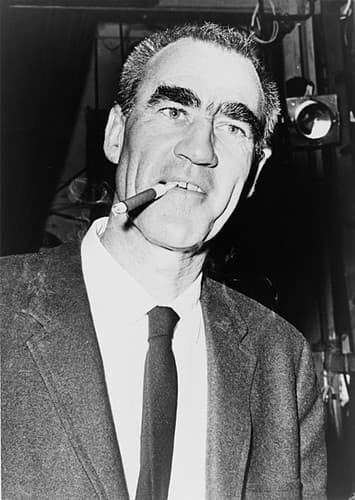
William Ford Gibson is an American-Canadian speculative fiction writer and essayist widely credited with pioneering the science fiction subgenre known as cyberpunk. Beginning his writing career in the late 1970s, his early works were noir, near-future stories that explored the effects of technology, cybernetics, and computer networks on humans—a "combination of lowlife and high tech"—and helped to create an iconography for the information age before the ubiquity of the Internet in the 1990s. Gibson coined the term "cyberspace" for "widespread, interconnected digital technology" in his short story "Burning Chrome" (1982), and later popularized the concept in his acclaimed debut novel Neuromancer (1984). These early works of Gibson's have been credited with "renovating" science fiction literature in the 1980s.
Similar books
- Neuromancer
William Gibson
3.9 (262k) average on GoodreadsFantasyShares Gibson's distinct prose, exploration of technology's impact, and a sense of cyberpunk cool, though 'Pattern Recognition' is set in a more contemporary world.
- Snow Crash
Neal Stephenson
4.0 (237k) average on GoodreadsFantasyFeatures a complex plot, a unique protagonist navigating a technologically advanced world, and a blend of mystery and social commentary.
- Angels & Demons
Dan Brown
3.9 (2.7M) average on GoodreadsThrillerA Harvard symbologist races through Rome's ancient sites, deciphering cryptic clues to unmask the Illuminati and stop a vengeful plot to destroy the Vatican with a stolen antimatter weapon.
- Gone Girl
Gillian Flynn
4.1 (2.3M) average on GoodreadsThrillerA wife's sudden disappearance on her fifth anniversary reveals a web of lies and psychological warfare, exposing the secrets within a seemingly perfect marriage.
- The Girl on the Train
Paula Hawkins
3.9 (2.1M) average on GoodreadsThrillerA woman’s fascination with a seemingly perfect couple she watches from her daily train commute leads her into a dark investigation when she witnesses something that shatters their idyllic image.
- The Da Vinci Code
Dan Brown
3.9 (1.9M) average on GoodreadsThrillerA symbologist and a cryptologist race through European landmarks, deciphering ancient codes and uncovering a conspiracy that could rewrite the foundations of Christianity.




Enjoyed the summary?
A summary gives you the shape of the book. The book itself has the detail, the examples and the voice.
Find Pattern Recognition on AmazonAs an Amazon Associate, BookBrief earns from qualifying purchases. How we're funded