
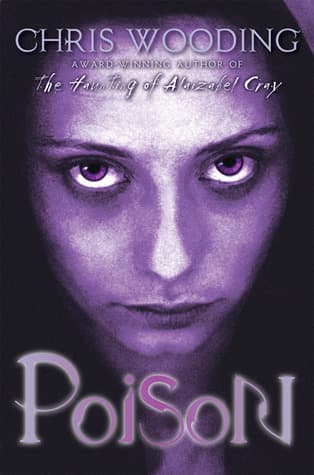
Synopsis
Covers the whole plot, including the ending.
- Difficulty
- Medium
- Pacing
- Fast
- Mood
- Dark, Mysterious, Adventurous, Suspenseful, Whimsical (darkly)
- Read it if
- You enjoy dark, twisted fairy tales with a strong, defiant female protagonist and a blend of mystery, fantasy, and adventure.
- Skip it if
- You prefer traditional, lighthearted fairy tales or shy away from stories with morally ambiguous characters and a dark tone.
Poison Plot Summary
Covers the whole plot, including the ending.
The Abduction and the Promise
Poison, a spirited girl in a village near the Wilds, is with her younger sister, Peony, when a faerie appears at their window. The beautiful but evil faerie snatches Peony away. Poison's parents are devastated and feel guilty, but Poison refuses to accept her sister's loss. Driven by strong love and determination, she promises herself and her family: she will go into the dangerous faerie world and bring Peony back, no matter the risk or the dangers in the Wilds.
Encountering the Stranger and the Talking Cat
Determined, Poison leaves her village for the Wilds. Her journey quickly leads her to an old cottage where she meets Bram, a mysterious and seemingly cynical boy who appears to know more about the faerie realm than he admits. He first dismisses her quest as pointless, but a strange, talking cat named Doctor Mattias, who claims to be a scholar cursed into a cat, gives a cryptic warning about faerie dangers and their magic. This meeting gives Poison her first real, though unsettling, guidance on how to navigate the dangerous faerie lands and understand the Phaerie Lord.
The Village of Storytellers
Following Doctor Mattias's advice, Poison and Bram go to a strange village where people are obsessed with stories, making them part of their lives. Here, they learn that stories are not just entertainment; they can shape reality and control people. In this village, they meet a sinister man called the Storyteller, who seems to have too much influence over the villagers and knows unsettling things about their world. Poison starts to suspect that the Storyteller is more than he seems and might be connected to the Phaerie Lord, or at least to the complex web of faerie power.
The Trap and the Rescue
Poison, always impulsive, falls into a faerie trap. Lured by a trick, she is almost captured by the evil creatures. However, Bram, despite his initial hesitation, shows surprising quickness and knowledge of faerie tactics, helping to fight off the attackers. Doctor Mattias, using his intelligence and knowledge of faerie weaknesses, also helps them escape. This incident strengthens the fragile alliance between the three, as Poison realizes she cannot face the faerie world's dangers alone, and Bram's true loyalty begins to show.
The Whispers of the Phaerie Lord
As they continue their journey, Doctor Mattias reveals more about the Phaerie Lord, describing him as a very powerful and cunning being who thrives on stories and desires. He explains that the Phaerie Lord does not just steal children; he collects desires and weaves them into his grand narratives, often with terrible results for mortals. Poison learns that bargaining with the Phaerie Lord means risking her very self, her memories, or even her soul. The doctor warns her that the Phaerie Lord's gifts always have a downside, and his promises come with hidden costs.
The City of Lies
Their quest takes them to a magnificent, yet terrifying, faerie city, a place built on illusions and changing realities. The city is a mix of impossible architecture, enchanted markets, and tricky faerie folk who enjoy deceiving mortals. Here, Poison sees firsthand the insidious nature of faerie magic and how easily mortals can be caught by its glamour. They must navigate a maze of lies and half-truths, always wary of the faeries' attempts to mislead or capture them, as they search for the Phaerie Lord's stronghold and Peony.
Bram's Secret and the Storyteller's True Identity
In the faerie city's center, Bram's mysterious past comes out. He confesses that he is not fully human but has faerie blood, which explains his knowledge and resilience. At the same time, the Storyteller reveals his true identity: he is a powerful faerie, a high-ranking servant of the Phaerie Lord, and has been manipulating events from the start. His role was to guide (or mislead) Poison, ensuring she played her part in the Phaerie Lord's larger, more complex plan. This revelation shakes Poison, making her question everyone and everything she has encountered.
Confronting the Phaerie Lord
Poison, along with Bram and Doctor Mattias, finally reaches the Phaerie Lord's castle. The Phaerie Lord is not the monster she imagined, but a being of immense, almost childlike, power, obsessed with creating the 'perfect story.' He reveals that he did not just take Peony; he chose her, seeing in her a pure, untouched desire he wanted to include in his grand narrative. He explains that he intends to make Peony his Queen, to complete his ultimate story, and offers Poison a choice: join him and live forever in his fantastical world, or face his anger and lose Peony forever.
The Bargain and the Betrayal
Desperate to save Peony, Poison tries to bargain with the Phaerie Lord. She offers him her own story, her memories, anything to free her sister. The Phaerie Lord, however, is not interested in a simple trade. He reveals that his true plan is far more sinister: he intends to replace Peony with a faerie changeling, allowing him to keep Peony's essence while sending a false version back to the human world. He wants to weave a story of loss and replacement, further showing his cruel control over human emotions and stories.
The Climax: Poison's Choice
In a final confrontation, Poison realizes she cannot defeat the Phaerie Lord with force or traditional bargaining. Instead, she uses her own understanding of stories against him. She makes a selfless choice: she offers the Phaerie Lord not her story, but the *absence* of her story. She chooses to forget her quest, her love for Peony, and her very identity, believing that by denying him the satisfaction of her narrative, she can break his hold. This act of deep self-sacrifice creates a paradox that the Phaerie Lord, who thrives on stories, cannot understand or control.
The Escape and the Aftermath
Poison's sacrifice, her deliberate act of erasing her story, weakens the Phaerie Lord's power over her and Peony. Seizing the chance, Bram and Doctor Mattias help them escape the crumbling faerie castle. They return to the human world, but the cost is huge. Poison has indeed forgotten much of her quest and her relationship with Peony. While Peony is safe, their bond is fractured, and Poison carries a deep, unexplainable sense of loss and emptiness, showing the price of defying a being who controls stories.
A Fragmented Memory and a Lingering Echo
Years pass. Poison lives a seemingly ordinary life in her village, having returned to her family. While she has no conscious memory of her journey or the faerie world, faint echoes and unexplained abilities sometimes appear, hinting at the powerful magic she once encountered. Peony, now grown, has some vague, unsettling memories of her time with the faeries, but cannot express them. Bram occasionally visits, a silent guardian, and Doctor Mattias, still a cat, remains a cryptic companion to Poison, a living reminder of a past she cannot fully recall but that shaped her permanently.
Poison Characters
Poison
Protagonist
A headstrong and courageous girl who ventures into the faerie world to rescue her sister.
Poison is fiercely independent, stubborn, and deeply loyal, especially to her younger sister, Peony. She possesses a fiery spirit and an unyielding determination that drives her quest. Despite her youth, she shows remarkable bravery and resilience in the face of overwhelming odds. Her greatest strength lies in her capacity for selfless love, which ultimately becomes her most potent weapon against the faerie magic. She is initially naive about the faerie world but learns quickly, adapting to its dangers.
Relationships: Peony (Younger sister, her primary motivation for the quest.); Bram (Reluctant ally and eventual protector, a complex romantic interest.); Doctor Mattias (Mentor and guide, a cursed scholar in cat form.); Phaerie Lord (Antagonist, a manipulative and powerful faerie being.)
Bram
Supporting
A mysterious boy with faerie blood who reluctantly aids Poison on her quest.
Bram is initially cynical, aloof, and seemingly indifferent to Poison's plight, but his actions reveal a hidden protectiveness and a deep knowledge of the faerie world. He is quick-witted, resourceful, and possesses a quiet strength. His faerie heritage grants him unique insights and abilities, making him an invaluable, if sometimes reluctant, ally. He struggles with his dual nature, caught between the human and faerie worlds, which contributes to his guarded personality.
Relationships: Poison (Reluctant ally, eventual protector, and romantic interest.); Doctor Mattias (Fellow traveler and intellectual foil.)
Doctor Mattias
Supporting
A scholar cursed into the form of a talking cat, serving as Poison's knowledgeable guide.
Doctor Mattias is a highly intelligent, albeit often sarcastic, talking cat. He was once a human scholar who delved too deeply into faerie lore and was cursed by the faeries. Despite his current form, he retains his vast knowledge of faerie history, magic, and customs, which proves invaluable to Poison's quest. He often provides exposition and warnings, acting as the voice of reason and caution. His dry wit and world-weary perspective add a unique charm to the narrative.
Relationships: Poison (Guide and mentor.); Bram (Fellow traveler and intellectual foil.)
Phaerie Lord
Antagonist
The powerful and manipulative ruler of the faeries, obsessed with crafting perfect stories.
The Phaerie Lord is not evil in a conventional sense but is amoral, driven by an insatiable desire to create and control stories. He sees mortals as characters in his grand narratives, their lives and emotions as material for his art. He is charming, cunning, and possesses immense magical power, capable of bending reality and memory to his will. His motivations are complex, rooted in a desire for perfection and an almost childlike fascination with human desire, making him a formidable and unpredictable foe.
Relationships: Poison (Antagonist, sees her as a key player in his grand story.); Peony (Intends to make her his Queen, a central figure in his ultimate story.)
Peony
Supporting
Poison's younger sister, whose abduction by the faeries initiates the quest.
Peony is initially portrayed as an innocent and vulnerable child, her abduction serving as the catalyst for the entire story. While she spends much of the narrative as a captive, her presence and the threat to her well-being constantly drive Poison forward. When reunited with Poison, she is affected by her time in the faerie world, carrying subtle changes and fragmented memories, highlighting the lasting impact of faerie magic even on those who return.
Relationships: Poison (Older sister, her primary rescuer and protector.); Phaerie Lord (Captor, intended bride for his story.)
The Storyteller
Supporting
A mysterious figure in the human world who is secretly a faerie agent.
The Storyteller is a charismatic and seemingly benign figure in the village of storytellers, but he possesses an unsettling aura and an uncanny ability to influence others through narrative. He is revealed to be a faerie, a high-ranking servant of the Phaerie Lord, tasked with subtly guiding Poison towards her destiny within the Lord's grand plan. His role is to manipulate events and information, ensuring Poison follows the path laid out for her, even while appearing to offer assistance.
Relationships: Poison (Manipulator, guide under false pretenses.); Phaerie Lord (Loyal servant and agent.)
Poison's Parents
Mentioned
Grieving parents whose despair fuels Poison's resolve.
Poison's parents are initially consumed by grief and helplessness after Peony's abduction. Their despair highlights the profound impact of the faeries' actions on mortal lives and serves as a stark contrast to Poison's active refusal to give up hope. They represent the conventional human response to such tragedy, making Poison's extraordinary quest all the more remarkable. Their love for their daughters, though expressed through sorrow, underscores the emotional stakes of the story.
Relationships: Poison (Daughter, their grief contrasts with her determination.); Peony (Daughter, their despair over her loss is central.)
Poison Themes
The Power of Stories and Narrative
The novel explores how stories shape reality, identity, and power. The Phaerie Lord's main goal is to create the 'perfect story,' using human lives as his material. Characters both manipulate and are manipulated by stories, and even Poison's final act of defiance involves going against the Phaerie Lord's story expectations. The villagers' obsession with stories and Doctor Mattias's knowledge of faerie lore show how stories can be both a source of magic and a dangerous weapon. Poison's final act of self-sacrifice, erasing her own story, strongly illustrates this theme.
“Stories are not just words, child. They are power. They are what makes the world turn. The Faerie Lord knows this better than anyone.”
Love and Sacrifice
Poison's steady love for her sister, Peony, drives the entire story. It pushes her to face unimaginable dangers and ultimately leads to her deep act of self-sacrifice. Her willingness to give up her memories and her very identity to save Peony highlights the limitless nature of familial love. This theme contrasts with the faeries' more selfish and transactional view of emotions, emphasizing the unique strength of human connection and sacrifice in a world of magic and manipulation.
“I will find her. I will bring her back. Whatever it takes.”
Identity and Memory
The faerie world's ability to manipulate memories and identities is a key concern. Poison's ultimate sacrifice involves erasing her own memories, which changes her identity. The Phaerie Lord's desire to control Peony's destiny and even replace her with a changeling speaks to how fragile selfhood is when faced with faerie magic. The lingering echoes of memory and the sense of loss Poison feels after her return emphasize how important memory is to who we are, and what it means to truly lose a part of oneself.
“The Faerie Lord collects desires, yes, but he also collects what makes you, you. Your memories, your dreams, your very self.”
The Duality of Beauty and Danger
The faerie world is always shown as incredibly beautiful yet inherently dangerous and cruel. The faeries themselves are alluring but evil, their gifts often coming with hidden, terrible costs. The city of lies, with its stunning illusions, perfectly shows this dual nature. This theme highlights that appearances can be misleading, and that real danger often hides behind an enchanted facade. It forces characters, and the reader, to question what is truly good or evil in a world where morality is often unclear.
“The faeries are beautiful, yes. But their beauty is a trap, a gilded cage designed to ensnare the unwary.”
Plot Devices & Literary Techniques
The Faerie Bargain
Agreements with faeries that are always deceptive and carry hidden costs.
The faerie bargain is a classic folkloric trope used to drive conflict and reveal the insidious nature of faerie power. In 'Poison,' any agreement made with the faeries, especially the Phaerie Lord, is never straightforward. These bargains always come with unforeseen consequences, often involving the loss of memories, emotions, or even one's soul. It highlights the faeries' cunning and their ability to twist words and desires to their advantage, forcing characters to think carefully about the true cost of their wishes.
The Cursed Companion
A character transformed by magic, providing knowledge and a moral compass.
Doctor Mattias, the talking cat, serves as the cursed companion. This device allows for the exposition of complex faerie lore and history without resorting to lengthy monologues from the protagonist. His cursed state provides him with unique insight and a personal understanding of the faeries' cruelty, making him a credible and sympathetic guide. His dry wit also adds moments of levity, balancing the story's darker elements, while his wisdom often steers Poison away from fatal mistakes.
The Shapeshifting/Illusionary Nature of Faerie Magic
Faerie magic's ability to create illusions and alter perceptions, making reality unreliable.
Faerie magic in 'Poison' is frequently depicted as illusionary and deceptive. The faeries can create convincing glamours, alter appearances, and even manipulate memories. This device creates a constant sense of unease and distrust, as characters (and the reader) can never be entirely sure what is real. It forces Poison to rely on her instincts and the advice of her companions, underscoring the dangers of the faerie world where nothing is as it seems, and truth is a constantly shifting concept.
The Hero's Journey (Subverted)
A classic narrative structure that is deliberately altered to fit an anti-fairy tale.
While Poison embarks on a quest that initially mirrors the traditional 'Hero's Journey' – leaving home, facing trials, confronting an antagonist – the novel subverts its typical resolution. Instead of returning triumphant and unchanged, Poison's ultimate victory comes at a profound personal cost: the loss of her memories and a part of her identity. This subversion reinforces the 'anti-fairy tale' aspect, demonstrating that not all heroic quests end with an unblemished 'happily ever after,' and some sacrifices are irreversible, making the victory bittersweet.
Poison Quotes
“The world was a cruel place, and it didn't care for pretty dresses or good intentions.”
“Sometimes the greatest poison isn't in a bottle, but in a lie.”
“Fear was a constant companion, a shadow that clung to her heels, but she wouldn't let it be her master.”
“There were some things you couldn't outrun, no matter how fast you went. Your past was one of them.”
“Love, she was learning, wasn't always a soft, gentle thing. Sometimes it was sharp, painful, and utterly necessary.”
“The greatest mysteries weren't in ancient scrolls or forgotten tombs, but in the hearts of people.”
“Hope was a dangerous thing, a flickering candle in the dark, but without it, there was only despair.”
“She had thought herself a pawn, but even pawns could become queens, given the right moves.”
“Magic wasn't always grand spells and incantations; sometimes it was just the right word at the right time.”
“The truth was a weapon, and like any weapon, it could cut both ways.”
“Even in the darkest places, a flicker of beauty could be found, if you only knew where to look.”
“To truly live, you had to be willing to bleed a little.”
“She was a story waiting to be written, and she would be the one to hold the pen.”
Quiz
10 questions on the plot and the characters. Each answer comes with a short explanation.
Question 1
What is the primary motivation for Poison's quest at the beginning of the story?
- To escape her mundane life in the village.
- To seek revenge on the Phaerie Lord for a past wrong.
- To rescue her sister who was snatched by faeries.
- To find a legendary magical artifact.
Show answer
C. To rescue her sister who was snatched by faeries. Poison's journey begins because her sister is taken by faeries, and she is determined to get her back.
Question 2
What kind of creatures are responsible for snatching Poison's sister?
- Goblins
- Witches
- Mean-spirited faeries
- Trolls
Show answer
C. Mean-spirited faeries The book description explicitly states that her sister was 'snatched by the mean-spirited faeries'.
Question 3
What is Poison's defining personality trait, as described in the book's synopsis?
- Shy and timid
- Willful, contrary, argumentative, and stubborn
- Kind and overly trusting
- Quiet and observant
Show answer
B. Willful, contrary, argumentative, and stubborn The description states, 'Poison has always been a willful, contrary girl, prone to being argumentative and stubborn.'
Question 4
What is the name of the antagonist Poison seeks out to get her sister back?
- The Goblin King
- The Witch Queen
- The Phaerie Lord
- The Shadow Master
Show answer
C. The Phaerie Lord Poison 'seeks out the Phaerie Lord to get her back,' referring to her sister.
Question 5
Besides her wits, what other resource does Poison rely on during her quest?
- A magical sword
- A powerful spellbook
- Her friends
- A detailed map of the faerie lands
Show answer
C. Her friends The synopsis mentions, 'With only her wits and her friends to aid her, Poison must survive...'
Question 6
What unique element is described as part of the 'murderous world of intrigue' Poison enters?
- Silent prophecies
- Deadly storytelling
- Enchanted riddles
- Illusory dances
Show answer
B. Deadly storytelling The quest leads Poison into 'a murderous world of intrigue, danger, and deadly storytelling.'
Question 7
Which genre is NOT explicitly listed for 'Poison' in the provided description?
- Thriller
- Science Fiction
- Mystery
- Romance
Show answer
B. Science Fiction The listed genres are Thriller, Historical Fiction, Mystery, Young Adult, Romance. Science Fiction is not mentioned.
Question 8
Beyond rescuing her sister, what larger conflict must Poison ultimately thwart?
- A war between humans and goblins.
- A plot beyond anything she (or the reader) can imagine.
- A curse threatening to destroy the faerie realm.
- The Phaerie Lord's attempt to conquer the human world.
Show answer
B. A plot beyond anything she (or the reader) can imagine. The description states she must 'thwart a plot that's beyond anything she (or the reader) can imagine.'
Question 9
What literary concept does the book description use to characterize 'Poison'?
- A classic epic poem
- A dystopian allegory
- An anti-fairy tale
- A traditional bildungsroman
Show answer
C. An anti-fairy tale The description calls it 'a brilliant, twisted, spirited anti-fairy tale'.
Question 10
The phrase 'deadly storytelling' suggests a theme where narratives or words themselves hold what kind of power?
- The power to reveal hidden truths and wisdom.
- The power to enchant and create beautiful illusions.
- The power to cause harm, manipulate, or even kill.
- The power to unite different factions and peoples.
Show answer
C. The power to cause harm, manipulate, or even kill. Given the context of 'murderous world of intrigue, danger, and deadly storytelling,' the word 'deadly' implies that narratives or words possess a destructive or harmful power.
Poison FAQ
What is the central premise of 'Poison'?
The story follows Poison, a headstrong girl, as she embarks on a perilous journey to rescue her younger sister, Peapod, who has been abducted by the malicious faeries. Her quest leads her into the treacherous realm of the Phaerie Lord, where she must navigate deadly traps and unravel a dark conspiracy.
Who is the main protagonist and what are her key personality traits?
The protagonist is Poison, a willful, argumentative, and stubborn young woman. Despite these challenging traits, she possesses immense courage, quick wit, and fierce loyalty, particularly towards her sister, which drives her through her dangerous adventure.
What is the primary motivation for Poison's quest?
Poison's primary motivation is the unconditional love for her sister, Peapod. She feels a deep sense of responsibility and determination to bring Peapod back from the faerie realm, no matter the personal cost or the dangers she faces.
Who is the Phaerie Lord and what is his role in the narrative?
The Phaerie Lord is the enigmatic and sinister ruler of the faerie realm, responsible for Peapod's abduction. He serves as the primary antagonist, manipulating events and individuals, and his true intentions are gradually revealed to be far more complex and terrifying than initially perceived.
What kind of world does Poison inhabit and how does it blend with the faerie realm?
Poison inhabits a historical, almost gothic world that is subtly intertwined with the more fantastical and dangerous faerie realm. The boundaries between these two worlds are permeable, allowing faeries to snatch humans and creating a constant underlying threat that shapes the human experience.
What is the true identity of Peapod, and how does this twist impact Poison?
Peapod is revealed to be a changeling, a faerie child swapped with the real Peapod by the Phaerie Lord. This devastating truth shatters Poison's understanding of her family and her quest, forcing her to confront a profound deception at the heart of her life.
How does the 'storytelling' aspect become a literal danger in the book?
Storytelling is not merely narrative in 'Poison'; it's a powerful magical force that can shape reality and trap individuals. The Phaerie Lord uses crafted stories and illusions to ensnare and manipulate, making Poison's ability to discern truth from fiction crucial for survival.
What is the significance of the 'mirror' motif throughout the story?
The mirror motif symbolizes deception, self-reflection, and alternate realities. It is often used by faeries to create illusions or reveal hidden truths, forcing characters like Poison to confront distorted reflections of themselves and their world.
How does Poison's stubbornness evolve from a flaw into a strength?
Initially, Poison's stubbornness can be seen as a negative trait, leading to arguments. However, in the face of overwhelming odds and the Phaerie Lord's manipulations, this same stubbornness transforms into unwavering resolve and resilience, preventing her from giving up on her quest.
Discuss the psychological impact of the revelation about Peapod on Poison.
The discovery that Peapod is a changeling inflicts immense psychological trauma on Poison, shattering her sense of identity, family, and purpose. She grapples with feelings of betrayal, grief, and confusion, questioning everything she believed to be true about her past and her love.
How does the theme of identity crisis manifest in characters other than Poison?
Identity crisis also affects characters who are faerie-touched or living under illusions, such as the changeling Peapod struggling with her dual nature. The faeries themselves often operate with fluid identities, reflecting the inherent instability and deceptive nature of their realm.
What role does free will versus destiny play in the choices made by Poison and the Phaerie Lord?
The narrative explores the tension between free will and destiny, particularly as the Phaerie Lord attempts to weave a predetermined story for Poison. Poison's constant defiance and her refusal to follow the expected narrative assert her free will, challenging the very fabric of the faerie's control.
Is the ending of 'Poison' ultimately hopeful or tragic, and why?
The ending of 'Poison' is open to interpretation, blending elements of both hope and tragedy. While Poison achieves a form of victory and self-discovery, the profound loss of her original sister and the lasting trauma of her experiences leave a bittersweet residue, preventing a purely happy resolution.
How does the book subvert traditional fairy tale tropes?
'Poison' actively subverts traditional fairy tale tropes by presenting a morally ambiguous protagonist, a faerie world that is terrifying rather than enchanting, and a 'happily ever after' that is complex and earned through significant sacrifice. It challenges the simplistic good-versus-evil narratives.
What is the significance of the book's title, 'Poison'?
The title 'Poison' is multi-layered. It refers to the protagonist's name, her sharp and sometimes abrasive personality, and metaphorically to the toxic deceptions and dangerous truths she uncovers. It also hints at the corrupting influence of the faerie world and the bitter realities she must swallow.
Does the book offer a clear moral message, or is it more about exploring complex ethical dilemmas?
'Poison' leans more towards exploring complex ethical dilemmas rather than delivering a clear moral message. It delves into themes of sacrifice, the nature of love, the cost of truth, and the blurred lines between good and evil, leaving readers to ponder the difficult choices made by its characters.
How does the 'romance' element contribute to or complicate Poison's journey?
The romance element, primarily with the character Bram, provides moments of support and emotional connection for Poison, offering a counterpoint to the darkness of her quest. However, it also introduces additional vulnerabilities and dilemmas, as her personal feelings can sometimes conflict with the urgent demands of her mission.
What commentary does the book make on the nature of reality and illusion?
The book heavily comments on the fragile nature of reality and the power of illusion, especially through the faeries' ability to manipulate perceptions and memories. It suggests that what we perceive as real can be easily constructed or deconstructed, forcing characters and readers to question the very fabric of their understanding.
About the author

Chris Wooding is a prolific British author known for his engaging young adult fantasy and adventure novels. His notable works include the "Tales of the Ketty Jay" series, beginning with "Retribution," the "Mortal Engines"-esque "Storm Thief," and the dark fantasy "The Haunting of Alaizabel Cray." Wooding's writing is characterized by its fast-paced plots, vivid world-building, and compelling characters, earning him a dedicated readership.
Similar books
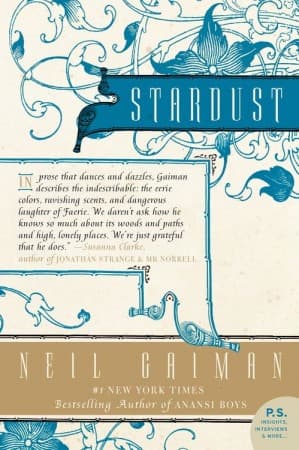
- Stardust
Neil Gaiman
4.1 (359k) average on GoodreadsFantasyFeatures a journey into a magical, dangerous faerie land with a unique, whimsical tone.
- Uprooted
Naomi Novik
4.1 (167k) average on GoodreadsFantasyInvolves a strong female protagonist dealing with powerful magical entities and a dark, enchanted forest.
- Angels & Demons
Dan Brown
3.9 (2.7M) average on GoodreadsThrillerA Harvard symbologist races through Rome's ancient sites, deciphering cryptic clues to unmask the Illuminati and stop a vengeful plot to destroy the Vatican with a stolen antimatter weapon.
- Gone Girl
Gillian Flynn
4.1 (2.3M) average on GoodreadsThrillerA wife's sudden disappearance on her fifth anniversary reveals a web of lies and psychological warfare, exposing the secrets within a seemingly perfect marriage.
- The Girl on the Train
Paula Hawkins
3.9 (2.1M) average on GoodreadsThrillerA woman’s fascination with a seemingly perfect couple she watches from her daily train commute leads her into a dark investigation when she witnesses something that shatters their idyllic image.
- The Da Vinci Code
Dan Brown
3.9 (1.9M) average on GoodreadsThrillerA symbologist and a cryptologist race through European landmarks, deciphering ancient codes and uncovering a conspiracy that could rewrite the foundations of Christianity.





Enjoyed the summary?
A summary gives you the shape of the book. The book itself has the detail, the examples and the voice.
Find Poison on AmazonAs an Amazon Associate, BookBrief earns from qualifying purchases. How we're funded