
BookBrief
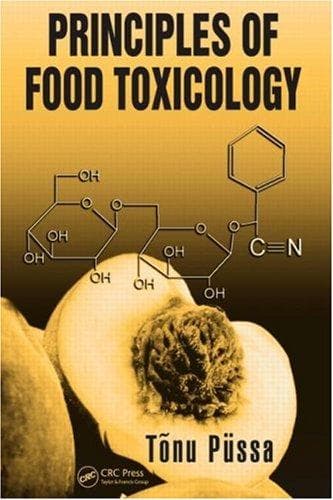
Principles of Food Toxicology cover

Principles of Food Toxicology Summary

Tõnu Püssa (2007)

Get the book

Goodreads Rating

3.00/ 5(1 reviews)

Genre

General

Summary Read

13 min

Book Length

10-15 hours (for thorough review)

By BookBrief EditorialLast updated September 23, 2026

Track Your Reading

Sign in to track this book

My Notes

Only visible to you
This guide explores food toxicology, explaining potential food hazards and the science behind food safety.

Core Idea

This textbook provides a comprehensive overview of the fundamental principles of food toxicology, focusing on the various types of toxicants found in food, their mechanisms of action, and the methods used to assess their risks to human health. It covers both naturally occurring toxins and those introduced through human activity, detailing their chemical properties, biological effects, and the regulatory frameworks in place to ensure food safety. The book emphasizes the importance of understanding the dose-response relationship, metabolism of toxicants, and the impact of food processing on the formation and reduction of harmful compounds.
Reading time
10-15 hours (for thorough review)
Difficulty
Hard
✓ Read this if...
You are a student or professional in food science, nutrition, toxicology, public health, or food safety, seeking a foundational understanding of how food contaminants impact human health. It's also suitable for those interested in the chemical and biological aspects of food safety and risk assessment.
✗ Skip this if...
You are looking for a light read on healthy eating or a popular science book on food fads. This is a technical textbook and assumes some background in chemistry and biology.

Chat with this book

Ask anything about Principles of Food Toxicology and get instant answers grounded in the summary.

Key Takeaways from Principles of Food Toxicology

1

Toxicity is a Matter of Dose, Not Just Presence

Understanding the dose-response relationship is fundamental to food toxicology, distinguishing hazard from risk.

Quote

All substances are poisons; there is none which is not a poison. The right dose differentiates a poison and a remedy.

Püssa states that finding a toxic substance in food does not automatically mean a health risk. The key factors are the dose, duration, and frequency of exposure. This idea, often linked to Paracelsus, is central to toxicology. For example, selenium is an important nutrient at low levels but very toxic at high levels. This point helps clear up public misunderstandings that link any chemical presence with immediate danger. It highlights the need for measuring risk rather than creating fear. The book explains different dose-response curv...

Supporting evidence

Detailed explanation of dose-response curves, including NOAEL (No Observed Adverse Effect Level) and LOAEL (Lowest Observed Adverse Effect Level) concepts, and the distinction between acute and chronic toxicity studies.

Apply this

When evaluating food safety concerns, always inquire about the concentration of the substance and the typical exposure levels, rather than reacting solely to its mere identification. This allows for a more rational assessment of actual risk.

dose-responseNOAELrisk-assessmentthreshold-effect
2

Natural Toxins Are as Prevalent and Potent as Synthetic Ones

Many common foods contain naturally occurring toxins that demand as much attention as man-made contaminants.

Quote

The public often perceives 'natural' as synonymous with 'safe,' a dangerous misconception when dealing with food toxicology.

This is one of the book's best points, as it challenges the common belief that 'natural' means 'harmless.' Püssa spends many chapters detailing natural toxins in everyday foods, such as solanine in potatoes, cyanogenic glycosides in almonds and cassava, and mycotoxins in grains and peanuts. He argues that these natural compounds are often stronger carcinogens or acute toxins than many regulated synthetic additives. The book gives examples like pyrrolizidine alkaloids in certain herbs or lectins in undercooked legumes, which can cause ...

Supporting evidence

Examples of solanine in green potatoes, amygdalin in bitter almonds, aflatoxins in moldy peanuts, and various plant alkaloids. Discussion of their mechanisms of action and health impacts.

Apply this

Be aware that 'natural' doesn't automatically mean 'safe.' Practice proper food preparation (e.g., cooking legumes thoroughly, avoiding green potatoes) and be cautious with wild foraging or unverified herbal remedies.

natural-toxinsmycotoxinsplant-toxinsfood-safety-misconceptions
3

Food Processing Can Mitigate or Create Toxins

The way we prepare and process food significantly influences its toxicological profile.

Quote

Food processing is a double-edged sword; it can detoxify harmful compounds or, under certain conditions, generate new ones.

Püssa fully explores the two sides of food processing. On one hand, methods like cooking, fermentation, or extraction can reduce or remove natural toxins (e.g., boiling cassava to remove cyanogenic glycosides, fermenting soybeans to reduce anti-nutrients). On the other hand, some processing methods can create new toxic compounds. Examples include acrylamide from high-temperature cooking of carbohydrate-rich foods, heterocyclic amines (HCAs) and polycyclic aromatic hydrocarbons (PAHs) in grilled or smoked meats, and advanced glycation ...

Supporting evidence

Discussion of acrylamide formation in fried potatoes, HCAs in grilled meat, and AGEs in highly processed foods. Also, examples of detoxification through traditional processing methods.

Apply this

Vary cooking methods, avoid excessive charring of meats, and consider steaming or boiling as alternatives to frequent high-temperature frying or grilling to minimize exposure to processing-induced toxins.

food-processingacrylamideheterocyclic-aminesadvanced-glycation-end-products
4

The Complexity of Food Matrix and Bioavailability

A toxin's presence in food doesn't directly translate to absorption or effect; the food matrix matters.

Quote

The human body is not a simple test tube; the bioavailability and ultimate toxicity of a compound are profoundly influenced by the surrounding food matrix.

Püssa points out that a toxin's effect depends not just on how much is eaten, but also on its bioavailability—the amount absorbed and available for the body to use. Other components of a meal can greatly affect this. For instance, fiber can bind certain toxins, reducing absorption, while fats can increase the absorption of fat-soluble contaminants. This idea challenges simple views of toxicology and explains why lab studies on single compounds might not accurately predict real-world effects. The book details how competing absorption m...

Supporting evidence

Examples of how dietary fiber can reduce heavy metal absorption, or how fat content influences the uptake of lipophilic pesticides. Discussion of competitive binding sites in the gut.

Apply this

Consider the overall diet rather than just individual components. A varied diet rich in fiber and antioxidants may help mitigate the impact of incidental toxin exposure by influencing bioavailability.

bioavailabilityfood-matrixabsorptiondigestion
5

Risk Assessment: A Scientific Imperative, Not Just Regulation

Systematic risk assessment frameworks are indispensable for making informed decisions about food safety.

Quote

Without a rigorous, quantitative risk assessment, food safety decisions devolve into conjecture and public hysteria.

Püssa focuses on the methods of food risk assessment, showing it as a scientific process, not just a regulatory step. He breaks down the four main stages: finding hazards, describing hazards (dose-response), assessing exposure, and characterizing risk. The book gives detailed examples of how these steps apply to real contaminants, from pesticides to microbial toxins. Püssa acknowledges the uncertainties and missing data, but argues that this structured approach is the only logical way to prioritize risks, use resources, and set scienc...

Supporting evidence

Detailed explanation of the four steps of risk assessment. Examples of how ADI (Acceptable Daily Intake) and TDI (Tolerable Daily Intake) values are derived for various substances.

Apply this

When encountering news about food contaminants, critically evaluate if the information includes details on exposure levels and the context of established safety limits, rather than just the presence of a substance.

risk-assessmenthazard-identificationexposure-assessmentADITDI
6

Synergistic and Antagonistic Effects Complicate Real-World Exposure

Toxins rarely act in isolation; their combined effects can be greater or lesser than the sum of their parts.

Quote

The human diet is a cocktail of compounds, and assuming simple additive effects for all toxins is often a dangerous oversimplification.

Püssa addresses one of toxicology's hardest parts: how multiple chemicals interact. He explains that people are rarely exposed to just one toxin; instead, they face a mix of natural and synthetic compounds daily. These compounds can have combined effects that are greater than their individual effects (synergism) or that reduce another's toxicity (antagonism). While hard to study fully, Püssa stresses the importance of considering these interactions, especially with long-term, low-level exposures. The book discusses examples where cert...

Supporting evidence

Discussion of examples where certain pesticides might show synergistic effects, or how specific dietary components can influence enzyme systems involved in detoxification (e.g., cytochrome P450).

Apply this

Recognize that the 'total toxic load' is a complex concept. While hard to quantify individually, a varied and balanced diet may offer some protective mechanisms against various interacting compounds.

synergistic-effectsantagonistic-effectschemical-mixturestoxicology-interactions
7

The Role of Detoxification and Individual Susceptibility

Our bodies possess sophisticated detoxification systems, but genetic and environmental factors influence their efficacy.

Quote

The human body is equipped with an impressive arsenal of detoxification enzymes, but individual genetic variations mean we don't all process toxins equally.

This point highlights how people react differently to toxins. Püssa details the body's complex detoxification processes, mainly in the liver, including Phase I (e.g., cytochrome P450 enzymes) and Phase II (e.g., conjugation reactions) metabolism. These systems change fat-soluble toxins into more water-soluble compounds for removal. However, he stresses that genetic differences can greatly change the activity of these enzymes, leading to different sensitivities among individuals. Environmental factors, diet, and overall health also pla...

Supporting evidence

Detailed explanation of Phase I and Phase II detoxification pathways in the liver, including specific enzyme systems like glutathione S-transferases (GSTs) and uridine diphosphate glucuronosyltransferases (UGTs). Discussion of genetic polymorphisms affecting these enzymes.

Apply this

While we cannot change our genetics, supporting liver health through a balanced diet, adequate hydration, and avoiding excessive alcohol can help optimize our body's natural detoxification processes.

detoxificationcytochrome-P450genetic-polymorphismindividual-susceptibility
8

Emerging Toxins and Analytical Challenges

The field of food toxicology is constantly evolving with new contaminants and advanced detection methods.

Quote

The toxicologist's work is never truly done; as analytical chemistry advances, new contaminants are identified, and our understanding of existing ones deepens.

Püssa acknowledges that food toxicology is always changing. He discusses new concerns, such as new processing contaminants, nanoplastics, or residues of medicines and personal care products in food. He also points out the ongoing improvements in analytical chemistry, which allow detection of substances at lower and lower levels (e.g., parts per trillion). While this better sensitivity helps with safety monitoring, it also creates a challenge: finding a substance at very low levels does not automatically mean a health risk, bringing us...

Supporting evidence

Discussion of analytical techniques like GC-MS, LC-MS/MS, and their increasing sensitivity. Mentions of new contaminants like per- and polyfluoroalkyl substances (PFAS) or microplastics in the food chain.

Apply this

Stay informed about reputable scientific sources regarding emerging food safety issues, but maintain a critical perspective, distinguishing between detection at trace levels and actual health risks.

emerging-contaminantsanalytical-chemistrynanoplasticsfood-safety-research
9

The Ethical and Societal Dimensions of Food Toxicology

Beyond science, food toxicology intersects with public perception, policy, and ethical decision-making.

Quote

Food toxicology is not merely a laboratory science; it is deeply intertwined with public trust, regulatory policy, and societal values.

While mainly a scientific text, Püssa subtly discusses the wider effects of food toxicology. He addresses the gap between scientific risk assessment and public perception of risk, where emotions often outweigh logical analysis (e.g., fear of 'chemicals' versus acceptance of natural toxins). The book highlights the ethical duty of scientists to explain complex information clearly and the difficulty for policymakers to balance scientific evidence with economic realities and public opinion. This aspect, though not a full chapter, comes t...

Supporting evidence

Implicit discussions throughout the book on the setting of regulatory limits, the challenge of communicating risk to the public, and the balance between consumer protection and economic feasibility.

Apply this

Be a discerning consumer of food safety information. Seek out sources that provide context, doses, and scientific consensus, and be wary of sensationalized or emotionally charged claims.

risk-perceptionfood-policyscience-communicationpublic-trust
10

Comprehensive Understanding Requires Interdisciplinary Approach

Effective food toxicology demands knowledge spanning chemistry, biology, public health, and regulatory science.

Quote

No single discipline can fully address the complexities of food toxicology; it is inherently an interdisciplinary field.

This last point, which is more of an overall theme than a specific chapter, is very important. Püssa's book itself shows this by combining ideas from analytical chemistry (detecting toxins), biochemistry (toxicity mechanisms, metabolism), physiology (absorption, removal), epidemiology (population effects), and regulatory science (risk assessment, policy). He argues that a full understanding of food toxicology—from farm to table—requires knowledge from many different fields. This broad approach is necessary to handle issues like contam...

Supporting evidence

The structure and content of the book itself, which integrates chapters on chemical classes of toxins, analytical methods, toxicokinetics, toxicodynamics, risk assessment, and specific food groups, demonstrating the breadth of required knowledge.

Apply this

When studying or working in food safety, actively seek to understand concepts and methodologies from related scientific disciplines to build a more robust and nuanced perspective.

interdisciplinary-sciencefood-sciencepublic-healthtoxicology-education

Principles of Food Toxicology Quotes

Food toxicology is the study of the adverse effects of food constituents on living organisms.

Introduction to the field of food toxicology.

Natural toxins in food can arise from plants, fungi, bacteria, and animals.

Discussing the sources of naturally occurring toxins in food.

Mycotoxins, produced by molds, are a significant concern in cereal grains and nuts.

Highlighting the risks associated with mycotoxins.

The dose makes the poison.

A fundamental principle in toxicology, emphasizing that the amount of a substance determines its toxicity.

Allergenic foods can cause severe and sometimes life-threatening reactions in susceptible individuals.

Explaining the impact of food allergens.

Food additives, while often beneficial for preservation and palatability, must be rigorously assessed for safety.

Addressing the safety evaluation of food additives.

Genetically modified organisms (GMOs) in food require careful toxicological evaluation to ensure they do not pose new risks.

Discussing the toxicological considerations for GMOs.

Contaminants can enter the food supply at various stages, from farm to fork.

Describing the pathways of food contamination.

Heavy metals like lead and mercury are persistent environmental contaminants that can accumulate in food.

Identifying specific heavy metal contaminants.

Understanding metabolism is crucial for predicting how a toxic substance will be processed and eliminated by the body.

Emphasizing the role of metabolism in toxicology.

Epidemiological studies provide valuable insights into the real-world effects of foodborne toxins on human populations.

The importance of epidemiological data in food toxicology.

Risk assessment involves identifying hazards, assessing dose-response relationships, characterizing exposure, and characterizing risk.

Outlining the steps involved in food safety risk assessment.

The regulatory framework for food safety aims to protect consumers from harmful substances.

The role of regulations in ensuring food safety.

Emerging foodborne hazards require continuous monitoring and research to stay ahead of potential threats.

The dynamic nature of food toxicology and the need for vigilance.

Quiz

Test Your Knowledge

Ready to see how well you understood this book? Take our interactive quiz with 10 questions.

10
Questions
~5
Minutes
?
Best Score

Principles of Food Toxicology FAQ

Food toxicology is the scientific discipline that deals with the adverse effects of food and food components on living organisms. It investigates the causes, mechanisms, and consequences of these effects, focusing on both naturally occurring and intentionally added substances in food.

About the author

Tõnu Püssa is the author of "Principles of Food Toxicology." This book offers a comprehensive exploration of the scientific principles underlying the assessment of food safety.

Similar books

No similar books available yet.

Enjoyed the summary?

Support the author — grab the full book.

As an Amazon Associate, BookBrief earns from qualifying purchases, at no extra cost to you. How we're funded.

Get the book