
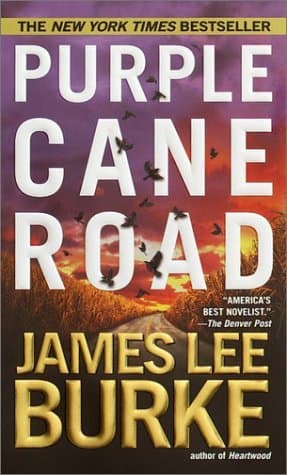
Synopsis
Covers the whole plot, including the ending.
- Difficulty
- Medium
- Pacing
- Moderate
- Mood
- Gritty, Suspenseful, Melancholic, Dark
- Read it if
- You enjoy gritty detective mysteries with a strong sense of place, deep character introspection, and a morally complex protagonist.
- Skip it if
- You prefer lighthearted mysteries or stories without significant violence and dark themes.
Purple Cane Road Plot Summary
Covers the whole plot, including the ending.
A Ghost from the Past
Dave Robicheaux helps his old friend Father Jimmie Dolan with a troubled young woman, Tee Jolie Melton, which pulls him into New Orleans' criminal world. Tee Jolie's pimp, Johnny Shondell, recognizes Dave and says something unsettling: he asks if Dave is Mae Guillory's son, claiming Mae was a prostitute killed by corrupt police thirty years ago. This shatters Dave's belief that his mother simply left him and died naturally. Shondell hints that these same corrupt officers still hold power in the city, sending Dave on a dangerous search for the truth about his mother's death.
First Clues and Old Wounds
Dave's first questions lead him to his father, Big Aldous Robicheaux, who is unhelpful and dismissive, deepening Dave's anger. He also talks to his uncle, who offers fragmented memories but little solid information. The more Dave looks, the more he understands how involved his mother's past was with powerful and dangerous men. He begins to connect with people who knew Mae, including an old woman, Claudette, who paints a more understanding picture of Mae as a woman trapped by her situation. However, these connections also put him on the radar of those who want the past hidden, leading to threats and surveillance.
The Shadow of the Syndicate
As Dave goes deeper, he uncovers a powerful crime organization, the 'Dixie Mafia,' which operated in New Orleans decades ago. This group, led by the mysterious 'Godot,' seems to be at the center of the conspiracy around Mae's death. Dave learns Mae was not just a prostitute but had information that could expose the group's illegal activities, including drug dealing and political corruption. The connection between police and organized crime becomes clear, making Dave's investigation very dangerous as he realizes he is up against a deeply rooted network.
Encounters with the Past's Protectors
Dave's investigation brings him to retired and current law enforcement officials who were either involved in or knew about the cover-up. He meets characters like the imposing 'Legs' Boutan, a former detective known for brutality, and other shadowy figures who try to stop him. These meetings are often tense and violent; Dave is physically attacked and threatened. He realizes that those who murdered his mother are not just old men but still have power and are willing to kill to keep their secrets buried, raising the personal stakes of his quest.
The Role of Tee Jolie Melton
Tee Jolie Melton is a young woman Father Jimmie asks Dave to help, seemingly a separate story. However, as Dave's investigation continues, he finds Tee Jolie is connected to the same criminal world that took his mother. Her pimp, Johnny Shondell, is one of the first to mention Mae. Tee Jolie herself, despite her vulnerable position, has fragmented knowledge and links to the crime group. Her involvement in the current criminal scene mirrors Mae's tragic situation, creating a poignant link and making her a vital, though risky, source of information and a potential target for the same forces that killed Mae.
A Mother's Legacy, A Son's Fury
Through persistent investigation, Dave uncovers the truth: Mae Guillory, a beautiful but troubled woman, became involved with the Dixie Mafia. She fell in love with 'Legs' Boutan, a corrupt cop working for the group. Mae was killed not just because she was a witness, but because she tried to escape that life and take her son, Dave, with her. Her murder was a brutal act planned by the crime group and carried out by corrupt police officers, including Boutan, who then hid her body in the bayou. This discovery fuels Dave's rage and his resolve to bring her killers to justice, no matter the personal cost.
Confrontation and Retribution
Armed with the truth, Dave confronts the remaining members of the crime group and the corrupt law enforcement officials responsible for his mother's death. This leads to violent and morally complex confrontations. Dave must make hard choices, blurring the lines between justice and revenge. He tracks down and confronts 'Legs' Boutan, the man who was both his mother's lover and her killer, leading to a brutal and final showdown. The justice Dave seeks is not always legal, but deeply personal, driven by his long-held grief and fury over his mother's lost life and violent end.
The Weight of the Past
Even after confronting the killers, Dave carries the heavy emotional weight of his discoveries. The truth about his mother is more complex and tragic than he ever imagined, giving him a deeper understanding of her suffering and the forces that shaped her life. His actions, while bringing a form of closure, also come with a moral cost, forcing him to face his own capacity for violence and the unclear boundaries of justice. The ending is not neat or fully satisfying, but it allows Dave to finally reconcile with his mother's memory and accept his identity as 'Mae Guillory's son.'
Protecting the Innocent
Throughout his personal search, Dave remembers his initial promise to Father Jimmie to protect Tee Jolie Melton. Her vulnerability and involvement with the criminal world deeply affect him, reminding him of his mother's tragic fate. After dealing with the crime group, Dave makes sure Tee Jolie is safe from Johnny Shondell and her dangerous life. He helps her find stability, offering her a chance at a future his own mother was denied. This act of protection is a redemptive echo, allowing Dave to perhaps atone for a past he could not change.
A New Understanding
By the end of his journey, Dave Robicheaux gains a deep and often painful understanding of his background. He no longer sees his mother as just an absent figure but as a victim of circumstance, passion, and brutal corruption. He confronts the dark side of his own family history, especially the legacy of violence and moral compromise. This understanding, though difficult, allows him to finally weave his mother's story into his own identity. He accepts that he is his mother's son, not just his father's, and that her strength, resilience, and vulnerabilities are part of who he is.
Principal Figures
Dave Robicheaux
Protagonist
A Louisiana detective haunted by his past and driven by a strong moral compass.
Dave Robicheaux is a complex and deeply conflicted Louisiana detective. A former alcoholic, he struggles with his own inner demons, often battling a violent temper and a tendency towards self-destructive behavior. He is a man of deep convictions, driven by a powerful sense of justice, yet constantly walking a fine line between law and personal retribution. His Catholic faith is a source of both comfort and internal conflict. The abandonment by his mother and the abusive relationship with his father have left deep scars, shaping his empathetic yet often volatile personality.
Relationships: Mae Guillory (His deceased mother, whose murder he investigates.); Big Aldous Robicheaux (His estranged, abusive father.); Bootsie Robicheaux (His loving and supportive wife.); Clete Purcel (His violent and morally ambiguous best friend.); Father Jimmie Dolan (An old friend and spiritual confidant.); Tee Jolie Melton (A young woman he tries to protect, mirroring his mother's fate.)
Mae Guillory
Central Figure (Deceased)
Dave's deceased mother, a beautiful and tragic figure whose murder drives the plot.
Mae Guillory is the ghost at the heart of the story. Known primarily through Dave's fragmented memories and the accounts of others, she emerges as a beautiful, spirited, but ultimately tragic figure. She was trapped by poverty and circumstance, forced into prostitution, and became entangled with dangerous men and a powerful criminal syndicate. Her desire for a better life for herself and her son, Dave, ultimately led to her brutal murder. She represents lost innocence, the vulnerability of women in a corrupt world, and the enduring impact of a parent's unresolved past.
Relationships: Dave Robicheaux (Her son, whom she loved and tried to protect.); Big Aldous Robicheaux (Her estranged husband.); 'Legs' Boutan (Her lover and ultimately one of her killers.)
Big Aldous Robicheaux
Supporting
Dave's abusive, alcoholic father, a source of lifelong pain and resentment.
Big Aldous is Dave's estranged and deeply flawed father. A heavy drinker and a man prone to violence, he represents the harsh, unforgiving side of Dave's upbringing. He is largely unrepentant about his past actions and offers little comfort or insight into Mae's life, further fueling Dave's resentment and sense of abandonment. His presence in the story highlights the generational trauma that Dave carries and the complex, often painful, nature of family bonds. He is a symbol of the 'sins of the father' that Dave has spent his life trying to escape.
Relationships: Dave Robicheaux (His son, with whom he has a deeply strained and hostile relationship.); Mae Guillory (His deceased wife.)
Johnny Shondell
Supporting/Antagonistic
A pimp whose casual remark ignites Dave's investigation into his mother's murder.
Johnny Shondell is a sleazy, opportunistic pimp who operates in the New Orleans underworld. He is the catalyst for Dave's journey, casually dropping the bombshell that Mae Guillory was a murdered prostitute, not just a woman who abandoned her son. Shondell represents the low-level criminal element that Mae was once entangled with and Tee Jolie currently is. While not directly involved in Mae's murder, his knowledge of the past and his connection to the contemporary criminal scene make him a dangerous, yet crucial, informant for Dave. He is a morally bankrupt character, but his insight is invaluable.
Relationships: Dave Robicheaux (The person he informs, unwittingly or wittingly, about Mae Guillory.); Tee Jolie Melton (Her pimp.)
Tee Jolie Melton
Supporting
A young, vulnerable prostitute whose plight mirrors Mae's and connects to the past.
Tee Jolie Melton is a young woman caught in the cycle of prostitution and addiction, under the thumb of Johnny Shondell. Her vulnerability and entanglement in the New Orleans underworld resonate deeply with Dave, reminding him of his mother's tragic life. She serves as a contemporary echo of Mae Guillory, and her safety becomes a secondary, yet powerful, motivation for Dave. She provides fragmented information and connections to the criminal world, but more importantly, she represents the ongoing struggle against exploitation and the hope for redemption that Dave strives to protect.
Relationships: Dave Robicheaux (Her protector and eventual savior.); Johnny Shondell (Her pimp.)
'Legs' Boutan
Antagonist
A corrupt former detective and syndicate enforcer, Mae's lover and killer.
'Legs' Boutan is a key antagonist and a central figure in Mae Guillory's murder. A former New Orleans police detective, he was deeply entrenched in the Dixie Mafia, serving as both an enforcer and a corrupt official. He had a relationship with Mae, making his betrayal and involvement in her murder particularly heinous. Boutan is a ruthless and dangerous man, embodying the pervasive corruption that Dave battles. His character highlights the moral decay within law enforcement and the syndicate's reach, and his confrontation with Dave is a pivotal moment of reckoning and revenge.
Relationships: Mae Guillory (Her lover and one of her murderers.); Dave Robicheaux (The object of Dave's vengeful justice.)
Father Jimmie Dolan
Supporting
An old friend and priest who often acts as Dave's moral compass.
Father Jimmie Dolan is an old and trusted friend of Dave Robicheaux. A Catholic priest, he often serves as Dave's confessor and moral anchor, offering guidance and a spiritual perspective amidst Dave's violent and morally ambiguous world. He is the one who initially asks Dave to help Tee Jolie Melton, indirectly setting the main plot in motion. Father Jimmie represents faith, compassion, and the possibility of redemption, providing a stark contrast to the darkness Dave often navigates. His friendship is a constant source of support for Dave.
Relationships: Dave Robicheaux (Close friend and confidant.); Tee Jolie Melton (A young woman he tries to help.)
Themes & Insights
The Sins of the Past
This theme explores how past actions, especially those of parents and powerful groups, affect the present. Dave's entire quest begins with a past crime – his mother's murder – and the unresolved trauma from his childhood. The novel shows how corruption and violence, left unpunished, continue to cause problems and affect new generations, as seen in Tee Jolie's similar involvement in the criminal world. The past is not just history but an active force shaping characters' lives and Louisiana's moral landscape, forcing Dave to confront legacies of abuse, abandonment, and widespread corruption.
“The past is a phantom that comes to life when you least expect it, to remind you of who you are and where you came from.”
Justice vs. Vengeance
The novel deeply explores the fuzzy line between seeking legal justice and personal revenge. Dave Robicheaux is a lawman, but his investigation into his mother's murder becomes very personal, fueled by a lifetime of suppressed grief and anger. He often acts outside standard legal procedures, using violence and intimidation to get information and get even. The story questions whether true justice can ever be achieved through official channels when corruption runs deep, and whether personal retribution, even if morally complex, can bring a form of closure. His confrontations with Mae's killers, especially 'Legs' Boutan, show this inner struggle.
“There was a thin membrane between justice and vengeance, and I had pierced it many times.”
The Nature of Identity
Dave's journey is a search to understand his own identity, which he realizes is directly linked to his mother's story. For years, he defined himself largely by opposing his abusive father. Finding out about Mae Guillory's true life and death forces him to accept being 'Mae Guillory's boy,' embracing a legacy of vulnerability, passion, and tragic resilience. The theme also extends to others' identities, showing how people are shaped by their origins, choices, and the societal forces that either lift them up or oppress them. Dave's understanding of himself changes deeply as he uncovers the truth of his maternal heritage.
“I had always been Aldous Robicheaux’s son, but now I knew I was also Mae Guillory’s boy, and that was a different kind of burden, a different kind of grace.”
Corruption and Moral Decay
The widespread theme of corruption, both in the criminal world and law enforcement, is central to the story. The Dixie Mafia operates freely, protected by a network of corrupt officials, including police officers directly involved in Mae's murder and its cover-up. This systemic moral decay highlights how hard it is to get justice in a world where power is held by dishonest people. The novel paints a grim picture of New Orleans, where the lines between good and evil are always blurred, and where innocence is easily taken advantage of, as seen in Mae's and Tee Jolie's stories. This corruption is not just an idea but is deeply personal, directly affecting Dave's family.
“The rot was deep, had been there for decades, and it smelled of money and blood and human indifference.”
Plot Devices & Literary Techniques
The Inciting Incident
A casual remark from a pimp that shatters Dave's long-held beliefs.
The inciting incident is Johnny Shondell's seemingly off-hand question to Dave Robicheaux: 'Are you Mae Guillory's boy? The whore a bunch of cops murdered 30 years ago?' This single line shatters Dave's understanding of his mother's abandonment and death, transforming her from a vague, painful memory into the focus of a murder investigation. It immediately establishes the central mystery and propels Dave into a dangerous quest, completely altering his perception of his past and his family history.
Parallel Lives
The mirroring of Mae Guillory's and Tee Jolie Melton's circumstances.
The device of parallel lives is employed through the characters of Mae Guillory and Tee Jolie Melton. Both are vulnerable young women drawn into the dangerous world of prostitution and crime, exploited by powerful men. Tee Jolie's contemporary struggles with her pimp, Johnny Shondell, and her entanglement with the criminal underworld directly echo Mae's tragic fate decades earlier. This parallelism not only underscores the cyclical nature of exploitation and the enduring presence of corruption but also deepens Dave's emotional investment, as protecting Tee Jolie becomes a way for him to address the past he couldn't change for his mother.
Flashbacks/Memory Fragments
Dave's fragmented memories and recollections from others to piece together the past.
The narrative frequently uses flashbacks and fragmented memories, often triggered by places, smells, or conversations, to reveal Mae Guillory's past. Dave's own hazy childhood recollections are interspersed with the often unreliable or biased accounts of others who knew Mae. This device creates a sense of uncovering a buried truth, making the reader piece together Mae's story alongside Dave. It emphasizes the subjective nature of memory and how the past is never fully known, only reconstructed through different perspectives, adding to the mystery and emotional depth of Mae's character.
The Southern Gothic Atmosphere
The use of Louisiana's unique setting to enhance mood and themes.
The novel heavily utilizes the Southern Gothic atmosphere of Louisiana – its bayous, decaying mansions, oppressive heat, and sense of historical weight – as a plot device. The landscape itself becomes a character, reflecting the moral decay and hidden secrets. The bayou, where Mae's body was dumped, symbolizes both a place of concealment and a repository of dark history. This setting enhances the themes of corruption, the lingering presence of the past, and the often-melancholy beauty of a region marked by violence and tragedy, creating a pervasive mood of unease and fatalism.
Purple Cane Road Quotes
“The wind was blowing out of the west, a dry wind that smelled of dust and pine needles.”
“There are some things you can never outrun, no matter how fast you drive.”
“The truth was a slippery eel, and it always found a way to wiggle out of your grasp.”
“Evil wasn't some abstract concept; it was a choice, made by ordinary people.”
“Sometimes the past isn't just a memory; it's a living thing that reaches out and grabs you.”
“The bayou held its secrets close, like a miser with his gold.”
“There's a fine line between justice and vengeance, and sometimes it gets blurred.”
“Fear was a cold hand on your heart, and it never let go.”
“The sun bled through the cypress trees, painting the water a bruised purple.”
“Every man carries a dark place inside him, a place where the shadows live.”
“Money was a disease, and it infected everything it touched.”
“You can bury the body, but you can't bury the deed.”
“The silence in the woods was a living thing, heavy and expectant.”
“Some roads lead you to places you never intended to go, and you can't turn back.”
Quiz
10 questions on the plot and the characters. Each answer comes with a short explanation.
Question 1
What shocking piece of information does a pimp reveal to Dave Robicheaux about his mother, Mae Guillory?
- That she was a famous jazz singer in New Orleans.
- That she was murdered by a group of corrupt police officers 30 years ago.
- That she had secretly left him a large inheritance.
- That she had faked her death and was still alive.
Show answer
B. That she was murdered by a group of corrupt police officers 30 years ago. The pimp stuns Dave by asking if he's 'Mae Guillory's boy, the whore a bunch of cops murdered 30 years ago,' directly revealing her violent death and implicating law enforcement.
Question 2
What is Dave Robicheaux's initial understanding of his mother's disappearance and fate?
- He believed she abandoned him to pursue a new life.
- He knew she had died young but not the circumstances.
- He had accepted that she was 'dead to him since youth' and lived with the fact he'd never know what happened.
- He suspected his father was responsible for her death.
Show answer
C. He had accepted that she was 'dead to him since youth' and lived with the fact he'd never know what happened. The text states that Mae Guillory 'has been shuttered away in the deep recesses of Dave's mind' and that 'He's lived with the fact that he would never really know what happened to the woman who left him to the devices of his whiskey-driven father.'
Question 3
What is the primary motivation for Dave Robicheaux's investigation in 'Purple Cane Road'?
- To clear his own name from a past scandal.
- To locate a hidden treasure Mae Guillory supposedly left behind.
- To find out the truth about his mother's murder and bring her killers to justice.
- To help an old friend solve a separate, unrelated case.
Show answer
C. To find out the truth about his mother's murder and bring her killers to justice. The synopsis explicitly states, 'Dave's search for his mother's killers leads him to the darker places in his past.'
Question 4
The novel suggests a connection between 'the sins of the father' and what other legacy in Dave Robicheaux's life?
- The wealth his father accumulated.
- His mother's legacy and the unresolved mystery surrounding her life and death.
- The professional reputation he inherited from his father.
- The physical characteristics he shares with his father.
Show answer
B. His mother's legacy and the unresolved mystery surrounding her life and death. The opening sentence sets up the contrast: 'Dave Robicheaux has spent his life confronting the age-old adage that the sins of the father pass onto the son. But what has his mother's legacy left him?' This directly links his mother's legacy to the theme of inherited burdens.
Question 5
Where was Mae Guillory's body reportedly dumped by the corrupt police officers?
- In the Mississippi River.
- In a shallow grave in the woods.
- In the bayou.
- Off the coast in the Gulf of Mexico.
Show answer
C. In the bayou. The pimp 'goes on to insinuate that the cops who dumped her body in the bayou were on the take.'
Question 6
What is implied about the corrupt police officers involved in Mae Guillory's murder?
- They were all arrested shortly after the crime.
- They had left the force and disappeared without a trace.
- They were on the take and continue to thrive in the New Orleans area.
- They were part of an organized crime syndicate.
Show answer
C. They were on the take and continue to thrive in the New Orleans area. The pimp 'goes on to insinuate that the cops who dumped her body in the bayou were on the take and continue to thrive in the New Orleans area.'
Question 7
How does the synopsis describe the overall emotional impact and plot of 'Purple Cane Road'?
- A straightforward procedural with minimal emotional depth.
- A lighthearted mystery with a predictable resolution.
- It has dimensions of 'classic-passion, murder, and nearly heartbreaking poignancy-wrapped in a wonderfully executed plot that surprises from start to finish.'
- A slow-paced character study focused solely on Dave's internal struggles.
Show answer
C. It has dimensions of 'classic-passion, murder, and nearly heartbreaking poignancy-wrapped in a wonderfully executed plot that surprises from start to finish.' The final paragraph explicitly states: 'Purple Cane Road has the dimensions of a classic-passion, murder, and nearly heartbreaking poignancy-wrapped in a wonderfully executed plot that surprises from start to finish.'
Question 8
What does Dave Robicheaux realize about his mother's life before learning about her murder?
- She had achieved great success and happiness.
- She had remarried and started a new family.
- Her life was marked by 'an infinite series of disappointments' that couldn't have come to a good end.
- She had been secretly communicating with him over the years.
Show answer
C. Her life was marked by 'an infinite series of disappointments' that couldn't have come to a good end. Even before the pimp's revelation, Dave 'knows the infinite series of disappointments in her life could not have come to a good end.'
Question 9
The phrase 'what it means to be his mother's son' suggests Dave's journey is not just about solving a crime. What deeper personal theme does it imply?
- Understanding her culinary skills.
- Discovering a shared genetic predisposition for a specific illness.
- Coming to terms with his identity, heritage, and the impact of her life on his own.
- Inheriting a physical property from her.
Show answer
C. Coming to terms with his identity, heritage, and the impact of her life on his own. The phrase 'solving this case teaches him what it means to be his mother's son' points to a profound personal journey of self-discovery and understanding his roots, beyond just the criminal investigation.
Question 10
How does the discovery of his mother's murder specifically impact Dave's perception of his past?
- It makes him nostalgic for his childhood with her.
- It validates his long-held belief that she was an innocent victim of circumstance.
- It leads him to 'the darker places in his past,' forcing him to confront previously suppressed or misunderstood aspects.
- It makes him re-evaluate his relationship with his father as more loving.
Show answer
C. It leads him to 'the darker places in his past,' forcing him to confront previously suppressed or misunderstood aspects. The text states, 'Dave's search for his mother's killers leads him to the darker places in his past,' indicating that this revelation forces him to re-examine and confront difficult aspects of his personal history.
Purple Cane Road FAQ
What is the central mystery Dave Robicheaux investigates in 'Purple Cane Road'?
Dave Robicheaux investigates the long-unsolved murder of his mother, Mae Guillory, who was a sex worker allegedly killed by corrupt police officers thirty years prior. This personal quest begins after a pimp mentions her name and the circumstances of her death, shaking Dave's long-held assumptions about his past.
How does Dave learn about the potential circumstances of his mother's death?
Dave learns about the potential circumstances of his mother's death from a pimp he encounters while helping an old friend. The pimp, recognizing Dave, asks if he is 'Mae Guillory's boy,' implying she was a 'whore a bunch of cops murdered 30 years ago' and dumped in the bayou, with the involved officers still thriving.
What is Dave's initial perception of his mother, Mae Guillory?
Dave's initial perception of Mae Guillory is fragmented and shadowed by her absence and his father's whiskey-fueled household. She has been 'shuttered away in the deep recesses of Dave's mind,' a figure whose tragic life and disappearance he has lived with, never fully knowing what happened to her.
How does the legacy of Dave's parents influence him throughout the novel?
The legacy of Dave's parents profoundly influences him; his father's 'sins' and alcoholism have always been a shadow, but his mother's tragic life and violent death force him to confront his own identity and the 'infinite series of disappointments' that shaped her. Solving her murder becomes a way for him to understand what it means to be her son.
What role does New Orleans play in the investigation?
New Orleans plays a crucial role as the setting where the corrupt police officers allegedly involved in Mae Guillory's murder are still active and thriving. The city's darker corners and criminal underworld are central to Dave's investigation, linking past corruption to present-day power structures.
Are there any recurring characters or themes from other Robicheaux novels that appear here?
Yes, while the prompt doesn't specify others, the mention of Dave Robicheaux and his struggle with his past and corrupt law enforcement are hallmarks of James Lee Burke's series. The theme of generational trauma and the persistent shadow of past violence are central to many of his works, including 'Purple Cane Road.'
What specific 'darker places' in Dave's past does the investigation uncover?
The investigation uncovers the raw, unaddressed trauma of his mother's abandonment and violent death, forcing him to confront the grim reality of her life as a sex worker and the systemic corruption that allowed her killers to escape justice. It reveals the emotional voids left by her absence and his father's inability to cope.
How does Dave's relationship with his father inform his understanding of Mae?
Dave's relationship with his whiskey-driven father, who left him to his own devices, highlights the void Mae's absence created and the difficult environment he grew up in. This context helps him understand the desperation and lack of support Mae likely faced, leading to her tragic circumstances and fostering a deeper empathy for her.
Is there a specific 'purple cane road' mentioned in the narrative, or is it symbolic?
While the prompt doesn't explicitly state a physical 'Purple Cane Road,' the title often serves as a symbolic representation of the difficult, winding, and often painful path Dave must travel through his past and the corrupt underbelly of society to uncover the truth about his mother. It evokes a sense of both beauty and danger inherent in the Louisiana landscape and its history.
How does confronting his mother's past impact Dave's sense of identity?
Confronting his mother's past profoundly impacts Dave's sense of identity, forcing him to reconcile the idealized or unknown figure of his youth with the tragic reality of Mae Guillory, the 'whore a bunch of cops murdered.' This journey helps him understand what it truly means to be 'his mother's son,' embracing both her vulnerabilities and the strength required to seek justice for her.
What psychological toll does the investigation take on Dave?
The investigation takes a significant psychological toll on Dave, forcing him to revisit childhood trauma and confront the deep-seated grief and anger he has suppressed for decades. It shatters his previous understanding of his family history and exposes him to the raw, violent truths of his mother's life and death, leading to emotional turmoil.
How does Dave's own sense of justice drive his actions in this deeply personal case?
Dave's ingrained sense of justice, a core aspect of his character, is amplified in this deeply personal case. The injustice of his mother's murder and the impunity of her killers ignite a fierce determination within him, pushing him to pursue the truth relentlessly, even at great personal risk, to right a decades-old wrong.
Does Dave experience any moral dilemmas or conflicts of interest during his investigation?
Given the deeply personal nature of the case and the involvement of potentially powerful, corrupt figures, Dave likely experiences significant moral dilemmas. His pursuit of justice for his mother could conflict with official police procedures, personal safety, or the well-being of those close to him, forcing him to make difficult choices outside conventional boundaries.
What is the book's commentary on the concept of 'sins of the father' versus 'legacy of the mother'?
The book extends the concept of 'sins of the father' to encompass the 'legacy of the mother,' suggesting that both parental figures, through their lives and deaths, profoundly shape a child's identity and future. It argues that a mother's unacknowledged suffering and violent end can leave as deep a psychological imprint as a father's overt failings, forcing Dave to confront Mae's tragic legacy.
How does the novel portray the pervasive nature of corruption within law enforcement?
The novel portrays corruption within law enforcement as deeply pervasive and long-lasting, with the same officers who allegedly murdered Mae Guillory thirty years ago still 'thriving' in the New Orleans area. This suggests a systemic issue where power protects the guilty, extending its reach across decades and impacting multiple lives.
What is the significance of the phrase 'what it means to be his mother's son'?
The phrase signifies Dave's journey of self-discovery and acceptance, moving beyond the idealized or unknown image of his mother to embrace the full, tragic reality of her life and death. It implies that understanding her struggles, her vulnerabilities, and the injustices she faced is crucial to understanding his own identity, empathy, and drive for justice.
Does the book offer a sense of closure or a more ambiguous ending regarding justice?
While the prompt highlights a 'wonderfully executed plot that surprises from start to finish,' classic Burke novels often provide a complex sense of justice. Dave might achieve a form of personal closure or expose the truth, but the systemic nature of the corruption could leave a more ambiguous ending regarding full, societal accountability for Mae's murder.
How does the book balance the thriller/mystery elements with its deeper emotional and psychological themes?
The book masterfully balances its thriller/mystery elements—the hunt for killers, plot twists, and suspense—with profound emotional and psychological themes. The personal stakes of finding his mother's murderers are so high for Dave that the mystery inherently becomes a vehicle for his emotional reckoning and exploration of trauma, making the two inseparable.
Similar books
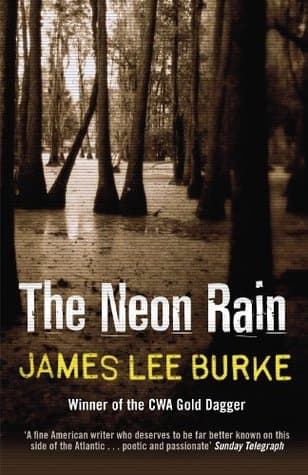
- The Neon Rain
James Lee Burke
3.9 (21k) average on GoodreadsThrillerAnother Dave Robicheaux novel, showcasing Burke's signature style, setting, and character depth.
- Mystic River
Dennis Lehane
4.2 (128k) average on GoodreadsThrillerExplores the lasting impact of past trauma and the blurred lines of justice within a community, with a similar dark and poignant tone.
- Angels & Demons
Dan Brown
3.9 (2.7M) average on GoodreadsThrillerA Harvard symbologist races through Rome's ancient sites, deciphering cryptic clues to unmask the Illuminati and stop a vengeful plot to destroy the Vatican with a stolen antimatter weapon.
- Gone Girl
Gillian Flynn
4.1 (2.3M) average on GoodreadsThrillerA wife's sudden disappearance on her fifth anniversary reveals a web of lies and psychological warfare, exposing the secrets within a seemingly perfect marriage.
- The Girl on the Train
Paula Hawkins
3.9 (2.1M) average on GoodreadsThrillerA woman’s fascination with a seemingly perfect couple she watches from her daily train commute leads her into a dark investigation when she witnesses something that shatters their idyllic image.
- The Da Vinci Code
Dan Brown
3.9 (1.9M) average on GoodreadsThrillerA symbologist and a cryptologist race through European landmarks, deciphering ancient codes and uncovering a conspiracy that could rewrite the foundations of Christianity.





Enjoyed the summary?
A summary gives you the shape of the book. The book itself has the detail, the examples and the voice.
Find Purple Cane Road on AmazonAs an Amazon Associate, BookBrief earns from qualifying purchases. How we're funded