
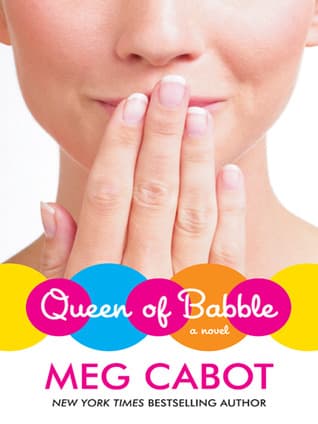
Synopsis
Covers the whole plot, including the ending.
- Difficulty
- Easy
- Pacing
- Fast
- Mood
- Humorous, Romantic, Lighthearted, Charming
- Read it if
- You enjoy lighthearted, funny romantic comedies with a quirky heroine who gets into amusing predicaments.
- Skip it if
- You prefer serious, deep literary fiction or dislike 'chick lit' tropes.
Queen of Babble Plot Summary
Covers the whole plot, including the ending.
London Calling, Trouble Brewing
Lizzie Nichols, an American college graduate who tends to overshare, arrives in London to see her long-distance boyfriend, Andrew. She is excited, but her inability to keep a secret quickly gets Andrew into trouble. Lizzie accidentally shares private information about Andrew's family with his aunt, causing a big fight between Andrew and his parents. Feeling betrayed and angry, Andrew breaks up with Lizzie. She is left alone in London with no boyfriend, no place to stay, and a plane ticket that cannot be refunded for several weeks. Desperate, Lizzie calls her best friend, Shari, who invites her to France.
Château Mirac and a French Welcome
Lizzie takes a train to Souillac, France, to meet Shari. Shari is spending the summer catering weddings at Château Mirac, a beautiful 16th-century estate, with her boyfriend, Chaz. Lizzie is immediately taken by the château's beauty and the French countryside. She also meets Luke, the handsome son of Château Mirac's owner, Jean-Pierre. Their first meeting is not romantic; Luke is at first dismissive and a bit rude to Lizzie, finding her American enthusiasm and poor French annoying. Despite his coldness, Lizzie feels attracted to him.
Wedding Woes and Gossip Gone Wild
Lizzie tries to help Shari and Chaz with their catering, even though she has no experience. Her biggest problem, however, is still her inability to stay quiet. During the first wedding at Château Mirac, Lizzie overhears a private conversation about the bride's past plastic surgery. Unable to stop herself, she accidentally blurts out the information, causing a big scene. The bride is upset, the wedding is almost ruined, and Luke, who values privacy and the château's reputation, is furious with Lizzie, confirming his bad first impression of her.
A Developing Connection and Shared Secrets
After the wedding disaster, Lizzie feels ashamed and tries to make things right. Slowly, despite his initial dislike, Luke starts to look past Lizzie's constant talking. They begin to spend more time together, and Lizzie learns about Luke's efforts to convince his father, Jean-Pierre, to keep the château as a family business instead of selling it to a developer who wants to turn it into a lipo-recovery spa. Lizzie, in turn, shares her own worries about her future and her inability to control her words. A connection, based on understanding and attraction, begins to grow between them.
Andrew's Return and Renewed Complications
Just as Lizzie and Luke's relationship deepens, Andrew, Lizzie's ex-boyfriend from London, unexpectedly arrives at Château Mirac. He says he is there for "closure" and to try to win Lizzie back, but he also subtly tries to borrow money from her. His presence immediately creates tension between Lizzie and Luke. Luke is suspicious of Andrew's reasons and jealous of his past with Lizzie, while Lizzie feels caught between her guilt over Andrew and her new feelings for Luke. Andrew's manipulative behavior threatens to ruin everything Lizzie has built in France.
The Château's Fate and Lizzie's Dilemma
Lizzie becomes more involved in Luke's efforts to save Château Mirac. She learns that Jean-Pierre is seriously considering selling the estate to a rich developer, Monsieur Dubois, who plans to turn it into an exclusive lipo-recovery clinic. Luke is strongly against this, wanting to keep his family's heritage and the château's history. He reveals his plan to host a series of successful, high-profile weddings to show the château's value as a wedding venue, hoping to make his father change his mind about the sale. Lizzie, feeling more committed to Luke and the château, wants to help.
A Grand Wedding and a Potential Betrayal
The catering team prepares for a critical, important wedding at Château Mirac, one that Luke hopes will secure the château's future. Monsieur Dubois, the potential buyer, is there, watching every detail. Lizzie, determined to help, tries her best with the preparations, but her impulsive nature takes over. She overhears a conversation between Andrew and Monsieur Dubois, where Andrew, perhaps trying to gain favor or just being himself, makes a comment that could jeopardize the wedding and Luke's whole plan. Lizzie, horrified, struggles to keep this new secret.
The Truth Revealed and a Reckoning
During the wedding reception, Lizzie faces a choice: stay quiet and let Andrew's schemes possibly ruin Luke's efforts, or use her 'big mouth' for good. Gathering her courage, Lizzie publicly exposes Andrew's true intentions and his attempts to undermine the wedding and Luke's plans for Château Mirac. While at first causing a stir, her honesty, along with the love she shows for Luke and the château, ultimately changes things. Andrew is discredited, and the guests, including Monsieur Dubois, are impressed by Lizzie's sincerity and Luke's dedication.
Château Saved, Love Declared
Lizzie's brave confession, though chaotic at first, ultimately saves the day. Jean-Pierre, seeing Luke's passion and the wedding's success despite the drama, decides not to sell Château Mirac to Monsieur Dubois. Instead, he agrees to give Luke a chance to manage the estate as a wedding venue. With the château's future secure, Luke openly tells Lizzie he loves her, acknowledging that her 'big mouth' is part of what makes her unique and charming. Lizzie, finding a place where she belongs and is truly appreciated, returns his feelings, ready to embrace her future with Luke at Château Mirac.
A Future in France
With the château's future secure and her relationship with Luke strong, Lizzie decides to stay in France. She realizes that her initial worries about her future and lack of direction are gone because she has found purpose and a community at Château Mirac. She starts learning French more seriously and actively helps plan and host future weddings. Lizzie finds that her 'big mouth,' once a source of constant trouble, can also be a tool for good, for honesty, and for expressing her true self. She finds happiness and belonging, not in a pre-planned career, but in love and a new life in France.
Principal Figures
Lizzie Nichols
Protagonist
An American college graduate with a big heart and an even bigger mouth.
Lizzie is an endearing, if often exasperating, young woman known for her inability to keep a secret. She's kind-hearted, well-intentioned, and deeply insecure about her future and her tendency to overshare. Despite her flaws, she possesses a strong sense of loyalty and a growing capacity for courage. Her internal struggle revolves around accepting herself and finding a place where her unique personality, including her 'big mouth,' is valued.
Relationships: Andrew (Ex-boyfriend, manipulative and self-serving.); Shari (Best friend and supportive roommate.); Luke (Love interest, initially antagonistic but grows to appreciate her.); Jean-Pierre (Luke's father, initially wary of Lizzie but eventually accepts her.)
Luke
Love Interest
The handsome and initially reserved son of Château Mirac's owner.
Luke is a passionate and dedicated young man who is deeply committed to preserving his family's heritage, Château Mirac. He is intelligent, responsible, and initially wary of Lizzie's American exuberance and indiscretions. He carries the burden of convincing his father to keep the château. Beneath his stoic exterior, he is kind and empathetic, eventually falling for Lizzie's genuine nature. He represents stability and tradition, contrasting with Lizzie's chaotic spontaneity.
Relationships: Lizzie Nichols (Love interest, initially adversarial but deeply connected.); Jean-Pierre (Father, with whom he has a strained but loving relationship over the château's future.)
Shari
Supporting
Lizzie's loyal and practical best friend.
Shari is Lizzie's grounding force, a practical and supportive best friend who often acts as Lizzie's sounding board and occasional rescuer. She is spending her summer catering weddings in France with her boyfriend, Chaz. Shari is more reserved and sensible than Lizzie, offering advice and a stable presence amidst Lizzie's chaotic adventures. She accepts Lizzie for who she is, even her flaws, and provides a much-needed anchor.
Relationships: Lizzie Nichols (Best friend, deeply supportive.); Chaz (Boyfriend, fellow caterer.)
Andrew
Antagonist/Ex-boyfriend
Lizzie's manipulative and self-serving ex-boyfriend.
Andrew is Lizzie's ex-boyfriend from London, who reappears in France under the guise of seeking 'closure.' He is charming on the surface but ultimately self-centered and manipulative, often trying to exploit Lizzie's good nature for his own gain, whether it's for money or to win her back despite his earlier harshness. He represents Lizzie's past mistakes and the kind of person she needs to move on from.
Relationships: Lizzie Nichols (Ex-boyfriend, manipulative and opportunistic.); Monsieur Dubois (Briefly forms an alliance to undermine Luke.)
Jean-Pierre
Supporting
Luke's father and the owner of Château Mirac.
Jean-Pierre is the patriarch of the family and the owner of the historic Château Mirac. He is a pragmatic man, facing financial pressures that lead him to consider selling his beloved family estate. He loves his son, Luke, but struggles to see the château's potential beyond its current financial state. He represents the traditional values and the historical weight of the château, and his decision holds the fate of the estate.
Relationships: Luke (Son, with whom he has disagreements about the château's future.); Lizzie Nichols (Initially skeptical, but eventually accepts her influence on Luke.)
Chaz
Supporting
Shari's boyfriend and fellow caterer.
Chaz is Shari's boyfriend and an integral part of the catering team at Château Mirac. He is generally laid-back and good-natured, providing a steady presence. He is supportive of Shari and, by extension, Lizzie, though he sometimes finds Lizzie's antics amusingly exasperating. He is a reliable and hardworking individual, focused on the practicalities of their catering business.
Relationships: Shari (Boyfriend and business partner.); Lizzie Nichols (Friend, part of her new social circle.)
Monsieur Dubois
Mentioned
The wealthy developer interested in buying Château Mirac.
Monsieur Dubois is a wealthy and ambitious developer who aims to purchase Château Mirac and transform it into a high-end lipo-recovery spa. He represents the commercialization and potential loss of the château's historical charm. He is primarily driven by profit and modern business ventures, standing in direct opposition to Luke's desire to preserve the estate's heritage. He acts as an external threat to the château's future.
Relationships: Jean-Pierre (Potential business partner, trying to buy the château.); Andrew (Briefly allied to undermine Luke.)
Themes & Insights
The Power (and Peril) of Communication
Lizzie's 'big mouth' is central to the story. At first, it causes her much trouble and embarrassment, especially with Andrew and at the first wedding. However, the novel shows how this trait, when used with purpose and honesty, becomes her greatest strength. By the end, Lizzie uses her voice to expose Andrew's lies and support Luke and Château Mirac. This shows that honest, even if sometimes messy, communication can lead to good results and real connection. It highlights the change from thoughtless chatter to meaningful speech.
“Maybe my big mouth wasn't such a bad thing after all. Maybe it was just waiting for the right thing to say.”
Finding Your Place and Purpose
At the start of the novel, Lizzie feels lost, unsure about her future and career, and like a failure compared to her friends. Her trip to France is initially an escape, but it becomes a journey of self-discovery. Through her experiences at Château Mirac, her growing relationship with Luke, and her part in saving the estate, Lizzie finds a sense of belonging and purpose she did not expect. She learns that her 'place' is not necessarily a set career, but where she feels valued and can contribute.
“I realized that for the first time in my life, I wasn't just existing. I was living. And I was exactly where I was supposed to be.”
Authenticity vs. Impression Management
The novel compares Lizzie's often-blunt honesty with the more calculated way characters like Andrew manage their image. Lizzie struggles with not being able to filter her thoughts, which often leads to social mistakes, but it also means she is truly herself. Andrew, on the other hand, is good at showing a charming front while hiding manipulative intentions. Luke, initially put off by Lizzie's unfiltered talk, eventually values her honesty. This theme explores the idea that while being authentic can be messy, it is ultimately more rewarding and builds deeper connections than superficial appearances.
“I couldn't pretend to be someone I wasn't, even if it meant I'd constantly be putting my foot in my mouth.”
Preservation of Heritage vs. Modernization
This theme is shown in the conflict over Château Mirac. Luke strongly believes in keeping the château as a historical and cultural landmark, turning it into a successful wedding venue. In contrast, Monsieur Dubois and, to some extent, Jean-Pierre, represent the desire for modernization and commercial gain, seeing the château as property to be used for profit (e.g., a lipo-recovery spa). The story ultimately supports the value of heritage and tradition, suggesting that money-making can exist with preservation, especially when driven by passion and love.
“It's more than just a building, Lizzie. It's our history. It's who we are.”
Plot Devices & Literary Techniques
The 'Big Mouth' as a Character Flaw and Strength
Lizzie's inability to keep secrets is both her greatest weakness and ultimate asset.
Lizzie's 'big mouth' is the central driving force of the plot. Initially, it functions as a comedic and dramatic flaw, constantly getting her into trouble and creating obstacles, such as the breakup with Andrew and the ruined wedding. However, as the narrative progresses, it transforms into a device for truth-telling and resolution. Her eventual use of her 'big mouth' to expose Andrew and save Château Mirac subverts the initial expectation, demonstrating how a perceived flaw can become a unique strength and lead to her personal growth and the story's happy ending.
The Fish-Out-of-Water Trope
Lizzie's cultural displacement in France highlights her personality and drives conflict.
Lizzie, an outspoken American, is placed in the refined and culturally distinct setting of rural France, specifically a historic château. Her limited French, American directness, and lack of social graces initially clash with the more reserved French customs and Luke's expectations. This trope generates both humor and conflict, emphasizing Lizzie's unique personality and making her journey of adaptation and self-discovery more pronounced. It allows for observations on cultural differences and underscores her feeling of being an outsider before she finds her place.
The Threatened Landmark
Château Mirac's potential sale creates a central conflict and raises stakes.
The looming threat of Château Mirac being sold and transformed into a lipo-recovery spa serves as a major external conflict. This plot device provides Luke with his primary motivation and gives Lizzie a tangible cause to rally behind, shifting her focus from her personal woes to a larger, shared goal. It raises the stakes of the narrative, creating urgency and providing a clear objective for the protagonists to work towards, ultimately leading to a satisfying resolution when the château is saved.
The Return of the Ex-Boyfriend
Andrew's reappearance introduces renewed romantic and personal conflict.
The unexpected arrival of Andrew in France functions as a classic romantic comedy plot device. His return creates a love triangle, injecting tension and doubt into Lizzie's burgeoning relationship with Luke. More importantly, Andrew's manipulative behavior and continued attempts to undermine Lizzie force her to confront her past and stand up for herself, catalyzing her personal growth and solidifying her commitment to Luke and her new life in France. He serves as a final obstacle for Lizzie to overcome before she can fully embrace her future.
Queen of Babble Quotes
“The only thing worse than having a crush on someone who doesn't know you exist is having a crush on someone who knows you exist and still doesn't care.”
“I may not be perfect, but at least I'm not boring.”
“Sometimes you have to be a little bit bad to be a lot bit good.”
“It's hard to be a grown-up when you still feel like a kid inside.”
“Love isn't about finding someone you can live with. It's about finding someone you can't live without.”
“Just because you're paranoid doesn't mean they aren't out to get you.”
“Boys are like shoes. You need to try on a lot of them before you find the perfect fit.”
“Sometimes the best adventures are the ones you didn't plan.”
“You can't force someone to love you, no matter how much you want them to.”
“It's amazing how much can change in a single summer.”
“Being yourself is the most important thing, even if 'yourself' is a little bit crazy.”
“Friendship isn't about who you've known the longest. It's about who walks into your life, says 'I'm here for you,' and proves it.”
“Maybe happily ever after isn't about finding the perfect person, but about learning to see the perfection in an imperfect one.”
“Life is too short to be anything but happy.”
Quiz
10 questions on the plot and the characters. Each answer comes with a short explanation.
Question 1
What is Lizzie's primary problem that causes her to get into trouble repeatedly?
- She is constantly losing her passport.
- She cannot keep secrets, especially her own.
- She spends all her money impulsively.
- She is terrible at speaking foreign languages.
Show answer
B. She cannot keep secrets, especially her own. The book explicitly states that Lizzie's problem is that she can't keep her mouth shut and can't keep anything to herself, which leads to her various predicaments.
Question 2
Where does Lizzie initially plan to go to visit her long-distance boyfriend, Andrew?
- Paris, France
- London, England
- Rome, Italy
- Souillac, France
Show answer
B. London, England Lizzie's initial plan was to use her apartment down payment to visit her long-distance boyfriend, Andrew, in London.
Question 3
Who is Shari in relation to Lizzie, and where is Shari spending her summer?
- Her cousin, in London working as a nanny.
- Her college roommate and best friend, in southern France.
- Her older sister, in Manhattan planning a wedding.
- Her new acquaintance, in a Parisian art school.
Show answer
B. Her college roommate and best friend, in southern France. Shari is Lizzie's best friend and college roommate who is spending her summer catering weddings in southern France.
Question 4
What kind of establishment is Château Mirac, where Shari is working?
- A modern hotel resort.
- A sixteenth-century château used for catering weddings.
- A renovated ancient monastery turned into a spa.
- A bustling urban restaurant.
Show answer
B. A sixteenth-century château used for catering weddings. Shari is catering weddings with her boyfriend, Chaz, in a sixteenth-century château called Château Mirac.
Question 5
What immediate negative consequence does Lizzie's 'big mouth' cause at Château Mirac?
- She accidentally breaks expensive catering equipment.
- Luke hates her and the bride is in tears.
- She reveals a secret recipe, ruining the food.
- She accidentally sets fire to a part of the château.
Show answer
B. Luke hates her and the bride is in tears. The text states that 'no sooner has the first cork been popped than Luke hates her, the bride is in tears,' directly attributing this to Lizzie's inability to keep secrets.
Question 6
What is the potential future use for Château Mirac that Lizzie's actions might inadvertently lead to?
- A historical museum.
- A lipo-recovery spa.
- An exclusive boarding school.
- A luxury apartment complex.
Show answer
B. A lipo-recovery spa. The synopsis mentions that 'it looks like Château Mirac is in danger of becoming a lipo-recovery spa' due to the unfolding events.
Question 7
What is Luke's relationship to Château Mirac?
- He is a guest attending a wedding.
- He is the son of Château Mirac's owner.
- He is a caterer working alongside Shari and Chaz.
- He is a local tour guide for the area.
Show answer
B. He is the son of Château Mirac's owner. Lizzie is smitten after one glimpse of 'gorgeous Luke, the son of Château Mirac's owner.'
Question 8
Why does Lizzie's ex-boyfriend Andrew show up in France?
- To surprise Lizzie with a reconciliation attempt.
- To seek 'closure' or possibly a loan from Lizzie.
- He was invited by Shari to help with the catering.
- He is on a business trip that coincidentally brought him there.
Show answer
B. To seek 'closure' or possibly a loan from Lizzie. Andrew shows up 'looking for 'closure' (or at least a loan),' which threatens Lizzie's chance at finding love.
Question 9
What is the central theme or challenge Lizzie must overcome by the end of the story?
- Learning to cook gourmet French cuisine.
- Figuring out how to use her 'big mouth' to save the day instead of causing trouble.
- Successfully running a wedding catering business.
- Avoiding her ex-boyfriend Andrew completely.
Show answer
B. Figuring out how to use her 'big mouth' to save the day instead of causing trouble. The final sentence of the synopsis highlights the main challenge: 'Unless she can figure out a way to use that big mouth of hers to save the day.'
Question 10
Before arriving at Château Mirac, what are Lizzie's travel experiences and language skills like?
- She is an experienced solo traveler fluent in French.
- She has never traveled alone and only speaks rudimentary French.
- She has traveled extensively but only speaks English.
- She is a skilled linguist but prefers group travel.
Show answer
B. She has never traveled alone and only speaks rudimentary French. The text states, 'Who cares if she's never traveled alone in her life and only speaks rudimentary French?' indicating her lack of experience and limited language skills.
Queen of Babble FAQ
What is Lizzie Nichols' central flaw that drives the plot of 'Queen of Babble'?
Lizzie Nichols' central flaw is her inability to keep secrets, both her own and others'. Her impulsive honesty and tendency to blurt out information, even with good intentions, consistently land her and those around her in trouble, particularly with her boyfriend Andrew and later in France.
Why does Lizzie end up alone in London at the beginning of the book?
Lizzie ends up alone in London because her 'big mouth' gets her long-distance boyfriend, Andrew, into significant trouble. This incident leads to their breakup, leaving her without a place to stay or a companion until her non-refundable flight home.
Who is Shari, and what role does she play in Lizzie's journey?
Shari is Lizzie's best friend and college roommate. She provides a crucial lifeline for Lizzie after her London mishap, inviting her to spend the summer in southern France, where Shari is catering weddings with her boyfriend, Chaz, at Château Mirac.
What is Château Mirac, and why is it significant to the story?
Château Mirac is a sixteenth-century château in southern France where Shari and Chaz are working as caterers. It becomes the primary setting for Lizzie's summer, her romantic entanglements with Luke, and the various secrets and dramas she inadvertently exposes, putting the château's future at risk.
Who is Luke, and what is his initial reaction to Lizzie?
Luke is the gorgeous son of Château Mirac's owner. Initially, he is smitten with Lizzie upon meeting her, but this quickly turns to dislike and anger after Lizzie's secret-blabbing causes chaos and distress for a bride and jeopardizes the château's reputation and financial stability.
How does Andrew reappear in Lizzie's life, and what does he want?
Andrew reappears at Château Mirac later in the story, ostensibly seeking 'closure' from Lizzie. However, his true motive is to get a loan from her, highlighting his manipulative nature and further complicating Lizzie's burgeoning relationship with Luke.
What specific secret does Lizzie reveal at a wedding that causes major problems?
Lizzie reveals a secret about the bride's past plastic surgery or a similar sensitive detail, causing the bride to burst into tears and creating a scandal. This incident directly leads to Luke's animosity towards Lizzie and endangers Château Mirac's catering business.
What is the implied threat to Château Mirac's future that Lizzie must help prevent?
The implied threat is that if the catering business fails due to Lizzie's indiscretions and the resulting bad publicity, Château Mirac might be converted into a 'lipo-recovery spa.' This undesirable outcome motivates Lizzie to use her 'big mouth' for good.
How does Lizzie's fluency in French (or lack thereof) impact her experience?
Lizzie's rudimentary French initially makes her feel isolated and vulnerable, especially traveling alone. However, her effort to communicate and learn, combined with her expressive personality, helps her connect with some locals, though it also contributes to misunderstandings.
How does Lizzie's 'big heart' often conflict with her 'big mouth'?
Lizzie's 'big heart' often leads her to share information out of a misguided sense of honesty or a desire to help, but her 'big mouth' means she lacks discretion. This conflict results in her good intentions frequently backfiring and causing more harm than good, despite her caring nature.
What is the psychological impact of Andrew's reappearance on Lizzie?
Andrew's reappearance forces Lizzie to confront her past relationship and his manipulative tendencies. It challenges her newfound independence and blossoming feelings for Luke, creating emotional turmoil and making her question her judgment about love and trust.
How does Lizzie's character evolve throughout the novel regarding her communication style?
Lizzie initially struggles with impulse control and blurting out secrets. By the end, she learns to channel her communicative nature more constructively, using her 'big mouth' to save the day by strategically revealing truths or advocating for others, demonstrating growth in discretion and purpose.
What internal conflict does Lizzie face regarding her self-identity and future plans?
Lizzie grapples with not knowing what to do with her life and feeling aimless, contrasting with her best friend Shari who seems to have a clearer path. This uncertainty about her future career and identity is a significant internal conflict that she begins to resolve through her experiences in France.
Is Lizzie's inability to keep secrets solely a flaw, or can it be seen as a strength in certain contexts?
While primarily a flaw causing chaos, Lizzie's inability to keep secrets can be reframed as a strength of honesty and transparency. It forces issues into the open, and by the end, she learns to direct this 'truth-telling' ability to expose genuine wrongdoings or resolve conflicts, ultimately saving Château Mirac.
How does the setting of Château Mirac contribute to the overall theme of the story?
The romantic, historic setting of Château Mirac, a place of beauty and tradition, contrasts with Lizzie's modern, sometimes chaotic personality. It highlights themes of hidden histories, secrets, and the clash between old-world charm and contemporary dilemmas, creating a perfect backdrop for romantic drama and personal growth.
What message does the book convey about self-acceptance and embracing one's unique qualities?
The book conveys that self-acceptance involves recognizing and learning to manage one's flaws, rather than eradicating them. Lizzie ultimately learns to harness her 'big mouth' for good, suggesting that even perceived weaknesses can become strengths when understood and directed purposefully, leading to self-love and finding one's place.
How does the relationship between Lizzie and Luke differ from her relationship with Andrew?
Lizzie's relationship with Luke is built on initial attraction, followed by conflict and a deeper understanding as he sees her true character and potential for good. In contrast, her relationship with Andrew is characterized by his manipulation and her enabling, highlighting a shift towards a more authentic and challenging connection with Luke.
What is the significance of the title 'Queen of Babble'?
The title 'Queen of Babble' directly refers to Lizzie's most prominent personality trait: her tendency to talk excessively and reveal secrets. It's an ironic title that encapsulates her initial struggle and eventual journey to transform this 'babbling' into a powerful, positive force for change.
About the author

Meg Cabot is an American author known for her engaging young adult and adult fiction. Her notable works include "Size 12 Is Not Fat," "Queen of Babble," "Princess in the Spotlight," "Missing You," "Princess in Waiting," and "Airhead," which often explore themes of romance and personal growth. Cabot has gained a significant following for her relatable characters and humorous storytelling.
Similar books
- The Princess Diaries
Meg Cabot
4.0 (624) average on GoodreadsYoung AdultShares Cabot's signature witty voice and a relatable, slightly awkward heroine.
- Confessions of a Shopaholic
Sophie Kinsella
3.6 (647k) average on GoodreadsYoung AdultFeatures a charming, well-meaning but often chaotic protagonist navigating life and love.
- Anna and the French Kiss
Stephanie Perkins
4.0 (364k) average on GoodreadsYoung AdultA fun, romantic story set in France with an American protagonist discovering love abroad.
- 13 Little Blue Envelopes
Maureen Johnson
3.6 (78k) average on GoodreadsLifestyleWhile both involve travel and self-discovery for young women, Johnson's work tends to integrate historical and cultural elements more deeply into the narrative, providing a richer, more complex backdrop for the protagonist's journey and often featuring more intricate plot developments and character growth than Cabot's Queen of Babble.
- Harry Potter and the Sorcerer's Stone
J.K. Rowling
4.5 (7M) average on GoodreadsFantasyRescued from a miserable life under the stairs, an orphaned boy discovers he's a wizard destined for a magical school, where he uncovers a dangerous secret tied to the dark wizard who murdered his parents.
- The Hunger Games
Suzanne Collins
4.3 (6.4M) average on GoodreadsFantasyIn a future where children fight to the death on live television, Katniss Everdeen volunteers for the arena, turning a death sentence into a fight for survival and a spark of rebellion.




Enjoyed the summary?
A summary gives you the shape of the book. The book itself has the detail, the examples and the voice.
Find Queen of Babble on AmazonAs an Amazon Associate, BookBrief earns from qualifying purchases. How we're funded