

Synopsis
Covers the whole plot, including the ending.
- Difficulty
- Medium
- Pacing
- Moderate
- Mood
- Dark, Suspenseful, Intense, Psychological
- Read it if
- You enjoy intense psychological thrillers, deeply disturbed serial killers, and the chilling origins of iconic villains like Hannibal Lecter.
- Skip it if
- You prefer lighthearted reads or are sensitive to graphic violence and disturbing psychological themes.
Red Dragon Plot Summary
Covers the whole plot, including the ending.
Will Graham Returns to the Hunt
Will Graham, a retired FBI profiler living a quiet life in Marathon, Florida, with his wife Molly and stepson Willy, is approached by his former superior, Jack Crawford. Crawford needs Graham's insight for a new case: a serial killer called 'The Tooth Fairy' who has brutally murdered two families, the Jacobi and Leeds families, during consecutive full moons. Graham, still affected by his near-fatal encounter with Hannibal Lecter and the mental toll of his work, first refuses. However, the brutality and strange nature of the murders, especially the killer's careful staging, eventually make him agree to help, knowing his specific way of thinking is needed.
A Glimpse into the Killer's World
Graham visits the Jacobi and Leeds crime scenes, carefully analyzing every detail. He experiences intense psychological immersion, trying to 'become' the killer to understand his motives and methods. He notices the killer's precise entry and exit, the use of shattered mirrors, and the placement of the victims' bodies. Graham concludes the killer is deeply disturbed, likely with a severe personality disorder, and believes he is 'changing' his victims. He also realizes the killer is interested in the full moon and is increasing his violence, suggesting a deep psychological drive rather than a purely sexual one.
The Devil's Advocate: Hannibal Lecter
Understanding the Tooth Fairy's psychological complexity, Graham decides he needs a mind even better at understanding psychopaths: Dr. Hannibal Lecter. Despite the trauma Lecter caused him (Lecter nearly disemboweled him), Graham visits Lecter at the Baltimore State Hospital for the Criminally Insane. Lecter, confined but still brilliant and manipulative, agrees to help. He immediately begins playing mind games with Graham, probing his weaknesses and subtly mocking him. Lecter provides cryptic insights, but also uses the opportunity to get Graham's home address, which he then secretly sends to the Tooth Fairy.
Francis Dolarhyde's Genesis
The story introduces Francis Dolarhyde, the 'Tooth Fairy.' Dolarhyde is a disturbed man with a severe cleft palate and a traumatic childhood marked by abuse from his grandmother. He works as a film developer at a St. Louis company, which gives him access to his victims' home movies. Dolarhyde is obsessed with William Blake's painting 'The Great Red Dragon and the Woman Clothed with the Sun.' He believes he is the Red Dragon, compelled to 'become' the creature by 'changing' his victims. He has a powerful, controlling internal voice, the Dragon, that dictates his actions and fuels his murderous urges.
A Dangerous Alliance: Lecter and Dolarhyde
After Lecter gets Graham's home address, he sends a coded message to the Tooth Fairy through a newspaper personal ad, revealing Graham's location and encouraging Dolarhyde to attack Graham's family. This betrayal by Lecter increases the danger for Graham. The FBI intercepts the message, but too late to prevent Dolarhyde from being alerted. Graham's family moves to a safe house, but the incident deeply affects Molly and Willy, showing the personal cost of Graham's return to the field. Graham now knows he is not just hunting Dolarhyde, but also dealing with Lecter's dangerous actions.
A Blind Date: Reba McClane
While fighting his internal struggles, Dolarhyde meets Reba McClane, a blind coworker at the film lab. Reba, unaware of Dolarhyde's true nature, treats him with kindness and respect, which he has rarely experienced. He grows fond of her, and their relationship becomes a fragile romance. This connection creates an internal conflict for Dolarhyde; his growing affection for Reba clashes with the Red Dragon's constant demands, which sees Reba as a distraction and a threat to his 'transformation.' He takes Reba to a zoo, where he lets her touch a sedated tiger, a moment of deep, shared closeness for him.
The Capture of Freddy Lounds
Freddy Lounds, a tabloid reporter for the *National Tattler*, publishes sensational and demeaning articles about the Tooth Fairy, calling him an impotent homosexual. Enraged by Lounds's disrespectful portrayal, Dolarhyde kidnaps him. He forces Lounds to retract his articles on tape, then bites off his lips and sets him on fire in his wheelchair, pushing him down a hill. Lounds is found alive but horribly disfigured, sending a chilling message to the public and the FBI about the Tooth Fairy's anger and his sensitivity to perceived insults.
Graham's Breakthrough and Dolarhyde's Despair
Graham, using information from Lecter's intercepted letter and Lounds's murder, focuses on the killer's likely profession and location. He thinks the killer must have access to home movies. A clue comes from a partial fingerprint on a fragment of a letter Lecter sent to Dolarhyde. The FBI traces this to a dental technician, leading them to a film processing company. Meanwhile, Dolarhyde's internal conflict becomes intense. He tries to 'kill' the Red Dragon by eating one of Blake's Red Dragon paintings, believing this will free him from its influence and let him be with Reba. However, the Dragon is too powerful.
The Confrontation and Reba's Escape
Dolarhyde, believing he must kill Reba to fully embrace the Dragon, plans a confrontation. He takes Reba to his house, intending to murder her and then himself. He sets his house on fire, with Reba inside. However, just as he is about to shoot her, the FBI, led by Graham, breaks in. In the chaos, Dolarhyde is shot. Reba, confused by the fire and gunshots, escapes the burning house. Dolarhyde's body is found in the wreckage, seemingly dead, with a suicide note and a confession to the Tooth Fairy murders.
The Aftermath and Lingering Shadows
The FBI declares Dolarhyde dead, but Graham realizes the body found was not Dolarhyde's. Dolarhyde faked his death using a morgue corpse, a detail revealed by his unique dental work. Dolarhyde then ambushes Graham at his home in Florida, shooting Molly and attacking Graham. Graham, despite his wounds, fights back, eventually killing Dolarhyde in a brutal struggle. The ordeal leaves Graham deeply scarred, physically and mentally. He retreats further into his family life, but the encounter with Lecter and Dolarhyde changes him forever, leaving him with lasting mental scars from his work and a deep understanding of evil.
Red Dragon Characters
Will Graham
Protagonist
Brilliant, empathetic FBI profiler haunted by his past.
Will Graham is a highly intelligent and uniquely empathetic FBI profiler who possesses the ability to immerse himself completely in the minds of serial killers. This gift, however, comes at a severe psychological cost, leading to his breakdown and retirement after his near-fatal encounter with Hannibal Lecter. He is driven by a strong moral compass and a desire to protect the innocent, even when it means confronting the darkest aspects of humanity within himself. His vulnerability and internal struggles make him a deeply human and relatable character, constantly battling the shadows his work casts upon his soul.
Relationships: Jack Crawford (Former boss and mentor who relies on Will's unique skills); Molly Graham (Loving wife, a grounding force in his life); Willy Graham (Stepson, whom he deeply cares for and seeks to protect); Hannibal Lecter (Arch-nemesis and a dark intellectual counterpart)
Francis Dolarhyde
Antagonist
Disturbed serial killer, 'The Tooth Fairy', obsessed with the Red Dragon.
Francis Dolarhyde is the 'Tooth Fairy,' a profoundly disturbed individual with a traumatic childhood marked by a severe cleft palate and abuse. He works in a film processing lab, which provides him access to his victims' lives. Dolarhyde is consumed by an alternate personality, 'The Red Dragon,' derived from William Blake's painting. This internal entity compels him to commit horrific murders, believing he is 'changing' his victims to achieve a state of 'becoming' the Dragon. He is capable of both extreme brutality and unexpected tenderness, particularly towards Reba McClane, highlighting his internal conflict.
Relationships: Reba McClane (Blind coworker with whom he develops a fragile, conflicted romantic connection); Hannibal Lecter (Manipulative confidante who encourages his violent tendencies); Will Graham (His hunter, whom he seeks to eliminate)
Dr. Hannibal Lecter
Supporting
Brilliant, manipulative psychiatrist and cannibalistic serial killer.
Dr. Hannibal Lecter is a highly intelligent, cultured, and terrifyingly cunning psychiatrist and serial killer, imprisoned in the Baltimore State Hospital for the Criminally Insane. Despite his confinement, he remains a powerful and manipulative force, capable of influencing events from his cell. He possesses an almost supernatural understanding of human psychology, particularly psychopathy, which Will Graham reluctantly seeks out. Lecter delights in intellectual games and psychological torture, viewing others as mere playthings or sources of amusement. His interactions with Graham are always a dangerous dance between aid and sabotage.
Relationships: Will Graham (Former captor and intellectual sparring partner, whom he both respects and despises); Francis Dolarhyde (A tool for his own amusement and revenge against Graham); Frederick Chilton (His ineffectual and often mocked prison warden)
Jack Crawford
Supporting
Head of the FBI's Behavioral Science Unit, Graham's former boss.
Jack Crawford is the head of the FBI's Behavioral Science Unit. He is a pragmatic and dedicated law enforcement officer, acutely aware of the unique and often uncomfortable talents of Will Graham. Crawford respects Graham's abilities but is also willing to push him to his psychological limits to solve cases. He acts as a bridge between the bureaucracy of the FBI and the intuitive, often unconventional methods of Graham, recognizing that some cases demand extraordinary measures. He carries the burden of responsibility for his agents' well-being, particularly Graham's.
Relationships: Will Graham (Boss and mentor who relies heavily on Will's profiling skills); Freddy Lounds (Adversary due to Lounds's sensationalist journalism)
Molly Graham
Supporting
Will Graham's supportive wife, a source of stability.
Molly Graham is Will Graham's loving and supportive wife. She provides a sense of normalcy and stability in Will's life, serving as his anchor to a world outside the horrors he confronts. She understands the dark nature of his past work and the toll it took on him, which makes her reluctant for him to return to the FBI. Her concern for Will's psychological well-being and the safety of their family is paramount, and she endures significant personal danger due to his involvement in the Tooth Fairy case. She represents the innocent lives Will is fighting to protect.
Relationships: Will Graham (Loving wife and confidante); Willy Graham (Mother to Willy, Will's stepson)
Reba McClane
Supporting
Blind coworker who forms a relationship with Francis Dolarhyde.
Reba McClane is a blind woman who works at the same film processing lab as Francis Dolarhyde. She is kind, empathetic, and possesses a remarkable ability to 'see' people for who they are beyond their physical appearance or social awkwardness. Her genuine affection and lack of judgment towards Dolarhyde provide him with the first truly positive human connection he has ever experienced. This relationship creates a profound internal conflict for Dolarhyde, as his love for Reba clashes with the demands of his 'Red Dragon' persona, making her a crucial figure in his psychological struggle.
Relationships: Francis Dolarhyde (Romantic interest, a source of both humanity and danger for him)
Freddy Lounds
Supporting
Sensationalist tabloid reporter for the National Tattler.
Freddy Lounds is a sleazy, opportunistic tabloid reporter for the *National Tattler*. He is obsessed with sensationalizing true crime stories, often at the expense of accuracy and human decency. Lounds is portrayed as morally bankrupt, willing to exploit tragedy and invade privacy for a headline. His disrespectful and demeaning articles about the Tooth Fairy ultimately provoke Dolarhyde's wrath, leading to his brutal torture and murder. He serves as a cautionary figure about irresponsible journalism and the dangerous consequences of provoking a disturbed mind.
Relationships: Francis Dolarhyde (His victim, enraged by Lounds's articles); Will Graham (Antagonistic, as Lounds often distorts Graham's work)
Frederick Chilton
Supporting
Pompous and incompetent director of the Baltimore State Hospital for the Criminally Insane.
Dr. Frederick Chilton is the ambitious, self-important, and largely ineffectual director of the Baltimore State Hospital for the Criminally Insane, where Hannibal Lecter is incarcerated. He is more concerned with his public image and self-promotion than with the actual care or security of his patients. Chilton attempts to capitalize on Lecter's notoriety, often mismanaging his interactions and underestimating Lecter's cunning. He is frequently manipulated and outwitted by Lecter, serving as a foil to Lecter's intelligence and a source of comic relief, despite the serious implications of his incompetence.
Relationships: Hannibal Lecter (Jailer and constant target of Lecter's disdain and manipulation)
Red Dragon Themes
The Nature of Evil and Sanity
The novel explores the origins of evil, especially through Francis Dolarhyde's traumatic past and his 'Red Dragon' persona, which embodies a destructive force. It questions sanity, showing how Dolarhyde's mental state comes from both his physical deformities and his abusive upbringing. Will Graham's ability to empathize with killers blurs the line between detective and psychopath, forcing him to confront darkness within himself, showing the mental cost of understanding evil without becoming evil. Hannibal Lecter represents pure, intellectual malevolence, a different kind of evil.
“The reason you're good, Will, is because you're more like them than you are like me.”
Identity and Transformation
A central theme is identity, how it changes, and the desire for transformation. Francis Dolarhyde is consumed by 'becoming' the Red Dragon, carefully changing his appearance and committing murders as part of this 'metamorphosis.' His struggle is to shed his flawed human identity for a powerful, monstrous one. Will Graham also struggles with his identity as a profiler, fearing that his immersion into killers' minds is changing him into something he hates. The theme explores the human (or inhuman) drive to escape one's given self and create a new, often terrifying, existence.
“I am the Dragon. I am the Dragon. I am the Dragon.”
The Power of the Past
The past greatly influences all main characters. Will Graham is haunted by his near-fatal encounter with Hannibal Lecter, which shapes his reluctance to return to profiling and his methods when he does. Francis Dolarhyde's monstrous identity comes from his horrific childhood abuse and physical deformity, which fuels his desire for power and transformation. The novel suggests that unresolved trauma and past experiences strongly determine present actions, shaping both heroes and villains. The past is not just background but an active, inescapable force.
“He was a product of the abuse he'd suffered, and the monster he became was shaped by the monstrousness inflicted upon him.”
Manipulation and Control
Manipulation is a theme, mainly shown by Hannibal Lecter. From his prison cell, Lecter directs events, subtly influencing both Will Graham and Francis Dolarhyde through coded messages and psychological games. He enjoys controlling others' lives, seeing them as pawns in his schemes. Dolarhyde, in turn, tries to control his victims and his own internal 'Dragon.' The struggle for control is central to the story, showing the psychological battles between characters and the dangerous power dynamics at play.
“Tell him, Graham. Tell him that you understand.”
Empathy and its Perils
Will Graham's main characteristic is his deep empathy, his ability to 'get inside' killers' minds. This empathy is both his greatest asset as a profiler and his greatest weakness. It allows him to understand the 'Tooth Fairy's' reasons but also exposes him to the psychological trauma of seeing the world through a monster's eyes. The novel explores the dangers of empathy when facing pure evil, suggesting that such deep understanding can corrupt and scar the empathetic person, making it a double-edged sword.
“He liked to watch. He liked to understand. He liked to be alone with them. And he was not alone.”
Plot Devices & Literary Techniques
The 'Mind Palace' / Empathic Profiling
Will Graham's unique method of immersing himself in a killer's perspective.
Will Graham's signature plot device is his ability to mentally reconstruct crime scenes and 'become' the killer. This isn't just deductive reasoning; it's a visceral, almost hallucinatory immersion into the killer's psyche, allowing him to understand motives, methods, and even emotional states. This device provides the reader with direct access to the killer's thought process, often blurring the lines between Graham's consciousness and the killer's, creating intense psychological tension and making Graham's insights uniquely valuable, yet deeply disturbing for him.
The Red Dragon Painting
A powerful symbol and catalyst for Francis Dolarhyde's murderous identity.
William Blake's 'The Great Red Dragon and the Woman Clothed with the Sun' is not just a painting; it's a central symbolic and psychological device. For Francis Dolarhyde, it provides the visual and conceptual framework for his 'Red Dragon' alter ego. He believes he must 'become' the Dragon, and the painting fuels his delusions and dictates his actions, including his 'transformation' of victims. The repeated imagery and Dolarhyde's obsession with it provide insight into his fractured mind and serve as a tangible focus for his psychosis.
Hannibal Lecter's Correspondence
A manipulative communication channel that advances the plot and raises stakes.
Lecter's ability to communicate from his prison cell, specifically his coded letter to the 'Tooth Fairy' via a newspaper personal ad, is a crucial plot device. It directly connects Lecter to Dolarhyde, provides Dolarhyde with Will Graham's home address, and significantly escalates the personal danger for Graham's family. This device demonstrates Lecter's enduring power and manipulative genius, even while incarcerated, and propels the narrative forward by creating a direct threat from the antagonist to the protagonist's personal life, making the chase more urgent and personal.
The Cleft Palate
Francis Dolarhyde's physical deformity, a root cause of his trauma and identity.
Francis Dolarhyde's severe cleft palate is a significant plot device, serving as a physical manifestation of his deep-seated trauma and the foundation of his self-loathing. It is the visible scar that led to his childhood abuse and ostracization, directly contributing to his fractured psyche and his desperate need to 'transform' into the powerful Red Dragon. This physical defect provides a tangible, sympathetic (though not excusing) origin for his monstrousness, making his character more complex than a simple villain.
Red Dragon Quotes
“We begin by coveting what we see every day.”
“You have to get back on the horse.”
“The Dragon is not a monster. He's just a man.”
“I'm having an old friend for dinner.”
“You see a lot, Doctor, but are you strong enough to point that high-powered perception at yourself?”
“The Tooth Fairy is a sad, lonely man.”
“Nothing happened to me. I happened.”
“You can't reduce me to a set of influences.”
“The world is more interesting with you in it.”
“He wants to be a dragon. Not a man.”
“We are all just one bad day away from being him.”
“You have to look at the evidence, not the story you want to believe.”
“The mirror shows me what I am, not what I want to be.”
“Killing must feel good to God, too. He does it all the time.”
Quiz
10 questions on the plot and the characters. Each answer comes with a short explanation.
Question 1
What is the nickname given to the serial killer who massacres entire families each full moon in 'Red Dragon'?
- The Moon Killer
- The Tooth Fairy
- The Full Moon Slayer
- The Lunar Butcher
Show answer
B. The Tooth Fairy The serial killer is nicknamed 'the Tooth Fairy' by the media and law enforcement because he leaves bite marks on his victims and operates during full moons, though this nickname is a misdirection from his true motivations.
Question 2
Why did Will Graham retire from the FBI before being called back to consult on the Tooth Fairy case?
- He was fired for unethical behavior
- He suffered terrible injuries while capturing Hannibal Lecter
- He became disillusioned with the FBI's methods
- He was diagnosed with a terminal illness
Show answer
B. He suffered terrible injuries while capturing Hannibal Lecter Will Graham was severely injured—both physically and psychologically—during his confrontation with Hannibal Lecter, which led to his retirement from active FBI profiling work.
Question 3
What is the real name of the serial killer known as the Tooth Fairy?
- Francis Dolarhyde
- Frederick Chilton
- Jack Crawford
- Mason Verger
Show answer
A. Francis Dolarhyde Francis Dolarhyde is the true identity of the Tooth Fairy, a man tormented by childhood trauma and obsessed with transforming into the 'Red Dragon' from William Blake's paintings.
Question 4
How does Hannibal Lecter communicate with Francis Dolarhyde while incarcerated?
- Through encrypted emails
- By sending coded letters
- Via phone calls monitored by the FBI
- Through visits arranged by corrupt guards
Show answer
B. By sending coded letters Hannibal Lecter sends coded letters to Francis Dolarhyde, offering twisted advice and manipulation, which complicates Will Graham's investigation as both profiler and killer are consulting the same source.
Question 5
What artistic work inspires Francis Dolarhyde's 'Red Dragon' persona and his crimes?
- A series of paintings by William Blake
- A poem by Edgar Allan Poe
- A sculpture by Michelangelo
- A film by Alfred Hitchcock
Show answer
A. A series of paintings by William Blake Dolarhyde is obsessed with William Blake's painting 'The Great Red Dragon and the Woman Clothed with the Sun,' which he interprets as a representation of his own transformative and destructive power.
Question 6
What method does Will Graham use to understand serial killers like the Tooth Fairy?
- Hypnosis and dream analysis
- Psychological profiling and empathy
- Genetic testing and DNA analysis
- Interrogation under torture
Show answer
B. Psychological profiling and empathy Will Graham employs a form of psychological profiling that involves deep empathy, allowing him to mentally reconstruct the killer's thoughts and motivations, though this takes a heavy toll on his own psyche.
Question 7
Why does Hannibal Lecter agree to help Will Graham with the Tooth Fairy case?
- He hopes for a reduced sentence
- He wants to manipulate events for his own amusement and revenge
- He feels genuine remorse for his past actions
- He is blackmailed by the FBI
Show answer
B. He wants to manipulate events for his own amusement and revenge Hannibal Lecter sees the situation as a game, offering help to both Will Graham and Francis Dolarhyde to create chaos, seek revenge on Will for capturing him, and satisfy his intellectual curiosity.
Question 8
What is the significance of the 'Red Dragon' in Francis Dolarhyde's psychology?
- It represents his desire for wealth and power
- It symbolizes his transformation into a powerful, godlike being
- It is a code name for his criminal organization
- It refers to a childhood pet he was forced to kill
Show answer
B. It symbolizes his transformation into a powerful, godlike being The 'Red Dragon' is a delusional identity Dolarhyde adopts, inspired by Blake's art, which he believes will allow him to transcend his traumatic past and achieve ultimate power through murder.
Question 9
How does Will Graham ultimately locate Francis Dolarhyde's residence?
- By tracing Hannibal Lecter's letters
- Through dental records of the bite marks
- By analyzing home movie film developed by Dolarhyde's employer
- Using satellite surveillance of full moon activity
Show answer
C. By analyzing home movie film developed by Dolarhyde's employer Will Graham discovers that Dolarhyde works at a film processing lab and uses this to track him down by analyzing home movies he developed, which provide clues to his location and identity.
Question 10
What critical mistake does Francis Dolarhyde make that leads to his downfall?
- He leaves a fingerprint at a crime scene
- He confides in a blind woman named Reba McClane, who later alerts authorities
- He uses a credit card under his real name
- He sends a taunting letter to Will Graham
Show answer
B. He confides in a blind woman named Reba McClane, who later alerts authorities Dolarhyde's relationship with Reba McClane, a blind coworker he becomes emotionally attached to, creates vulnerability. When she discovers his true nature, it triggers events that lead to his exposure and final confrontation.
Red Dragon FAQ
What is 'Red Dragon' about?
'Red Dragon' follows former FBI profiler Will Graham, who is pulled out of retirement to hunt a serial killer known as 'the Tooth Fairy' who murders families during full moons. Graham reluctantly consults with his nemesis, the imprisoned cannibalistic psychiatrist Dr. Hannibal Lecter, to understand the killer's mind, while the killer himself, Francis Dolarhyde, is haunted by visions of the mythical Red Dragon that drive his murders.
Why should I read 'Red Dragon'?
This novel is essential for thriller and crime fiction fans as it introduces both Hannibal Lecter and the psychological profiling genre. It masterfully builds tension through dual perspectives—the hunter (Will Graham) and the hunted (Francis Dolarhyde)—while exploring themes of trauma, obsession, and the blurred line between sanity and madness in a gripping, atmospheric narrative.
What is the background/setting of 'Red Dragon'?
The story is set primarily in the late 1970s/early 1980s across various U.S. locations, including FBI headquarters, the Baltimore State Hospital for the Criminally Insane where Hannibal Lecter is imprisoned, and the suburban homes targeted by the Tooth Fairy. The settings emphasize the contrast between institutional authority and domestic vulnerability, heightening the thriller's tension.
What are the most memorable quotes?
Key quotes include Hannibal Lecter's chilling line, 'We're having an old friend for dinner,' which hints at his manipulative nature, and Will Graham's reflection, 'You have to get in the mind of the killer to catch him, but what if you can't get out?' capturing the psychological toll of profiling. Another is Francis Dolarhyde's internal mantra, 'I am the Dragon,' showing his delusional transformation.
What writing style does Thomas Harris use?
Harris employs a precise, clinical prose style that mirrors the forensic and psychological analysis central to the plot. He alternates between third-person omniscient narration for broader perspectives and deep point-of-view chapters for characters like Will Graham and Francis Dolarhyde, creating immersive psychological depth and suspense through detailed descriptions of crime scenes and inner turmoil.
What minor details add significant meaning?
The recurring motif of the 'Red Dragon' painting by William Blake serves as a critical symbol, representing Dolarhyde's desire for transformation and power. Small details like Lecter's coded correspondence with Dolarhyde through newspaper ads reveal his manipulative reach from prison, while Graham's physical scars from Lecter symbolize the lasting trauma of their past encounter.
What are some subtle foreshadowing moments?
Early mentions of Graham's reluctance to profile again hint at his eventual breakdown. Dolarhyde's obsession with home movies of his victims foreshadows his plan to film his own transformation. Lecter's seemingly casual advice to Graham about 'seeing' the killer's perspective subtly sets up the climax where Graham must empathize with Dolarhyde to stop him.
What unexpected character connections exist?
A key connection is that both Will Graham and Francis Dolarhyde are linked through Hannibal Lecter, who manipulates each for his own amusement—Graham as a tool to catch Dolarhyde, and Dolarhyde as a pawn to torment Graham. Additionally, Dolarhyde's childhood abuse by his grandmother parallels Graham's psychological wounds, creating an unexpected mirror between hunter and hunted.
What are unspoken character motivations?
Will Graham's motivation extends beyond duty; he is driven by a deep-seated need to redeem himself after failing to fully understand Lecter, which led to his injuries. Francis Dolarhyde is motivated not just by bloodlust but by a desperate desire to transcend his human frailty and become the powerful 'Red Dragon,' seeking validation through destruction.
What psychological complexities do characters exhibit?
Will Graham exhibits 'empathetic projection,' allowing him to think like killers but at the cost of his mental stability, blurring his identity. Francis Dolarhyde shows dissociative identity disorder, splitting between his timid human self and the dominant 'Dragon' persona. Hannibal Lecter displays antisocial personality disorder with high intelligence, using manipulation as a form of control and entertainment.
What are the major emotional turning points?
Key emotional turns include Graham's initial breakdown when revisiting Lecter, reigniting his trauma; Dolarhyde's moment of vulnerability with Reba McClane, briefly humanizing him; and the climax where Graham confronts Dolarhyde, forcing a cathartic empathy that resolves the hunt but leaves Graham psychologically scarred.
How do relationship dynamics evolve?
Graham's relationship with Lecter evolves from past enmity to a tense, necessary collaboration, highlighting mutual respect and manipulation. Dolarhyde's relationship with Reba McClane shifts from predatory to genuinely affectionate, complicating his murderous path. Graham's bond with his family strains under the case's pressure, reflecting the cost of his profiling work.
Which parts remain ambiguous or open-ended?
The extent of Hannibal Lecter's influence over Dolarhyde is ambiguous—whether he merely enabled or directly orchestrated aspects of the murders. The novel also leaves open whether Graham's empathy for Dolarhyde represents a psychological breakthrough or further fragmentation, and the final fate of Graham's mental health is unresolved, hinting at ongoing trauma.
What are controversial scenes or decisions?
Graham's decision to consult with Lecter, a known manipulator and killer, is controversial as it risks enabling further violence. Dolarhyde's graphic murders of families, depicted in detail, sparked debate over sensationalism in crime fiction. Some readers also question the ethical implications of humanizing Dolarhyde through his relationship with Reba, blurring moral lines.
'Red Dragon' ending explained: how it ends & what it means
The climax sees Will Graham confronting Francis Dolarhyde at his home, where Dolarhyde is killed after a violent struggle, but not before Graham empathizes with his pain. The ending implies Graham has survived physically but remains psychologically haunted, with Lecter still manipulating from prison. It suggests that understanding evil comes at a personal cost, and the battle between sanity and madness is ongoing.
About the author

William Thomas Harris III is an American writer, best known for a series of suspense novels about his most famous character, Hannibal Lecter. The majority of his works have been adapted into films and television, most notably The Silence of the Lambs, which became only the third film in Academy Awards history to sweep the Oscars in major categories.
Similar books
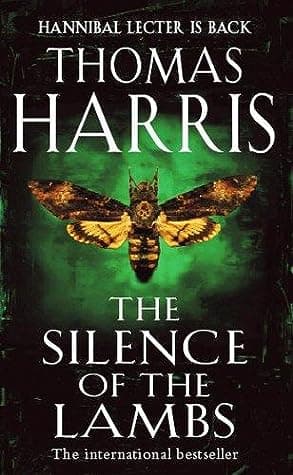
- The Silence of the Lambs
Thomas Harris
4.2 (464k) average on GoodreadsThrillerFeatures Hannibal Lecter and an FBI agent hunting a serial killer.
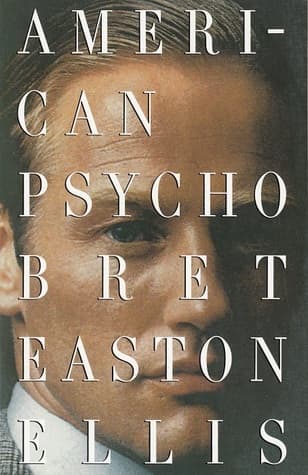
- American Psycho
Bret Easton Ellis
3.8 (242k) average on GoodreadsThrillerDelves into the mind of a disturbed killer with graphic detail and psychological depth.
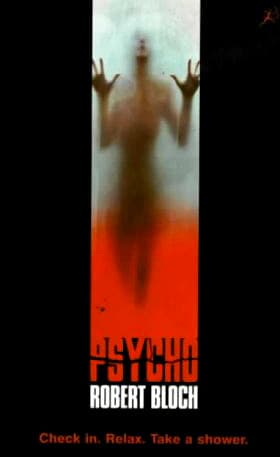
- Psycho
Robert Bloch
4.1 (55k) average on GoodreadsThrillerWhile Psycho is a foundational psychological horror, its focus is more on immediate shock and a singular, iconic twist. Red Dragon delves much deeper into the 'why' of the killer's pathology and the psychological burden on the profiler, offering a more sustained and intricate exploration of the criminal mind rather than just the act.
- Angels & Demons
Dan Brown
3.9 (2.7M) average on GoodreadsThrillerA Harvard symbologist races through Rome's ancient sites, deciphering cryptic clues to unmask the Illuminati and stop a vengeful plot to destroy the Vatican with a stolen antimatter weapon.
- Gone Girl
Gillian Flynn
4.1 (2.3M) average on GoodreadsThrillerA wife's sudden disappearance on her fifth anniversary reveals a web of lies and psychological warfare, exposing the secrets within a seemingly perfect marriage.
- The Girl on the Train
Paula Hawkins
3.9 (2.1M) average on GoodreadsThrillerA woman’s fascination with a seemingly perfect couple she watches from her daily train commute leads her into a dark investigation when she witnesses something that shatters their idyllic image.



Enjoyed the summary?
A summary gives you the shape of the book. The book itself has the detail, the examples and the voice.
Find Red Dragon on AmazonAs an Amazon Associate, BookBrief earns from qualifying purchases. How we're funded