

Synopsis
Covers the whole plot, including the ending.
- Difficulty
- Medium
- Pacing
- Fast
- Mood
- Gritty, Suspenseful, Tense, Realistic
- Read it if
- You enjoy gritty, realistic military thrillers with a resourceful protagonist and high stakes.
- Skip it if
- You prefer fantasy or character-driven dramas over action-packed plots and espionage.
Remote Control Plot Summary
Covers the whole plot, including the ending.
A Routine Tail Gone Wrong
Nick Stone, a former SAS trooper working for British Intelligence, is in Washington D.C. on what seems like a routine surveillance mission. His target is a known terrorist, but the operation quickly goes wrong. Following a lead, Stone arrives at a suburban house and finds the murdered bodies of an ex-SAS officer named Alistair Finch, his wife, and their son. The only survivor is Finch's seven-year-old daughter, Kelly. Stone realizes he has found something more sinister than a simple tail, takes Kelly, and flees the scene, becoming a fugitive from both the killers and the local police.
On the Run with Kelly
With Kelly, Stone begins a desperate escape across Washington D.C. He uses his training to stay hidden, constantly moving and changing disguises. Kelly, traumatized but resilient, gives crucial details about the attackers—their accents and the methodical nature of the killings. Stone realizes that Kelly is not just a witness but a target, and her survival is most important. He starts to suspect a deeper conspiracy, connecting the murdered ex-SAS officer to a past operation, and understands that he cannot trust official law enforcement.
The Ghost of Bravo Two Zero
As Stone investigates, he discovers that Alistair Finch was a member of the ill-fated Bravo Two Zero SAS patrol during the Gulf War, a mission known for its high casualties and controversy. Stone, having served in the SAS himself, immediately sees the importance of this. He suspects Finch's murder is not random but directly linked to this past operation, perhaps involving secrets or betrayals from that time. He begins to investigate other surviving members of the patrol, trying to understand what information Finch might have had that made him a target, and why the killers want to silence all witnesses, including Kelly.
A Treacherous Contact
Desperate for information and resources, Stone contacts an old, semi-retired intelligence contact. However, this meeting quickly turns into an ambush. Stone realizes he has been betrayed, and the conspirators extend further than he imagined, possibly reaching into the agencies he once trusted. He narrowly escapes with Kelly, confirming his belief that he is alone and must rely only on his skills and instincts. This betrayal also makes him question who he can truly trust, increasing his paranoia and isolation.
The Safe House and the Interrogation
Stone finds a temporary safe house, a secluded apartment, where he and Kelly can hide for a few days. During this time, he carefully and gently, but thoroughly, questions Kelly about the night of the murders. He uses his specialized training to get details from her child's memory, comparing her observations with his growing understanding of the plot. Kelly's descriptions of the killers' appearance, mannerisms, and the specific sounds she heard become crucial pieces, helping Stone build a clearer picture of the perpetrators and their motives.
Unmasking the Perpetrators
Through Kelly's testimony and his own investigation, Stone begins to identify the killers. To his shock, he discovers they are former members of the SAS, specifically individuals also connected to the Bravo Two Zero mission. Their motive, he learns, centers around a large sum of money allegedly stolen or diverted during the Gulf War, and Finch had recently found evidence that threatened to expose their secret. The killers are eliminating anyone who could link them to the stolen funds and the past betrayal.
The Hunt for the Truth
Armed with the identities of the killers and their motive, Stone changes from evading to actively pursuing. He realizes that the conspiracy is far-reaching and involves individuals both inside and outside the intelligence community. His hunt takes him across international borders, using his network of contacts and his skills in tracking and intelligence gathering. He is driven by loyalty to a fellow SAS comrade and a fierce protectiveness over Kelly, the innocent victim caught in a web of greed and betrayal from a past military operation.
Confrontation in the Wilderness
Stone tracks one of the main conspirators, a former SAS colleague named John, to a remote, isolated location, far from any cities. This setting gives Stone the tactical advantage he needs for a direct confrontation, minimizing damage and outside interference. The encounter is tense and brutal, a clash between former comrades now on opposite sides of a deadly secret. Stone uses all his combat skills and psychological cunning to corner John, demanding answers about the full extent of the conspiracy and the location of the stolen funds.
The Final Showdown
The trail leads Stone to the mastermind behind the Bravo Two Zero betrayal and the murders: another high-ranking former SAS officer who arranged the theft of funds and the cover-up. The confrontation is climactic, a brutal battle of wits and combat. Stone, despite being outnumbered and outmaneuvered at times, uses his fieldcraft and determination to overcome his adversaries. His main goal is to ensure Kelly's safety and bring the perpetrators to justice, even if it means operating outside the law.
Resolution and Aftermath
With the conspirators stopped and the truth revealed, Stone ensures Kelly is placed in a safe and loving environment, free from her past. He understands that his actions, though necessary, have further isolated him from society and official channels. While he has brought justice to Alistair Finch's family, the experience reinforces the harsh realities of his 'deniable operator' role. He is left to think about the moral complexities of his work and the lasting scars of his past, but with a renewed purpose to protect the innocent.
Principal Figures
Nick Stone
Protagonist
A former SAS operative turned deniable agent for British Intelligence.
Nick Stone is a highly skilled, resourceful, and ruthless individual, forged by years in the SAS. He possesses exceptional combat, surveillance, and survival skills, combined with a sharp analytical mind. Despite his tough exterior, he harbors a strong moral compass and a deep sense of loyalty, especially towards the innocent. He is pragmatic, preferring to work alone and outside the system when necessary, and is driven by a desire for justice, even if it means operating in the moral grey areas.
Relationships: Kelly (Protector and surrogate father figure); Alistair Finch (Former SAS comrade, whose death Stone seeks to avenge); British Intelligence (Employer, often a source of distrust and deniability)
Kelly
Supporting
A seven-year-old sole survivor of a brutal family murder.
Kelly is a seven-year-old girl who witnesses the horrific murder of her family. Despite her profound trauma, she displays remarkable resilience, intelligence, and observational skills. Her innocent perspective and fragmented memories are crucial to Stone's investigation. She quickly forms a bond of trust and dependency with Stone, seeing him as her protector in a terrifying world. Her vulnerability highlights the stakes of Stone's mission and provides a moral anchor for his actions.
Relationships: Nick Stone (Protected by Stone, forms a deep, trusting bond); Alistair Finch (father) (Loved father, whose death she witnessed)
Alistair Finch
Mentioned
An ex-SAS officer whose murder ignites the plot.
Alistair Finch is a former SAS officer and a member of the Bravo Two Zero patrol. His brutal murder, along with his family, is the catalyst for the entire story. While only appearing deceased, his past actions and the secrets he held are central to the conspiracy. He represents the innocent victim caught in a web of past betrayals and greed, and his fate serves as a warning of the dangers lurking for those who know too much about powerful secrets.
Relationships: Nick Stone (Former SAS comrade); Kelly (Father)
The Mastermind (Unnamed)
Antagonist
The high-ranking former SAS officer behind the Bravo Two Zero betrayal and subsequent murders.
This character is the ultimate antagonist, a former high-ranking SAS officer who orchestrated the theft of funds during the Gulf War and systematically eliminates anyone who threatens to expose him. He is cunning, ruthless, and highly intelligent, using his past military connections and knowledge to cover his tracks. His motivation is pure greed and the preservation of his illicit gains, making him a formidable and dangerous adversary for Stone.
Relationships: Nick Stone (Antagonist, former colleague); Alistair Finch (Victim of his conspiracy)
John (Conspirator)
Antagonist
A former SAS member involved in the conspiracy and murders.
John is one of the primary enforcers and co-conspirators in the murders. He is a former SAS colleague of Stone and Finch, now corrupted by greed and complicit in the cover-up. He is skilled in combat and ruthless in his pursuit of Kelly and Stone. He represents the betrayal within the elite military ranks, showcasing how even highly trained individuals can be led astray by illicit gains and a desire to maintain their secrets at any cost.
Relationships: Nick Stone (Former comrade, now adversary); The Mastermind (Subordinate in the conspiracy)
British Intelligence Handler (Unnamed)
Supporting
Stone's handler within British Intelligence, providing limited support and often operating with deniability.
This character represents the official link between Stone and the British government. They provide Stone with his initial missions and some resources, but often maintain a distance, reflecting the 'deniable operator' nature of Stone's role. While not overtly hostile, there's a constant undercurrent of manipulation and a willingness to sacrifice Stone if necessary, highlighting the cold, calculating nature of intelligence work and Stone's precarious position within it.
Relationships: Nick Stone (Employer/employee, often strained and distrustful)
Themes & Insights
Betrayal and Loyalty
The novel explores betrayal, especially within the close world of the SAS. Alistair Finch is murdered by former comrades, and Stone is betrayed by an old contact, showing how fragile trust can be. Conversely, Stone's loyalty to Finch's memory and his protectiveness of Kelly show the strength of these bonds, even in a world of deceit. The betrayal from the Bravo Two Zero mission's aftermath forms the core of the conspiracy, showing how past betrayals can have devastating, long-lasting consequences.
“Once a brother, always a brother. Until the money gets too big.”
The Price of War and Its Aftermath
The story links the current violence to the aftermath of the Gulf War and the Bravo Two Zero mission. It shows how the pressures, opportunities, and moral compromises of war can lead to corruption and long-term consequences for those involved. The stolen funds and the cover-up show that the 'battle' does not always end on the battlefield, but can continue for years, destroying lives far from the front lines. The psychological and moral toll on soldiers, even years later, is an important undertone.
“The sand gets everywhere, even years later. In your boots, in your mind, in your soul.”
Moral Ambiguity and Deniability
Nick Stone operates in a morally gray world. As a 'deniable operator,' his actions are often outside the law, and he must make difficult, often brutal, choices to reach his goals. The novel questions the line between justice and vengeance, and the ethics of operating without official oversight. Stone's methods are effective but ethically complex, forcing the reader to face the harsh realities of covert intelligence work where official agencies prefer to keep their hands clean while others do the dirty work. His isolation is a direct result of this deniability.
“There are no rules when you're off the books. Just consequences.”
The Vulnerability of Innocence
Kelly, the seven-year-old survivor, represents vulnerable innocence caught in an adult world of violence and corruption. Her presence raises the stakes for Stone, making his mission not just about revenge or justice, but about protecting a child who has already suffered trauma. Her fragility and need for protection highlight the senselessness of the violence and provide an emotional core to the thriller, reminding Stone and the reader of the human cost of these dark deeds.
“She was a small, fragile piece of glass in a world of hammers.”
Plot Devices & Literary Techniques
The MacGuffin (Stolen Funds/Evidence)
The hidden object or information that drives the plot.
The 'MacGuffin' in Remote Control is the evidence related to the stolen funds from the Gulf War, which Alistair Finch possessed. This information, rather than a physical object, is what the conspirators are desperate to retrieve or destroy, and what Stone seeks to uncover. It serves as the primary motivation for the antagonists' actions and the central mystery that Stone must unravel, propelling the narrative forward and giving a tangible goal to Stone's investigation.
Fish Out of Water
The protagonist is placed in an unfamiliar and challenging environment.
While Stone is highly competent, he finds himself in a 'fish out of water' scenario in Washington D.C. He is an ex-military operative, trained for combat zones, suddenly navigating the complexities of urban evasion, protecting a child, and dealing with a conspiracy that reaches into the civilian world and intelligence agencies. This device highlights his adaptability and resourcefulness, forcing him to rely on different skill sets than he might in a traditional military setting, and adds to the tension of his predicament.
The Child Witness
A vulnerable child holds crucial information, elevating the stakes.
Kelly, the seven-year-old survivor, functions as a crucial plot device. Her direct witnessing of the murders means she holds vital, albeit fragmented, information about the killers. Her vulnerability not only raises the emotional stakes for Stone, making his mission personal, but also provides a unique challenge in extracting reliable intelligence. Her presence forces Stone to adapt his methods, showcasing his humanity and providing a moral compass for his otherwise ruthless actions.
The Betrayed Mentor/Comrade
A trusted figure is murdered, fueling the protagonist's quest for justice.
Alistair Finch, Stone's former SAS comrade, serves as the betrayed mentor/comrade device. His brutal murder, and the subsequent discovery of his past connection to the Bravo Two Zero mission, deeply personalizes the conflict for Stone. This fuels Stone's determination to uncover the truth and avenge his fallen comrade, providing a strong emotional impetus for his relentless pursuit of the conspirators, beyond just his professional obligations.
Remote Control Quotes
“There are some things in life you just can't change. You have to accept them and move on.”
“The hardest part of being a soldier isn't the fighting, it's the waiting.”
“Every mission is a gamble. You just try to stack the odds in your favour as much as you can.”
“Trust is a luxury I can't afford. Not in my line of work.”
“Sometimes the most dangerous enemy is the one you can't see.”
“You learn to live with the ghosts. They never really leave you.”
“Information is power. And in this game, power means survival.”
“The line between right and wrong gets pretty blurry when you're fighting a war no one knows about.”
“Fear is a tool. You can let it control you, or you can use it.”
“You can never truly escape your past. It always finds a way to catch up.”
“In my world, there are no easy answers. Just harder questions.”
“It's not about being the toughest, it's about being the smartest. And the fastest.”
“Sometimes you have to break the rules to do what's right.”
“The silence can be louder than any explosion.”
Quiz
10 questions on the plot and the characters. Each answer comes with a short explanation.
Question 1
What is Nick Stone's profession at the beginning of 'Remote Control' after leaving the SAS?
- Private security consultant for a wealthy individual
- A freelance mercenary for hire
- A deniable operator for British Intelligence
- An instructor at a private military academy
Show answer
C. A deniable operator for British Intelligence After a botched mission, the Regiment no longer wants his services, but British Intelligence does, as a deniable operator.
Question 2
In what city does Nick Stone initially discover the bodies of an ex-SAS officer and his family?
- London, England
- Washington D.C., USA
- Paris, France
- Berlin, Germany
Show answer
B. Washington D.C., USA The synopsis explicitly states, 'In Washington DC, it's about to get dirtier still. On the apparently routine tail of two terrorists, he discovers the bodies of an ex-SAS officer and his family.'
Question 3
Who is the lone survivor of the bloodbath that Nick Stone finds?
- The ex-SAS officer's wife
- A seven-year-old girl
- The family's bodyguard
- The ex-SAS officer's teenage son
Show answer
B. A seven-year-old girl The synopsis states, 'Soon he's on the run with the lone survivor of the bloodbath - a seven year old girl.'
Question 4
What is the primary reason the seven-year-old girl is crucial to the mystery Nick Stone is trying to solve?
- She possesses a hidden package the killers are after.
- She can identify the killers.
- She knows the location of a secret safe house.
- She holds classified information given to her by her father.
Show answer
B. She can identify the killers. The synopsis highlights, 'And whilst she can identify the killers, only Stone can keep them at bay - and solve a mystery.'
Question 5
What phrase is used to describe the nature of Nick Stone's job for British Intelligence?
- High-stakes diplomatic liaison
- Sensitive information retrieval
- The dirtiest job in a very, very dirty world
- Elite counter-terrorism operations
Show answer
C. The dirtiest job in a very, very dirty world The text describes his new role: 'It's the dirtiest job in a very, very dirty world.'
Question 6
The genesis of the mystery takes Nick Stone back to what specific event?
- A cold war espionage mission
- The most notorious SAS mission in recent history
- A past personal vendetta
- An international arms deal gone wrong
Show answer
B. The most notorious SAS mission in recent history The synopsis states the mystery's genesis 'takes him back to the most notorious SAS mission in recent history.'
Question 7
What characteristic is NOT attributed to Nick Stone in the provided description?
- Tough
- Resourceful
- Naive
- Ruthless
Show answer
C. Naive The description characterizes Nick Stone as 'Tough, resourceful, ruthless'. Naive is not listed.
Question 8
Why did the Ministry of Defence have to vet Andy McNab's Nick Stone thrillers?
- To ensure they didn't reveal future operational plans.
- Because their landscape is so compellingly close to the truth.
- To confirm the historical accuracy of all events portrayed.
- To classify them as non-fiction for educational purposes.
Show answer
B. Because their landscape is so compellingly close to the truth. The text states they 'had to be vetted by the Ministry of Defence, and could only be published as fiction... whose landscape is so compellingly close to the truth.'
Question 9
What is the implication of Nick Stone being a 'deniable operator' for British Intelligence?
- His actions are officially sanctioned and supported by the government.
- He is given a high level of diplomatic immunity.
- His operations can be disavowed by the government if compromised.
- He primarily gathers intelligence without engaging in direct action.
Show answer
C. His operations can be disavowed by the government if compromised. A 'deniable operator' implies that if their actions are discovered or go wrong, the government can deny any knowledge or involvement, protecting its own reputation.
Question 10
What makes 'Remote Control' significant within the Nick Stone thriller series?
- It is the only book where Nick Stone works for British Intelligence.
- It features a unique narrative structure not repeated in later books.
- It is the first of Andy McNab's blistering Nick Stone thrillers.
- It is the only book to be based entirely on a true story.
Show answer
C. It is the first of Andy McNab's blistering Nick Stone thrillers. The text explicitly states, 'Remote Control is the first of Andy McNab's blistering Nick Stone thrillers.'
Remote Control FAQ
What is the primary premise of 'Remote Control' and Nick Stone's initial situation?
Nick Stone, a former SAS trooper, finds himself discharged after a botched mission. His unique skills are then leveraged by British Intelligence as a 'deniable operator,' meaning he undertakes clandestine missions where official government involvement cannot be acknowledged, setting the stage for his dangerous new career.
How does Stone's mission in Washington D.C. escalate from routine surveillance to a fight for survival?
Initially tasked with tailing two suspected terrorists in Washington D.C., Stone stumbles upon the brutal murder of an ex-SAS officer and his family. This discovery quickly spirals into a high-stakes pursuit when he finds himself protecting the lone survivor, a seven-year-old girl named Kelly, who witnessed the massacre.
Who is Kelly and what crucial role does she play in the unfolding mystery?
Kelly is the seven-year-old daughter of the murdered ex-SAS officer and the sole survivor of the family's brutal assassination. Her ability to identify the killers makes her an invaluable witness, but also a prime target, forcing Nick Stone into a protective role while he unravels the larger conspiracy.
What historical SAS mission is hinted at as having a connection to the present-day events?
The narrative strongly suggests a connection to the infamous SAS mission during the Gulf War, specifically referring to events from 'Bravo Two Zero.' This historical link provides a deeply personal and dangerous genesis for the conspiracy Stone uncovers, intertwining past covert operations with current threats.
What is the ultimate goal of the antagonists Nick Stone is pursuing?
The antagonists, a rogue faction connected to past SAS operations and potentially international terrorism, are attempting to retrieve or eliminate evidence linked to a botched mission from the Gulf War. Their goal is to prevent the truth about their past actions, and potentially illicit dealings, from being exposed, leading them to systematically eliminate anyone who might know too much.
What is the significance of the 'Bravo Two Zero' connection beyond just a historical reference?
The 'Bravo Two Zero' connection isn't just a nod to McNab's previous work; it establishes a deep-seated betrayal and a network of former SAS personnel who have gone rogue. It highlights how past operations, particularly those involving extreme duress and difficult decisions, can create long-lasting grievances and dangerous factions within the intelligence community.
How does the book subtly introduce the concept of 'deniable operations' and its ethical ambiguities?
The book introduces 'deniable operations' by showing Stone's recruitment after his discharge, emphasizing that his actions cannot be officially sanctioned or supported. This immediately places him in a moral grey area where he must achieve objectives without official backing, highlighting the ruthless and often unethical nature of black ops.
Are there any specific objects or pieces of information that serve as key plot devices for Stone to uncover the truth?
Yes, Stone often relies on encrypted files, old military contacts, and the fragmented memories or possessions of the victims to piece together the puzzle. A specific data chip or a hidden journal entry from the murdered ex-SAS officer often serves as the crucial link, revealing the true depth of the conspiracy and the identities of the rogue agents.
How does Nick Stone's past SAS experience manifest in his current role as a 'deniable operator'?
Stone's SAS training is evident in his exceptional combat skills, tactical thinking, and ability to operate independently under extreme pressure. He demonstrates a ruthless efficiency, a deep understanding of surveillance and counter-surveillance, and an unwavering determination to complete his mission, even when facing overwhelming odds and minimal support.
What psychological toll does Stone's 'deniable' status and constant danger take on him?
Stone's deniable status isolates him, forcing him to rely solely on his own judgment and skills, which can lead to paranoia and a constant state of vigilance. The constant threat to his life and the lives of those he protects, like Kelly, hardens him emotionally, often making him appear cold and detached while internally battling the moral ambiguities of his work.
How does the relationship between Nick Stone and Kelly evolve and impact Stone's character?
Initially, Stone sees Kelly as a liability and a mission objective, but as they spend more time together, a paternal bond slowly forms. Her vulnerability and innocence challenge his hardened exterior, forcing him to confront his own humanity and providing him with a stronger personal motivation beyond just completing the mission.
In what ways does Stone grapple with the concept of loyalty, both to his past regiment and his current employers?
Stone constantly grapples with loyalty; he feels a deep-seated loyalty to the SAS brotherhood, which is challenged by the betrayal of former comrades. Simultaneously, his loyalty to British Intelligence is transactional and pragmatic, based on necessity rather than trust, forcing him to navigate a moral landscape where allegiances are fluid and often compromised.
Is 'Remote Control' a commentary on the ethics of intelligence agencies and 'black ops'?
Yes, the novel can be interpreted as a commentary on the murky ethics of intelligence agencies and 'black ops.' By placing Stone in situations where he is unsupported and forced to commit morally ambiguous acts, the book highlights the deniability, ruthlessness, and often corrupting influence of such operations, questioning the line between national security and unlawful actions.
How does the book use its 'close to the truth' realism to enhance the thriller aspect?
The book uses its 'close to the truth' realism, vetted by the Ministry of Defence, to ground the thriller in a believable, gritty reality. This realism enhances the tension by making the dangers, the operational procedures, and the psychological pressures faced by Stone feel authentic, drawing the reader deeper into the dangerous world of covert intelligence.
Does the ending of 'Remote Control' offer a clear resolution, or does it leave room for future installments and ongoing moral dilemmas?
While 'Remote Control' resolves the immediate mystery of the ex-SAS officer's murder and Kelly's safety, it deliberately leaves room for future installments. Stone's 'deniable operator' status and the lingering implications of the rogue network suggest that his moral dilemmas and dangerous missions are far from over, setting up the foundation for the series.
What is the author's message regarding the long-term consequences of highly sensitive military operations?
The author's message suggests that highly sensitive military operations, particularly those with a covert nature, can have devastating long-term consequences, creating networks of disillusioned or rogue individuals. These operations can lead to betrayals, cover-ups, and a cycle of violence that extends far beyond the initial conflict, impacting lives for decades.
How does the book portray the bureaucracy and infighting within intelligence agencies?
The book portrays bureaucracy and infighting by showing Stone receiving minimal and often contradictory support from his handlers, who are more concerned with political fallout and maintaining plausible deniability than with his safety. This internal conflict highlights the complex, often frustrating dynamics within intelligence agencies, where personal agendas can compromise operational effectiveness.
What role does the setting of Washington D.C. play in the narrative?
Washington D.C. serves as a crucial backdrop, representing not only the center of American power but also a nexus for international intrigue and covert operations. Its juxtaposition of iconic public spaces with hidden, dangerous underbellies reinforces the novel's themes of conspiracy and the unseen forces at play within the world's political capitals.
About the author

Andy McNab is a former SAS soldier turned bestselling author, renowned for his thrilling action novels. His works, including 'Liberation Day,' 'Remote Control,' and 'Traitor,' draw heavily on his real-life experiences in special forces operations. McNab's writing is characterized by its gritty realism and fast-paced plots, making him a prominent figure in the thriller genre.
Similar books
- Patriot Games
Tom Clancy
4.1 (188k) average on GoodreadsThrillerInvolves former military personnel, international intrigue, and a family in danger.
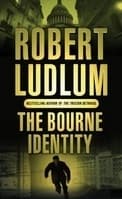
- The Bourne Identity
Robert Ludlum
4.0 (397k) average on GoodreadsThrillerWhile both feature highly capable protagonists in high-stakes situations, Ludlum's novel delves much deeper into the psychological trauma and identity crisis of its main character, Jason Bourne, offering a more introspective and complex character study. McNab's focus is more on the procedural and tactical aspects of survival.
- Angels & Demons
Dan Brown
3.9 (2.7M) average on GoodreadsThrillerA Harvard symbologist races through Rome's ancient sites, deciphering cryptic clues to unmask the Illuminati and stop a vengeful plot to destroy the Vatican with a stolen antimatter weapon.
- Gone Girl
Gillian Flynn
4.1 (2.3M) average on GoodreadsThrillerA wife's sudden disappearance on her fifth anniversary reveals a web of lies and psychological warfare, exposing the secrets within a seemingly perfect marriage.
- The Girl on the Train
Paula Hawkins
3.9 (2.1M) average on GoodreadsThrillerA woman’s fascination with a seemingly perfect couple she watches from her daily train commute leads her into a dark investigation when she witnesses something that shatters their idyllic image.
- The Da Vinci Code
Dan Brown
3.9 (1.9M) average on GoodreadsThrillerA symbologist and a cryptologist race through European landmarks, deciphering ancient codes and uncovering a conspiracy that could rewrite the foundations of Christianity.





Enjoyed the summary?
A summary gives you the shape of the book. The book itself has the detail, the examples and the voice.
Find Remote Control on AmazonAs an Amazon Associate, BookBrief earns from qualifying purchases. How we're funded