
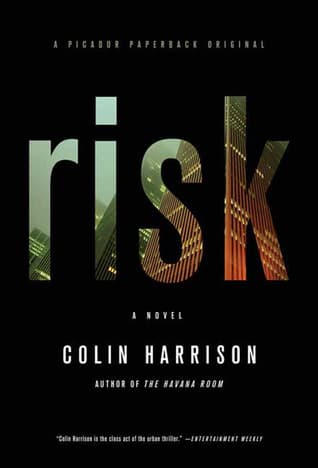
Synopsis
Covers the whole plot, including the ending.
- Difficulty
- Medium
- Pacing
- Moderate
- Mood
- Suspenseful, Atmospheric, Gritty, Intriguing
- Read it if
- You enjoy intricate, character-driven mysteries set in a vividly drawn, gritty urban landscape, with a focus on uncovering hidden truths.
- Skip it if
- You prefer fast-paced, action-heavy thrillers over more deliberate, investigative narratives.
Risk Plot Summary
Covers the whole plot, including the ending.
The Peculiar Assignment
George Young, a meticulous lawyer for the firm Corbett & Young, is called by co-founder Mrs. Corbett. Frail and terminally ill, Mrs. Corbett asks George to find out what really happened to her son, Roger Corbett, who supposedly died by suicide two years earlier. Despite the official ruling, she believes Roger was murdered and wants George to find the truth before she dies, offering a large sum for his help. George, initially hesitant to go beyond his legal role, agrees out of duty and growing curiosity.
Initial Inquiries and Eliska's Introduction
George starts by reviewing police reports and Roger's belongings, finding little beyond the official suicide ruling. His first real lead comes from Mrs. Corbett's vague mention of a 'foreign girl.' Using Roger's financial records, George identifies Eliska, a Czech hand model, as Roger's mistress. He finds her in a modest apartment. Their first meeting is tense. Eliska is guarded and avoids questions, giving only small details about her relationship with Roger, portraying him as troubled but generous. George feels she is holding back crucial information, which increases his suspicion.
The Box of Ornaments
During a later, more relaxed meeting, Eliska reveals a key detail: Roger had given her a small, carved wooden box filled with unusual Christmas ornaments shortly before he died. He told her to keep it safe and not open it, implying its contents were important. Eliska, despite her initial hesitation, shows George the box. The ornaments seem harmless, but the secrecy around them interests George. He suspects the box, or what it represents, is key to Roger's death, and Eliska's careful handling of it suggests she understands its importance, even if she doesn't fully grasp its dangers.
Diving into Roger's Past
George looks deeper into Roger's life, talking to former colleagues and associates. He learns that Roger, despite his family's wealth, liked risky ventures and was involved in a shadowy world outside corporate offices. George discovers Roger's connection to a network dealing in stolen art and antiquities, often involving international travel and illegal transactions. This information paints a clearer picture of Roger: not just a troubled heir, but a man deeply involved in dangerous, illegal activities. The Christmas ornaments now seem less like trinkets and more like potential clues or coded messages related to this illicit trade.
Eliska's Complicity and Fear
As George continues to question Eliska, her tough exterior begins to break. He realizes she knew more about Roger's illegal activities than she first said. She admits Roger often used her to carry small, seemingly innocent packages, and that she knew about his dealings with unsavory people. Her fear is clear, suggesting she understands the real danger linked to the box of ornaments and Roger's past. George sees that Eliska is not just a grieving mistress but a potential target, caught in the dangerous aftermath of Roger's life and death, making him more protective of her as his investigation continues.
The Hidden Compartment
George re-examines the box of ornaments closely. He notices a slight flaw in the craftsmanship and, after careful handling, finds a hidden compartment. Inside, he finds not more ornaments, but a microfiche containing encrypted financial ledgers and coded messages. This discovery confirms his suspicions: the box was a dead drop, and the ornaments were a clever disguise. The microfiche details a complex web of money laundering and illegal art transactions, implicating powerful figures in the art world and possibly within Corbett & Young, suggesting Roger's death was not a simple suicide.
Unmasking the Conspiracy
George works hard to decipher the microfiche. With Eliska's help in translating some of Roger's cryptic notes, they piece together the full scope of the operation. The ledgers show that Roger was not just a participant but was trying to expose a major art smuggling ring, one that reached into the highest levels of New York society. Shockingly, the evidence points to Henderson, a senior partner at Corbett & Young, as the mastermind, using the firm's legitimate operations as a cover. Roger's 'suicide' was a planned murder to silence him before he could expose Henderson.
Henderson's Confrontation
With clear evidence, George confronts Henderson. Henderson, at first pretending ignorance, quickly drops his act, showing his ruthless nature. He admits to arranging Roger's murder, fearing exposure. Henderson tries to intimidate George into handing over the microfiche, but George refuses. The confrontation escalates, and Henderson, desperate to protect his empire, tries to kill George. A tense struggle follows, with George barely escaping Henderson's grasp, now a target himself. He realizes the full extent of the danger he and Eliska are in, understanding that Henderson will stop at nothing to get the evidence back.
The Chase and Resolution
George and Eliska, now united against a common enemy, go on the run, seeking a safe way to reveal the evidence. Henderson's operatives pursue them through Manhattan's streets. Using George's legal skill and Eliska's street smarts, they manage to evade their pursuers. George contacts a trusted colleague, an old friend from the District Attorney's office, and arranges a secure handover of the microfiche. With the evidence finally in the hands of law enforcement, Henderson is arrested, and the art smuggling ring is broken up. George ensures Eliska's safety and privacy.
Aftermath and Reflection
Mrs. Corbett, told the truth and about Henderson's arrest, finds peace in her final days, grateful to George for fulfilling her last wish. Roger's name is cleared, and the firm, though shaken, begins to recover. George, no longer just a meticulous insurance lawyer, has changed greatly from the experience. He has faced danger, solved a complex conspiracy, and protected Eliska. He thinks about the fine line between risk and reward, honesty and corruption, and the unexpected depths of human character he met. His view of his career and life has shifted, leaving him with a deeper understanding of justice.
Risk Characters
George Young
Protagonist
A meticulous, honest insurance lawyer thrust into a dangerous murder investigation.
George Young is a diligent and somewhat unassuming lawyer at Corbett & Young. He prides himself on his meticulous attention to detail and his adherence to legal procedures. Initially, he is a man of routine, comfortable within the structured world of insurance claims. He is morally upright and possesses a strong sense of duty, which compels him to take on Mrs. Corbett's unusual request. He is not a natural detective but relies on his legal training and keen observational skills to piece together clues. His journey forces him out of his comfort zone, revealing an unexpected capacity for courage and resourcefulness.
Relationships: Mrs. Corbett (Client; employer; catalyst for his investigation); Eliska (Informant; ally; romantic interest); Roger Corbett (Deceased subject of his investigation)
Eliska
Supporting
Roger Corbett's enigmatic Czech mistress, a hand model with secrets and hidden strength.
Eliska is a beautiful and guarded Czech hand model who was Roger Corbett's mistress. She is initially portrayed as evasive and somewhat opportunistic, navigating the fringes of New York's high society. Despite her vulnerability as an immigrant in a foreign city, she possesses a remarkable resilience and street smarts. She is deeply entwined in Roger's secrets, having been entrusted with the crucial box of ornaments. Her fear is genuine, but beneath it lies a strong will and a surprising capacity for loyalty once she trusts George. She is a survivor, capable of adapting to dangerous circumstances.
Relationships: Roger Corbett (Lover; source of her entanglement in the plot); George Young (Investigator; protector; eventual romantic interest)
Mrs. Corbett
Supporting
The firm's dying co-founder, who initiates the investigation into her son's death.
Mrs. Corbett is the wealthy and eccentric co-founder of Corbett & Young. Terminally ill and facing her own mortality, her primary motivation is to uncover the truth behind her son Roger's suspicious death, which the police ruled a suicide. She is a woman of considerable influence and determination, using her resources to hire George and pursue her quest for closure. Though physically frail, her mind remains sharp, and her intuition about Roger's murder proves to be correct. She represents the grieving parent, desperate for justice, and acts as the initial catalyst for the entire plot.
Relationships: Roger Corbett (Deceased son); George Young (Employee; trusted investigator)
Roger Corbett
Mentioned
The deceased son whose mysterious death is the central mystery of the novel.
Roger Corbett is the deceased son of Mrs. Corbett, whose supposed suicide two years prior to the story's opening is the central mystery. Although never seen alive in the narrative, his character is revealed through George's investigation and the memories of those who knew him. He is depicted as a complex individual – privileged yet restless, intelligent but drawn to illicit ventures. He was involved in a high-stakes art smuggling operation but, at some point, decided to expose the network. His actions, both criminal and ultimately heroic, are the driving force behind the plot.
Relationships: Mrs. Corbett (Mother); Eliska (Mistress); Henderson (Business associate; murderer)
Henderson
Antagonist
A ruthless senior partner at Corbett & Young, secretly the mastermind of an art smuggling ring.
Henderson is a senior partner at Corbett & Young, outwardly a respected figure within the legal and business community. Beneath his polished exterior, however, lies a cold and calculating criminal mastermind. He uses his position within the firm to front a vast international art smuggling and money laundering operation. He is ruthless, intelligent, and utterly devoid of moral scruples, willing to commit murder to protect his illicit empire. He represents the insidious corruption that can exist within seemingly legitimate institutions, making him a formidable and dangerous adversary for George.
Relationships: George Young (Colleague; adversary); Roger Corbett (Victim; former associate)
Risk Themes
The Nature of Risk
The novel explores various forms of risk: the financial risks of illegal ventures, the personal risks taken to find truth, and the risks in human relationships. Roger Corbett's involvement in art smuggling shows the appeal and danger of high-stakes crime. George Young takes big personal and professional risks by investigating a murder, putting him against powerful figures. Eliska's life as an immigrant and her involvement with Roger also represent constant personal risk. The title itself highlights how risk is always present in each character's life and the choices they make.
“Risk was everywhere, in every decision, every secret, every breath taken in the city.”
Corruption and Deception
Corruption is a main theme, appearing in the illegal art smuggling ring and the moral decay of characters like Henderson, who uses a respected law firm to cover criminal activities. Deception is woven throughout the story, from Roger's double life to Eliska's initial evasiveness and Henderson's elaborate cover-up. George's journey is an unraveling of layers of lies and hidden motives. The novel suggests that corruption can thrive even in seemingly honest institutions, hidden beneath a respectable appearance, challenging the protagonist's initial view of the world.
“The city was a monument to ambition, and where ambition thrived, so did its shadows.”
Justice and Truth
At its core, the novel is a search for justice and truth, driven by Mrs. Corbett's dying wish. George Young, initially a lawyer focused on facts within a legal framework, must confront a reality where official truths are often false. His pursuit of Roger's killer is a moral duty, going beyond his professional tasks. The discovery of the microfiche and the exposure of Henderson's crimes show truth overcoming deception and the eventual, though hard-won, achievement of justice, bringing closure to Mrs. Corbett and exposing a dangerous criminal.
“Some truths refused to stay buried, no matter how deep the grave.”
Identity and Transformation
Characters in 'Risk' change significantly or deal with multiple identities. Roger Corbett lived a double life, one as a wealthy heir and another as a participant in a criminal underworld. Eliska, first seen as a simple mistress, shows layers of resilience and resourcefulness. Most notably, George Young changes from a meticulous, risk-averse lawyer to an amateur detective capable of courage and decisive action. His journey forces him to redefine himself and his understanding of his own abilities, leaving him fundamentally changed by the dangerous events he experiences.
“He had walked into a world he never knew existed, and in doing so, had become someone he never thought he could be.”
Plot Devices & Literary Techniques
The Mysterious Object (Box of Ornaments)
A seemingly innocuous box of Christmas ornaments that conceals vital evidence.
The box of Christmas ornaments acts as a classic MacGuffin, driving much of the plot's early mystery. Initially, its significance is unclear, but its secrecy and Roger's instructions to Eliska immediately establish it as important. As the story progresses, it's revealed to contain a hidden compartment with crucial evidence (the microfiche), transforming it from a mere curiosity into the central piece of the puzzle. It serves as both a literal and symbolic key to unlocking the truth behind Roger's death and the larger criminal conspiracy.
The Dying Request
Mrs. Corbett's terminal illness and her last wish to uncover the truth about her son's death.
Mrs. Corbett's imminent death creates a strong sense of urgency and moral imperative for George's investigation. Her request is more than a legal assignment; it's a personal plea that compels George to go beyond his usual professional boundaries. This device not only kickstarts the plot but also adds emotional depth, framing the entire investigation as a race against time and a final act of maternal love and justice. It motivates George and gives his actions a higher purpose than just solving a case.
The Double Life
Roger Corbett's secret involvement in an art smuggling ring, hidden from his family and firm.
Roger Corbett's double life as a privileged heir and a participant in a criminal enterprise is a crucial plot device. It creates layers of deception and mystery, making his death initially appear as a suicide, while the truth is far more complex. This device allows for the slow reveal of his true activities and connections, gradually deepening the conspiracy. It also highlights the theme of corruption lurking beneath a respectable facade and provides a compelling reason for his murder, as his two worlds inevitably collided.
Risk Quotes
“The city was a beast, and he was just one more morsel in its maw.”
“Every secret had a price, and sometimes the currency was more than just money.”
“He learned that the most dangerous lies were the ones you told yourself.”
“The past wasn't dead; it was just waiting for the right moment to ambush you.”
“Fear was a kind of currency, and the powerful knew how to spend it.”
“In a city of eight million stories, some were meant to stay buried.”
“The line between ambition and obsession was often invisible until it was too late.”
“He felt like a man walking a tightrope, with the entire world watching and waiting for him to fall.”
“Money didn't buy happiness, but it certainly bought options, and options were power.”
“The silence in the room was heavier than any spoken word, thick with unspoken accusations and dread.”
“Justice was a luxury, and not everyone could afford it.”
“He understood then that sometimes the only way out was further in.”
“The truth was a slippery thing, constantly changing shape depending on who was holding it.”
“Every choice was a gamble, and the stakes kept getting higher.”
Quiz
10 questions on the plot and the characters. Each answer comes with a short explanation.
Question 1
What is George Young's primary profession at the start of the novel?
- Private Investigator
- Criminal Defense Attorney
- Insurance Firm Lawyer
- Financial Auditor
Show answer
C. Insurance Firm Lawyer George Young is described as an attorney for a top insurance firm, whose job is to pin down suspicious claims.
Question 2
Who hires George Young to investigate her son's death?
- Eliska, Roger's mistress
- Mrs. Corbett, wife of the firm's founder
- Roger Corbett's business partner
- A police detective assigned to the cold case
Show answer
B. Mrs. Corbett, wife of the firm's founder Mrs. Corbett, the rich, eccentric wife of the firm's founder, puts George on the assignment to investigate her son Roger's death.
Question 3
What is Eliska's profession?
- An art dealer
- A fashion designer
- A Czech hand model
- A private chef
Show answer
C. A Czech hand model Eliska is explicitly identified as a cagy Czech hand model.
Question 4
What specific item is mentioned as playing a part in the mystery, alongside the lawyer and hand model?
- A stolen painting
- A box of mysterious Christmas ornaments
- An antique watch
- A rare stamp collection
Show answer
B. A box of mysterious Christmas ornaments The synopsis specifically mentions 'a box of mysterious Christmas ornaments' as playing a part in the mystery.
Question 5
What is Mrs. Corbett's primary motivation for wanting to know the truth about her son's death?
- She suspects insurance fraud.
- She wants to clear Roger's name.
- She only has a few months to live and this is her one desire.
- She is trying to locate a hidden inheritance.
Show answer
C. She only has a few months to live and this is her one desire. The synopsis states that Mrs. Corbett, with only a few months to live, has the one desire to know the true circumstance of her son Roger's violent death.
Question 6
What is George Young's initial perception of his own skills in detective work?
- He considers himself an expert detective.
- He never thought of himself as a detective.
- He believes his legal skills directly translate to detective work.
- He is reluctant but confident in his abilities.
Show answer
B. He never thought of himself as a detective. The text states, 'George Young never thought of himself as a detective, but that's pretty much his vocation'.
Question 7
What is the implied relationship between Eliska's motives and Roger's death?
- Eliska was a witness to his death and is now in hiding.
- Eliska's romantic involvement was the sole cause of his death.
- Eliska's motives for being with Roger may have led to his death.
- Eliska is trying to solve his murder herself.
Show answer
C. Eliska's motives for being with Roger may have led to his death. The synopsis suggests that Eliska's 'motives for latching on to Mrs. Corbett's son may have gotten him killed,' implying a suspicious link.
Question 8
What is the setting for the novel 'Risk'?
- A small, quiet suburban town
- A remote island estate
- A brilliantly-drawn Manhattan
- Various European cities
Show answer
C. A brilliantly-drawn Manhattan The book is described as being 'Set against a brilliantly-drawn Manhattan, at once volatile and vivid'.
Question 9
What kind of death did Mrs. Corbett's son, Roger, experience?
- A sudden illness
- A tragic accident
- A violent death
- A suicide
Show answer
C. A violent death Mrs. Corbett's desire is to know the true circumstance of her son Roger's 'violent death'.
Question 10
Considering George Young's initial role and the nature of the mystery, what thematic element is most central to the narrative?
- The pursuit of corporate dominance.
- The blurred lines between legal investigation and personal detective work.
- The challenges of cross-cultural relationships.
- The impact of terminal illness on family dynamics.
Show answer
B. The blurred lines between legal investigation and personal detective work. George, an insurance lawyer who 'never thought of himself as a detective,' is thrust into a personal murder investigation, highlighting the theme of his profession blurring into private detective work.
Risk FAQ
What is the central mystery George Young is tasked with solving?
George Young, an attorney for a top insurance firm, is assigned by the dying Mrs. Corbett to investigate the true circumstances surrounding her son Roger Corbett's violent death. Mrs. Corbett believes there's more to Roger's demise than what was initially reported and wants closure before she passes.
Who is Eliska and what is her initial connection to Roger Corbett?
Eliska is a cagy Czech hand model who was Roger Corbett's mistress. George's investigation quickly points to her as a key figure in Roger's life leading up to his death, making her motives and actions a central focus of the mystery.
What role do the 'mysterious Christmas ornaments' play in the plot?
The mysterious Christmas ornaments are a crucial plot device, initially appearing as innocuous objects but soon revealing themselves to be a conduit for hidden information or valuables. They are linked to Roger's secret dealings and become a significant clue for George as he unravels the mystery.
How does George Young's profession as an insurance attorney prepare him for this unusual investigation?
George's job as an insurance attorney involves pinning down suspicious claims, which requires meticulous attention to detail, interviewing skills, and an ability to discern truth from deception. These skills are directly transferable to his private investigation into Roger Corbett's death, allowing him to navigate the intricate web of clues and unreliable testimonies.
What is the primary setting of the novel and how does it influence the atmosphere?
The primary setting is a brilliantly-drawn Manhattan, which is depicted as both volatile and vivid. This urban landscape influences the atmosphere by providing a backdrop of constant motion, hidden corners, and diverse characters, reflecting the complexity and moral ambiguities of the mystery George is trying to solve.
Are there any subtle clues about Eliska's true intentions early in the narrative?
Early in the narrative, Eliska's caginess and her financial entanglement with Roger Corbett hint at her potentially mercenary motives. Her guarded demeanor and carefully constructed stories suggest a deeper agenda beyond a simple romantic relationship, which George slowly uncovers.
What is the significance of Mrs. Corbett's impending death in motivating George's investigation?
Mrs. Corbett's terminal illness creates an urgent deadline for George's investigation, intensifying the stakes and pushing him to work quickly. Her desire for truth and closure acts as a moral imperative for George, transforming a mere assignment into a deeply personal quest for justice.
How do the 'Christmas ornaments' evolve from a simple object to a critical piece of evidence?
Initially, the Christmas ornaments seem like sentimental trinkets, perhaps a quirky detail of Roger's life. However, George discovers they are not merely decorative but conceal vital documents or illicit goods, transforming them into a central, physical link to Roger's secretive activities and the true nature of his death.
Does George Young's personal life intersect with his professional investigation in unexpected ways?
Yes, George's personal life subtly intertwines with his investigation as he grapples with ethical dilemmas and the dangerous implications of his findings. The moral ambiguities he encounters in Roger's world begin to challenge his own sense of integrity and safety, blurring the lines between his detached professional role and his personal involvement.
How does George Young's initial skepticism or reluctance evolve as he delves deeper into the case?
Initially, George approaches the case with a professional, somewhat detached skepticism, viewing it as another suspicious claim. However, as he uncovers more shocking details and faces increasing danger, his reluctance gives way to a determined resolve, driven by a growing sense of responsibility and a desire for truth.
What psychological vulnerabilities does Mrs. Corbett display, and how are they exploited?
Mrs. Corbett's primary vulnerability is her grief and her desperate need for closure regarding Roger's death, exacerbated by her own terminal illness. This makes her susceptible to manipulation, as those with knowledge of Roger's secrets might try to exploit her desire for truth for their own gain.
Discuss the psychological impact of living in a 'volatile and vivid' Manhattan on the characters.
The volatile and vivid Manhattan setting fosters a sense of anonymity and constant pressure, influencing characters to be guarded and resourceful. It can amplify feelings of isolation or paranoia, while also providing opportunities for reinvention or escape, shaping their psychological resilience and moral choices.
How does Eliska's character embody themes of survival and moral ambiguity?
Eliska embodies themes of survival through her resourcefulness and ability to adapt to dangerous situations, using her charm and intelligence to navigate a perilous world. Her actions often blur ethical lines, highlighting the moral ambiguities inherent in her pursuit of security and self-preservation.
What does Roger Corbett's violent death ultimately reveal about the darker aspects of the city's elite?
Roger Corbett's violent death ultimately peels back the veneer of respectability, revealing the corruption, illicit dealings, and moral decay hidden beneath the surface of Manhattan's elite. It exposes how power, wealth, and privilege can enable dangerous behaviors and create a culture of impunity.
Is 'Risk' primarily a whodunit, or does it explore broader themes about truth and deception?
'Risk' transcends a simple whodunit, delving deeply into broader themes of truth and deception. While solving Roger's murder is central, the novel more significantly examines how easily truth can be obscured, how individuals manipulate narratives, and the lengths people go to protect their secrets.
How does the title 'Risk' reflect the overarching message or character journeys in the novel?
The title 'Risk' profoundly reflects the character journeys, as George, Eliska, and even Mrs. Corbett take significant personal and professional risks. It encapsulates the dangers inherent in uncovering uncomfortable truths, the perils of illicit dealings, and the emotional vulnerability involved in seeking justice or survival.
Could George Young be considered an anti-hero or a reluctant hero by the end of the novel?
George Young leans more towards a reluctant hero. He doesn't seek out danger or glory but is drawn into a morally complex world by duty and a burgeoning sense of justice. While not without flaws, his ultimate commitment to uncovering the truth, despite personal risk, solidifies his heroic, albeit unwilling, status.
What is the novel's stance on justice, particularly in a corrupt environment like the one depicted?
The novel suggests that justice in a corrupt environment is often elusive and hard-won, not always aligning with legal definitions. It implies that while formal justice may be compromised, there can be a form of moral or personal justice achieved through exposure of truth, even if the consequences are messy and imperfect.
How does the ending of 'Risk' challenge conventional thriller resolutions?
The ending of 'Risk' likely challenges conventional thriller resolutions by perhaps not providing a clean, fully satisfying wrap-up where all villains are punished and all questions answered neatly. Instead, it might leave some ambiguities, reflecting the real-world complexities where justice is often partial and consequences are far-reaching.
About the author

Colin Harrison is an American author known for his gritty, noir-infused crime fiction. His novel "Risk" was a finalist for the Edgar Award for Best Paperback Original, showcasing his talent for complex plots and morally ambiguous characters. Harrison's writing often explores the dark underbelly of New York City, earning him a reputation as a master of suspense.
Similar books
- The Lincoln Lawyer
Michael Connelly
4.2 (193k) average on GoodreadsThrillerFeatures a lawyer protagonist uncovering a complex criminal plot.
- Mystic River
Dennis Lehane
4.2 (128k) average on GoodreadsThrillerA dark, character-driven mystery about past secrets resurfacing in a grim setting.
- Fatherland
Robert Harris
4.0 (37k) average on GoodreadsThrillerRisk is an engaging thriller but lacks the profound historical and moral questions explored in Fatherland. While Harrison's corporate espionage is compelling, Harris uses his thriller framework to delve into deeper, more philosophical territory, leaving a more lasting intellectual impression.
- The Kill Artist
Daniel Silva
4.0 (58k) average on GoodreadsThrillerWhile Risk offers a well-crafted conspiracy, it doesn't possess the intricate, multi-layered plotting or the global geopolitical resonance often found in Daniel Silva's Gabriel Allon series. Silva's novels frequently involve higher stakes and more complex international networks, making Risk feel somewhat more localized in comparison.
- Angels & Demons
Dan Brown
3.9 (2.7M) average on GoodreadsThrillerA Harvard symbologist races through Rome's ancient sites, deciphering cryptic clues to unmask the Illuminati and stop a vengeful plot to destroy the Vatican with a stolen antimatter weapon.
- Gone Girl
Gillian Flynn
4.1 (2.3M) average on GoodreadsThrillerA wife's sudden disappearance on her fifth anniversary reveals a web of lies and psychological warfare, exposing the secrets within a seemingly perfect marriage.



Enjoyed the summary?
A summary gives you the shape of the book. The book itself has the detail, the examples and the voice.
Find Risk on AmazonAs an Amazon Associate, BookBrief earns from qualifying purchases. How we're funded