

Synopsis
Covers the whole plot, including the ending.
- Difficulty
- Medium
- Pacing
- Fast
- Mood
- Suspenseful, Intense, Dark, Thrilling
- Read it if
- You enjoy fast-paced thrillers with a brilliant serial killer and a detective who faces personal challenges.
- Skip it if
- You prefer less graphic violence or are looking for a lighthearted mystery.
Roses are Red Plot Summary
Covers the whole plot, including the ending.
The Mastermind's Introduction: Bank Robbery and Murder
Washington D.C. is under attack as a series of bank robberies happen with precise timing. The robbers, following a mysterious figure called the 'Mastermind', demand specific actions from bank employees. If they do not comply, employees and their families are murdered. Detective Alex Cross, still recovering from his last case and dealing with personal issues, is called to investigate. The brutal and careful planning of the crimes immediately tells Cross this is not an ordinary criminal; the Mastermind shows a strong need for control and perfection, leaving few clues.
Alex Cross's Personal Turmoil
While working on the Mastermind case, Alex Cross faces big personal challenges. He is still recovering emotionally from his encounters with serial killer 'the Wolf' (Kyle Craig) and the loss of his partner, Betsy. His relationship with Christine Johnson, a former FBI agent, is growing, but his job often threatens to overshadow their connection. His grandmother, Nana Mama, and his children, Janelle and Damon, offer support, but even they cannot fully ease the pressure the Mastermind case puts on Alex, making him face his own weaknesses.
The Mastermind's Escalation and Psychological Warfare
As Alex Cross gets deeper into the case, the Mastermind increases his attacks, not just with more complex crimes, but by directly involving Cross. The killer sends cryptic messages and riddles to Cross, showing he knows about Cross's life and methods. This psychological battle changes the case from simple bank robbery to a personal attack, making Cross the main target of the Mastermind's games. The Mastermind's intelligence and ability to predict Cross's moves leave the detective frustrated and alone, as he tries to understand the full extent of his enemy's mind and reason.
Christine Johnson's Involvement and Near Miss
Christine Johnson, with her FBI background, helps Alex Cross understand the Mastermind's psychology. Their professional work together strengthens their personal relationship, but it also puts Christine in danger. The Mastermind, knowing about her connection to Cross, plans an attack that almost kills her. This event warns Cross and shows the Mastermind's ruthlessness and willingness to target anyone close to the detective, blurring the lines between the investigation and Alex's personal life.
Deciphering the Mastermind's Puzzles
Alex Cross, with his team, including Sampson, spends many hours solving the Mastermind's puzzles and riddles. These clues, often found at crime scenes or sent to Cross, are meant to show the killer's intelligence and mock the police. The puzzles are complex, referring to literature, history, and math, requiring Cross to use all his analytical skills. Each solved riddle gives a brief look into the Mastermind's mind, but the full picture remains unclear, as the killer consistently stays ahead.
The Mastermind's Identity Revealed
Through careful investigation and a key discovery in one of the Mastermind's clues, Alex Cross finally learns his enemy's identity: Geoffrey Shafer. Shafer is a brilliant, former FBI agent who was disgraced and jailed because of Cross's previous investigations into 'the Wolf' (Kyle Craig). Shafer, feeling a deep injustice, wanting revenge against Cross, and needing to prove his superior intellect, planned his escape and began his attacks, carefully planning each crime as a challenge to Cross.
The Mastermind's Ultimate Plan
With his identity known, Geoffrey Shafer, the Mastermind, reveals his full plan. He intends to carry out a series of coordinated attacks on multiple important targets across Washington D.C. This 'last crime' is meant to cause widespread chaos and destruction, and publicly humiliate Alex Cross. Shafer's plan shows his strategic mind and his determination to undo the order Cross represents, establishing his place as the most brilliant criminal Cross has ever faced.
The Race Against Time
Knowing Shafer's plan, Alex Cross and his team begin a desperate race against time. They must guess Shafer's moves, solve his remaining clues, and get law enforcement ready to prevent the attacks. The pressure on Cross is huge, as many innocent lives, and possibly his own family, are at risk. He uses every resource he has, relying on his psychological insight and his team's effort to find Shafer and stop his network before the final, destructive part of his plan can happen.
The Confrontation and Resolution
The novel's climax sees Alex Cross finally confront Geoffrey Shafer. The confrontation is not just physical but also a battle of minds. Cross uses his understanding of Shafer's psychology to predict his actions and trap him. The showdown is intense, with Shafer showing his cleverness until the end. Ultimately, Cross stops Shafer's grand plan, ending his attacks. The resolution is hard-won, leaving Cross tired but victorious.
Aftermath and Personal Reflection
After the Mastermind case, Alex Cross processes the psychological impact of fighting such a brilliant and vengeful enemy. The experience strengthens his commitment to his work but also shows the constant danger it poses to his personal life. He finds comfort and strength in his relationships with Nana Mama, Janelle, and Damon, and his bond with Christine Johnson grows. While the Mastermind is stopped, the memory of his cleverness and cruelty remains, reminding Cross of the dark parts of human intellect he often faces.
Principal Figures
Alex Cross
Protagonist
A brilliant forensic psychologist and homicide detective for the Washington D.C. police.
Alex Cross is a highly intelligent and empathetic detective, renowned for his ability to delve into the minds of serial killers. He is driven by a strong moral compass and a deep desire for justice, but he also carries the emotional scars of his past cases and personal losses. Despite the darkness he confronts daily, he remains deeply devoted to his family – his grandmother, Nana Mama, and his children, Janelle and Damon – who serve as his anchor and motivation. He is insightful, resilient, and relentlessly pursues the truth, even when it puts him in extreme danger.
Relationships: Christine Johnson (Romantic partner, professional colleague); Nana Mama (Grandmother, confidante, caretaker of his children); Janelle Cross (Daughter); Damon Cross (Son); John Sampson (Detective partner and best friend); Geoffrey Shafer (The Mastermind) (Arch-nemesis, former FBI agent seeking revenge)
Geoffrey Shafer (The Mastermind)
Antagonist
A genius former FBI agent turned vengeful, narcissistic serial killer.
Geoffrey Shafer, known as 'the Mastermind', is an exceptionally intelligent and cunning individual whose brilliance is matched only by his profound narcissism and thirst for revenge. Formerly a respected FBI agent, he was disgraced and imprisoned due to Alex Cross's involvement in a previous case. His crimes are meticulously planned, demonstrating an obsessive need for control and perfection. He delights in psychological games and taunting his adversaries, particularly Alex Cross, whom he sees as both the cause of his downfall and a worthy intellectual opponent. His ultimate goal is to prove his superior intellect and exact a devastating revenge.
Relationships: Alex Cross (Primary target of revenge, intellectual rival)
Christine Johnson
Supporting
A former FBI agent and Alex Cross's romantic interest and professional confidante.
Christine Johnson is an intelligent, capable, and compassionate woman who enters Alex Cross's life as a romantic interest. Her background as a former FBI agent provides her with unique insights into the criminal mind and the pressures of law enforcement, allowing her to understand and support Alex in ways others cannot. She is resilient and courageous, even when placed in grave danger by the Mastermind. Her presence brings a new dimension of hope and companionship into Alex's often-dark world, offering him a chance at happiness amidst the chaos.
Relationships: Alex Cross (Romantic partner)
Nana Mama (Regina Cross)
Supporting
Alex Cross's wise and loving grandmother, the matriarch of the Cross family.
Nana Mama is the steadfast matriarch of the Cross family, providing a foundation of love, wisdom, and stability for Alex and his children. She is fiercely protective, offering sage advice and unwavering support, often sensing Alex's struggles before he vocalizes them. Her presence grounds Alex, reminding him of what truly matters outside of his dangerous profession. She is a source of comfort and strength, ensuring that despite the horrors Alex faces, his home remains a sanctuary.
Relationships: Alex Cross (Grandson); Janelle Cross (Great-granddaughter); Damon Cross (Great-grandson)
John Sampson
Supporting
Alex Cross's loyal and dependable detective partner and best friend.
John Sampson is Alex Cross's long-time partner and closest friend on the force. He is a formidable presence, both physically and in his dedication to his work. Sampson is fiercely loyal to Cross, often acting as his sounding board, protector, and comedic relief. He provides a grounded perspective to Cross's more psychological approach, and their partnership is built on deep trust and mutual respect. He is a crucial member of the team, always ready to back Cross up, no matter the danger.
Relationships: Alex Cross (Detective partner and best friend)
Janelle Cross
Supporting
Alex Cross's intelligent and observant daughter.
Janelle is Alex Cross's daughter, a bright and perceptive young girl. She represents the innocence and future that Alex is fighting to protect. While she is shielded from the full horrors of her father's work, she is aware of the dangers and the emotional toll it takes on him. Her presence reminds Alex of his responsibilities beyond the badge and provides moments of levity and normalcy amidst the grim reality of his profession.
Relationships: Alex Cross (Father); Nana Mama (Great-grandmother); Damon Cross (Brother)
Damon Cross
Supporting
Alex Cross's son, who looks up to his father.
Damon is Alex Cross's son, a typical young boy who admires his father. Like Janelle, he represents the personal stakes for Alex in his dangerous work. His safety and future are constant concerns for Alex, driving his determination to bring criminals like the Mastermind to justice. Damon's interactions with Alex highlight the detective's softer, paternal side, contrasting with the hardened investigator he must be in the field.
Relationships: Alex Cross (Father); Nana Mama (Great-grandmother); Janelle Cross (Sister)
Themes & Insights
The Nature of Evil and Control
This theme looks at human cruelty and the intense need for control, shown by the Mastermind. Shafer's carefully planned crimes, from bank robberies to family murders, show a pathological desire to control every part of his victims' lives and deaths. His psychological games with Alex Cross are another example, as he tries to control Cross's thoughts and actions, asserting his intellectual power. The theme shows how brilliant minds can be twisted by revenge and narcissism into tools of evil, seeking to force their will on the world at any cost, seen in the precise bank heists and executions.
“He wanted to be God. He wanted to control everyone and everything. It wasn't just about revenge, it was about proving he was the smartest, the most powerful.”
The Personal Cost of Justice
The novel deeply examines the emotional cost of pursuing justice for Alex Cross. He constantly balances his dangerous job with his family and his growing relationship with Christine. The Mastermind's targeting of Cross's loved ones, especially Christine, highlights the danger his work brings to his personal life. Alex's internal struggles, nightmares, and constant watchfulness show the sacrifices made and the psychological scars gained in the fight against evil, showing that justice often comes with a high personal price.
“Every time I look into the eyes of a monster, a piece of me stays with them. And a piece of them comes home with me.”
Intellectual Warfare
The main conflict between Alex Cross and the Mastermind is a battle of wits. The Mastermind's use of complex riddles, cryptic messages, and elaborate traps turns the investigation into a high-stakes intellectual game. Cross's use of psychological profiling, deductive reasoning, and ability to think like the killer is key. The story emphasizes the mental skill needed to outsmart such a brilliant enemy, making the solving of each puzzle a small win in a larger war for intellectual dominance. This is clear in Cross's tireless efforts to decode Shafer's clues, often needing him to use obscure knowledge.
“He didn't just commit crimes; he posed questions, challenges designed to prove his superiority.”
Revenge and Obsession
Revenge is the main reason for Geoffrey Shafer, the Mastermind. His actions are not random violence but a carefully planned vendetta against Alex Cross, whom he blames for his downfall and imprisonment. This theme explores how a perceived injustice can become an all-consuming obsession, driving someone to extreme and terrible acts. Shafer's single-minded pursuit of revenge fuels his genius and his cruelty, showing the destructive power of unresolved anger and the lengths an obsessed mind will go to achieve its twisted sense of justice. His entire 'perfect crime' is ultimately a way for him to get personal retribution.
“Revenge is a dish best served cold, they say. But Shafer wanted to serve it with fire and brimstone.”
Plot Devices & Literary Techniques
The Cat-and-Mouse Game
The Mastermind constantly taunts and challenges Cross, creating a direct, personal conflict.
This device is central to the narrative, as the Mastermind directly engages Alex Cross, turning the investigation into a personalized duel. The Mastermind sends messages, leaves clues specifically for Cross, and even targets those close to him. This keeps Cross constantly on edge, making the stakes incredibly personal and escalating the tension with each interaction. It highlights the Mastermind's narcissistic desire for recognition and his need to prove his superiority over Cross, making the pursuit a psychological and intellectual battle as much as a criminal investigation.
Red Herrings and Misdirection
The Mastermind employs false leads and complex puzzles to mislead investigators.
The Mastermind frequently uses red herrings and misdirection to throw Alex Cross and his team off track. His elaborate clues often contain layers of deception, leading investigators down dead ends or wasting precious time. This device emphasizes the Mastermind's cunning and intellect, making it incredibly difficult for the police to anticipate his next move. It heightens the suspense and frustration for Cross, as he must constantly discern genuine leads from the killer's intentional distractions, ensuring that the Mastermind always seems to be one step ahead.
Ticking Clock
The Mastermind's ultimate plan involves a time-sensitive, catastrophic event.
The ticking clock device is effectively employed towards the climax of the novel. Once the Mastermind's grand, final plan is revealed – a series of coordinated, high-profile attacks – Alex Cross and his team are placed under immense time pressure. The impending catastrophe creates a desperate race against time, forcing Cross to work quickly and decisively to prevent widespread death and destruction. This device dramatically increases the stakes and the urgency of the investigation, ensuring a thrilling and suspenseful conclusion as Cross fights to dismantle the Mastermind's plot before it's too late.
Psychological Profiling
Alex Cross uses his expertise in forensic psychology to understand and predict the killer.
Alex Cross's background as a forensic psychologist is a crucial plot device. His ability to delve into the mind of the Mastermind, understanding his motivations, patterns, and psychological needs, is key to the investigation. This allows him to interpret the killer's actions, decipher his cryptic messages, and anticipate his next moves, even when conventional police work falls short. It provides a unique lens through which the audience understands the killer and highlights Cross's distinct advantage over other investigators, making the intellectual battle more compelling and believable.
Roses are Red Quotes
“I was thinking about the kind of guy who would put a gun to my head, and I realized he wasn't thinking about me at all.”
“The Mastermind was a chess player. He was always three or four moves ahead.”
“Fear is a powerful motivator. It can make people do things they never thought possible.”
“Sometimes the most dangerous people are the ones who seem the most ordinary.”
“You can't catch a ghost if you don't believe in ghosts.”
“The past always catches up to you, one way or another.”
“Every secret has a price.”
“There's a fine line between genius and madness.”
“Justice isn't always fair, but it's always necessary.”
“The closer you get to the truth, the more dangerous it becomes.”
“We all have our demons. Some of us just hide them better than others.”
“Sometimes, the only way to win is to break the rules.”
“He didn't want to be caught. He wanted to be admired.”
“The most dangerous game is the one you don't know you're playing.”
Quiz
10 questions on the plot and the characters. Each answer comes with a short explanation.
Question 1
What is the alias the mysterious criminal uses in 'Roses are Red'?
- The Architect
- The Mastermind
- The Professor
- The Conductor
Show answer
B. The Mastermind The criminal who Detective Alex Cross pursues in 'Roses are Red' calls himself the Mastermind.
Question 2
What type of crime spree initially stuns Washington, D.C. in the novel?
- Kidnappings of high-profile politicians
- Serial arsons targeting historical landmarks
- Bank robberies with precise demands and subsequent murders
- Targeted assassinations of federal judges
Show answer
C. Bank robberies with precise demands and subsequent murders The story begins with a series of bank robberies where precise demands are made, followed by the killing of bank employees and their families if demands are not met.
Question 3
What is Detective Alex Cross experiencing in his personal life at the beginning of the case?
- A new romantic relationship
- A personal crisis at home
- A promotion within the police department
- A sabbatical from work
Show answer
B. A personal crisis at home The synopsis explicitly states that 'Cross is in the midst of a personal crisis at home' while taking on the case.
Question 4
What characteristic of the bank robberies leads Alex Cross to believe it's not an ordinary criminal?
- The use of advanced technology
- The lack of any clear motive
- The pathological need for control and perfection
- The targeting of only small, independent banks
Show answer
C. The pathological need for control and perfection Cross deduces that 'the pathological need for control and perfection is too great' for these to be ordinary bank robberies.
Question 5
What is the ultimate goal the Mastermind is described as plotting?
- To escape the country with his loot
- To reveal his true identity to the public
- One huge, last, perfect crime
- To dismantle the banking system entirely
Show answer
C. One huge, last, perfect crime The synopsis mentions that Alex Cross learns 'the Mastermind is plotting one huge, last, perfect crime.'
Question 6
Which of the following describes the Mastermind's approach to his crimes?
- Random and impulsive
- Highly organized and meticulous
- Focused on minimal collateral damage
- Driven by financial desperation
Show answer
B. Highly organized and meticulous The Mastermind's crimes involve 'precise demands' and a 'pathological need for control and perfection,' indicating a highly organized and meticulous approach.
Question 7
How does the Mastermind ensure his demands are met during the bank robberies?
- By holding the bank managers' families hostage outside the bank
- By threatening to kill the bank employees and their families if instructions are not followed
- By setting off small, controlled explosions if the demands are ignored
- By broadcasting live threats to local news stations
Show answer
B. By threatening to kill the bank employees and their families if instructions are not followed The Mastermind ensures compliance by 'killing the bank employees and their families if those instructions are not followed to the letter.'
Question 8
What genre is 'Roses are Red' classified as?
- Romantic Comedy
- Historical Fiction
- Thriller, Mystery
- Science Fiction
Show answer
C. Thriller, Mystery The book is described as a 'heart-pounding but touchingly romantic thriller' and 'Thriller, Mystery' in the provided context.
Question 9
What specific aspect of the Mastermind's personality is highlighted as making him different from an ordinary bank robber?
- His desire for fame
- His exceptional physical strength
- His pathological need for control and perfection
- His unusual choice of targets
Show answer
C. His pathological need for control and perfection Alex Cross notes that 'the pathological need for control and perfection is too great' for the Mastermind to be an ordinary bank robber, emphasizing a key psychological trait.
Question 10
How does the book balance its thriller elements according to the description?
- With elements of political intrigue
- With a touchingly romantic subplot
- With extensive psychological profiling
- With comedic relief through supporting characters
Show answer
B. With a touchingly romantic subplot The description states the book is a 'heart-pounding but touchingly romantic thriller,' indicating a balance between suspense and romance.
Roses are Red FAQ
What is the central premise of 'Roses are Red'?
Detective Alex Cross is thrust into a perplexing case where a meticulous criminal, known as the Mastermind, orchestrates a series of bank robberies. The Mastermind's unique modus operandi involves issuing precise demands and then brutally murdering bank employees and their families if those instructions are not followed, indicating a deep-seated need for control and perfection rather than mere monetary gain.
Who is the primary antagonist Alex Cross faces in this novel?
The primary antagonist is a mysterious and highly intelligent criminal who goes by the moniker 'the Mastermind.' This individual is characterized by an obsessive need for control and perfection, leading to the precise and brutal execution of bank employees and their families when his specific demands are not met during robberies.
What kind of crimes does the Mastermind commit?
The Mastermind commits a series of highly organized bank robberies in Washington, D.C. However, these are not typical robberies; the Mastermind issues specific demands and then, chillingly, kills the bank employees and their families if his instructions are not followed to the letter, showcasing a pathological need for control.
How does the Mastermind's M.O. differ from typical criminals?
The Mastermind's M.O. is distinguished by an extreme level of precision and a chilling follow-through on threats. Unlike typical bank robbers focused solely on money, the Mastermind issues detailed demands and then executes bank employees and their families if those demands are not met, driven by a profound need for control and perfection rather than just financial gain.
What personal challenges does Alex Cross face during this investigation?
During the intense investigation into the Mastermind, Alex Cross is concurrently navigating a significant personal crisis at home. This domestic turmoil adds an extra layer of emotional strain and complexity to his already demanding and all-consuming professional pursuit of the elusive and dangerous criminal.
Are there any subtle clues early in the book that hint at the Mastermind's true identity or motivation?
The book subtly emphasizes the Mastermind's 'pathological need for control and perfection.' While not explicitly revealing identity, these character traits are consistent across all crimes, hinting that the motive is deeply psychological rather than purely financial, guiding Alex Cross's profiling efforts and distinguishing this villain from others.
How do the Mastermind's demands evolve or become more complex over the course of the investigation?
Initially, the Mastermind's demands are precise but seemingly straightforward for bank robberies. As the plot progresses, Alex Cross discovers that the Mastermind is meticulously planning 'one huge, last, perfect crime,' implying that the demands and scale of the operations will escalate dramatically, reflecting a growing ambition and need for ultimate control.
Are there any recurring symbols or motifs used by the Mastermind that Alex Cross must decipher?
The Mastermind's recurring 'precise demands' and the subsequent 'killing of bank employees and their families if those instructions are not followed to the letter' serve as a chilling motif. This consistent pattern of absolute control and ruthless enforcement is a key symbol Alex Cross must decipher to understand the killer's psychology, rather than focusing on traditional physical symbols.
How does the Mastermind's need for 'perfection' manifest in his crimes?
The Mastermind's need for 'perfection' manifests through the meticulous planning of each bank robbery, the issuance of 'precise demands,' and the absolute adherence to his own rules. Any deviation from his instructions results in the brutal murder of victims, demonstrating that the 'perfection' lies in his unchallenged control and the flawless execution of his will, not just the financial gain.
What psychological impact do the Mastermind's methods have on the victims and the general public?
The Mastermind's methods create an extreme climate of fear and helplessness, as victims are aware that even following instructions perfectly might not save their families. This unique brand of terror, where compliance is met with death if not 'perfectly' executed by the victim, psychologically devastates the community and profoundly impacts the general public's sense of security.
How does Alex Cross's personal crisis influence his professional approach to the case?
Alex Cross's personal crisis at home, while not explicitly detailed, likely adds an emotional weight and urgency to his professional pursuit. It might make him more determined to bring the Mastermind to justice, serving as an escape or a driving force, but could also make him more vulnerable to stress and emotional manipulation during the intense investigation.
What kind of psychological profile does Alex Cross likely develop for the Mastermind?
Based on the Mastermind's actions, Alex Cross would likely develop a profile indicating a highly intelligent, narcissistic individual with a severe obsessive-compulsive disorder and a profound need for absolute control. The brutality and precision suggest a lack of empathy and a deep-seated desire to assert power through terror, possibly stemming from past trauma or feelings of powerlessness.
Is the Mastermind's ultimate goal truly financial gain, or is there a deeper, more psychological motive?
The narrative strongly suggests a deeper, more psychological motive for the Mastermind. While bank robberies are the vehicle, the 'pathological need for control and perfection' and the brutal murders for non-compliance point away from mere financial gain. The ultimate goal appears to be the assertion of absolute power and the execution of 'one huge, last, perfect crime' as a demonstration of ultimate control.
How does the 'touchingly romantic' element mentioned in the synopsis intertwine with the thriller plot?
The 'touchingly romantic' element likely refers to Alex Cross's personal life and relationships, possibly with a new or existing love interest, providing a counterpoint to the dark and violent investigation. This romantic subplot offers a glimpse into Cross's humanity and emotional needs, contrasting the brutal world of the Mastermind and adding depth to his character amidst the thriller plot.
What makes the Mastermind the 'most complex and brilliant killer' Alex Cross has ever confronted?
The Mastermind's complexity and brilliance stem from their unique blend of meticulous planning, extreme psychological manipulation, and the ability to instill terror through unconventional means. Their focus on 'control and perfection' rather than simple financial gain, coupled with the brutal enforcement of demands, presents a psychological puzzle that challenges Alex Cross beyond typical criminal profiling.
To what extent is the Mastermind's 'last, perfect crime' symbolic of their entire M.O.?
The Mastermind's 'last, perfect crime' is highly symbolic of their entire M.O., representing the culmination of their pathological need for absolute control and flawless execution. It suggests a final, grand statement where every detail is meticulously planned and every outcome is precisely orchestrated, encapsulating their identity and driving force.
How does the book balance the 'heart-pounding thriller' aspects with the 'touchingly romantic' elements?
The book likely balances these elements by having the 'heart-pounding thriller' plot, centered on Alex Cross's pursuit of the Mastermind, drive the main narrative tension. The 'touchingly romantic' elements, possibly involving Cross's personal life or relationships, provide moments of emotional respite and character development, offering a stark contrast to the dark violence and adding depth to the protagonist's journey.
About the author

James Patterson is an American author known for his contributions to the thriller and fiction genres. His notable works include "Along Came a Spider," "Kiss the Girls," "1st to Die," "The Angel Experiment," "Suzanne's Diary for Nicholas," and "School's Out—Forever." Patterson has received multiple awards for his writing, including the Edgar Award.
Similar books
- Kiss the Girls
James Patterson
4.0 (313k) average on GoodreadsThrillerFeatures Alex Cross against a brilliant, psychopathic killer and involves high-stakes psychological games.
- The Silent Patient
Alex Michaelides
4.1 (507k) average on GoodreadsThrillerPsychological thriller with a focus on unraveling a complex mystery and a shocking twist.
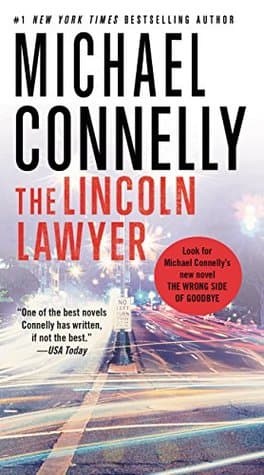
- The Lincoln Lawyer
Michael Connelly
4.2 (193k) average on GoodreadsThrillerFeatures a driven protagonist navigating a complex legal and criminal landscape, with high stakes.
- The Da Vinci Code
Dan Brown
3.9 (1.9M) average on GoodreadsThrillerWhile both Roses are Red and The Da Vinci Code feature protagonists deciphering complex clues to prevent a catastrophic event, Patterson's novel focuses more on psychological profiling and serial crime investigation within a contemporary urban setting. Brown's work, conversely, is heavily steeped in historical conspiracy, religious symbology, and international travel, offering a broader, more academic-leaning puzzle. Patterson's character development for Alex Cross is also more central and continuous across his series, whereas Robert Langdon often serves as a lens for historical exposition.
- The Silence of the Lambs
Thomas Harris
4.2 (464k) average on GoodreadsThrillerBoth novels feature brilliant, manipulative serial killers and protagonists who must delve into their minds. However, The Silence of the Lambs offers a far deeper, more disturbing psychological exploration of its antagonists (Buffalo Bill and Hannibal Lecter) and protagonist (Clarice Starling). Harris's prose is denser and more literary, creating an atmosphere of intense dread and psychological horror that Roses are Red, with its faster pace and broader appeal, does not aim to replicate. Patterson's Mastermind, while clever, lacks the profound, unsettling presence of Lecter or the grotesque detail of Buffalo Bill, making Roses are Red a more straightforward thriller rather than a deep dive into the abyss of human pathology.
- Angels & Demons
Dan Brown
3.9 (2.7M) average on GoodreadsThrillerA Harvard symbologist races through Rome's ancient sites, deciphering cryptic clues to unmask the Illuminati and stop a vengeful plot to destroy the Vatican with a stolen antimatter weapon.





Enjoyed the summary?
A summary gives you the shape of the book. The book itself has the detail, the examples and the voice.
Find Roses are Red on AmazonAs an Amazon Associate, BookBrief earns from qualifying purchases. How we're funded