

Synopsis
Covers the whole plot, including the ending.
- Difficulty
- Medium
- Pacing
- Fast
- Mood
- Suspenseful, Intense, Morally Ambiguous, Action-packed
- Read it if
- You enjoy fast-paced spy thrillers with a morally complex teenage protagonist and high stakes.
- Skip it if
- You prefer lighthearted adventures or are looking for a story with clear-cut heroes and villains.
Scorpia Plot Summary
Covers the whole plot, including the ending.
The Riviera Incident and a Shocking Revelation
Alex Rider is on holiday in the South of France, trying to recover from his last mission. He finds a coded message in a book, telling him to go to Venice. Curious and cautious, Alex follows the lead to the Grand Canal, where he falls into a trap. He is saved by Julia Rothman, who says she used to work with his father, John Rider. Rothman then tells him that John Rider was not an MI6 agent but an assassin for Scorpia, a global terrorist group. This news shatters Alex's view of his family and himself, leaving him confused.
Venice and the Lure of Scorpia
Julia Rothman acts like a mother figure to Alex in Venice. She works to break down his resistance, showing him fake photos and evidence that seem to confirm his father's link to Scorpia. She argues that Scorpia offers a true family and purpose, unlike MI6. Alex, feeling betrayed by MI6 for hiding the truth, begins to doubt. He is given a choice: join Scorpia and accept his supposed legacy, or remain an enemy. This time in Venice is important as Alex struggles with his identity and the tempting offer of belonging.
The Training Grounds and a Test of Loyalty
Alex, seemingly convinced by Rothman and wanting to understand his father, agrees to join Scorpia. He is taken to a secret training facility, where he undergoes intense physical and mental conditioning with other recruits. The training is brutal, designed to sharpen his killer instincts. He meets a boy named Desmond, who becomes a rival and friend. Rothman watches Alex closely, judging his potential and loyalty. Alex, however, secretly plans to infiltrate Scorpia and learn their true goals, using his apparent cooperation as a disguise.
Operation Invisible Sword Revealed
At the training facility, Alex overhears bits of conversations and gathers clues about Scorpia's latest and most dangerous plan, 'Invisible Sword.' He learns that Scorpia plans to use a deadly strain of bacteria to poison London's water supply. The goal is to cause widespread panic, death, and economic collapse, showing Scorpia's power and blackmailing governments. Alex is horrified by the plan's scale and the immense danger. He realizes he must stop Scorpia, even if it means risking his life and revealing his true allegiance.
The Mission: Assassinating Mrs. Jones
As a final test of his loyalty to Scorpia, Alex is given a disturbing mission: assassinate Mrs. Jones, the head of MI6 Special Operations and one of his few trusted contacts. He is given a modified rifle and told to target her during a public event. This puts Alex in an impossible situation. He knows that failing will expose him as a double agent, but killing Mrs. Jones is unthinkable. He must find a way to complete the mission without harming her, while convincing Scorpia of his success.
The Deception and Escape
During the public event, Alex carries out a carefully planned deception. He uses his spy training and a clever trick to make it look like he shot Mrs. Jones, but she is unharmed. The 'assassination' creates chaos, allowing Alex to escape Scorpia's watch. He contacts MI6, revealing his infiltration and the details of Operation Invisible Sword. The fake assassination is a risky move that works, solidifying his cover and giving him the crucial information to counter Scorpia's plot. His escape is narrow, showing Scorpia's ruthlessness.
Race Against Time in London
With Alex's information, MI6 acts to stop Operation Invisible Sword. Alex, despite his previous ordeal, insists on joining the mission. He helps MI6 agents find the Scorpia operatives deploying the biological weapon. Time is short, as Scorpia has already started releasing the deadly bacteria into London's water. Alex's knowledge of Scorpia's methods and people proves vital as they locate the dispersal devices. The city's fate hangs in the balance as they confront the terrorists.
Confrontation and Capture
Alex confronts Julia Rothman, who is overseeing the final stages of 'Invisible Sword.' He reveals his true loyalty, leading to a tense standoff. Rothman, furious, tries to kill him. During the fight, Alex disables the remaining dispersal devices and helps MI6 capture Rothman and other key Scorpia members. The biological threat is contained, and London is saved from disaster. Alex's bravery and quick thinking prevent mass casualties, though the emotional cost of confronting Rothman is high.
The Truth About John Rider
Afterward, MI6 finally tells Alex the full truth about John Rider. It is confirmed that he was an MI6 agent with a deep cover assignment within Scorpia. His mission was to infiltrate and dismantle the organization from within, which required him to act as an assassin. The 'evidence' shown by Julia Rothman was partly true but twisted to manipulate Alex. John Rider had loved Alex and worked to protect him, at great personal cost. This revelation brings Alex some peace, clarifying his father's unclear past.
Aftermath and Lingering Scars
After the Scorpia mission, Alex is exhausted, both physically and emotionally. He has saved thousands of lives but is deeply affected by the deception, violence, and revelations about his family. He understands his father's sacrifices and the moral complexities of the spy world. While London is safe, Alex knows Scorpia remains a threat, and his involvement with MI6 is not over. He is no longer just a boy; he is an experienced operative, carrying the heavy weight of his experiences and the knowledge that his life will never be normal again.
Scorpia Characters
Alex Rider
Protagonist
A teenage spy grappling with his father's ambiguous past and his own identity.
Alex Rider is a resourceful and intelligent fourteen-year-old boy who has been reluctantly thrust into the world of espionage. Orphaned at a young age, he possesses an innate curiosity and a strong moral compass. Despite his youth, he displays remarkable courage, resilience, and a talent for observation and deduction. He is driven by a desire for truth and justice, but also by a yearning to understand his family's mysterious past. His emotional vulnerability makes him susceptible to manipulation, yet his core integrity always shines through.
Relationships: Julia Rothman (Manipulative mentor/antagonist); Mrs. Jones (MI6 handler, complex mentor figure); John Rider (Deceased father, whose legacy is central to Alex's internal conflict)
Julia Rothman
Antagonist
A high-ranking Scorpia operative who attempts to recruit Alex, claiming to have known his father.
Julia Rothman is a cunning, manipulative, and seemingly maternal figure who serves as a key Scorpia leader. She possesses a chilling ability to exploit emotional vulnerabilities, particularly Alex's desire to understand his father. Her calm demeanor masks a ruthless determination and a complete lack of empathy. She genuinely believes in Scorpia's ideology and sees Alex as a valuable asset to be groomed. She is intelligent and strategic, capable of crafting elaborate deceptions to achieve her goals.
Relationships: Alex Rider (Recruiter/manipulator, ultimately enemy); John Rider (Former Scorpia colleague (as she claims))
Mrs. Jones
Supporting
Head of Special Operations for MI6, who struggles with the moral implications of using Alex.
Mrs. Jones is a formidable and highly capable MI6 agent. She is pragmatic and dedicated to national security, often making difficult decisions for the greater good. Despite her stern exterior, she harbors a deep concern for Alex's well-being, though she often struggles with the ethical dilemmas of involving a minor in dangerous missions. She represents the morally ambiguous but ultimately well-intentioned side of MI6. Her trust in Alex is crucial, and she is instrumental in guiding him through the complexities of his father's true past.
Relationships: Alex Rider (Handler/protector, sometimes seen as betrayer by Alex); John Rider (Former MI6 colleague)
John Rider
Mentioned
Alex's deceased father, whose true identity as an MI6 deep-cover agent is revealed.
John Rider is Alex's deceased father, whose mysterious past forms the central enigma of the novel. Initially presented as a Scorpia assassin by Julia Rothman, he is eventually revealed to have been a deeply undercover MI6 agent tasked with infiltrating Scorpia. He was a man of immense courage and sacrifice, forced to adopt a ruthless persona to protect his family and serve his country. His love for Alex was profound, and his actions, though seemingly contradictory, were ultimately driven by a desire to keep his son safe. His legacy is one of complex heroism.
Relationships: Alex Rider (Father/son, central to Alex's motivations); Julia Rothman (Former 'colleague' in Scorpia (as part of his cover))
Desmond
Supporting
A young recruit at Scorpia's training facility who befriends Alex.
Desmond is a young boy, roughly Alex's age, who is also undergoing training at the Scorpia facility. He is initially presented as a rival, but a bond of sorts develops between him and Alex. Desmond represents another potential path for Alex – that of a child fully indoctrinated into Scorpia's ideology. He is somewhat naive but driven by a desire to prove himself. His presence highlights the moral corruption inherent in Scorpia's methods of recruiting and training children.
Relationships: Alex Rider (Fellow recruit, temporary ally/rival)
Alan Blunt
Supporting
Chairman of MI6, pragmatic and often secretive.
Alan Blunt is the cold, calculating Chairman of MI6. He is a master of espionage and strategy, always prioritizing national security above individual feelings. He is often seen as detached and unfeeling, making decisions that are logically sound but emotionally difficult. Blunt is the one who ultimately authorizes Alex's missions, and his secrecy often frustrates Alex. However, he is dedicated to protecting the country, even if his methods are morally grey. He represents the stark, utilitarian side of intelligence work.
Relationships: Alex Rider (Superior, often seen as manipulative); Mrs. Jones (Colleague, often differing in approach)
Yassen Gregorovich
Mentioned
A legendary assassin, who briefly appears in Alex's thoughts.
Yassen Gregorovich is a notorious and highly skilled assassin, previously encountered by Alex. Though only mentioned briefly in Scorpia, his presence looms large in Alex's mind as a reminder of the dangerous world he inhabits and the moral complexities of his adversaries. Yassen represents the cold, professional killer, and Alex often reflects on their past encounters, which have significantly shaped his understanding of right and wrong in the spy world. He serves as a benchmark for the kind of operative Alex could become, or actively avoids becoming.
Relationships: Alex Rider (Past adversary, enigmatic figure)
Scorpia Themes
Identity and Belonging
Alex Rider faces a crisis of identity throughout the novel. The news that his father, John Rider, might have been a Scorpia assassin shatters his view of himself and his family. Julia Rothman exploits this weakness, offering Alex a sense of belonging within Scorpia, a 'family' that understands his skills. Alex is torn between his known life and the tempting promise of a legacy he never imagined. This theme drives his internal conflict as he questions who he is and where his loyalties lie, ending with the complex truth about his father's double life.
“You’re just like him, Alex. You have his eyes, his quick mind, his… talent. It’s in your blood.”
Betrayal and Trust
Betrayal runs through Alex's journey. He feels betrayed by MI6 for hiding the truth about his father, making him question their motives and his service to them. Julia Rothman's manipulation is a direct betrayal, twisting facts to exploit his emotions. Even the truth about John Rider, while heroic, involves a deep level of deception that affects Alex. Alex's struggle to trust is a constant challenge, forcing him to rely on his instincts and make hard moral choices, such as faking Mrs. Jones's assassination to keep his cover.
“How could they keep something like that from me? How could they let me believe all those lies?”
The Nature of Good and Evil
Scorpia explores the unclear lines between good and evil, especially in espionage. Alex must face the idea that his heroic father might have been a villain, and that MI6, while fighting for good, uses morally questionable methods. Julia Rothman argues that Scorpia offers a clear, though ruthless, purpose, contrasting it with MI6's perceived hypocrisy. Alex's mission to assassinate Mrs. Jones forces him to fake an evil act to achieve a greater good, showing the difficult moral compromises in his work. The novel suggests that 'good' often means navigating shades of grey.
“There are no good guys or bad guys, Alex. Just people with different agendas.”
Sacrifice and Consequence
The story highlights the high cost of sacrifice and the far-reaching impact of actions. John Rider's deep-cover operation involved great personal sacrifice, including living a lie and dying for his mission, all to protect his son and country. Alex also makes significant sacrifices, enduring dangerous training, emotional manipulation, and risking his life to stop Operation Invisible Sword. The consequences of Scorpia's actions, like the planned biological attack, show the devastating impact of terrorism. The book shows that every decision, especially in espionage, carries profound and often painful consequences.
“Sometimes, Alex, to do good, you have to do things that feel very, very bad.”
Plot Devices & Literary Techniques
The MacGuffin: Operation Invisible Sword
A deadly biological weapon plot that drives the main conflict.
Operation Invisible Sword serves as the central MacGuffin of the novel. It is Scorpia's plan to unleash a deadly biological agent into London's water supply, threatening mass casualties and driving the entire latter half of the plot. Its specific nature (a biological weapon) is less important than its function: to provide a tangible, catastrophic threat that Alex must prevent. This plot device creates urgency, raises the stakes, and gives Alex a clear, heroic objective once he uncovers Scorpia's true intentions, uniting MI6 and Alex against a common, devastating enemy.
The Mentor Figure (Manipulative): Julia Rothman
A character who guides the protagonist but with ulterior, often sinister, motives.
Julia Rothman acts as a manipulative mentor figure for Alex. She takes him under her wing in Venice, providing him with information (albeit twisted) about his father and guiding him through Scorpia's training. Her 'mentorship' is designed to indoctrinate Alex and turn him into a loyal Scorpia operative. This device highlights Alex's vulnerability and emotional need for guidance, making him susceptible to her influence. It also creates a moral dilemma for Alex, as he must feign loyalty while secretly working against her, ultimately betraying the 'trust' she placed in him.
Identity Concealment/Double Agent
A character feigns allegiance to one side while secretly working for another.
The device of identity concealment is crucial, both for Alex and his father, John Rider. John Rider lived a double life as an MI6 agent deep undercover within Scorpia, his true identity hidden even from his own son. Alex, in turn, adopts the role of a double agent, pretending to join Scorpia to infiltrate their ranks and uncover their plans. This device creates suspense, allows for dramatic reveals, and forces characters into morally ambiguous situations. It emphasizes the theme of betrayal and trust, as characters must constantly question appearances and motives.
The Moral Dilemma: Assassinating Mrs. Jones
A difficult choice presented to the protagonist that tests their values and loyalty.
The assignment to assassinate Mrs. Jones is a powerful moral dilemma that serves as a pivotal plot device. It is Scorpia's ultimate test of Alex's loyalty and commitment to their cause. This choice forces Alex to confront the depths of his own morality: either commit a heinous act to maintain his cover, or expose himself and risk failure. This device heightens the tension, reveals Alex's core values, and showcases his ingenuity as he devises a way to fake the assassination, proving his intelligence and his unwavering moral compass without compromising his mission.
Scorpia Quotes
“Fear is a powerful weapon. It can make people do things they never thought possible.”
“The truth is rarely simple, and often, it's the last thing people want to hear.”
“Sometimes, the biggest risks come from the people you trust the most.”
“Every secret has a price. And sometimes, that price is paid in blood.”
“You can never truly escape your past. It always finds a way to catch up with you.”
“The line between good and evil is often blurred, especially when you're fighting for survival.”
“Knowledge is power, but it can also be a burden.”
“There are some people in the world who simply want to watch it burn.”
“Even the most ordinary person can do extraordinary things when pushed to their limits.”
“Deception is an art form. And some artists are masters of their craft.”
“Sometimes, the only way to win is to break the rules.”
“The greatest weapon is often the one you least expect.”
“Loneliness is a dangerous companion, especially in a world full of enemies.”
“The past isn't just history; it's a blueprint for the future.”
Quiz
10 questions on the plot and the characters. Each answer comes with a short explanation.
Question 1
What is the name of the terrorist organization that Alex Rider's father may have worked for?
- SMERSH
- Scorpia
- K-Force
- Spectre
Show answer
B. Scorpia The book explicitly states that Alex learns his father may have been an assassin for 'Scorpia', the most lethal and powerful terrorist organization.
Question 2
What is the codename for Scorpia's latest plot, which Alex learns about?
- Operation Black Sun
- Invisible Sword
- Project Chimera
- Desert Storm
Show answer
B. Invisible Sword The summary mentions that Alex learns of Scorpia’s latest plot: an operation known only as 'Invisible Sword'.
Question 3
Initially, how does Alex feel about joining Scorpia after learning about his father?
- He is eager to join them immediately.
- He is determined to fight them more fiercely.
- He no longer has the strength to fight them.
- He tries to convince them to stop their operations.
Show answer
C. He no longer has the strength to fight them. The summary states, 'Now Scorpia wants Alex on their side, and Alex no longer has the strength to fight them.'
Question 4
What specific revelation shatters Alex's world regarding his father?
- His father was a double agent for MI6.
- His father faked his own death.
- His father may have been an assassin for Scorpia.
- His father was never an agent at all.
Show answer
C. His father may have been an assassin for Scorpia. The text clearly states, 'But when Alex learns that his father may have been an assassin for the most lethal and powerful terrorist organization in the world, Scorpia, his world shatters.'
Question 5
What is the primary motivation for Alex to reconsider his stance against Scorpia?
- He wants to understand his father's true motives.
- He hopes to gain power within the organization.
- He learns of Scorpia’s plot to kill thousands of people.
- He is offered a large sum of money to join them.
Show answer
C. He learns of Scorpia’s plot to kill thousands of people. Alex's resolve to fight Scorpia returns 'until he learns of Scorpia’s latest plot: an operation known only as 'Invisible Sword' that will result in the death of thousands of people.'
Question 6
The description highlights a key theme about Alex's identity. Which of the following best represents this theme?
- The struggle between good and evil within one's family lineage.
- The importance of choosing one's own path regardless of influence.
- The inevitable corruption of power.
- The search for lost family members.
Show answer
A. The struggle between good and evil within one's family lineage. Alex is told he is the 'spitting image' of his father, then learns his father was an assassin for a terrorist group, forcing him to confront the potential for evil within his own heritage.
Question 7
What does the phrase 'spitting image of the father he never knew' imply about Alex's perception of his father before the events of this book?
- He harbored resentment towards his absent father.
- He had no strong feelings or knowledge about his father's character.
- He idealized his father as a hero.
- He knew his father was involved in espionage.
Show answer
B. He had no strong feelings or knowledge about his father's character. The phrase 'never knew' directly indicates a lack of personal knowledge or interaction, implying his perception was based on external observations (like looking like him) rather than personal understanding of his character.
Question 8
The book's description poses a question: 'Can Alex prevent the slaughter, or will Scorpia prove once and for all that the terror will not be stopped?' What literary device is primarily used here?
- Metaphor
- Foreshadowing
- Rhetorical question
- Allusion
Show answer
C. Rhetorical question This is a rhetorical question, designed to engage the reader and highlight the central conflict and stakes of the plot without expecting a direct answer.
Question 9
Considering the genre 'Young Adult Thriller,' what is the likely purpose of Alex's internal conflict regarding his father and Scorpia?
- To establish a clear villain for the entire series.
- To explore themes of identity, moral choice, and the influence of family legacy on a young protagonist.
- To provide a justification for Alex to retire from being a spy.
- To introduce a love interest who can help him through his struggles.
Show answer
B. To explore themes of identity, moral choice, and the influence of family legacy on a young protagonist. In young adult literature, especially thrillers, internal conflict often serves to deepen character development and explore complex themes relevant to adolescence, such as identity, moral dilemmas, and the impact of one's background.
Question 10
The summary states that Scorpia is 'the most lethal and powerful terrorist organization in the world.' What does this detail primarily contribute to the narrative?
- It suggests that Alex will easily defeat them.
- It foreshadows a quick resolution to the conflict.
- It heightens the stakes, danger, and the formidable challenge Alex faces.
- It implies that Scorpia is a globally recognized and public entity.
Show answer
C. It heightens the stakes, danger, and the formidable challenge Alex faces. Describing Scorpia as 'most lethal and powerful' immediately establishes them as a significant and dangerous antagonist, increasing the tension and the perceived difficulty of Alex's mission.
Scorpia FAQ
What is the central conflict Alex Rider faces at the beginning of 'Scorpia'?
Alex Rider's central conflict is the revelation that his father, John Rider, was potentially an assassin for Scorpia, the very terrorist organization he's been fighting. This shatters his perception of his family and himself, leading to a deep personal crisis and a struggle with his identity.
How does Scorpia attempt to recruit Alex, and what methods do they use?
Scorpia attempts to recruit Alex by exploiting his vulnerability and offering him a sense of belonging and truth about his father. They provide him with evidence, albeit manipulated, that MI6 betrayed his father and that Scorpia was his true 'family', using emotional manipulation and presenting a distorted narrative.
Who is Julia Rothman, and what role does she play in Scorpia's operations?
Julia Rothman is a high-ranking and ruthless leader within Scorpia, often seen as a key architect of their operations. She is responsible for orchestrating the 'Invisible Sword' plot and is directly involved in the psychological manipulation of Alex, presenting herself as a maternal figure while secretly using him.
What is the 'Invisible Sword' operation, and what are its goals?
The 'Invisible Sword' operation is Scorpia's plot to release a deadly biological agent, specifically a genetically engineered strain of anthrax, into London's water supply. Its goal is to cause mass casualties and terror, demonstrating Scorpia's power and destabilizing the government.
How does Alex ultimately decide to fight against Scorpia, despite his initial wavering?
Alex ultimately decides to fight against Scorpia when he learns the true, horrific nature of the 'Invisible Sword' operation and realizes the extent of their depravity. The sheer scale of the planned massacre and the threat to innocent lives rekindles his moral compass and commitment to justice.
What specific piece of evidence does Scorpia show Alex to convince him about his father's past?
Scorpia shows Alex a seemingly authentic video recording and files that depict John Rider participating in Scorpia activities and being betrayed by MI6. This fabricated evidence, combined with personal artifacts, is designed to make Alex believe his father was an assassin and a victim of British intelligence.
How does Yassen Gregorovich's past connection to John Rider subtly influence Alex's journey in this book?
Yassen Gregorovich's past connection to John Rider, hinted at in previous books and explored here, suggests a complex relationship where John may have been trying to protect Yassen or was involved in a deeper game. This history adds a layer of ambiguity to John's character and makes Alex question the absolutes of good and evil.
What is the significance of the 'Scorpia' acronym itself, and how does it reflect the organization's ideology?
The acronym 'Scorpia' stands for 'Sabotage, Corruption, Orchestration, Retribution, Pillage, Incineration, Anarchy'. This directly reflects the organization's ideology of global chaos and destruction, highlighting their nihilistic and destructive goals rather than any political or ideological agenda.
Are there any subtle clues that Scorpia's narrative about John Rider might be false, even before Alex fully uncovers the truth?
Yes, subtle clues include the overly convenient and perfectly tailored nature of the evidence Scorpia presents, designed to appeal directly to Alex's insecurities. Also, the complete absence of MI6's counter-narrative and the one-sided portrayal of events should raise a reader's suspicion about the authenticity of Scorpia's claims.
How does the revelation about his father impact Alex's sense of identity and self-worth?
The revelation about his father's potential past as a Scorpia assassin deeply shatters Alex's sense of identity, making him question everything he thought he knew about himself and his moral compass. He struggles with the fear that he might inherit his father's supposed dark nature, leading to profound self-doubt and a crisis of purpose.
Discuss the psychological manipulation employed by Julia Rothman and how it affects Alex.
Julia Rothman employs sophisticated psychological manipulation, acting as a seemingly empathetic maternal figure who offers Alex 'truth' and belonging. She preys on his grief, loneliness, and desire for family, making him feel understood and valued, which temporarily blinds him to Scorpia's true intentions and his father's real character.
How does Alex's internal conflict between loyalty to MI6 and the 'truth' from Scorpia reflect a common adolescent struggle?
Alex's internal conflict reflects a common adolescent struggle of questioning authority figures (MI6) and seeking independent truth, especially when presented with a compelling, alternative narrative (Scorpia's). It mirrors the desire to forge one's own path and challenge established beliefs, even if those challenges lead to dangerous conclusions.
To what extent is Alex responsible for his initial decision to join Scorpia, given the circumstances?
Alex's initial decision to join Scorpia is largely influenced by extreme psychological manipulation, grief, and the profound shock of his father's supposed betrayal. While he makes the choice, the overwhelming and calculated pressure from Scorpia, combined with his vulnerable emotional state, significantly mitigates his personal responsibility.
What does Scorpia's motivation for 'Invisible Sword' reveal about the nature of terrorism in the Alex Rider universe?
Scorpia's motivation for 'Invisible Sword' reveals that terrorism in the Alex Rider universe is often driven by a desire for global chaos, profit, and a display of power rather than specific political or religious ideologies. It highlights a more nihilistic and destructive form of evil that seeks to destabilize society for its own sake.
How does the ending of 'Scorpia' challenge the traditional 'hero's journey' narrative for Alex?
The ending of 'Scorpia' profoundly challenges the traditional hero's journey by leaving Alex in a deeply traumatized and physically vulnerable state, shot and left for dead. It subverts the expectation of a triumphant resolution, emphasizing the brutal cost of espionage and leaving his future uncertain, rather than concluding with a clear victory and peace.
Could Alex have uncovered the truth about his father earlier, or was Scorpia's deception too perfect?
Scorpia's deception was highly sophisticated and tailored to Alex's emotional state, making it incredibly difficult for him to uncover the truth earlier. He was isolated, vulnerable, and presented with seemingly irrefutable evidence that played on his deepest insecurities, making it almost impossible to objectively scrutinize their narrative.
What is the thematic significance of the 'mirror image' motif regarding Alex and his father?
The 'mirror image' motif emphasizes Alex's struggle with his identity and the fear of becoming what he fights. It highlights the idea that external appearances can be deceiving and that true character is defined by choices, not inherited traits, as Alex ultimately rejects the dark path Scorpia tried to convince him his father took.
How does the book's title, 'Scorpia', encapsulate the essence of the story and Alex's journey?
The title 'Scorpia' encapsulates the story by directly naming the formidable antagonist that defines Alex's most personal and existential crisis. It signifies the venomous nature of the organization that poisons his perception of his family and forces him to confront the darkest truths about his lineage and the world of espionage.
About the author

Anthony Horowitz is a prolific British author known for his engaging mystery and thriller novels. He is the creator of the bestselling Sherlock Holmes novels, including 'The House of Silk' and 'Moriarty,' as well as the acclaimed 'Hawthorne and Horowitz' series, featuring 'The Word is Murder' and 'The Sentence is Death.' Horowitz also penned the Alex Rider series for young adults, which has sold over 19 million copies worldwide.
Similar books
- Artemis Fowl
Eoin Colfer
3.9 (496k) average on GoodreadsFantasyPresents a morally ambiguous young genius in a high-stakes, action-driven plot against powerful organizations.
- Angels & Demons
Dan Brown
3.9 (2.7M) average on GoodreadsThrillerA Harvard symbologist races through Rome's ancient sites, deciphering cryptic clues to unmask the Illuminati and stop a vengeful plot to destroy the Vatican with a stolen antimatter weapon.
- Gone Girl
Gillian Flynn
4.1 (2.3M) average on GoodreadsThrillerA wife's sudden disappearance on her fifth anniversary reveals a web of lies and psychological warfare, exposing the secrets within a seemingly perfect marriage.
- The Girl on the Train
Paula Hawkins
3.9 (2.1M) average on GoodreadsThrillerA woman’s fascination with a seemingly perfect couple she watches from her daily train commute leads her into a dark investigation when she witnesses something that shatters their idyllic image.
- The Da Vinci Code
Dan Brown
3.9 (1.9M) average on GoodreadsThrillerA symbologist and a cryptologist race through European landmarks, deciphering ancient codes and uncovering a conspiracy that could rewrite the foundations of Christianity.
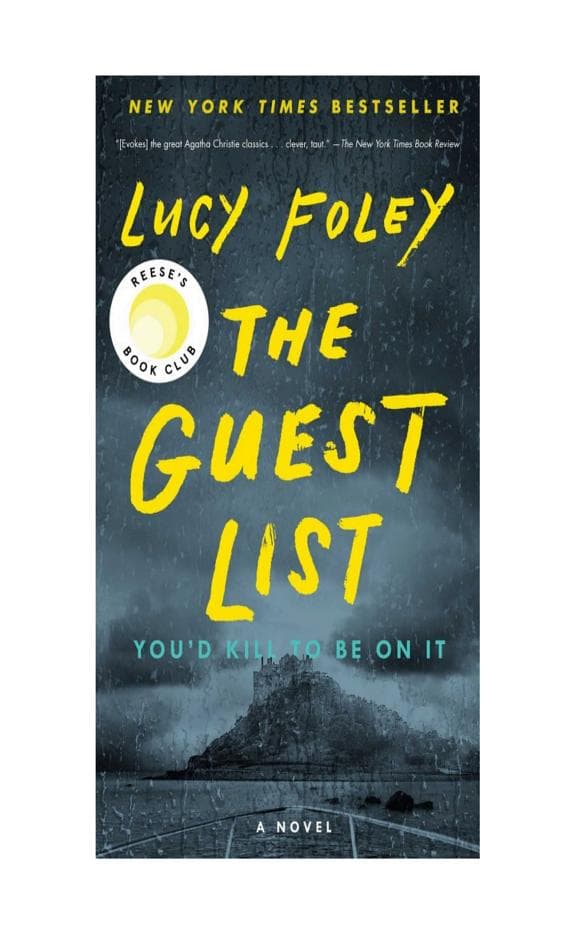
- The Guest List
Lucy Foley
3.8 (1.3M) average on GoodreadsThrillerOn a remote Irish island, a glamorous wedding descends into a deadly whodunnit when a guest is found murdered, trapping everyone with their secrets as a storm rages.





Enjoyed the summary?
A summary gives you the shape of the book. The book itself has the detail, the examples and the voice.
Find Scorpia on AmazonAs an Amazon Associate, BookBrief earns from qualifying purchases. How we're funded