

Synopsis
Covers the whole plot, including the ending.
- Difficulty
- Medium
- Pacing
- Moderate
- Mood
- Dark, Atmospheric, Suspenseful, Disturbing, Unsettling
- Read it if
- You enjoy psychological thrillers with a deeply unreliable narrator, explore themes of generational trauma and Southern Gothic atmosphere, and don't mind disturbing content.
- Skip it if
- You prefer lighthearted mysteries, are sensitive to themes of child abuse, self-harm, or graphic violence, or dislike ambiguous and morally grey characters.
Sharp Objects Plot Summary
Covers the whole plot, including the ending.
Return to Wind Gap
Camille Preaker, a reporter, is sent by her editor, Frank Curry, to her childhood home in Wind Gap, Missouri. Her assignment is to cover the recent murders of two preteen girls: Ann Nash, found strangled and with her teeth pulled out, and Natalie Keene, who has gone missing. Camille has just left a psychiatric hospital for self-harm and has a difficult relationship with her mother, Adora Crellin, and her thirteen-year-old half-sister, Amma. Returning to her family's Victorian mansion and confronting her past immediately brings back Camille's anxieties and old coping mechanisms.
First Impressions and Tensions
In Wind Gap, Camille faces the stifling heat and the strange, isolated nature of the small town. Her reunion with Adora is cold and filled with passive-aggressive comments. Amma, who seems innocent but is manipulative, shows both curiosity and disdain. Camille struggles to connect with her mother and sister, feeling like an outsider in her own home. She meets Chief Vickery, the local police chief, who is hesitant to share information, and Detective Richard Willis, an officer from Kansas City, with whom Camille develops a professional, then personal, relationship. The town is gripped by fear and suspicion, with everyone a potential suspect.
Uncovering Clues and Town Secrets
Camille begins her interviews with the victims' families and townspeople. She learns Ann Nash was quiet, while Natalie Keene was more rebellious. The discovery of Natalie's body in a creek, also missing teeth, increases the town's panic. Camille observes the town's strange grief and how rumors spread quickly. She notices the decay and hidden violence beneath Wind Gap's polite exterior. Her own memories of growing up there, especially of her deceased sister Marian, begin to resurface, mixing with the current investigation.
The Influence of Amma
Amma, despite her age, has a strange power over her friends and the town. She spends her days roller-skating with a group of girls, often engaging in reckless behavior. Camille sees Amma's manipulative nature firsthand, how she uses her mother for attention and control. The constant tension at home, combined with her assignment, pushes Camille deeper into self-harm. She drinks heavily and carves words into her skin, a secret she has kept for years. Wind Gap's oppressive environment amplifies her internal struggles, making it hard to stay detached.
Richard Willis's Suspicions
Detective Richard Willis, seeing Camille's unique position as both an insider and outsider, starts to confide in her. He shares his theories, which often differ from Chief Vickery's approach. Willis is skeptical about the initial suspects and notes the precise tooth extractions, suggesting a personal motive. He also notices the strange dynamics within Camille's family, particularly Adora's overbearing nature and Amma's unsettling behavior. Their professional relationship becomes a cautious intimacy, giving Camille a rare connection amid her isolation.
The Crellin Family History
As Camille spends more time in her childhood home, vivid memories of her younger sister, Marian, who died tragically, return. She remembers Marian's constant illnesses and Adora's obsessive care. Camille questions the circumstances of Marian's death, recalling Adora's strange rituals and how she seemed to thrive on Marian's sickness. She finds old medical records and photos, making her consider that Marian's death was not natural. These memories increase her unease about Adora.
Adora's Control and Camille's Illness
Adora, seemingly concerned for Camille's health, offers her various herbal concoctions. Camille, weakened by drinking and emotional stress, initially accepts the 'care,' but soon sees a disturbing pattern. Adora's 'remedies' make Camille feel increasingly ill and disoriented, similar to how Marian was constantly sick under Adora's care. This realization triggers a terrifying memory: Adora gave Marian similar 'medicines' that made her sicker. Camille's suspicion becomes a chilling fear that her mother might be poisoning her.
The Truth About Marian's Death
Driven by her growing illness and the familiarity of Adora's 'care,' Camille confronts her mother, or tries to escape her. She connects fragmented memories and information, confirming that Adora had Munchausen by Proxy, a disorder where a caregiver induces illness in someone they care for. Marian's chronic sickness and death were not natural but a result of Adora's deliberate poisoning. This revelation shatters Camille's understanding of her childhood and her mother, revealing a monstrous truth hidden beneath a polite exterior. She realizes she is now Adora's target.
The Arrest and Initial Resolution
With help from Detective Willis and Curry, Camille exposes Adora's abuse. Evidence, including extracted teeth in Adora's dollhouse and testimony from Camille and Amma, leads to Adora's arrest for the murders of Ann Nash and Natalie Keene. The town is shocked that Adora Crellin is a serial killer. After Adora's incarceration, Camille begins to process the trauma, finding a fragile sense of peace. She takes Amma to St. Louis to live with her, hoping to provide a stable and loving environment away from Wind Gap.
A New Beginning, and an Unsettling Discovery
Camille brings Amma to live with her in St. Louis, hoping to offer her a fresh start away from Adora's influence and the dark memories of Wind Gap. Amma initially seems to do well, making friends and adjusting to city life. However, Camille notices disturbing signs in Amma's behavior: her manipulative tendencies, intense jealousy, and a chilling lack of empathy. Amma quickly discards new friends if they displease her, and Camille sees glimpses of the same controlling nature that characterized Adora. These observations slowly erode Camille's fragile sense of security, hinting that Wind Gap's darkness may have followed them.
The Final Revelation: Amma's Guilt
While helping Amma unpack her dollhouse, Camille makes a horrifying discovery: a hidden compartment containing the teeth of Ann Nash and Natalie Keene, along with pliers. In a chilling confession, Amma reveals that she, not Adora, murdered the girls. Her motive was jealousy and a desire to be the sole recipient of Adora's attention and 'care,' even if that care was poison. Amma admits to killing the girls and extracting their teeth, then framing Adora. The cycle of violence, instead of being broken, has been continued by Amma, who has inherited Adora's cruelty. Amma's final words, 'Don't tell Mama,' confirm Camille's terrifying realization.
Sharp Objects Characters
Camille Preaker
Protagonist
A journalist returning to her hometown to cover a murder, grappling with her past and self-harm.
Camille is a crime reporter in her early thirties, haunted by a traumatic childhood in Wind Gap. She copes with her deep emotional scars, particularly the death of her sister Marian and her mother's abuse, through self-harm, carving words into her skin. She is intelligent, observant, and possesses a cynical wit, but is deeply insecure and struggles with intimacy. Her assignment forces her to confront the very origins of her pain, leading her to unravel the mysteries of both the murders and her own family's dark history.
Relationships: Adora Crellin (Abusive mother-daughter relationship, marked by Adora's Munchausen by Proxy and Camille's emotional neglect.); Amma Crellin (Estranged older sister-younger sister; Camille tries to protect Amma, only to discover Amma's true nature.); Marian Crellin (Deceased younger sister, whose death is a central trauma for Camille.); Richard Willis (Professional colleagues who develop a romantic and supportive relationship.); Frank Curry (Camille's editor and mentor, a supportive but sometimes demanding boss.)
Adora Crellin
Antagonist
Camille's wealthy, manipulative, and abusive mother, suffering from Munchausen by Proxy.
Adora is the seemingly genteel and respected matriarch of the Crellin family, deeply embedded in Wind Gap's high society. Beneath her elegant facade lies a deeply disturbed individual suffering from Munchausen by Proxy, compulsively poisoning her children to gain sympathy and attention. She is controlling, manipulative, and emotionally cold, especially towards Camille. Adora's twisted form of 'care' is a central theme, as she thrives on the illness and dependence of others, particularly her daughters. She represents the hidden darkness and decay beneath the town's polished surface.
Relationships: Camille Preaker (Abusive mother-daughter relationship, where Adora poisons Camille.); Amma Crellin (Adora's current victim of Munchausen by Proxy, doted upon and made ill.); Marian Crellin (Deceased daughter, poisoned to death by Adora.); Alan Crellin (Her passive and largely oblivious husband.)
Amma Crellin
Antagonist
Camille's manipulative and secretly violent thirteen-year-old half-sister.
Amma is a beautiful and seemingly innocent thirteen-year-old girl who, beneath her childlike exterior, harbors a dark and manipulative personality. She is popular among her peers, leading a gang of roller-skating girls, and is adept at playing her mother for attention and control. She is fiercely possessive of Adora, even in her abusive 'care.' Amma is intelligent, charming, and capable of extreme cruelty, a product of her upbringing and her own innate psychopathy. Her actions are driven by a desire for control and to be the sole focus of Adora's (and later Camille's) attention.
Relationships: Camille Preaker (Half-sisters; Amma is initially wary, then seems to accept Camille, only to betray her.); Adora Crellin (Mother-daughter relationship, where Amma is both a victim and a manipulator, fiercely possessive of Adora's attention.); Ann Nash (Victim, murdered by Amma.); Natalie Keene (Victim, murdered by Amma.)
Richard Willis
Supporting
A detective from Kansas City investigating the murders, who develops a relationship with Camille.
Richard Willis is a professional and observant detective brought in from Kansas City to assist with the Wind Gap murders. He is a pragmatic and empathetic man, initially skeptical of the local police's methods. He forms a bond with Camille, recognizing her intelligence and insight, and becomes a confidant and love interest. Richard serves as an outsider's perspective on the insular community of Wind Gap and provides a grounding presence for Camille amidst her emotional turmoil. He is committed to justice and uncovering the truth, even when it leads to uncomfortable places.
Relationships: Camille Preaker (Professional colleagues who develop a romantic and supportive relationship.); Chief Vickery (Professional colleagues with differing investigative approaches.)
Frank Curry
Supporting
Camille's editor and mentor at the St. Louis Chronicle.
Frank Curry is Camille's editor and a father figure to her. He is a gruff but caring man who sees Camille's potential as a journalist despite her personal struggles. He is the one who sends her to Wind Gap, believing she can get the story, but also genuinely concerned for her well-being. Curry represents a connection to Camille's professional life and a source of stability outside of her dysfunctional family. He pushes her to do her job but also offers a measure of support and understanding.
Relationships: Camille Preaker (Editor-reporter, mentor-mentee relationship.)
Marian Crellin
Mentioned
Camille's deceased younger sister, whose death is a key to the family's dark history.
Marian was Camille's younger sister, who died in childhood from a mysterious illness. Her death is a central trauma in Camille's life and a catalyst for her self-harm. Marian is primarily present through Camille's fragmented memories and serves as a symbol of Adora's early victims. Her chronic sickness and eventual demise are later revealed to be the result of Adora's Munchausen by Proxy, making her a crucial piece in understanding the Crellin family's dark past and Adora's true nature.
Relationships: Camille Preaker (Sisters, with Marian's death deeply impacting Camille.); Adora Crellin (Daughter, victim of Adora's Munchausen by Proxy.)
Alan Crellin
Supporting
Camille's stepfather and Adora's largely passive husband.
Alan is Adora's husband and Camille's stepfather. He is a quiet, withdrawn man who spends most of his time listening to classical music through headphones. He is largely oblivious or willfully ignorant of the dark dynamics within his family, particularly Adora's abuse. Alan represents the complicity of silence and the inability to confront uncomfortable truths within the household. He is a peripheral figure, overshadowed by Adora's powerful and destructive presence.
Relationships: Adora Crellin (Husband to Adora, largely passive and submissive.); Camille Preaker (Stepfather, with a distant and awkward relationship.); Amma Crellin (Father to Amma, but with little active involvement.)
John Keene
Supporting
The brother of victim Natalie Keene, initially a suspect in the murders.
John Keene is the older brother of Natalie Keene, one of the murdered girls. He is a troubled young man, known for being sullen and withdrawn, and becomes an early suspect in the murders due to his proximity to Natalie and his general demeanor. He is protective of his family and struggles with the grief and suspicion surrounding him. John represents the marginalization and prejudice faced by those who don't fit into Wind Gap's social norms.
Relationships: Natalie Keene (Brother of the victim.); Camille Preaker (Interviewed by Camille as part of her investigation.)
Sharp Objects Themes
The Cycle of Abuse and Trauma
The novel explores how abuse, especially maternal abuse, continues across generations. Camille's self-harm results from Adora's Munchausen by Proxy, and her return to Wind Gap forces her to confront these wounds. The revelation that Amma, also a victim, becomes a killer shows this chilling cycle's continuation. The novel suggests that unaddressed trauma can appear in destructive ways, as seen in Amma's violence mirroring Adora's poisoning. This theme is central to the story's psychological horror.
“What is it about a hometown that makes a person's past seem to have a palpable presence?”
The Destructive Nature of Secrets and Lies
Wind Gap is a town built on secrets, both personal and communal. The Crellin family home holds many hidden truths, from Adora's poisoning of her daughters to Camille's self-inflicted scars. The town prefers to ignore its darker elements, maintaining a facade of Southern charm while tensions and violence fester. The murders force these secrets to the surface, revealing the decay beneath the polished exterior. The climax, where Amma's secret is exposed, shows how buried truths can erupt with devastating consequences, destroying lives and trust.
“Ugly things, like wounds, need air.”
The Insidious Nature of Southern Gothic
The novel uses Southern Gothic literature through its setting, atmosphere, and characters. Wind Gap is a decaying small town with oppressive heat, sinister landscapes, and a sense of dread. The Crellin mansion is a classic Gothic setting, full of secrets and shadows. The characters, especially Adora and Amma, embody the genre's focus on disturbed individuals hidden beneath respectability. The mix of psychological torment, family dysfunction, and a decaying social order creates an atmosphere of unease and horror, where the past is always present.
“I was a ghost in my own house, a shadow that could be seen only when the light was just right.”
Identity and Self-Destruction
Camille's journey is about identity and her struggle with self-destruction. Her self-harm, carving words into her skin, is a physical sign of her internal pain and her attempt to control her narrative. The words she carves, often negative, reflect her fractured sense of self, influenced by her abusive upbringing. As she uncovers her past, she begins to understand why she self-harms. The novel explores how trauma can shape one's identity to the point where self-harm becomes a coping mechanism, a dangerous attempt to reclaim control in a life where she felt powerless.
“My body is a journal in a way. It’s a road map, a record of where I’ve been and how I’ve gotten there.”
Plot Devices & Literary Techniques
Unreliable Narrator
Camille Preaker's perspective is colored by her trauma, self-harm, and alcoholism.
Camille's narration is deeply subjective and often unreliable due to her ongoing psychological struggles, including her history of self-harm, her heavy drinking, and her repressed memories. Her fragmented recollections and emotional state mean that the reader experiences events through a distorted lens, making it difficult to discern objective truth. This device heightens the suspense and psychological depth, forcing the reader to question not only the events of the murders but also Camille's own perceptions and interpretations of her past and present. It creates a sense of unease and vulnerability, mirroring Camille's own internal state.
Foreshadowing through Self-Harm
The words carved into Camille's skin subtly hint at past abuses and future revelations.
The physical scars on Camille's body, particularly the words she has carved into her skin, serve as a unique form of foreshadowing. While initially presented as a coping mechanism, the specific words themselves (e.g., 'bad,' 'ugly,' 'dirty') often hint at the emotional abuse she endured and the psychological wounds inflicted by Adora. More subtly, the act of carving and the body's 'journal' metaphor foreshadow the eventual revelation of Adora's Munchausen by Proxy, where the body itself becomes a site of inflicted harm and a record of suffering. This device ties Camille's personal trauma directly into the overarching mystery.
The Dollhouse
Amma's dollhouse is a miniature, disturbing reflection of the Crellin household and a hiding place for crucial evidence.
Amma's meticulously crafted dollhouse is more than just a toy; it is a symbolic representation of the Crellin family's dysfunction and the sinister undercurrents of the narrative. It mirrors the real house in disturbing detail, allowing Amma to play out her twisted power dynamics and control in miniature. Crucially, the dollhouse also serves as a hiding place for the extracted teeth of the murdered girls, making it a pivotal plot device for the final shocking revelation. Its seemingly innocent nature masks its true, macabre significance, reflecting the deceptive appearances within the Crellin family and Wind Gap itself.
Munchausen by Proxy
A psychological disorder where a caregiver induces illness in another for attention, central to Adora's character.
Munchausen by Proxy (now known as Factitious Disorder Imposed on Another) is a core plot device, revealing Adora Crellin's true nature and the cause of Marian's death. This disorder explains Adora's obsessive 'care' for her daughters, her constant 'remedies,' and their subsequent illnesses. It provides the motivation for Adora's seemingly maternal but ultimately lethal actions, turning a seemingly sympathetic figure into a monstrous antagonist. The gradual understanding of this disorder by Camille allows her to piece together her fragmented memories and expose the horrifying truth of her childhood and the current murders.
Sharp Objects Quotes
“When you are a teenager, you are both a child and an adult. You are an adult in your body, but a child in your mind. You are trying to figure out who you are, and you are trying to figure out where you fit in.”
“A pretty girl is a weapon.”
“Some shadows are so deep, you can't tell where they end and you begin.”
“I am a bad person. I have done bad things. I am not good.”
“It's hard to be a woman in a small town. Everyone knows your business. Everyone judges you.”
“The past is a knife, and it cuts you over and over again.”
“Girls are supposed to be pretty and quiet. They're not supposed to have opinions or be smart or be anything but what men want them to be.”
“The hardest part of any investigation is when you realize the monster is someone you know.”
“Some families are just not meant to be. Some families are poison.”
“I keep trying to forget, but the memories are like scars. They never really go away.”
“The truth is a sharp object. It cuts you deep.”
“Sometimes you have to break things to fix them.”
“It's a strange thing, a memory. It can be so clear, and then it can be so blurry.”
“Girls are always looking for love. Even when they say they're not.”
Quiz
10 questions on the plot and the characters. Each answer comes with a short explanation.
Question 1
What is Camille Preaker's profession when she returns to Wind Gap?
- Detective
- Psychiatrist
- Reporter
- Novelist
Show answer
C. Reporter Camille Preaker is a reporter for a St. Louis newspaper, sent back to her hometown to cover the murders.
Question 2
Which of the following describes Camille's relationship with her mother, Adora?
- Warm and supportive
- Distant and strained
- Competitive and jealous
- Non-existent; they haven't spoken in years
Show answer
B. Distant and strained The book explicitly states that Camille has 'hardly spoken' to her mother for years, indicating a distant and strained relationship.
Question 3
What is the primary method Camille uses to cope with her emotional pain and trauma?
- Journaling
- Excessive exercise
- Self-harm through cutting words into her skin
- Alcohol abuse
Show answer
C. Self-harm through cutting words into her skin Camille's most prominent coping mechanism for her past trauma is self-harm, specifically cutting words into her skin, which is a key detail about her character.
Question 4
Who is the first girl murdered in Wind Gap that Camille is sent to investigate?
- Amma Crellin
- Natalie Keene
- Ann Nash
- Marian Preaker
Show answer
C. Ann Nash Ann Nash is the first victim whose murder brings Camille back to Wind Gap. Natalie Keene is the second.
Question 5
What is the name of Camille's younger half-sister, known for her manipulative nature and influence in town?
- Ann Nash
- Natalie Keene
- Amma Crellin
- Marian Preaker
Show answer
C. Amma Crellin Amma Crellin is Camille's thirteen-year-old half-sister, described as having an 'eerie grip on the town' and a complex personality.
Question 6
What is the specific medical condition Adora is implied to suffer from, which explains her treatment of her daughters?
- Schizophrenia
- Munchausen syndrome by proxy
- Borderline personality disorder
- Obsessive-compulsive disorder
Show answer
B. Munchausen syndrome by proxy Adora suffers from Munchausen syndrome by proxy, a condition where a caregiver fabricates or induces illness in someone under their care, often a child, for attention or sympathy.
Question 7
What significant detail is found in the mouths of the murdered girls?
- Small, intricate carvings
- Teeth pulled out
- Notes with cryptic messages
- Strands of human hair
Show answer
B. Teeth pulled out A crucial and disturbing detail of the murders is that the victims' teeth are pulled out, a detail that eventually links to the killer.
Question 8
What is the name of Camille's deceased full sister, whose death profoundly impacted the family?
- Amma
- Ann
- Marian
- Natalie
Show answer
C. Marian Marian Preaker was Camille's older full sister who died young, a tragedy that has haunted Camille and shaped her family dynamics.
Question 9
What is the ultimate revelation about who committed the murders of Ann Nash and Natalie Keene?
- Adora Crellin
- John Keene
- Amma Crellin
- Richard Willis
Show answer
C. Amma Crellin The shocking twist ending reveals that Camille's younger half-sister, Amma, is the true killer, driven by jealousy and a desire to keep her mother's attention.
Question 10
What is the significance of the phrase 'It's a woman's touch' at the end of the novel?
- It refers to Adora's delicate care for her daughters' illnesses.
- It implies that the town gossips are always right.
- It is Amma's chilling explanation for her crimes, particularly the teeth extraction.
- It's a metaphor for Camille's reporting style.
Show answer
C. It is Amma's chilling explanation for her crimes, particularly the teeth extraction. The phrase 'It's a woman's touch' is Amma's horrifying confession, revealing her motive and method for extracting the victims' teeth, solidifying her guilt and the novel's dark themes.
Sharp Objects FAQ
What is Camille Preaker's initial assignment in Wind Gap and why is it particularly challenging for her?
Camille, a reporter for the 'Daily Post', is sent back to her estranged hometown of Wind Gap, Missouri, to cover the murders of two preteen girls, Ann Nash and Natalie Keene. This assignment is challenging because she has recently been discharged from a psychiatric hospital for self-harm and must confront her traumatic past, including her difficult relationship with her mother, Adora, and the ghost of her deceased sister, Marian, in the very house she grew up in.
Who are the primary members of Camille's family in Wind Gap, and what is their dynamic like?
Camille's family consists of her mother, Adora Crellin, a wealthy, manipulative Southern belle, and her thirteen-year-old half-sister, Amma Crellin, who presents as both a sweet child and a wild, rebellious teen. Their dynamic is deeply dysfunctional, marked by Adora's emotional abuse and Munchausen by proxy, Camille's long-standing estrangement, and Amma's complex, often unsettling, relationship with her mother.
What are the key characteristics of Wind Gap that make it a significant setting for the story?
Wind Gap is a small, isolated, and economically depressed town in Missouri, characterized by its stifling heat, pervasive gossip, and deep-seated social hierarchies. Its insular nature and the unspoken history within its community amplify the psychological tension and make it difficult for Camille to escape her past or find objective truth.
How does Camille's history of self-harm manifest throughout the narrative, and what is its symbolic significance?
Camille's history of self-harm manifests through her body, which is covered in words she carved into her skin during moments of emotional distress. This serves as a literal manifestation of her trauma and her attempt to control her pain, with the words themselves often reflecting her internal state or past experiences, acting as a secret, painful diary.
Who were Ann Nash and Natalie Keene, and what details are revealed about their murders?
Ann Nash and Natalie Keene were preteen girls from Wind Gap. Ann was found strangled and with her teeth pulled out, while Natalie was also found strangled, and her teeth had been extracted post-mortem. Both girls were known to be friends with Amma and frequented the woods, and their deaths deeply traumatized the small community.
What is the significance of the dollhouse in the Crellin mansion, particularly concerning Amma?
The dollhouse is a meticulously crafted miniature replica of the Crellin mansion, a gift from Adora to Amma. It symbolizes Amma's twisted version of control and her desire to replicate her mother's world, but also hints at the dark secrets within the house, eventually being revealed as a place where Amma stored the victims' teeth.
How does the death of Camille's sister, Marian, influence Adora's behavior and the family dynamic?
Marian's death, which Adora caused through Munchausen by proxy, profoundly shapes Adora's entire persona, allowing her to perpetuate her victimhood and gain sympathy. It fuels her need for control and attention, leading her to inflict similar harm on Amma and nearly on Camille, creating a cycle of abuse rooted in Marian's tragic demise.
What is the true purpose of Adora's 'care' for her daughters, and how does it relate to Munchausen by proxy?
Adora's 'care' for her daughters is a manifestation of Munchausen by proxy, where she intentionally makes them sick to gain attention and sympathy from others, and to feel indispensable. She poisons them with rat poison and other substances, then 'nurses' them back to health, deriving a perverse satisfaction from their dependence and her perceived heroism.
What is the meaning behind Camille's final realization, 'It was Amma. It was Amma all along,' and the phrase 'Naughty'?
Camille's final realization confirms that Amma was the true killer of Ann Nash and Natalie Keene, and later, of Mae. The phrase 'Naughty' is uttered by Amma after Camille discovers the victims' teeth in the dollhouse, a chilling admission and a reference to the 'naughty girls' Amma believed needed punishment for challenging her perceived social dominance or closeness to her mother.
How does Camille's identity as a 'sharp object' relate to her self-harm and her family's past?
Camille's identity as a 'sharp object' is a literal and metaphorical representation of her pain. Her body is covered in carved words, making her physically 'sharp.' Metaphorically, she is a product of a 'sharp' and cutting environment, shaped by Adora's psychological abuse and the violence that permeates her family, making her both a victim and a potential instrument of truth.
Analyze Adora's psychological motivations for her actions. Is she purely evil, or are there deeper complexities?
Adora's motivations stem from a deep-seated need for control, attention, and sympathy, likely rooted in her own childhood trauma and a personality disorder. While her actions are undeniably cruel and murderous, she doesn't perceive herself as evil, but rather as a loving, self-sacrificing mother, demonstrating a profound lack of empathy and a distorted sense of reality characteristic of Munchausen by proxy syndrome.
How does Amma's personality shift between her public and private personas, and what does this reveal about her?
Amma maintains a sweet, innocent, and fragile public persona, often appearing as a victim of her mother's overprotection or the town's gossip. Privately, she is manipulative, violent, and highly intelligent, orchestrating elaborate cruelties with her friends. This duality reveals her extreme cunning, her mastery of deception, and her ability to mimic Adora's manipulative tendencies, showing a budding sociopathy.
Discuss the theme of inherited trauma and how it manifests through the generations in the Crellin family.
The Crellin family exhibits a strong theme of inherited trauma, with Adora's abuse of her daughters mirroring her own mother's potential neglect or psychological issues, and then Amma inheriting Adora's manipulative and violent tendencies. The cycle of abuse, self-harm, and the inability to escape past patterns is passed down, demonstrating how unaddressed trauma can perpetuate across generations.
To what extent is Richard Willis, the detective, a reliable confidante for Camille, and what role does he play in her journey?
Richard Willis initially appears as a potential confidante and romantic interest for Camille, offering a sense of stability and an outside perspective on Wind Gap's dysfunction. However, his reliability is limited by his own biases and his inability to fully comprehend the depths of the Crellin family's pathology. He serves as a catalyst for Camille's investigation and a temporary emotional anchor, but ultimately, she must confront her family's truth alone.
How does the novel use the motif of heat and decay to reflect the psychological state of Wind Gap and its inhabitants?
The oppressive heat and pervasive decay (rotting mansions, wilting flowers, lingering odors) in Wind Gap serve as a powerful motif mirroring the town's moral and psychological rot. It reflects the stifling secrets, the slow deterioration of its inhabitants' mental health, and the inescapable, suffocating atmosphere of past traumas that permeate the community and its key families.
What is the significance of the ending, particularly Camille's decision to stay with Amma despite knowing her crimes?
Camille's decision to stay with Amma, even after discovering her horrific crimes, is deeply complex. It can be interpreted as a desperate attempt to break the cycle of abandonment and abuse in her family, a misguided maternal instinct, or perhaps a lingering, toxic attachment to her only remaining family. It highlights the profound difficulty of escaping her past and the lingering trauma.
How does the novel challenge traditional notions of motherhood and female relationships?
The novel profoundly challenges traditional notions of motherhood by presenting Adora as a murderous abuser who poisons her children, subverting the idea of maternal protection. It also explores the complex, often destructive, relationships between women – sisters, mothers, and daughters – highlighting themes of jealousy, manipulation, and the dark undercurrents that can exist beneath societal expectations of female affection and care.
Discuss the role of gossip and rumor in Wind Gap and how it impacts the investigation and Camille's personal journey.
Gossip and rumor are pervasive forces in Wind Gap, acting as both a social glue and a destructive weapon. They hinder the murder investigation by spreading misinformation and deflecting suspicion, while also revealing the town's judgmental nature. For Camille, the constant whispers and judgments about her past and her family amplify her discomfort and make it difficult to find objective truth or privacy.
About the author

Gillian Flynn is an American author known for her psychological thrillers that often explore themes of darkness and deception. Her notable works include "Gone Girl," which gained widespread attention for its intricate plot and unreliable narration, as well as "Sharp Objects," "Dark Places," and "The Grownup." Flynn's writing has received critical acclaim and has been adapted into successful films and television series.
Similar books
- Gone Girl
Gillian Flynn
4.1 (2.3M) average on GoodreadsThrillerShares Flynn's signature dark psychological depth, unreliable narration, and shocking twists.
- The Girl on the Train
Paula Hawkins
3.9 (2.1M) average on GoodreadsThrillerFeatures an alcoholic, unreliable female protagonist investigating a mystery with personal ties.
- Angels & Demons
Dan Brown
3.9 (2.7M) average on GoodreadsThrillerA Harvard symbologist races through Rome's ancient sites, deciphering cryptic clues to unmask the Illuminati and stop a vengeful plot to destroy the Vatican with a stolen antimatter weapon.
- The Da Vinci Code
Dan Brown
3.9 (1.9M) average on GoodreadsThrillerA symbologist and a cryptologist race through European landmarks, deciphering ancient codes and uncovering a conspiracy that could rewrite the foundations of Christianity.
- The Guest List
Lucy Foley
3.8 (1.3M) average on GoodreadsThrillerOn a remote Irish island, a glamorous wedding descends into a deadly whodunnit when a guest is found murdered, trapping everyone with their secrets as a storm rages.
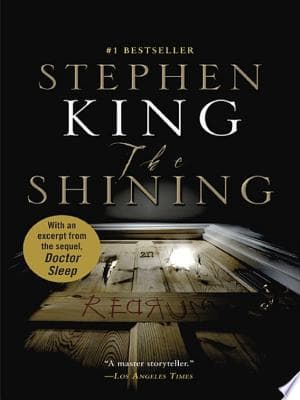
- The Shining
Stephen King
4.2 (1.1M) average on GoodreadsThrillerA recovering alcoholic accepts a caretaking job at a snow-bound, haunted hotel, where his son's psychic abilities reveal the sinister forces that drive him to madness and terrorize his family.





Enjoyed the summary?
A summary gives you the shape of the book. The book itself has the detail, the examples and the voice.
Find Sharp Objects on AmazonAs an Amazon Associate, BookBrief earns from qualifying purchases. How we're funded