

Synopsis
Covers the whole plot, including the ending.
- Difficulty
- Medium
- Pacing
- Fast
- Mood
- Dark, Suspenseful, Gritty, Intense
- Read it if
- You enjoy dark, gritty British crime thrillers with a strong female detective and a focus on psychological trauma and past secrets.
- Skip it if
- You prefer lighter mysteries or are sensitive to themes of child abuse and graphic violence.
Silent Scream Plot Summary
Covers the whole plot, including the ending.
The Discovery at Crestwood Grange
The story begins with DI Kim Stone and her team – DS Bryant, DC Dawson, and DC Penn – called to a brutal murder. Miss Belinda Ashton, a headmistress, has been found strangled in her Black Country home. Her body is carefully placed, suggesting a personal vendetta or ritual. At the same time, human remains are found at Crestwood Grange, an old children's home, during a routine check. These remains belong to several people, including children, and show signs of severe abuse. Kim immediately suspects a link between the current murder and the terrible history of Crestwood Grange, known for its strict rules and the mysterious disappearance of several children decades ago. The discovery at Crestwood Grange deeply bothers Kim, whose own traumatic past in care homes starts to resurface, adding a personal side to the investigation.
Unearthing the Past of Crestwood Grange
As the forensic team, led by Dr. Alex Thorne, carefully works to identify the remains from Crestwood Grange, Kim's team interviews former residents and staff. They find a pattern of severe physical and psychological abuse by the matron, Margaret Hill, and her staff. Many children disappeared without a trace, dismissed by authorities as runaways. Kim focuses on a specific group of children who were close and seemed to have a secret pact. The current murder victim, Belinda Ashton, was a former resident of Crestwood Grange, confirming Kim's belief that the past and present are connected. The team struggles to get former residents to talk, as fear and trauma have kept them silent for decades, making the investigation slow.
The Second Victim and a Pattern Emerges
While the team processes information from Crestwood Grange, a second victim is found: Graham Ransome, a former resident who became a successful businessman. Like Belinda Ashton, he is brutally murdered, the scene carefully arranged. This second murder confirms Kim's theory that a serial killer is targeting former residents or staff of Crestwood Grange. The killer's methods are precise and brutal, suggesting deep anger. Kim and Bryant believe the killer is either seeking revenge for past abuses or trying to silence witnesses to a long-hidden secret. Pressure builds as the media sensationalizes the killings, and the police force demands quick progress, pushing Kim to work constantly despite her personal discomfort with the case.
The Five-Pointed Star and a Shared Secret
During the examination of the crime scenes, forensic evidence shows a small, five-pointed star carved into furniture or left near the victims. This symbol is quickly identified as important to a group of children at Crestwood Grange. Kim remembers seeing similar symbols in her own past in care. The team learns from reluctant former residents that a specific group of five children – Belinda, Graham, and three others – were close and had a secret pact, marked by this star. This suggests the killer is targeting members of this specific group, implying a shared secret or wrong from their childhood that is now being avenged or silenced. The focus shifts to finding the remaining members of this group before the killer strikes again.
The Search for the Remaining Survivors
With the killer's pattern clear, Kim and her team work to find the remaining members of the five-pointed star group. They identify two more people: Marcus Thorne, a successful architect, and a woman named Sarah, whose location is unknown. The team tries to contact Marcus, but he is initially evasive and scared, not wanting to revisit his past. Kim realizes the killer is systematically removing those connected to a specific event at Crestwood Grange. Time is short as they know the killer is likely closing in on Marcus and Sarah. Kim's own memories of her time in care homes become more vivid and disturbing, making her more determined to protect the vulnerable survivors.
Marcus Thorne's Confession
Fearing for his life, Marcus Thorne finally agrees to meet with Kim after she ensures his safety. He breaks down and confesses the dark secret shared by the five children: they were all involved in the accidental death of another child, Billy, at Crestwood Grange. Billy, a younger, vulnerable boy, had been a target of Matron Hill's abuse. While trying to protect him, the five children accidentally caused his death. Scared of Matron Hill's punishment, they buried Billy's body in the grounds and made a pact to keep their secret forever. This confession explains the shallow graves and the motive for the killings: someone is punishing them for their past actions, or for their silence.
The Identity of the Killer and a Personal Vendetta
With Marcus's confession, Kim realizes the killer must be someone closely linked to Billy and the pact. The team finds Sarah, the fifth member of the group, and discovers she is Billy's older sister, who also lived at Crestwood Grange. Sarah, traumatized by her brother's death and the group's silence, has been planning her revenge for decades. She believes the others betrayed Billy by not speaking about his abuse or their part in his death. Her killing spree is a twisted form of justice, driven by grief and a deep feeling of abandonment. Kim understands that Sarah's actions, while terrible, come from an understandable, though destructive, place of pain.
The Confrontation and Kim's Trauma
Kim and her team race to stop Sarah before she can kill her final victim, Marcus Thorne. They track her to a secluded place where she has Marcus cornered, ready for her final act of revenge. Kim confronts Sarah, not just as a detective, but as someone who understands the pain of a traumatic childhood in care. Kim uses her own experiences to connect with Sarah, trying to break through her vengeful front. The confrontation is tense and emotional, forcing Kim to revisit her own hidden memories of abuse and abandonment. Kim's ability to empathize, while staying professional, helps end Sarah's terror without more bloodshed.
The Resolution and Aftermath
Sarah is caught, ending the brutal murders. The full story of Crestwood Grange, Matron Hill's terrible abuses, and Billy's tragic death, along with the cover-up, finally comes out. The remains of the children buried in the grounds are identified, giving some closure to their families. While justice is served now, the past system failures are also exposed. For Kim, solving the case, especially one so tied to the trauma of institutional care, lets her confront some of her own problems. She starts to process her past, finding some peace and a renewed purpose in her work, knowing she can fight for those who cannot fight for themselves. The team, though shaken, becomes stronger and more united.
Lingering Scars and Future Implications
Even after the case closes, emotional scars remain, especially for Kim. The investigation into Crestwood Grange and Sarah's revenge forces Kim to acknowledge how much her own childhood trauma has affected her life and her detective work. While she has found a way to use her experiences in her job, the memories are still raw. The team also deals with the darkness they've seen, strengthening their bond and commitment to justice. The novel ends with Kim thinking about how fragile childhood is and how important it is to uncover truth, no matter how painful. This hints at her continued journey of self-discovery and her dedication to giving a voice to society's voiceless victims.
Silent Scream Characters
DI Kim Stone
Protagonist
A brilliant but emotionally scarred detective inspector with a traumatic past in care homes.
Kim Stone is a highly intelligent and intuitive detective, known for her sharp mind, relentless pursuit of justice, and unconventional methods. She is fiercely independent and often struggles with authority, preferring to follow her instincts. Her personal life is largely solitary, marked by the deep emotional scars left by a childhood spent in abusive care homes. This past makes her deeply empathetic towards victims, especially children, but also prone to internalizing the darkness of her cases. She often uses humor as a defense mechanism but underneath lies a profound vulnerability and a fierce sense of loyalty to her team.
Relationships: DS Bryant (Trusted partner and confidant, a steadying influence.); DC Dawson (Loyal and eager team member, often the comic relief.); DC Penn (Competent and dedicated team member, initially more reserved.); Dr. Alex Thorne (Professional colleague and forensic pathologist, provides crucial insights.)
DS Bryant
Supporting
Kim Stone's loyal and pragmatic second-in-command.
DS Bryant is Kim's most trusted colleague and partner. He is steady, reliable, and possesses a strong moral compass. While not as outwardly brilliant as Kim, he provides a grounded perspective and often acts as a buffer between Kim and the more conventional police hierarchy. He is deeply loyal to Kim, understanding her unique methods and often anticipating her needs. He serves as Kim's emotional anchor, offering quiet support and practicality, especially when Kim's past resurfaces. Bryant is a family man, contrasting with Kim's solitary existence, and his calm demeanor often balances Kim's intensity.
Relationships: DI Kim Stone (Loyal partner and confidant, provides grounding and support.); DC Dawson (Superior, guides and manages the team.); DC Penn (Superior, guides and manages the team.)
DC Dawson
Supporting
An enthusiastic and sometimes overzealous junior detective on Kim's team.
DC Dawson is the youngest and most eager member of Kim's team. He is enthusiastic, sometimes prone to making minor mistakes due to his eagerness, but he is quick to learn and fiercely dedicated. Dawson often provides comic relief and a sense of youthful energy to the team. He looks up to Kim and Bryant, striving to prove himself. Despite his occasional blunders, he is a valuable asset, particularly with his computer skills and ability to connect with people. He represents the fresh perspective and the potential for growth within the team.
Relationships: DI Kim Stone (Superior and mentor, he seeks her approval.); DS Bryant (Superior and mentor.); DC Penn (Colleague, often shares tasks and banter with.)
DC Penn
Supporting
A quiet and observant detective, the newest member of Kim's team.
DC Penn is the newest addition to Kim's team. Initially quiet and reserved, she is highly competent and observant. Penn is meticulous in her work and quickly proves her worth, often picking up on details others miss. She is less outwardly expressive than Dawson but equally dedicated. She brings a fresh perspective to the team and gradually integrates herself, earning Kim's respect. Penn's quiet competence provides a strong foundation for the team's investigations, and she often acts as a foil to Dawson's more outgoing personality.
Relationships: DI Kim Stone (Superior and mentor.); DS Bryant (Superior and mentor.); DC Dawson (Colleague, often works alongside.)
Sarah
Antagonist
The vengeful older sister of Billy, seeking justice for his death and the silence of the 'pact' children.
Sarah is the primary antagonist of the story, though her motivations are rooted in profound grief and trauma. As Billy's older sister, she was also a resident at Crestwood Grange and witnessed his abuse and the subsequent accidental death. Her inability to protect him and the collective silence of the 'pact' children festered into a deep-seated rage and desire for revenge over decades. She is intelligent, meticulous, and utterly ruthless in her pursuit of justice, believing her actions are morally justified. Her character highlights the long-lasting and destructive impact of unaddressed trauma and systemic failures.
Relationships: Billy (Her younger brother, whose death fuels her revenge.); Belinda Ashton (Victim, a member of the 'pact'.); Graham Ransome (Victim, a member of the 'pact'.); Marcus Thorne (Target, a member of the 'pact'.); DI Kim Stone (Her ultimate adversary, who ultimately brings her to justice.)
Marcus Thorne
Supporting
A successful architect and one of the surviving members of the 'pact' group from Crestwood Grange.
Marcus Thorne is one of the five children who formed the 'pact' at Crestwood Grange. He managed to escape his traumatic past and build a successful life as an architect, burying his memories deep down. He is initially fearful and evasive when contacted by the police, terrified of having his past exposed and facing the consequences of the long-held secret. His character represents the guilt and fear that can haunt survivors of childhood trauma, and his eventual confession is a turning point in the investigation. He embodies the struggle to move on from a horrific past while still being bound by it.
Relationships: Belinda Ashton (Fellow member of the 'pact', a victim.); Graham Ransome (Fellow member of the 'pact', a victim.); Sarah (Fellow member of the 'pact', the killer.); DI Kim Stone (The detective who pushes him to reveal the truth.)
Miss Belinda Ashton
Mentioned
The first murder victim, a headmistress and former resident of Crestwood Grange.
Belinda Ashton was a respected headmistress, seemingly living a normal, successful life. However, she carried the dark secret of her time at Crestwood Grange and her involvement in the 'pact'. Her murder is the catalyst for the entire investigation, revealing the deep-seated trauma and long-buried secrets connected to the children's home. Her character represents the initial victim of the killer's revenge, highlighting how past traumas can resurface with devastating consequences, even decades later. She is a symbol of the seemingly innocent lives irrevocably tainted by a horrific childhood.
Relationships: Sarah (Her killer, fellow resident of Crestwood Grange.); Marcus Thorne (Fellow member of the 'pact'.); Graham Ransome (Fellow member of the 'pact'.)
Graham Ransome
Mentioned
The second murder victim, a successful businessman and former resident of Crestwood Grange.
Graham Ransome was a successful businessman, similar to Belinda Ashton in having seemingly overcome his traumatic past at Crestwood Grange. He was also a member of the 'pact' group. His murder confirms Kim's suspicion that the killer is targeting individuals connected to the children's home and the shared secret. His character further establishes the pattern of the killer's revenge, demonstrating that no amount of success or distance from the past can protect the victims from the long reach of their shared history. His death intensifies the urgency of the police investigation.
Relationships: Sarah (His killer, fellow resident of Crestwood Grange.); Belinda Ashton (Fellow member of the 'pact', a victim.); Marcus Thorne (Fellow member of the 'pact'.)
Billy
Mentioned
The young child whose accidental death at Crestwood Grange forms the central mystery and motive.
Billy is the tragic figure at the heart of the mystery. A younger, vulnerable boy at Crestwood Grange, he was subjected to severe abuse by Matron Hill. His accidental death, caused by the 'pact' children in an attempt to protect him, was covered up, leading to decades of silence and ultimately, Sarah's vengeful rampage. Billy represents the innocent victims of institutional abuse and the profound impact their suffering has on others. His presence, though posthumous, drives the entire plot, revealing the deep-seated trauma and guilt that haunted the survivors.
Relationships: Sarah (His older sister, who seeks revenge for his death.); Belinda Ashton (One of the 'pact' children present at his death.); Graham Ransome (One of the 'pact' children present at his death.); Marcus Thorne (One of the 'pact' children present at his death.); Matron Hill (His abuser at Crestwood Grange.)
Matron Hill
Mentioned
The abusive matron of Crestwood Grange, responsible for widespread child abuse.
Matron Hill is the unseen but ever-present villain from the past. She was the cruel and sadistic head of Crestwood Grange, responsible for the systemic physical and psychological abuse of the children in her care. Her reign of terror created an environment of fear and secrecy that led directly to Billy's death and the subsequent 'pact' among the children. Though she is long deceased by the time of the investigation, her legacy of abuse continues to haunt the survivors and is the ultimate root cause of the present-day murders. She embodies the unchecked power and corruption within institutions meant to protect the vulnerable.
Relationships: Billy (His abuser.); Belinda Ashton (Her victim.); Graham Ransome (Her victim.); Marcus Thorne (Her victim.); Sarah (Her victim.)
Silent Scream Themes
The Enduring Impact of Childhood Trauma
The novel shows how childhood trauma, especially abuse in care, can shape and destroy lives decades later. Kim's own past in care homes makes her understand the victims and the killer, Sarah, whose actions come from the unhealed pain of her brother's death and the cover-up at Crestwood Grange. The survivors of Crestwood Grange, whether victims or perpetrators, are all deeply affected, unable to escape the shadow of their terrible experiences. This theme highlights the long-term psychological and emotional results of early bad experiences, showing how they can appear as destructive behaviors, guilt, and a lifelong struggle for peace.
“Some wounds never healed. They just festered, waiting for the right moment to burst open.”
Justice vs. Revenge
A main conflict involves the unclear line between seeking justice and taking revenge. Sarah's killing spree is her twisted attempt to find justice for her brother Billy and punish those she believes were involved in his death and the subsequent silence. While her pain is understandable, her methods are brutal and illegal. Kim, as a detective, represents the pursuit of lawful justice, even for past wrongs, and must confront Sarah's vigilante actions. The novel explores if true justice can ever be found when the legal system failed so badly in the past, and if revenge, no matter the reason, can truly bring peace.
“Justice wasn't about who suffered more. It was about right and wrong. And murder was always wrong.”
The Weight of Secrets and Silence
The entire plot moves forward because of a long-hidden secret: Billy's accidental death and the pact made by the five children to stay silent. This silence, kept for decades, creates a breeding ground for guilt, fear, and eventually, revenge. The children's inability or unwillingness to speak about the abuses at Crestwood Grange and Billy's death leads to terrible results in the present. The novel shows how secrets, especially those born from trauma and fear, can fester and destroy lives, and how breaking that silence, however painful, is often the only way to healing and truth. Kim's own journey involves facing her own hidden memories.
“Silence was a killer. It allowed evil to thrive, and it choked the truth until it died.”
Institutional Failure and Child Protection
The novel reveals the horrifying reality of system failure in protecting vulnerable children. Crestwood Grange is a clear example of a care home where children suffered severe abuse, and their disappearances were ignored or dismissed by authorities. The lack of oversight and accountability allowed Matron Hill to act without punishment, creating a fearful environment. This theme criticizes the systems meant to protect children, showing how bureaucratic indifference and societal neglect can continue cycles of abuse and trauma. Finding the buried remains forces a reckoning with these past failures and shows the ongoing need for care in child protection.
“The system was supposed to protect them. Instead, it had broken them, left them to rot.”
Plot Devices & Literary Techniques
The Unreliable Memory/Trauma Flashbacks
Kim's own fragmented memories of her childhood in care homes resurface, impacting her investigation.
Kim Stone experiences vivid and disturbing flashbacks to her own traumatic childhood in care homes, particularly as the Crestwood Grange case unfolds. These fragmented memories are initially difficult for her to process and often trigger strong emotional responses. This device serves to deepen Kim's character, making her empathy for the victims and even the killer more profound. It also creates a sense of internal conflict and vulnerability for the protagonist, making her journey more personal. The unreliability and gradual unveiling of her own past parallels the uncovering of the truth about Crestwood Grange, adding layers to the mystery and Kim's personal arc.
The Blood Pact/Shared Secret
A childhood promise to keep a dark secret, which becomes the central motive for the killings.
The 'blood pact' made by the five children at Crestwood Grange after Billy's accidental death is the core plot device. This pact, symbolized by the five-pointed star, binds the children in a lifelong secret and becomes the direct cause of the present-day murders. It creates a powerful motive for the killer, who seeks to punish those who broke or upheld the silence. The pact's existence raises the stakes, as Kim must uncover this hidden history to understand the killer's target and motivation. It represents the enduring power of childhood experiences and the destructive nature of secrets kept under duress.
The Motif of the Five-Pointed Star
A recurring symbol linking the victims and the killer to a shared childhood secret.
The five-pointed star is a crucial recurring motif throughout the novel. It is found subtly at the crime scenes and is eventually revealed to be the symbol of the 'pact' between the five children at Crestwood Grange. This symbol acts as a breadcrumb trail, guiding Kim's investigation and helping her to identify the victims' shared connection. It adds a ritualistic, almost mythical quality to the killings, emphasizing the deep-seated, almost sacred nature of the childhood secret. The star serves as a visual representation of the unbreakable bond and the tragic event that continues to haunt the survivors.
The Derelict Children's Home (Crestwood Grange)
A physical setting that embodies past trauma and serves as the nexus of the mystery.
Crestwood Grange, the derelict former children's home, functions as a powerful plot device. It is not merely a setting but a character in itself, embodying the past trauma and abuse that drives the entire narrative. The discovery of human remains within its grounds immediately establishes the sinister history and sets the tone for the investigation. Its decaying state mirrors the forgotten and suppressed memories of its former residents. The Grange serves as the central hub connecting all the victims and the killer, a physical manifestation of the secrets that refuse to stay buried. Its oppressive atmosphere enhances the psychological thriller aspect of the novel.
Silent Scream Quotes
“The past was a relentless predator, and it had finally caught up with her.”
“Sometimes the most monstrous acts were committed by those who appeared the most ordinary.”
“Every secret had a shelf life, and eventually, they all went bad.”
“Justice wasn't about revenge; it was about balance.”
“The silence was never truly silent; it always held echoes of what had been.”
“There were no monsters under the bed, only broken people trying to put themselves back together.”
“The truth had a way of bleeding out, no matter how deep you tried to bury it.”
“Some wounds never healed, they just scabbed over, waiting for the next scratch to bleed again.”
“The greatest cruelty often came from those who claimed to care the most.”
“Fear was a powerful motivator, capable of making people do terrible things.”
“Every victim had a voice, even if it was only heard in the silence that followed.”
“The weight of a secret could crush you, even if no one else knew you were carrying it.”
“Sometimes, the only way to move forward was to look back, no matter how painful the view.”
Quiz
10 questions on the plot and the characters. Each answer comes with a short explanation.
Question 1
What is the initial crime that brings D.I. Kim Stone into the case?
- The discovery of human remains at a former children's home.
- The brutal strangulation of a headmistress.
- A series of disappearances in the Black Country.
- A break-in at a local orphanage.
Show answer
B. The brutal strangulation of a headmistress. The book description states that 'a headmistress is found brutally strangled, the first in a spate of gruesome murders which shock the Black Country.' This is the initial event that begins the investigation.
Question 2
What kind of location is central to the discovery of human remains that unearths disturbing secrets?
- A deserted factory.
- A former children's home.
- An abandoned hospital.
- A historical burial ground.
Show answer
B. A former children's home. The synopsis mentions, 'But when human remains are discovered at a former children’s home, disturbing secrets are also unearthed.' This location is key to the unfolding mystery.
Question 3
What is the primary motivation for the 'five figures' at the beginning of the story to bury an 'innocent life'?
- To hide a robbery gone wrong.
- To enact revenge on a rival gang.
- To keep their secrets buried and bound in blood.
- To cover up an accidental death.
Show answer
C. To keep their secrets buried and bound in blood. The opening lines state, 'Their secrets would be buried, bound in blood…' indicating their pact to conceal a past crime.
Question 4
What challenge does D.I. Kim Stone face personally during the investigation?
- She struggles with a new police partner.
- She needs to confront the demons of her own past.
- She is dealing with a serious illness.
- She has to relocate to a new city for the case.
Show answer
B. She needs to confront the demons of her own past. The description highlights, 'But to catch the killer, can Kim confront the demons of her own past before it’s too late?' This suggests a personal struggle tied to the case.
Question 5
The killer's spree is described as spanning what duration?
- Months.
- A few years.
- Decades.
- Weeks.
Show answer
C. Decades. The synopsis states, 'D.I. Kim Stone fast realises she’s on the hunt for a twisted individual whose killing spree spans decades.'
Question 6
What is the primary genre of 'Silent Scream'?
- Romance.
- Fantasy.
- Thriller, Mystery.
- Science Fiction.
Show answer
C. Thriller, Mystery. The provided information explicitly states the book's genre as 'Thriller, Mystery'.
Question 7
The initial shallow grave mentioned in the prologue is described as being 'adult sized' if it had 'taken longer'. What does this detail imply about the victim?
- The victim was an adult, but they were in a fetal position.
- The victim was a child, making the burial quicker and easier.
- The victim was dismembered to fit into a smaller grave.
- The victim was a very small adult.
Show answer
B. The victim was a child, making the burial quicker and easier. The text states, 'An adult sized hole would have taken longer. An innocent life had been taken...' This strongly implies the victim was not an adult, thus a child, which made the digging of the shallow grave less time-consuming.
Question 8
What specific region of the UK is mentioned as being shocked by the gruesome murders?
- The Scottish Highlands.
- The Black Country.
- The Lake District.
- East Anglia.
Show answer
B. The Black Country. The description clearly states, 'gruesome murders which shock the Black Country.'
Question 9
The phrase 'bound in blood' in the context of the initial pact made by the five figures most strongly suggests what about their secret?
- They performed a blood ritual to seal their friendship.
- Their secret involves a murder and a shared guilt that ties them together.
- They are blood relatives trying to protect a family secret.
- They signed a contract written in blood.
Show answer
B. Their secret involves a murder and a shared guilt that ties them together. Given the context of burying an 'innocent life' and making a 'pact' for their 'secrets would be buried, bound in blood', it implies a shared involvement in a violent crime and a deep, binding commitment to its concealment.
Question 10
The repeated discovery of bodies and the killer's long-spanning spree suggests which overarching theme regarding justice?
- Justice is swift and immediate.
- Justice is often delayed but ultimately unavoidable.
- Justice is only served through personal vengeance.
- Justice is irrelevant in such complex cases.
Show answer
B. Justice is often delayed but ultimately unavoidable. The phrase 'Even the darkest secrets can’t stay buried forever…' combined with a 'killing spree spans decades' and 'human remains are discovered' strongly implies that past crimes, despite being buried for a long time, will eventually come to light and face justice.
Silent Scream FAQ
What is the central mystery D.I. Kim Stone investigates in 'Silent Scream'?
D.I. Kim Stone investigates a series of brutal strangulation murders in the Black Country, starting with a headmistress. Concurrently, human remains are discovered at a former children's home, Heathlands, which leads her to believe the current murders are connected to a decades-old pact and a killer whose spree spans years.
What is the significance of Heathlands Children's Home in the plot?
Heathlands Children's Home is where the human remains are discovered, linking directly to a group of children who made a blood pact after burying a body decades ago. This home serves as the epicenter of the past trauma and the origin point for the killer's motives and the victims' connections.
Who are the primary victims in the present-day murder spree?
The present-day victims include the headmistress of St. John's Primary, Amanda Carter, followed by other individuals who were all connected to Heathlands Children's Home as either former residents or staff. Each victim seems to be systematically targeted due to their involvement in the past secrets.
How does D.I. Kim Stone's past influence her investigation in this book?
Kim Stone's own traumatic past in children's homes, specifically her experiences with neglect and abuse, creates a strong personal connection to the case. This history often triggers her emotionally, but also gives her unique insight and an unwavering drive to seek justice for the vulnerable, particularly the children from Heathlands.
Who are the key members of Kim Stone's team and what are their roles?
Kim's team includes DS Bryant, her loyal and pragmatic second-in-command; DC Dawson, the meticulous and reliable junior officer; and DC Penn, the tech-savvy and often sarcastic member. They provide diverse skills and support, helping Kim navigate the complex investigation and offering crucial insights.
What is the 'pact' mentioned in the synopsis, and who was involved?
The 'pact' refers to a solemn agreement made by five children at Heathlands Children's Home after they buried a body. This group included a young Melanie, Paul, and others, who swore to keep their secret bound in blood, fearing the consequences if the truth ever came out.
How does the killer choose their victims, specifically linking them to the past?
The killer meticulously targets individuals who were directly involved in the events at Heathlands, either as part of the original five children who made the pact, or those who were complicit in the abuse and neglect within the home. Their deaths are a form of retribution for past actions and silence.
Are there any red herrings or misleading clues regarding the killer's identity?
Yes, the investigation initially points towards several potential suspects, including former staff members with grudges or other residents from Heathlands. The narrative skillfully misdirects the reader by highlighting various characters' suspicious behaviors and past secrets, making the true killer's reveal impactful.
What is the significance of the specific method of murder (strangulation)?
The strangulation method is highly personal and intimate, suggesting a deep-seated rage and a desire for control over the victims. It hints at the killer's emotional investment and the intensity of their anger, likely stemming from feelings of powerlessness experienced in their past at Heathlands.
How does the killer's motive reflect the long-term psychological impact of childhood trauma?
The killer's motive is a direct manifestation of unaddressed childhood trauma, specifically the abuse and neglect suffered at Heathlands, combined with the guilt and fear from the pact. The murders are an attempt to reclaim agency and exact revenge for a stolen childhood, showing how past wounds can fester into destructive obsessions.
How does Kim Stone's personal history affect her professional conduct during the investigation?
Kim's past makes her intensely empathetic towards the child victims and fiercely determined to uncover the truth, often pushing boundaries. While this drive is an asset, it can also make her emotionally vulnerable and prone to impulsive actions, requiring her team to occasionally ground her and ensure she maintains objectivity.
What psychological themes are explored through the 'pact' made by the children?
The pact explores themes of collective trauma, the burden of shared secrets, and the psychological weight of guilt. It highlights how children, in their vulnerability, can be forced into choices that haunt them for life, demonstrating the corrosive power of silence and fear.
Is the killer's ultimate goal justice, revenge, or something else entirely?
The killer's ultimate goal is a complex mix of revenge for their own suffering and a twisted sense of justice for the past wrongs at Heathlands. They believe they are righting historical injustices, but their methods are purely vindictive, driven by a deep-seated desire to make those responsible pay for their actions and silence.
Does the book suggest that the 'justice' sought by the killer is ever justified, even with their horrific methods?
No, the book firmly establishes that while the killer's origins in suffering are tragic, their methods are unequivocally horrific and criminal. It highlights the destructive cycle of violence and trauma, emphasizing that true justice cannot be achieved through further bloodshed, regardless of past injustices.
How does 'Silent Scream' comment on the institutional failures in child protection?
'Silent Scream' powerfully critiques the systemic failures within institutions like Heathlands, exposing the neglect, abuse, and cover-ups that can occur. It underscores how vulnerable children were left unprotected, leading to long-term trauma and the tragic events that unfold decades later.
What is the lasting impact of the resolution on Kim Stone's character?
The resolution of 'Silent Scream' leaves Kim Stone deeply affected, reinforcing her commitment to her work and her understanding of the lasting scars of childhood trauma. While she solves the case, it also forces her to confront more of her own past, making her more resolute but also more aware of her own vulnerabilities.
Could the 'pact' have been broken earlier, and if so, what might have been the consequences?
The 'pact' could theoretically have been broken earlier if one of the children had come forward, but the immense fear of repercussions and their young age prevented this. Breaking it earlier might have prevented the decades of murders, but it also could have led to different forms of retribution or further trauma for the children involved.
Similar books
- The Cuckoo's Calling
Robert Galbraith
3.9 (482k) average on GoodreadsThriller"Silent Scream" offers a more visceral and less genteel depiction of crime. While Galbraith's Cormoran Strike series excels in classic detective work and character interplay, Marsons plunges directly into the darker psychological undercurrents of human depravity, prioritizing tension and emotional impact over intricate clue-solving and drawing less on cozy mystery tropes.
- The Girl on the Train
Paula Hawkins
3.9 (2.1M) average on GoodreadsThrillerWhile sharing a focus on trauma and psychological suspense, Marsons' work distinguishes itself through its grounded police procedural elements rather than relying on unreliable narration. Hawkins' strength lies in its psychological suspense derived from perception and memory, whereas Marsons’ intensity comes from the grim reality of past events and their present-day consequences, firmly rooted in a police investigation.
- Angels & Demons
Dan Brown
3.9 (2.7M) average on GoodreadsThrillerA Harvard symbologist races through Rome's ancient sites, deciphering cryptic clues to unmask the Illuminati and stop a vengeful plot to destroy the Vatican with a stolen antimatter weapon.
- Gone Girl
Gillian Flynn
4.1 (2.3M) average on GoodreadsThrillerA wife's sudden disappearance on her fifth anniversary reveals a web of lies and psychological warfare, exposing the secrets within a seemingly perfect marriage.
- The Da Vinci Code
Dan Brown
3.9 (1.9M) average on GoodreadsThrillerA symbologist and a cryptologist race through European landmarks, deciphering ancient codes and uncovering a conspiracy that could rewrite the foundations of Christianity.
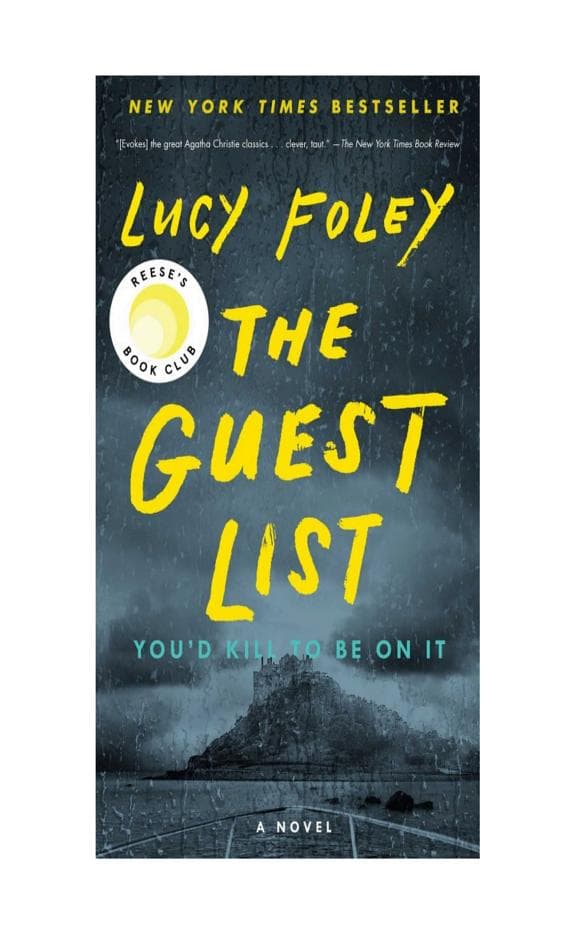
- The Guest List
Lucy Foley
3.8 (1.3M) average on GoodreadsThrillerOn a remote Irish island, a glamorous wedding descends into a deadly whodunnit when a guest is found murdered, trapping everyone with their secrets as a storm rages.





Enjoyed the summary?
A summary gives you the shape of the book. The book itself has the detail, the examples and the voice.
Find Silent Scream on AmazonAs an Amazon Associate, BookBrief earns from qualifying purchases. How we're funded