

Synopsis
Covers the whole plot, including the ending.
- Difficulty
- Medium
- Pacing
- Variable
- Mood
- Dark, Cynical, Suspenseful, Unsettling
- Read it if
- You enjoy dark, unconventional thrillers with morally ambiguous characters and a unique premise.
- Skip it if
- You prefer straightforward mysteries without a heavy dose of psychological introspection or a slightly bizarre concept.
Sorry Plot Summary
Covers the whole plot, including the ending.
The Genesis of SORRY
Kris, Tamara, Wolf, and Frauke, four childhood friends in their late twenties, are stuck in dead-end lives in Berlin. Kris, a former art student, is a petty thief; Tamara works in a call center; Wolf is an unemployed bouncer; and Frauke is a struggling actress. One night, while drunk and commiserating over their failures and the general injustices of the world, Kris proposes a bizarre idea: an agency that offers apologies on behalf of others. They jokingly call it SORRY. Initially conceived as a cynical joke, the concept gradually takes root, appealing to their shared sense of disillusionment and their desire for a way out of their current predicaments. They decide to pool their meager resources and give the outlandish venture a try, setting up their first office in a dilapidated building.
SORRY's Unexpected Success
To their surprise, SORRY gains traction quickly. Their first clients are a mix of the guilt-ridden, the cowardly, and the manipulative – a businessman wanting to apologize to a former partner he swindled, a child wanting to say sorry to a friend for a broken toy. The friends develop a system: Frauke, with her acting skills, delivers the apologies, often adopting personas to match the client's desired effect; Wolf provides security and intimidation; Tamara manages the finances and logistics; and Kris, the original visionary, handles the creative aspects and client consultations. The agency's unique service taps into a deeply human need, and word-of-mouth spreads rapidly, leading to a steady stream of increasingly complex and lucrative apologies. They move into a more respectable office and begin to earn significant money.
The First Unsettling Apology
As SORRY grows, the nature of their apologies becomes more varied. One particular case stands out: a wealthy, elderly woman hires SORRY to apologize to her estranged daughter for years of neglect and emotional abuse. Frauke, embodying a contrite mother, delivers a heartfelt apology, which the daughter initially rejects but eventually seems to accept. However, the friends notice a subtle shift in the daughter's demeanor after the apology – a newfound, almost unsettling peace. Kris feels a flicker of unease, a sense that their service, while seemingly benevolent, might be having unforeseen and potentially manipulative effects. This incident marks the first time they question the true impact and ethics of their work, moving beyond simple apologies into the realm of emotional intervention.
The Case of the Missing Heiress
SORRY is approached by a powerful, enigmatic figure named Mr. Blank, who offers an exorbitant sum for an apology. His client, a shadowy individual, wants to apologize to a young heiress, Isabella, who has recently disappeared under mysterious circumstances. The apology is not for Isabella directly, but for 'what happened to her.' This case immediately raises red flags for Kris and the others. The sheer amount of money, coupled with the ambiguity of the apology's target and content, suggests a connection to Isabella's disappearance. Despite their growing apprehension, the lure of the money and the thrill of the challenge are too strong to resist, pulling them deeper into a dangerous game. They agree to take the case, not realizing the extent of the peril they are inviting.
The Apology to Isabella
Frauke, after much deliberation and preparation, delivers the apology to an empty room, as Isabella is missing. However, the 'apology' itself is not one of remorse but a chilling narrative, carefully crafted by Kris based on cryptic clues from Mr. Blank. Frauke's performance, delivered with her characteristic intensity, describes Isabella's kidnapping, her captivity, and ultimately, her murder. The friends are horrified by the implications: they have unwittingly become instruments in a murderer's twisted attempt at psychological closure, or perhaps, a macabre form of gloating. The line between apology and complicity blurs, leaving them profoundly shaken.
The Police Investigation and SORRY's Exposure
The police, led by the astute Inspector Müller, begin to investigate Isabella's disappearance more aggressively. Clues, some intentionally planted by Mr. Blank, lead them to SORRY. Müller, a keen observer of human nature, finds the concept of the agency inherently suspicious. He interrogates Kris, Tamara, Wolf, and Frauke, sensing their involvement is deeper than they let on. The friends struggle to maintain their composure and secrecy, realizing they are now prime suspects or, at the very least, persons of interest in a murder investigation. The pressure mounts, and the once-harmonious dynamic within the group begins to fray under the intense scrutiny and the weight of their secret.
Internal Strife and Moral Dilemmas
The escalating police investigation and the horrifying truth about Isabella's fate create deep rifts within the SORRY team. Tamara, always the most pragmatic, becomes increasingly paranoid and advocates for cutting their losses and potentially revealing what they know. Wolf, initially dismissive, grows agitated and violent, struggling with the moral implications of their actions. Frauke, whose performances have become increasingly dark, suffers from nightmares and a profound sense of complicity. Kris, burdened by the initial idea, tries to hold them together but feels the weight of his responsibility. Accusations fly, trust erodes, and the friends, once united by their cynicism, find themselves isolated by their shared guilt and fear of exposure.
Unraveling Mr. Blank's Identity
Determined to understand who they are truly dealing with, Kris secretly begins his own investigation into Mr. Blank. He uses his street smarts and contacts from his past life as a thief to dig into Blank's background. Kris discovers that Mr. Blank is not just a middleman but a key figure, a ruthless manipulator with powerful connections, and that he has a personal vendetta or connection to Isabella's family. The 'apology' was not just a confession but a deliberate, psychological torment aimed at someone close to Isabella. Kris uncovers a complex web of deceit, revenge, and old scores, realizing that SORRY was merely a pawn in a much larger, more dangerous game. This revelation solidifies his resolve to expose Blank.
The Confrontation and the Trap
Armed with the truth about Mr. Blank, Kris devises a dangerous plan to expose him, hoping to clear SORRY's name and bring justice for Isabella. He uses SORRY's unique methodology against Blank, proposing a new 'apology' that would, in effect, be a confession of Blank's own crimes. He manipulates the situation, drawing Blank into a final, climactic meeting. The friends, despite their fears and internal conflicts, reluctantly agree to participate, seeing it as their only way out. The confrontation takes place in a tense, high-stakes environment, with the police, led by Inspector Müller, secretly monitoring the situation, thanks to an anonymous tip from Kris.
The Climax and Aftermath
During the orchestrated 'apology,' Frauke, under immense pressure, delivers a performance that exposes Mr. Blank's crimes and his connection to Isabella's murder. The truth, carefully woven into the apology's narrative, shocks Blank, who realizes he has been outmaneuvered. A violent struggle ensues as Blank attempts to escape. Inspector Müller and his team intervene, leading to a chaotic climax. Blank is apprehended, but not without casualties or injuries. In the aftermath, SORRY is irrevocably broken. The friends are interrogated, their involvement revealed, though their role is ultimately seen as coerced. They are scarred by the experience, their friendship fractured, and the agency, once a symbol of their cynical ambition, is dissolved, leaving them to grapple with the moral complexities of their past actions.
Sorry Characters
Kris
Protagonist
The cynical visionary and reluctant leader of SORRY.
Kris is the intellectual and creative force behind SORRY. A former art student, he possesses a sharp mind, a cynical worldview, and a knack for observation. He is the one who conceives the idea of the apology agency, driven by a blend of disillusionment and a desire for something more than his current life of petty crime. Though often detached, he feels the weight of responsibility for the agency's actions and its impact on his friends. He is the most driven to uncover the truth about Mr. Blank.
Relationships: Tamara (Childhood friend, business partner, romantic tension); Wolf (Childhood friend, business partner, often clashes with); Frauke (Childhood friend, business partner, relies on her acting skills)
Tamara
Supporting
The pragmatic and financially astute member of SORRY.
Tamara is the pragmatic and organized member of the group, handling SORRY's finances and logistics. She is the most grounded and risk-averse, often questioning the more audacious plans. Working in a call center has given her a cynical outlook on human nature, but she also possesses a deep loyalty to her friends. As the stakes rise, she becomes increasingly anxious and focused on self-preservation, often clashing with Kris over their ethical boundaries.
Relationships: Kris (Childhood friend, business partner, romantic tension); Wolf (Childhood friend, business partner); Frauke (Childhood friend, business partner)
Wolf
Supporting
The muscle and enforcer of the SORRY agency.
Wolf is the physically imposing and often aggressive member of the group. An unemployed bouncer, he struggles with his temper and a sense of aimlessness. He initially embraces the SORRY concept as a way to earn money and feel useful, enjoying the power dynamics involved. However, as the apologies become darker, his moral compass is challenged, leading to internal conflict and outbursts of anger. He struggles to reconcile his desire for loyalty with the escalating danger and ethical dilemmas.
Relationships: Kris (Childhood friend, business partner, often clashes with); Tamara (Childhood friend, business partner); Frauke (Childhood friend, business partner)
Frauke
Supporting
The talented actress who delivers SORRY's apologies.
Frauke is the emotional core and the public face of SORRY. A struggling actress, she channels her theatrical skills into delivering the apologies, often embodying different personas with remarkable conviction. She possesses a deep empathy, which makes her performances incredibly effective but also leaves her vulnerable to the emotional weight of the apologies. As the agency delves into darker territory, her performances become increasingly disturbing, taking a significant psychological toll on her.
Relationships: Kris (Childhood friend, business partner, relies on her talent); Tamara (Childhood friend, business partner); Wolf (Childhood friend, business partner)
Mr. Blank
Antagonist
The enigmatic and manipulative client who pulls SORRY into a murder investigation.
Mr. Blank is a shadowy, powerful, and utterly ruthless individual. He orchestrates the apology related to Isabella's disappearance, using SORRY as an unwitting tool in his complex scheme. He operates with a cold, calculating demeanor, revealing very little about his true motives or identity. He represents the corrupting influence that money and power can have, and his actions drive the central conflict of the novel. His true identity and connection to Isabella are slowly unraveled by Kris.
Relationships: Kris (Client/adversary); Isabella (Victim of his schemes)
Inspector Müller
Supporting
The astute police detective investigating Isabella's disappearance.
Inspector Müller is a seasoned and perceptive police detective. He is intelligent, methodical, and possesses a keen understanding of human psychology, which makes him immediately suspicious of the SORRY agency. He patiently pieces together clues, slowly tightening the net around the friends, always sensing that there is more to their story than they let on. He represents the forces of law and order, a constant threat to SORRY's secret.
Relationships: Kris (Interrogator/investigator); Isabella (Victim of the case he's investigating)
Isabella
Mentioned
The missing heiress whose disappearance fuels the central mystery.
Isabella is the young heiress whose mysterious disappearance and eventual murder form the core of the novel's central mystery. Though she never appears directly, her absence and the circumstances surrounding it drive the plot forward. She represents innocence corrupted and is the catalyst for SORRY's entanglement in the criminal underworld. Her story is slowly revealed through the 'apology' and Kris's investigation, highlighting the dark deeds committed by Mr. Blank.
Relationships: Mr. Blank (Murderer/victim); Kris (Subject of investigation)
Sorry Themes
The Nature of Guilt and Forgiveness
The novel explores the complex interplay of guilt, apology, and forgiveness. Initially, SORRY offers a superficial solution to guilt, allowing clients to outsource their remorse. However, as the agency moves into darker territory, particularly with Isabella's case, the story questions whether true forgiveness can be achieved without genuine contrition, or if an apology can be a tool for manipulation. The friends themselves grapple with their own guilt over their complicity, highlighting the personal burden of moral compromise, as seen when Frauke is psychologically tormented by delivering the 'confession' apology.
“An apology is just words, unless the heart means them. But sometimes, words are all that's left to change a life.”
The Corrupting Influence of Money and Power
The rapid success of SORRY and the escalating fees they command gradually corrupt the friends' initial cynical but somewhat naive intentions. The lure of wealth blinds them to the increasingly unethical nature of their work, culminating in their involvement with Mr. Blank. Blank himself embodies the corrupting influence of power, using his resources to manipulate situations and people for his own dark ends. The narrative shows how the pursuit of financial gain can compromise moral integrity and lead individuals into dangerous and morally compromising situations, as when Tamara pushes to take Blank's case despite Kris's unease.
“Money talks. And sometimes, it whispers secrets that should never be heard.”
Identity and Performance
Frauke's role as the 'apologist' is central to this theme. She constantly adopts different personas, blurring the lines between her true self and the characters she plays. This extends to the other friends, who perform roles within the agency and within their own lives, trying to escape their pasts. The novel questions the authenticity of apologies and the self when one is constantly performing. The chilling apology for Isabella's murder is the ultimate performance, where Frauke embodies the voice of a killer, highlighting how performance can be used to convey truth, or indeed, to hide it, with devastating psychological impact on the performer.
“Every apology is a performance. The client writes the script, but the actor gives it life.”
Disillusionment and Existentialism
The four friends begin the story as deeply disaffected individuals, disillusioned with society and their own lives. They create SORRY as a cynical response to a world they perceive as broken and unjust. This underlying existential weariness drives their initial venture and their willingness to bend moral rules. The novel explores how individuals cope with a lack of meaning, either by creating their own purpose (however twisted) or by succumbing to the despair of their circumstances. Their journey with SORRY is a search for meaning, albeit one that leads them into profound moral quandaries, reflecting a broader commentary on modern alienation.
“We were just four losers, trying to make sense of a world that didn't make sense to us.”
Plot Devices & Literary Techniques
The Unreliable Narrator
The story is often told from Kris's perspective, colored by his cynicism and biases.
Kris serves as the primary, though not always entirely reliable, narrator. His cynical worldview and introspective nature shape the reader's understanding of events and the motivations of the other characters. His perspective can sometimes lead to misinterpretations or delayed revelations, forcing the reader to question what is truly happening. This device enhances the mystery and psychological depth, making the reader actively participate in deciphering the truth behind the apologies and the characters' intentions.
Dramatic Irony
The audience is often privy to information or implications that the characters are not, particularly in the early stages of SORRY's growth.
Dramatic irony is frequently used, especially as SORRY takes on more ambiguous cases. The reader often senses the darker implications of an apology or a client's motives before the characters fully grasp them, building tension and suspense. For example, when the friends celebrate the success of a complex apology, the reader might already be aware of the unsettling impact it had on the recipient, foreshadowing the moral quagmire they are entering.
The MacGuffin (Isabella's Disappearance)
Isabella's disappearance acts as the central mystery that drives the plot forward.
Isabella's disappearance functions as a MacGuffin. While her fate is central to the plot's resolution, her character herself is not deeply explored. Instead, her absence and the 'apology' surrounding it serve as the primary catalyst that propels the four friends into the dangerous world of Mr. Blank and the murder investigation. It is the object of desire (or rather, the object of resolution) that motivates Kris to investigate and ultimately brings about the climax of the story.
Foreshadowing
Subtle hints and unsettling details predict future dangers and moral dilemmas.
The novel employs foreshadowing through unsettling details and Kris's growing unease. Early 'innocent' apologies sometimes have unforeseen consequences, hinting that SORRY's power is greater and more dangerous than the friends realize. The increasing ambiguity of client requests and the escalating fees also foreshadow the moral compromises to come. This builds suspense and a sense of impending doom, preparing the reader for the darker turn the narrative eventually takes with Isabella's case.
Sorry Quotes
“The past is a monster. It waits, it watches, and then it devours you.”
“Sometimes, the only way to find out who you are is to lose everything you think you are.”
“The truth is rarely simple, and never convenient.”
“Every lie we tell is a brick in the wall we build around ourselves.”
“Fear is a powerful motivator, but it's a terrible guide.”
“You can apologize for what you did, but you can never un-do it.”
“The city has a way of swallowing people whole, leaving no trace.”
“Nobody is just one thing. We're all a collection of secrets and scars.”
“Justice isn't always fair, and fairness isn't always just.”
“The worst prisons are the ones we build for ourselves inside our own heads.”
“Hope is a fragile thing, easily broken, but impossible to live without.”
“We all wear masks, but some of us forget who we are underneath them.”
“It's not the fall that kills you; it's the sudden stop at the end.”
“The silence was louder than any scream, full of unspoken accusations.”
Quiz
10 questions on the plot and the characters. Each answer comes with a short explanation.
Question 1
What is the initial, primary service offered by the 'SORRY' agency?
- Investigating past crimes
- Delivering apologies on behalf of clients
- Providing therapy for guilt-ridden individuals
- Organizing reconciliation meetings
Show answer
B. Delivering apologies on behalf of clients The core concept of the SORRY agency, as devised by the friends, is to offer a service where they deliver apologies for various wrongs, for a fee.
Question 2
Which of the following is NOT one of the four childhood friends who founded the SORRY agency?
- Kris
- Tamara
- Max
- Wolf
Show answer
C. Max The four founders mentioned are Kris, Tamara, Wolf, and Frauke. Max is not listed as one of the founding members.
Question 3
What is the general state of the four friends' lives before they conceive the idea for SORRY?
- They are successful entrepreneurs looking for a new venture.
- They are disaffected, going nowhere, and described as 'losers'.
- They are well-adjusted individuals seeking a charitable cause.
- They are students struggling to find a career path.
Show answer
B. They are disaffected, going nowhere, and described as 'losers'. The book description explicitly states that the friends are 'a disaffected bunch of losers going nowhere' before they come up with the agency idea.
Question 4
What specific event triggers the friends' idea to create the SORRY agency?
- A chance encounter with a wealthy, remorseful individual
- A drunken night where they brainstormed solutions for their own problems
- Reading an article about the psychological impact of unsaid apologies
- A dare from a rival group of friends
Show answer
B. A drunken night where they brainstormed solutions for their own problems The book description states the idea for SORRY arose 'during one drunken night' when they conceived the plan.
Question 5
What is the primary motivation for the friends to charge a 'fat fee' for their apology service?
- To establish the agency as an exclusive, high-end brand.
- To make money and improve their own dire financial situations.
- To ensure the sincerity of their clients' apologies.
- To cover the extensive travel costs involved in delivering apologies.
Show answer
B. To make money and improve their own dire financial situations. Given their 'going nowhere' status, the 'fat fee' implies a strong motivation for personal gain and escaping their current circumstances, making money a primary driver.
Question 6
How is the success of the SORRY agency described in the provided synopsis?
- It struggles to find clients initially but eventually gains traction.
- It becomes a 'runaway success' almost immediately.
- It achieves moderate, sustainable growth over several years.
- It faces significant legal challenges due to its unusual nature.
Show answer
B. It becomes a 'runaway success' almost immediately. The synopsis explicitly states, 'The agency, which they call SORRY, becomes a runaway success.'
Question 7
What broader societal commentary might the concept of a paid apology agency suggest, based on the synopsis?
- That modern society values genuine emotional connection above all else.
- That people are increasingly unwilling or unable to take personal responsibility for their actions.
- That the legal system is failing to provide adequate avenues for reconciliation.
- That there is a growing demand for professional event planners.
Show answer
B. That people are increasingly unwilling or unable to take personal responsibility for their actions. The idea of paying someone else to apologize for 'wrongs in the world' implies a societal trend where individuals might be outsourcing difficult emotional labor or avoiding direct personal accountability, a key theme for the book's mystery/thriller elements.
Question 8
Considering the genre is 'Thriller, Mystery', what implication does the 'runaway success' of SORRY likely have for the plot?
- It will lead to the friends becoming philanthropists and solving world peace.
- The success will attract unwanted attention, moral dilemmas, or dangerous clients, escalating the stakes.
- The friends will use their wealth to retire early and live quiet lives.
- It will allow them to expand into other unrelated business ventures.
Show answer
B. The success will attract unwanted attention, moral dilemmas, or dangerous clients, escalating the stakes. In a thriller/mystery, 'runaway success' often serves as a catalyst for complications, drawing in dangerous elements, moral compromises, or uncovering dark secrets connected to their clients or the nature of their business itself.
Question 9
What is the most likely internal conflict the friends will face as the SORRY agency grows, given their initial description as 'disaffected losers'?
- Disagreements over how to spend their vast wealth on luxury items.
- Struggles with their conscience, the moral implications of their business, and the impact of success on their friendship.
- Debates about expanding into international markets versus staying local.
- Arguments about which type of marketing strategy to employ next.
Show answer
B. Struggles with their conscience, the moral implications of their business, and the impact of success on their friendship. Their initial 'disaffected' state and the nature of dealing with 'wrongs in the world' suggest that moral quandaries, the psychological toll of their work, and how success changes their relationships will be significant internal conflicts.
Question 10
The phrase 'apologises for all the wrongs in the world' is used to describe SORRY's mission. What does this hyperbole suggest about the agency's potential scope and the nature of the 'wrongs' they address?
- They only handle minor, everyday apologies for individuals.
- It implies a broad, potentially overwhelming range of transgressions, from personal slights to societal injustices, hinting at the complexity and danger involved.
- They strictly adhere to a legal definition of 'wrongdoing' to avoid liabilities.
- Their apologies are purely symbolic and have no real-world impact.
Show answer
B. It implies a broad, potentially overwhelming range of transgressions, from personal slights to societal injustices, hinting at the complexity and danger involved. The sweeping statement 'all the wrongs in the world' suggests that SORRY might tackle apologies for a vast and diverse array of issues, from personal to potentially very serious and large-scale transgressions, which aligns with the thriller/mystery genre's capacity for escalating stakes.
Sorry FAQ
What is the core premise of the agency SORRY and how does it operate?
The agency SORRY is established by four friends – Kris, Tamara, Wolf, and Frauke – to offer professional apologies for various transgressions, ranging from minor slights to significant betrayals. Clients pay a substantial fee for SORRY to deliver a meticulously crafted apology on their behalf, often involving elaborate setups or carefully chosen words, without the client ever needing to face the aggrieved party themselves.
Who are the four founding members of SORRY and what are their individual motivations for joining?
The founders are Kris, Tamara, Wolf, and Frauke, all childhood friends from a bleak background. Kris, often the strategic mind, seeks a way out of their dead-end lives. Tamara, sharp and perceptive, is drawn by the power and control the agency offers. Wolf, the more impulsive and physical member, finds a purpose and a sense of belonging. Frauke, often quiet and observant, contributes a moral compass and a desire for some form of redemption or meaning.
How does the agency SORRY transition from a drunken idea into a successful enterprise?
The transition begins when their initial, somewhat haphazard apologies surprisingly resonate with their first clients and the recipients. Word-of-mouth and the unique, almost therapeutic nature of their service quickly spread, attracting more clients willing to pay high prices for the emotional absolution SORRY provides. Their meticulous planning and understanding of human guilt contribute significantly to their rapid success.
What kind of 'wrongs' does SORRY typically apologize for, and are there any boundaries?
SORRY apologizes for a wide range of wrongs, from infidelity and professional betrayals to familial estrangements and long-held resentments. While they initially aim to apologize for genuine transgressions, the boundaries become increasingly blurred as the agency grows, with clients sometimes seeking apologies for actions that are more self-serving than truly remorseful. The ethical limits of their work become a central tension.
What is the significance of the characters' shared childhood and how does it influence their adult venture?
Their shared childhood in a disaffected, 'loser' environment creates a deep, unspoken bond and a collective desire for escape and validation. This background fuels their ambition for SORRY, but also instills a cynicism and a certain moral ambiguity in their approach to 'apologizing.' Their past experiences with neglect and disappointment inform their understanding of human pain and the need for closure, even if manufactured.
Are there any specific recurring motifs or symbols within the book that hint at deeper meanings?
The recurring motif of masks or disguises, literal and metaphorical, is significant, reflecting the agency's role in delivering apologies on behalf of others and the characters' own hidden identities and motivations. The concept of 'debt' — emotional, financial, and moral — also frequently appears, highlighting the transactions involved in both the apologies and the characters' personal histories. The city itself, with its hidden corners and undercurrents, acts as a symbolic backdrop for their clandestine operations.
Does the book suggest any particular 'rules' or unspoken codes that the SORRY members operate by?
Initially, they operate under an unspoken code of confidentiality and a commitment to delivering a truly impactful apology. However, as the agency evolves, these rules become more fluid. There's an underlying understanding that their work is about performance and psychological manipulation, and a growing tension arises regarding whether they are truly seeking justice or simply profiting from guilt. The internal 'rules' are constantly being tested and redefined by their experiences.
Are there any subtle foreshadowing elements regarding the agency's ultimate fate or internal conflicts?
Yes, early interactions among the friends and the increasing moral ambiguity of their cases subtly foreshadow the internal rifts and potential downfall of SORRY. Kris's growing ambition, Tamara's increasing cynicism, Wolf's impulsiveness, and Frauke's quiet discomfort all hint at future conflicts. The very nature of profiting from manufactured remorse also serves as an implicit warning about the sustainability and ethical consequences of their enterprise.
How does the act of delivering apologies impact the psychological states of Kris, Tamara, Wolf, and Frauke?
Delivering apologies profoundly affects them. Kris becomes more calculating and detached, viewing human emotion as a commodity. Tamara grows increasingly cynical and powerful, finding a perverse satisfaction in manipulating others' guilt. Wolf struggles with the moral implications but is drawn to the excitement and belonging. Frauke, often the most sensitive, internalizes the weight of the apologies, leading to internal conflict and a search for genuine meaning beyond the facade.
What psychological needs does the agency SORRY fulfill for its clients, beyond simply avoiding confrontation?
For clients, SORRY fulfills a deep psychological need for absolution and the alleviation of guilt without the personal discomfort of genuine remorse or direct confrontation. It allows them to maintain a positive self-image by outsourcing their atonement, providing a sense of closure or peace of mind, however superficial. It's a transaction of conscience, where a fee buys a clear slate, or at least the illusion of one.
How does the narrative explore themes of guilt, responsibility, and absolution from a psychological perspective?
The narrative intricately explores these themes by showing how guilt can be commodified and how responsibility can be outsourced. It delves into the psychology of both the apologizer and the apologized-to, revealing the complex interplay of genuine remorse, strategic manipulation, and the human desire for closure. It questions whether true absolution can ever be achieved through a third party or if it requires genuine personal accountability and empathy.
In what ways do the characters' past traumas or insecurities influence their roles within SORRY?
Their collective past as 'losers' and their individual insecurities significantly shape their roles. Kris's need for control and recognition, Tamara's desire for power and intellectual dominance, Wolf's yearning for belonging and action, and Frauke's quiet search for purpose are all rooted in their formative experiences. SORRY becomes a vehicle for them to address, or perhaps avoid, these deep-seated psychological needs and past traumas.
Is SORRY ultimately a force for good, providing closure, or a morally dubious enterprise exploiting human weakness?
This is a central interpretive debate. While SORRY can provide a form of closure for some recipients and a release from guilt for clients, its methods are morally ambiguous. By profiting from manufactured remorse and allowing clients to avoid personal accountability, it often exploits human weakness and the desire for an easy path to absolution, suggesting it leans more towards a morally dubious enterprise despite its initial good intentions.
Does the book critique modern society's approach to responsibility and interpersonal relationships?
Yes, the book offers a sharp critique of modern society, particularly its tendency towards superficiality, convenience, and the avoidance of personal responsibility. SORRY thrives because people are willing to pay to bypass difficult emotional work, highlighting a societal trend where genuine connection and empathy are replaced by transactional solutions. It suggests a breakdown in authentic interpersonal relationships.
What is the significance of the agency's name, 'SORRY', and how does it evolve in meaning throughout the story?
The name 'SORRY' is initially a simple, direct representation of their service. However, its meaning evolves to become ironic and layered. It encapsulates the superficiality of the apologies they deliver, the 'sorry state' of the characters' lives, and the 'sorry' excuses clients make. It highlights the vast gap between uttering the word 'sorry' and genuinely feeling or acting on remorse, becoming a symbol of the book's central moral dilemma.
Could SORRY be interpreted as a metaphor for any larger societal or philosophical concepts?
SORRY can be interpreted as a metaphor for the commodification of emotion, the outsourcing of morality, and the human desire for an easy path to redemption. It also reflects on the nature of truth and performance in modern life, where appearances often outweigh genuine substance. Philosophically, it raises questions about free will, accountability, and the very definition of forgiveness in an increasingly transactional world.
How does the ending of 'Sorry' challenge or affirm the initial premise of the agency?
The ending of 'Sorry' significantly challenges the initial premise. While the agency started with the idea of 'making things right,' the conclusion often reveals the devastating personal and ethical costs of their venture. It exposes the futility of manufactured absolution and the inescapable consequences of their actions, suggesting that true apologies and genuine reconciliation cannot be bought or outsourced, ultimately undermining the agency's core mission.
About the author

Zoran Drvenkar is a German author known for his work in fiction. His notable book, "Sorry," explores themes of guilt and redemption through a unique narrative structure. Drvenkar's writing often delves into psychological and moral complexities, engaging readers with thought-provoking storytelling.
Similar books
- Gone Girl
Gillian Flynn
4.1 (2.3M) average on GoodreadsThrillerWhile both books are psychological thrillers with intricate plots and focus on manipulation, 'Gone Girl' centers on marital deception and the psychological games within a relationship. 'Sorry' expands this to a professional service, exploring the commodification of apologies and human emotion on a broader societal scale. Drvenkar's premise is arguably more conceptually unique than Flynn's character-driven deception.
- Angels & Demons
Dan Brown
3.9 (2.7M) average on GoodreadsThrillerA Harvard symbologist races through Rome's ancient sites, deciphering cryptic clues to unmask the Illuminati and stop a vengeful plot to destroy the Vatican with a stolen antimatter weapon.
- The Girl on the Train
Paula Hawkins
3.9 (2.1M) average on GoodreadsThrillerA woman’s fascination with a seemingly perfect couple she watches from her daily train commute leads her into a dark investigation when she witnesses something that shatters their idyllic image.
- The Da Vinci Code
Dan Brown
3.9 (1.9M) average on GoodreadsThrillerA symbologist and a cryptologist race through European landmarks, deciphering ancient codes and uncovering a conspiracy that could rewrite the foundations of Christianity.
- The Guest List
Lucy Foley
3.8 (1.3M) average on GoodreadsThrillerOn a remote Irish island, a glamorous wedding descends into a deadly whodunnit when a guest is found murdered, trapping everyone with their secrets as a storm rages.
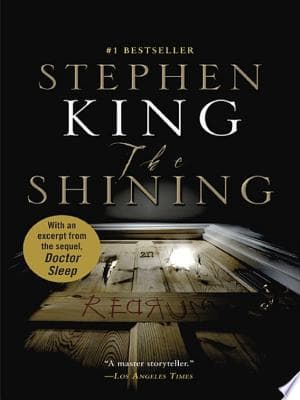
- The Shining
Stephen King
4.2 (1.1M) average on GoodreadsThrillerA recovering alcoholic accepts a caretaking job at a snow-bound, haunted hotel, where his son's psychic abilities reveal the sinister forces that drive him to madness and terrorize his family.





Enjoyed the summary?
A summary gives you the shape of the book. The book itself has the detail, the examples and the voice.
Find Sorry on AmazonAs an Amazon Associate, BookBrief earns from qualifying purchases. How we're funded