

Synopsis
Covers the whole plot, including the ending.
- Difficulty
- Medium
- Pacing
- Moderate
- Mood
- Suspenseful, Intriguing, Futuristic, Romantic
- Read it if
- You enjoy futuristic police procedurals with a strong, driven female lead and a touch of romance, focusing on intricate mystery solving.
- Skip it if
- You prefer hard science fiction or dislike the blending of romance and mystery in a futuristic setting.
Strangers in Death Plot Summary
Covers the whole plot, including the ending.
The Velvet Strangling
Lieutenant Eve Dallas responds to a murder at the Park Avenue apartment of Thomas Anders, a sporting-goods magnate. Anders is found tied to his bed, strangled with black velvet cords. This detail immediately makes the murder unusual. Eve initially thinks it is a crime of passion, possibly BDSM, given the elaborate scene. Her husband, Roarke, a billionaire who owns the building where Anders's firm is, offers his resources. This gives Eve important access to the victim's business and personal life. The scene is carefully arranged, suggesting either a disturbed killer or a planned execution made to look like something else. Eve, with Detective Peabody, starts interviewing Anders's family, employees, and associates. Each conversation reveals more about the victim's complicated life and possible reasons for his death.
Initial Suspects and Alibis
Eve and Peabody begin interviews with Margot Anders, Thomas's estranged wife. She was on vacation in the tropics during the murder, giving her a solid alibi. Next is Inez Anders, Thomas's sister, who cares more about the family's image than her brother's death. The main suspect quickly becomes David Anders, Thomas's ambitious nephew and heir to millions. David claims he was out of town on business, an alibi that seems strong at first. Eve also questions Thomas's business partners, including his loyal executive assistant, Ms. Van Cleef, and other top employees. Everyone has a plausible alibi, making the investigation difficult. Eve's gut feeling tells her that someone close to Anders is involved, or at least knows more than they are saying.
Unraveling Thomas Anders's Secret Life
As Eve digs deeper, she finds evidence that Thomas Anders led a carefully separated secret life. He regularly visited 'The Velvet Room,' an exclusive pleasure club where wealthy people indulged in various fantasies, often involving BDSM. This discovery matches the black velvet cords found at the murder scene. Eve and Peabody investigate the club, interviewing its owner, Julian Cross, and various employees and patrons. They learn Anders had several intimate, sometimes volatile, relationships within this world. One important connection is with Sabrina, a dominatrix who had a complex, long-term arrangement with Anders. This new information shifts the focus from a simple inheritance motive to a potentially more passionate or vengeful motive from his illicit activities.
The Velvet Room and Sabrina
Eve and Peabody visit The Velvet Room, a lavish and private club for specific desires. Julian Cross, the owner, is guarded but eventually shares some insights into Anders's activities there. They learn about Sabrina, a professional dominatrix who had a long-standing, intense relationship with Anders. Sabrina, a striking and confident woman, confirms her relationship with Anders, calling it professional but also personal. She admits to arguments and power struggles but strongly denies involvement in his murder, and her alibi checks out. Eve senses genuine sadness in Sabrina, suggesting their bond was more complex than just client and provider. The investigation starts to focus on the intricate web of relationships Anders kept, both inside and outside The Velvet Room, and the potential for jealousy or betrayal within these groups.
The Missing Link: Dr. Mira's Profile
Eve consults Dr. Charlotte Mira, the police psychologist, to create a killer profile. Dr. Mira analyzes the crime scene and the victim's known behaviors, concluding the killer is likely meticulous, intelligent, and driven by a need for control. The elaborate staging suggests a personal connection to Anders, but also a desire to mislead investigators. The use of black velvet implies a symbolic act, possibly linked to the victim's secret life, but done with chilling detachment. Dr. Mira's insights help Eve refine her search, moving her focus from impulsive passion to a more calculated, vengeful act, possibly by someone who felt deeply wronged or betrayed by Anders. The profile also suggests a killer who might enjoy outsmarting the police.
Roarke's Assistance and Digital Footprints
Roarke, using his technology skills and resources, helps Eve by looking into Thomas Anders's digital life. He finds hidden financial transactions and encrypted messages Anders had carefully concealed. These findings show Anders was involved in shady dealings, including potential embezzlement from his company and blackmail against several prominent people. Roarke's analysis shows Anders had been systematically taking funds and using sensitive information to gain power. This discovery introduces a new, strong motive for murder: someone Anders was blackmailing, or someone affected by his financial schemes, decided to silence him for good. The digital trail is complex and deliberately hidden, but Roarke's skills are essential in putting this puzzle together, leading Eve to new possible suspects.
The Blackmail Victim
Following Roarke's leads, Eve and Peabody carefully investigate Anders's blackmail targets. They find Anders had been extorting money from several influential people, including a judge, a politician, and a former business associate. The information Anders held over them ranged from financial misdeeds to scandalous personal secrets. Eve realizes any of these people would have a strong reason to kill Anders and get back the incriminating evidence. The investigation becomes a race to identify which of these powerful figures, if any, could be the killer. The sheer boldness of Anders's blackmail scheme highlights his ruthless nature and expands the list of suspects beyond his immediate personal and professional circles, making the case even more dangerous.
Connecting the Strangers
Through careful police work and analyzing small details, Eve starts to connect different pieces of information. She notices a subtle link between several of Anders's blackmail targets and a past incident: a manufacturing defect in one of Anders's early sporting goods products that caused a death. While officially ruled an accident, Eve suspects Anders covered it up, and that his blackmail was somehow tied to this dark secret. This changes the entire scope of the investigation, suggesting the motive might not just be about money or sex, but about a deep desire for justice or revenge for a past wrong. The 'strangers' in Anders's life are starting to show unexpected and deadly connections.
The Revelation of the Killer
Eve's search for the truth leads her to the killer: Ms. Van Cleef, Thomas Anders's seemingly loyal executive assistant. Van Cleef was the sister of the young woman who died in the sporting goods accident years ago, an incident Anders had successfully covered up. For years, Van Cleef had carefully planned her revenge, getting close to Anders, gaining his trust, and gathering evidence. The black velvet cords were a symbol of the 'velvet rope' of privilege Anders hid behind. Her motive was not passion or profit, but a cold, calculated pursuit of justice for her sister. She had skillfully manipulated alibis and planted false clues, making her the perfect 'stranger' in plain sight.
The Confrontation and Confession
Eve confronts Ms. Van Cleef in a tense and emotional scene. At first, Van Cleef remains calm, but as Eve presents the clear evidence—the planned steps, the digital clues, the symbolic nature of the killing, and the long-held secret of her sister's death—Van Cleef breaks. She confesses to the murder, explaining how she dedicated her life to avenging her sister, enduring years of working for the man she hated. She describes the satisfaction of seeing Anders's fear and the careful precision with which she carried out her plan, making it look like a crime of passion to mislead suspicion. Her confession shows the power of long-held grief and the desire for ultimate justice, bringing a complex and personal end to Thomas Anders's brutal murder.
Aftermath and Reflection
With Ms. Van Cleef caught and the case closed, Eve Dallas takes a moment to think about human nature and the secrets people keep. She discusses the case with Roarke and Peabody, acknowledging the careful planning and the deep personal reason behind the murder. The case reminds her that even in a high-tech future, basic human emotions like grief, revenge, and the desire for justice remain strong. Eve considers the ethics of Van Cleef's actions, understanding her pain but upholding the law. The experience strengthens Eve's belief that while the world changes, the darkness in humanity often stays the same, and her job is to navigate that darkness to bring the truth to light, no matter how unsettling.
Principal Figures
Lieutenant Eve Dallas
Protagonist
A tough, intuitive homicide detective in 2060s New York.
Eve Dallas is a highly skilled and driven homicide lieutenant with the NYPSD. Orphaned and abused as a child, she carries deep emotional scars but channels her past trauma into an unwavering dedication to justice. She is fiercely independent, often relying on her gut instincts and sharp analytical mind to solve complex cases. Despite her tough exterior, she is deeply loyal to her husband, Roarke, and her partner, Peabody, and possesses a strong moral compass. Her personal history often informs her understanding of victims and perpetrators, giving her a unique perspective on the darker aspects of human nature.
Relationships: Roarke (Husband, billionaire, technological genius, and emotional anchor.); Detective Delia Peabody (Partner and close friend, often providing a lighter perspective and practical support.); Dr. Charlotte Mira (Police psychologist and mentor, offering insights into criminal psychology.)
Roarke
Supporting
Billionaire businessman, former criminal, and Eve's devoted husband.
Roarke is an enigmatic and impossibly wealthy Irish businessman who owns vast holdings across the globe, including the building where Thomas Anders's firm is headquartered. He has a dark past, having built his empire through less-than-legal means before meeting Eve and finding a path to redemption. He is fiercely protective of Eve, often using his unparalleled resources, technological prowess, and connections to assist her in investigations. His intelligence is formidable, and he possesses a keen understanding of human nature, making him an invaluable, albeit unofficial, partner in Eve's work. He provides emotional support and a grounding presence for Eve.
Relationships: Lieutenant Eve Dallas (Wife and soulmate, his primary focus and emotional center.); Summerset (His loyal butler and surrogate father figure.)
Detective Delia Peabody
Supporting
Eve's loyal and often humorous partner, providing practical and emotional support.
Detective Delia Peabody is Eve's junior partner, a capable and earnest officer who often provides a counterpoint to Eve's intensity. She is highly observant, with a knack for noticing details Eve might overlook, and her more conventional approach to police work complements Eve's intuitive style. Peabody is fiercely loyal to Eve, learning quickly from her mentor and growing in confidence with each case. She has a dry wit and a strong sense of humor, often lightening the mood during tense investigations. Her personal life, including her relationship with McNab, provides a relatable human element to the futuristic setting.
Relationships: Lieutenant Eve Dallas (Partner, mentor, and close friend.); Ian McNab (Boyfriend and fellow police officer, specializing in computer forensics.)
Thomas Anders
Victim
A prominent sporting-goods magnate with a scandalous secret life.
Thomas Anders is the murder victim, a wealthy and influential businessman known for his sporting-goods empire. On the surface, he appears to be a respectable pillar of society, but Eve's investigation quickly uncovers a meticulously concealed double life. Anders was a regular at an exclusive pleasure club, engaging in BDSM, and was also involved in systematic financial embezzlement and blackmail. He was a ruthless and manipulative individual, driven by power and a desire to control others. His past is marred by a cover-up of a manufacturing defect that led to a fatality, a secret he leveraged for blackmail and that ultimately became his undoing.
Relationships: Margot Anders (Estranged wife.); David Anders (Ambitious nephew and heir.); Ms. Van Cleef (Executive assistant and eventually, his killer.); Sabrina (Dominatrix and intimate associate from 'The Velvet Room'.)
Ms. Van Cleef
Antagonist
Thomas Anders's unassuming executive assistant, revealed to be his meticulous and vengeful killer.
Ms. Van Cleef initially appears as a quiet, efficient, and utterly loyal executive assistant to Thomas Anders. She is meticulous, organized, and seemingly unremarkable, making her the perfect 'stranger' in plain sight. Beneath her demure exterior lies a calculating and deeply vengeful individual. She is revealed to be the sister of a young woman who died years ago due to a covered-up manufacturing defect in one of Anders's products. Driven by a profound sense of grief and a thirst for justice, she spent years meticulously planning her revenge, infiltrating Anders's life to gain his trust and ultimately orchestrate his death, making it appear like a crime of passion.
Relationships: Thomas Anders (Employer and murder victim, secretly the target of her revenge.); Eve Dallas (Her ultimate adversary, who uncovers her carefully constructed facade.)
Dr. Charlotte Mira
Supporting
The police psychologist who provides crucial insights into criminal minds.
Dr. Charlotte Mira is the NYPSD's resident psychologist, a wise and insightful woman who frequently consults with Eve on complex cases. She has a deep understanding of human behavior, motivations, and pathology, and her psychological profiles often provide Eve with critical leads and perspectives. Dr. Mira acts as a mentor and confidante to Eve, offering not only professional advice but also emotional support and a calming presence. Her ability to delve into the minds of both victims and perpetrators is invaluable to the police force.
Relationships: Lieutenant Eve Dallas (Colleague, mentor, and trusted friend.)
Julian Cross
Supporting
The enigmatic and discreet owner of 'The Velvet Room' pleasure club.
Julian Cross is the smooth, sophisticated, and utterly discreet owner of 'The Velvet Room,' an exclusive club catering to the sexual fantasies and BDSM proclivities of the wealthy elite. He is a master of discretion and maintaining his clients' privacy, making him initially resistant to Eve's inquiries. Despite his profession, he operates with a certain code of ethics within his establishment, and eventually provides Eve with crucial information about Thomas Anders's activities and relationships within the club, particularly concerning Sabrina. He represents a morally ambiguous but ultimately helpful figure in the underworld Eve navigates.
Relationships: Thomas Anders (Client, for whom he maintained discretion.); Sabrina (Employee and associate within his club.)
Sabrina
Supporting
A professional dominatrix who had a complex relationship with Thomas Anders.
Sabrina is a striking and self-possessed professional dominatrix who worked at 'The Velvet Room' and maintained a long-term, intense relationship with Thomas Anders. She is intelligent, articulate, and candid about the nature of her profession and her bond with Anders, which she describes as both professional and deeply personal. Despite the power dynamics inherent in their arrangement, she genuinely seems to have cared for Anders in her own way and is visibly affected by his death. Her insights into Anders's personality and desires within the club provide Eve with valuable context for his secret life.
Relationships: Thomas Anders (Client and intimate associate.); Julian Cross (Employer and club owner.)
Themes & Insights
The Duality of Public and Private Life
The novel explores how people, especially those in power, keep very different public and private lives. Thomas Anders shows this well, appearing as a respected businessman while secretly engaging in BDSM, blackmail, and unethical financial deals. This duality creates complex motives and suspects, as Eve must uncover layers of deception. The theme highlights how secrets, once revealed, can ruin reputations and lead to deadly outcomes, as seen with Anders's hidden life at 'The Velvet Room' and his history of cover-ups.
“Everyone keeps secrets, Dallas. The question is, how deadly are they?”
Justice vs. Revenge
This theme is central to solving the murder. Ms. Van Cleef's motive is a personal quest for justice for her sister's death, which Thomas Anders had covered up years before. Her actions, though criminal, are driven by a desire to correct a deep wrong that the legal system failed to address. Eve, as a police officer, must uphold the law, even when she understands the killer's pain and motivation. The novel makes us consider if personal revenge can ever truly be justice, and the moral complexities that arise when these lines blur, as shown by Van Cleef's careful, long-term plan.
“I didn't want him to just die. I wanted him to suffer. I wanted him to know why.”
The Unseen Connections Between Strangers
The title itself hints at this theme, which is woven throughout the story. Initially, the victim's acquaintances—his family, business partners, and associates from 'The Velvet Room'—seem like separate people, some of whom do not know each other. However, Eve's investigation reveals unexpected and deadly connections, particularly the long-buried link between Thomas Anders and Ms. Van Cleef through her deceased sister. This theme shows how seemingly small past events can have lasting effects, bringing people together in unexpected and often tragic ways. It highlights that no one truly lives alone, and past actions always have consequences.
“Sometimes the people who seem to be intimates guard secrets from each other—and strangers may be connected in unexpected, and deadly, ways.”
The Corrupting Influence of Power and Wealth
Thomas Anders's character is an example of how power and wealth can corrupt. His position allowed him to cover up a fatal accident, engage in blackmail, and lead a dangerous double life without immediate consequences. He manipulated those around him, using his influence to protect his secrets and pursue his desires. The novel illustrates how such power can create a feeling of invincibility, leading people to believe they are above the law and beyond consequence, ultimately contributing to their downfall. Roarke, despite his own wealth, offers a contrast, actively choosing to use his power for good and to support justice.
“Money and power. They don't make you good, Dallas. Just powerful.”
Plot Devices & Literary Techniques
Red Herring
Misleading clues or suspects designed to divert the detective's attention.
The novel employs several red herrings to complicate Eve's investigation. Initially, the BDSM aspect of the murder scene and Thomas Anders's activities at 'The Velvet Room' strongly suggest a crime of passion by an intimate partner or an enraged dominatrix. Sabrina, Anders's dominatrix, and David Anders, his ambitious nephew, are presented as strong initial suspects with plausible motives. These elements are designed to lead Eve, and the reader, down various paths before the true, deeply personal motive of Ms. Van Cleef is revealed, making the eventual twist more impactful.
The Locked Room Mystery Element
A crime committed in circumstances where it seems impossible for the perpetrator to have entered or exited.
While not a classic 'locked room' in the traditional sense, the murder of Thomas Anders presents elements of one. The meticulously arranged scene in his Park Avenue apartment, coupled with the seemingly ironclad alibis of all initial suspects, creates a sense of impossibility regarding how the murder could have been committed and by whom. The killer's ability to enter, commit the crime, stage the scene, and exit without leaving immediate traceable evidence, combined with having a perfect alibi, adds a layer of complexity that Eve must unravel through careful deduction and technological assistance.
Symbolism of the Black Velvet
The use of black velvet as a recurring motif with deeper meaning.
The black velvet cords used to strangle Thomas Anders are highly symbolic. Initially, they point to his secret life in 'The Velvet Room' and his BDSM proclivities, suggesting a crime of passion within that world. However, as the story unfolds, the velvet takes on a deeper meaning. For Ms. Van Cleef, it represents the 'velvet rope' of privilege and secrecy that Anders used to hide his past crimes and maintain his status. It symbolizes the luxurious facade behind which Anders operated, and its use in his death is a deliberate, ironic statement from the killer, linking his public persona to his hidden depravity and ultimate demise.
Technological Forensics (Roarke's Expertise)
Advanced futuristic technology used to uncover hidden digital evidence.
In the futuristic setting of 2060, Roarke's unparalleled expertise in advanced technology and digital forensics serves as a crucial plot device. Traditional police methods are augmented by his ability to access and decrypt highly secured digital footprints, unraveling complex financial schemes and hidden communications that Thomas Anders had meticulously concealed. This technological prowess allows Eve to uncover motives and connections that would be impossible to find with conventional methods, significantly advancing the plot and providing breakthroughs in the investigation where human intuition alone would fall short.
Strangers in Death Quotes
“There are no strangers in death, only friends you haven't met yet.”
“The dead don't lie, but they don't always tell the whole truth either. It's up to me to find the rest.”
“He was the kind of man who made you want to believe in happy endings, even if you knew they were mostly fiction.”
“Sometimes the monster wasn't in the shadows, but in the places you least expected, wearing a smile.”
“You can't save everyone, Dallas. But you can damn well try.”
“The city hummed around her, a constant, living entity, full of secrets and shadows.”
“He didn't just see her scars; he saw the strength that forged them.”
“Fear was a tool, like any other. You could let it paralyze you, or you could use it to sharpen your edge.”
“A good cop didn't just solve the crime; they understood the human cost.”
“There was a fine line between obsession and dedication. Eve walked it every day.”
“Money didn't buy happiness, but it sure could buy a lot of comfortable misery.”
“The past was a ghost, always lurking, always ready to whisper its secrets.”
“He was her anchor in the storm, her calm in the chaos.”
“Justice wasn't a perfect system, but it was the best they had. And she was its fiercest warrior.”
Quiz
10 questions on the plot and the characters. Each answer comes with a short explanation.
Question 1
Who is the primary victim in 'Strangers in Death'?
- Roarke
- Thomas Anders
- Eve Dallas
- Mavis Freestone
Show answer
B. Thomas Anders The victim found in his Park Avenue apartment, tied to the bed and strangled, is Thomas Anders.
Question 2
What is the specific method used to strangle the victim, Thomas Anders?
- A silk scarf
- A garrote
- Cords of black velvet
- A power cable
Show answer
C. Cords of black velvet Thomas Anders was found strangled with cords of black velvet, a distinctive detail of the murder.
Question 3
What is the profession of Lieutenant Eve Dallas?
- Private Investigator
- Forensic Scientist
- Homicide Cop
- District Attorney
Show answer
C. Homicide Cop Eve Dallas is explicitly identified as a homicide cop, responsible for investigating the murder.
Question 4
How does Roarke, Eve's husband, assist in the investigation early on?
- He provides a witness statement.
- He owns the building where the victim's firm is headquartered, providing access.
- He is a suspect in the case.
- He performs the autopsy.
Show answer
B. He owns the building where the victim's firm is headquartered, providing access. Roarke's ownership of the prime real estate where Thomas Anders's firm is located gives Eve valuable access for her investigation.
Question 5
What year is the story 'Strangers in Death' set?
- 2020
- 2040
- 2060
- 2080
Show answer
C. 2060 The story takes place in 2060 New York, establishing its futuristic setting.
Question 6
Where is the victim, Thomas Anders, found?
- His office building
- A secluded warehouse
- His Park Avenue apartment
- A luxury hotel suite
Show answer
C. His Park Avenue apartment Thomas Anders is discovered in his Park Avenue apartment, tied to the bed.
Question 7
What is the initial challenge Eve faces regarding the suspects?
- Lack of any potential suspects
- Everyone's alibi checks out, including the wife and nephew.
- Too many unrelated suspects with conflicting stories
- The prime suspect has diplomatic immunity.
Show answer
B. Everyone's alibi checks out, including the wife and nephew. A key complication in the early investigation is that all initial suspects, such as the wife and nephew, have solid alibis.
Question 8
What does the description of the murder suggest it could be?
- A random act of violence
- A robbery gone wrong
- A crime of passion or a carefully planned execution
- An accidental death
Show answer
C. A crime of passion or a carefully planned execution The text poses the question directly: 'Was this a crime of passion—or a carefully planned execution?' highlighting the two main possibilities Eve considers.
Question 9
What kind of business did the victim, Thomas Anders, own?
- A real estate agency
- A sporting-goods firm
- A high-tech manufacturing company
- A financial investment company
Show answer
B. A sporting-goods firm Thomas Anders's business is identified as a sporting-goods firm, headquartered in a building owned by Roarke.
Question 10
What central theme about relationships is highlighted in the description of the case?
- The importance of open communication in all relationships.
- That intimates may guard secrets and strangers can be connected in deadly ways.
- Love always conquers all, even in death.
- Family ties are always stronger than any other connection.
Show answer
B. That intimates may guard secrets and strangers can be connected in deadly ways. The description explicitly states: 'those who seem to be intimates sometimes guard secrets from each other—and strangers may be connected in unexpected, and deadly, ways.' This is a core theme of the mystery.
Strangers in Death FAQ
What is the central murder case Lieutenant Eve Dallas investigates in 'Strangers in Death'?
Eve Dallas investigates the murder of Thomas Anders, a prominent sporting-goods businessman, found strangled with black velvet cords in his Park Avenue apartment. The unusual method and the victim's status immediately mark it as a high-profile case.
How does Roarke, Eve's husband, become involved or provide assistance in the initial stages of the investigation?
Roarke's company owns the building where Thomas Anders's sporting-goods firm is headquartered, providing Eve with immediate access and a convenient entry point into the corporate side of the investigation. His connections often streamline her access to information and locations.
Who are some of the initial suspects Eve considers, and what are their apparent alibis?
Eve initially considers Anders's wife, who was on vacation in the tropics, and his nephew, who stood to inherit millions. Both individuals appear to have solid alibis, complicating the immediate identification of a clear perpetrator.
What is the significance of the 'black velvet cords' used in the murder?
The black velvet cords are a crucial detail, hinting at a personal, possibly ritualistic, or passion-driven motive rather than a simple robbery. Eve often uses such unique murder methods to delve into the killer's psychology and connection to the victim.
What is the main challenge Eve faces in solving this particular case?
The main challenge for Eve is that everyone's alibi checks out, and the obvious suspects seem to be in the clear. She must dig deeper into the victim's life and the seemingly unconnected 'strangers' to find the true links.
Are there any subtle clues regarding the killer's identity or motive early in the investigation that Eve initially overlooks?
Eve initially struggles to connect the disparate individuals in Anders's life, overlooking the subtle threads that tie seemingly casual acquaintances or 'strangers' to a deeper, shared motive. The unusual method, while striking, doesn't immediately point to a conventional suspect.
How does the setting of 2060 New York play a role in the investigation, beyond just the futuristic technology?
Beyond advanced forensics, the 2060 setting highlights the persistence of human greed and dark secrets despite societal advancements. It also allows for sophisticated surveillance and data analysis, which Eve utilizes to piece together the victim's hidden life and connections.
Is there a specific moment where Eve has an 'aha!' revelation that significantly shifts her perspective on the case?
Eve's 'aha!' moment often comes from connecting seemingly insignificant details, like a shared, obscure hobby or a past incident that links unrelated individuals. This typically occurs when she realizes the motive isn't about money or simple revenge, but something more complex and deeply personal.
How does Eve's past trauma subtly influence her approach to the victims and suspects in this particular case?
Eve's past trauma makes her particularly attuned to victims of abuse or manipulation, and she often empathizes deeply with those who have suffered. This can drive her relentless pursuit of justice, especially when she senses a hidden power dynamic at play among the suspects or victims.
What psychological profile does Eve begin to build for the killer based on the evidence?
Based on the meticulous nature of the crime and the specific use of the black velvet cords, Eve starts to profile a killer who is patient, possibly obsessive, and driven by a deeply personal, perhaps long-simmering, motive rather than spontaneous passion. The killer likely feels a strong sense of betrayal or injustice.
How does the theme of 'secrets' impact the psychological landscape of the characters, both victims and suspects?
The theme of 'secrets' creates a tense psychological landscape where trust is eroded, and characters are constantly guarding their hidden lives. For Anders, his secrets ultimately led to his demise, while for the suspects, their attempts to conceal information create a web of suspicion and psychological pressure.
Discuss the psychological dynamic between Eve and Roarke as they navigate the complexities of the case.
Eve and Roarke's dynamic is one of strong mutual support, where Roarke often provides a stable emotional anchor and practical assistance, allowing Eve to fully immerse herself in the dark psychology of the crime. Their shared understanding deepens their bond amidst the grim realities of her work.
Is the ending of 'Strangers in Death' conclusive, or does it leave any lingering questions about human nature or justice?
The ending is conclusive in identifying the killer and bringing them to justice, but it often leaves lingering questions about the depths of human depravity and the unexpected connections that can lead to violence. It reinforces that even in a futuristic society, fundamental human flaws persist.
How does this book contribute to the overarching themes of the 'In Death' series, such as the evolution of justice or the nature of good vs. evil?
'Strangers in Death' reinforces the series' themes by showing that despite technological advancements, the core struggle between good and evil remains. It highlights Eve's unwavering commitment to justice, even when facing complex moral ambiguities and the insidious nature of hidden crimes.
What is the primary message or moral lesson the author might be conveying through the resolution of Thomas Anders's murder?
The author might be conveying that appearances can be deceiving, and those who seem like 'intimates' may harbor the deepest secrets, while 'strangers' can be connected in profound and deadly ways. It emphasizes that true justice requires looking beyond the obvious.
Could the title 'Strangers in Death' have a dual meaning, referring not only to the killer's identity but also to the victim's hidden life?
Yes, the title likely carries a dual meaning. It refers to the unexpected connections between seemingly unrelated individuals who become involved in the murder, and also to how the victim, Thomas Anders, was perhaps a stranger to those closest to him due to his concealed life and actions.
Does the novel suggest that some murders are inherently more 'sensational' than others, and if so, what implications does this have for Eve's work?
The novel explicitly states that some murders get more attention, especially those involving prominent figures like Thomas Anders. This implies that Eve often has to navigate political pressures and public scrutiny, which adds another layer of complexity to her already demanding job.
How does the concept of 'passion' vs. 'planned execution' play out in the unfolding of the mystery?
The mystery initially presents as a crime of passion due to the intimate nature of the strangulation, but Eve's investigation reveals it to be a carefully planned execution, driven by deeply held grievances rather than impulsive rage. This distinction is key to uncovering the true perpetrators and their motives.
About the author

J.D. Robb is a pseudonym for author Nora Roberts, known for her work in the romance and suspense genres. She is particularly recognized for the "In Death" series, which includes titles such as "Naked in Death," "Glory in Death," "Immortal in Death," "Rapture in Death," "Ceremony in Death," and "Holiday in Death." These novels blend elements of crime fiction with futuristic settings and strong character development.
Similar books
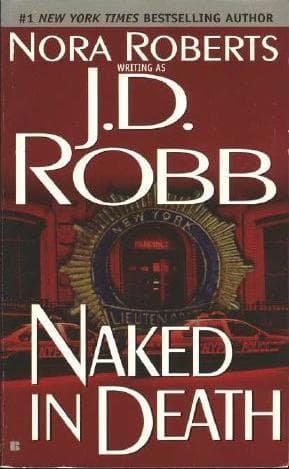
- Naked in Death
J.D. Robb
4.1 (167k) average on GoodreadsThrillerFirst book in the same series, featuring the same characters and setting.
- The Silent Patient
Alex Michaelides
4.1 (507k) average on GoodreadsThrillerFeatures a complex murder mystery with psychological depth and surprising twists.
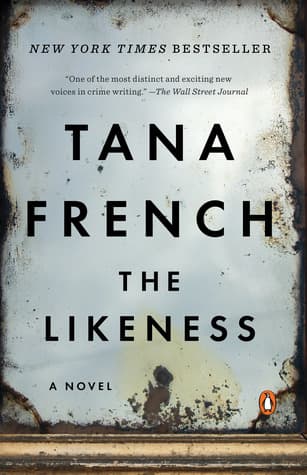
- The Likeness
Tana French
4.0 (126k) average on GoodreadsThriller"Strangers in Death" prioritizes plot momentum and its futuristic setting, whereas French's The Likeness delves deeply into psychological introspection, morally ambiguous characters, and a more grounded, literary crime framework, focusing on atmosphere and internal conflict.
- Angels & Demons
Dan Brown
3.9 (2.7M) average on GoodreadsThrillerA Harvard symbologist races through Rome's ancient sites, deciphering cryptic clues to unmask the Illuminati and stop a vengeful plot to destroy the Vatican with a stolen antimatter weapon.
- Gone Girl
Gillian Flynn
4.1 (2.3M) average on GoodreadsThrillerA wife's sudden disappearance on her fifth anniversary reveals a web of lies and psychological warfare, exposing the secrets within a seemingly perfect marriage.
- The Girl on the Train
Paula Hawkins
3.9 (2.1M) average on GoodreadsThrillerA woman’s fascination with a seemingly perfect couple she watches from her daily train commute leads her into a dark investigation when she witnesses something that shatters their idyllic image.




Enjoyed the summary?
A summary gives you the shape of the book. The book itself has the detail, the examples and the voice.
Find Strangers in Death on AmazonAs an Amazon Associate, BookBrief earns from qualifying purchases. How we're funded