
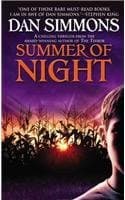
Synopsis
Covers the whole plot, including the ending.
- Difficulty
- Medium
- Pacing
- Moderate
- Mood
- Nostalgic, Eerie, Suspenseful, Dark, Adventurous
- Read it if
- You love Stephen King's 'It' and are looking for a similar blend of childhood nostalgia, supernatural horror, and coming-of-age themes.
- Skip it if
- You prefer fast-paced, action-driven thrillers over atmospheric, character-centric horror with a slow build.
Summer of Night Plot Summary
Covers the whole plot, including the ending.
The Last Day of School and a Vanishing Boy
The summer of 1960 begins in Elm Haven, Illinois, for a group of twelve-year-old boys: Dale Stewart, Mike O'Rourke, Jim Harlen, Harlen 'Hoagie' Hoaglund, and Kevin Riley. On the last day of school, a strange atmosphere is in town. The boys see unsettling signs, including a rendering-plant truck that seems to follow them and an old man, Mr. Karmen, who gives them a warning. Later, their classmate, Tubby Cooke, vanishes after a bicycle race. His disappearance darkens the start of their summer vacation, suggesting an evil in their small town. The boys are unnerved, but adults initially think he ran away.
The Old Central School and Whispers of the Past
The boys' curiosity leads them to explore the abandoned Old Central School, a forbidden place. Inside, they find evidence of its past, including old textbooks, strange symbols, and a sense of dread. Jim Harlen, a reader, finds local legends and newspaper clippings detailing other child disappearances over the decades, all linked to the school. These stories, with the school's atmosphere, convince the boys that Tubby's disappearance is part of a recurring pattern connected to the school. They begin to suspect a supernatural force.
Unsettling Discoveries and the Bell's Chime
As summer continues, the boys encounter more unsettling events. They find unexplained, perfectly round holes appearing in the ground around Elm Haven, often with an oily residue. These holes seem connected to the school. More disturbing, they hear the bell of the abandoned Old Central School ringing at odd times, a sound that frightens them. Kevin Riley, the most sensitive of the group, starts having disturbing nightmares and visions, sensing the presence growing stronger. The boys realize the school is a conduit for something old and evil.
The Soldier and the Pact of Blood
A strange, silent man in a World War I uniform, called 'the Soldier,' is seen around town, watching the boys and the school. His presence is ominous. The boys, scared but united, decide they must act. Inspired by adventure stories, they make a blood pact in the woods, vowing to confront the evil in Elm Haven and protect their town. This pact strengthens their bond and their commitment to face whatever horror awaits them, even if it means risking their lives. They feel a responsibility that no adult seems to take on.
The School's Manifestations and a Near-Death Experience
The entity within the Old Central School becomes more active and aggressive. During a visit to the school, the boys are attacked. Hoagie Hoaglund is almost pulled into one of the mysterious holes that appear inside the school, saved by his friends. The school's windows shatter, doors slam, and an oppressive force tries to trap them. This encounter confirms their fears: the school is alive with a predatory evil, and it is hunting them. The boys realize the danger is greater than they first thought.
The Truth About the Boiler and the 'Man' in the Basement
Through research, shared experiences, and Kevin's psychic impressions, the boys learn the truth. The Old Central School is not just haunted; it is a living entity, a 'Man' or 'Boiler Man' in its basement boiler room. This entity, an ancient force, feeds on the souls and fears of children, using the school as its physical form. The bell's chimes are its calls, the holes its pathways, and the boiler its heart, needing to be fed with the life force of the young. They understand Tubby Cooke was its latest victim.
The Ritual and the Sacrifice of the Soldier
As summer ends, the entity's power increases, and the boys know they must act. They plan their final assault on the Old Central School, gathering makeshift weapons and preparing themselves. During this time, they meet the Soldier again, and his tragic story is revealed. He is not a threat but a tormented soul, a former victim or guardian trying to protect the children, or perhaps a manifestation of a past attempt to fight the evil. In a moment, the Soldier sacrifices himself, giving the boys time and weakening the entity through his act, giving them a chance to strike at its core.
The Battle in the Boiler Room
Armed with their resolve and knowledge of the entity's weaknesses, the boys go into the basement of the Old Central School. The boiler room is a hellish place, filled with heat, steam, and the presence of the Boiler Man. They confront the grotesque, mechanical-organic entity that is the 'Man,' a creature of pipes, rust, and energy. Each boy uses his strengths – Dale's leadership, Mike's courage, Jim's intellect, Hoagie's resourcefulness, and Kevin's psychic sensitivity – to fight the creature, enduring its psychic attacks and physical forms.
The Destruction of the Boiler Man
In a difficult battle, the boys exploit the Boiler Man's weaknesses. Jim, remembering details about its nature, guides them. Hoagie, with his practical skills, helps damage its physical parts. Mike and Dale confront its forms. Kevin, channeling his psychic energy, launches a mental attack. Through their combined efforts and courage, they critically wound and destroy the Boiler Man, causing the entity to collapse and the school to crumble around them. The evil that plagued Elm Haven for generations is finally vanquished.
Aftermath and the End of Summer
The boys escape the collapsing Old Central School, emerging into the fading summer light, exhausted but victorious. The school burns, taking the last of the evil with it. Tubby Cooke's body is found, confirming his fate, but the town is free. Summer ends, and the boys, though they try to return to normal, are forever changed by their ordeal. Their bond is strong, forged in shared terror and triumph. They carry the memories and lessons of that summer, knowing they faced an evil and survived, facing a changed future.
Principal Figures
Dale Stewart
Protagonist
The de facto leader of the group, a thoughtful and brave boy.
Dale is the quiet, thoughtful, and often reluctant leader of the group. He possesses a strong moral compass and a deep sense of responsibility. While he initially struggles with fear and doubt, he consistently steps up to rally his friends and make difficult decisions. His courage is not born of recklessness but of a profound loyalty to his friends and a desire to protect his town. He is observant and intelligent, often piecing together clues with Jim. He represents the common boy who finds extraordinary bravery when faced with unimaginable evil.
Relationships: Mike O'Rourke (Best friend and loyal companion); Jim Harlen (Intellectual partner in solving the mystery); Hoagie Hoaglund (Friend, relying on his practical skills); Kevin Riley (Friend, protective of his sensitivity)
Mike O'Rourke
Protagonist
The athletic and impulsive member, known for his bravery and loyalty.
Mike is the most athletic and physically courageous of the group. He is impulsive, quick to anger, but fiercely loyal to his friends. He often acts as the group's muscle, never shying away from a physical challenge or confrontation. Despite his tough exterior, he has a deep affection for his friends and a strong sense of justice. His bravery is often a catalyst for action, pushing the others forward even when they are afraid. He provides a grounded, physical presence against the supernatural threat.
Relationships: Dale Stewart (Best friend and trusted confidant); Jim Harlen (Friend, often clashing but respectful); Hoagie Hoaglund (Friend and fellow adventurer); Kevin Riley (Friend, protective of his vulnerability)
Jim Harlen
Protagonist
The intellectual and studious boy, providing the research and theories.
Jim is the intellectual powerhouse of the group, a voracious reader with a keen mind for history, folklore, and research. He is the one who uncovers the historical context of the disappearances and the legends surrounding the Old Central School. His knowledge is crucial in understanding the nature of the evil they face, providing the strategic insights needed to fight it. While not as physically brave as Mike, his courage lies in his unwavering pursuit of truth and his ability to remain rational under extreme pressure. He is the strategist.
Relationships: Dale Stewart (Collaborator in solving the mystery); Mike O'Rourke (Friend, often providing a logical counterpoint); Hoagie Hoaglund (Friend, valuing his practical skills); Kevin Riley (Friend, interested in his psychic insights)
Harlen 'Hoagie' Hoaglund
Protagonist
The resourceful and practical boy, adept at fixing things and providing tools.
Hoagie is the pragmatic and resourceful member of the group. He is good with his hands, able to fix things, and often carries useful tools. His practical skills and common sense are invaluable, whether it's navigating the old school or fashioning makeshift weapons. He's grounded and often provides a dose of reality, but he is equally committed to the cause. His family runs the local rendering plant, an ironic detail given the gruesome nature of some of the events. Hoagie represents the ingenuity and adaptability needed in a crisis.
Relationships: Dale Stewart (Friend, relying on his leadership); Mike O'Rourke (Friend, sharing adventures with); Jim Harlen (Friend, valuing his intellect); Kevin Riley (Friend, supportive of his sensitivity)
Kevin Riley
Protagonist
The sensitive and psychic boy, attuned to the supernatural presence.
Kevin is the most sensitive and imaginative of the group, possessing a burgeoning psychic ability that allows him to sense the malevolent presence and experience vivid, prophetic nightmares. He is often the first to feel the entity's influence, providing crucial, albeit terrifying, insights into its nature and intentions. His vulnerability makes him a target, but his sensitivity also makes him a vital conduit for understanding the supernatural threat. He often struggles with fear but finds strength in his friends' support.
Relationships: Dale Stewart (Friend, protective of him); Mike O'Rourke (Friend, protective of him); Jim Harlen (Friend, who analyzes his visions); Hoagie Hoaglund (Friend, supportive of him)
The Old Central School
Antagonist
The physical manifestation and lair of the ancient, child-consuming entity.
The Old Central School is not merely a setting but the primary antagonist, a decaying, abandoned building that serves as the physical manifestation and lair of an ancient, demonic entity. It is alive with a predatory malevolence, feeding on the fear and life force of children. The school bell tolls ominously, the building itself shifts and attacks, and its basement boiler room is the heart of the 'Boiler Man' – a grotesque, mechanical-organic creature. It represents a corrupted innocence and a pervasive evil that has plagued Elm Haven for generations, a silent predator waiting for its next victims.
Relationships: The Boys (Prey and ultimate destroyers); Tubby Cooke (Victim); The Soldier (Former victim/guardian, ultimately sacrificed against it)
The Soldier
Supporting
A mysterious figure in a WWI uniform, connected to the school's past and the boys' struggle.
The Soldier is a spectral, enigmatic figure dressed in a World War I uniform who appears periodically throughout the summer. He is initially a source of fear and confusion for the boys, but later his true nature is revealed: he is a tormented soul, a former victim or guardian linked to the Old Central School's evil. He seems to be trying to warn or protect the children, unable to directly intervene but providing subtle guidance or distractions. His ultimate act of self-sacrifice, weakening the Boiler Man, is crucial to the boys' success, revealing him as a tragic hero.
Relationships: The Boys (Observer, protector, and ultimately a sacrifice for them); The Old Central School (Past victim and current adversary)
Tubby Cooke
Mentioned
The first child to disappear, his vanishing sets the plot in motion.
Tubby Cooke is the first child to disappear on the last day of school, his vanishing serving as the catalyst for the entire plot. He is a classmate of the main boys, and his disappearance immediately signals that something is terribly wrong in Elm Haven. His fate is a constant reminder of the stakes and the horrifying power of the Boiler Man. Though he is not a central character, his absence and the mystery surrounding it drive the boys' investigation and their resolve to confront the evil.
Relationships: The Boys (Classmate, his disappearance motivates them); The Old Central School (Victim)
Mr. Karmen
Supporting
An eccentric old man who provides cryptic warnings to the boys.
Mr. Karmen is an elderly, somewhat eccentric resident of Elm Haven. He is one of the few adults who seems to possess some awareness of the town's underlying darkness, though he communicates it through cryptic warnings and unsettling pronouncements. He is often dismissed by others as a harmless eccentric, but his words hold prophetic significance for the boys. He represents the hidden knowledge and suppressed fears of the adult world, unable or unwilling to directly confront the evil, but offering a glimmer of insight.
Relationships: The Boys (Giver of cryptic warnings)
Themes & Insights
Loss of Innocence and Childhood's End
The summer of 1960 marks the end of childhood for the five boys. The horrors they face force them to confront death, evil, and fear, removing their innocence. Their games become deadly, their fears real, and the summer turns into a battle for survival. This theme is clear in their blood pact, their shift from play to grim determination, and the lasting changes in their personalities by the book's end. They emerge from the ordeal as different, older, and forever marked individuals, having crossed a threshold no child should.
“'Childhood was a land of sun and shadow, of innocence and fear. But for the boys of Elm Haven, that summer, the shadows grew long and cold, and innocence was burned away in the furnace of the Old Central School.'”
The Nature of Evil
The novel explores evil as an old, pervasive, and corrupting force. The Boiler Man is an entity that feeds on fear and life, appearing through the Old Central School. It is an evil that preys on the vulnerable, especially children, and has a cyclical nature, returning over generations. The novel looks at the idea that evil can hide in plain sight, within familiar structures, and that its horror is its ability to corrupt and destroy innocence. The entity's mechanical-organic form suggests a perversion of life.
“'It wasn't a ghost. It wasn't just a monster. It was the school itself, the very stone and mortar, alive with a hunger as old as the earth.'”
Friendship and Loyalty
The story shows the power of friendship and loyalty. The five boys, each with distinct personalities and strengths, form a strong bond forged in shared fear and courage. They rely on each other's talents – Dale's leadership, Mike's bravery, Jim's intellect, Hoagie's practicality, and Kevin's sensitivity – to survive and defeat the evil. Their blood pact symbolizes their commitment. This theme shows that collective strength, trust, and support are essential in overcoming challenges, especially when adults fail to see or act.
“'They were just five boys, but together, they were a force, a shield, a weapon against the ancient darkness.'”
The Failure of Adults and the Agency of Children
A theme is the inability of adults to see and confront the evil in Elm Haven. Parents and other adults are mostly unaware, dismissive, or paralyzed by their fears and routines, leaving the children to face the terror alone. This makes the boys take on adult responsibilities, becoming the only ones who can save their town. This theme highlights the children's unique perspective and their courage, contrasting it with the often-blind or complacent adult world, making their heroism more meaningful.
“'The adults saw only what they wanted to see, or what they were capable of seeing. It was up to the children to see the monsters in the dark.'”
Memory and the Enduring Past
The novel explores how the past, especially traumatic events, continues to influence the present. The evil in the Old Central School is old, with a history of disappearances going back decades. Jim's research into old newspaper clippings and local legends reveals this cyclical nature of the evil. The boys' experiences become lasting memories that will shape their lives forever, showing how certain events from the past, especially profound trauma, are never truly forgotten but become part of one's identity and the fabric of a place.
“'Some things don't just happen and then go away. Some things stay, buried deep, waiting for the right moment to come back.'”
Plot Devices & Literary Techniques
The Old Central School
The central symbolic and literal antagonist of the story.
The Old Central School acts as the primary plot device, serving as both the physical setting for much of the horror and the literal manifestation of the antagonist. It is where the boys discover clues, face direct threats, and ultimately confront the Boiler Man. The school is imbued with a malevolent sentience, its decaying structure reflecting the corrupting evil within. Its bell tolls ominously, signaling the entity's activity, and its very architecture becomes a character in itself, trapping and luring its victims. It serves as a focal point for all the sinister events.
The Blood Pact
A ritualistic vow solidifying the boys' commitment and bond.
The blood pact is a classic narrative device used to symbolize the unbreakable bond and unwavering commitment among the five boys. By cutting their palms and mingling their blood, they formally swear an oath to face the evil together, no matter the danger. This ritual elevates their friendship from mere childhood camaraderie to a sacred, life-or-death alliance. It provides a powerful moment of unity and determination, reinforcing their collective agency and courage in the face of adult ignorance and overwhelming dread, driving them towards their ultimate confrontation.
Kevin's Psychic Visions and Dreams
A narrative tool for foreshadowing and revealing the nature of the evil.
Kevin Riley's burgeoning psychic abilities, manifesting as vivid dreams and waking visions, serve as a crucial plot device for foreshadowing events and revealing the true nature of the Boiler Man and the Old Central School. His terrifying impressions provide the boys (and the reader) with fragmented but vital information about the entity's history, its hunger, and its weaknesses. This device allows the supernatural elements to be gradually unveiled, building suspense and offering insights that rational investigation alone could not provide, making Kevin indispensable to the group's understanding of their foe.
The Rendering Plant Truck
A recurring, unsettling symbol of pervasive, hidden horror.
The rendering plant truck is a recurring, unsettling symbol that appears at key moments, often preceding or coinciding with sinister events. It represents the pervasive, hidden horror lurking beneath the surface of the seemingly normal town. Its foul smell and association with processing discarded animal parts subtly link to the gruesome nature of the evil consuming children. It's a mundane object imbued with an ominous quality, reminding the boys that evil isn't always confined to a single location but can manifest in unexpected, everyday forms, contributing to the atmosphere of dread.
The 'Boiler Man'
The personification of the ancient evil, a grotesque fusion of mechanical and organic horror.
The 'Boiler Man' is the personification of the ancient evil entity residing in the Old Central School's basement. This grotesque, mechanical-organic creature, a fusion of pipes, rust, and malevolent consciousness, is a powerful and terrifying plot device. It gives a physical form to the abstract evil, making it tangible and therefore conquerable, while also representing a perversion of industrial progress and natural life. Its unique nature requires the boys to combine their different strengths to defeat it, making the final confrontation a truly epic battle against a uniquely conceived antagonist.
Summer of Night Quotes
“The past is never dead. It's not even past.”
“We're all just kids playing in the dark, trying to find the light switch.”
“Sometimes the monsters are real, and they live right next door.”
“Memory is a tricky thing. It can save you or it can haunt you forever.”
“The summer sun can hide the darkest shadows.”
“Fear is a weapon, and they know how to use it.”
“In every small town, there are secrets buried deeper than the dead.”
“Friendship is the only armor we have against the night.”
“The bell tolls for those who listen, and for those who don't.”
“Childhood ends when you see the world for what it really is.”
“Darkness doesn't just live in the night; it grows in the hearts of men.”
“We fight not because we are brave, but because we have no choice.”
“The old stories are true, and they're hungry for new ones.”
“In the heart of summer, winter never really leaves.”
Quiz
10 questions on the plot and the characters. Each answer comes with a short explanation.
Question 1
What event on the last day of school triggers the main plot of 'Summer of Night'?
- The discovery of a mysterious hole in the ground
- The arrival of a stranger dressed as a World War I soldier
- The disappearance of their classmate Tubby Cooke
- The first sighting of the rendering-plant truck
Show answer
C. The disappearance of their classmate Tubby Cooke The novel begins with Tubby Cooke's disappearance on the last day of school in 1960, which sets the five main characters on their investigation into the supernatural events in Elm Haven.
Question 2
Which of the following is NOT one of the five 12-year-old boys at the center of the story?
- Mike O'Rourke
- Dale Stewart
- Lawrence Stewart
- Tubby Cooke
Show answer
D. Tubby Cooke Tubby Cooke is the classmate who disappears at the beginning of the story, not one of the five main protagonists. The core group consists of Mike O'Rourke, Dale Stewart, Lawrence Stewart, Kevin Grumbacher, and Harlen 'Harl' Engel.
Question 3
What ominous vehicle seems to be following the boys throughout the summer?
- A black sedan with tinted windows
- A rendering-plant truck
- A police car with a broken siren
- An ice cream truck playing eerie music
Show answer
B. A rendering-plant truck The rendering-plant truck becomes a recurring symbol of menace in the novel, appearing at key moments and seeming to stalk the boys as they investigate the supernatural occurrences in Elm Haven.
Question 4
What historical period does the mysterious stranger's uniform reference?
- World War II
- The Civil War
- World War I
- The Korean War
Show answer
C. World War I The stranger is described as wearing a World War I uniform, connecting to the novel's themes of historical trauma and the lingering effects of past violence on the present.
Question 5
What do the boys discover about Elm Haven's history that connects to the current disappearances?
- The town was built on an ancient burial ground
- There have been other children who disappeared in the past
- A serial killer operated there in the 1930s
- The school was the site of a tragic fire decades earlier
Show answer
B. There have been other children who disappeared in the past As the boys investigate Tubby's disappearance, they uncover stories of other children who vanished from Elm Haven in previous years, suggesting a pattern of supernatural predation rather than isolated incidents.
Question 6
Which character serves as a spiritual or religious counterpoint to the evil in Elm Haven?
- Dale Stewart
- Mike O'Rourke
- Kevin Grumbacher
- Harlen Engel
Show answer
B. Mike O'Rourke Mike O'Rourke is portrayed as having a strong Catholic faith that becomes important in confronting the supernatural evil, representing traditional religious values against ancient malevolence.
Question 7
What natural phenomenon in Elm Haven becomes increasingly ominous as the story progresses?
- Unexplained holes appearing in the ground
- A persistent drought affecting the town
- Frequent thunderstorms with no rain
- Unseasonably cold temperatures in July
Show answer
A. Unexplained holes appearing in the ground The mysterious holes that appear throughout Elm Haven represent physical manifestations of the supernatural threat, suggesting something ancient and malevolent is awakening beneath the town.
Question 8
What central theme does 'Summer of Night' explore through its portrayal of childhood friendships?
- The inevitability of growing apart as adults
- The power of innocence against ancient evil
- The dangers of peer pressure in adolescence
- The importance of academic achievement
Show answer
B. The power of innocence against ancient evil The novel contrasts the innocence and loyalty of childhood friendships with the ancient, corrupting evil they must confront, suggesting that their youthful perspective gives them unique strength against supernatural threats.
Question 9
How does the setting of 1960 America contribute to the novel's atmosphere?
- It creates nostalgia for simpler times that contrasts with the horror
- It allows for modern technology to help solve the mystery
- It references specific political events of that year
- It enables the use of contemporary slang throughout
Show answer
A. It creates nostalgia for simpler times that contrasts with the horror The 1960 small-town America setting creates a nostalgic atmosphere of childhood freedom and innocence that makes the intrusion of supernatural horror more jarring and effective, playing on the contrast between idyllic memory and terrifying reality.
Question 10
What does the novel suggest about the nature of the evil in Elm Haven through its various manifestations?
- It is a recently arrived supernatural force
- It is a human serial killer with no supernatural elements
- It is an ancient, shape-shifting entity tied to the land
- It is a curse brought by the World War I soldier
Show answer
C. It is an ancient, shape-shifting entity tied to the land Through the various supernatural occurrences - the holes, the soldier, the truck, and the disappearances - the novel reveals that the evil is an ancient entity deeply connected to Elm Haven itself, capable of taking different forms to prey on the vulnerable.
Summer of Night FAQ
What is 'Summer of Night' about?
In the summer of 1960 in Elm Haven, Illinois, five 12-year-old boys—Mike O'Rourke, Duane McBride, Dale Stewart, Lawrence Stewart, and Kevin Grumbacher—investigate the disappearance of their classmate Tubby Cooke. They uncover a pattern of missing children throughout the town's history and face supernatural threats, including a mysterious World War I soldier and a sinister rendering-plant truck, as they confront an ancient evil haunting their community.
Why should I read 'Summer of Night'?
It's a masterful blend of coming-of-age nostalgia and supernatural horror, with richly developed characters and a suspenseful plot. Dan Simmons expertly captures the innocence of childhood friendships while building dread through eerie small-town mysteries and terrifying encounters, making it a compelling read for fans of Stephen King-style horror.
What is the background/setting of 'Summer of Night'?
The story is set in Elm Haven, Illinois, during the summer of 1960, a time of post-war Americana where kids ride bikes and explore freely. The town has a dark history of unexplained disappearances, and the setting includes key locations like the Old Central School, the rendering plant, and rural areas with mysterious holes, all contributing to the ominous atmosphere.
What are the most memorable quotes?
Notable quotes include Mike O'Rourke's reflection, 'Summer was supposed to be a time of freedom, not fear,' and Duane McBride's ominous warning, 'Some things in Elm Haven don't want to be found.' These lines highlight the contrast between childhood innocence and the lurking horror, emphasizing the novel's themes.
What writing style does Dan Simmons use?
Simmons employs a descriptive, atmospheric prose that vividly evokes 1960s small-town life while building suspense through gradual reveals and eerie imagery. His style blends nostalgic storytelling with horror elements, using multiple perspectives to deepen character development and enhance the sense of impending doom.
What minor details add significant meaning?
The recurring image of the rendering-plant truck, which seems to stalk the boys, symbolizes the town's hidden malevolence feeding on fear. Additionally, the unexplained holes in the ground hint at ancient, buried evils, while the World War I soldier represents a historical trauma that ties into the supernatural threats.
What are some subtle foreshadowing moments?
Early scenes, such as Tubby Cooke's disappearance on the last day of school, foreshadow the pattern of missing children. The boys' initial encounters with the rendering-plant truck and strange noises in Old Central School subtly hint at the larger evil at work, building tension before full revelations.
What unexpected character connections exist?
Duane McBride's intellectual curiosity leads him to uncover historical records linking past disappearances to the current events, connecting the boys to a century-old curse. The World War I soldier is revealed to be a manifestation of the town's collective trauma, tying individual fears to a broader supernatural framework.
What are unspoken character motivations?
Mike O'Rourke is driven by a deep sense of responsibility and guilt over not protecting Tubby, while Duane McBride's motivation stems from an intellectual need to solve mysteries and prove his theories. Dale Stewart's desire to prove his bravery often masks his underlying fears and insecurities.
What psychological complexities do characters exhibit?
The boys grapple with fear, loyalty, and the loss of innocence as they face supernatural threats. For example, Lawrence Stewart's younger perspective adds a layer of naive terror, while Kevin Grumbacher's pragmatic nature clashes with the irrational horrors, showcasing how each character copes differently with trauma.
What are the major emotional turning points?
Key moments include the group's realization that they are being targeted after multiple encounters with the rendering-plant truck, Duane's discovery of the historical pattern of disappearances, and the climactic confrontation at Old Central School, where they must overcome their fears to save themselves and the town.
How do relationship dynamics evolve?
Initially bonded by friendship and summer adventures, the boys' relationships deepen under pressure as they rely on each other for survival. Conflicts arise from differing bravery levels and strategies, but their loyalty is tested and strengthened through shared traumatic experiences, solidifying their bond.
Which parts remain ambiguous or open-ended?
The exact nature of the ancient evil is left somewhat vague, with hints of a Lovecraftian entity tied to the land. The fate of some minor characters and the full extent of the town's curse are not fully resolved, leaving room for interpretation about whether the evil is truly defeated or merely dormant.
What are controversial scenes or decisions?
Some readers debate the boys' decision to confront the evil directly rather than seek adult help, highlighting themes of childhood agency versus naivety. Additionally, the graphic descriptions of supernatural violence and the rendering-plant's symbolism of industrial horror can be unsettling and spark discussion about horror boundaries.
'Summer of Night' ending explained: how it ends & what it means
The boys confront and seemingly defeat the evil at Old Central School, but the ending implies the threat may not be fully eradicated, with lingering unease in Elm Haven. This suggests that childhood innocence is permanently scarred by trauma, and the novel serves as a metaphor for the loss of innocence and the enduring nature of fear.
About the author

Dan Simmons is an American science fiction and horror writer. He is the author of the Hyperion Cantos and the Ilium/Olympos cycles, among other works which span the science fiction, horror, and fantasy genres, sometimes within a single novel. Simmons's genre-intermingling Song of Kali (1985) won the World Fantasy Award. He also writes mysteries and thrillers, some of which feature the continuing character Joe Kurtz.
Similar books
- It
Stephen King
3.5 (237) average on GoodreadsFictionFeatures a group of children battling an ancient evil in their hometown, blending horror with coming-of-age.
- Ghost Story
Peter Straub
4.3 (83k) average on GoodreadsFantasyGhost Story presents a more sophisticated, psychological, and adult-centric horror narrative, focusing on the shared guilt and past sins of a group of older men. Summer of Night, while delving into psychological elements, is firmly rooted in the perspective and experiences of its adolescent protagonists, offering a more visceral, creature-feature aspect alongside its deeper themes.
- Angels & Demons
Dan Brown
3.9 (2.7M) average on GoodreadsThrillerA Harvard symbologist races through Rome's ancient sites, deciphering cryptic clues to unmask the Illuminati and stop a vengeful plot to destroy the Vatican with a stolen antimatter weapon.
- Gone Girl
Gillian Flynn
4.1 (2.3M) average on GoodreadsThrillerA wife's sudden disappearance on her fifth anniversary reveals a web of lies and psychological warfare, exposing the secrets within a seemingly perfect marriage.
- The Girl on the Train
Paula Hawkins
3.9 (2.1M) average on GoodreadsThrillerA woman’s fascination with a seemingly perfect couple she watches from her daily train commute leads her into a dark investigation when she witnesses something that shatters their idyllic image.
- The Da Vinci Code
Dan Brown
3.9 (1.9M) average on GoodreadsThrillerA symbologist and a cryptologist race through European landmarks, deciphering ancient codes and uncovering a conspiracy that could rewrite the foundations of Christianity.




Enjoyed the summary?
A summary gives you the shape of the book. The book itself has the detail, the examples and the voice.
Find Summer of Night on AmazonAs an Amazon Associate, BookBrief earns from qualifying purchases. How we're funded