
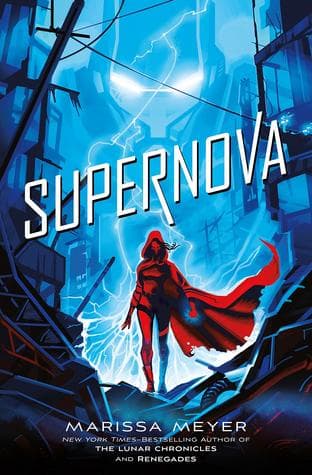
Synopsis
Covers the whole plot, including the ending.
- Difficulty
- Medium
- Pacing
- Fast
- Mood
- Action-packed, Suspenseful, Romantic, Intense, Thought-provoking
- Read it if
- You've read the first two books in the Renegades Trilogy and are eager for an action-packed, high-stakes conclusion with romance, moral dilemmas, and shocking twists.
- Skip it if
- You haven't read 'Renegades' or 'Archenemies' and don't want to start a series at the end, or you prefer standalone fantasy novels.
Supernova Plot Summary
Covers the whole plot, including the ending.
The Aftermath and the Anarchist Meeting
After the Renegade parade, Nova (Nightmare) attends a secret Anarchist meeting where Phobia, the new leader, takes charge and plans their next moves against the Renegades. Phobia shows her power to cause fear and distrust, wanting to break Gatlon City's faith in its heroes. Meanwhile, Adrian Everhart (Sentinel) and the other Renegade council members deal with Ace Anarchy's symbol reappearing and growing public unrest. Adrian is especially worried, as he saw Ace die and suspects a trick. Nova continues her double life, gathering information for the Anarchists while acting as a loyal Renegade, struggling with her divided loyalties and her feelings for Adrian.
The Search for Ace Anarchy
Adrian tries to find the truth behind Ace Anarchy's return, sure that someone is pretending to be him. He asks Nova for help, unaware of her true identity. Together, they follow clues left by the mysterious 'Ace,' which often lead them to old Anarchist hideouts and symbols. Nova, while pretending to help, subtly guides their investigation away from anything that might expose her or her Anarchist allies. During their search, they find signs that Ace Anarchy might have had a backup plan or an heir, making the mystery more complex. Their shared investigation brings them closer, increasing the romantic tension, even as Nova's guilt grows.
The Council's Distrust and Max's Illness
The Renegade Council, especially Captain Chromium and other senior members, becomes more paranoid and distrustful, influenced by Phobia's subtle effect on the city. They start to suspect traitors and add more security. At the same time, Adrian's younger brother, Max, who can absorb and copy others' powers, starts to have severe, unpredictable power changes. His condition worsens, causing him great pain and making him dangerous to himself and others. Adrian tries to find a cure for Max, believing it might be linked to the original experiments that gave Max his powers, further straining his family.
Nova's Divided Loyalties and the Revelation of Phobia
Nova keeps gathering information for Phobia, but her loyalty wavers as she sees the chaos and fear Phobia causes in the city. She discovers that Phobia is Evie, a former Anarchist child thought to have died during Ace Anarchy's original defeat. Evie, driven by revenge, plans to use her fear powers to dismantle the Renegades from within, creating a power vacuum she wants to fill. Nova realizes how ruthless Evie is and begins to question if the Anarchist cause, under Evie's leadership, truly matches her own ideas of justice and equality, especially as she sees the suffering it causes.
The Discovery of Max's Link to Ace Anarchy
Adrian's search for a cure for Max leads him to old Renegade files and Dr. True's research. He uncovers a secret: Max's powers are not natural but resulted from Dr. True's illegal experiments, using Ace Anarchy's genetic material. This means Max is Ace Anarchy's biological son, conceived in a lab. This discovery shatters Adrian's understanding of his family and the Renegades' moral standing. He confronts his adoptive parents, Captain Chromium and Dreadnought, who confirm the truth, revealing the Renegade organization's dark side and their desperate actions to create powerful allies.
Nova's Betrayal and Adrian's Heartbreak
Through several close calls and detective work, Adrian finally unmasks Nova as Nightmare, the Anarchist. The revelation devastates him, as he struggles to accept the woman he loves is the villain who caused so much trouble. He feels betrayed by Nova and by his own judgment. The confrontation is emotional, with Nova trying to explain her actions and Adrian unable to see past the deception. This discovery creates a deep rift between them, threatening their personal relationship and the fragile peace they had unknowingly created between their groups. Adrian vows to bring Nightmare to justice.
Phobia's Gambit and the Unveiling of Ace
Phobia starts her final plan: to expose the truth about Ace Anarchy's supposed return. She arranges a public broadcast, revealing that the 'Ace Anarchy' terrorizing the city is Max, manipulated by her and suffering from his unstable powers. She uses Max to broadcast a message of anarchy and distrust, further eroding public faith in the Renegades. This shocks the city and the Renegades, who must face the dark secret of Max's origins and their leaders' ethical compromises. The city descends into widespread panic and rioting as the lines between hero and villain blur.
The Battle for Gatlon City
The city erupts into a full-scale battle as the Renegades try to stop the chaos and catch Phobia, while the Anarchists support her. Max, now fully unleashed and controlled by Phobia, becomes a weapon, absorbing and reflecting powers, causing great destruction. Nova, torn between her Anarchist past and her growing understanding of Phobia's tyranny, finds herself fighting with Adrian and the Renegades, trying to protect citizens and stop Phobia. The battle is fierce, with former allies becoming enemies, and Gatlon City threatening to fall apart.
Nova's Choice and the Confrontation with Phobia
During the battle, Nova chooses justice and protection over revenge. She confronts Phobia, trying to reason with her and stop her. Phobia, full of hatred, refuses, leading to a direct fight between the two former allies. Nova uses her skills and powers to counter Phobia's fear abilities, aiming to expose Phobia's manipulation and defeat her. This moment marks Nova's complete break from her Anarchist identity and her full acceptance of a more complex view of heroism and villainy, even as she deals with her past actions.
Max's Sacrifice and the Aftermath
In a key moment, Max, regaining some control, sacrifices himself to stop Phobia's rampage and protect Gatlon City, absorbing a huge amount of destructive energy. His sacrifice is a turning point, letting the Renegades subdue Phobia and start to restore order. Afterward, the city deals with the revelations about Ace Anarchy, Max, and the Renegade Council's ethical failures. Nova and Adrian, though still hurt, begin the long process of healing and understanding, realizing that good and evil are more complex than they imagined. The future of Gatlon City, and their relationship, is uncertain but hopeful.
The Council's Reckoning and New Leadership
After the battle, the truth about Max's origins and the Council's hiding of Dr. True's unethical experiments comes out, causing public anger and a lack of trust in the Renegades. Captain Chromium and other senior Council members must step down or face scrutiny. A new, more open leadership is set up, committed to fixing problems within the organization and rebuilding public trust. This reform marks a big change in the Renegades' approach to justice and governance, recognizing the need for more accountability and the dangers of unchecked power, even for heroes. Adrian takes a more important role, supporting these changes.
Nova's Redemption and Adrian's Forgiveness
Nova, now committed to being a hero, works to help rebuild Gatlon City and make up for her past actions as Nightmare. She uses her skills and knowledge to help the new Renegade leadership, proving her loyalty. Adrian, though still deeply hurt by her betrayal, sees her true efforts and begins to understand her reasons. Their shared experiences and Max's sacrifice slowly bridge the gap between them. Forgiveness is hard, but they gradually start to rebuild their relationship, based on a new understanding of truth, trust, and the grey areas of morality. Their bond becomes stronger, forged by their shared trauma.
The Future of Gatlon City and the Prodigies
As Gatlon City heals, Nova and Adrian become key figures in its future. They work together, blending their views to create a new path for prodigies, one that values cooperation, accountability, and compassion over strict hero or villain labels. The city starts to embrace a more integrated approach to its gifted citizens, building understanding and preventing new Anarchist movements driven by anger. Nova, no longer Nightmare but not fully a Renegade, finds her unique place as a bridge between worlds, while Adrian tries to ensure Max's sacrifice was not in vain. Their story ends with a hopeful, though challenging, vision for Gatlon City's future.
Principal Figures
Nova Artino (Nightmare/Insomnia)
Protagonist
An Anarchist sleeper agent with the power to induce sleep, caught between two worlds.
Nova is driven by a profound desire for justice, stemming from the belief that the Renegades failed to save her family from Ace Anarchy. She is intelligent, resourceful, and possesses the power to induce sleep and disrupt others' powers. Under the alias Nightmare, she infiltrates the Renegades, seeking to dismantle their system from within. Despite her Anarchist upbringing, she develops genuine connections with Renegades, particularly Adrian, causing deep internal conflict. She is a master of disguise and deception, but her core desire is to protect the innocent and ensure no one suffers as she did.
Relationships: Adrian Everhart (Love interest, initially unaware of her true identity, later deeply betrayed but ultimately forgiving.); Ace Anarchy (Her uncle, whom she idolizes and seeks to avenge, though his true nature is more complex.); Phobia (Evie) (Former Anarchist ally, later her adversary due to differing ideologies.); Honey (Her aunt and fellow Anarchist, a source of guidance and familial connection.)
Adrian Everhart (Sentinel/Sketch)
Protagonist
A Renegade with the power to bring his drawings to life, grappling with his family's legacy and secrets.
Adrian is the adopted son of Captain Chromium and Dreadnought, two of the most powerful Renegades. He possesses the unique ability to manifest his drawings into reality, often using them to create force fields or temporary constructs. He is earnest, compassionate, and deeply committed to the Renegade ideals of justice and protection. However, he is also burdened by the weight of his family's reputation and the secrets they keep. His unwavering belief in good and evil is challenged by his feelings for Nova and the dark truths he uncovers about the Renegades. He is a skilled artist and a thoughtful leader.
Relationships: Nova Artino (Love interest, initially unaware of her true identity, later deeply betrayed but ultimately forgiving.); Max Everhart (His adopted younger brother, whose illness and true origins drive much of Adrian's actions.); Captain Chromium (Adoptive father, a powerful Renegade leader whose secrets deeply affect Adrian.); Dreadnought (Adoptive mother, a powerful Renegade leader whose secrets deeply affect Adrian.)
Max Everhart (Ace Anarchy)
Supporting/Antagonist
Adrian's adopted younger brother, whose unstable powers and true identity become a central mystery.
Max is Adrian's younger adopted brother, a sweet and innocent child who possesses the incredibly powerful and dangerous ability to absorb and mimic the powers of any prodigy near him. This power is unstable and causes him immense pain and illness. Max is initially a victim, manipulated by others due to his genetic connection to Ace Anarchy. His true identity as Ace Anarchy's biological son, created through unethical experimentation by Dr. True, is a shocking revelation that unravels the Renegades' reputation. Despite his involuntary role as a weapon, Max retains a core of innocence and ultimately makes a selfless sacrifice.
Relationships: Adrian Everhart (Adoptive brother, Adrian is fiercely protective of him.); Captain Chromium (Adoptive father, who hid his true origins.); Dreadnought (Adoptive mother, who hid his true origins.); Ace Anarchy (Biological father, though they never meet in a true father-son dynamic.)
Phobia (Evie)
Antagonist
A vengeful Anarchist with the power to induce fear, seeking to destroy the Renegades.
Phobia, whose true name is Evie, is a cunning and ruthless Anarchist prodigy with the power to induce intense fear and distrust in others. She was believed to have died during the original defeat of Ace Anarchy, but she survived and now leads the remaining Anarchists. Driven by a deep-seated hatred for the Renegades, whom she blames for her past suffering, Evie seeks to dismantle their entire system and establish Anarchist rule. She is a master manipulator, using her powers and strategic mind to turn the city against its heroes. Her methods are extreme, and she prioritizes revenge above all else, making her a formidable and dangerous adversary.
Relationships: Nova Artino (Former Anarchist ally, later her primary antagonist as Nova rejects her methods.); Ace Anarchy (Her perceived mentor and inspiration, whose legacy she attempts to reclaim.)
Captain Chromium
Supporting
A founding member and leader of the Renegades, Adrian's adoptive father.
Captain Chromium is one of the most powerful and respected Renegades, possessing super strength and invulnerability. He is Adrian's adoptive father and a prominent figure on the Renegade Council. He embodies the classic hero archetype, dedicated to maintaining order and protecting Gatlon City. However, he is also deeply flawed, having made morally questionable decisions in the past, particularly regarding Max's origins, to protect his family and the Renegades' image. His secrets weigh heavily on him, and his actions ultimately lead to a crisis of public trust in the Renegades.
Relationships: Adrian Everhart (Adoptive son, whom he loves but also keeps vital secrets from.); Dreadnought (Wife and fellow Renegade leader.); Max Everhart (Adoptive son, whose true origins he helped conceal.)
Dreadnought
Supporting
A founding member of the Renegades, Adrian's adoptive mother.
Dreadnought is a powerful Renegade with the ability to control and manipulate metal, making her a formidable combatant. She is Adrian's adoptive mother and a key member of the Renegade Council. Like Captain Chromium, she is committed to the Renegade cause but has also participated in concealing the truth about Max's origins. She is often more pragmatic and less outwardly emotional than her husband, but her love for her family is undeniable. She struggles with the ethical dilemmas of their past actions and the consequences they bring.
Relationships: Adrian Everhart (Adoptive son, whom she loves and tries to protect.); Captain Chromium (Husband and fellow Renegade leader.); Max Everhart (Adoptive son, whose true origins she helped conceal.)
Smokescreen (Leroy)
Supporting
An Anarchist with the power to create illusions and smoke, Nova's loyal friend.
Smokescreen, whose real name is Leroy, is a loyal Anarchist with the power to create illusions and manipulate smoke. He is a long-time friend and ally of Nova, often providing comic relief and unwavering support. Despite his Anarchist affiliation, he is not malicious and often questions the more extreme methods of leaders like Phobia. He cares deeply for Nova and acts as her confidante, offering a moral compass even within the Anarchist ranks. His powers are useful for infiltration and evasion, making him a valuable asset to Nova's missions.
Relationships: Nova Artino (Close friend and trusted Anarchist ally.)
Ruby (Red Assassin)
Supporting
A Renegade with the power to manipulate blood, a member of Adrian's team.
Ruby, known as Red Assassin in her Renegade persona, possesses the gruesome but powerful ability to manipulate blood, both her own and others'. She is a member of Adrian's Renegade team and a close friend. Ruby is fiercely loyal, practical, and often provides a grounded perspective. She is a skilled fighter and isn't afraid to use her unsettling powers when necessary. Her loyalty to Adrian and the Renegades is unwavering, making her a stark contrast to Nova's internal conflicts. She struggles with the moral implications of her own powers and the dark truths uncovered about the Renegades.
Relationships: Adrian Everhart (Close friend and teammate.); Danna Bell (Monarch) (Teammate and friend.)
Danna Bell (Monarch)
Supporting
A Renegade with the power to manipulate pheromones, a member of Adrian's team.
Danna Bell, known as Monarch, is a Renegade with the ability to manipulate pheromones, allowing her to influence emotions and attract others. She is a member of Adrian's team and a generally upbeat and sociable individual. Her powers are subtle but effective, often used for crowd control or to calm tense situations. She is a good friend to Adrian and Ruby, providing emotional support and a sense of normalcy amidst the chaos. She is observant and perceptive, often noticing the subtle shifts in dynamics within their group, including the growing tension between Adrian and Nova.
Relationships: Adrian Everhart (Close friend and teammate.); Ruby (Red Assassin) (Teammate and friend.)
Oscar Silva (Cyanide)
Supporting
A Renegade with the power to generate and control poisons, a member of Adrian's team.
Oscar Silva, known as Cyanide, is a Renegade with the ability to generate and control various poisons and toxins. He is a member of Adrian's team, characterized by his quiet demeanor and sharp intellect. Despite his dangerous powers, Oscar is generally reserved and uses his abilities with precision and caution. He is a loyal Renegade and a reliable teammate, often providing strategic insight. His powers, though lethal, are used in service of justice, highlighting the complex nature of prodigy abilities within the Renegade framework.
Relationships: Adrian Everhart (Teammate and friend.); Ruby (Red Assassin) (Teammate and friend.)
Themes & Insights
The Ambiguity of Good and Evil
The novel makes the lines between heroes and villains unclear, constantly challenging the reader's idea of right and wrong. Nova, an Anarchist, wants justice, while the Renegades, supposedly heroes, are shown to have done unethical things and hidden secrets, such as Dr. True's experiments on Max. Characters like Adrian realize that even 'good' intentions can lead to harm, and 'evil' can come from understandable pain. This theme ends with Nova's choice to fight for a new, more balanced justice, rather than just destroying the Renegades, showing that true heroism is in understanding and compassion. The whole conflict is based on both sides believing they fight for justice.
“There were no heroes or villains, only people with different perspectives, fighting for what they believed in.”
The Corrupting Influence of Power
Both the Renegades and the Anarchists show how unchecked power can lead to corruption and moral decay. The Renegade Council's decision to hide Max's origins and Dr. True's unethical experiments shows how even 'heroes' can misuse authority to keep control and reputation. On the Anarchist side, Phobia's ruthless pursuit of revenge, using her fear powers to destabilize the city, shows how a desire for justice can turn into tyranny. The novel suggests that any group, regardless of its initial goals, can become corrupt when power is unchallenged or absolute. This theme is central to the eventual restructuring of Gatlon City's government.
“Absolute power corrupts absolutely, and Gatlon City was about to learn that lesson the hard way.”
Identity and Self-Discovery
Many characters, especially Nova and Adrian, struggle with their true identities versus the roles they are expected to play. Nova constantly lives a dual life as Nightmare and Nova Artino, trying to figure out which persona truly represents her and what she believes. Adrian also struggles with being the son of legendary Renegades and the secret artist Sentinel. The discovery of Max's true origins makes Adrian re-evaluate his family's past and his own identity. The journey of self-discovery is about accepting one's complex past and creating an authentic path forward, even if it means questioning strong beliefs. Nova's final choice to fight for a balanced future is her ultimate act of self-definition.
“Who are you when no one is watching? Who are you when everyone is watching? The answer was often two different people, battling for the same soul.”
Justice vs. Revenge
A main conflict in the novel is the difference between seeking true justice and giving in to revenge. Nova's initial reasons as an Anarchist are driven by a desire to avenge her family and punish the Renegades. Phobia shows this theme most strongly, her entire plan driven by vengeful hatred. However, as Nova sees the destructive results of Phobia's actions and experiences real connections with Adrian and other Renegades, she starts to understand that revenge only continues cycles of violence. Her arc shows a shift from personal vengeance to a broader, more compassionate view of justice that aims to heal and rebuild rather than destroy. Max's sacrifice, in particular, highlights how destructive revenge is.
“Revenge was a poison, a fire that consumed everything in its path, leaving only ash and more hatred.”
Plot Devices & Literary Techniques
The Double Life/Secret Identity
Characters maintain hidden personas, creating dramatic irony and internal conflict.
The pervasive use of secret identities is central to the plot. Nova lives a double life as the Anarchist Nightmare and the aspiring Renegade Nova Artino, creating constant tension and dramatic irony as she interacts with Adrian, who is also Sentinel. This device allows for exploration of identity, loyalty, and betrayal. It fuels much of the romantic tension and the ultimate heartbreak when identities are revealed, forcing characters to confront the gap between perception and reality. The entire premise of the series relies on these hidden personas.
The MacGuffin: Max's Powers and Origins
Max's unique powers and genetic connection to Ace Anarchy drive much of the plot's mystery and conflict.
Max's unstable power to absorb and mimic other prodigies' abilities, coupled with the secret of his genetic connection to Ace Anarchy, serves as a crucial plot device. It's the catalyst for Adrian's investigation into Dr. True's past, exposes the Renegade Council's dark secrets, and becomes the central tool used by Phobia to destabilize Gatlon City. The mystery surrounding Max's condition and lineage propels the narrative forward, unraveling the established order and forcing both factions to confront uncomfortable truths about their origins and ethics.
The Unreliable Narrator (Implied)
The narrative primarily follows Nova, whose Anarchist perspective colors the initial portrayal of events and characters.
While not explicitly an unreliable narrator, Nova's perspective as an Anarchist influences the early understanding of the Renegades and the 'villains.' Her deep-seated bias against the Renegades shapes how the reader initially perceives their actions and motivations. As the story progresses and Nova uncovers more truths, her perspective shifts, forcing the reader to re-evaluate prior assumptions. This implicit unreliability allows for gradual reveals and reinforces the theme of ambiguity, as the 'truth' is revealed to be far more complex than any single character's initial worldview.
Deus Ex Machina (Max's Sacrifice)
Max's sudden, selfless act resolves the immediate crisis and provides a path to victory.
In the climax of the battle, Max, who has been largely a victim of his powers and manipulation, suddenly regains enough agency to make a critical, selfless sacrifice. He absorbs a massive amount of destructive energy, effectively neutralizing Phobia's ultimate weapon and turning the tide of the battle. While his condition has been central to the plot, his sudden ability to exert control and make such a profound decision at the peak of chaos functions as a Deus Ex Machina, providing a powerful emotional resolution to the immediate threat and allowing the heroes to win, though at a great cost.
Supernova Quotes
“Even the mightiest stars eventually burn out.”
“Sometimes, the only way to save someone is to let them go.”
“A hero's greatest weakness is often their own compassion.”
“Hope is a dangerous thing. It can make you believe in the impossible, even when you know better.”
“The line between villain and hero is often blurred by perspective.”
“You can't choose your family, but you can choose who you fight for.”
“True strength isn't about how much power you have, but how you choose to use it.”
“Love isn't always logical. Sometimes it just... is.”
“The greatest deceptions are often born from the deepest affections.”
“Sometimes, the hardest battles are fought within yourself.”
“A secret is only safe as long as no one knows it exists.”
“Even the most broken pieces can be put back together, if you have the right glue.”
“The future is not set in stone. We are the ones who carve it.”
“What defines us is not our powers, but our choices.”
Quiz
10 questions on the plot and the characters. Each answer comes with a short explanation.
Question 1
What is the name of the organization Nova Artino is secretly a member of, dedicated to overthrowing the Renegades?
- The Anarchists
- The Sentinels
- The Insurgents
- The Outlaws
Show answer
A. The Anarchists Nova Artino, under the alias Nightmare, is a prominent member of the Anarchists, who seek to dismantle the Renegade government.
Question 2
Which of Adrian Everhart's alter egos is known for creating physical objects from his drawings?
- The Sentinel
- Sketch
- The Illustrator
- The Creator
Show answer
B. Sketch Adrian's secret identity, Sketch, possesses the ability to bring his drawings to life, forming solid objects.
Question 3
What is the primary power of Ace Anarchy, the original leader of the Anarchists?
- Super speed
- Invisibility
- Immortality/regeneration
- Telekinesis
Show answer
C. Immortality/regeneration Ace Anarchy possesses the ability to regenerate from almost any injury, making him effectively immortal.
Question 4
What significant event occurs at the end of 'Supernova' regarding the public perception of heroes and villains?
- All Renegades are disbanded and stripped of their powers.
- The Anarchists successfully take over Gatlon City.
- The lines between heroes and villains become blurred, leading to a new societal structure.
- Nova and Adrian publicly reveal all their secret identities.
Show answer
C. The lines between heroes and villains become blurred, leading to a new societal structure. The conclusion of 'Supernova' sees the public learning the truth about many Renegades and Anarchists, challenging the traditional hero/villain dichotomy and leading to a more nuanced understanding.
Question 5
Which character is revealed to have the ability to duplicate themselves, creating multiple copies?
- Dreadnought
- Monarch
- Phobia
- The Puppeteer (Evander)
Show answer
D. The Puppeteer (Evander) Evander, also known as The Puppeteer, has the unique ability to create multiple clones of himself.
Question 6
What is the primary motivation for Nova's involvement with the Anarchists?
- To gain personal power and control over Gatlon City.
- To avenge her family's death and expose the Renegades' flaws.
- To find a cure for her own superpower.
- To impress Ace Anarchy and become his successor.
Show answer
B. To avenge her family's death and expose the Renegades' flaws. Nova's deep-seated resentment stems from the Renegades' failure to save her family, driving her to expose their hypocrisy and dismantle their system.
Question 7
What is the true nature of Phobia's power, beyond inducing fear?
- She can read minds.
- She can manipulate memories.
- She can manifest a person's deepest fears into reality.
- She can control others' actions through fear.
Show answer
C. She can manifest a person's deepest fears into reality. Phobia's power is more potent than simply inducing fear; she can actually make a person's worst nightmares and fears appear as if they are real.
Question 8
Which character is Nova's biological aunt, who she initially believed to be dead?
- Ingrid Thompson (Detonator)
- Murmur (Cyborg)
- Honey (The Honeycomb)
- Evie (Cyanide)
Show answer
D. Evie (Cyanide) It is revealed that Evie, known as Cyanide, is actually Nova's aunt, believed to have died during the initial Anarchist uprising.
Question 9
What major secret is Nova trying to keep from Adrian throughout the series, especially in 'Supernova'?
- Her true feelings for him.
- Her identity as Nightmare, an Anarchist.
- Her connection to Ace Anarchy.
- Her plans to leave Gatlon City.
Show answer
B. Her identity as Nightmare, an Anarchist. The central conflict of their relationship revolves around Nova desperately trying to conceal her identity as the Anarchist Nightmare from Adrian, a Renegade.
Question 10
What critical role does Max, Adrian's adopted brother, play in the climax of 'Supernova'?
- He leads the charge against Ace Anarchy's forces.
- He uses his power to reveal crucial information to the public.
- He sacrifices himself to save Nova and Adrian.
- He betrays the Renegades to join the Anarchists.
Show answer
B. He uses his power to reveal crucial information to the public. Max, with his ability to absorb and project thoughts and memories, plays a pivotal role in revealing the truth about Ace Anarchy and other secrets to the citizens of Gatlon City, bridging the divide between factions.
Supernova FAQ
What is the central conflict Nova Artino (Nightmare) faces throughout 'Supernova'?
Nova's primary conflict revolves around her dual identity and her loyalty to both the Anarchists and her growing affection for Adrian Everhart (Sentinel). She struggles with her mission to dismantle the Renegades from within, while simultaneously questioning the Anarchists' methods and the very nature of justice and villainy.
How does Adrian Everhart (Sentinel/Sketch) contribute to the overarching plot of 'Supernova'?
Adrian is central as he is both a Renegade leader and the secret identity Sketch, who collaborates with Nova. His artistic powers and desire to understand justice drive him to create the 'dreamer' serum, inadvertently escalating the conflict and forcing him to confront the complexities of his own family's history and the Renegade system.
Who is Ace Anarchy, and what role does he play in 'Supernova'?
Ace Anarchy is Nova's uncle and the legendary leader of the Anarchists, believed to be dead for ten years. His miraculous return is a major turning point, as he seeks to reactivate his powers and reclaim control of Gatlon City, forcing Nova to choose between his radical ideology and her burgeoning connections with the Renegades.
What is the significance of the 'dreamer' power and how does it develop in 'Supernova'?
The 'dreamer' power, initially thought to be Nova's unique ability to put people to sleep, is revealed to be a much more potent ability to suppress or enhance other prodigies' powers. Adrian's serum, designed to replicate it, inadvertently spreads the ability, leading to widespread power fluctuations and a desperate search for a cure, highlighting its potential for both control and chaos.
What is the ultimate resolution of the conflict between the Renegades and the Anarchists by the end of 'Supernova'?
The conflict culminates not in a clear victory for one side, but in a fractured peace and a new understanding. Ace Anarchy is defeated, but Nova and Adrian work to expose the flaws in both systems, leading to the establishment of the Council of Prodigies and a push towards a more nuanced, democratic approach to justice, blurring the lines between heroes and villains.
What is the true origin of Nova's 'dreamer' powers, and how does it connect to her family?
Nova's 'dreamer' power is revealed to be a manifestation of Ace Anarchy's original power, 'anarchy,' which allows him to nullify other prodigies' abilities. Nova inherited a variant of this power, which she could also use to amplify or restore powers, making her a crucial key to both Ace's plans and the eventual resolution of the power crisis.
How do Max Everhart's powers and existence serve as a hidden catalyst for major plot points?
Max, Adrian's younger brother, possesses the powerful and dangerous ability to absorb and redirect energy, which he struggles to control. His deteriorating health and the Renegades' attempts to find a cure for him are what originally led Adrian to develop the 'dreamer' serum, inadvertently unleashing the power crisis and giving Ace Anarchy a means to restore his own abilities.
What is the significance of the 'mirror' in Ace Anarchy's hidden lair, and how does it relate to his plans?
The 'mirror' in Ace's lair is not a simple reflective surface but a device he created to amplify and restore prodigy powers, including his own nullifying ability. He uses it to funnel the 'dreamer' power from others, intending to regain his full strength and impose his vision of anarchy on Gatlon City, making it a central component of his endgame.
How does Nova's internal struggle with her identity as Nightmare and Insomnia reflect her psychological state?
Nova's internal conflict between Nightmare (the Anarchist assassin) and Insomnia (the Renegade ally) symbolizes her deep-seated trauma and her yearning for belonging. Nightmare represents her past and loyalty to her family's ideology, while Insomnia embodies her evolving morality and the connections she forms with Adrian and the Renegades, revealing her desire for a more just, less violent world.
Analyze Adrian's 'Sketch' persona from a psychological perspective. What does it allow him to do?
Adrian's 'Sketch' persona allows him to explore his artistic abilities and moral ambiguities outside the strictures of his Renegade identity as Sentinel. It represents his desire for justice and understanding beyond the black-and-white hero/villain dichotomy, providing him a safe space to connect with Nova and question the system without facing immediate judgment from his peers or family.
How does the theme of 'nature vs. nurture' play out in the character of Ace Anarchy?
Ace Anarchy exemplifies the 'nurture' aspect, as his radical ideology and actions are heavily influenced by his traumatic past and the perceived injustices he suffered at the hands of the first Renegades. While he possesses immense power ('nature'), his unyielding belief that all authority is corrupt stems from his experiences, driving his quest for a world without rules.
What is the psychological impact of Nova's betrayal on Adrian, and how does he process it?
Nova's betrayal deeply wounds Adrian, shaking his trust and forcing him to confront the reality that his 'Sketch' confidante and the villain Nightmare are the same person. He processes it through a combination of anger, heartbreak, and ultimately, a desire for understanding, pushing him to re-evaluate his own rigid beliefs about good and evil and to forgive.
Is Ace Anarchy truly a 'villain,' or is his ideology a misguided attempt at justice?
This is debatable. While Ace's methods are extreme and violent, leading to much suffering, his core belief that authority can be corrupt and that individuals should be free from oppressive systems resonates with some. He is arguably a tragic figure whose past trauma and unyielding ideology transformed a desire for freedom into a tyrannical quest for anarchy.
How does the ending of 'Supernova' challenge traditional superhero tropes?
The ending subverts traditional superhero narratives by refusing a clear-cut hero victory or villain defeat. Instead, it advocates for a more complex, collaborative approach to justice, where former adversaries work together to create a new system. It blurs the lines between good and evil, suggesting that true heroism lies in understanding and compromise, not absolute power.
What is the ultimate message about justice and morality that 'Supernova' conveys?
'Supernova' argues that justice is rarely black and white, and that both rigid systems (like the Renegades) and absolute anarchy (like Ace's vision) are flawed. The book suggests that true morality lies in empathy, understanding, and the willingness to bridge divides, advocating for a nuanced approach where individual rights and collective safety are balanced through open dialogue and shared governance.
Could Nova and Adrian's relationship realistically survive the revelations and betrayals they endured?
Their relationship's survival is a testament to their deep connection and shared ideals, despite the betrayals. While highly challenging, their ability to see beyond each other's alter egos and recognize their fundamental desire for a better world allows them to overcome the immense trust issues. Their love is rooted in mutual respect and understanding, which proves stronger than their conflicting loyalties.
What is the thematic significance of the 'Council of Prodigies' established at the end?
The Council of Prodigies represents a new, more democratic future for Gatlon City, moving away from the authoritarian rule of the Renegade Council. It signifies a shift towards inclusivity and shared governance, giving all prodigies a voice and fostering a system that aims to prevent the abuses of power seen in both the Renegades and the Anarchists, embodying a hope for lasting peace.
How does the revelation of Nova's sister, Evie, impact Nova's character arc?
The discovery that Evie is alive and has been cared for by the Renegades shatters Nova's foundational belief that the Renegades were solely responsible for her family's tragedy. This revelation forces Nova to re-evaluate her entire identity and mission, pushing her further towards reconciliation and away from the Anarchist ideology that fueled her revenge.
About the author

Marissa Meyer is an American author known for her young adult fiction, particularly in the fantasy and science fiction genres. She is best known for her Lunar Chronicles series, which includes "Cinder," "Cress," "Winter," and "Stars Above," as well as the standalone novel "Heartless" and the "Renegades" duology. Her works often feature unique retellings of classic fairy tales and original superhero narratives.
Similar books
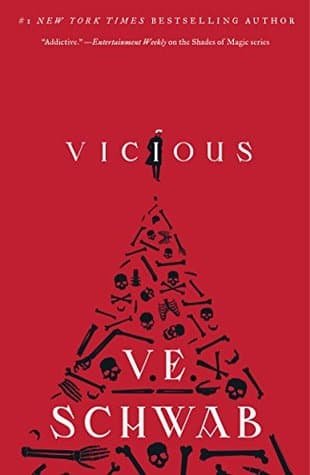
- Vicious
V.E. Schwab
4.0 (7k) average on GoodreadsThrillerExplores morally grey superpowered individuals and the blurry lines between heroes and villains.
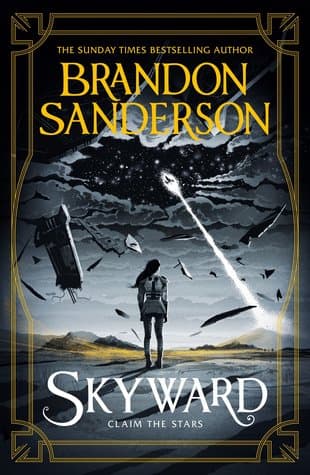
- Skyward
Brandon Sanderson
4.5 (67k) average on GoodreadsFantasyFeatures a determined young protagonist with a secret identity fighting in a high-stakes conflict.
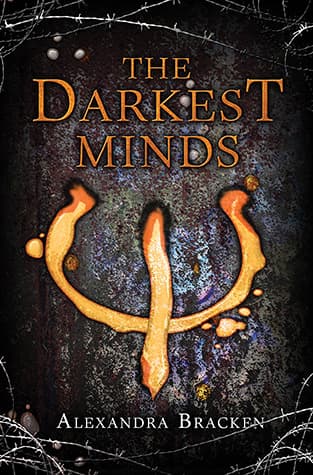
- The Darkest Minds
Alexandra Bracken
4.2 (148k) average on GoodreadsFantasyFollows superpowered teens on the run, dealing with complex allegiances and a dystopian society.
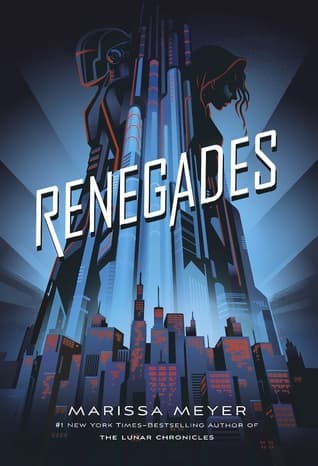
- Renegades
Marissa Meyer
4.2 (62k) average on GoodreadsFantasySupernova builds directly on the themes and character development established in Renegades. While Renegades introduced the core conflict and moral ambiguities, Supernova deepens them, forcing characters to make more difficult choices. Supernova expands on the world-building, revealing more about the origins of prodigies and the true history of Gatlon City, something Renegades only hinted at. The first book set the stage, and Supernova attempts to deliver the payoff, with a significantly higher stakes narrative and more intense personal betrayals. However, some might argue Supernova's reliance on constant twists overshadows the more measured character introductions of its predecessor.
- Harry Potter and the Sorcerer's Stone
J.K. Rowling
4.5 (7M) average on GoodreadsFantasyRescued from a miserable life under the stairs, an orphaned boy discovers he's a wizard destined for a magical school, where he uncovers a dangerous secret tied to the dark wizard who murdered his parents.
- The Hunger Games
Suzanne Collins
4.3 (6.4M) average on GoodreadsFantasyIn a future where children fight to the death on live television, Katniss Everdeen volunteers for the arena, turning a death sentence into a fight for survival and a spark of rebellion.


Enjoyed the summary?
A summary gives you the shape of the book. The book itself has the detail, the examples and the voice.
Find Supernova on AmazonAs an Amazon Associate, BookBrief earns from qualifying purchases. How we're funded