

Synopsis
Covers the whole plot, including the ending.
- Difficulty
- Medium
- Pacing
- Variable
- Mood
- Suspenseful, Chilling, Unsettling, Dark
- Read it if
- You enjoy a slow-burn mystery that gradually reveals a chilling villain, with a focus on psychological tension and the dark side of human nature.
- Skip it if
- You prefer fast-paced action thrillers or mysteries with a clear-cut, satisfying resolution where the villain is definitively brought to justice.
T is for Trespass Plot Summary
Covers the whole plot, including the ending.
Kinsey's Mundane Life and the Case of the Missing Man
Kinsey Millhone, a private investigator in Santa Teresa, California, is in a professional slump in late 1987. Her routine involves jogging, managing finances, and avoiding her landlord, Henry Pitts. A new client, Lisa, is concerned about her elderly neighbor, Pete Wolinsky, who has vanished. Pete, a reclusive man, usually follows a strict schedule, and Lisa cannot reach him. Kinsey takes the case, thinking it is a simple missing persons investigation. She visits Pete's house, finding it locked with no signs of forced entry, which deepens the mystery.
Solana Rojas's Calculated Infiltration
At the same time, the story introduces Solana Rojas, a manipulative woman who recently stole the identity of a deceased acquaintance. Using this stolen identity, Solana gets a job as a live-in caregiver for Agnes Gray, a wealthy elderly woman. Solana's goal is to isolate Agnes, control her finances, and inherit her estate. Solana plans carefully, charming Agnes and her family while subtly undermining anyone who might pose a threat. She observes Agnes's routines and weaknesses, setting up her long-term exploitation.
Pete Wolinsky's Backstory and Kinsey's Growing Unease
Kinsey's investigation into Pete Wolinsky's disappearance continues. She interviews Pete's few acquaintances, learning he was a quiet man with no close family. He recently sold a valuable coin collection, which interests Kinsey, as it suggests a sudden amount of cash. Kinsey also finds out Pete hired a new caregiver, Solana Rojas, shortly before he vanished. The name sounds familiar, but Kinsey cannot place it. The lack of a clear reason for Pete's departure and inconsistent information from those who knew him make Kinsey suspect there is more to the case.
Solana's Control Over Agnes Tightens
Solana Rojas continues her plan with Agnes Gray. She slowly starts controlling Agnes's access to the outside world, intercepting calls and mail, and discouraging visits from Agnes's children, especially her suspicious daughter, Nora. Solana convinces Agnes to give her power of attorney, claiming it will simplify finances. She then begins taking money from Agnes's accounts, making it seem like Agnes is spending more. Solana's charm and apparent devotion keep Agnes from realizing the manipulation, while Nora's concerns are dismissed by her siblings. The tension grows as Solana's deceit tightens around Agnes.
Kinsey Connects the Dots to Solana Rojas
Kinsey's investigation leads her to the caregiver agency that placed 'Solana Rojas' with Pete Wolinsky. She finds out the agency had a different 'Solana Rojas' on their books—the deceased woman whose identity Solana stole. This difference immediately raises a red flag. Further checking shows that the same 'Solana Rojas' who cared for Pete is now working for Agnes Gray. Kinsey feels a growing sense of dread, realizing the woman is not who she claims to be and her involvement with both Pete and Agnes is suspicious. The cases, initially separate, start to connect, pointing to one dangerous person.
The Unveiling of Solana's True Nature
Kinsey works to expose Solana Rojas. She finds the family of the deceased Solana Rojas, confirming the identity theft. Kinsey also uncovers Solana's real name, Renie, and a history of petty crimes and scams, mostly targeting the elderly. The more Kinsey learns, the clearer it becomes that Solana is a professional predator, skilled at charming her way into vulnerable people's lives and exploiting them. Kinsey realizes that both Pete Wolinsky and Agnes Gray are likely victims of a sophisticated scam, and Agnes is in immediate danger. The stakes are higher as Kinsey understands the true evil she faces.
The Race Against Time for Agnes
With the truth about Solana, Kinsey tries to warn Agnes Gray's family, especially Nora, who had already worried. However, Solana has so effectively isolated Agnes and manipulated her children that Nora struggles to convince her siblings of the danger. Solana has carefully built an image of a devoted caregiver, making Kinsey's accusations seem unbelievable. Kinsey faces the challenge of proving Solana's malevolence before it is too late for Agnes. The legal and bureaucratic obstacles in removing a caregiver, especially one who has gained trust, are significant, adding to the urgency of Kinsey's mission.
The Discovery of Pete Wolinsky's Fate
Kinsey's investigation leads her back to Pete Wolinsky's house. With a search warrant, she carefully examines the property, finding a hidden compartment in the basement. Inside, she discovers Pete's remains, confirming her worst fears: Pete was murdered. This discovery solidifies Solana's criminal nature and elevates her from a con artist to a murderer. Kinsey realizes that Agnes Gray is not just being defrauded, but her life is also in grave danger. The pressure increases as Kinsey understands that Solana is capable of extreme violence and will stop at nothing to achieve her goals. The case shifts from a missing person to a murder investigation, with Agnes as the next potential victim.
The Confrontation and Solana's Escape
With evidence of Pete's murder, Kinsey and the police move to apprehend Solana Rojas at Agnes Gray's home. A tense confrontation occurs. Solana, a master manipulator, tries to maintain her innocent facade, but the evidence is overwhelming. However, in a moment of distraction, Solana manages to escape. Her escape shows her cunning, leaving Kinsey and the police frustrated but determined to find her. Solana's disappearance means she is still a threat, possibly seeking new victims or trying to disappear completely.
The Aftermath and Lingering Questions
Agnes Gray is safely removed from Solana's care, physically unharmed but emotionally shaken by the betrayal. Her family begins the process of fixing the financial damage Solana caused. Despite the rescue, the question of Solana's whereabouts remains. Kinsey, relieved for Agnes, is bothered that Solana is free, a dangerous predator still at large. The case ends with a sense of unfinished business, showing the nature of such crimes and the difficulty in bringing every perpetrator to justice. Kinsey reflects on the vulnerability of the elderly and how easily trust can be exploited.
Principal Figures
Kinsey Millhone
Protagonist
A pragmatic and independent private investigator.
Kinsey is a no-nonsense, independent private investigator in her thirties, based in Santa Teresa, California. She lives a simple, disciplined life, often preferring her own company. Driven by a strong sense of justice and a keen analytical mind, Kinsey is meticulous in her work, often relying on intuition and persistent legwork. She is resourceful and resilient, but also capable of empathy, especially towards victims of injustice. Her personal life is somewhat solitary, marked by a preference for routine and a cautious approach to relationships.
Relationships: Henry Pitts (Landlord and platonic friend, with Henry harboring unrequited romantic interest.); Lisa (Client who initially hires Kinsey to find her neighbor, Pete Wolinsky.)
Solana Rojas (Renie Sipes)
Antagonist
A cunning and ruthless sociopath who preys on the elderly.
Solana Rojas is the primary antagonist, though this is an assumed identity; her real name is Renie Sipes. She is a highly intelligent, manipulative, and utterly amoral woman with a complete lack of empathy. Solana is a master of disguise and deception, able to charm and disarm her victims and their families while systematically exploiting them. Her motivation is purely financial gain, and she is willing to commit fraud, theft, and even murder to achieve her goals. She views people as mere tools to be used and discarded, exhibiting classic sociopathic tendencies.
Relationships: Pete Wolinsky (Victim whose identity she exploits and whom she murders.); Agnes Gray (Elderly victim she attempts to defraud and potentially murder.); Nora (Agnes's daughter, whom Solana views as a threat to her scheme.)
Pete Wolinsky
Victim/Supporting
An elderly, reclusive man who becomes Solana's first known victim.
Pete Wolinsky is an elderly, somewhat reclusive man who lives alone. He is quiet, set in his ways, and has few close connections. His simple life makes him an easy target for Solana Rojas, who exploits his need for a caregiver. Pete's disappearance is the catalyst for Kinsey's investigation, and his ultimate fate reveals the true depth of Solana's depravity. Though he is not present for much of the narrative, his story serves as a chilling example of Solana's modus operandi.
Relationships: Lisa (Concerned neighbor who initiates the search for him.); Solana Rojas (His caregiver and eventual murderer.)
Agnes Gray
Victim/Supporting
A wealthy elderly woman targeted by Solana Rojas.
Agnes Gray is a wealthy, elderly woman who becomes Solana Rojas's second major victim. She is initially trusting and somewhat frail, making her vulnerable to Solana's manipulative charm. Despite having adult children, Agnes becomes isolated under Solana's care, her independence gradually eroded. She represents the archetypal victim of elder abuse and financial exploitation, a person whose trust is utterly betrayed by someone she believes is helping her. Her rescue becomes a race against time for Kinsey.
Relationships: Solana Rojas (Her caregiver who attempts to defraud and potentially murder her.); Nora (Her suspicious daughter, who tries to warn her.)
Nora
Supporting
Agnes Gray's suspicious and protective daughter.
Nora is Agnes Gray's daughter, who from the outset harbors suspicions about Solana Rojas. She is perceptive and protective of her mother, often clashing with her siblings who are more easily swayed by Solana's charm. Nora's concerns are initially dismissed, highlighting the difficulty families face when trying to intervene in elder abuse situations. She becomes an important ally for Kinsey, providing insights into Agnes's situation and helping to confirm Kinsey's suspicions about Solana.
Relationships: Agnes Gray (Her mother, whom she tries to protect.); Solana Rojas (Antagonist she distrusts from the beginning.); Kinsey Millhone (Ally in exposing Solana.)
Henry Pitts
Supporting
Kinsey's landlord and a retired baker.
Henry Pitts is Kinsey Millhone's kind and steadfast landlord, a retired baker with a gentle demeanor. He lives in the apartment above Kinsey and often offers her baked goods and companionship. Henry harbors a quiet affection for Kinsey, which she mostly deflects, but he remains a reliable and comforting presence in her life. He represents a sense of normalcy and stability amidst Kinsey's often chaotic and dangerous professional world.
Relationships: Kinsey Millhone (Landlord and platonic friend, with unrequited romantic interest.)
Lisa
Supporting
Pete Wolinsky's concerned young neighbor.
Lisa is a young woman, a student, and Pete Wolinsky's neighbor. She is the one who initially notices Pete's unusual absence and hires Kinsey Millhone to investigate. Lisa represents the good samaritan, someone who pays attention to her community and acts when something seems amiss. Her concern for Pete, a man she barely knows, sets the entire plot in motion, highlighting the importance of looking out for vulnerable individuals.
Relationships: Pete Wolinsky (Her elderly neighbor.); Kinsey Millhone (Her hired private investigator.)
Themes & Insights
The Vulnerability of the Elderly
The novel shows how easily elderly individuals, especially those isolated or in declining health, can become targets for exploitation. Both Pete Wolinsky and Agnes Gray are trusting and vulnerable, making them susceptible to Solana Rojas's tactics. The theme explores the breakdown of social protections and the challenges families face in protecting loved ones, as seen in Nora's struggle to convince her siblings of Solana's danger. It makes the reader confront the reality of elder abuse.
“What surprised me was the depth of the betrayal. It wasn't just a matter of money; it was a violation of trust so profound it bordered on sacrilege.”
The Insidiousness of Identity Theft and Deception
Identity theft is the main crime in the story, allowing Solana Rojas to easily enter her victims' lives. The novel details how Solana uses a stolen identity to get jobs, build trust, and avoid detection. This theme explores how easily one can shed an old life and take on a new one, exploiting the system's reliance on documents and appearances. It suggests that evil can hide behind respectability, making it hard to uncover until much damage is done, as Kinsey finds when tracing Solana's past.
“She was a chameleon, changing her skin to fit the environment, leaving no trace of the creature she'd been before.”
The Nature of Evil and Sociopathy
Solana Rojas is a chilling portrayal of a sociopath, driven by self-interest and lacking empathy. The novel explores her manipulation, showing her calculated charm, her ability to lie easily, and her indifference to the suffering she causes. This theme explores how such individuals operate in society, often undetected until their destructive patterns are clear. Kinsey's confrontation with Solana's lack of remorse highlights the terrifying nature of true evil, which operates outside normal human understanding.
“There was no flicker of conscience in her eyes, no hint of regret. Just a cold, calculating assessment of her next move.”
Justice and the Limits of the Law
The pursuit of justice is central to Kinsey's mission, but the novel also explores the limitations of legal and bureaucratic systems when dealing with cunning criminals like Solana. Kinsey faces hurdles in getting warrants, convincing skeptical family members, and ultimately apprehending Solana, who escapes. This theme questions whether legal frameworks are always enough to combat sophisticated deception and psychological manipulation. It suggests that while justice can sometimes win, some criminals can evade it, leaving a sense of unease and unfinished business.
“The law was a blunt instrument, sometimes too slow, sometimes too blind, to catch someone as slippery as Solana.”
Plot Devices & Literary Techniques
Dual Narrative Perspective
Alternating chapters between Kinsey's first-person and Solana's third-person viewpoints.
The novel employs a dual narrative structure, with most chapters told from Kinsey Millhone's first-person perspective, offering her characteristic wit and investigative process. Interspersed are chapters from Solana Rojas's third-person omniscient perspective, revealing her thoughts, motivations, and meticulous planning. This device creates dramatic irony, as the reader is privy to Solana's malevolent intentions long before Kinsey, building excruciating tension and suspense. It allows for a deep psychological exploration of the villain while keeping the protagonist's journey of discovery central.
Dramatic Irony
The reader knows Solana's true nature and intentions before Kinsey does.
Dramatic irony is heavily utilized through the dual narrative. The reader is introduced to Solana Rojas's true, sinister nature and her calculated plans for exploiting her victims from her very first chapter. This knowledge creates a constant sense of dread and urgency, as the reader watches Kinsey piece together the puzzle, often feeling helpless as Kinsey unknowingly approaches danger or as Agnes Gray falls further under Solana's spell. The suspense is derived not from 'what will happen,' but 'when will Kinsey figure it out,' and 'will she be in time?'
Red Herring
Initial suspicions about Pete Wolinsky's disappearance are misleading.
When Pete Wolinsky first goes missing, Kinsey explores various mundane possibilities: he might have gone on an unexpected trip, had a medical emergency, or simply chosen to disappear. The initial focus on his reclusive nature and lack of close ties serves as a red herring, diverting attention from the true, sinister cause of his absence. This device effectively misleads both Kinsey and the reader, making the eventual discovery of Solana's involvement and Pete's murder all the more shocking and impactful, highlighting the depth of Solana's deception.
Foreshadowing
Subtle hints and growing unease signal impending danger.
Foreshadowing is employed through Kinsey's growing unease about the 'Solana Rojas' name and the inconsistencies in the case. Early in the narrative, Kinsey senses something is off about Pete's disappearance, and later, the discrepancies in Solana's background create a mounting sense of dread. The chapters from Solana's perspective, detailing her meticulous plans for Agnes, also serve as direct foreshadowing of the danger Agnes faces. This device builds suspense and prepares the reader for the inevitable, chilling revelations about Solana's true nature and intentions.
T is for Trespass Quotes
“There are some things in life you can’t get back. Your virginity, your youth, and a really good night’s sleep after you’ve had a nightmare.”
“She was like a cat, always landing on her feet, no matter how high the fall.”
“The past is never really gone. It’s just waiting for the right moment to ambush you.”
“People always think they want the truth, until they get it.”
“A lie, once told, takes on a life of its own. It grows, it multiplies, and eventually, it devours you.”
“There’s a thin line between helping someone and enabling them.”
“Fear is a powerful motivator. It can make you do things you never thought you were capable of.”
“Sometimes the most dangerous people are the ones who seem the most harmless.”
“Grief is a strange thing. It comes in waves, and just when you think you’ve drowned, you find yourself on solid ground again.”
“The hardest part of getting older isn’t the wrinkles, it’s the realization that time is running out.”
“Every secret has a shelf life.”
“You can’t fix other people. You can only fix yourself.”
“There's a special kind of loneliness that comes from being surrounded by people who don't truly know you.”
“Justice is a luxury not everyone can afford.”
Quiz
10 questions on the plot and the characters. Each answer comes with a short explanation.
Question 1
What is the name of the private investigator character in 'T is for Trespass'?
- Solana Rojas
- Kinsey Millhone
- Rosie
- Judy
Show answer
B. Kinsey Millhone Kinsey Millhone is Sue Grafton's recurring private investigator protagonist, and she is featured in 'T is for Trespass'.
Question 2
What kind of jobs does Solana Rojas typically seek out using her stolen identity?
- Retail positions
- Corporate management
- Private caregiving for the elderly
- Teaching positions
Show answer
C. Private caregiving for the elderly Solana Rojas uses her stolen identity to gain access to vulnerable individuals through private caregiving jobs, which is central to the plot's horror.
Question 3
The novel 'T is for Trespass' is set in which decade?
- The 1970s
- The 1980s
- The 1990s
- The 2000s
Show answer
B. The 1980s According to the description, 'T is for Trespass' is set in the late eighties, even though its themes remain topical.
Question 4
What is the primary method Solana Rojas uses to gain access to her victims?
- Physical intimidation
- Identity theft and deception
- Hacking computer systems
- Blackmail
Show answer
B. Identity theft and deception The core of Solana's modus operandi is stealing an identity to secure caregiving roles, highlighting the theme of identity theft.
Question 5
The novel shifts between the narrative voice of Kinsey Millhone and which other character?
- The true Solana Rojas
- One of the elderly victims
- Solana Rojas (the impostor)
- A police detective
Show answer
C. Solana Rojas (the impostor) The narrative structure shifts between Kinsey Millhone and Solana Rojas, giving readers insight into the sociopath's perspective.
Question 6
What is the key element that creates suspense for the reader in 'T is for Trespass'?
- Whether Solana Rojas will escape justice entirely
- Whether Kinsey Millhone will realize what is happening in time to intervene
- The identity of Solana Rojas's next victim
- The reason behind Solana Rojas's motivations
Show answer
B. Whether Kinsey Millhone will realize what is happening in time to intervene The suspense is explicitly stated as lying in whether Millhone will intervene in time, building 'excruciating tension' as the reader foresees the awfulness.
Question 7
Which of the following social issues is NOT explicitly mentioned in the description as a theme explored in 'T is for Trespass'?
- Identity theft
- Elder abuse
- Political corruption
- Betrayal of trust
Show answer
C. Political corruption While the book covers many dark themes, political corruption is not listed among the topical issues like identity theft, elder abuse, and betrayal of trust.
Question 8
The dictionary definition of 'trespass' provided in the description emphasizes what aspect of the word?
- A physical invasion of property
- A legal dispute over boundaries
- A violation of moral law or obligation to others
- An accidental infringement
Show answer
C. A violation of moral law or obligation to others The provided definition specifically highlights 'a transgression of law involving one's obligations to God or to one's neighbor; a violation of moral law; an offense; a sin,' pointing to the deeper moral implications.
Question 9
The description states that 'T is for Trespass' is Grafton's 'most direct confrontation with the forces of evil.' This is primarily achieved through the introduction of which character?
- Kinsey Millhone's internal struggles
- The chilling sociopath, Solana Rojas
- A corrupt police force
- A shadowy criminal organization
Show answer
B. The chilling sociopath, Solana Rojas The description explicitly calls Solana Rojas a 'chilling sociopath' and links her introduction to the 'direct confrontation with the forces of evil'.
Question 10
What kind of 'rip' in the social fabric does the novel reveal, according to the description?
- A comedic misunderstanding
- A terrifying but all-too-real breakdown in care for the weak and dependent
- A generational conflict
- A political divide within the community
Show answer
B. A terrifying but all-too-real breakdown in care for the weak and dependent The description states the novel 'reveals a terrifying but all-too-real rip in the social fabric' specifically related to 'the breakdown in the institutions charged with caring for the weak and the dependent.'
T is for Trespass FAQ
What is the central premise of 'T is for Trespass' and how does it differ from other Kinsey Millhone novels?
'T is for Trespass' focuses on two intertwining narratives: Kinsey Millhone's investigation into a seemingly minor case and the chilling first-person account of Solana Rojas, a sociopathic identity thief. This dual perspective, particularly the extensive use of Solana's voice, marks a significant departure from Grafton's usual Kinsey-centric narration, creating a unique sense of dread as the reader is privy to Solana's sinister plans.
Who is Solana Rojas and what is her primary motivation in the novel?
Solana Rojas is the primary antagonist, a cunning and manipulative woman who has stolen the identity of a legitimate caregiver. Her primary motivation is financial gain through elder abuse, targeting vulnerable wealthy seniors to drain their assets. She exhibits a complete lack of empathy, viewing her victims merely as means to an end.
What role does Kinsey Millhone play in the unfolding events, and how does her investigation connect to Solana?
Kinsey Millhone is initially hired by P. I. Morley Shine to investigate the background of a woman named Solana Rojas, who is caring for his wealthy, ailing client, Daisy. Kinsey's methodical investigation slowly uncovers discrepancies in Solana's story, eventually leading her to realize the true danger Solana poses, though she's often a step behind Solana's machinations.
Who are some of Solana's key victims, and what makes them vulnerable?
Solana's main victim in the story is Daisy, an elderly woman with dementia who is isolated and dependent on her caregiver. Another victim is the 'real' Solana Rojas, whose identity is stolen, leaving her life in disarray. Solana preys on the elderly and infirm, exploiting their trust and the weaknesses in the caregiving system.
How does the novel explore the theme of identity theft beyond just financial implications?
The novel delves into the profound psychological impact of identity theft, not just financially but existentially. Solana Rojas completely erases the true Solana's life, leaving her without a past or a future, highlighting how identity is tied to one's legal and social existence. It also explores how easily one can assume a new identity to commit crimes.
What specific details reveal Solana's sociopathic nature early in her narrative sections?
Early in her sections, Solana's sociopathy is evident through her detached, clinical descriptions of manipulating people, her complete lack of remorse for past misdeeds, and her internal monologue that rationalizes every cruel act. She meticulously plans her deceptions and views others purely as objects to be exploited, never expressing genuine human connection or regret.
Are there any subtle clues Kinsey misses initially that, in hindsight, pointed to Solana's true nature?
Kinsey initially dismisses some of Solana's evasiveness as typical privacy or eccentricity. For instance, Solana's vague answers about her past, her lack of verifiable references (which Kinsey struggles to confirm), and her overly controlled demeanor are red flags that Kinsey, focused on the surface details of a background check, doesn't immediately interpret as signs of a dangerous criminal.
How does the novel foreshadow the escalating danger without directly revealing Solana's specific plans?
The novel uses Solana's internal monologues to foreshadow danger. She frequently thinks about past 'successes' and how she will apply similar tactics, making veiled references to 'cleaning up' situations or 'taking care of' problems, hinting at her ruthless methods without explicitly detailing the next step in her scheme against Daisy.
What is the significance of the 'trespass' in the title, beyond the obvious legal definition?
The 'trespass' in the title refers not only to Solana's illegal acts of identity theft and financial fraud but also to a deeper moral and spiritual transgression. It signifies her violation of trust, her intrusion into the sanctity of others' lives, and her fundamental breach of human decency and moral law, as suggested by the dictionary definition provided at the outset.
How does the author use the shifting narrative perspective to build suspense and dread?
By alternating between Kinsey's investigative perspective and Solana's first-person account, Grafton creates a unique form of suspense. The reader is privy to Solana's evil intentions and actions, while Kinsey remains in the dark, building dread as the reader foresees the impending horror and wonders if Kinsey will uncover the truth in time to prevent tragedy.
Discuss the psychological profile of Solana Rojas. What drives her actions?
Solana Rojas exhibits classic traits of a sociopath: a profound lack of empathy, glib superficial charm, manipulative behavior, pathological lying, and a grandiose sense of self-worth. She is driven by avarice and a desire for control, viewing others as mere tools to satisfy her material desires without any moral compunction or emotional attachment.
How does the novel portray the psychological vulnerability of the elderly and infirm?
The novel vividly portrays the psychological vulnerability of characters like Daisy, who suffer from cognitive decline and isolation. Their inability to accurately recall events, their dependence on caregivers, and their diminished capacity to advocate for themselves make them prime targets for predators like Solana, highlighting the tragic reality of elder abuse.
What psychological impact does dealing with a character like Solana have on Kinsey Millhone?
While Kinsey remains resilient, the encounter with Solana challenges her worldview and capacity for empathy. The sheer depravity and calculated cruelty of Solana's actions force Kinsey to confront a level of evil that is deeply unsettling, reinforcing her commitment to justice while also perhaps leaving a lingering sense of the darkness that exists in the world.
In what ways does Solana's past, briefly hinted at, contribute to her present psychopathy?
Solana's brief recollections hint at a traumatic and unstable childhood, potentially involving neglect or abuse, and a history of constantly reinventing herself to escape consequences. While not explicitly detailed, these fragments suggest a foundational lack of stable attachment and moral development, contributing to her present-day detachment and predatory behavior.
Could Kinsey have intervened sooner, or was Solana's plan too meticulously executed?
While Kinsey is diligent, Solana's plan is meticulously executed and relies heavily on exploiting systemic weaknesses and the trust placed in caregivers. Kinsey faces legitimate obstacles in verifying Solana's fabricated identity. It's debatable whether she could have intervened significantly sooner given the cleverness of Solana's deception and the time required for a proper investigation.
What commentary does the novel make about the institutions responsible for elder care and background checks?
The novel offers a scathing commentary on the failings of institutions designed to protect the vulnerable. It exposes the ease with which identity theft can occur, the laxity in background checks for caregivers, and the isolation of elderly individuals, all of which create fertile ground for exploitation. It highlights a 'rip in the social fabric' where the weak are left unprotected.
How does the ending of 'T is for Trespass' resolve the main conflict, and what lingering questions does it leave?
The ending sees Kinsey eventually uncovering Solana's scheme and intervening to protect Daisy, leading to a confrontation. While Solana is apprehended, the novel leaves lingering questions about the full extent of her past crimes and the lasting damage inflicted on all her victims. It also implicitly questions how many others like Solana might exist, operating undetected.
Are there any recurring motifs or symbols used by Grafton to enhance the novel's themes?
One recurring motif is the idea of facades and hidden identities, exemplified by Solana's stolen name and her meticulously crafted persona. Another is the symbol of the 'trespass' itself, extending beyond legal boundaries to encompass moral and ethical violations. The vulnerability of domestic settings, usually safe, becomes a symbol of breached trust and danger.
About the author

Sue Grafton was an American author known for her mystery novels featuring private investigator Kinsey Millhone. Her notable works include "A is for Alibi," "C is for Corpse," "W is for Wasted," and "T is for Trespass," each part of her alphabet series. Grafton's writing is characterized by its engaging plots and strong female lead.
Similar books
- The Silent Patient
Alex Michaelides
4.1 (507k) average on GoodreadsThrillerFeatures psychological manipulation and a gradual reveal of a disturbing truth.
- Before I Go to Sleep
S.J. Watson
3.9 (290k) average on GoodreadsThrillerExplores themes of identity, memory, and a vulnerable protagonist under a manipulator's control.
- Misery
Stephen King
4.2 (499k) average on GoodreadsThrillerShowcases an isolated victim under the terrifying control of a seemingly benevolent but deeply disturbed individual.
- The Woman in Cabin 10
Ruth Ware
3.7 (375k) average on GoodreadsThriller'T is for Trespass' shares with Ware's novel the theme of a protagonist uncovering a sinister plot from an initially innocuous setting. However, Grafton's Kinsey Millhone offers a more blue-collar, grounded perspective compared to Ware's often more affluent protagonists and settings.
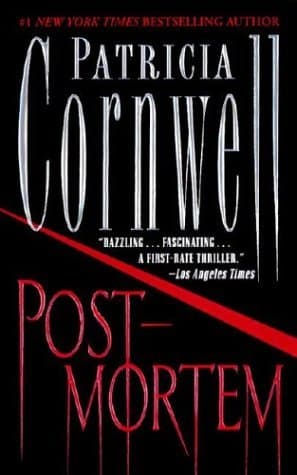
- Postmortem
Patricia Cornwell
4.0 (212k) average on GoodreadsThrillerWhile Cornwell's Kay Scarpetta series emphasizes forensic science and detailed crime scene analysis, Grafton's 'T is for Trespass' focuses more on traditional investigative legwork, psychological interplay, and character development, making it a more character-driven mystery rather than procedure-heavy.
- Gone Girl
Gillian Flynn
4.1 (2.3M) average on GoodreadsThrillerBoth novels utilize shifting perspectives and dual narratives to reveal the complexities of their characters and plots. However, Grafton's approach in 'T is for Trespass' is more focused on the external investigation uncovering an internal deception, whereas Flynn's 'Gone Girl' delves deeper into the psychological manipulation within a marital relationship.




Enjoyed the summary?
A summary gives you the shape of the book. The book itself has the detail, the examples and the voice.
Find T is for Trespass on AmazonAs an Amazon Associate, BookBrief earns from qualifying purchases. How we're funded