
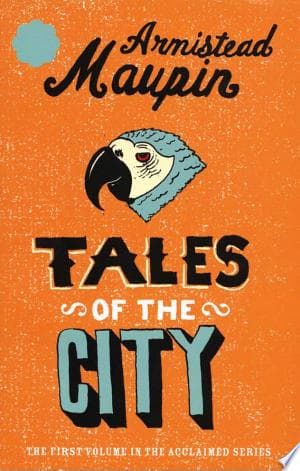
Synopsis
Covers the whole plot, including the ending.
- Difficulty
- Easy
- Pacing
- Moderate
- Mood
- Heartwarming, Witty, Nostalgic, Charming
- Read it if
- You love character-driven stories about found family, LGBTQ+ themes, and the unique charm of San Francisco in the 1970s.
- Skip it if
- You prefer fast-paced thrillers or stories with a very traditional plot structure.
Tales of the City Plot Summary
Covers the whole plot, including the ending.
Mary Ann Arrives in San Francisco
Mary Ann Singleton, a naive young woman from Cleveland, arrives in San Francisco in 1976, seeking a fresh start. Overwhelmed and without a place to stay, she finds a vacancy at 28 Barbary Lane, an apartment building managed by Mrs. Anna Madrigal, who grows marijuana. Mary Ann quickly settles into her new home, which is populated by an eclectic mix of tenants, including Mona Ramsey and Michael Tolliver. Her initial experiences include a disastrous blind date with a man named Norman and a growing fascination with her new neighbors' unconventional lifestyles. She also begins working as a secretary, trying to adjust to the city's fast pace and liberal atmosphere.
Meeting the Residents of Barbary Lane
Mary Ann soon meets the other residents of 28 Barbary Lane. She forms an immediate bond with Michael 'Mouse' Tolliver, a kind and open-hearted gay man, and Mona Ramsey, a bisexual free spirit who works for a PR firm. Brian Hawkins, a handsome but somewhat aimless man, also lives there, often seen sunbathing nude on the roof. The building itself, with its communal atmosphere and Mrs. Madrigal's nurturing presence, quickly becomes a sanctuary for Mary Ann. She observes the complex relationships and secrets within the building, from Mona's affair with her boss, Edgar Halcyon, to Michael's search for love. Mary Ann finds herself drawn into their lives, slowly shedding her Midwestern inhibitions.
Mona's Affair and Edgar Halcyon's Family
Mona Ramsey is having an affair with her married boss, Edgar Halcyon, a prominent advertising executive. Edgar's wife, Frannie, remains oblivious, while his daughter, DeDe, struggles with her own hidden desires and an unhappy marriage to Beauchamp Day. Mona is initially attracted to Edgar's stability and charm, but their relationship is complicated by his family life and the secrets they keep. Mona also becomes somewhat of a confidante to DeDe, who is increasingly disaffected with her privileged but suffocating existence. This connection between Mona and DeDe unknowingly sets the stage for future revelations and shifts in their personal lives, linking the residents of Barbary Lane to the upper echelons of San Francisco society.
Michael's Search for Love and Jon Fielding
Michael Tolliver, known as 'Mouse,' is searching for love and companionship in San Francisco's gay community. He frequents various bars and bathhouses, experiencing both the joys and heartbreaks of dating. His search takes a positive turn when he meets Dr. Jon Fielding, a charming and seemingly stable gynecologist. Michael is smitten, and they begin a relationship that offers him hope and belonging. However, Jon's past and certain aspects of his life remain somewhat mysterious, hinting at complexities beneath his polished exterior. Michael, ever the optimist, is eager to build a future with Jon, despite the lingering questions.
DeDe Day's Disappearance and the Halcyon Family Crisis
DeDe Day, increasingly unhappy with her marriage to Beauchamp and her superficial social life, disappears. Her absence causes a scandal among her wealthy parents, Edgar and Frannie Halcyon, and a frantic search begins. DeDe's disappearance draws the attention of the media and the police. Edgar confides in Mona about his worries, further entangling her in the family's drama. The search for DeDe indirectly brings some of the Barbary Lane residents into contact with the Halcyon family, particularly through Mona's existing connection to Edgar. The mystery surrounding DeDe's whereabouts adds suspense and intrigue to the lives of both the privileged elite and the bohemian residents.
Mary Ann's New Romance and Brian's Pursuit
Mary Ann, still finding her footing in San Francisco, begins a relationship with Norman Neal Williams, a handsome and seemingly attentive man she meets at a laundromat. Norman appears to be a stable and appealing partner, and Mary Ann is happy to finally have a romantic connection in the city. Meanwhile, Brian Hawkins, another tenant at Barbary Lane, develops a quiet affection for Mary Ann. He observes her interactions with Norman with a subtle jealousy and a growing desire to be with her himself. This creates a romantic tension at Barbary Lane, as Mary Ann remains oblivious to Brian's feelings, focusing instead on her burgeoning relationship with Norman.
The Secret of Mrs. Madrigal's Past
Throughout the narrative, hints are dropped about Mrs. Anna Madrigal's past. Her wisdom, her understanding of human nature, and her unusual tolerance for her tenants' unconventional lifestyles suggest a history far more complex than that of a simple landlady. The residents, particularly Mary Ann, occasionally wonder about her background, but Mrs. Madrigal remains discreet, offering guidance and warmth without revealing too much of herself. These glimpses into her past, often through her philosophical musings or the occasional cryptic remark, create an air of mystery around her, establishing her as a central, almost maternal figure whose own journey has shaped her unique perspective on life and love.
DeDe's Return and the Cult
DeDe Day eventually returns, revealing that she had run away to join a cult led by a charismatic but manipulative figure named Reverend Billy Blackburn. She is disoriented and emotionally vulnerable, having been subjected to the cult's brainwashing techniques. Mona Ramsey, still connected to the Halcyon family through Edgar, helps DeDe escape the cult's influence and reintegrate into her former life. This experience further solidifies the bond between Mona and DeDe, and exposes the darker side of San Francisco's counterculture movements, contrasting sharply with the more benign eccentricities of Barbary Lane.
The Truth About Norman Neal Williams
Mary Ann's relationship with Norman Neal Williams takes a dark turn when she discovers his true, sinister nature. It is revealed that Norman is not the charming man he pretends to be but is, in fact, a manipulative and dangerous individual who targets naive women. Mary Ann uncovers evidence of his past crimes and realizes she is in serious peril. This revelation shatters her innocence and forces her to confront the darker aspects of her new city. The danger she faces prompts a desperate attempt to escape his clutches, showing the risks of trusting strangers and the importance of vigilance in her new, more complex world.
Brian's Heroism and Mary Ann's Realization
As Norman's true intentions become clear and Mary Ann finds herself in grave danger, Brian Hawkins intervenes, saving her from harm. This act of bravery solidifies his long-held feelings for Mary Ann and proves his genuine care for her. In the aftermath of the terrifying ordeal, Mary Ann finally recognizes Brian's unwavering affection and his inherent goodness. The experience forces her to re-evaluate her previous romantic choices and her perception of love, leading her to acknowledge her own growing feelings for Brian. This moment marks a turning point in Mary Ann's journey, as she begins to understand the true value of authentic connection.
The Revelation of Mrs. Madrigal's Past
In an emotional and significant moment, Mrs. Anna Madrigal gathers her tenants and reveals the truth about her past: she is a transgender woman. She shares her life story, including her transition and her journey to finding her true self. This revelation explains her empathy and her understanding of the diverse lives at Barbary Lane. The tenants, initially surprised, embrace her with love and acceptance, solidifying their bond as a chosen family. This disclosure is a powerful moment of vulnerability and authenticity, reinforcing the theme of acceptance and challenging societal norms, while deepening the connections within the Barbary Lane community.
New Beginnings and Enduring Bonds
With all the secrets laid bare, the residents of 28 Barbary Lane embrace new beginnings. Mary Ann and Brian solidify their relationship, finding comfort and genuine affection with each other. Michael and Jon continue their journey as a couple, navigating the complexities of their lives. Mona, having helped DeDe, starts to re-evaluate her own path. The community at Barbary Lane, having faced various challenges and revelations, emerges stronger and more united. The book concludes with a sense of enduring familial bonds, where love, acceptance, and individuality thrive under the watchful and loving eye of Mrs. Madrigal, reinforcing the idea of a chosen family in the heart of San Francisco.
Principal Figures
Mary Ann Singleton
Protagonist
Naive Midwestern secretary who moves to San Francisco seeking a new life.
Mary Ann arrives in San Francisco from Cleveland, initially a sheltered and somewhat prudish young woman. She is observant and earnest, eager to shed her inhibitions and embrace the city's liberal atmosphere. Throughout the story, she undergoes significant personal growth, learning about love, friendship, and the complexities of human nature. Her journey is one of self-discovery, as she navigates new relationships and confronts unexpected dangers, ultimately finding her place and voice in her new home. She is initially drawn to conventional ideas of romance but learns to appreciate genuine connection.
Relationships: Mrs. Anna Madrigal (landlady and surrogate mother figure); Michael Tolliver (close friend); Mona Ramsey (friend and housemate); Brian Hawkins (love interest and eventual partner); Norman Neal Williams (brief, dangerous romantic partner)
Mrs. Anna Madrigal
Supporting
Eccentric, marijuana-growing landlady of 28 Barbary Lane and a maternal figure.
Mrs. Madrigal is the nurturing, wise, and enigmatic landlady of 28 Barbary Lane. She cultivates marijuana in her garden and acts as a surrogate mother figure to her diverse group of tenants, offering advice, comfort, and unconditional acceptance. Her past is shrouded in mystery for much of the novel, but her deep empathy and understanding of human nature suggest a rich and complex history. She fosters a sense of chosen family among her tenants, creating a safe and loving environment. Her final revelation solidifies her role as the heart of Barbary Lane.
Relationships: Mary Ann Singleton (maternal figure); Michael Tolliver (maternal figure); Mona Ramsey (maternal figure); Brian Hawkins (maternal figure)
Michael 'Mouse' Tolliver
Supporting
Openly gay tenant at Barbary Lane, searching for love and acceptance.
Michael, affectionately called 'Mouse,' is a kind-hearted, openly gay man living at Barbary Lane. He is optimistic and romantic, constantly navigating the San Francisco gay dating scene in search of lasting love and connection. He forms a close friendship with Mary Ann and is a loyal and supportive member of the Barbary Lane family. Michael's journey reflects the joys and challenges of being gay in the 1970s, characterized by both freedom and the search for meaningful relationships. He is sensitive and often wears his heart on his sleeve.
Relationships: Mary Ann Singleton (close friend); Mrs. Anna Madrigal (landlady and maternal figure); Jon Fielding (romantic partner)
Mona Ramsey
Supporting
Free-spirited, bisexual tenant with a penchant for unconventional relationships.
Mona is a free-spirited and independent woman with a dry wit and a strong sense of self. She is bisexual and often finds herself in complex romantic entanglements, including an affair with her married boss, Edgar Halcyon. Mona is observant and often cynical, but possesses a deep loyalty to her friends at Barbary Lane. She is resourceful and often acts as a catalyst for other characters' growth or revelations, particularly in her interactions with DeDe Day. Her journey involves navigating her desires and finding her own path, often questioning societal norms.
Relationships: Mary Ann Singleton (friend and housemate); Mrs. Anna Madrigal (landlady and maternal figure); Edgar Halcyon (boss and lover); DeDe Day (friend and confidante)
Brian Hawkins
Supporting
Handsome, easygoing tenant who harbors a secret affection for Mary Ann.
Brian is a handsome, laid-back tenant at Barbary Lane, known for his casual demeanor and love of sunbathing. He initially appears somewhat aimless but possesses a quiet strength and a deep capacity for care. He develops a strong, unspoken affection for Mary Ann, observing her relationships with subtle jealousy. His true character is revealed through his actions, particularly when he comes to Mary Ann's rescue. Brian represents stability and genuine affection, contrasting with the more volatile relationships Mary Ann initially seeks out. He is a loyal and dependable friend.
Relationships: Mary Ann Singleton (love interest and eventual partner); Mrs. Anna Madrigal (landlady and maternal figure)
Edgar Halcyon
Supporting
Prominent advertising executive and Mona's married boss and lover.
Edgar Halcyon is a successful and powerful advertising executive, representing the more established, albeit somewhat hypocritical, side of San Francisco society. He is married to Frannie Halcyon and is the father of DeDe Day. Edgar is having an affair with Mona Ramsey, which adds a layer of complexity to his seemingly polished life. He is concerned with appearances and maintaining his social standing, but also genuinely worried about his daughter's well-being. His character highlights the hidden lives and moral compromises beneath the surface of respectability.
Relationships: Mona Ramsey (boss and lover); Frannie Halcyon (wife); DeDe Day (daughter)
DeDe Day
Supporting
Socialite daughter of Edgar and Frannie Halcyon, unhappy with her privileged life.
DeDe Day is the privileged but deeply unhappy daughter of Edgar and Frannie Halcyon. Married to the equally superficial Beauchamp Day, she feels suffocated by her socialite lifestyle and yearns for something more authentic. Her dissatisfaction leads her to make impulsive and self-destructive choices, including running away to join a cult. DeDe represents the disillusionment that can exist within apparent affluence and her journey is one of searching for identity and meaning outside of societal expectations. She is vulnerable and easily influenced but also resilient.
Relationships: Edgar Halcyon (father); Frannie Halcyon (mother); Beauchamp Day (husband); Mona Ramsey (friend and rescuer)
Dr. Jon Fielding
Supporting
Charming gynecologist and Michael Tolliver's romantic interest.
Dr. Jon Fielding is a charming and seemingly stable gynecologist who becomes Michael Tolliver's romantic partner. He appears to be a good catch, offering Michael the kind of stable relationship he desires. However, Jon carries a mysterious past and certain complexities that are gradually hinted at throughout their relationship. He represents the potential for happiness and intimacy, but also the idea that even seemingly perfect individuals can have hidden depths and unresolved issues. He is kind and attentive to Michael, but his full story is not entirely revealed in this first book.
Relationships: Michael Tolliver (romantic partner)
Norman Neal Williams
Antagonist
Mary Ann's charming but ultimately dangerous romantic interest.
Norman Neal Williams is initially portrayed as a handsome and charming man whom Mary Ann meets at a laundromat and begins dating. He presents himself as a stable and appealing partner, but his true nature is revealed to be manipulative, predatory, and dangerous. He targets vulnerable women, using his charm to gain their trust before exploiting them. Norman serves as a crucial antagonist in Mary Ann's story, representing the hidden dangers and darker aspects of navigating a new city and trusting strangers. His presence forces Mary Ann to confront harsh realities and grow significantly.
Relationships: Mary Ann Singleton (brief, dangerous romantic partner)
Themes & Insights
Chosen Family and Community
The central theme of 'Tales of the City' is the idea of a chosen family, exemplified by the residents of 28 Barbary Lane. Despite their diverse backgrounds and sexual orientations, the tenants form a deep, supportive bond under Mrs. Madrigal's nurturing guidance. They offer each other unconditional love, acceptance, and a sense of belonging that often surpasses traditional familial ties. This theme is evident in how they rally around each other during crises, such as Brian saving Mary Ann, or their collective acceptance of Mrs. Madrigal's revelation, solidifying their unconventional but powerful kinship.
“And so, as the sun went down over San Francisco, they were family, a strange, beautiful, and utterly true family.”
Identity and Self-Discovery
Many characters in the novel are on a journey of self-discovery, particularly Mary Ann Singleton, who sheds her Midwestern naivety to embrace her true self in San Francisco. Mona Ramsey explores her bisexuality and career aspirations, while Michael Tolliver navigates his identity as a gay man searching for love. The most significant exploration of identity comes with Mrs. Anna Madrigal's revelation of her transgender past, which not only defines her character but also challenges societal norms and reinforces the idea that true identity is about authenticity, regardless of external expectations. This theme highlights the liberating power of self-acceptance.
“She was Mary Ann Singleton, no longer a stranger to herself, but a woman finding her footing in a city that embraced all her evolving selves.”
Acceptance and Tolerance
San Francisco itself is a character embodying acceptance and tolerance, particularly for the LGBTQ+ community and those seeking unconventional lifestyles. The Barbary Lane community, in particular, is a microcosm of this theme, where differences are not just tolerated but celebrated. The residents' acceptance of Michael's sexuality, Mona's bisexuality, and ultimately Mrs. Madrigal's transgender identity, shows a level of open-mindedness. This theme contrasts sharply with the more conservative attitudes Mary Ann initially brings from Cleveland and highlights the liberating power of a non-judgmental environment.
“In this city, you could be whoever you wanted to be, and no one would bat an eye. It was a kind of freedom she had never known.”
The Search for Love and Connection
Love and connection are driving forces for many characters. Michael Tolliver actively seeks a romantic partner, eventually finding Jon Fielding, while Mary Ann navigates the complexities of new relationships, moving from the dangerous Norman to the genuine affection of Brian. Mona Ramsey grapples with her affair with Edgar Halcyon, searching for fulfillment outside conventional bounds. Even Mrs. Madrigal, through her maternal care, provides a form of unconditional love and connection to her tenants. The novel explores various forms of love—romantic, platonic, and familial—and the universal human desire for meaningful relationships.
“He just wanted someone to hold, someone to share the quiet moments with, someone who understood.”
The Illusion of Appearances
Many characters and situations in the book demonstrate that appearances can be deceiving. Norman Neal Williams, initially charming, is revealed to be a dangerous predator. The wealthy Halcyon family, seemingly perfect, harbors secrets and unhappiness, with DeDe Day's disappearance exposing the cracks in their polished facade. Even Mrs. Madrigal's seemingly ordinary, eccentric landlady persona hides a transformative personal history. This theme encourages readers to look beyond superficialities and understand the complex realities and hidden truths that lie beneath the surface of people and society.
“In San Francisco, everyone was a little bit of a chameleon, changing colors to suit the light.”
Plot Devices & Literary Techniques
Omniscient Narrator
Provides insight into the thoughts and lives of multiple characters.
The novel employs an omniscient narrator who moves seamlessly between the perspectives of various characters, offering readers an intimate look into their thoughts, motivations, and secret lives. This allows Maupin to weave together multiple storylines and character arcs, creating a rich tapestry of interconnected lives at Barbary Lane and beyond. The narrator often interjects with witty observations and philosophical musings, enhancing the novel's distinctive tone and providing a comprehensive view of the diverse San Francisco setting.
Interlocking Storylines
Multiple character plots converge and influence each other.
Maupin masterfully uses interlocking storylines, where the individual narratives of Mary Ann, Michael, Mona, and the Halcyon family are not isolated but frequently intersect and impact one another. Mona's affair with Edgar Halcyon connects her to DeDe Day's disappearance, which in turn affects the broader social circle. The Barbary Lane residents, through their close proximity, are constantly influencing each other's decisions and discoveries. This device creates a sense of a tightly knit community and demonstrates how seemingly disparate lives are, in fact, deeply intertwined.
Epistolary Elements (Letters/Notes)
Letters and notes reveal character thoughts and advance plot points.
While not a purely epistolary novel, 'Tales of the City' frequently incorporates letters and notes exchanged between characters. Michael Tolliver's letters to his mother, particularly, serve to reveal his inner thoughts, his struggles, and his journey as a gay man, often with poignant humor. These written communications provide direct access to character perspectives, advance the plot by sharing crucial information, and add a personal touch to the narrative, allowing for moments of reflection and revelation that might not be as effective through dialogue alone.
San Francisco as a Character
The city's unique atmosphere shapes the lives and identities of its inhabitants.
San Francisco itself acts as a vibrant and influential character in the novel. Its liberal atmosphere, diverse communities, and iconic landmarks are not merely a backdrop but actively shape the experiences and identities of the characters. The city offers freedom, anonymity, and a sense of belonging for those seeking to escape traditional norms, allowing characters like Mary Ann to reinvent themselves and Mrs. Madrigal to live authentically. The city's unique charm, from its fog to its hills, imbues the narrative with a distinct sense of place and possibility.
Tales of the City Quotes
“She was a free spirit, a wild child, a creature of impulse and a lover of life.”
“Life is a banquet, and most poor saps are starving to death!”
“There was no such thing as normal. There was only the way you were, and the way you weren't.”
“The world was a scary place, but it was also a place of wonder, and sometimes the two were the same.”
“San Francisco was a city of refugees, and not just from other places, but from other lives.”
“Love is not a matter of counting the years, but making the years count.”
“We are all of us, in some way, looking for a home.”
“It was the sort of night when anything could happen, and usually did.”
“The greatest gift you can give someone is the freedom to be themselves.”
“There are no ordinary lives, only lives that are not fully understood.”
“Sometimes the most unlikely people become the most important.”
“The only way to deal with the future is to live in the present.”
“We are all just trying to find our way back to who we were before the world told us who to be.”
“Family isn't always blood. It's the people in your life who want you in theirs.”
Quiz
10 questions on the plot and the characters. Each answer comes with a short explanation.
Question 1
What is Mary Ann Singleton's primary reason for moving to San Francisco?
- To escape a bad relationship in Cleveland.
- To pursue a career in journalism.
- She was on vacation and impulsively decided to stay.
- To find her estranged sister who lives there.
Show answer
C. She was on vacation and impulsively decided to stay. Mary Ann Singleton originally came to San Francisco for a two-week vacation and, charmed by the city and its possibilities, decided on a whim to stay rather than return to Cleveland.
Question 2
What is the address of the apartment building where many of the main characters reside?
- 101 Lombard Street
- 28 Barbary Lane
- 42 Market Street
- 1 Telegraph Hill
Show answer
B. 28 Barbary Lane Many of the central characters, including Mary Ann, Mona, Michael, and Brian, live at the iconic 28 Barbary Lane, presided over by the eccentric landlady, Anna Madrigal.
Question 3
Who is the mysterious landlady of 28 Barbary Lane?
- DeDe Halcyon Day
- Connie Bradshaw
- Anna Madrigal
- Frannie Halcyon
Show answer
C. Anna Madrigal Anna Madrigal is the warm, marijuana-cultivating landlady of 28 Barbary Lane, known for her maternal care for her tenants and her enigmatic past.
Question 4
What is Michael Tolliver's nickname among his friends?
- Mouse
- Bear
- Tiger
- Rabbit
Show answer
A. Mouse Michael Tolliver, one of the tenants at Barbary Lane, is affectionately known as 'Mouse' by his friends, reflecting his sometimes timid but ultimately kind nature.
Question 5
What secret does Mrs. Madrigal reveal to her tenants by the end of the book?
- That she is secretly wealthy and owns several properties.
- That she used to be a famous actress.
- That she is transgender.
- That she is related to a prominent San Francisco family.
Show answer
C. That she is transgender. Towards the end of the first novel, Anna Madrigal reveals to her tenants that she is a transgender woman, a pivotal moment that solidifies the theme of chosen family and acceptance.
Question 6
Which character is a wealthy socialite whose marriage is in trouble?
- Mona Ramsey
- DeDe Halcyon Day
- Mary Ann Singleton
- Prue Giroux
Show answer
B. DeDe Halcyon Day DeDe Halcyon Day is a prominent San Francisco socialite whose seemingly perfect life is unraveling, particularly her marriage to Beauchamp Day.
Question 7
What is the significance of the 'laundromat lothario' mentioned in the book's description?
- It refers to a specific character Mary Ann falls for named Beauchamp Day.
- It describes Brian Hawkins, who Mary Ann meets and flirts with at the laundromat shortly after arriving.
- It's a metaphor for the casual encounters common in San Francisco.
- It refers to a series of anonymous notes left in laundromats.
Show answer
B. It describes Brian Hawkins, who Mary Ann meets and flirts with at the laundromat shortly after arriving. The 'laundromat lothario' directly refers to Brian Hawkins, whom Mary Ann Singleton meets while doing her laundry shortly after moving to San Francisco. This encounter is one of her first introductions to the city's unique social scene.
Question 8
How does the book explore the theme of 'chosen family'?
- By showing how biological families always overcome their differences.
- Through the deep bonds formed among the diverse tenants of 28 Barbary Lane who support each other like relatives.
- By focusing solely on the traditional nuclear family structures in San Francisco.
- By demonstrating that blood relatives are always more important than friends.
Show answer
B. Through the deep bonds formed among the diverse tenants of 28 Barbary Lane who support each other like relatives. The concept of 'chosen family' is central to 'Tales of the City,' exemplified by the residents of 28 Barbary Lane. Despite their varied backgrounds and lack of blood relation, they form a strong, supportive, and unconventional family unit, especially under Anna Madrigal's care.
Question 9
Which character works as a copywriter at an advertising agency and is a close friend of Mary Ann and Michael?
- Brian Hawkins
- Edgar Halcyon
- Mona Ramsey
- D'orothea Wilson
Show answer
C. Mona Ramsey Mona Ramsey is the sharp-witted copywriter who shares an apartment with Mary Ann and Michael at 28 Barbary Lane. She is a key member of their chosen family and often provides cynical but insightful commentary.
Question 10
What is the primary role of the newspaper columns in the original publication of 'Tales of the City'?
- To provide historical context about San Francisco in the 1970s.
- To offer political commentary on current events in California.
- To introduce characters and advance the plot in a serialized, episodic format.
- To serve as a platform for Maupin's personal opinions.
Show answer
C. To introduce characters and advance the plot in a serialized, episodic format. The 'Tales of the City' series originally began as serialized columns in the San Francisco Chronicle. This format allowed Maupin to introduce characters, develop ongoing storylines, and build suspense in an episodic manner, much like a daily soap opera.
Tales of the City FAQ
What is "Tales of the City" about?
"Tales of the City" follows the journey of Mary Ann Singleton, a naive young secretary from Cleveland who moves to San Francisco in 1976. She quickly finds herself living at the eccentric 28 Barbary Lane, an apartment building owned by the enigmatic landlady Anna Madrigal, and becomes entangled in the lives and loves of her diverse new neighbors.
Why should I read "Tales of the City"?
You should read "Tales of the City" for its charming portrayal of San Francisco in the 1970s, its memorable and diverse cast of characters, and its warm, witty, and often poignant exploration of identity, community, and unconventional families. It offers a nostalgic look at a specific era while addressing timeless themes of belonging and self-discovery.
What is the background/setting of "Tales of the City"?
The book is set in San Francisco during the summer of 1976, capturing the city's vibrant and free-spirited atmosphere before the AIDS epidemic. It primarily takes place around the fictional apartment building at 28 Barbary Lane, with various scenes unfolding in iconic San Francisco locations like North Beach and the Castro.
What are the most memorable quotes?
One memorable quote is Anna Madrigal's advice: "You know, dear, in this city, you can be anyone you want to be." Another is Brian Hawkins's musing, "San Francisco is a city where people come to find themselves, and sometimes, to lose themselves too." These encapsulate the book's themes of self-reinvention and the city's transformative power.
What writing style does the author use?
Armistead Maupin employs an episodic, serial-like writing style, reflecting its origins as a newspaper column. The prose is conversational, witty, and often satirical, with a keen eye for detail and character. He uses multiple perspectives to weave together the interconnected lives of his characters, creating a mosaic of San Francisco life.
What minor details add significant meaning?
The consistent use of marijuana smoking by Anna Madrigal is more than just a quirky habit; it subtly hints at her counter-culture philosophy and her open-minded approach to life, which in turn sets the tone for the accepting and unconventional community at Barbary Lane. Also, Mona Ramsey's constant yearning for a sense of belonging, often expressed through her longing for a 'real' family, underscores the book's theme of chosen families.
What are some subtle foreshadowing moments?
One subtle moment is Anna Madrigal's recurring, almost maternal, interest in her tenants' personal lives, which hints at her deeper, more complex connection to them that is revealed later in the series. Another is the brief, seemingly insignificant mention of Beauchamp Day's past connections, which later proves crucial to Mona Ramsey's search for her birth family.
What unexpected character connections exist?
The most significant unexpected connection is the revelation of Anna Madrigal's transgender identity, which recontextualizes her entire persona and her deep empathy for her tenants. Another is the surprising and complicated romantic entanglement between the seemingly straitlaced Mary Ann Singleton and the bohemian Brian Hawkins, which challenges Mary Ann's preconceived notions of love.
What are unspoken character motivations?
Mary Ann Singleton's unspoken motivation for moving to San Francisco is not just career advancement, but a deep-seated desire to escape her provincial past and find a place where she can truly be herself, free from societal expectations. Similarly, Michael Tolliver's flirtatious demeanor often masks a deeper yearning for lasting connection and acceptance within the gay community.
What psychological complexities do characters exhibit?
Michael 'Mouse' Tolliver grapples with the complexities of his sexuality in a pre-AIDS era, balancing his desire for freedom with a longing for stability and love. Mona Ramsey exhibits a complex search for identity and belonging, stemming from her adoption and leading her to constantly seek out connections and a 'true' family, even as she has one in Anna Madrigal.
What are the major emotional turning points?
A major emotional turning point for Mary Ann is when she finally embraces the unconventional lifestyle of Barbary Lane, shedding her Midwestern inhibitions and truly finding her voice. For Michael, it's the moment he fully accepts his identity and finds a sense of community within his chosen family, moving past his initial shyness.
How do relationship dynamics evolve?
Mary Ann and Brian Hawkins's relationship evolves from a casual, almost accidental fling into a genuine, if sometimes rocky, romance that challenges Mary Ann's conservative views. The landlord-tenant dynamic between Anna Madrigal and her residents transforms into a profound, familial bond, where Anna acts as a surrogate mother figure offering unconditional love and guidance.
Which parts remain ambiguous or open-ended?
The true nature of Anna Madrigal's past before San Francisco remains largely ambiguous within this first book, hinting at a more complex history without fully revealing it. Additionally, the long-term stability of many of the romantic relationships, particularly Mary Ann's, is left somewhat open-ended, reflecting the transient nature of relationships in the city.
What are controversial scenes or decisions?
The casual depiction of drug use, particularly marijuana, and the frank portrayal of diverse sexualities were considered controversial by some audiences upon the book's initial publication in the 1970s. Anna Madrigal's decision to maintain a somewhat mysterious past, even from her closest tenants, could also be seen as a controversial choice by some readers seeking full transparency.
"Tales of the City" ending explained: how it ends & what it means
The first book of "Tales of the City" ends with a series of personal revelations and new beginnings for the characters. Mary Ann finds herself more settled and independent, Michael embraces his identity, and Mona makes a significant discovery about her parentage. It means that while individual journeys continue, the found family at 28 Barbary Lane remains a constant, providing a sanctuary for self-discovery and acceptance in the ever-changing landscape of San Francisco.
About the author

Armistead Jones Maupin, Jr. is an American writer notable for Tales of the City, a series of novels set in San Francisco.
Similar books
- The House in the Cerulean Sea
T.J. Klune
4.5 (22k) average on GoodreadsFantasyFeatures a quirky found family and a heartwarming, accepting atmosphere.
- Less
Andrew Sean Greer
3.7 (126k) average on GoodreadsLiterary FictionOffers a humorous and introspective look at a character's journey and self-discovery.
- City of Girls
Elizabeth Gilbert
4.0 (157k) average on GoodreadsHistorical FictionExplores a young woman's coming-of-age in a vibrant, unconventional city setting.
- Nineteen Eighty-Four
George Orwell
4.2 (5.5M) average on GoodreadsFictionWinston Smith dreams of truth and rebellion in a world where Big Brother watches all, but he confronts the terrifying power of a regime that controls not just actions, but thoughts.
- The Frozen River
Ariel Lawhon
4.4 (600k) average on GoodreadsFictionIn 1789 Maine, a heroic midwife's diary helps her expose a murder and get justice in a town that wants to silence her.
- A Man Called Ove
Fredrik Backman
4.4 (569k) average on GoodreadsFictionA stubborn widower, who lives by strict rules, finds his quiet world changed by a lively new family next door, making him face his past and find happiness in human connection.





Enjoyed the summary?
A summary gives you the shape of the book. The book itself has the detail, the examples and the voice.
Find Tales of the City on AmazonAs an Amazon Associate, BookBrief earns from qualifying purchases. How we're funded