

Synopsis
Covers the whole plot, including the ending.
- Difficulty
- Hard
- Pacing
- Slow
- Mood
- Disturbing, Provocative, Unsettling, Explicit
- Read it if
- You are a scholar interested in the history of philosophy, sexuality, and censorship, or wish to understand a foundational text in the study of sadism and its influence on literature and critical theory.
- Skip it if
- You are easily disturbed by graphic descriptions of sexual violence, torture, and extreme cruelty, or are seeking a conventional narrative with sympathetic characters.
The 120 Days of Sodom Plot Summary
Covers the whole plot, including the ending.
The Pact and the Castle's Seclusion
In the winter of 1782, four immensely wealthy and powerful French noblemen – the Duke de Blangis, the Bishop de ***, the President de Curval, and Durcet the Financier – gather in a remote, impenetrable castle in the Black Forest. They have formed a pact to engage in four months of unprecedented sexual depravity, free from societal constraints and legal repercussions. To facilitate this, they bring with them 42 victims: four wives (their own daughters, kidnapped and forced into marriage), eight young girls (aged 12-15), eight young boys (aged 12-15), and 16 'f***ers' (men and women of varying ages used for sexual acts). They also employ four elderly female Storytellers, four male cooks, and four male guards. The castle is meticulously prepared, and their isolation ensures complete secrecy for their horrific project.
The First Month: The History of Simple Passions
The libertines establish a strict daily routine within the castle. Each evening, after a luxurious dinner, one of the four Storytellers (Madame Duclos, Madame Champville, Madame Martaine, and Madame Desgranges) recounts tales of 'simple passions' – a catalogue of common sexual perversions, often involving incest, sodomy, and blasphemy, but still within a relatively 'mild' range compared to what is to come. As the Storyteller narrates, the libertines select victims from their captives to immediately re-enact the described scenes. The victims, already terrified and completely subjugated, are forced to participate in these acts, enduring humiliation and physical abuse. This month serves as an introduction to the escalating cruelty and a testing ground for the libertines' control over their human chattel.
The Second Month: The History of Complex Passions
As the second month commences, the Storytellers move on to 'complex passions.' These narratives describe more elaborate and violent sexual acts, incorporating elements of torture, mutilation, and extreme degradation. The acts performed by the libertines become increasingly sadistic, and the suffering of the victims intensifies. The young girls and boys, in particular, are subjected to horrifying abuses, their innocence systematically destroyed. The wives are also not spared, enduring profound humiliation and physical torment, often at the hands of their own fathers. The castle becomes a chamber of horrors, where the libertines' desires know no bounds, and the victims' despair deepens with each passing day. The focus shifts from mere sexual gratification to the infliction of pain and the assertion of absolute power.
The Third Month: The History of Criminal Passions
The third month marks a significant escalation into 'criminal passions.' The Storytellers now recount tales involving murder, extreme torture, and cannibalism, and these acts are immediately put into practice. The libertines begin to murder their victims, often in agonizing and drawn-out ways, incorporating their deaths into their sexual rituals. The bodies are sometimes mutilated, and the libertines derive perverse pleasure from the terror and agony of their dying captives. The 'f***ers' are frequently among the first to be killed, but the young girls and boys are also targeted, their lives extinguished with callous disregard. The atmosphere in the castle becomes even more oppressive, filled with screams and the stench of blood, as the libertines fully embrace their most monstrous desires, celebrating death as the ultimate act of power.
The Fourth Month: The History of Murderous Passions and the Unfinished Catalogue
The final month, dedicated to 'murderous passions,' sees the libertines reaching the zenith of their sadism. The remaining victims are systematically tortured and murdered in the most gruesome ways imaginable. The novel describes acts of dismemberment, evisceration, and other unspeakable atrocities. The Storytellers continue to provide a framework for these horrors, detailing increasingly inventive methods of destruction. However, the manuscript abruptly ends during this month, with Sade having only cataloged a fraction of the planned 'passions.' It is implied that by the end of the four months, all the victims, including the wives, girls, boys, and 'f***ers,' would have been systematically eliminated, leaving only the four libertines, the Storytellers, cooks, and guards. The unfinished nature of the text leaves the full extent of the final month's horrors to the reader's imagination, underscoring the boundless nature of the libertines' evil.
Principal Figures
Duke de Blangis
Protagonist/Libertine
The most powerful and often the instigator of the most extreme acts.
The Duke de Blangis is one of the four principal libertines. He is depicted as immensely wealthy, possessing vast estates and political influence, which he uses to secure his immunity from justice. He is characterized by his insatiable lust for cruelty and his particular enjoyment of sodomy and the degradation of young boys. Blangis often takes the lead in proposing the most heinous acts, demonstrating a cold, calculating sadism. His actions are driven by a desire for absolute power and the transgression of all moral and societal norms, finding pleasure in the suffering he inflicts.
Relationships: Duclos (Storyteller); His Daughter (Victim (forced wife)); Bishop de *** (Co-conspirator/Fellow Libertine); President de Curval (Co-conspirator/Fellow Libertine); Durcet (Co-conspirator/Fellow Libertine)
Bishop de ***
Protagonist/Libertine
A high-ranking cleric who embodies sacrilegious perversion.
The Bishop de *** (often referred to as 'the Bishop') is another principal libertine, representing the ultimate hypocrisy and blasphemy. Despite his ecclesiastical title, he is deeply depraved, deriving particular pleasure from acts that mock religious sanctity and moral codes. He frequently engages in acts of sodomy and incest, often combining them with blasphemous rituals. His character highlights Sade's critique of institutional religion and its potential for corruption. The Bishop's actions are driven by a desire to desecrate all that is considered sacred, finding exhilaration in the transgression of divine and human law.
Relationships: Champville (Storyteller); His Daughter (Victim (forced wife)); Duke de Blangis (Co-conspirator/Fellow Libertine); President de Curval (Co-conspirator/Fellow Libertine); Durcet (Co-conspirator/Fellow Libertine)
President de Curval
Protagonist/Libertine
A former magistrate who perverts justice and order.
President de Curval is one of the four main libertines, a former magistrate who represents the corruption of the legal system. He is known for his philosophical justifications of his depravity, often engaging in lengthy monologues that rationalize their extreme acts as natural and even beneficial. Curval has a particular penchant for flagellation and other forms of physical torture, often combined with intellectualized discussions of pleasure and pain. His character underscores Sade's belief that even those entrusted with upholding law and order can be consumed by vice, using their intellect to justify their monstrous desires.
Relationships: Martaine (Storyteller); His Daughter (Victim (forced wife)); Duke de Blangis (Co-conspirator/Fellow Libertine); Bishop de *** (Co-conspirator/Fellow Libertine); Durcet (Co-conspirator/Fellow Libertine)
Durcet the Financier
Protagonist/Libertine
A wealthy financier whose avarice translates into sexual sadism.
Durcet is the fourth principal libertine, a wealthy financier whose greed and materialism are mirrored in his sexual appetites. He is often depicted as the most physically repulsive of the four, which he compensates for with extreme cruelty and a desire to dominate. Durcet is particularly fond of scatological acts and other forms of physical degradation, finding pleasure in the ultimate debasement of his victims. His character reflects Sade's view that economic power can lead to moral decay and unchecked depravity, using his wealth to fund and orchestrate the atrocities within the castle.
Relationships: Desgranges (Storyteller); His Daughter (Victim (forced wife)); Duke de Blangis (Co-conspirator/Fellow Libertine); Bishop de *** (Co-conspirator/Fellow Libertine); President de Curval (Co-conspirator/Fellow Libertine)
Madame Duclos
Supporting/Storyteller
The most experienced and eloquent of the Storytellers.
Madame Duclos is one of the four elderly Storytellers employed by the libertines. She is described as the most intelligent and articulate, possessing an encyclopedic knowledge of human perversions. Her role is to narrate the 'passions' – detailed accounts of sexual acts, tortures, and murders – which the libertines then immediately enact. Duclos, like the other Storytellers, is complicit in the atrocities, her role being to fuel the libertines' imaginations and provide a framework for their depravity. She represents the intellectualization and systematization of vice, serving as a living library of human evil.
Relationships: Duke de Blangis (Her assigned master); Other Storytellers (Colleagues); Victims (Subjects of her narratives)
Madame Champville
Supporting/Storyteller
A Storyteller specializing in particular forms of perversion.
Madame Champville is another of the four Storytellers, each assigned to one of the libertines. While less prominent than Duclos, she contributes significantly to the catalogue of perversions, often detailing specific types of sexual acts and tortures. Her narratives, like those of the other Storytellers, are crucial to the daily rituals of the castle, providing the blueprint for the escalating atrocities. She is a tool in the hands of the libertines, her memory and imagination exploited to satisfy their boundless desires. Her complicity further highlights the pervasive nature of the evil within the castle.
Relationships: Bishop de *** (Her assigned master); Other Storytellers (Colleagues); Victims (Subjects of her narratives)
The Four Wives (Daughters)
Victim
The libertines' own daughters, forced into incestuous marriages and suffering extreme abuse.
These four women are the biological daughters of the four libertines, forced into incestuous marriages and brought to the castle as primary victims. Their presence underscores the ultimate transgression of familial bonds and natural law. They endure unimaginable physical and psychological torture, often at the hands of their own fathers/husbands. Their suffering is amplified by the betrayal and the complete destruction of their innocence and dignity. They represent the ultimate sacrifice of purity and familial love to the libertines' insatiable appetites for depravity. Their identities are largely subsumed by their role as victims.
Relationships: Duke de Blangis (Father/Husband to one); Bishop de *** (Father/Husband to one); President de Curval (Father/Husband to one); Durcet (Father/Husband to one); Young Girls/Boys (Fellow victims)
The Eight Young Girls
Victim
Adolescent girls subjected to extreme sexual and physical torture.
These eight girls, aged 12-15, are among the most vulnerable and tragic victims in the castle. Their youth and innocence make their suffering particularly horrifying. They are subjected to every imaginable sexual act, often involving multiple libertines simultaneously, and endure escalating physical torture. Their bodies are used and abused until they are broken, and they are among the first to be murdered when the 'criminal passions' begin. Their presence emphasizes the libertines' complete disregard for human life and their pursuit of the most taboo and destructive forms of pleasure.
Relationships: Libertines (Perpetrators); Young Boys (Fellow victims); F***ers (Fellow victims)
The Eight Young Boys
Victim
Adolescent boys subjected to extreme sexual and physical torture.
Similar to the young girls, these eight boys, aged 12-15, are brought to the castle as victims, primarily for the libertines' sodomitic desires. They endure unspeakable sexual abuse and physical torment, their young bodies and minds systematically destroyed. Their suffering is a central component of the libertines' pleasure, particularly for characters like the Duke de Blangis. They, too, are gradually murdered as the rituals escalate into 'criminal passions.' Their fate highlights the indiscriminate nature of the libertines' cruelty, which extends to all forms of innocence and vulnerability.
Relationships: Libertines (Perpetrators); Young Girls (Fellow victims); F***ers (Fellow victims)
The Sixteen F***ers
Victim
Adult men and women of various ages used for diverse sexual acts and often the first to be killed.
These sixteen individuals, comprising both men and women, are brought to the castle specifically to be used for a wide range of sexual acts, often serving as objects for the libertines' more unconventional or physically demanding desires. They are treated as mere instruments, devoid of any rights or dignity. As the rituals escalate, they are frequently the first victims to be tortured and murdered, their lives considered disposable. Their role is to absorb the initial and often most grotesque expressions of the libertines' cruelty, paving the way for the abuse of the younger, more 'precious' victims.
Relationships: Libertines (Perpetrators); Young Girls/Boys (Fellow victims)
Themes & Insights
Absolute Power and Corruption
The novel explicitly explores how unchecked wealth and social standing grant the libertines absolute power, which they use to commit atrocities with complete impunity. The remote castle symbolizes their self-imposed kingdom where laws, morality, and human rights are entirely suspended. The libertines' ability to kidnap, torture, and murder their victims without fear of reprisal demonstrates the corrupting influence of ultimate power, turning them into tyrannical gods within their domain. This theme is central to understanding the novel's critique of aristocratic privilege and the potential for human depravity when all external constraints are removed, as seen in the Duke de Blangis's unfettered cruelty.
“'It is not the crime that is shameful, but the scaffold.'”
The Nature of Evil and Human Depravity
Sade meticulously catalogues the darkest aspects of human nature, presenting a relentless exploration of sadism, sexual perversion, and cruelty. The novel argues that evil is an inherent part of humanity, not merely an aberration. The libertines' philosophical justifications for their actions, particularly those of President de Curval, suggest that their desires are 'natural' and that societal prohibitions are artificial. The escalating acts of torture, mutilation, and murder throughout the four months demonstrate a limitless capacity for depravity, challenging conventional notions of morality and human compassion. The book forces the reader to confront the most extreme forms of human malevolence.
“'All crimes are excusable when they lead to pleasure.'”
Transgression and Blasphemy
A core theme is the deliberate transgression of all societal, moral, and religious boundaries. The libertines actively seek to violate every taboo: incest, sodomy, murder, and cannibalism are not just committed but celebrated as acts of defiance against God and man. The presence of the Bishop de ***, a high-ranking cleric, engaging in the most sacrilegious acts, highlights this theme of blasphemy. The novel argues that true freedom lies in the absolute rejection of all external authority and the embrace of one's darkest desires, regardless of the suffering caused. Each 'passion' described by the Storytellers is a step further into this realm of ultimate transgression.
“'What is crime, after all, but a transgression of the law? And what is the law but a human convention?'”
The Objectification of the Human Body
Throughout the novel, the victims' bodies are systematically reduced to mere objects for the libertines' gratification. They are stripped of their humanity, their identities, and their rights, becoming interchangeable instruments for sexual and sadistic pleasure. The detailed descriptions of anatomical abuse and the casual disposal of bodies underscore this theme. The victims are not seen as individuals but as resources to be exploited until their utility is exhausted, at which point they are discarded or destroyed. This objectification is crucial to enabling the extreme violence, as it allows the perpetrators to detach themselves from the suffering they inflict, turning living beings into inert matter for their perverse experiments.
“'These creatures are nothing but flesh for our desires, instruments for our pleasures.'”
Plot Devices & Literary Techniques
The Catalogue of Passions
A systematic classification of sexual perversions and atrocities.
This is the central structural device of the novel. The 'Catalogue of Passions' is a meticulously organized list of sexual acts, tortures, and murders, divided into four escalating categories (simple, complex, criminal, murderous). Narrated by the four Storytellers, these detailed descriptions serve as both a blueprint and a justification for the libertines' actions. The catalogue is not merely descriptive; it is prescriptive, dictating the daily atrocities. This device allows Sade to explore the full spectrum of human depravity in an almost scientific, exhaustive manner, stripping away narrative conventionality to focus solely on the systematic exploration of vice.
The Storytellers
Narrators who detail and categorize perversions for the libertines' enactment.
The four elderly female Storytellers (Duclos, Champville, Martaine, Desgranges) are crucial to the novel's structure. They are not merely passive observers but active facilitators, responsible for providing the daily 'menu' of perversions from their vast knowledge and experience. Their role is to systematically recount the 'passions' from the catalogue, which the libertines then immediately put into practice with their victims. This device creates a meta-narrative layer, as the Storytellers' narratives within the novel drive the actual plot. They represent the intellectual and historical justification for depravity, serving as living libraries of human vice.
The Isolated Castle (Silling)
A fortified, remote setting symbolizing total impunity and a world unto itself.
The castle of Silling in the Black Forest serves as a crucial plot device by providing a completely isolated and impenetrable environment. This physical isolation ensures the libertines' absolute impunity from societal laws and moral judgment, allowing them to enact their most extreme fantasies without fear of discovery or punishment. The castle functions as a microcosm of their desired world, a closed system where they are the sole authorities, and their desires are the only law. Its remote nature reinforces the idea that their actions exist outside the bounds of civilized society, creating a space for ultimate transgression.
Philosophical Justifications
The libertines' lengthy monologues rationalizing their atrocities.
Throughout the novel, particularly from President de Curval, the libertines engage in extensive philosophical monologues. These are not just casual remarks but detailed arguments that rationalize their extreme sadism and perversions as natural, even virtuous, acts. They challenge conventional morality, religion, and social order, arguing for the supremacy of individual pleasure and the 'naturalness' of vice. This device transforms the novel from a mere catalogue of obscenities into a philosophical treatise on human nature, freedom, and evil, forcing the reader to confront the intellectual underpinnings of extreme depravity and Sade's radical worldview.
The 120 Days of Sodom Quotes
“It is always by way of pain one arrives at pleasure.”
“The only way to acquire a taste for evil is to practice it.”
“Cruelty, far from being a vice, is the first sentiment nature injects in us.”
“To be happy, one must be free from all prejudices and all moral constraints.”
“The greatest pleasure is to conquer the will of others.”
“There are no crimes, only pleasures.”
“Everything is permitted to those who know how to take it.”
“The more atrocious the crime, the more delicious the sensation.”
“Nature has no laws, only instincts.”
“The true philosopher is he who, having nothing, has everything.”
“It is not enough to be wicked, one must also be intelligent.”
“The only real sin is that which one regrets.”
“All passions are good when one is master of them; all are bad when one is their slave.”
“Nothing is more delightful than to excite the passions of others and then to betray them.”
Quiz
10 questions on the plot and the characters. Each answer comes with a short explanation.
Question 1
Which of the following is NOT one of the four libertines who orchestrate the events in the Castle of Silling?
- The Duke of Blangis
- The Bishop of Dol
- The President Curval
- The Count de Valmont
Show answer
D. The Count de Valmont The four main libertines are the Duke of Blangis, the Bishop of Dol, the President Curval, and the Financier Durcet. The Count de Valmont is not one of them.
Question 2
What is the primary purpose of the four Storytellers (or Madams) brought to the Castle of Silling?
- To serve as personal maids to the libertines
- To educate the victims in various arts and sciences
- To recount tales of depravity and excess for the libertines' amusement and inspiration
- To manage the daily logistics and provisions for the castle
Show answer
C. To recount tales of depravity and excess for the libertines' amusement and inspiration The Storytellers are crucial to the structure of the novel, as they are tasked with narrating different categories of 'passions' to the libertines, which then inspire the acts committed in the castle.
Question 3
How many 'classes' or categories of passions are described and enacted over the 120 days?
- Two
- Three
- Four
- Five
Show answer
C. Four The novel is structured around four 'classes' of passions: simple passions, complex passions, criminal passions, and murderous passions, each corresponding to a month of the sojourn.
Question 4
What is the significance of the isolated Castle of Silling in the novel's setting?
- It symbolizes a return to nature and innocence for the characters.
- It serves as a metaphor for the libertines' detachment from societal norms and laws.
- It is a historical landmark where similar events actually took place.
- It is a place of spiritual retreat and philosophical discussion.
Show answer
B. It serves as a metaphor for the libertines' detachment from societal norms and laws. The extreme isolation of the Castle of Silling allows the libertines to create their own 'society' free from external judgment, laws, or consequences, thus enabling their unrestrained pursuit of vice.
Question 5
Which group among the victims is specifically chosen for their youth and presumed innocence, making their corruption a particular focus for the libertines?
- The chambermaids
- The mistresses
- The male and female adolescents (the 'foursomes')
- The cooks and stable hands
Show answer
C. The male and female adolescents (the 'foursomes') The libertines specifically select a group of eight young boys and eight young girls, often referred to as the 'foursomes' (due to their arrangement in groups of four for the libertines), whose youth and vulnerability are central to the acts of depravity.
Question 6
What literary device is central to the structure of 'The 120 Days of Sodom,' where the libertines listen to detailed accounts of various 'passions' before enacting them?
- Stream of consciousness
- Epistolary narrative
- Frame narrative with embedded tales
- Allegory
Show answer
C. Frame narrative with embedded tales The novel employs a frame narrative where the main plot (the events in the castle) frames the numerous embedded tales told by the Storytellers, which describe various 'passions' that the libertines then attempt to replicate or surpass.
Question 7
Which of the following philosophical concepts is most closely associated with the libertines' actions and justifications in the novel?
- Utilitarianism, seeking the greatest good for the greatest number.
- Rationalism, prioritizing reason and logic above all else.
- Nihilism and extreme individualism, where self-gratification is the sole moral imperative.
- Romanticism, emphasizing emotion and the beauty of nature.
Show answer
C. Nihilism and extreme individualism, where self-gratification is the sole moral imperative. The libertines operate under an extreme form of individualism and nihilism, rejecting all conventional morality, social norms, and religious strictures in pursuit of their own absolute pleasure, often at the expense of others.
Question 8
The novel is presented as an unfinished manuscript. What is the state of the manuscript regarding the 'murderous passions' section?
- It is fully detailed with all planned events completed.
- It is entirely missing, leaving only a brief outline.
- It contains only a list of victims without any descriptions of the acts.
- It is partially completed, with some acts described but others only noted.
Show answer
B. It is entirely missing, leaving only a brief outline. Sade's original manuscript was lost for many years and is famously incomplete. While he outlined the 'murderous passions' for the fourth month, the detailed descriptions of these acts were never written, leaving the most extreme section as a mere list of intentions.
Question 9
What role do the libertines' wives and daughters play in the events at Silling?
- They are the primary instigators and leaders of the depraved acts.
- They act as unwilling victims, forced into the castle against their will.
- They are active participants and accomplices, often demonstrating their own forms of depravity.
- They serve as moral counterpoints, attempting to dissuade the men from their actions.
Show answer
C. They are active participants and accomplices, often demonstrating their own forms of depravity. Far from being innocent victims or moral guides, the wives and daughters of the libertines are willing and often enthusiastic participants in the atrocities, reinforcing the pervasive nature of vice among the elite.
Question 10
The novel is often cited for its extreme and graphic content. What broader commentary does this extremity serve within Sade's work?
- It advocates for the complete liberation of all sexual desires without consequence.
- It is a critique of the hypocrisy and corruption of the French aristocracy and religious institutions of his time.
- It is purely sensationalist literature designed only to shock and entertain.
- It promotes a return to natural, instinctual behaviors, free from societal constraints.
Show answer
B. It is a critique of the hypocrisy and corruption of the French aristocracy and religious institutions of his time. While shocking, Sade's work is often interpreted as a scathing satire and indictment of the moral decay, unchecked power, and inherent cruelty he perceived in the ruling classes and established institutions of 18th-century France.
The 120 Days of Sodom FAQ
What is 'The 120 Days of Sodom' about?
'The 120 Days of Sodom' describes four wealthy, depraved French noblemen – the Duc de Blangis, the Bishop of M. . ., the President Curval, and the Financier Durcet – who retreat to an isolated castle in the Black Forest with a retinue of victims. Over 120 days, they systematically subject 36 young men and women, ranging from adolescents to adults, to every conceivable sexual torture, recounted by four professional procuresses through increasingly horrific tales.
Why should I read 'The 120 Days of Sodom'?
Despite its disturbing content, 'The 120 Days of Sodom' is a seminal work in literary history, offering a profound, albeit horrifying, exploration of absolute power, unchecked desire, and the dark extremes of human nature. It's crucial for understanding the origins of modern philosophical and psychological thought on transgression, influencing figures from the Surrealists to feminist theorists, and sparking ongoing debates about censorship and the nature of evil.
What is the background/setting of 'The 120 Days of Sodom'?
The novel is set in the late 18th century, specifically during the winter of 1782-1783, within the remote, heavily fortified castle of Silling in the Black Forest. This isolated, impenetrable fortress serves as a microcosm where the four libertines can enact their limitless cruelties without fear of discovery or consequence, reflecting Sade's own philosophical concerns about societal constraints.
What writing style does the author use?
Marquis de Sade employs a meticulous, almost clinical, and highly systematic style, especially in the cataloging of depravities. The narrative is structured as a series of tales told by the procuresses, detailing specific 'passions' and 'crimes,' punctuated by philosophical digressions from the libertines. This detached, encyclopedic approach paradoxically amplifies the horror, making the atrocities seem like a scientific experiment.
What minor details add significant meaning?
The strict, almost bureaucratic organization of the castle, including detailed inventories of victims and specific daily schedules for tortures, highlights the libertines' desire for absolute control and order in their chaos. This meticulous planning underscores the premeditated and intellectual nature of their cruelty, contrasting sharply with spontaneous acts of passion.
What are some subtle foreshadowing moments?
Early descriptions of the libertines' previous, less extreme transgressions and their growing boredom with conventional vices subtly foreshadow the unprecedented scale of depravity they intend to unleash at Silling. The increasing severity of the procuresses' tales, moving from 'simple' to 'criminal' passions, also foreshadows the escalating barbarity of the acts committed within the castle.
What unexpected character connections exist?
Beyond the master-victim dynamic, some of the victims are revealed to have familial or pre-existing social connections to the libertines, often as their own children, former lovers, or servants. This adds another layer of betrayal and perversion, as the powerful prey upon those who were once close or dependent on them, blurring the lines of traditional morality and kinship.
What are unspoken character motivations?
While the libertines explicitly state their philosophical justifications for pleasure through cruelty, an unspoken motivation appears to be an insatiable desire for absolute control and a rejection of any natural or divine authority. Their actions suggest a desperate attempt to assert their will over existence itself, reducing others to mere objects to confirm their own omnipotence.
What psychological complexities do characters exhibit?
The four libertines, despite their shared depravity, each embody distinct psychological facets of evil: Durcet represents intellectual sadism and philosophical justification; Curval, visceral, unbridled lust; the Duc de Blangis, aristocratic entitlement and cold cruelty; and the Bishop, hypocritical sacrilege. Their interactions reveal a complex interplay of competition, collaboration, and shared nihilism.
What are the major emotional turning points?
Emotional turning points are largely absent for the libertines, whose detachment is central to their philosophy. For the victims, however, the turning points are often moments of complete psychological collapse, such as the realization of utter hopelessness and the abandonment of all self-preservation, which marks their final descent into passive objects of torture.
How do relationship dynamics evolve?
Relationship dynamics devolve from initial coercion into absolute subjugation. The libertines' relationships with their victims transition from master-slave to torturer-object, stripping away all humanity. Among the libertines themselves, their bond strengthens through shared transgression, forming a perverse fraternity united by their defiance of all moral norms.
Which parts remain ambiguous or open-ended?
The novel is famously incomplete; Sade only finished the first part, outlining the plan for the 120 days. The detailed descriptions of the final 'passions' and the ultimate fates of all the victims beyond the initial weeks remain largely in outline form, leaving the full extent of the planned atrocities and their precise execution to the reader's imagination.
What are controversial scenes or decisions?
Virtually every scene is controversial due to the graphic and systematic depiction of sexual violence, torture, and murder, particularly involving minors. The author's decision to present these acts with philosophical justifications rather than moral condemnation is perhaps the most controversial aspect, challenging readers to confront the nature of evil without easy answers.
'The 120 Days of Sodom' ending explained: how it ends & what it means
The manuscript of 'The 120 Days of Sodom' ends abruptly, with Sade having only completed the first 'story' section and provided outlines for the remaining three, detailing the increasingly extreme 'passions' and the ultimate deaths of all victims by the 120th day. It does not offer a narrative resolution but rather a chilling blueprint for escalating depravity, leaving the full horror imagined rather than explicitly depicted, emphasizing the boundless nature of human cruelty.
About the author
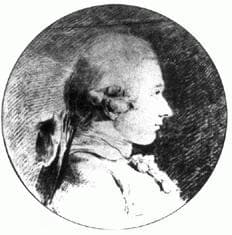
Donatien Alphonse François, Marquis de Sade, was a French nobleman, revolutionary politician, philosopher and writer famous for his literary depictions of a libertine sexuality as well as numerous accusations of sex crimes. His works include novels, short stories, plays, dialogues, and political tracts. In his lifetime some of these were published under his own name while others, which Sade denied having written, appeared anonymously.
Similar books
- Story of O
Pauline Réage
3.3 (18k) average on GoodreadsRomanceExplores themes of sexual submission, power dynamics, and extreme eroticism within an isolated, controlled environment, echoing Sade's focus on structured depravity.
- Story of the Eye
Georges Bataille
3.7 (16k) average on GoodreadsThrillerWhile both explore taboo sexuality and violence, Bataille's work often imbues transgression with a poetic, dreamlike quality and a sense of sacredness, seeking meaning or transcendence. Sade, conversely, offers a purely materialist and mechanistic view, devoid of spiritual or redemptive elements, focusing on the sheer will to power and pleasure derived from cruelty.
- Nineteen Eighty-Four
George Orwell
4.2 (5.5M) average on GoodreadsFictionWinston Smith dreams of truth and rebellion in a world where Big Brother watches all, but he confronts the terrifying power of a regime that controls not just actions, but thoughts.
- The Frozen River
Ariel Lawhon
4.4 (600k) average on GoodreadsFictionIn 1789 Maine, a heroic midwife's diary helps her expose a murder and get justice in a town that wants to silence her.
- A Man Called Ove
Fredrik Backman
4.4 (569k) average on GoodreadsFictionA stubborn widower, who lives by strict rules, finds his quiet world changed by a lively new family next door, making him face his past and find happiness in human connection.
- The Art of Racing in the Rain
Garth Stein
4.2 (452k) average on GoodreadsFictionThrough the eyes of Enzo, a wise and observant dog, a race car driver's family navigates a journey of love, loss, and resilience, learning that life's most important lessons often come in the curves, not just on the straightaways.






Enjoyed the summary?
A summary gives you the shape of the book. The book itself has the detail, the examples and the voice.
Find The 120 Days of Sodom on AmazonAs an Amazon Associate, BookBrief earns from qualifying purchases. How we're funded