
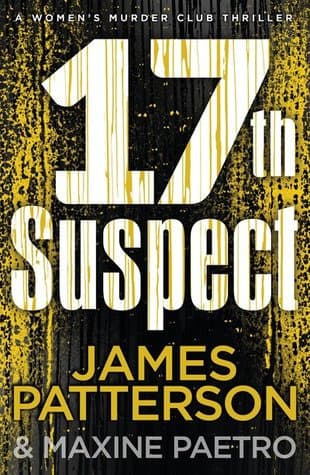
Synopsis
Covers the whole plot, including the ending.
- Difficulty
- Easy
- Pacing
- Fast
- Mood
- Suspenseful, Tense, Driven, Urgent
- Read it if
- You enjoy fast-paced police procedurals with a strong female lead and intricate plots involving internal corruption.
- Skip it if
- You prefer deep character studies over plot-driven thrillers or are sensitive to medical crises impacting protagonists.
The 17th Suspect Plot Summary
Covers the whole plot, including the ending.
The First Shot
Sergeant Lindsay Boxer is called to the scene of a shooting at the San Francisco Grand Hyatt. The victim, wealthy businessman Robert Van Dorn, was shot execution-style in his room. The immediate puzzle is the method of entry: no forced entry, no witnesses, and the hotel's security system shows no one suspicious entering or leaving. This suggests a professional killer or someone with inside access. Lindsay, working with her partner Rich Conklin, begins to piece together Van Dorn's life, looking for motives among his business dealings and personal relationships, but the initial leads are cold, setting a perplexing tone for the case.
A Second Victim, A Pattern Emerges
Days later, another prominent figure, biotech CEO Dr. Janice Kinkaid, is found murdered in her apartment, also shot execution-style. The circumstances are similar to Van Dorn's murder: no forced entry, no witnesses, and a seemingly impossible entry/exit for the killer. The identical method confirms Lindsay's suspicion that they are dealing with a serial killer. The victims, Van Dorn and Kinkaid, appear to have no direct connection, making the killer's motive and selection criteria a mystery for Lindsay and the SFPD. Pressure mounts as the public demands answers and fears grow.
The Informant's Whispers
Lindsay receives a call from her trusted informant, an older woman named Martha, who is terrified but insists on a face-to-face meeting. Martha reveals a chilling piece of information: she believes the killer is a police officer, or at least someone with knowledge of police procedures and access. She mentions seeing a police car near one of the crime scenes at an unusual time. This revelation disturbs Lindsay, who initially struggles to accept the possibility of corruption within her own department. The information, however, is too specific to ignore, forcing Lindsay to consider the unthinkable.
Internal Suspicions
Acting on Martha's tip, Lindsay and Rich begin to discreetly investigate their fellow officers. This is a sensitive and dangerous undertaking, as accusing a colleague without concrete evidence could ruin careers and lives. They start by reviewing patrol logs, internal security footage, and personnel files, looking for any anomalies or suspicious behavior. Their investigation is complicated by the need for secrecy, making it difficult to access certain information. Lindsay feels a growing sense of isolation, knowing she can't fully trust anyone within the department until the killer is caught.
A Third Victim and a Closer Call
A third victim, renowned architect David Sanchez, is murdered in the same fashion. This time, however, a neighbor briefly sees a shadowy figure fleeing the scene. The description is vague, but it confirms the killer is human. Meanwhile, Lindsay experiences concerning medical symptoms: severe headaches, blurred vision, and debilitating fatigue. She dismisses them as stress-related, but her friends in the Women's Murder Club, particularly Claire, urge her to see a doctor. The escalating case and her deteriorating health begin to take a toll on Lindsay.
The Women's Murder Club Gathers Clues
Lindsay confides in her closest friends: Cindy Thomas, a journalist; Yuki Castellano, an assistant district attorney; and Claire Washburn, a medical examiner. The Women's Murder Club pools their unique expertise to help Lindsay. Cindy uses her journalistic contacts to dig into the victims' backgrounds for any hidden connections; Yuki scrutinizes legal documents and court records for discrepancies; and Claire, despite her concerns about Lindsay's health, analyzes autopsy reports for subtle clues missed by official channels. Their combined efforts provide new angles and insights, helping Lindsay navigate the complex web of deceit.
Unmasking the Inside Man
Through diligent work and cross-referencing Martha's information with patrol logs and internal reports, Lindsay and Rich narrow down their suspect list. They focus on Officer Brady, a seemingly unassuming and well-respected member of the force. Brady's shifts and patrol routes align suspiciously with the times and locations of the murders. Further investigation reveals inconsistencies in his alibis and a sudden, unexplained increase in his personal wealth. The realization that one of their own is a cold-blooded killer sends shockwaves through the small team, but they know they must act carefully to avoid alerting him.
The Killer's Motive Revealed
As Lindsay and Rich look deeper into Officer Brady's background, they uncover a tragic history. Brady's family was destroyed years ago due to the negligence or corruption of powerful figures. Each of his victims – Van Dorn, Kinkaid, and Sanchez – were involved in the downfall of his family or benefited from their misfortune. Brady, driven by a sense of injustice and a desire for revenge, meticulously planned his kills, using his police access to bypass security and cover his tracks. His calm demeanor masked a deep rage and a thirst for retribution.
Lindsay's Health Crisis and Personal Stakes
Lindsay's health deteriorates rapidly. She collapses during a crucial moment in the investigation, forcing her to be hospitalized. Diagnosed with a severe brain aneurysm, her life hangs in the balance. This medical crisis not only puts her life at risk but also threatens to derail the entire investigation, as she holds key pieces of information. Her husband, Joe, and her friends are terrified, fearing for her life. The killer, Brady, remains at large, and the clock is ticking, adding immense pressure to the Women's Murder Club to continue the hunt without their leader.
The Final Confrontation
Against medical advice, Lindsay, weakened but determined, leaves the hospital to join the final pursuit of Brady. The Women's Murder Club, working together, manages to corner Brady. A tense standoff ensues, with Brady refusing to surrender. He attempts to escape, leading to a dangerous chase. Lindsay, despite her precarious health, uses her detective skills and courage to outmaneuver him. The confrontation is brutal and personal, as Lindsay battles not only a dangerous killer but also her own physical limitations.
Justice Served
After a fierce struggle, Officer Brady is finally apprehended, thanks to the combined efforts of Lindsay, Rich, and the Women's Murder Club. He is taken into custody, and the city breathes a sigh of relief. The case is closed, but the aftermath for Lindsay is significant. She faces a long and uncertain recovery from her aneurysm, and the psychological toll of investigating a fellow officer, combined with her near-fatal illness, is immense. While justice has been served, the experience leaves a lasting mark on Lindsay, her family, and her friends.
The 17th Suspect Characters
Lindsay Boxer
Protagonist
A dedicated San Francisco homicide detective facing an unprecedented threat and a personal health crisis.
Sergeant Lindsay Boxer is the lead detective in the SFPD homicide division. She is a highly decorated officer, known for her sharp intellect, unwavering integrity, and relentless pursuit of justice. She is also a devoted wife to Joe Molinari and a loving mother to her daughter, Julie. Lindsay is fiercely loyal to her friends in the Women's Murder Club and often relies on their unique skills to solve complex cases. She is driven by a deep sense of duty and a need to protect the innocent, even when it puts her own life at risk.
Relationships: Joe Molinari (Husband, supportive and concerned); Rich Conklin (Detective partner, loyal and reliable); Cindy Thomas (Friend, journalist, member of Women's Murder Club); Yuki Castellano (Friend, Assistant DA, member of Women's Murder Club); Claire Washburn (Friend, medical examiner, member of Women's Murder Club)
Rich Conklin
Supporting
Lindsay's loyal and dependable detective partner.
Rich Conklin is Lindsay Boxer's long-time detective partner. He is steady, reliable, and deeply trusts Lindsay's instincts. While often more pragmatic and cautious than Lindsay, he consistently stands by her, even when her investigations lead into dangerous and politically sensitive territory, such as investigating their own department. He provides a grounded perspective and is instrumental in the legwork and analysis required to break down complex cases. His loyalty to Lindsay is unwavering, and he acts as her sounding board and a crucial ally.
Relationships: Lindsay Boxer (Detective partner, trusted colleague); Joe Molinari (Colleague, friendly acquaintance)
Cindy Thomas
Supporting
A tenacious journalist and member of the Women's Murder Club.
Cindy Thomas is a sharp and ambitious journalist who uses her media connections and investigative skills to assist Lindsay and the Women's Murder Club. She is adept at uncovering information from public records, interviewing sources, and understanding the nuances of public opinion and media portrayal. Her journalistic drive often provides crucial external perspectives and leads that the police might not access. She is fiercely loyal to her friends and uses her platform to aid in their pursuit of justice, often risking her own career in the process.
Relationships: Lindsay Boxer (Friend, source); Yuki Castellano (Friend); Claire Washburn (Friend)
Yuki Castellano
Supporting
A meticulous Assistant District Attorney and legal mind of the Women's Murder Club.
Yuki Castellano is an Assistant District Attorney who brings her legal expertise and sharp analytical mind to the Women's Murder Club. She is skilled at dissecting legal documents, identifying procedural loopholes, and understanding the intricacies of the justice system. Her insights are invaluable in ensuring that evidence is legally admissible and that the cases built by Lindsay can withstand scrutiny in court. Yuki is a strong advocate for justice and provides crucial legal guidance to the group, often navigating complex bureaucratic hurdles.
Relationships: Lindsay Boxer (Friend, colleague); Cindy Thomas (Friend); Claire Washburn (Friend)
Claire Washburn
Supporting
A compassionate medical examiner and the emotional anchor of the Women's Murder Club.
Dr. Claire Washburn is the medical examiner for San Francisco and a close friend of Lindsay. She provides crucial forensic insights, deciphering clues from crime scenes and autopsies that often escape others. Beyond her professional skills, Claire is deeply empathetic and often acts as the emotional conscience and support system for the group, particularly for Lindsay. She is highly observant and often the first to notice Lindsay's declining health, urging her to prioritize her well-being. Her medical expertise is vital to understanding both the victims and Lindsay's own physical struggles.
Relationships: Lindsay Boxer (Friend, colleague); Cindy Thomas (Friend); Yuki Castellano (Friend)
Joe Molinari
Supporting
Lindsay's supportive husband and a former police officer.
Joe Molinari is Lindsay's loving and supportive husband. A former police officer himself, he understands the demands and dangers of Lindsay's profession, offering her empathy and practical advice. He is a devoted father to their daughter, Julie, and often takes on the primary parenting role when Lindsay is consumed by a case. Joe is a steadying presence in Lindsay's life, providing emotional support and a safe harbor, especially when she faces personal or professional crises. His concern for her well-being is a constant throughout the narrative.
Relationships: Lindsay Boxer (Husband); Julie Boxer (Father); Rich Conklin (Colleague, friendly acquaintance)
Officer Brady
Antagonist
A seemingly unassuming police officer revealed to be a vengeful serial killer.
Officer Brady initially appears as a quiet, unremarkable member of the SFPD, blending into the background. However, beneath his calm exterior lies a deep-seated resentment and a meticulously planned agenda for revenge. He is intelligent and cunning, using his knowledge of police procedures and access to carry out his murders without leaving a trace. His motive stems from a tragic past where powerful figures, including the victims, were responsible for the destruction of his family. He is driven by a cold, calculating desire for retribution, believing he is dispensing justice.
Relationships: Lindsay Boxer (Adversary, colleague (initially)); Robert Van Dorn (Victim, target of revenge); Dr. Janice Kinkaid (Victim, target of revenge); David Sanchez (Victim, target of revenge)
Martha
Supporting
A nervous but crucial confidential informant.
Martha is a confidential informant with a nervous disposition but a sharp eye for detail. She is terrified of coming forward, especially with information that implicates a police officer, but her conscience compels her to contact Lindsay. Her initial tip about seeing a police car near a crime scene is the catalyst that shifts Lindsay's investigation from an external hunt to an internal one. Martha's bravery, despite her fear, is essential in guiding Lindsay towards the truth and exposing the corruption within the department. She represents the ordinary citizen whose observation can crack a case.
Relationships: Lindsay Boxer (Informant-handler relationship)
The 17th Suspect Themes
Corruption and Betrayal of Trust
This theme explores the impact when those sworn to uphold the law become its violators. The revelation that Officer Brady, a member of the SFPD, is the serial killer shatters Lindsay's trust in her institution and colleagues. It forces her to operate in secrecy, questioning everyone around her. The betrayal is deep, as Brady uses his position and knowledge of police procedures to commit crimes, turning the system meant to protect into a tool for his personal vengeance. This theme is particularly strong when Lindsay realizes she cannot fully confide in her own department, relying instead on her trusted circle outside official channels.
“How could one of our own do this? It's like finding a snake in your own bed.”
Justice vs. Vengeance
The novel contrasts the pursuit of lawful justice with the destructive path of personal vengeance. Lindsay Boxer tirelessly works within the legal framework to bring criminals to justice, even when the system is flawed. In contrast, Officer Brady takes the law into his own hands, believing his victims deserved their fate for past wrongs against his family. His actions, while perhaps born from a desire for 'justice' in his eyes, are ultimately acts of murder. The narrative questions whether an individual's perceived righting of wrongs can ever justify such brutal actions, highlighting the moral and ethical lines that separate justice from mere retribution. This is evident in Brady's careful planning, driven by a twisted sense of moral superiority.
“He wasn't just killing them; he was making a statement. A statement he thought was justice.”
Personal Sacrifice and Resilience
Lindsay Boxer's journey is one of personal sacrifice and unwavering resilience in the face of overwhelming odds. She confronts a dangerous killer who is an insider, and she also battles a life-threatening brain aneurysm. Despite her debilitating symptoms and the advice of her doctors and friends, Lindsay pushes herself to the brink, driven by her commitment to the victims and her duty. Her willingness to put her life on the line, both professionally and physically, shows her dedication. Her resilience is not just physical, but also mental, as she maintains her focus and integrity under immense pressure and fear for her own life.
“I can't stop. Not while he's out there. Not while there's a chance to stop him.”
The Power of Friendship and Community
The Women's Murder Club is a symbol of the strength found in female friendship and community. When Lindsay must investigate her own department and then faces a severe health crisis, it is her friends – Cindy, Yuki, and Claire – who step up. They pool their diverse professional skills (journalism, law, medicine) and provide emotional support, becoming her clandestine investigative team and her personal lifeline. This theme highlights how collective effort, trust, and deep personal bonds can overcome obstacles that would be too difficult for an individual, reinforcing the idea that true strength often lies in collaboration and mutual support, especially in times of extreme adversity.
“We're in this together, Lindsay. Always.”
Plot Devices & Literary Techniques
The Inside Man
The killer is an internal member of the police force, complicating the investigation.
The revelation that the serial killer is Officer Brady, a member of the SFPD, serves as a crucial plot device. This 'inside man' trope immediately raises the stakes and introduces immense dramatic tension. It forces Lindsay to conduct a highly sensitive, clandestine investigation, creating internal conflict and paranoia within the department. The killer's access to police resources, knowledge of procedures, and ability to blend in make him incredibly difficult to catch, while simultaneously challenging Lindsay's trust in her colleagues and the institution itself. This device subverts the typical detective narrative, where the police are unequivocally the heroes, by making one of their own the antagonist.
Red Herring Victims
Initially unconnected victims mislead the investigation, obscuring the killer's true motive.
The initial victims – a wealthy businessman, a biotech CEO, and an architect – appear to have no direct connection, serving as a red herring. This device forces Lindsay and her team to cast a wide net, looking for conventional motives like business rivalries or personal feuds, which leads them down blind alleys. The apparent randomness of the victims for a significant portion of the investigation delays the discovery of the killer's true, deeply personal motive, which is rooted in a past injustice. This misdirection builds suspense and frustration, making the eventual revelation of Brady's motive more impactful as the seemingly disparate victims are finally linked.
Protagonist's Life-Threatening Illness
Lindsay Boxer's severe brain aneurysm creates a ticking clock and personal vulnerability.
Lindsay's sudden and severe brain aneurysm serves as a powerful plot device, adding a critical layer of personal stakes and a ticking clock to the narrative. Her deteriorating health not only puts her life in jeopardy but also threatens to derail the entire investigation, as she is central to solving the case. This device heightens the emotional tension, making the pursuit of the killer a race against both external threats and Lindsay's own mortality. It forces her friends to step up and carry the investigation while simultaneously showcasing Lindsay's immense courage and determination to see justice served, even from her sickbed.
The Women's Murder Club
A network of female friends with diverse professional skills who aid the police investigation.
The Women's Murder Club – consisting of a journalist (Cindy), an Assistant DA (Yuki), and a medical examiner (Claire) – acts as a crucial plot device for problem-solving and emotional support. Their varied professional backgrounds provide complementary expertise that Lindsay, as a police detective, might not have access to or cannot utilize officially. This allows for unconventional investigative avenues, such as journalistic digging, legal analysis, and forensic insights, often operating outside the bureaucratic constraints of the police department. Beyond their professional contributions, their unwavering friendship provides Lindsay with a safe space for emotional processing and crucial personal support, particularly when she faces internal departmental corruption and her own health crisis.
The 17th Suspect Quotes
“There are some things in life you just can't outrun, and the past is definitely one of them.”
“Every secret has a shelf life. Eventually, it spoils.”
“Sometimes the most obvious answer is the right one, and sometimes it's just the best disguise.”
“Fear can make people do terrible things, but it can also reveal who they truly are.”
“The city never sleeps, and neither do its dark corners.”
“Justice isn't always about what's fair; it's about what can be proven.”
“You can't save everyone, no matter how hard you try. Sometimes, all you can do is try to understand why.”
“The truth is a stubborn thing. It has a way of coming out, eventually.”
“Even the strongest walls can crumble if the foundation is weak.”
“There's a fine line between loyalty and complicity.”
“Sometimes the loudest voices are trying to hide the quietest secrets.”
“The past isn't just behind us; it's often walking right beside us.”
“In the end, everyone has a story. It's just a matter of who gets to tell it.”
“Hope is a dangerous thing when you're dealing with a killer. It can make you blind.”
Quiz
10 questions on the plot and the characters. Each answer comes with a short explanation.
Question 1
What is Sergeant Lindsay Boxer's primary role in the San Francisco police department, as described in the book's premise?
- Forensic analyst
- Homicide detective
- Internal affairs investigator
- Crime scene photographer
Show answer
B. Homicide detective The premise indicates Lindsay Boxer is a Sergeant who is putting her life on the line to protect San Francisco from a killer, which aligns with a homicide detective's role.
Question 2
What unsettling conclusion does Lindsay Boxer reach after receiving a tip from a confidential informant?
- The killer is targeting specific ethnic groups.
- The killer is a former police officer.
- Something has gone horribly wrong inside the police department.
- The serial shootings are random and unconnected.
Show answer
C. Something has gone horribly wrong inside the police department. The text explicitly states: 'The confidential informant's tip leads Lindsay to a disturbing conclusion: something has gone horribly wrong inside the police department.'
Question 3
What type of symptoms does Lindsay Boxer begin to experience as she gets deeper into the case?
- Severe insomnia and nightmares
- Unsettling medical symptoms
- Hallucinations and paranoia
- Sudden memory loss
Show answer
B. Unsettling medical symptoms The synopsis mentions, 'She suffers unsettling medical symptoms,' indicating a physical toll from the investigation.
Question 4
Who are the 'Women's Murder Club' in relation to Lindsay Boxer?
- A group of rival detectives
- A support group for victims of crime
- Her friends who warn her against taking the crimes to heart
- An underground vigilante organization
Show answer
C. Her friends who warn her against taking the crimes to heart The text states, 'her friends in the Women's Murder Club warn her against taking the crimes to heart,' identifying them as her friends.
Question 5
What is the killer's primary objective regarding Lindsay Boxer, as described in the summary?
- To frame her for the murders.
- To undermine her unwavering integrity.
- To force her to leave the police force.
- To make her join their cause.
Show answer
B. To undermine her unwavering integrity. The summary concludes with, 'But now she is confronting a killer who is determined to undermine it all,' referring to her integrity.
Question 6
How does the investigation into the killer affect Lindsay's professional boundaries?
- It forces her to collaborate with international agencies.
- It lures her out of her jurisdiction.
- It requires her to go undercover.
- It leads to her temporary suspension.
Show answer
B. It lures her out of her jurisdiction. The text mentions, 'The hunt for the killer lures Lindsay out of her jurisdiction,' indicating a breach of her usual operational area.
Question 7
What personal qualities does Lindsay Boxer possess that the killer aims to challenge?
- Her exceptional marksmanship and combat skills.
- Her unwavering integrity as a decorated officer, loving wife, devoted mother, and loyal friend.
- Her ability to remain emotionally detached from her cases.
- Her reputation for solving cold cases.
Show answer
B. Her unwavering integrity as a decorated officer, loving wife, devoted mother, and loyal friend. The summary states, 'Lindsay has always acted with unwavering integrity. But now she is confronting a killer who is determined to undermine it all,' directly linking her integrity to the killer's goal.
Question 8
What is the primary genre of 'The 17th Suspect'?
- Romantic Comedy
- Fantasy Adventure
- Thriller, Mystery
- Historical Fiction
Show answer
C. Thriller, Mystery The prompt explicitly states the genre: 'Thriller, Mystery.'
Question 9
Why is the woman who provides the confidential informant's tip described as 'reluctant'?
- She doesn't trust Lindsay Boxer personally.
- She fears for her own safety due to the killer's nature or the implications of the tip.
- She is unsure about the accuracy of her information.
- She is legally obligated not to share information.
Show answer
B. She fears for her own safety due to the killer's nature or the implications of the tip. In thrillers, reluctance from informants usually stems from fear of reprisal or danger, especially when the information is sensitive and involves corruption within the police department.
Question 10
What core conflict does Lindsay face regarding her personal involvement in the case?
- She struggles with the ethical dilemma of using illegal methods to catch the killer.
- She is torn between her duty as an officer and her desire to protect her family from the danger.
- Despite warnings from friends, she can't help but follow the case into terrifying terrain and take the crimes to heart.
- She is pressured by superiors to drop the case due to its sensitive nature.
Show answer
C. Despite warnings from friends, she can't help but follow the case into terrifying terrain and take the crimes to heart. The text states, 'her friends in the Women's Murder Club warn her against taking the crimes to heart. But with lives at stake, the detective can't help but follow the case into terrifying terrain,' highlighting her internal conflict.
The 17th Suspect FAQ
What is the central mystery Lindsay Boxer investigates in 'The 17th Suspect'?
Lindsay Boxer investigates a series of seemingly random shootings in San Francisco. The mystery deepens when a confidential informant suggests the killer might be operating from within the police department, forcing Lindsay to confront potential corruption among her colleagues.
Who is the 'reluctant woman' who provides Lindsay with a crucial tip?
The reluctant woman is Martha, who works as a dispatcher within the police department. Her initial tip is vague but points Lindsay towards the unsettling possibility that the killer is not an external threat but someone connected to law enforcement.
How does the investigation personally impact Lindsay Boxer?
Lindsay experiences unsettling medical symptoms, including dizziness and fatigue, which her friends attribute to stress. The case also forces her to question the integrity of her own department and colleagues, creating significant emotional and professional strain.
What role do the Women's Murder Club members play in this particular investigation?
The Women's Murder Club, composed of Cindy, Claire, and Yuki, provide Lindsay with emotional support and practical advice. They warn her against becoming too personally invested in the case, recognizing the toll it's taking on her health and well-being, though Lindsay often finds it difficult to heed their warnings.
What is the killer's primary motivation or objective in 'The 17th Suspect'?
The killer's primary objective is to target individuals within the criminal justice system whom they believe have escaped justice or were corrupt. This motivation stems from a deep-seated desire for retribution, aiming to expose perceived flaws and hypocrisy within the system.
Are there any subtle clues early in the narrative that foreshadow the killer's identity or connection to the police?
Yes, Martha's initial reluctance and veiled hints about 'something wrong inside' the department are early indicators. Additionally, the specific targeting of victims with ties to past controversial cases or police actions subtly points towards someone with insider knowledge of the system.
How does Lindsay's husband, Joe Molinari, react to her deteriorating health and intense involvement in the case?
Joe becomes increasingly concerned about Lindsay's medical symptoms and her all-consuming dedication to the case. He tries to encourage her to prioritize her health and family, often feeling sidelined by her professional commitments, leading to some tension in their relationship.
Is there a specific past case or event that triggered the killer's actions?
The killer's actions are triggered by a past case involving a perceived miscarriage of justice, where individuals involved in a crime were either acquitted or received lenient sentences due to corruption or procedural errors within the police department and legal system. This deeply personal grievance fuels their vengeful spree.
What is the significance of the title 'The 17th Suspect'?
The title hints at the large number of potential suspects or individuals linked to the past injustice that fuels the killer's motive. It also alludes to the difficulty Lindsay faces in narrowing down the field, suggesting a complex web of connections that obscure the true culprit until later in the investigation.
How does Lindsay's integrity, a core trait, become challenged by this specific investigation?
Lindsay's unwavering integrity is challenged when she must consider that her own colleagues might be involved in or covering up the crimes. This forces her to confront the painful possibility of betrayal from within the institution she has always trusted, testing her loyalty and moral compass.
Analyze the psychological impact of working a case where the killer might be a fellow officer.
The psychological impact is profound, leading to paranoia, distrust, and a sense of isolation. Lindsay struggles with the moral dilemma of investigating her own, which erodes her sense of security and loyalty, making her question everyone around her and the very foundations of her career.
How do Lindsay's medical symptoms contribute to the psychological tension of the narrative?
Lindsay's medical symptoms create a layer of psychological tension by making her doubt her own judgment and physical capabilities. The fear that her health might be failing, combined with the stress of the case, blurs the lines between physical ailment and psychological strain, making her feel vulnerable and isolated.
What internal conflicts does Lindsay face regarding her roles as a detective, wife, and mother during this case?
Lindsay struggles to balance her demanding role as a detective with her responsibilities as a wife to Joe and mother to Julie. The intensity of the investigation causes her to neglect her family, leading to guilt and marital strain, as she feels torn between her professional duty and her personal commitments.
Could the killer's actions be interpreted as a warped form of justice, given their motivation?
Yes, from the killer's perspective, their actions are a warped form of vigilante justice. They believe they are correcting past wrongs and holding accountable those who evaded punishment, seeing themselves as righteous avengers rather than murderers, which is a common theme in crime thrillers.
Does the book suggest any systemic failures within the police department or legal system that enabled the killer's motivation?
The book strongly suggests systemic failures, particularly through the killer's origin story. It implies that corruption, cover-ups, or incompetence within the police and legal systems led to individuals escaping justice, thereby creating the very grievance that fuels the killer's violent retribution.
How does the ending of 'The 17th Suspect' challenge Lindsay's perception of justice?
The ending challenges Lindsay's perception of justice by revealing the complex motivations behind the killer's actions, which stem from legitimate grievances about the system. It forces her to confront the idea that 'justice' isn't always clear-cut, and that sometimes the system itself can be the catalyst for crime, making her question her own role.
Is there a debate to be had about whether the killer's methods, despite being horrific, achieve a certain kind of 'truth' or exposure?
Yes, there is a strong debate. While the killer's methods are undeniably horrific and illegal, their actions do succeed in exposing deep-seated corruption or past injustices that might otherwise have remained buried. This forces characters and readers to confront uncomfortable truths about the justice system.
What is the ultimate resolution regarding Lindsay's medical symptoms?
Lindsay's medical symptoms are ultimately revealed to be stress-related, exacerbated by the intense pressure and emotional toll of the case. With the resolution of the investigation, her symptoms begin to subside, highlighting the profound mind-body connection in her experience.
About the author
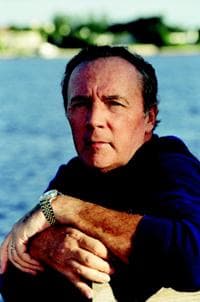
James Patterson is an American author known for his contributions to the thriller and fiction genres. His notable works include "Along Came a Spider," "Kiss the Girls," "1st to Die," "The Angel Experiment," "Suzanne's Diary for Nicholas," and "School's Out—Forever." Patterson has received multiple awards for his writing, including the Edgar Award.
Similar books
- Gone Girl
Gillian Flynn
4.1 (2.3M) average on GoodreadsThrillerFeatures a strong mystery with unexpected twists and a focus on psychological suspense.
- The Silent Patient
Alex Michaelides
4.1 (507k) average on GoodreadsThrillerA gripping psychological thriller with an intricate plot and surprising revelations.
- Angels & Demons
Dan Brown
3.9 (2.7M) average on GoodreadsThrillerA Harvard symbologist races through Rome's ancient sites, deciphering cryptic clues to unmask the Illuminati and stop a vengeful plot to destroy the Vatican with a stolen antimatter weapon.
- The Girl on the Train
Paula Hawkins
3.9 (2.1M) average on GoodreadsThrillerA woman’s fascination with a seemingly perfect couple she watches from her daily train commute leads her into a dark investigation when she witnesses something that shatters their idyllic image.
- The Da Vinci Code
Dan Brown
3.9 (1.9M) average on GoodreadsThrillerA symbologist and a cryptologist race through European landmarks, deciphering ancient codes and uncovering a conspiracy that could rewrite the foundations of Christianity.
- The Guest List
Lucy Foley
3.8 (1.3M) average on GoodreadsThrillerOn a remote Irish island, a glamorous wedding descends into a deadly whodunnit when a guest is found murdered, trapping everyone with their secrets as a storm rages.






Enjoyed the summary?
A summary gives you the shape of the book. The book itself has the detail, the examples and the voice.
Find The 17th Suspect on AmazonAs an Amazon Associate, BookBrief earns from qualifying purchases. How we're funded