
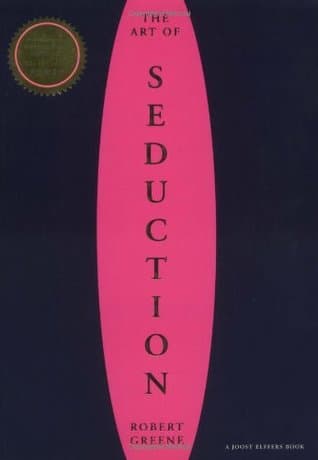
Core Idea
- Difficulty
- Medium
- Read it if
- You are fascinated by power dynamics, historical examples of influence, and psychological strategies for persuasion, or if you want to understand the mechanics behind charisma and attraction in various contexts (not just romantic).
- Skip it if
- You are looking for a straightforward guide to ethical relationships, find the idea of 'manipulation' distasteful, or prefer direct communication over strategic ambiguity.
Key Takeaways from The Art of Seduction
The Seductive Character: Beyond Looks
Seduction isn't about physical beauty; it's about cultivating a compelling persona.
Greene redefines seduction as a psychological art. He says real seduction comes from a developed character, a unique and magnetic presence beyond physical looks. This means understanding and becoming one of the archetypal seducer types—like the Siren, the Rake, or the Ideal Lover—each with its own psychological appeal. The goal is to create an aura of desirability, mystery, and fulfillment, making the target feel seen, understood, and drawn to the seducer. It is about creating an illusion of potential, a promise of an experience the target wants but lacks in their life. This developed character acts as a psychological magnet, pulling the target into a story.
“Seduction is a game of psychology, not beauty, and it is within the grasp of any person to become a master of the game.”
In the book: Greene details various archetypes, such as the Siren (Cleopatra), the Rake (Don Juan), and the Ideal Lover (Casander), illustrating how their distinct psychological profiles, rather than just their looks, made them irresistible. Cleopatra's power, for instance, lay in her theatricality and ability to constantly reinvent herself, keeping Mark Antony enthralled.
Try this: Identify your core personality strengths and consciously amplify them to create a distinctive, alluring persona. Study the archetypes Greene presents and consider which aspects resonate with you, then practice embodying those traits. Focus on developing a unique style, mannerisms, and conversational approach that differentiates you and sparks curiosity.
Related ideas: seductive-archetypes, psychological-appeal, cultivated-persona
The Art of the Approach: Indirect and Gradual
Effective seduction is a slow burn, not a direct assault, building intrigue through indirect methods.
Greene states that being direct ruins seduction. A direct approach, especially early on, causes suspicion and resistance. Instead, a master seducer uses an indirect, slow method, gradually lowering the target's defenses. This involves creating comfort and familiarity, often through a 'friendly' appearance, before subtly adding intrigue, mystery, and desire. The process is like a slow dance, where each step is measured to draw the target closer without them realizing they are being led. The goal is to make the target feel they are starting the connection, or that the attraction is natural, not a planned move. This slow pace builds the psychological foundation, making the target open to deeper manipulation.
“The greatest mistake in seduction is to be too direct. The seducer must first lull the victim into a false sense of security, then slowly draw them into their web.”
In the book: Greene cites the historical example of courtesans who would first establish themselves as intellectual companions or confidantes, making their male targets feel understood and appreciated, before gradually introducing a romantic or sexual dimension. This indirect method disarmed their targets' initial resistance.
Try this: Avoid overt compliments or declarations of interest early on. Instead, focus on shared interests, humor, and active listening to build rapport. Gradually introduce subtle flirtation, suggestive glances, or intriguing snippets about yourself that leave the target wanting more. Create situations where 'chance' encounters seem to occur naturally.
Related ideas: indirect-approach, gradual-escalation, psychological-disarming
Creating the Illusion of Choice
Make your target believe they are in control, while subtly guiding them where you want them to go.
A key part of Greene's seduction idea is making the target feel they have a choice. The seducer never forces or demands. Instead, they arrange situations and offer options that subtly guide the target to the desired outcome. This involves planting ideas, creating chances for the target to 'discover' their own attraction, and making them feel like the initiator. By letting the target believe they are in control, their defenses stay low, and their involvement deepens. This manipulation of perception is important because people resist being controlled. When they feel they are acting on their own will, they are more likely to commit and invest emotionally. The seducer is a puppeteer whose strings are invisible, making the target act as desired without realizing they are being controlled.
“The target must feel that he or she is making the move, that the desire originates with them.”
In the book: Greene discusses how many historical seducers would present a 'challenge' or a 'mystery' to their targets, inviting them to pursue the seducer rather than the other way around. This made the pursuit feel like the target's own initiative and conquest. For example, a Coquette's hot-and-cold behavior makes the target work harder for attention, believing they are winning her over.
Try this: Instead of directly asking for something, frame it as an invitation or a possibility. Offer two choices, both of which lead to your desired outcome. Encourage the target to share their thoughts and feelings, then subtly mirror or validate those that align with your agenda. Create situations where they feel they are 'discovering' your attractive qualities.
Related ideas: illusion-of-control, psychological-manipulation, guided-choice
Isolating the Target: Breaking Down Defenses
Separate the target from their usual environment and influences to make them more susceptible.
Greene says that to truly seduce someone, you must separate them from their usual influences and routines. People resist seduction most when they are around friends, family, or familiar places, as these provide security and reinforce their identity. By bringing the target into a new, unfamiliar, or slightly forbidden environment, the seducer creates a space where the target's usual defenses and critical thinking weaken. This isolation can be physical, moving them to a new place, or psychological, making them feel uniquely understood and separate from the everyday world. In this isolated state, the target becomes more vulnerable, more open to new ideas, and more open to the seducer's influence, as their usual supports are gone, and they start to rely more on the seducer for their reality.
“The greatest weapon in the seducer's arsenal is to isolate the target from their normal environment and social circle.”
In the book: Greene highlights the tactic of taking a target on a trip, even a short one, away from their daily life. The novelty of the environment, combined with the intense focus on the seducer, creates a powerful bond. Courtesans would often invite patrons to exclusive, private spaces, cutting them off from their public persona and societal expectations.
Try this: Suggest activities that take the target out of their comfort zone or usual haunts. Create intimate, private settings for your interactions. Frame your connection as something special and unique, setting it apart from their other relationships. Encourage them to confide in you, creating an emotional isolation from others.
Related ideas: social-isolation, vulnerability-creation, environmental-manipulation
Playing on Unfulfilled Desires and Childhood Fixations
Tap into the target's deepest, often unconscious, longings and unresolved past experiences.
Greene explores the Freudian aspects of seduction, saying that the strongest influence comes from finding and using the target's unfulfilled desires, childhood fixations, and psychological gaps. These are often unconscious longings—for attention, validation, adventure, or a parent figure—that come from past experiences. The seducer acts as a mirror, reflecting back the qualities the target craves, or embodying the missing piece they seek. This is not about surface flattery. It is about deeply understanding the target's mind and presenting oneself as the solution to their inner problems or unexpressed dreams. When a seducer connects with these deep needs, they bypass rational thought and create an intense, often addictive bond, making the target feel truly 'seen' and understood deeply.
“Every person carries within them a void, a missing piece from childhood, an unfulfilled desire. The seducer's art is to locate this void and appear to fill it.”
In the book: Greene discusses how many seducers, like the Ideal Lover, carefully listen to their targets' complaints about their current relationships or lives. They then subtly present themselves as possessing the very qualities or offering the experiences the target explicitly or implicitly desires. Napoleon, for instance, tapped into Josephine's desire for security and status.
Try this: Listen intently to the target's stories about their past, their complaints, and their dreams. Identify recurring themes or unspoken longings. Then, subtly embody or offer the solution to these voids. If they crave adventure, become an adventurous companion; if they yearn for intellectual stimulation, become their intellectual equal.
Related ideas: psychological-voids, unconscious-desires, childhood-fixations
The Power of the Chase: Hot and Cold
Maintain dynamic tension by alternating between attraction and withdrawal, keeping the target on edge.
Greene supports the 'Coquette' type as someone who masters the hot and cold dynamic, a key tactic for keeping seductive power. Always being available or showing constant affection quickly leads to boredom and a feeling of low value. On the other hand, too much distance can lead to disinterest. The skill is in a planned back and forth: drawing the target in with warmth and attention, then subtly pulling back, creating worry and a renewed sense of pursuit. This push-and-pull keeps the target off-balance, always trying to get the seducer's attention and affection. It creates a psychological addiction, as the target becomes obsessed with the 'high' of the seducer's presence and the 'low' of their absence, investing more emotional energy into the chase. The Coquette never fully gives themselves, ensuring desire stays strong and unfulfilled.
“The human heart is stimulated by alternation. If you are too available, you lose your charm. If you are too distant, you lose your hold. The Coquette masters this balance.”
In the book: The Coquette archetype is built entirely on this principle. Greene describes how figures like Marilyn Monroe, whether intentionally or not, mastered this by being alluringly present one moment and elusive the next, driving men to obsession. Their unpredictability made them irresistible.
Try this: After a period of intense engagement, create a brief, subtle distance. Respond slower, be 'busy' with other things, or appear slightly preoccupied. Then, re-engage with renewed warmth. Never fully reveal your hand or become completely predictable. Keep a touch of mystery and unavailability to maintain the chase.
Related ideas: coquette-strategy, psychological-addiction, unpredictability
The Grand Illusion: Creating a Fantasyland
Elevate the interaction beyond the mundane, crafting an experience of fantasy and escape.
Greene says seduction is not just about personal connection; it is about creating a whole world for the target—a fantasy that promises escape from their boring reality. Most people live in routine and with unfulfilled dreams. The seducer uses this by offering a look into a more exciting, romantic, or adventurous life. This involves drama, chosen settings, interesting stories, and a sense of mystery. The seducer becomes the way to this better reality, making the target feel that with them, life will be more lively, passionate, and meaningful. This illusion does not have to be entirely false, but it is always an enhanced, romanticized version of reality, made for the target's deepest desires. The seducer creates a story that captures the target's imagination and makes them want this new, enchanting world.
“The seducer's supreme art is to transport the target out of the mundane and into a world of fantasy, where their desires can be fulfilled.”
In the book: Greene cites figures like Andy Warhol, who created an entire 'Factory' scene that drew people in with its promise of glamour, artistic freedom, and a break from conventional life. This was a carefully constructed fantasyland that made people feel special and part of something extraordinary.
Try this: Identify what aspects of their life the target finds mundane or dissatisfying. Then, subtly present yourself and your interactions as the antidote. Plan dates or activities that are novel, slightly dramatic, or transportive. Weave stories that hint at adventure, romance, or a deeper meaning. Cultivate an aesthetic that feels unique and enchanting.
Related ideas: fantasy-creation, escapism, theatricality
The Anti-Seducer: Avoid These Fatal Flaws
Recognize and eliminate behaviors that repel and destroy seductive potential.
Greene focuses on the 'Anti-Seducer'—an important contrast to understanding good seduction. These are people whose behaviors actively push others away, often because of deep insecurities, self-focus, or a lack of social understanding. Common anti-seductive traits include neediness, not being able to listen, being too moralistic or preachy, showing insecurity, being too eager, or lacking mystery. These flaws instantly break the seduction by making the target uncomfortable, bored, or annoyed. Understanding the Anti-Seducer is important because it shows what not to do. By finding and removing these repellent behaviors, one can clear the way for seductive qualities to appear. It is about self-awareness and conscious self-correction, removing the things that prevent real connection and appeal.
“The Anti-Seducer is a person who, through their insecurity, self-absorption, or inability to read others, repels rather than attracts.”
In the book: Greene offers numerous examples of anti-seductive types, such as the 'Brute' (overly aggressive), the 'Clingy Baby' (needy and insecure), and the 'Moralizer' (judgmental and preachy). He details how these traits instantly shut down any potential for attraction, as they make the target feel pressured, uncomfortable, or superior.
Try this: Engage in honest self-assessment to identify any of the anti-seductive traits you might possess. Actively work on listening more than you speak, avoiding boasting or excessive self-disclosure, cultivating an air of independence, and refraining from judgment. Practice emotional self-regulation to avoid appearing needy or desperate.
Related ideas: anti-seductive-traits, fatal-flaws, social-intelligence
The Art of Retreat: Knowing When to Withdraw
Strategic withdrawal at the peak of desire intensifies attraction and prevents boredom.
Greene emphasizes how important strategic withdrawal is as a powerful seductive move. A common mistake is to stay too long, become too predictable, or give too much once the target is interested. This leads to boredom and less desire. Instead, the master seducer knows that leaving the target wanting more—withdrawing at the peak of their interest or desire—is more effective. This creates a lingering hunger, a sense of loss, and renewed obsession. It reinforces the seducer's value and scarcity, making the target pursue them more intensely. This planned retreat is not cruel, but about keeping the tension, mystery, and sense of an unfulfilled promise that keeps the seductive flame burning. It is a power move, showing control and leaving a lasting impression.
“The greatest seducers know that the moment to withdraw is not when the target is bored, but when they are most deeply engaged and desiring more.”
In the book: Many historical seducers, particularly the Coquette, would disappear or become unavailable after a particularly intense or intimate encounter, leaving their targets in a state of longing and speculation, often driving them to desperate measures to regain attention.
Try this: After a successful interaction or a moment of peak connection, be the first to end the conversation or date, even if you could continue. Leave the target with a positive, lingering impression and a desire for more. Don't immediately respond to every text or call; create a slight delay to build anticipation.
Related ideas: strategic-withdrawal, peak-desire, unfulfilled-promise
Mastering the Language of Seduction: Ambiguity and Suggestion
Communicate through subtle hints, double meanings, and non-verbal cues to create intrigue.
Greene says that the real language of seduction is not direct or obvious but works through suggestion, ambiguity, and non-verbal communication. Open declarations or clear intentions remove mystery and can cause resistance. Instead, the seducer skillfully uses double meanings, suggestive looks, subtle touches, and carefully chosen words that hint at deeper meanings without fully revealing them. This creates an interesting puzzle for the target, engaging their imagination and making them fill in the blanks, often projecting their own desires onto the seducer. Ambiguity keeps the target guessing, investing their mental energy in figuring out the seducer's intentions, and becoming more involved in the psychological game. It is about planting possibilities rather than making clear statements, thereby keeping an air of appeal and unpredictability.
“The language of seduction is not about what is said, but what is implied. It is a game of suggestion and ambiguity.”
In the book: Greene frequently references how historical figures like Casanova were masters of subtle, suggestive language, using compliments that could be interpreted in multiple ways or telling stories that hinted at their own mysterious past, making women endlessly curious.
Try this: Practice using suggestive language, gentle teasing, and playful innuendo rather than direct statements. Master the art of the lingering gaze, the subtle smile, or the brief, accidental touch. Leave certain things unsaid, allowing the target's imagination to do the work. Cultivate a slight air of mystery about your own life and intentions.
Related ideas: ambiguous-communication, non-verbal-seduction, suggestive-language
The Art of Seduction Quotes
“The greatest seducers are not those who are physically attractive, but those who create an aura of mystery and fascination.”
“In seduction, the victim must be led to believe they are in control, while you subtly guide their emotions.”
“People are tired of the same old routines; they crave novelty and the unexpected.”
“The key to seduction is to understand the desires and weaknesses of your target.”
“Create a sense of exclusivity: make people feel they are part of a select group.”
“Seduction is a game of patience; the slow, deliberate approach is often the most effective.”
“Use your words to paint vivid pictures and stir the imagination.”
“The seducer must be a master of disguise, adapting to the needs and fantasies of the target.”
“Avoid the obvious; the more you reveal, the less intriguing you become.”
“In history, the greatest leaders were often seducers who charmed their way to power.”
“Seduction is not about manipulation for evil, but about understanding human nature to create connection.”
“The art of seduction lies in making the other person feel uniquely seen and understood.”
“Use setbacks and obstacles to your advantage; they can heighten desire and drama.”
“Seduction is a dance of give and take, where you alternate between presence and absence.”
Quiz
10 questions on the main ideas. Each answer comes with a short explanation.
Question 1
According to Robert Greene in 'The Art of Seduction', what is the primary purpose of seduction as described in the book?
- To build long-term romantic relationships
- To achieve the ultimate power trip through refined influence
- To teach ethical communication skills
- To promote self-help through meditation
Show answer
B. To achieve the ultimate power trip through refined influence Greene frames seduction as 'the most highly refined mode of influence, the ultimate power trip,' emphasizing its role in manipulation and power dynamics rather than just romance or ethics.
Question 2
Which of the following is NOT one of the seducer archetypes described by Greene in the book?
- The Siren
- The Ideal Lover
- The Trickster
- The Charmer
Show answer
C. The Trickster Greene identifies nine seducer types including the Siren, Rake, Ideal Lover, Dandy, Natural, Coquette, Charmer, and Charismatic, but 'The Trickster' is not among them; it appears in his other works like 'The 48 Laws of Power'.
Question 3
How many maneuvers does Greene outline in 'The Art of Seduction' to guide readers through the seduction process?
- 48
- 24
- 12
- 36
Show answer
B. 24 The book specifies 'Twenty-four maneuvers' that provide cunning instructions for the seduction process, mirroring the structured approach of Greene's earlier work 'The 48 Laws of Power'.
Question 4
Which historical figure is mentioned in the book as an example of a seducer?
- Cleopatra
- Napoleon Bonaparte
- Albert Einstein
- Sigmund Freud
Show answer
A. Cleopatra Greene mines history to include Cleopatra as a key example of a seducer, highlighting her tactics and influence, along with others like John F. Kennedy and Josephine Bonaparte.
Question 5
What does Greene suggest is a key characteristic of 'The Natural' seducer archetype?
- They use calculated charm and wit to manipulate others
- They appear spontaneous and unpretentious, drawing people in with authenticity
- They rely on physical beauty and allure like the Siren
- They adopt a mysterious and aloof persona to create intrigue
Show answer
B. They appear spontaneous and unpretentious, drawing people in with authenticity 'The Natural' seducer is described as appearing genuine and spontaneous, using an unassuming manner to lower defenses and create attraction, unlike more calculated or overtly alluring types.
Question 6
According to Greene, what is a primary risk or failure point for seducers as analyzed in the book?
- Becoming too emotionally attached and losing objectivity
- Lacking physical attractiveness
- Using outdated historical tactics
- Focusing too much on power rather than romance
Show answer
A. Becoming too emotionally attached and losing objectivity Greene discusses how seducers can fail by letting emotions cloud their judgment, as seduction requires maintaining control and detachment to effectively influence others.
Question 7
In the context of the book, what does Greene imply about the morality of seduction tactics?
- They are strictly ethical and promote mutual benefit
- They are amoral, focusing on effectiveness rather than right or wrong
- They are immoral and should be avoided in modern society
- They are based on religious principles of love and compassion
Show answer
B. They are amoral, focusing on effectiveness rather than right or wrong Greene describes the instructions as 'cunning, amoral,' meaning they are presented without moral judgment, focusing purely on the mechanics of persuasion and power.
Question 8
Which thinker's work does Greene synthesize in 'The Art of Seduction', as mentioned in the description?
- Friedrich Nietzsche
- Sigmund Freud
- Karl Marx
- Immanuel Kant
Show answer
B. Sigmund Freud The book is noted as a synthesis of thinkers including Freud, along with Ovid, Kierkegaard, and Einstein, drawing on psychological and philosophical insights to explore seduction.
Question 9
What practical lesson does Greene offer for readers who want to avoid being seduced?
- Learn to recognize seducer archetypes and their tactics to build defenses
- Avoid all social interactions to minimize risk
- Focus solely on self-improvement without studying others
- Use counter-seduction techniques to outmaneuver seducers
Show answer
A. Learn to recognize seducer archetypes and their tactics to build defenses Greene positions the book as a primer for both practicing seduction and preventing oneself from being taken, implying that understanding the archetypes and maneuvers helps in recognizing and resisting manipulation.
Question 10
How does Greene's approach in 'The Art of Seduction' compare to his earlier work 'The 48 Laws of Power'?
- It is more focused on romantic relationships, while the earlier book is about general power
- It applies similar historical synthesis and strategic framing to the specific domain of seduction
- It rejects the amoral tactics of the earlier book in favor of ethical guidance
- It is less practical and more theoretical than the earlier book
Show answer
B. It applies similar historical synthesis and strategic framing to the specific domain of seduction Both books use historical examples and structured lessons (e.g., 48 laws vs. 24 maneuvers) to distill strategies for influence, with 'The Art of Seduction' narrowing the focus to seduction as a refined form of power.
The Art of Seduction FAQ
What is 'The Art of Seduction' by Robert Greene about?
The Art of Seduction is a guide to the psychology and tactics of seduction as a form of influence and power. It synthesizes historical examples, from figures like Cleopatra to John F. Kennedy, and outlines 24 maneuvers and character types like the Siren or Charmer to teach persuasion skills in relationships, business, and personal strategy.
Does 'The Art of Seduction' work in business or professional settings?
Yes, the book applies seduction principles beyond romantic contexts to business and professional influence. It teaches how to charm, persuade, and gain power in negotiations, leadership, and networking by using historical tactics adapted for modern scenarios.
How is 'The Art of Seduction' different from 'The 48 Laws of Power'?
While both books by Robert Greene focus on power and influence, The Art of Seduction specifically explores seduction as a refined mode of manipulation through charm and psychological tactics. In contrast, The 48 Laws of Power covers broader strategies for dominance and control in various aspects of life.
What are the seducer types in 'The Art of Seduction'?
The book identifies nine seducer archetypes, including the Siren, Rake, Ideal Lover, Dandy, Natural, Coquette, Charmer, and Charismatic. Each represents a distinct character and approach to seduction, based on historical and literary examples.
Is 'The Art of Seduction' ethical or manipulative?
The book presents seduction as an amoral tool of influence, offering tactics that can be seen as manipulative. It encourages readers to use these skills for personal gain but also to recognize and defend against seduction by others, framing it as a neutral strategy.
How can I apply 'The Art of Seduction' in everyday life?
Apply the book's lessons by studying the 24 maneuvers and seducer types to enhance charisma, build rapport, and influence others in social or professional interactions. Practice tactics like creating mystery or using targeted flattery to achieve desired outcomes.
What historical figures are analyzed in 'The Art of Seduction'?
The book analyzes seducers throughout history, such as Cleopatra, John F. Kennedy, Andy Warhol, and Josephine Bonaparte. It uses their stories to illustrate seduction techniques and the psychological dynamics of power and attraction.
Does 'The Art of Seduction' include psychological theories?
Yes, it synthesizes ideas from thinkers like Freud, Ovid, Kierkegaard, and Einstein to explain the psychology behind seduction. It blends philosophical and psychological insights with practical tactics for influence.
How is 'The Art of Seduction' useful for self-help?
As a self-help guide, it teaches readers to develop personal charisma, improve social skills, and gain confidence in persuasion. It offers strategies for taking control of situations and achieving goals through refined influence techniques.
Can 'The Art of Seduction' help in preventing manipulation?
Yes, by understanding the tactics and character types of seducers, readers can learn to recognize and defend against manipulation in relationships, business, or social settings. The book provides insights into spotting seductive behaviors and protecting oneself.
About the author

Robert Greene is an American author known for his works on strategy, power, and human behavior. His notable books include The 48 Laws of Power, Mastery, The Art of Seduction, The 33 Strategies of War, The Daily Laws, and The Laws of Human Nature, which explore themes of manipulation, influence, and personal development. Greene's writing combines historical examples with practical advice, appealing to a wide audience interested in self-improvement and strategic thinking.
Similar books
- The 48 Laws of Power
Robert Greene
4.2 (79k) average on GoodreadsBusinessExplores similar themes of power, strategy, and manipulation through historical examples, focusing on broader societal influence.
- Influence: The Psychology of Persuasion
Robert B. Cialdini
4.2 (101k) average on GoodreadsBusinessAnalyzes the psychological principles behind persuasion and compliance, providing a more academic framework for influence.
- The Art of War
Sun Tzu
4.0 (330k) average on GoodreadsBusinessOffers strategic principles for indirect action, deception, and understanding human nature to gain an advantage, applicable to various forms of conflict and competition.
- How to Win Friends and Influence People
Dale Carnegie
Carnegie's classic, published decades before Greene's, also deals with interpersonal influence but from a distinctly different ethical standpoint. Carnegie's approach emphasizes genuine interest in others, active listening, showing appreciation, and making others feel important – principles rooted in fostering positive relationships and mutual respect. While some might argue Carnegie's methods can be used manipulatively, his core philosophy champions sincerity and building goodwill. Greene, conversely, often advocates for calculated detachment, creating illusions, and exploiting vulnerabilities. Carnegie's advice, as noted by researchers like Dr. Adam Grant in discussions on 'givers' and 'takers,' aligns more with building sustainable social capital through positive interactions, whereas Greene's is geared towards short-term conquest and power acquisition, often at the expense of genuine connection.
- Steve Jobs
Walter Isaacson
4.1 (957k) average on GoodreadsBusinessSteve Jobs was a visionary who fused creativity and technology to revolutionize six industries and shape our digital world.
- Freakonomics: A Rogue Economist Explores the Hidden Side of Everything
Steven D. Levitt
4.0 (709k) average on GoodreadsBusinessThis book uses economic principles to reveal the surprising incentives behind everything from drug dealing and real estate to cheating teachers and the decline of crime.





Enjoyed the summary?
A summary gives you the shape of the book. The book itself has the detail, the examples and the voice.
Find The Art of Seduction on AmazonAs an Amazon Associate, BookBrief earns from qualifying purchases. How we're funded