

Synopsis
Covers the whole plot, including the ending.
- Difficulty
- Medium
- Pacing
- Variable
- Mood
- Suspenseful, Dark, Unsettling, Intense
- Read it if
- You enjoy psychological thrillers centered on toxic female friendships, unreliable narrators, and a non-linear timeline that slowly unravels a dark secret.
- Skip it if
- You prefer straightforward mysteries, clear-cut heroes and villains, or shy away from stories exploring intense, unhealthy relationships.
The Best Lies Plot Summary
Covers the whole plot, including the ending.
The Aftermath: Jack's Death and Elise's Arrest
The story begins with Remy Tsai reeling from her boyfriend Jack's death. He was shot in the chest, and her best friend, Elise, pulled the trigger. Elise is arrested immediately, and police begin their investigation, asking Remy about what happened before the tragedy. Remy is in shock, struggling to see the Elise she knows—her 'soulmate'—as a killer. The story moves between the present, where Remy is questioned and grieving, and the past, where her intense friendship with Elise and her relationship with Jack began. Remy feels an urgent need to understand what truly happened, not just for the police, but for herself and Elise.
The Beginning of a Friendship
Remy flashes back to the start of her senior year, before Jack and the tragedy. She remembers meeting Elise, a new student who immediately captivated her. Elise is an enigmatic and independent artist. Remy, feeling a bit lost and overshadowed by her high-achieving sister, is drawn to Elise's magnetic personality. Their connection is instant and deep, quickly becoming an intense, almost obsessive friendship. Elise encourages Remy to break free from her insecurities and embrace a more adventurous side. This period includes shared secrets, art projects, and a deep sense of belonging Remy had never felt before, setting up the complex relationship that will define their lives.
Jack Enters the Picture
Remy remembers falling in love with Jack, a kind and stable boy who offered her a sense of normalcy and comfort. At first, Elise is wary of Jack, seeing him as a threat to her exclusive bond with Remy. However, Remy eventually brings Jack and Elise together, hoping her two favorite people would connect. While Jack is initially intimidated by Elise's intensity, he gradually warms to her, and the three start spending time together. This forms a complicated triangle, where Remy often feels torn between the two most important people in her life. The dynamic is fragile, with underlying tensions, especially Elise's possessiveness over Remy.
The Summer of Secrets
The story explores the summer before Jack's death, a key time for Remy, Elise, and Jack. They spend almost every day together, exploring abandoned places, making art, and sharing intimate moments. While seemingly perfect, this period is full of unspoken tensions and shifting loyalties. Elise's influence on Remy grows stronger, often pushing Remy to defy expectations and take risks, sometimes at Jack's expense. Jack, in turn, tries to ground Remy, offering a stability that contrasts with Elise's more chaotic energy. Remy feels increasingly caught in the middle, navigating the competing desires of her best friend and her boyfriend, leading to moments of discomfort and subtle manipulation she struggles to understand at the time.
The Growing Rift
As summer goes on, the cracks in the trio's relationships become clearer. Elise's jealousy of Jack grows, leading to subtle sabotage and open hostility. She questions Jack's motives and manipulates situations to create distance between Remy and him. Remy, torn and often overwhelmed, makes excuses for Elise's behavior, unable to confront the darker parts of their friendship. Jack, increasingly frustrated by Elise's possessiveness and the strain it puts on his relationship with Remy, tries to make Remy see Elise's manipulative tendencies. This period has several arguments and betrayals, pushing Remy to choose between her boyfriend and her best friend, a choice she tries desperately to avoid.
The Truth About the Art
Remy, sifting through her memories and Elise's belongings, starts to put together a disturbing truth about Elise's art. She discovers that many of Elise's celebrated pieces, which Remy thought were spontaneous, were actually carefully constructed narratives, often using Remy's life and secrets without her full consent. This revelation chips away at Remy's idealized image of Elise, making her question the authenticity of their shared creative work and the boundaries Elise had crossed. The art, once a symbol of their bond, now shows Elise's manipulative tendencies and her desire to control the story of their friendship, making Remy wonder how much of their shared history was genuine.
The Escalation
The events leading up to Jack's death are told in fragmented, increasingly tense flashbacks. The animosity between Elise and Jack reaches a peak, fueled by resentment, jealousy, and a desperate struggle for Remy's attention. There are heated arguments, accusations, and physical fights that Remy tries desperately to stop, often failing. Elise's behavior becomes more erratic and possessive, while Jack grows increasingly protective of Remy, fearing Elise's influence. The final confrontation is a chaotic blur of emotions and actions, ending in the fatal gunshot. Remy's memory of this moment is broken, making it hard for her to give a clear account to the police or herself.
The Confession and the Cover-up
Immediately after Jack's death, Remy remembers Elise's panicked confession, claiming self-defense. However, the details are hazy, and Elise quickly urges Remy to back up her story, creating a false narrative for the authorities. Remy, still in shock and fiercely loyal to Elise, goes along with the plan, weaving a web of lies to protect her best friend. This moment of complicity ties Remy even more to Elise, forcing her to face the moral implications of her actions. The memory of this shared secret and the pressure to maintain the lie weighs heavily on Remy, making her question the true nature of their friendship and Elise's control.
Remy's Investigation
Driven by a need for truth, Remy begins her own investigation, sifting through her memories, Elise's belongings, and old conversations. She talks to people who knew Elise before she came to their school, uncovering fragments of a troubled past and a pattern of intense, sometimes destructive, friendships. This process is painful, forcing Remy to re-evaluate every interaction, every shared secret, and every act of loyalty she showed Elise. She starts to see the subtle manipulations and the darker parts of Elise's personality that she had ignored or rationalized. Each new piece of information challenges her view of Elise and the foundation of their friendship.
The Full Picture Emerges
Through her persistent search, Remy finally uncovers the full, devastating truth. She realizes that Elise's friendship was not as pure as she believed; it was a careful manipulation, a way for Elise to control and find an identity through Remy. Jack's death was not just self-defense, but the tragic result of Elise's obsessive jealousy and her inability to share Remy. The 'best lies' were not just the ones they told the police, but the ones Elise had woven throughout their friendship, creating a false reality Remy had willingly lived in. This realization shatters Remy's world, forcing her to confront the deep betrayal at the heart of their bond.
The Confrontation and Confession
Armed with the complete truth, Remy confronts Elise. In a tense and emotional meeting, the full story of Jack's death is revealed. It becomes clear that while there was an argument, Elise deliberately made the situation worse, and the shooting was not purely self-defense, but an act driven by her possessive desire to remove Jack as a rival for Remy's affection. Elise's carefully built facade crumbles, revealing the depths of her manipulation and her psychological instability. This confrontation is a key moment, forcing both Remy and Elise to face the devastating results of their intertwined lives and the lies they maintained.
Testimony and Aftermath
In the final act, Remy must decide how to testify in court. She struggles with the immense pressure to protect Elise versus her moral duty to tell the truth about Jack's death. Ultimately, Remy chooses to reveal the full extent of Elise's manipulation and the true circumstances of the shooting, even though it means betraying her 'soulmate.' Her testimony leads to Elise being held accountable for her actions. The ending leaves Remy changed, scarred by Jack's loss and the shattering of her most intense friendship. She faces a future where she must rebuild her identity and learn to trust again, carrying the weight of the truths she uncovered.
Principal Figures
Remy Tsai
Protagonist
A high school senior caught between her magnetic best friend and her stable boyfriend.
Remy is initially portrayed as somewhat insecure and easily influenced, especially by Elise. She longs for a deep connection and finds it in Elise, who helps her come out of her shell. She is artistic and sensitive but also prone to self-doubt and people-pleasing. Her loyalty to Elise is profound, bordering on blind devotion, which leads her to participate in covering up the truth. After Jack's death, she embarks on an emotional journey of self-discovery, forced to confront the painful realities of her relationships.
Relationships: Elise (Intense, obsessive, co-dependent best friendship, later revealed as manipulative.); Jack (Loving, stable romantic relationship, later strained by Elise's jealousy.); Remy's Parents (Supportive but somewhat distant, contributing to Remy's search for belonging.)
Elise
Antagonist
Remy's enigmatic, artistic, and deeply manipulative best friend.
Elise is charismatic, intelligent, and fiercely independent, with a magnetic personality that draws Remy in. She is a talented artist who uses her art as a means of expression and control. However, beneath her captivating exterior lies a deeply troubled and manipulative individual with a history of intense, possessive friendships. Her desire for exclusive connection with Remy drives her to extreme lengths, including sabotaging Remy's relationship with Jack and ultimately leading to his death. She is skilled at crafting narratives and manipulating perceptions.
Relationships: Remy (Obsessive, controlling, and ultimately destructive best friendship.); Jack (Intense rivalry, fueled by jealousy and possessiveness over Remy.)
Jack
Supporting
Remy's kind and stable boyfriend, a victim of the toxic friendship.
Jack is a grounding presence in Remy's life, offering her stability, comfort, and genuine affection. He is kind, patient, and generally well-meaning, but he struggles to understand or cope with the intense dynamic between Remy and Elise. He sees Elise's manipulative tendencies more clearly than Remy initially does and tries to protect Remy from her. His love for Remy is sincere, but he is ultimately caught in the crossfire of Elise's jealousy and possessiveness, leading to his tragic death.
Relationships: Remy (Loving romantic relationship, though strained by Elise.); Elise (Antagonistic relationship, marked by tension and rivalry.)
Detective Miller
Supporting
The police detective investigating Jack's death.
Detective Miller is the lead investigator on Jack's murder case. She is thorough, perceptive, and persistent in her questioning of Remy. She represents the external pressure for truth and justice, and her probing questions force Remy to confront her fragmented memories and inconsistencies in her story. She serves as a catalyst for Remy's internal investigation, pushing Remy to seek the full truth rather than just protecting Elise.
Relationships: Remy (Investigator-witness relationship, initially adversarial, later cooperative.)
Remy's Sister (unnamed)
Mentioned
Remy's academically successful older sister.
Remy's older sister is mentioned as being academically brilliant and successful, often putting pressure on Remy to live up to similar standards. Her achievements contribute to Remy's initial feelings of inadequacy and her search for an identity separate from her family's expectations. While not a direct character, her presence influences Remy's motivations for seeking validation and belonging, particularly through her friendship with Elise.
Relationships: Remy (Sisterly relationship, marked by Remy's feelings of being overshadowed.)
Themes & Insights
The Dark Side of Obsessive Friendship
The novel explores how an intense bond, initially seen as empowering, can turn into a destructive, co-dependent relationship. Remy and Elise's friendship, while at first giving Remy confidence, ultimately becomes a cage built on manipulation and jealousy. Elise's possessiveness, shown in her reaction to Jack and her control over their shared art, highlights the dangers of blurred boundaries and losing one's identity within a friendship. The tragic outcome shows how unchecked obsession can lead to fatal consequences, even between those who claim to love each other.
“Maybe that’s what a best friend was: someone who knew all your worst secrets and didn’t care.”
Truth vs. Perception
A central theme is the subjective nature of truth and how personal stories can be made, manipulated, and eventually broken. Remy's journey is about uncovering the 'best lies' – not just those told to the police, but the self-deceptions and false realities Elise wove throughout their friendship. The alternating timelines show how memories can be unreliable and how the present can change the past. Remy's struggle to recall the exact events of Jack's death, and her gradual realization of Elise's true nature, illustrate the painful process of telling the difference between perceived reality and the stark truth.
“Memory is a funny thing. You think you know what happened, and then you replay it, and bits start to move around, change color, take on new meaning.”
Identity and Self-Discovery
Remy's journey is one of self-discovery, prompted by trauma. Initially, she defines herself largely through her relationships, first feeling incomplete, then finding a sense of self through Elise's influence, and later through her love for Jack. The breaking of these relationships forces her to confront who she is outside of them. Her investigation into Jack's death becomes an internal search to understand her own involvement, her own desires, and her own moral compass. By the end, Remy emerges with a clearer, though more painful, sense of her independent identity, no longer defined by others' expectations or manipulations.
“I was a blank canvas, and Elise painted me into something new.”
Manipulation and Control
Elise embodies manipulation, using her charisma, artistic talent, and knowledge of Remy's weaknesses to control her. She subtly isolates Remy from Jack, creates stories through her art, and ultimately pressures Remy into covering up a crime. This manipulation is insidious because it pretends to be deep affection and shared experience. The novel shows how easily one can be swayed by a charismatic person, especially when that person fills a deep need for connection and validation. The revelation of Elise's manipulative patterns forces Remy to re-evaluate every part of their shared history.
“She didn't just tell stories; she created them. And sometimes, she made me a character in them without me even knowing.”
Plot Devices & Literary Techniques
Alternating Timelines
The narrative shifts between 'Before' (leading up to Jack's death) and 'After' (the investigation).
This device is crucial for building suspense and revealing information gradually. The 'After' timeline, set in the present, grounds the reader in the immediate aftermath of the tragedy and Remy's grief, while the 'Before' timeline slowly unravels the complex, toxic friendship between Remy and Elise, and Remy's relationship with Jack. This structure allows the author to hint at future events and create dramatic irony, as the reader knows the outcome but not the full path that led there. It also mirrors Remy's own fragmented memory and her process of piecing together the truth.
Unreliable Narrator
Remy's perspective is influenced by grief, trauma, and her deep loyalty to Elise.
Remy's narration is inherently unreliable due to her emotional state, her trauma from Jack's death, and her initial unwavering belief in Elise. As she recounts events, her memories are often hazy, contradictory, or colored by her desire to protect Elise and her own complicity. This device forces the reader to actively question Remy's account and look for subtle clues, mirroring Remy's own journey of re-evaluating her past. The unreliability deepens the mystery and underscores the theme of truth versus perception, as Remy herself struggles to discern the 'best lies' from the painful truth.
Red Herrings and Misdirection
Clues and character actions are presented to mislead the reader about the true culprit or motives.
The novel employs various red herrings, particularly in the early stages of the investigation, to keep the reader guessing about the exact circumstances of Jack's death and Elise's true nature. Initial portrayals of Elise's artistic temperament, her seemingly spontaneous actions, and Remy's loyal defense of her all serve to misdirect. The focus on self-defense as a potential justification for the shooting also acts as a red herring, obscuring the deeper, more manipulative motives that are eventually revealed. This device maintains suspense and enhances the 'thriller' aspect of the story.
Symbolism of Art
Elise's art represents her control, manipulation, and the constructed nature of reality.
Art, particularly Elise's photographs and installations, serves as a powerful symbolic device. Initially, it symbolizes the creative bond between Remy and Elise and their shared escape. However, as the story progresses, it becomes clear that Elise uses her art to manipulate narratives, control perceptions, and even exploit Remy's life for her own creative and psychological ends. The discovery that Elise's 'spontaneous' art was meticulously planned and often based on Remy's secrets underscores Elise's manipulative nature and the theme of constructed reality, revealing how art can be used as a tool of power rather than pure expression.
The Best Lies Quotes
“Sometimes the truth is too ugly to look at directly, so we find ways to blur the edges, to soften the blow.”
“The thing about secrets is they don't stay buried forever. Eventually, they claw their way out.”
“You can love someone and still not really know them. Maybe that's the scariest part.”
“Grief is a strange thing. It makes you do things you never thought you would, say things you can't take back.”
“Memory is a tricky thing. It bends and warps, showing you what it wants you to see, not always what was.”
“We build our lives on stories, some true, some we tell ourselves so often they become true.”
“The silence after a lie is often louder than the lie itself.”
“It's easy to judge from the outside, but you never know what battles someone is fighting on the inside.”
“Sometimes the person you think you know best is the one who surprises you the most.”
“Fear can be a powerful motivator, pushing you to do things you never imagined.”
“The past isn't just behind us; it's woven into every fiber of who we are now.”
“There’s a difference between wanting to know the truth and being ready for it.”
“Sometimes the best lies are the ones we tell ourselves, the ones that let us keep going.”
“Trust is a fragile thing. Once broken, it's almost impossible to put back together perfectly.”
Quiz
10 questions on the plot and the characters. Each answer comes with a short explanation.
Question 1
What is the primary event that sets the mystery in motion at the beginning of 'The Best Lies'?
- Remy and Jack break up.
- Elise moves away from town.
- Jack is shot and killed by Elise.
- Remy discovers a secret about her parents.
Show answer
C. Jack is shot and killed by Elise. The central conflict and mystery of the novel begin with the shooting death of Remy's boyfriend, Jack, at the hands of her best friend, Elise.
Question 2
Who is accused of shooting Jack, Remy's boyfriend?
- Remy Tsai
- Elise
- An unknown assailant
- Jack's estranged father
Show answer
B. Elise The premise explicitly states that Elise pulled the trigger, killing Jack, and the police are investigating whether it was self-defense.
Question 3
What narrative structure does 'The Best Lies' employ to tell Remy's story?
- A single chronological timeline from beginning to end.
- Multiple perspectives from different characters.
- Alternating timelines between 'before' and 'after' the incident.
- A series of police interrogation transcripts.
Show answer
C. Alternating timelines between 'before' and 'after' the incident. The book description mentions that the story is 'Told in alternating timelines,' which is a key structural element of the narrative.
Question 4
What is the primary theme explored through the relationship between Remy and Elise?
- The challenges of long-distance relationships.
- The dark side of obsessive friendship.
- The importance of family loyalty.
- The pursuit of academic excellence.
Show answer
B. The dark side of obsessive friendship. The book is described as a 'twisted psychological thriller about the dark side of obsessive friendship,' making this the central theme.
Question 5
Why does Remy begin to 'sift through her own memories' after Jack's death?
- To write a eulogy for Jack.
- To find evidence that could save Elise and their friendship.
- To cope with her grief and move on.
- To remember the good times she had with Jack.
Show answer
B. To find evidence that could save Elise and their friendship. Remy's investigation into her own memories is driven by her desire to find 'a scrap of truth that could save the friendship that means everything to her.'
Question 6
The description compares 'The Best Lies' to which two other works?
- Romeo and Juliet and Hamlet.
- Thelma and Louise and Gone Girl.
- Pride and Prejudice and Sense and Sensibility.
- The Hunger Games and Divergent.
Show answer
B. Thelma and Louise and Gone Girl. The blurb explicitly states, 'Thelma and Louise meets Gone Girl in this twisted psychological thriller.'
Question 7
What is Remy's initial emotional state regarding her future before the central tragedy occurs?
- She was uncertain and anxious about her future.
- She had a clear and happy vision for her future.
- She was indifferent to what her future held.
- She was actively trying to change her predetermined path.
Show answer
B. She had a clear and happy vision for her future. The text states, 'Remy Tsai used to know how her story would turn out. But now, she doesn’t even know what tomorrow will look like.She was happy once. Remy had her boyfriend Jack, and Elise, her best friend—her soulmate—who understood her better than anyone else in the world.' This implies she had a clear, happy vision that was shattered.
Question 8
What is the core question Remy is trying to answer about Elise's actions?
- Whether Elise acted out of jealousy towards Jack.
- If Elise's motive was self-defense or something more sinister.
- If Elise was coerced into shooting Jack by someone else.
- How Elise managed to acquire a firearm.
Show answer
B. If Elise's motive was self-defense or something more sinister. The central mystery for Remy and the police is whether Elise's act was 'self-defense? Or something deeper, darker than anything Remy could have imagined?'
Question 9
What does the phrase 'her soulmate' imply about Remy's perception of her friendship with Elise before the incident?
- Remy saw Elise as a romantic interest.
- Remy believed Elise understood her perfectly and was an essential part of her identity.
- Remy felt obligated to maintain the friendship out of habit.
- Remy thought Elise was merely a casual acquaintance.
Show answer
B. Remy believed Elise understood her perfectly and was an essential part of her identity. Calling Elise her 'soulmate' emphasizes the profound, almost spiritual connection Remy felt, indicating a deep understanding and an indispensable bond, which makes the subsequent betrayal or mystery even more impactful.
Question 10
Given the genre and thematic descriptions, what kind of ending might a reader anticipate from 'The Best Lies'?
- A clear-cut resolution with all questions answered and a happy ending for Remy.
- An ambiguous or morally complex resolution, potentially questioning the nature of truth and loyalty.
- A cliffhanger leading to a sequel.
- A purely tragic ending with no hope for any character.
Show answer
B. An ambiguous or morally complex resolution, potentially questioning the nature of truth and loyalty. The descriptions 'twisted psychological thriller' and 'dark side of obsessive friendship,' along with comparisons to 'Gone Girl,' suggest an ending that is likely to be complex, potentially unsettling, and challenge the reader's perception of truth and morality, rather than a simple happy resolution.
The Best Lies FAQ
What is the central mystery driving the plot of 'The Best Lies'?
The central mystery revolves around the death of Jack, Remy's boyfriend, who was shot by Elise, Remy's best friend. The police and Remy herself investigate whether Elise acted in self-defense or if there was a more sinister motive behind the shooting, unraveling the complex dynamics of their friendship.
Who are the three main characters and what is their relationship before the inciting incident?
The three main characters are Remy Tsai, her boyfriend Jack, and her best friend Elise. Before Jack's death, Remy and Jack were a couple, and Remy and Elise shared an intense, almost soulmate-level friendship, with Elise understanding Remy better than anyone else.
What narrative structure does 'The Best Lies' employ to tell its story?
The novel utilizes alternating timelines, shifting between the present-day investigation into Jack's death and flashbacks detailing the events leading up to the shooting. This structure gradually reveals the layers of Remy, Jack, and Elise's relationships and the truth behind the tragedy.
What role does Remy play in uncovering the truth about Jack's death?
Remy is not only a witness and a grieving girlfriend but also an amateur investigator, sifting through her own memories and piecing together past events. She desperately seeks to understand what truly happened, hoping to find a truth that might preserve her friendship with Elise.
What is the significance of the 'Thelma and Louise meets Gone Girl' comparison in describing the book?
This comparison highlights the themes of intense female friendship and potential crime ('Thelma and Louise') combined with psychological manipulation, unreliable narration, and a dark, twisted mystery ('Gone Girl'). It signals a story where relationships are far more complex and dangerous than they appear.
Are there any subtle clues early in the flashbacks that hint at the toxic nature of Remy and Elise's friendship?
Early flashbacks might subtly show Elise's possessiveness over Remy's time and attention, or Remy's tendency to defer to Elise's desires, even at the expense of her own. These moments, initially appearing as deep connection, later reveal themselves as signs of an unhealthy dynamic.
How does Jack's character development contribute to the unraveling of Remy and Elise's bond?
Jack's increasing presence in Remy's life acts as an external force that challenges the exclusivity of Remy and Elise's friendship. His attempts to integrate into Remy's life, and perhaps his own observations of Elise, create friction and expose the cracks in their seemingly perfect bond.
Is there a specific incident before Jack's death that foreshadows the violent climax?
The story likely includes escalating arguments or confrontations between Elise and Jack, or moments where Elise's jealousy and possessiveness become overtly aggressive. These incidents serve as direct foreshadowing for the final, fatal confrontation.
What is the significance of Remy's fluctuating memories and her struggle to recall events accurately?
Remy's unreliable memory is crucial; it reflects her psychological trauma, her denial about the true nature of her friendships, and the manipulation she may have endured. Her struggle to remember forces the reader to question her perspective and piece together the truth alongside her.
How does the book explore the concept of obsessive friendship?
The book delves into obsessive friendship by portraying Elise's extreme possessiveness and Remy's dependency, blurring the lines between love and control. It shows how such a bond can isolate individuals, warp their perceptions, and lead to destructive outcomes when threatened.
What psychological impact does Jack's death and the subsequent investigation have on Remy?
Remy experiences profound grief, confusion, and betrayal, leading to a severe identity crisis as her understanding of her past and her closest relationships shatters. The investigation forces her to confront uncomfortable truths about herself and those she loved.
How does the story challenge the reader's perception of who the 'victim' and 'villain' truly are?
Through the alternating timelines and Remy's evolving understanding, the story complexifies the roles of victim and villain. Initial perceptions are challenged as details emerge, revealing that all characters might be complicit, manipulated, or victims in their own ways, making clear-cut labels impossible.
What societal pressure or expectations might have contributed to the intensity and toxicity of Remy and Elise's friendship?
The story might implicitly explore themes of adolescent intensity, the search for identity, and the pressure to find a 'soulmate' connection, which can lead to over-reliance on a single relationship. The absence of strong external support systems could also amplify their co-dependency.
Could Remy be considered an unreliable narrator, and if so, how does this affect the reader's understanding of the plot?
Yes, Remy is a prime example of an unreliable narrator due to her emotional state, manipulated memories, and potential denial. This unreliability forces readers to actively question her perspective, scrutinize details, and piece together the objective truth from fragmented, subjective accounts.
Does the book ultimately offer a clear resolution regarding Elise's guilt or innocence, or does it leave room for ambiguity?
While the book aims to uncover the truth of Jack's death, it often leaves a degree of psychological ambiguity, particularly regarding the full extent of intent or the nuances of each character's culpability. The 'truth' revealed may still be open to interpretation of motives and moral implications.
What is the ultimate message or warning about friendship that 'The Best Lies' conveys?
The book powerfully warns against the dangers of obsessive and exclusive friendships, highlighting how they can stifle individual growth, breed jealousy, and lead to destructive outcomes. It emphasizes the importance of healthy boundaries and self-identity within relationships.
How does the author use the setting or environment to enhance the mood and themes of the story?
The author likely uses settings that reflect the characters' internal states—perhaps claustrophobic or isolated environments for the intense friendship, or stark, unwelcoming police stations for the investigation. The atmosphere contributes to the sense of unease and psychological tension.
In what ways does 'The Best Lies' subvert typical young adult thriller tropes?
Instead of a clear hero and villain, the book often blurs these lines, presenting morally complex characters and challenging the idea of straightforward good versus evil. It also delves deeper into the psychological underpinnings of toxic relationships rather than just surface-level mystery.
Similar books
- Gone Girl
Gillian Flynn
4.1 (2.3M) average on GoodreadsThrillerFeatures unreliable narration, psychological twists, and a dark exploration of relationships.
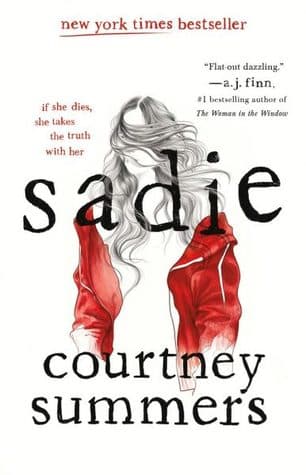
- Sadie
Courtney Summers
4.1 (64k) average on GoodreadsThrillerYoung adult thriller with a mystery at its core and a compelling, dark atmosphere.
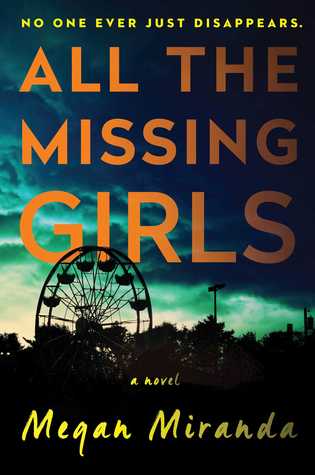
- All the Missing Girls
Megan Miranda
3.8 (131k) average on GoodreadsThrillerMiranda's "All the Missing Girls" also employs a reverse chronological narrative to uncover a mystery, focusing on a protagonist's fragmented memories. While both books effectively use this technique to build suspense, Miranda's novel often provides a more intricate and emotionally resonant exploration of trauma and the protagonist's internal struggle, allowing for a deeper connection to the character's journey. "The Best Lies" is strong in its psychological tension but sometimes prioritizes plot reveals over sustained emotional depth found in Miranda's work.
- Angels & Demons
Dan Brown
3.9 (2.7M) average on GoodreadsThrillerA Harvard symbologist races through Rome's ancient sites, deciphering cryptic clues to unmask the Illuminati and stop a vengeful plot to destroy the Vatican with a stolen antimatter weapon.
- The Girl on the Train
Paula Hawkins
3.9 (2.1M) average on GoodreadsThrillerA woman’s fascination with a seemingly perfect couple she watches from her daily train commute leads her into a dark investigation when she witnesses something that shatters their idyllic image.
- The Da Vinci Code
Dan Brown
3.9 (1.9M) average on GoodreadsThrillerA symbologist and a cryptologist race through European landmarks, deciphering ancient codes and uncovering a conspiracy that could rewrite the foundations of Christianity.




Enjoyed the summary?
A summary gives you the shape of the book. The book itself has the detail, the examples and the voice.
Find The Best Lies on AmazonAs an Amazon Associate, BookBrief earns from qualifying purchases. How we're funded