
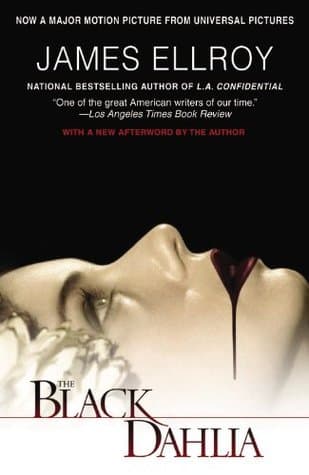
Synopsis
Covers the whole plot, including the ending.
- Difficulty
- Hard
- Pacing
- Moderate
- Mood
- Dark, Gritty, Obsessive, Nihilistic, Bleak
- Read it if
- You enjoy gritty, hard-boiled detective stories, are fascinated by unsolved historical mysteries, or appreciate a dark, psychological exploration of obsession and corruption in post-war Los Angeles.
- Skip it if
- You prefer straightforward mysteries, are sensitive to graphic violence and disturbing themes, or dislike morally ambiguous characters and complex, non-linear narratives.
The Black Dahlia Plot Summary
Covers the whole plot, including the ending.
The Discovery of the Black Dahlia
On January 15, 1947, a woman's body is found in a vacant lot in Leimert Park, Los Angeles. The victim is Elizabeth Short, a 22-year-old actress known as 'The Black Dahlia.' LAPD detectives Dwight 'Bucky' Bleichert and Leland 'Lee' Blanchard, called 'Mr. Fire' and 'Mr. Ice' from their boxing past, are assigned to the Warrants Squad but get involved in the murder investigation. The crime's nature and Short's mysterious past draw public attention and create pressure on the police to find her killer.
Bucky and Lee's Obsession
Bucky and Lee, already connected by boxing and their love for Kay Lake, find their lives increasingly taken over by the Dahlia case. Bucky starts to project his own dark fantasies and past problems onto Elizabeth Short, becoming obsessed with her image and life. He looks into her background, interviewing people she knew and trying to reconstruct her last days, finding a pattern of moving around, small-time hustling, and wanting fame. Lee also becomes consumed by the case, which affects his unstable mental state and relationship with Kay.
The Investigation's Dark Turns
The official LAPD investigation into the Black Dahlia murder has false leads, media coverage, and internal politics. Bucky, unhappy with the official process, starts his own investigation. He explores the seedy parts of Hollywood and Los Angeles, meeting morally unclear characters like prostitutes, small-time criminals, and corrupt officials. He finds evidence of Elizabeth Short's links to various people and parties, suggesting a more complex and dangerous life than first thought. This independent search separates Bucky from official police efforts and deepens his personal involvement.
Lee's Disappearance and Bucky's Descent
Lee Blanchard, showing signs of severe psychological distress from the Dahlia case and his past, suddenly disappears. His disappearance becomes another problem for the LAPD and a personal pain for Bucky and Kay. While looking for Lee, Bucky continues to uncover details of Elizabeth Short's life, finding more connections between her and the same dark groups Lee was investigating. He finds that Lee also had a disturbing obsession with the Dahlia, leading Bucky to think Lee's disappearance might be linked to the murder or its perpetrators, possibly even meaning Lee's involvement or death.
The Sprague Family Connection
Bucky's investigation leads him to the wealthy Sprague family, specifically Emmet Sprague, a real estate developer, and his daughters, Madeleine and Lorna. He finds that Elizabeth Short had a sexual relationship with Emmet Sprague and was involved with his family's secrets. Madeleine Sprague, a beautiful socialite, looks like Elizabeth Short, which bothers Bucky and increases his obsession. As Bucky looks deeper, he finds a history of incest, mental illness, and depravity in the Sprague family, showing a possible reason for Short's murder tied to their desire to protect their reputation and secrets.
Madeleine's Confession and Deception
Madeleine Sprague, in several manipulative meetings, tells Bucky that she killed Elizabeth Short during a fit of jealousy and mental instability. This was caused by her incestuous relationship with her father, Emmet Sprague, and her mother's role in the family's problems. She says she disfigured Short to copy a traumatic event from her own childhood. Bucky, despite her confession, senses a deeper deception. He thinks Madeleine is covering for someone else or is part of a larger plan, and that the Dahlia case's true horror goes beyond her guilt. He continues to search for the full truth.
The Truth About Lee and Kay
Bucky eventually finds out about Lee Blanchard's past: Lee had molested Kay Lake when she was a child. Kay, traumatized, went to live with her sister, but Lee, feeling guilty and with a twisted love, dedicated his life to protecting her and making amends, even marrying her. This news destroys Bucky's view of his best friend and his relationship with Kay. He realizes that Lee's obsession with Elizabeth Short was partly a projection of his guilt and an attempt to find redemption by saving another 'damaged' woman, which led him to self-destruction and his death.
The Real Killer Revealed
Bucky's investigation leads him to the real killer: Ramona Sprague, Madeleine and Lorna's mother. Ramona, driven by mental illness, sadism, and a desire to protect the family's incestuous secrets, murdered Elizabeth Short. She disfigured Short's body, recreating a traumatic event from her own past where her face was cut by a pimp. Ramona reveals that Madeleine's confession was a lie to protect her mother, and Emmet Sprague helped cover up the crime. Bucky confronts Ramona, who admits to the murder and her motives, confirming the Sprague family's pathology.
The Final Confrontation and Aftermath
In a violent fight, Ramona Sprague is killed. Bucky, having found the full truth, deals with the aftermath. The police, wanting to close the case, accept a false story, and the disturbing details of the Sprague family's involvement are mostly hidden. Bucky's life is changed by his time in the Black Dahlia's world. He is left with the trauma of the case, the loss of Lee, his friendship's broken illusion, and the knowledge of Kay's childhood abuse. He leaves Los Angeles, forever marked by the darkness he found, unable to fully escape the Dahlia's shadow.
The Black Dahlia Characters
Dwight 'Bucky' Bleichert
Protagonist
A former boxer turned LAPD detective, obsessed with the Black Dahlia case.
Bucky Bleichert is the novel's narrator and protagonist, a former professional boxer known as 'Mr. Ice' for his cool demeanor in the ring. He is a complex character, driven by a deep-seated need to uncover the truth, but also susceptible to his own dark desires and projections. His obsession with Elizabeth Short stems from a combination of professional duty, personal identification with her perceived vulnerability, and a latent sadomasochistic streak. He is intelligent and tenacious, but his moral compass becomes increasingly skewed as he delves deeper into the depravity surrounding the case. His relationship with Kay Lake is complicated by his friendship with Lee and his growing fixation on the Dahlia.
Relationships: Lee Blanchard (Best friend, boxing partner, rival); Kay Lake (Lover, conflicted by her past with Lee); Elizabeth Short (Obsessive fixation, symbolic figure)
Leland 'Lee' Blanchard
Supporting
Bucky's partner and best friend, equally obsessed with the Dahlia, hiding a dark past.
Lee Blanchard, known as 'Mr. Fire', is Bucky's partner and best friend. He is a charismatic but deeply troubled man, haunted by a secret past involving the molestation of a young Kay Lake. His initial involvement in the Dahlia case is professional, but it quickly devolves into a personal obsession, mirroring and amplifying his own guilt and desire for redemption. He sees Elizabeth Short as a victim he failed to protect, and his erratic behavior and eventual disappearance are direct consequences of his psychological unraveling. His character embodies the idea of a good man consumed by his demons and the pervasive corruption around him.
Relationships: Dwight 'Bucky' Bleichert (Best friend, partner); Kay Lake (Wife, victim of his past abuse, object of his redemption); Elizabeth Short (Obsessive fixation, symbolic figure)
Kay Lake
Supporting
Lee's wife and Bucky's lover, a survivor of childhood trauma.
Kay Lake is a complex woman caught between Bucky and Lee. She is a survivor of childhood sexual abuse at the hands of Lee Blanchard, a trauma she has tried to bury but which profoundly shapes her relationships and emotional life. She genuinely loves both men, but her loyalty is constantly tested by their shared obsession with the Black Dahlia and their own destructive paths. She represents the innocent victim corrupted by the dark underbelly of Los Angeles, and her presence highlights the novel's themes of abuse, trauma, and the impossibility of true escape from one's past.
Relationships: Dwight 'Bucky' Bleichert (Lover); Leland 'Lee' Blanchard (Husband, abuser, protector)
Elizabeth Short ('The Black Dahlia')
Central Figure (Posthumous)
The beautiful, murdered aspiring actress whose death fuels the narrative.
Elizabeth Short is the titular 'Black Dahlia', a 22-year-old aspiring actress whose brutal murder drives the entire plot. Though she is dead from the beginning, her presence permeates every page. She is portrayed as a transient, somewhat naive but also manipulative young woman who sought fame and excitement in Hollywood. Her life was a series of small-time hustles, sexual encounters, and broken dreams. She represents both the victim of a heinous crime and a symbol of the dark allure and destructive potential of Hollywood's underbelly. Her mystery and the grotesque nature of her death become a canvas onto which the living characters project their own desires, fears, and perversions.
Relationships: Dwight 'Bucky' Bleichert (Object of obsession); Leland 'Lee' Blanchard (Object of obsession); Madeleine Sprague (Acquaintance, rival); Emmet Sprague (Sexual partner)
Madeleine Sprague
Supporting
A wealthy, enigmatic socialite with a striking resemblance to Elizabeth Short.
Madeleine Sprague is the beautiful, manipulative, and deeply disturbed daughter of Emmet and Ramona Sprague. She bears an uncanny resemblance to Elizabeth Short, which Bucky finds both alluring and unsettling. She is a master of deception, using her beauty and intelligence to manipulate those around her, including Bucky. Her character embodies the corrupting influence of wealth and privilege, hiding profound family dysfunction and mental illness. She plays a crucial role in misdirecting Bucky's investigation, driven by a twisted loyalty to her family's dark secrets.
Relationships: Dwight 'Bucky' Bleichert (Lover, object of manipulation); Emmet Sprague (Father, incestuous partner); Ramona Sprague (Mother, true killer); Elizabeth Short (Acquaintance, rival, victim of family secrets)
Emmet Sprague
Supporting
A powerful, corrupt real estate magnate, patriarch of the Sprague family.
Emmet Sprague is the wealthy and influential patriarch of the Sprague family, a man who wields considerable power in Los Angeles. He is a deeply corrupt and morally depraved individual, complicit in the cover-up of his family's dark secrets, including incest and murder. He had a sexual relationship with Elizabeth Short, further entangling her in his family's web. Emmet represents the pervasive corruption and moral decay that exists beneath the glamorous facade of post-war Hollywood, using his power to protect his family's reputation at any cost.
Relationships: Madeleine Sprague (Daughter, incestuous partner); Ramona Sprague (Wife, true killer); Elizabeth Short (Sexual partner)
Ramona Sprague
Antagonist
The mentally unstable matriarch of the Sprague family and the true killer of Elizabeth Short.
Ramona Sprague is the mentally ill and deeply disturbed matriarch of the Sprague family, and ultimately revealed as the true, sadistic killer of Elizabeth Short. Her character embodies extreme psychological trauma and a terrifying capacity for violence. Driven by a desire to protect her family's incestuous secrets and fueled by her own past trauma (having her face slashed by a pimp), she disfigured Short's body to recreate her own suffering. She is the ultimate symbol of the depravity Bucky uncovers, a hidden monster lurking beneath the veneer of high society.
Relationships: Emmet Sprague (Husband); Madeleine Sprague (Daughter, accomplice in cover-up); Elizabeth Short (Victim)
Lorna Sprague
Mentioned
The younger, unstable sister of Madeleine Sprague.
Lorna Sprague is Madeleine's younger sister, also a part of the dysfunctional Sprague family. While less prominent than Madeleine, her presence underscores the widespread mental illness and depravity within the family. She is portrayed as fragile and prone to breakdowns, a victim of her family's toxic environment. Her character serves to further illustrate the depth of the Sprague family's pathology and the pervasive nature of their secrets.
Relationships: Madeleine Sprague (Sister); Emmet Sprague (Father); Ramona Sprague (Mother)
Ellis Loew
Supporting
A powerful, corrupt District Attorney involved in the cover-up.
Ellis Loew is the District Attorney, a politically ambitious and morally flexible figure. He represents the corrupt arm of the justice system, more concerned with public image and political expediency than with true justice. He becomes complicit in the cover-up of the Black Dahlia murder, eager to close the case with a convenient narrative rather than expose the full, horrifying truth involving the powerful Sprague family. He exemplifies the institutional corruption that Bucky fights against.
Relationships: Dwight 'Bucky' Bleichert (Antagonistic professional relationship)
The Black Dahlia Themes
Obsession and Projection
The novel explores how Bucky and Lee project their psychological issues, past traumas, and dark fantasies onto Elizabeth Short. Short becomes a canvas for their desires and guilt. Bucky's fascination, his attempts to 'know' her through her belongings and imagined life, and Lee's quest to save a 'damaged' woman, show how their internal worlds combine with the tragedy. This theme highlights how finding truth can mix with personal problems.
“She was a cipher, a blank slate onto which we could all project our desires and our fears. We loved her, we hated her, we wanted to save her, we wanted to kill her. She was the perfect victim.”
The Corrupting Nature of Power and Wealth
Ellroy shows how wealth and power in post-war Los Angeles enable and hide moral decay. The Sprague family, with their money and influence, can commit horrific acts, including incest and murder, and then cover it up. Characters like Emmet Sprague and Ellis Loew show how the justice system and media can be used to protect the elite. This theme reveals the hypocrisy beneath Hollywood's glamorous facade, where money can buy freedom from punishment and silence.
“Money talks, and in this town, it screams. It screams out the truth, and then it screams out a lie, and the lie wins every time.”
Trauma and Its Legacy
Trauma, both personal and passed down through generations, is a theme. Kay Lake's childhood abuse by Lee, Lee's guilt and self-destructive actions, Bucky's projection of his past, and the psychological damage in the Sprague family (especially Ramona's history and Madeleine's incestuous relationship with her father) all show how past wounds affect current actions. The novel suggests that trauma is cyclical and often leads to more violence and abuse, making true healing difficult.
“The past is a festering wound, and sometimes, it bleeds all over the present.”
The Illusion of Hollywood and the American Dream
The novel contrasts Hollywood's idealized image of dreams and opportunity with its dark, seedy side. Elizabeth Short, an aspiring actress, represents the broken American Dream, her search for fame ending in murder. The Sprague family's glamorous appearance hides incest and madness. Ellroy removes the romanticism, showing a world of prostitution, corruption, and desperate ambition, where innocence is exploited and dreams are crushed. This shows the true cost of chasing an illusion.
“Hollywood was a dream factory, but it also manufactured nightmares. And sometimes, the nightmares were real.”
Plot Devices & Literary Techniques
First-Person Noir Narration
Bucky Bleichert's subjective, cynical, and often unreliable voice.
The entire novel is narrated by Dwight 'Bucky' Bleichert in a hard-boiled, cynical, and highly subjective first-person voice. This device immerses the reader directly into Bucky's increasingly disturbed psyche, reflecting his obsession, paranoia, and moral ambiguity. The narration is characterized by short, clipped sentences, a detached yet emotionally charged tone, and frequent use of internal monologue, blurring the lines between objective reality and Bucky's warped perceptions. This style is quintessential noir, emphasizing the protagonist's descent into a morally corrupt world.
Doppelgängers and Doubles
Characters mirroring each other, blurring identities and motives.
The novel heavily utilizes the motif of doppelgängers and doubles. Elizabeth Short's striking resemblance to Madeleine Sprague is central to the plot, creating a disturbing psychological link for Bucky. Bucky and Lee themselves are presented as 'Mr. Ice' and 'Mr. Fire,' two sides of the same coin, sharing a boxing past, a lover, and an obsessive pursuit of the Dahlia. This device highlights themes of identity, projection, and the interchangeability of victims and perpetrators, suggesting a deeper, interconnected web of pathology where individuals reflect and amplify each other's darkness.
Grotesque Imagery and Body Horror
Graphic descriptions of violence and disfigurement to emphasize brutality and psychological impact.
Ellroy employs extremely graphic and visceral descriptions of Elizabeth Short's mutilated body and other acts of violence. This grotesque imagery serves not merely for shock value but to underscore the profound depravity of the crime and its psychological impact on the investigators, particularly Bucky. The detailed descriptions of dismemberment and torture force the reader to confront the raw horror, mirroring Bucky's own morbid fascination and descent into the dark recesses of human cruelty. It's a key element of the novel's dark, unflinching tone.
The Femme Fatale
A seductive, dangerous woman who leads the protagonist into peril.
Madeleine Sprague embodies the classic femme fatale archetype. She is beautiful, alluring, and sexually manipulative, drawing Bucky into her orbit with promises of information and intimacy, all while serving her own hidden agenda. Her resemblance to Elizabeth Short further blurs the lines between desire and danger for Bucky. She uses her charm and intelligence to misdirect the investigation and protect her family's secrets, representing the seductive yet ultimately destructive power of women in the noir landscape, leading the protagonist deeper into a web of deceit and peril.
The Black Dahlia Quotes
“She was the queen of the night, and she was going to be my queen, too.”
“Some men are born to be policemen, some men are born to be criminals. I was born to be both.”
“The city was a whore, and I was her pimp. I knew all her secrets, and she knew all of mine.”
“Death was a woman, and she was beautiful. She had to be, for so many men to follow her.”
“Lies were like a second skin in this town. Everybody wore them, and nobody knew who they really were underneath.”
“He was a man who lived on the edge of a scream, and he was always about to fall off.”
“The past was a beast, and it was always hungry. It never forgot, and it never forgave.”
“We were all just shadows in the City of Angels, trying to find a little light before the darkness swallowed us whole.”
“Justice was a word the politicians used. Revenge was what people really wanted.”
“The truth was a monster, and it was always hiding in plain sight.”
“Every beautiful thing had a dark secret, and every dark secret had a price.”
“Sometimes you had to become the monster to fight the monsters.”
“She was the dream that died, and I was the one who had to bury her.”
“The past is a putrid thing, and it clings to you like a shroud.”
Quiz
10 questions on the plot and the characters. Each answer comes with a short explanation.
Question 1
What was the initial discovery location of Elizabeth Short's body?
- Griffith Park
- A vacant lot in Leimert Park
- Hollywood Hills
- Near the Hollywoodland sign
Show answer
B. A vacant lot in Leimert Park Elizabeth Short's body was discovered, cut in half and mutilated, in a vacant lot in Leimert Park, sparking the infamous Black Dahlia investigation.
Question 2
What is the relationship between Bucky Bleichert and Lee Blanchard at the beginning of the novel?
- They are estranged brothers
- They are rival detectives from different precincts
- They are friends, partners in the Warrants Squad, and rivals in love
- They are former boxing opponents turned colleagues
Show answer
C. They are friends, partners in the Warrants Squad, and rivals in love Bucky and Lee are established as close friends and partners in the LAPD's Warrants Squad, but their relationship is complicated by their shared romantic interest in Kay Lake.
Question 3
What nickname did Bucky and Lee earn early in their careers due to their boxing past?
- The Hammer Brothers
- Mr. Fire and Mr. Ice
- The Knockout Duo
- The Boxing Cops
Show answer
B. Mr. Fire and Mr. Ice Bucky 'Mr. Ice' Bleichert and Lee 'Mr. Fire' Blanchard earned their nicknames from their boxing days and contrasting personalities, which carried over into their police work.
Question 4
Who is Kay Lake?
- Elizabeth Short's sister
- A reporter covering the Dahlia case
- A woman loved by both Bucky and Lee
- A key witness in the investigation
Show answer
C. A woman loved by both Bucky and Lee Kay Lake is a central character who is romantically involved with both Bucky and Lee, creating a complex love triangle that deeply impacts their personal and professional lives.
Question 5
What is one of the primary themes explored in 'The Black Dahlia'?
- The triumph of justice over corruption
- The redemptive power of love
- The corrupting influence of obsession and the dark side of human nature
- The glamorous facade of postwar Hollywood
Show answer
C. The corrupting influence of obsession and the dark side of human nature The novel heavily explores the destructive nature of obsession, particularly Bucky and Lee's fixation on the Dahlia, and delves into the moral decay and psychological darkness within individuals and society.
Question 6
How does Elizabeth Short's past as an aspiring actress and call girl influence the investigation?
- It leads the police to suspect a rival studio executive
- It connects her to a vast network of powerful and corrupt individuals in Hollywood
- It suggests her murder was a random act of violence
- It provides a clear motive for a jilted lover
Show answer
B. It connects her to a vast network of powerful and corrupt individuals in Hollywood Elizabeth Short's past, particularly her involvement in the seedy underbelly of Hollywood as a call girl, exposes a web of corruption, perversion, and powerful figures who are implicated in or connected to her death.
Question 7
What significant event happens to Lee Blanchard during the course of the investigation?
- He successfully solves the case and receives a promotion
- He is transferred to a different city due to insubordination
- He disappears, seemingly consumed by his obsession with the Dahlia
- He marries Kay Lake and leaves the police force
Show answer
C. He disappears, seemingly consumed by his obsession with the Dahlia Lee Blanchard becomes increasingly unhinged and obsessed with the Dahlia case, eventually disappearing from the narrative, leaving Bucky to continue the investigation and deal with the fallout.
Question 8
What is the nature of Bucky Bleichert's evolving relationship with Elizabeth Short, the victim?
- He feels only professional detachment, focusing on the facts
- He develops a morbid fascination and psychological identification with her
- He initially knew her and feels guilt over her death
- He sees her as a symbol of all victims, driving his pursuit of justice
Show answer
B. He develops a morbid fascination and psychological identification with her Bucky becomes deeply and disturbingly obsessed with Elizabeth Short, delving into her past to the point of psychological identification, blurring the lines between investigator and victim, and experiencing vivid, often sexualized, fantasies about her.
Question 9
Who is the true killer of Elizabeth Short, as revealed at the novel's climax?
- A deranged serial killer with no prior connection to Short
- Emmett Linscott, a powerful and corrupt real estate developer
- Ramona Sprague, with her father, George Tilden, complicit
- Lee Blanchard, in a fit of drug-induced madness
Show answer
C. Ramona Sprague, with her father, George Tilden, complicit The shocking truth is revealed that Ramona Sprague, a deeply disturbed woman who resembles Elizabeth Short, was the actual killer, with her father, George Tilden, complicit in covering up the crime and disposing of the body.
Question 10
What is the ultimate fate of Bucky Bleichert by the end of the novel?
- He achieves a sense of peace and closure, moving on with Kay Lake
- He is killed in the line of duty, bringing the case to a tragic end
- He is left profoundly scarred and morally compromised, having descended into madness himself
- He exposes the full extent of Hollywood corruption and becomes a hero
Show answer
C. He is left profoundly scarred and morally compromised, having descended into madness himself Bucky Bleichert is left a broken man, having faced the darkest aspects of humanity and his own psyche. He is morally compromised, deeply scarred by the horrors he uncovered, and far from achieving any true peace or redemption.
The Black Dahlia FAQ
What is 'The Black Dahlia' about?
'The Black Dahlia' by James Ellroy is a hardboiled detective novel set in post-WWII Los Angeles, following Warrants Squad detectives Bucky Bleichert and Lee Blanchard as they become obsessed with solving the brutal murder of aspiring actress Elizabeth Short, dubbed 'The Black Dahlia.' Their investigation plunges them into the city's corrupt underbelly, intertwining with their personal lives, rivalries, and deep psychological struggles.
Why should I read 'The Black Dahlia'?
You should read 'The Black Dahlia' for its intense, labyrinthine plot, its unflinching exploration of human depravity and obsession, and its atmospheric recreation of 1940s Los Angeles. Ellroy's distinctive prose style and complex character development make it a compelling, dark journey into the psychology of both the hunters and the hunted, offering a fictionalized yet deeply resonant take on a notorious real-life crime.
What is the background/setting of 'The Black Dahlia'?
The book is set in Los Angeles during the immediate post-World War II era, specifically 1947, a time of booming growth but also rampant corruption, moral decay, and a dark underside beneath the Hollywood glamour. The setting is crucial, depicting a city rife with mob influence, police brutality, and a stark contrast between public facade and private vice, which mirrors the characters' internal conflicts.
What writing style does the author use?
James Ellroy employs a distinctive, clipped, and often brutal prose style characterized by short, declarative sentences, slang, and a rapid-fire pace. His narration is gritty and unsentimental, often jumping between character perspectives and utilizing a hardboiled, noir sensibility that reflects the dark themes and the cynical worldview of his protagonists, Bucky Bleichert and Lee Blanchard.
What minor details add significant meaning?
The recurring motif of teeth and dental work, particularly Elizabeth Short's perfect teeth and the dental records used for identification, subtly links to the themes of superficiality and the hidden horrors beneath a polished exterior. Also, the detail of Elizabeth's 'perfect' yet ultimately unfulfilling pursuit of Hollywood fame highlights the deceptive allure of the dream factory.
What are some subtle foreshadowing moments?
Lee Blanchard's increasingly erratic behavior and his deep personal connection to the 'fixer' side of Hollywood subtly foreshadow his eventual breakdown and his own hidden involvement with the very darkness he's pursuing. Also, the early descriptions of Bucky's own buried trauma and his attraction to damaged women hint at his later, disturbing obsession with Elizabeth Short.
What unexpected character connections exist?
One of the most shocking connections is the intricate web linking Elizabeth Short to the wealthy Sprague family, particularly Emmet and Ramona Sprague, and their daughter Madeleine. Madeleine Sprague, who bears a striking resemblance to Elizabeth, becomes intertwined with Bucky and is revealed to have a deeply disturbed family history that directly connects to the Dahlia's murder and the broader corruption.
What are unspoken character motivations?
Bucky Bleichert's unspoken motivation for his obsession with the Dahlia case stems from his own childhood trauma and his need to 'rescue' or understand damaged women, projecting his past onto Elizabeth. Lee Blanchard's intense drive is fueled by a desire for redemption and to confront the demons of his own past, which are disturbingly similar to the victim's circumstances.
What psychological complexities do characters exhibit?
Bucky Bleichert exhibits a complex mix of moral ambiguity, self-loathing, and a disturbing fascination with death and violence, bordering on necrophilia in his obsession with Elizabeth. Lee Blanchard struggles with deep-seated anger, a Messiah complex, and a destructive need to control, leading him to make increasingly reckless and morally compromising decisions.
What are the major emotional turning points?
A major emotional turning point is when Bucky discovers Lee's true, disturbing connection to Elizabeth Short and his own role in her final days, shattering Bucky's idealized view of his partner. Another is Bucky's realization of Madeleine Sprague's profound psychological damage and her family's culpability, forcing him to confront the depths of depravity he's been uncovering.
How do relationship dynamics evolve?
The relationship between Bucky and Lee, initially a bond of fraternal rivalry and respect, devolves into suspicion and betrayal as the Dahlia case exposes their individual darkness. Bucky's relationship with Kay Lake, initially a love triangle with Lee, transforms into a complex, often toxic bond marked by shared trauma and his increasing emotional detachment, as he becomes consumed by the case.
Which parts remain ambiguous or open-ended?
While the killer is ultimately revealed, the extent of the institutional corruption and the full scope of complicity among various powerful figures remain somewhat ambiguous, suggesting a pervasive evil beyond just one individual. The precise nature of Elizabeth Short's final hours and her own motivations leading up to her death also retain a degree of mystery, despite the investigation's findings.
What are controversial scenes or decisions?
The scene depicting Bucky's disturbing, almost necrophilic obsession with Elizabeth Short's autopsy photos and his subsequent dreams is highly controversial, pushing the boundaries of psychological horror. Also, the decision by various characters, including police, to cover up or manipulate evidence for their own ends, rather than pursuing pure justice, is a morally controversial aspect of the plot.
The Black Dahlia ending explained: how it ends & what it means
The novel concludes with Bucky Bleichert uncovering the true killer: Ramona Sprague, Madeleine's mother, who murdered Elizabeth Short in a fit of rage tied to her own disturbed past and sexual proclivities, orchestrated by her husband Emmet. The ending signifies the triumph of pervasive corruption and personal demons over justice, as Bucky, instead of exposing everything, chooses to protect Madeleine and exact a twisted form of revenge, suggesting that the pursuit of truth often leads to further moral compromise and a perpetuation of darkness.
About the author

Lee Earle "James" Ellroy is an American crime fiction writer and essayist. Ellroy has become known for a telegrammatic prose style in his most recent work, wherein he frequently omits connecting words and uses only short, staccato sentences, and in particular for the novels The Black Dahlia (1987) and L.A. Confidential (1990).
Similar books
- The Big Sleep
Raymond Chandler
4.0 (126k) average on GoodreadsThrillerClassic hard-boiled detective fiction set in a morally ambiguous Los Angeles, though Ellroy is much darker.
- Angels & Demons
Dan Brown
3.9 (2.7M) average on GoodreadsThrillerA Harvard symbologist races through Rome's ancient sites, deciphering cryptic clues to unmask the Illuminati and stop a vengeful plot to destroy the Vatican with a stolen antimatter weapon.
- Gone Girl
Gillian Flynn
4.1 (2.3M) average on GoodreadsThrillerA wife's sudden disappearance on her fifth anniversary reveals a web of lies and psychological warfare, exposing the secrets within a seemingly perfect marriage.
- The Girl on the Train
Paula Hawkins
3.9 (2.1M) average on GoodreadsThrillerA woman’s fascination with a seemingly perfect couple she watches from her daily train commute leads her into a dark investigation when she witnesses something that shatters their idyllic image.
- The Da Vinci Code
Dan Brown
3.9 (1.9M) average on GoodreadsThrillerA symbologist and a cryptologist race through European landmarks, deciphering ancient codes and uncovering a conspiracy that could rewrite the foundations of Christianity.
- The Guest List
Lucy Foley
3.8 (1.3M) average on GoodreadsThrillerOn a remote Irish island, a glamorous wedding descends into a deadly whodunnit when a guest is found murdered, trapping everyone with their secrets as a storm rages.





Enjoyed the summary?
A summary gives you the shape of the book. The book itself has the detail, the examples and the voice.
Find The Black Dahlia on AmazonAs an Amazon Associate, BookBrief earns from qualifying purchases. How we're funded