
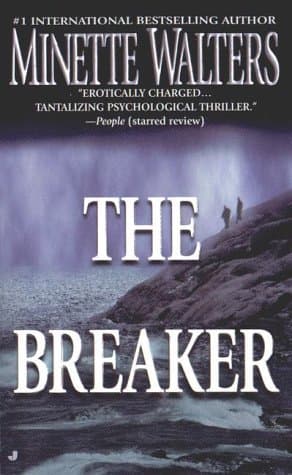
Synopsis
Covers the whole plot, including the ending.
- Difficulty
- Medium
- Pacing
- Moderate
- Mood
- Suspenseful, Gritty, Psychological, Unsettling
- Read it if
- You enjoy intricate police procedurals with psychological depth and a slow-burn revelation of truth.
- Skip it if
- You prefer fast-paced, action-heavy thrillers or find depictions of child trauma distressing.
The Breaker Plot Summary
Covers the whole plot, including the ending.
The Discovery at Ringstead Bay
The novel opens with the discovery of the naked, beaten body of a young woman, Jenny Breaker, washed ashore at Ringstead Bay on the Dorset coast. Her car, a red Volvo, is found abandoned nearby. At the same time, twenty miles away in Weymouth, a traumatized three-year-old girl, Joanna, is found alone on a bus. Joanna is Jenny Breaker's daughter, and her discovery starts a major police investigation led by Detective Inspector Ricky Savidge. The first goal is to identify the victim and understand how she and her daughter were separated and how Jenny died. Joanna, because of her trauma, cannot speak clearly about what happened.
Initial Suspects and Misdirection
DI Savidge and his team begin by looking into Jenny Breaker's past. They discover she had a troubled history, having left her husband, Stephen Breaker, a vicar, just weeks before her death. The police also quickly identify a local eccentric, Patrick O'Keefe, known for his reclusive life and obsession with pornography, as an early person of interest. O'Keefe lives near Ringstead Bay and has a history of voyeurism and minor sexual offenses. His unusual behavior and proximity to the crime scene make him a prime suspect, drawing police attention for a significant period.
Joanna's Trauma and Recovered Memories
Joanna, placed in the care of social services, is deeply traumatized and at first unresponsive. Child psychologist Dr. Margaret Hammond works with her, patiently trying to help her process the events. Through play therapy and drawing, Joanna gradually begins to communicate fragmented memories. Her drawings and babblings often feature a 'red car' and a 'bad man' with 'red eyes' or a 'red face,' which the police at first interpret as a reference to Patrick O'Keefe, who has a ruddy complexion. These early, disjointed revelations prove important, though their interpretation is at first flawed.
The Shifting Focus to Stephen Breaker
As the investigation progresses, the evidence against Patrick O'Keefe weakens. Forensic analysis of his property yields no conclusive links to Jenny's murder. Meanwhile, DI Savidge's team begins to look deeper into Jenny's relationship with her estranged husband, Stephen Breaker. They learn about his controlling nature, his rigid religious beliefs, and the severe marital problems that led to Jenny leaving him. Stephen's calm, composed demeanor and his seemingly perfect public image as a vicar begin to raise suspicions, especially when inconsistencies in his alibi emerge.
Stephen's Calculated Deception
Stephen Breaker presents himself as a grieving husband and a man of God, gaining sympathy from his parishioners and the media. However, DI Savidge and Sergeant Judy Johnson find his emotional detachment and carefully constructed story unsettling. They discover that Stephen had been having an affair with a parishioner, Mrs. Dawson, and that Jenny had threatened to expose him, which would ruin his career. This motive provides a strong alternative to O'Keefe. Stephen's ability to maintain his facade while orchestrating a complex cover-up becomes clearer, challenging the police's initial assumptions.
The Significance of the Red Volvo
The red Volvo, Jenny Breaker's car, found near Ringstead Bay, becomes a critical piece of evidence. Forensic examinations reveal bloodstains and signs of a struggle within the vehicle. The police reconstruct the car's movements, establishing that it was driven by someone other than Jenny after her death. The car's location, seemingly abandoned, is analyzed for clues about how Jenny's body was transported to the beach. The car's presence links the crime scene to the wider movements of the perpetrator and becomes a key element in unraveling Stephen's planning and attempts to mislead the investigation.
Joanna's Breakthrough
Under Dr. Hammond's continued care, Joanna has a significant breakthrough. Her fragmented memories begin to form a clearer picture. She recalls being with her mother and father in the car, and a violent altercation. She identifies her father, Stephen, as the 'bad man' with the 'red face' – not due to a ruddy complexion, but from anger and exertion. She remembers him hitting her mother and then driving the car. These direct recollections from Joanna provide the strongest evidence yet against Stephen, supporting the police's growing suspicions and shifting the investigation's focus.
Stephen's Confession and the Truth Unveiled
Faced with Joanna's testimony, forensic evidence from the car, and the unraveling of his alibi and public persona, Stephen Breaker's carefully constructed facade finally crumbles. DI Savidge and Sergeant Johnson confront him with the overwhelming evidence, including the details from Joanna's recovered memories. Stephen, realizing he can no longer maintain his deception, confesses to murdering Jenny. He reveals that he killed her during an argument when she threatened to expose his affair and ruin his career. He then drove her body to Ringstead Bay, leaving Joanna abandoned to create a false trail.
The Aftermath and Justice
Following his confession, Stephen Breaker is arrested and charged with the murder of Jenny Breaker. The details of his calculated crime and his attempts to frame an innocent man and abandon his daughter shock the community. The novel concludes with the resolution of the criminal investigation, bringing a sense of justice for Jenny. Joanna's long-term recovery and future are still uncertain, but she is now safe and receiving the support she needs. The case shows how deceptive appearances can be and the devastating consequences of hidden domestic violence.
The Breaker Characters
Jenny Breaker
Victim
The murdered woman whose death sets off the investigation.
Jenny Breaker is portrayed primarily through the memories and accounts of others, as she is dead at the outset of the novel. She was a young mother who had recently left her controlling vicar husband, Stephen. She had a difficult relationship with her family and was struggling to establish independence. Her decision to leave Stephen and her threat to expose his affair ultimately led to her murder. She is characterized as strong-willed, but also vulnerable and seeking a better life for herself and her daughter.
Relationships: Stephen Breaker (Husband, killer, controlling); Joanna Breaker (Daughter)
Stephen Breaker
Antagonist
A respected vicar who is secretly a manipulative and violent killer.
Stephen Breaker is a seemingly pious and respected Anglican vicar, known for his calm demeanor and community involvement. Beneath this facade, he is a deeply controlling, manipulative, and ultimately violent man. He is driven by a desire to maintain his public image and career, viewing Jenny as an obstacle to his ambitions. His religious beliefs are twisted to justify his actions and control over his family. He meticulously plans Jenny's murder and attempts to frame Patrick O'Keefe, showing a chilling lack of remorse.
Relationships: Jenny Breaker (Wife, victim); Joanna Breaker (Daughter); Mrs. Dawson (Parishioner, mistress)
Detective Inspector Ricky Savidge
Protagonist
The lead detective, persistent and insightful, who uncovers the truth.
DI Ricky Savidge is the lead investigator on Jenny Breaker's murder. He is a seasoned detective, initially prone to following obvious leads but ultimately guided by a strong sense of justice and an ability to see beyond superficial appearances. He is persistent, meticulous, and increasingly suspicious of Stephen Breaker's composure. Savidge builds a strong rapport with his team, particularly Sergeant Judy Johnson, and is instrumental in piecing together the complex puzzle of the crime.
Relationships: Sergeant Judy Johnson (Colleague, trusted subordinate); Dr. Margaret Hammond (Professional collaborator)
Sergeant Judy Johnson
Supporting
Savidge's perceptive and empathetic second-in-command.
Sergeant Judy Johnson is DI Savidge's capable and observant second-in-command. She often provides a crucial female perspective on the case, particularly regarding the dynamics of domestic violence and the victim's perspective. She is empathetic towards Joanna and Jenny, and her insights often help Savidge to consider alternative theories and challenge initial assumptions. Johnson is practical, intelligent, and a loyal member of the investigative team, playing a key role in interviewing witnesses and gathering evidence.
Relationships: Detective Inspector Ricky Savidge (Colleague, superior)
Joanna Breaker
Supporting
Jenny's traumatized three-year-old daughter, a key witness to the murder.
Joanna is the three-year-old daughter of Jenny and Stephen Breaker. She is found abandoned and deeply traumatized after witnessing her mother's murder. Her inability to communicate initially hinders the investigation, but through the patient work of Dr. Hammond, her fragmented memories become the most crucial evidence against her father. Joanna is vulnerable but resilient, and her journey to recovery is a central emotional thread of the story, highlighting the profound impact of domestic violence on children.
Relationships: Jenny Breaker (Mother, victim); Stephen Breaker (Father, killer); Dr. Margaret Hammond (Therapist, caregiver)
Patrick O'Keefe
Mentioned
A reclusive loner initially suspected of the murder.
Patrick O'Keefe is a reclusive, socially awkward man who lives near Ringstead Bay. He has a history of voyeurism and an obsession with pornography, making him an easy and obvious initial suspect for the police. He is portrayed as an outsider, misunderstood and judged by society. While he is innocent of Jenny's murder, his presence in the narrative serves to highlight the dangers of prejudgment and the ease with which society can scapegoat those who are different.
Dr. Margaret Hammond
Supporting
The child psychologist who helps Joanna recover her memories.
Dr. Margaret Hammond is a compassionate and skilled child psychologist tasked with helping Joanna process her trauma. She uses play therapy and patient interaction to slowly draw out Joanna's suppressed memories of the murder. Her expertise is critical to the investigation, as Joanna's testimony proves to be the turning point in identifying Stephen Breaker as the killer. Dr. Hammond acts as an advocate for Joanna's well-being and a vital link between the child's fragmented world and the police investigation.
Relationships: Joanna Breaker (Patient); Detective Inspector Ricky Savidge (Professional collaborator)
The Breaker Themes
The Deceptiveness of Appearances
This theme is central to 'The Breaker,' shown by Stephen Breaker, the outwardly respected vicar who is secretly a violent murderer. His calm, pious demeanor hides a controlling and manipulative personality, making it difficult for initial investigators and the community to suspect him. The novel contrasts his public image with the reality of his domestic abuse and calculated crime, showing how easily evil can hide behind a respectable appearance. Patrick O'Keefe, the initial suspect, also fits this theme; his 'creepy' exterior hides his innocence, showing how easily people are judged by their surface.
“It was always the quiet ones, wasn’t it? The ones who seemed to have it all together, the ones you’d least suspect.”
Domestic Violence and Control
The novel explores the nature of domestic violence, not just physical but also psychological and emotional control. Stephen Breaker's relationship with Jenny is marked by his rigid expectations, his need for dominance, and his emotional manipulation. Jenny's murder is the tragic outcome of this abusive dynamic. The story shows how victims often feel trapped and how hard it is to escape such relationships, and how abusers can maintain a 'perfect' public image while harming others in private. Joanna's trauma further shows the damage of domestic abuse.
“He didn’t just want to control her body, he wanted to control her mind, her very being.”
The Nature of Truth and Memory
The search for truth is a core element, especially through Joanna's traumatized memory. Her fragmented recollections – the 'red car,' the 'bad man with red eyes' – at first mislead the police but eventually become the key to solving the crime. The novel shows how fragile and reconstructive memory is, especially in trauma, and the painstaking process required to uncover it. It also explores how different people's 'truths' (Stephen's lies, O'Keefe's perceived guilt, the police's evolving theories) clash until the objective truth is finally revealed.
“The truth, like a shard of glass, was always there, waiting to be found, no matter how deeply buried.”
Justice and Social Responsibility
The novel addresses justice, not just as a legal outcome but as a moral need. DI Savidge and his team are driven to bring Jenny's killer to account and to protect Joanna. It also touches on social responsibility, particularly in how the community at first supports Stephen Breaker due to his position, and the shock and betrayal they later feel. The story questions society's readiness to believe those in positions of authority and the responsibility to look beyond the surface, even when it's uncomfortable.
“Justice isn't just about punishment, it's about exposing the lie and protecting the innocent.”
Plot Devices & Literary Techniques
Red Herring
Patrick O'Keefe is introduced to divert police attention from the true killer.
Patrick O'Keefe serves as a classic red herring. His reclusive nature, history of voyeurism, and proximity to the crime scene make him an obvious and convenient suspect. The police initially focus heavily on him, interpreting Joanna's vague descriptions ('red eyes,' 'bad man') as referring to him. This misdirection allows the true killer, Stephen Breaker, to maintain his facade and further his alibi, highlighting the dangers of preconceived notions and societal judgment of 'outsiders' and building suspense as the police chase a false lead.
Unreliable Narrator/Witness (Child Trauma)
Joanna's traumatized state makes her a crucial but initially unreliable witness.
Joanna, the three-year-old daughter, is the only witness to her mother's murder, but her severe trauma renders her unable to coherently communicate what she saw. Her fragmented memories and childlike interpretations ('red face' for anger, not complexion) initially confuse and mislead the police. This device creates suspense and highlights the challenges of child psychology in criminal investigations. Her gradual recovery of memory, facilitated by Dr. Hammond, becomes the critical turning point, demonstrating the power of suppressed trauma and the eventual triumph of truth.
Dramatic Irony
The reader is aware of Stephen's villainy before the police fully grasp it.
Dramatic irony is employed through Stephen Breaker's character. The reader quickly becomes aware of his calculating nature and manipulative tendencies, even as the police and the community continue to see him as a grieving, pious vicar. This creates tension as the reader watches DI Savidge and his team slowly piece together the truth, often interpreting evidence differently than the reader, who has insights into Stephen's true character. This device heightens the suspense and underscores the theme of deceptiveness of appearances.
Foreshadowing
Subtle clues and character traits hint at Stephen's true nature.
Throughout the narrative, there are subtle hints and character observations that foreshadow Stephen Breaker's guilt. His unnervingly calm demeanor, his carefully constructed alibis, his controlling personality as described by others, and early inconsistencies in his story all serve as foreshadowing. These clues, though initially overlooked or dismissed by some characters, build a sense of unease and prepare the reader for the eventual revelation of his true, murderous nature, rather than it coming as a complete surprise.
The Breaker Quotes
“The sea, once it casts its spell, holds one in its net of wonder forever.”
“People always think they know what's best for others, don't they? Even when they don't know the first thing about them.”
“Sometimes the truth is too messy for people to want to believe it.”
“It was amazing how quickly a life could unravel, how fragile the threads were that held it all together.”
“Fear was a powerful motivator, but it was also a blinding one.”
“The past was never truly buried; it just lay dormant, waiting for the right moment to surface.”
“Silence could be a weapon, as sharp and effective as any spoken word.”
“He had learned that the most dangerous lies were often those whispered by oneself.”
“There was a fine line between protecting someone and imprisoning them.”
“The weight of unspoken words could be heavier than any physical burden.”
“Justice, she thought, was often a matter of perspective, and rarely truly blind.”
“It was astonishing how much one could miss, simply by not looking closely enough.”
“Sometimes the greatest strength lay in knowing when to let go.”
Quiz
10 questions on the plot and the characters. Each answer comes with a short explanation.
Question 1
Where is the body of the woman, Jenny, initially discovered?
- In a fishing boat off the coast of Dorset
- Washed up on a deserted shore on the south coast of England
- Near her home in a suburban London park
- At the bottom of a cliff near her holiday cottage
Show answer
B. Washed up on a deserted shore on the south coast of England Jenny's body is found washed up on a deserted shore, initiating the police investigation.
Question 2
How far from her mother's body is Jenny's three-year-old daughter, Emily, discovered?
- 5 miles away
- 10 miles away
- 20 miles away
- Right next to her mother
Show answer
C. 20 miles away Emily is found alone and traumatized 20 miles from where her mother's body washed ashore.
Question 3
Initially, on whom do the police first focus their investigation?
- Jenny's husband, Mark
- A loner obsessed with pornography
- A suspicious neighbor
- A stranger seen near the beach
Show answer
B. A loner obsessed with pornography The police initially target a loner with a pornography obsession before shifting their focus.
Question 4
What is the name of Jenny's husband, who becomes a key suspect?
- David
- Paul
- Mark
- Richard
Show answer
C. Mark Mark is Jenny's husband, and the police's attention eventually shifts to him as a suspect.
Question 5
What is the primary condition of Jenny's daughter, Emily, when she is found?
- Physically unharmed but suffering from amnesia
- Severely injured from a fall
- Traumatized and apparently abandoned
- Sleeping peacefully in a car
Show answer
C. Traumatized and apparently abandoned Emily is found traumatized and alone, suggesting abandonment and the distressing events she witnessed.
Question 6
What type of crime is 'The Breaker' primarily classified as?
- Historical Fiction
- Romantic Comedy
- Thriller, Mystery
- Science Fiction
Show answer
C. Thriller, Mystery The book is described as a 'Thriller, Mystery' due to its suspenseful investigation into a murder.
Question 7
What is a recurring theme in the initial police investigation regarding the suspects?
- The focus on random acts of violence
- The tendency to initially suspect outsiders or 'loners'
- The immediate suspicion of family members
- The reliance on forensic evidence over witness testimony
Show answer
B. The tendency to initially suspect outsiders or 'loners' The police first focus on a loner before shifting to the husband, highlighting a common investigative pattern of looking at easy targets first.
Question 8
What specific detail about the initial 'loner' suspect is mentioned?
- He was a former colleague of Jenny's
- He lived in the same village as Jenny
- He was obsessed with pornography
- He had a history of violent crime
Show answer
C. He was obsessed with pornography The description specifically mentions the loner was 'obsessed with pornography,' which initially drew police attention.
Question 9
What does the shift in police attention from the loner to Jenny's husband imply about the nature of the crime?
- It suggests the crime was an act of terrorism.
- It suggests the crime was likely domestic or personal in nature.
- It suggests the loner provided an alibi for the husband.
- It suggests the police found a connection between the loner and the husband.
Show answer
B. It suggests the crime was likely domestic or personal in nature. Shifting focus to the husband often indicates that the police suspect the crime has a personal motive, rather than being a random act by a stranger.
Question 10
What is the significance of Emily being found 'alone and apparently abandoned'?
- It indicates Jenny likely died from natural causes.
- It suggests a deliberate act to leave her, potentially by the perpetrator.
- It means she wandered off after Jenny's accidental death.
- It implies she was kidnapped and then released.
Show answer
B. It suggests a deliberate act to leave her, potentially by the perpetrator. Emily's abandonment points towards the perpetrator intentionally leaving her, possibly to distance themselves from the crime or to cause further distress.
The Breaker FAQ
What is the central mystery that kicks off the plot of 'The Breaker'?
The core mystery begins with the discovery of a woman's body, Jenny Price, washed ashore on a desolate beach in Dorset, England. Simultaneously, her three-year-old daughter, Emily, is found traumatized and alone twenty miles away, sparking an urgent investigation into what happened to them both.
Who are the primary police investigators in charge of the case?
The investigation is led by Detective Inspector J.D. Smith, a seasoned officer, and his younger, more ambitious colleague, Sergeant Annie McGuire. Their differing approaches and personal lives often intersect with the professional demands of solving Jenny Price's murder.
What initial suspect does the police focus on, and why?
Initially, the police focus on a local recluse named Michael Deacon, who lives near the beach where Jenny's body was found and is known to be obsessed with pornography. His isolated lifestyle and unusual habits make him an immediate person of interest, fitting a common profile for such crimes.
How does the investigation shift focus from Michael Deacon to Jenny Price's husband, Mark?
The shift occurs as inconsistencies emerge in Mark Price's alibi and behavior, coupled with the lack of direct evidence linking Deacon to the crime. As more details about the Price family's troubled marriage and financial difficulties come to light, Mark becomes the prime suspect, suggesting a domestic motive.
What role does Emily, the three-year-old daughter, play in uncovering the truth?
Emily, though traumatized and unable to speak coherently about the events, provides crucial, albeit fragmented, clues through her behavior and occasional utterances. Her presence at the scene and subsequent discovery are central to the initial investigation and her eventual recovery is key to understanding the full picture.
What is the significance of the 'breaker' in the title?
The 'breaker' refers to the powerful waves that crash against the shore, symbolizing the destructive forces at play in the characters' lives and the shattering of their peace. It also alludes to the 'breaking' of trust and the emotional turmoil experienced by Jenny, Mark, and even the investigators as they confront the harsh realities of the case.
Are there any subtle hints about the true perpetrator's identity early in the novel?
Yes, the novel subtly hints at Mark's culpability through his overly controlled demeanor, his immediate defensiveness, and the way he manipulates information. His seemingly perfect facade begins to crack under police scrutiny, contrasting sharply with Michael Deacon's more obvious, but ultimately misleading, oddities.
What is the underlying connection between the isolated beach setting and the characters' emotional states?
The isolated beach setting mirrors the emotional isolation experienced by several characters, particularly Jenny Price in her marriage and Michael Deacon in his life. The bleak, exposed landscape reflects the rawness and vulnerability of human emotions laid bare by the crime, offering no hiding place from the truth.
How does the novel explore the concept of victim blaming, particularly concerning Jenny Price?
The novel subtly explores victim blaming through the initial assumptions made about Jenny's character and her marriage. As details of her life emerge, some characters and even the police briefly question her choices, but the narrative ultimately shifts to focus on Mark's abusive behavior, challenging these initial judgments.
What psychological factors contribute to Michael Deacon's initial portrayal as a strong suspect?
Michael Deacon's reclusive nature, social awkwardness, and reliance on pornography create a psychological profile that aligns with societal stereotypes of a predator. His inability to articulate himself effectively under pressure further solidifies police suspicions, even though he is ultimately innocent of the murder.
How does Sergeant Annie McGuire's personal life influence her professional conduct in the investigation?
Annie McGuire's own struggles with relationships and her ambition often make her more empathetic to certain aspects of the case, but also occasionally cloud her judgment. Her desire to prove herself and her observations about domestic dynamics influence her perspective as the investigation progresses, particularly regarding Mark Price.
What is the psychological impact of the crime on Detective Inspector J.D. Smith?
J.D. Smith, as a seasoned officer, carries the weight of past cases, and this murder further tests his resolve. The particularly brutal nature of Jenny's death and the involvement of a child, Emily, challenge his professional detachment, forcing him to confront the dark aspects of human nature and the toll his job takes.
Is Mark Price a purely evil character, or is there any nuance to his portrayal?
While Mark Price is ultimately revealed as the perpetrator and displays manipulative and abusive tendencies, the novel offers some nuance by showing his desperate attempts to maintain control and his fear of exposure. This doesn't excuse his actions, but it provides a glimpse into the psychological pressures that drive his dark deeds.
What message does 'The Breaker' convey about the nature of truth and deception?
The novel suggests that truth is often obscured by layers of deception, both intentional and unintentional, and that appearances can be profoundly misleading. It highlights how easily people can be fooled by outward charm and how difficult it is to uncover the dark realities hidden beneath the surface of seemingly normal lives.
How does the ending challenge or confirm reader expectations about justice?
The ending largely confirms reader expectations of justice being served, as the true perpetrator, Mark Price, is unmasked and faces consequences for his actions. However, it also leaves a lingering sense of the lasting trauma and the imperfect nature of resolution, especially for Emily, suggesting that justice doesn't always erase the pain.
What broader social commentary does the book offer regarding domestic abuse?
The book subtly critiques the hidden nature of domestic abuse, demonstrating how a seemingly respectable individual like Mark Price can perpetrate violence behind closed doors. It highlights the difficulty victims like Jenny face in escaping such situations and the societal blind spots that allow abusers to operate undetected for periods.
Could Michael Deacon be seen as a sympathetic character, despite his peculiarities?
Yes, Michael Deacon can be seen as a sympathetic character. Despite his eccentricities and initial suspicious behavior, he is ultimately a lonely and misunderstood individual who becomes a scapegoat due to societal prejudices. His innocence of the murder elicits empathy, highlighting the dangers of judging people based on appearances.
How does the pacing of the investigation contribute to the overall suspense of the novel?
The pacing of the investigation is deliberate and methodical, slowly peeling back layers of deception and red herrings, which significantly builds suspense. The gradual shift in focus from Michael Deacon to Mark Price keeps readers guessing and invested, mirroring the real-time challenges faced by the police.
About the author

Minette Walters is a British author known for her fiction, particularly in the crime and mystery genres. Among her works is "The Breaker," which showcases her skill in crafting intricate plots and engaging characters. Walters has received various accolades for her writing, including multiple awards for her contributions to the genre.
Similar books
- The Silent Patient
Alex Michaelides
4.1 (507k) average on GoodreadsThrillerFocuses on psychological trauma and a protagonist's silence as a key to solving a crime.
- The Cuckoo's Calling
Robert Galbraith
3.9 (482k) average on GoodreadsThrillerFeatures a detailed, character-driven police investigation with a methodical unraveling of clues.
- Gone Girl
Gillian Flynn
4.1 (2.3M) average on GoodreadsThrillerBoth novels explore marital deception and unreliable narrators. The Breaker is more character-driven, focusing on Joanna's internal journey and trauma recovery, while Gone Girl is more visceral, twist-laden, and revels in shocking revelations and overt manipulation. Walters builds suspense through methodical truth-uncovering; Flynn through jarring plot twists and dual perspectives.
- The Likeness
Tana French
4.0 (126k) average on GoodreadsThrillerWhile both delve into psychological aspects, The Breaker maintains a more traditional whodunit structure with psychological insights into perpetrator and victim. The Likeness deeply explores identity blurring and psychological immersion, with its protagonist adopting another's life. Walters focuses on uncovering a specific truth; French on the dissolution and reconstruction of identity.
- Angels & Demons
Dan Brown
3.9 (2.7M) average on GoodreadsThrillerA Harvard symbologist races through Rome's ancient sites, deciphering cryptic clues to unmask the Illuminati and stop a vengeful plot to destroy the Vatican with a stolen antimatter weapon.
- The Girl on the Train
Paula Hawkins
3.9 (2.1M) average on GoodreadsThrillerA woman’s fascination with a seemingly perfect couple she watches from her daily train commute leads her into a dark investigation when she witnesses something that shatters their idyllic image.





Enjoyed the summary?
A summary gives you the shape of the book. The book itself has the detail, the examples and the voice.
Find The Breaker on AmazonAs an Amazon Associate, BookBrief earns from qualifying purchases. How we're funded