
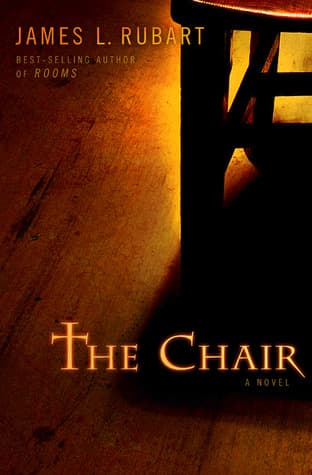
Synopsis
Covers the whole plot, including the ending.
- Difficulty
- Medium
- Pacing
- Moderate
- Mood
- Mysterious, Redemptive, Suspenseful, Hopeful
- Read it if
- You enjoy thrillers with a strong spiritual or miraculous element, and stories about redemption and confronting past mistakes.
- Skip it if
- You prefer secular thrillers or are uncomfortable with overt Christian themes and miracles.
The Chair Plot Summary
Covers the whole plot, including the ending.
The Mysterious Delivery
Corin Roscoe, owner of a Seattle antique shop, meets Elani, an eccentric elderly woman. She insists on giving him a simple, antique chair, claiming Jesus Christ made it and that Corin is meant to guard it. Corin, a skeptic burdened by past guilt, dismisses her claims as fantasy, but takes the chair, drawn by its quiet yet strong presence. Elani's mysterious manner and the chair's simple design leave an impression, despite his disbelief. He puts it in his shop, unaware of the changes it will bring to his life and others.
A Miraculous Healing
Two days after the chair arrives, a young boy named Jacob, who has a severe autoimmune disease, visits Corin's shop with his mother. Jacob, drawn to the chair, sits in it briefly. Soon after, his mother reports a surprising and immediate recovery from his illness, which doctors cannot explain. This event shakes Corin's cynical view. He starts to question everything, wondering if Elani's claims about the chair's origin and power might be true. The miracle sparks a desperate hope: could this chair heal the person whose life he ruined twelve years ago?
The Pastor's Pursuit
News of Jacob's healing spreads, reaching Pastor David Miller, the charismatic leader of a mega-church. Miller, wanting power and to revitalize his congregation, becomes obsessed with getting the chair, believing it will bring a spiritual revival and raise his status. He approaches Corin, at first appearing benevolent, but quickly shows his manipulative goals, trying to pressure Corin into giving up the artifact. Miller sees the chair as a tool for his ambitions, putting him on a collision course with Corin.
Seeking Answers
Overwhelmed by the events and Pastor Miller's growing pressure, Corin seeks help from Professor Graham, a history professor at a local university known for his knowledge of ancient artifacts and religious stories. Professor Graham, at first cautious, reveals he knows legends about a similar chair, said to have extraordinary properties and a divine origin. He becomes a reluctant ally, giving Corin historical context and warning him about the dangers of such powerful items. Their work together starts to uncover a deeper, older mystery about the chair than Corin imagined.
The Revelation of Guilt
Through flashbacks and internal thoughts, Corin's deep guilt becomes clear. Twelve years earlier, he was in a drunk driving accident that left his best friend, Rick, paralyzed. This tragedy has haunted Corin, leading to a life of isolation and a strong sense of unworthiness. His desperate hope for the chair comes from believing it might heal Rick, offering him a chance at redemption and forgiveness. This personal quest drives his determination to protect and understand the chair, even as danger grows around him.
Elani's Guidance
Elani, the mysterious woman who gave Corin the chair, reappears at times, her presence both comforting and unsettling. She offers cryptic advice, speaking of destiny, spiritual conflict, and the chair's true purpose, which she stresses is not just for physical healing but for deeper, spiritual restoration. She warns Corin that the chair's power comes with great responsibility and that many will try to exploit it. Elani's enigmatic guidance pushes Corin to look beyond the surface miracles and consider the artifact's profound spiritual meaning, solidifying his role as its guardian.
The Threat Escalates
Pastor Miller, increasingly desperate and frustrated by Corin's refusal to give up the chair, increases his tactics. He uses his influence to spread rumors, manipulate public opinion against Corin, and even makes veiled threats. Miller's ambition consumes him, turning him from a seemingly benevolent spiritual leader into a dangerous opponent. Corin finds himself fighting to protect not only the chair but also his reputation and safety, as Miller's pursuit becomes more relentless and morally questionable, showing how power and greed corrupt.
The Chair's True Power
Through his experiences and Elani's guidance, Corin begins to understand that the chair's power is not just about physical healing. Those who sit in it often have deep spiritual encounters, facing their deepest fears, regrets, and need for forgiveness. It sparks self-reflection and spiritual awakening. Corin himself, sitting in the chair, has visions and a deep sense of peace, prompting him to confront his own past and the unforgiveness he holds for himself. The chair helps connect to a divine presence, offering a path to spiritual healing and reconciliation.
Confrontation and Betrayal
The conflict between Corin and Pastor Miller ends in a tense confrontation. Miller, in a final attempt to take the chair, plans a public event to discredit Corin and force him to hand over the artifact. During this, Corin, guided by his spiritual insights, stands firm, explaining the chair's true message of humble faith and genuine repentance, contrasting it with Miller's self-serving ambition. The encounter exposes Miller's hypocrisy and tests Corin's resolve, forcing him to fully embrace his role as the chair's guardian and live by its principles.
The Path to Forgiveness
With a new understanding of forgiveness and grace, Corin finally finds the courage to visit Rick, his paralyzed friend. He confesses his deep regret for the accident and expresses his desire for Rick's forgiveness. While the chair does not immediately heal Rick physically, the conversation itself starts a deep emotional and spiritual healing for both men. Corin offers Rick the chance to sit in the chair, not as a guaranteed cure, but as an act of faith and an invitation to experience its spiritual comfort and peace. This act marks a significant step in Corin's journey to redemption.
A New Beginning
Corin, having gone through the challenges around the chair, accepts his role as its guardian. He understands that his purpose is not to exploit its power but to share its message of hope, healing, and forgiveness with those who truly seek it. He continues to run his antique shop, but now with a renewed sense of purpose, allowing people to encounter the chair in a quiet, unmanipulated setting. His journey changes him from a cynical, guilt-ridden man into someone who embodies faith and grace, finding peace in service and reconciliation.
The Chair Characters
Corin Roscoe
Protagonist
A cynical antique shop owner burdened by a tragic past.
Corin is a man in his late thirties, operating a small antique shop in Seattle. He carries immense guilt and self-loathing from a drunk driving accident twelve years prior that left his best friend, Rick, paralyzed. This past trauma has made him cynical and emotionally distant, skeptical of anything beyond the tangible. He initially dismisses the chair as a curiosity but becomes increasingly drawn into its mystery as miracles unfold around it. His driving force is a desperate hope that the chair might heal Rick, offering him a chance at redemption and forgiveness, both for himself and from his friend.
Relationships: Elani (Mysterious mentor and giver of the chair.); Rick (Childhood best friend, paralyzed due to Corin's past actions.); Professor Graham (Academic ally and source of historical knowledge.); Pastor David Miller (Antagonist, a manipulative rival for the chair.)
Elani
Supporting
The enigmatic elderly woman who gifts Corin the chair.
Elani is an elderly woman of mysterious origins, seemingly possessing an ancient wisdom and a deep spiritual connection. She appears and disappears throughout the narrative like a shadow, offering cryptic guidance and profound insights into the chair's true nature and Corin's destiny. She is the catalyst for the entire story, entrusting Corin with the chair and subtly guiding him through his journey of discovery and transformation. Her serene demeanor and unwavering faith serve as a counterpoint to Corin's initial skepticism, and she represents a divine messenger or guardian figure, hinting at a larger spiritual reality at play.
Relationships: Corin Roscoe (Mentor and spiritual guide.)
Pastor David Miller
Antagonist
A charismatic but manipulative mega-church pastor seeking the chair for personal gain.
Pastor David Miller is the ambitious and influential leader of a large, successful mega-church. He is charismatic and outwardly pious, but beneath the surface lies a deep-seated desire for power, recognition, and control. Upon hearing of the chair's miraculous properties, he becomes fixated on acquiring it, believing it will revitalize his church and elevate his personal status. He uses manipulation, pressure, and veiled threats to try and coerce Corin into handing over the chair, viewing it as a tool for his own agenda rather than an object of divine grace. He represents the corrupting influence of ambition within the guise of spirituality.
Relationships: Corin Roscoe (Rival for possession of the chair.)
Rick
Supporting
Corin's best friend, paralyzed in an accident caused by Corin.
Rick is Corin's childhood best friend, whose life was irrevocably altered by a drunk driving accident twelve years prior, leaving him paralyzed and confined to a wheelchair. He harbors deep-seated resentment and bitterness towards Corin, creating a chasm between them. Despite his physical limitations, Rick's emotional wounds are perhaps deeper. He represents the person Corin most desperately wants to heal and reconcile with, serving as the primary motivation for Corin's initial interest in the chair. His journey is one of struggling with unforgiveness and the weight of his own suffering.
Relationships: Corin Roscoe (Best friend, victim of Corin's past mistake.)
Professor Graham
Supporting
A history professor with knowledge of ancient artifacts and legends.
Professor Graham is an academic and historian specializing in ancient artifacts and religious lore. He is initially skeptical of Corin's claims but possesses a vast knowledge of historical legends surrounding objects of divine power. He becomes Corin's intellectual ally, providing crucial historical context and warnings about the dangers and responsibilities associated with possessing such an artifact. His research helps Corin understand the deeper implications of the chair and the forces at play. He is cautious and analytical, a voice of reason amidst the escalating supernatural events.
Relationships: Corin Roscoe (Academic consultant and ally.)
Jacob
Mentioned
The young boy miraculously healed by the chair.
Jacob is a young boy suffering from a severe autoimmune disease. He is the first person in the story to experience a miraculous physical healing after sitting in the chair. His recovery serves as the initial catalyst that convinces Corin of the chair's extraordinary power and sparks widespread interest, including that of Pastor Miller. Jacob represents innocence and the immediate, undeniable evidence of the chair's supernatural capabilities, pushing the narrative forward by forcing Corin and others to confront their disbelief.
Relationships: Corin Roscoe (Recipient of the chair's healing power, inspiring Corin.)
The Chair Themes
Redemption and Forgiveness
The main theme is Corin's journey to find redemption for his past actions and to receive forgiveness, both from Rick and from himself. The chair helps this process, not necessarily by physically healing Rick, but by forcing Corin to face his guilt and understand what grace truly means. Scenes where Corin struggles with his memories of the accident and his eventual, brave visit to Rick show this theme directly, proving that true healing often starts with the heart and a willingness to seek reconciliation.
“Forgiveness isn't for the other person, Corin. It's for you.”
Faith vs. Skepticism
The story explores the tension between Corin's initial skepticism and the unexplained events around the chair. Corin, a man of logic, must confront the limits of his understanding as miracles happen. This theme is further highlighted by the contrast between Corin's developing faith and Pastor Miller's manipulative, self-serving 'faith.' The book suggests that true faith is not about blind belief or exploiting power, but about humility, trust, and an open heart, as shown by the simple, genuine interactions with the chair versus Miller's grand, showy displays.
“Some things, Corin, you just have to believe to see.”
The Nature of Power
The novel explores how power corrupts and how different characters try to use it. Pastor Miller sees the chair as a way to gain more influence, fame, and control over his congregation, showing how spiritual power can be twisted for selfish ambition. In contrast, Corin learns that the chair's real power is not in performing grand miracles on demand, but in helping inner transformation, healing, and connection to the divine. This theme is clear in the growing conflict between Corin and Miller, where their different approaches to the chair's power are sharply contrasted.
“The chair is not a vending machine, Corin. It's an invitation.”
Spiritual vs. Physical Healing
While the chair first shows physical healing, the story ultimately stresses that its deeper purpose is spiritual. Jacob's physical healing starts things, but Corin's journey reveals that the chair primarily helps emotional and spiritual restoration – forgiving oneself, reconciling with others, and finding peace with God. The fact that Rick is not immediately physically healed by the chair emphasizes this, shifting focus from a miraculous cure to the deeper work of inner peace and reconciliation. Encounters with the chair often reveal inner truths and prompt self-reflection, leading to a more complete form of healing.
“The greatest healing is not always of the body, but of the soul.”
Plot Devices & Literary Techniques
The Miraculous Artifact (The Chair)
A seemingly ordinary chair with extraordinary, divine healing properties.
The chair itself is the central plot device. It acts as a MacGuffin, driving the plot forward through its mysterious origins and miraculous capabilities. Its power, initially perceived as purely physical healing, later reveals a deeper spiritual dimension, forcing characters to confront their beliefs and desires. The chair's unassuming appearance belies its profound influence, making it a symbol of humble power and divine presence. It serves as a catalyst for transformation, conflict, and the exploration of faith.
The Mysterious Mentor (Elani)
An enigmatic figure who guides the protagonist with cryptic wisdom.
Elani serves as a classic mysterious mentor figure. Her appearances are sporadic and her advice often cryptic, yet crucial to Corin's understanding of the chair and his own journey. She represents a connection to the spiritual realm and a source of ancient wisdom, pushing Corin beyond his rationalistic worldview. Her role is to guide, warn, and subtly steer Corin towards his destiny as the chair's guardian, without directly interfering, allowing him to discover truths for himself.
The Burden of Guilt
A protagonist's past mistake that fuels their present motivations.
Corin's profound guilt over the accident that paralyzed Rick serves as a powerful motivational plot device. This internal conflict drives his initial pursuit of the chair's healing power and informs his character arc. It provides a deep emotional core to his journey, making his quest for redemption relatable and compelling. The resolution of this guilt is central to his personal transformation and the overarching theme of forgiveness, giving his actions a strong personal stake.
The Antagonistic Rival
A character whose opposing desires create conflict and tension.
Pastor David Miller functions as the primary antagonistic rival. His desire to possess the chair for his own ambitious purposes creates direct conflict with Corin. Miller's manipulative tactics and escalating aggression provide external obstacles for Corin, pushing him to defend the chair and articulate its true meaning. This rivalry not only creates tension but also serves to highlight the contrasting values of genuine faith versus self-serving ambition.
The Chair Quotes
“The chair was more than just a piece of furniture; it was a doorway, a conduit to possibilities he hadn't dared to dream of.”
“Fear can be a powerful motivator, but it’s a terrible master.”
“Some doors are meant to be opened, even if you don't know what's on the other side.”
“The greatest battles are often fought not in the world outside, but within the confines of our own minds.”
“Truth, like light, can be blinding if you've been living in the dark for too long.”
“What if the very thing you fear losing is the key to everything you've ever wanted?”
“Sometimes the most profound changes begin with the simplest act of sitting down.”
“The past isn't just something that happened; it's a living, breathing part of who you are, shaping every step you take.”
“Every choice you make echoes through time, creating ripples you may never see.”
“The real magic isn't in the object itself, but in what it reveals about the heart that holds it.”
“Even in the deepest shadows, a flicker of hope can ignite a fire.”
“Forgiveness isn't for the other person; it's the key that unlocks your own prison.”
“The universe doesn't always give you what you want, but it always gives you what you need to grow.”
“Sometimes, the only way out is through the very thing you've been avoiding.”
Quiz
10 questions on the plot and the characters. Each answer comes with a short explanation.
Question 1
What is Corin Roscoe's profession at the beginning of the story?
- Mega-church pastor
- College history professor
- Antiques store owner
- Carpenter
Show answer
C. Antiques store owner Corin Roscoe owns an antiques store, where the elderly lady brings him the chair.
Question 2
What prompts Corin to stop scoffing at the idea of the chair being made by Jesus?
- The elderly lady provides definitive proof of its origin.
- A young boy is miraculously healed two days after sitting in it.
- A college professor confirms the chair's historical significance.
- He experiences a personal spiritual awakening.
Show answer
B. A young boy is miraculously healed two days after sitting in it. Corin's disbelief is challenged when a young boy is miraculously healed shortly after interacting with the chair.
Question 3
What is Corin's primary motivation for seeking the truth about the chair and its powers?
- To become famous and wealthy from the chair's healing abilities.
- To heal the person whose life he destroyed twelve years ago.
- To prove the mega-church pastor wrong about his intentions.
- To understand the mysterious woman's true identity.
Show answer
B. To heal the person whose life he destroyed twelve years ago. Corin's main drive is the hope that the chair can heal someone he harmed in the past.
Question 4
Who does Corin turn to for help in understanding the legend of the chair?
- The mega-church pastor
- The mysterious elderly woman
- A college history professor
- A local priest
Show answer
C. A college history professor He seeks out a college history professor for his knowledge regarding the chair's legend.
Question 5
What is one of the central themes highlighted by the book's acclaim?
- The dangers of religious fanaticism.
- The pursuit of ancient artifacts for personal gain.
- A message of healing, restoration, and God's unconditional love.
- The conflict between science and faith.
Show answer
C. A message of healing, restoration, and God's unconditional love. Multiple accolades, such as those from Kathi Macias, emphasize 'a message of healing and restoration' and 'God's depth of love and longing for relationship'.
Question 6
What kind of person is the mega-church pastor depicted as, in relation to the chair?
- A skeptical observer
- Someone determined to manipulate Corin into turning over the chair
- A helpful ally to Corin
- Indifferent to the chair's existence
Show answer
B. Someone determined to manipulate Corin into turning over the chair The synopsis states that the mega-church pastor 'is determined to manipulate Corin into turning over the chair'.
Question 7
How does the mysterious woman who gave Corin the chair primarily interact with him?
- She stays with him constantly, guiding his every move.
- She provides detailed historical documents about the chair.
- She flits in and out of his life like a shadow, hinting at his destiny.
- She attempts to steal the chair back from him.
Show answer
C. She flits in and out of his life like a shadow, hinting at his destiny. The description notes she 'flits in and out of his life like a shadow, insinuating it's Corin’s destiny to guard the chair'.
Question 8
What does the plot suggest about the power connected to the chair?
- It is solely for personal spiritual enlightenment.
- It is recognized and desired by multiple parties, leading to conflict.
- It only works for those who are already strong in faith.
- It is a hoax, and the healings are coincidental.
Show answer
B. It is recognized and desired by multiple parties, leading to conflict. The synopsis states, 'he's not the only one willing do almost anything to possess the power seemingly connected to the chair,' indicating widespread desire and potential conflict.
Question 9
The reviews suggest that 'The Chair' masterfully paints a picture of God's depth of love and longing for relationship. This indicates the novel primarily explores which type of theme?
- The corrupting influence of power.
- The nature of divine intervention and personal redemption.
- The historical accuracy of religious relics.
- The ethics of antique dealing.
Show answer
B. The nature of divine intervention and personal redemption. Reviews like Kathi Macias's highlight 'a message of healing and restoration' and 'God's depth of love and longing for relationship', directly pointing to themes of divine intervention and redemption.
Question 10
What is implied about Corin's past experience with the person he hopes to heal?
- He inadvertently caused them physical harm in a childhood accident.
- He intentionally destroyed their life twelve years ago.
- He was a victim of their actions, and now seeks revenge.
- He merely witnessed someone else destroy their life.
Show answer
B. He intentionally destroyed their life twelve years ago. The text explicitly states Corin wonders if the chair 'could heal the person whose life Corin destroyed twelve years ago?', indicating his direct responsibility.
The Chair FAQ
What is the central premise of 'The Chair'?
The story revolves around Corin Roscoe, an antique store owner who receives an ancient chair from an elderly woman, claimed to be crafted by Jesus Christ. Initially skeptical, Corin is forced to reconsider when a young boy is miraculously healed after sitting in it, leading him on a quest to understand its power and potentially use it to atone for a past mistake.
Who is Corin Roscoe and what is his motivation?
Corin Roscoe is an antique store owner haunted by a past tragedy where he destroyed someone's life twelve years prior. His primary motivation throughout the book is to discover if the chair's miraculous healing power can be used to rectify this past wrong and heal the person he harmed, driven by guilt and a desire for redemption.
Who are the main antagonists or opposing forces Corin faces?
Corin faces several opposing forces: a manipulative mega-church pastor determined to acquire the chair for his own ends, and other shadowy figures who are also willing to do anything to possess the chair's power. The mysterious woman who gave him the chair also provides enigmatic guidance, creating a complex web of alliances and threats.
What role does the college history professor play in Corin's journey?
The college history professor is a trusted confidant and an expert on the legend of the chair. He provides crucial historical context and knowledge about the artifact, helping Corin to piece together its origins and significance, though he initially holds back some key information.
What kind of supernatural or miraculous events occur in the story?
The primary miraculous event is the healing of a young boy after sitting in the chair. Beyond this, there are unexplained phenomena surrounding the chair, including the mysterious appearances and disappearances of the woman who gave it to Corin, suggesting a deeper, perhaps divine, influence at play.
What is the significance of the woman who gives Corin the chair?
The elderly woman who gives Corin the chair is a pivotal, enigmatic figure. She acts as a guardian or messenger, guiding Corin and hinting at his destiny to protect the chair. Her mysterious appearances and deep knowledge suggest a connection to the chair's ancient history and perhaps a spiritual mission.
Are there any clues about the chair's true origin or the identity of its maker beyond the initial claim?
The book delves into the legend of the chair, with the history professor providing historical context. While initially claimed to be made by Jesus, the narrative explores the deeper spiritual and historical implications of such an artifact, hinting at ancient prophecies and divine purpose rather than just a literal carpenter's creation.
How does Corin's past mistake influence his present actions and decisions regarding the chair?
Corin's guilt over destroying someone's life twelve years ago is his driving force. Every decision he makes regarding the chair, from investigating its power to guarding it, is filtered through his desperate hope that it can provide atonement and healing for the person he wronged, making his journey deeply personal and redemptive.
What psychological journey does Corin undergo as he grapples with the chair's power?
Corin undergoes a profound psychological transformation from skepticism to belief, and from guilt to a quest for redemption. He grapples with the immense responsibility of guarding such a powerful artifact, facing moral dilemmas and confronting his own fears and past failures as he seeks to understand its true purpose.
How does the author explore the themes of faith and skepticism through Corin's character?
Corin begins as a skeptic, scoffing at the idea of a chair made by Jesus. His journey forces him to confront his unbelief as miracles occur, leading him to a path where he must either accept the miraculous or rationalize the unexplainable, ultimately exploring the tension between rational thought and spiritual faith.
What is the broader message or spiritual truth the author conveys through the chair's power?
The book conveys a powerful message of healing, restoration, and God's unconditional love. The chair's power symbolizes divine intervention and the possibility of grace, even for those running from God, emphasizing that true healing comes not just physically but spiritually, often requiring unimaginable sacrifice.
Does the novel suggest the chair itself possesses inherent power, or is it a conduit for a greater divine force?
The novel strongly implies that the chair is a conduit for a greater divine force rather than possessing inherent magical power. It serves as a tangible symbol or vessel through which God's compassion and healing manifest, emphasizing relationship with Christ over the object itself.
How does the story challenge or affirm traditional religious beliefs?
The story affirms traditional beliefs in miracles, divine intervention, and the redemptive power of faith, while challenging readers to consider the true nature of sacrifice and God's love beyond conventional understanding. It explores how spiritual truth can manifest in unexpected ways, pushing characters to re-evaluate their perception of the sacred.
What makes the ending of 'The Chair' particularly impactful or memorable?
The ending of 'The Chair' is described as bringing a 'huge smile' and providing a message of 'healing and restoration,' suggesting a resolution that is both emotionally satisfying and spiritually profound. It likely ties together Corin's redemption arc with the greater purpose of the chair, leaving a lasting impression of hope and unconditional love.
Is 'The Chair' primarily a Christian novel, and how does its faith element integrate with the thriller/mystery aspects?
Yes, 'The Chair' is primarily a Christian novel, integrating its faith elements seamlessly with the thriller and mystery genres. The spiritual truths are not didactic but woven into Corin's desperate search for the truth, the dangers he faces, and the moral dilemmas, making the spiritual journey central to the suspense and plot development.
How does the manipulative mega-church pastor exemplify a corrupted form of faith or desire for power?
The mega-church pastor represents a corrupted form of faith, driven by a desire for power and control rather than genuine spiritual purpose. He seeks to exploit the chair's miraculous reputation for his own gain, contrasting sharply with Corin's more selfless, albeit guilt-driven, quest for redemption, highlighting the dangers of spiritual manipulation.
What is the ultimate sacrifice Corin might have to make to protect or understand the chair?
The narrative hints at 'unimaginable sacrifice,' suggesting Corin might have to give up something profoundly personal—perhaps his own life, his desire for personal redemption, or his understanding of the chair's power—to fulfill his destiny as its guardian and ensure its true purpose is realized.
Are there any historical or legendary references embedded in the story beyond the obvious claim about Jesus?
The involvement of a college history professor and discussions about the 'legend of the chair' strongly suggest that the narrative delves into deeper historical and perhaps apocryphal legends surrounding divine artifacts or their significance throughout history, connecting the chair to a rich tapestry of ancient lore.
Similar books
- The Shack
Young, William Paul Young
3.8 (538k) average on GoodreadsSpiritualityDeals with profound spiritual questions, grief, and forgiveness through a unique narrative.
- The Oath
Frank E. Peretti
4.1 (26k) average on GoodreadsThrillerA supernatural thriller with a strong moral and spiritual message.
- This Present Darkness
Frank E. Peretti
4.2 (93k) average on GoodreadsThrillerPeretti's 'This Present Darkness' employs spiritual warfare with angels and demons as its primary fantastical element, depicting a cosmic conflict. In contrast, 'The Chair' by Rubart focuses on a more intimate form of divine intervention tied to a specific object, impacting individual lives directly rather than a broad, town-wide spiritual battle.
- Angels & Demons
Dan Brown
3.9 (2.7M) average on GoodreadsThrillerA Harvard symbologist races through Rome's ancient sites, deciphering cryptic clues to unmask the Illuminati and stop a vengeful plot to destroy the Vatican with a stolen antimatter weapon.
- Gone Girl
Gillian Flynn
4.1 (2.3M) average on GoodreadsThrillerA wife's sudden disappearance on her fifth anniversary reveals a web of lies and psychological warfare, exposing the secrets within a seemingly perfect marriage.
- The Girl on the Train
Paula Hawkins
3.9 (2.1M) average on GoodreadsThrillerA woman’s fascination with a seemingly perfect couple she watches from her daily train commute leads her into a dark investigation when she witnesses something that shatters their idyllic image.





Enjoyed the summary?
A summary gives you the shape of the book. The book itself has the detail, the examples and the voice.
Find The Chair on AmazonAs an Amazon Associate, BookBrief earns from qualifying purchases. How we're funded