
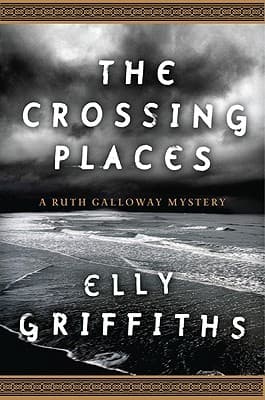
Synopsis
Covers the whole plot, including the ending.
- Difficulty
- Medium
- Pacing
- Moderate
- Mood
- Atmospheric, Suspenseful, Dark, Introspective
- Read it if
- You enjoy atmospheric mysteries blending forensic archaeology, ancient folklore, and modern police procedural work with a touch of dark academia.
- Skip it if
- You prefer fast-paced, action-driven thrillers over character-focused, atmospheric mysteries with a slower build.
The Crossing Places Plot Summary
Covers the whole plot, including the ending.
A Child's Bones and a Detective's Plea
Dr. Ruth Galloway, a forensic archaeologist at the University of North Norfolk, lives alone with her cats in a remote cottage on the saltmarshes. Her routine changes when DCI Harry Nelson contacts her. Child's bones have been found on Blakeney Point, and Nelson thinks they might be those of Lucy Downey, a five-year-old girl who disappeared ten years ago. The case has bothered Nelson, especially as he still gets cryptic, taunting letters from the presumed abductor, with references to pagan rituals, Shakespeare, and the Bible. Ruth's help is needed to tell the age and origin of the bones, which could be ancient or modern, possibly helping the cold case.
Ancient Rituals and Modern Fears
Ruth examines the bones and first decides they are Iron Age, likely from a ritual sacrifice, a common practice in the area's past. This finding seems to rule out their connection to Lucy Downey. However, the killer's letters to Nelson specifically mention 'the crossing places' and 'children of the earth,' phrases that match Ruth's knowledge of the local landscape's pagan history and its link to ritualistic child sacrifice. This coincidence makes Ruth reconsider. It suggests the killer might be copying ancient practices or getting ideas from them, mixing ancient history with current crime.
A Second Disappearance and a New Letter
Just as the investigation into Lucy Downey's disappearance seems stuck, a second five-year-old girl, Emily Hennessey, vanishes from her home in North Norfolk. The similarity to Lucy's case is clear. Soon after Emily's disappearance, Nelson gets another taunting letter, like those he received about Lucy Downey. This new letter confirms Nelson's fears: the killer is the same person or a precise copycat. The new threat makes the police act, and Ruth becomes more involved in the investigation. Her knowledge of the local landscape and its history becomes more important.
Uncovering Personal Histories and Local Legends
Ruth starts to research the history of the 'crossing places' – areas between land and sea, often linked to ancient pagan rituals and sacrifices. She works more closely with Nelson, visiting important sites and discussing ideas. Their investigation leads them to interview various people connected to Lucy and Emily, including Lucy's parents, the Downey family, and Emily's parents, the Hennesseys. Ruth also meets Cathbad, a local druid and academic colleague, who offers a different, more spiritual view of the ancient sites and their possible modern meanings. These talks show strained relationships and hidden tensions in the community.
The Academic Connection and Cathbad's Insights
Ruth's academic background is helpful. She researches the work of Professor Erik Anderssen, an archaeologist who wrote about the ritual importance of the Norfolk saltmarshes and the 'crossing places,' especially child sacrifices. She also talks with Cathbad, who, despite his quirks, knows a lot about local folklore and pagan beliefs. Cathbad suggests the killer might be following a specific ancient ritual, perhaps thinking they are pleasing an ancient god or fulfilling a prophecy. His interpretations, though unusual, offer a framework for understanding the killer's motives and methods, connecting the current crimes directly to the area's ancient past.
A Confession and a New Suspect
A local man, Peter Haddon, a reclusive and troubled individual, confesses to Lucy Downey's murder. His confession gives details that seem to support the crime, making Nelson think they have their man. However, Emily Hennessey's disappearance and a new, identical letter make Haddon's confession questionable for Emily's case. If Haddon killed Lucy, who abducted Emily? This makes Nelson and Ruth consider that there might be a copycat killer, or that Haddon's confession was forced or incomplete, leaving the real person who abducted Emily still free and the mystery of Lucy's fate unsolved.
The Saltmarsh Discovery and a Hidden Grave
Following her archaeological instincts and the killer's references to 'crossing places,' Ruth goes back to the saltmarshes, an area she knows well. Following subtle clues in the landscape and the letters, she finds Lucy Downey's body, buried in a shallow grave, near her own cottage. The body shows signs of ritualistic burial, confirming the killer's interest in ancient practices. This discovery confirms Lucy's death and makes finding Emily more urgent. It also puts Ruth dangerously close to the killer, showing the personal risk she is taking.
The Killer's Identity Revealed
With archaeological insight, letter analysis, and police work, Ruth and Nelson solve the puzzle. The killer is Robert Hennessey, Emily's father. Robert had been having an affair with Lucy Downey's mother, Annie. Lucy saw something, leading Robert to abduct and kill her to keep her quiet. He then abducted his own daughter, Emily, planning to make her death look like a ritual sacrifice, like the previous crime, to divert suspicion from himself and blame Peter Haddon, who he knew had confessed to Lucy's murder. Robert's knowledge of local history and his manipulative nature allowed him to create the elaborate taunts.
A Deadly Confrontation on the Marshes
Ruth, realizing Robert Hennessey is the killer, confronts him on the saltmarshes, where he plans to complete his ritualistic sacrifice of Emily. The confrontation is tense and dangerous. Ruth uses her knowledge of the terrain and her quick thinking to avoid Robert and try to protect Emily. Nelson and his team arrive, following Ruth's lead, leading to a chase across the darkening, unpredictable landscape. Robert is cornered, and a struggle happens as they try to rescue Emily before it's too late. Ruth's bravery and Nelson's arrival save the second girl's life.
Aftermath and Lingering Questions
Emily Hennessey is rescued, traumatized but alive. Robert Hennessey is arrested, ending his terror. The community is left shocked by the killer's identity and the truth about Lucy Downey's fate. Ruth and Nelson think about the case; their professional relationship becomes more complex and personal. The immediate danger is gone, but the experience has changed Ruth, creating a powerful, though complicated, bond with DCI Nelson. She is left with a greater awareness of the dark things that can exist in peaceful communities.
Principal Figures
Dr. Ruth Galloway
Protagonist
Forensic archaeologist drawn into a murder investigation.
Ruth is a quirky, intelligent, and somewhat reclusive forensic archaeologist in her late thirties. She lives a solitary life in a remote Norfolk cottage with her two cats, preferring ancient bones to modern people. Overweight and self-conscious about her appearance, she possesses a sharp mind, a dry wit, and an encyclopedic knowledge of history, particularly pagan rituals and burial practices. She is initially reluctant to get involved in police work but becomes deeply invested in the cases of Lucy Downey and Emily Hennessey, using her unique expertise to uncover crucial clues. Her personal life is somewhat stagnant, but the investigation sparks a new connection with DCI Nelson.
Relationships: DCI Harry Nelson (Professional collaboration developing into a complex, unspoken attraction and friendship.); Cathbad (Eccentric colleague and friend, providing spiritual and historical insights.); Professor Erik Anderssen (Academic inspiration, whose work guides her understanding of the 'crossing places'.)
DCI Harry Nelson
Protagonist
Haunted detective leading the investigation into missing children.
Harry Nelson is a dedicated, driven, and somewhat brooding Detective Chief Inspector, haunted by the cold case of Lucy Downey. He is a family man, married to Michelle, but his obsession with the case strains his personal life. He is initially skeptical of Ruth's academic approach but quickly comes to respect and rely on her unique insights. Nelson is pragmatic and grounded, a foil to Ruth's intellectualism, but shares her deep commitment to justice. He is physically imposing and fiercely protective, especially of the missing children, and develops a strong, complicated connection with Ruth.
Relationships: Dr. Ruth Galloway (Professional collaboration developing into a complex, unspoken attraction and friendship.); Michelle Nelson (Wife, whose relationship is strained by Nelson's dedication to his work.); Lucy Downey (Victim whose disappearance has obsessed him for ten years.)
Cathbad
Supporting
Eccentric druid and academic colleague of Ruth's.
Cathbad is a flamboyant, new-age druid and a lecturer at the University of North Norfolk, known for his long hair, flowing robes, and spiritual beliefs. Despite his eccentric appearance, he possesses a surprisingly deep and accurate knowledge of local history, folklore, and pagan rituals. He is a friend and colleague of Ruth's, often providing her with alternative perspectives and cryptic clues that prove surprisingly useful to the investigation. He is protective of the ancient sites and believes in the spiritual power of the land, offering a mystical counterpoint to the logical police investigation.
Relationships: Dr. Ruth Galloway (Friend and colleague, sharing academic interests and a bond over the local landscape.)
Michelle Nelson
Supporting
DCI Nelson's wife, struggling with his dedication to his work.
Michelle is DCI Nelson's wife and the mother of their two daughters. She is a supportive but increasingly frustrated partner, feeling neglected due to Nelson's all-consuming obsession with the Lucy Downey case. She represents the domestic side of Nelson's life, a contrast to the grim world of his police work. Her concerns highlight the personal cost of Nelson's dedication and the strain the prolonged investigation places on their family life. She is a grounding influence for Nelson, though he often struggles to balance his family duties with his professional responsibilities.
Relationships: DCI Harry Nelson (Wife, whose relationship is strained by his work.)
Robert Hennessey
Antagonist
Emily Hennessey's father and the true killer of Lucy Downey.
Robert Hennessey appears initially as a concerned father whose daughter, Emily, goes missing. He is married to Sandy and seems like a pillar of the community. However, he is eventually revealed to be the manipulative and calculating killer of Lucy Downey and the abductor of his own daughter. He is intelligent, deeply familiar with the local history and pagan rituals, which he uses to craft his taunting letters and stage his crimes. His motive for killing Lucy stemmed from her witnessing his affair with Annie Downey, and he abducts Emily to deflect suspicion and frame another man. He is a master of deception, hiding his dark nature behind a facade of respectability.
Relationships: Emily Hennessey (Daughter, whom he abducts and attempts to kill.); Sandy Hennessey (Wife, whom he deceives.); Annie Downey (Lover, whose affair with him is a catalyst for the first murder.)
Annie Downey
Supporting
Lucy Downey's mother, grieving and hiding a secret.
Annie Downey is Lucy Downey's mother, a woman consumed by grief and guilt over her daughter's disappearance a decade ago. She is married to Phil Downey but has been having an affair with Robert Hennessey, a secret that becomes a crucial plot point. Her emotional state makes her a sympathetic figure, but her hidden infidelity provides a motive for Robert Hennessey's actions. She struggles with the reopening of the case, forced to confront both her daughter's tragedy and her own personal failings.
Relationships: Lucy Downey (Missing daughter.); Phil Downey (Husband.); Robert Hennessey (Lover, whose affair with her leads to Lucy's murder.)
Peter Haddon
Supporting
Reclusive man who falsely confesses to Lucy Downey's murder.
Peter Haddon is a reclusive, somewhat unstable local man who lives alone. He is known to be a bit of an outcast and is easily intimidated. He falsely confesses to Lucy Downey's murder, providing details that seem convincing but are ultimately revealed to be either coincidental or fed to him by the true killer. His confession complicates the investigation, temporarily diverting attention from the real perpetrator. He represents the vulnerable members of the community who can be easily manipulated or scapegoated.
Relationships: DCI Harry Nelson (Interrogator, to whom he falsely confesses.)
Professor Erik Anderssen
Mentioned
Renowned archaeologist whose theories influence the killer.
Professor Erik Anderssen is a renowned, though deceased, archaeologist whose academic work on the ritualistic significance of the Norfolk saltmarshes and the 'crossing places' is pivotal to Ruth's understanding of the case. His writings detail ancient child sacrifices and the spiritual beliefs surrounding these liminal landscapes. The killer, Robert Hennessey, explicitly draws inspiration from Anderssen's theories, using them as a template for his crimes and his taunting letters. Anderssen's work effectively serves as a guidebook for both the killer and Ruth.
Relationships: Dr. Ruth Galloway (Academic influence and guide for her investigation.); Robert Hennessey (Indirect inspiration for his crimes.)
Emily Hennessey
Supporting
Second missing girl, whose disappearance mirrors Lucy Downey's.
Emily Hennessey is a five-year-old girl, daughter of Robert and Sandy Hennessey, who disappears ten years after Lucy Downey. Her abduction, and the subsequent taunting letter sent to DCI Nelson, mirrors Lucy's case almost exactly, leading the police to believe the same killer is active. Emily's disappearance ratchets up the tension and urgency of the investigation, as Ruth and Nelson race against time to prevent her from suffering the same fate as Lucy. She represents the innocent victims caught in the killer's manipulative web.
Relationships: Robert Hennessey (Father and abductor.); Sandy Hennessey (Mother.)
Themes & Insights
The Intertwining of Past and Present
The novel connects ancient history and current crime. The killer's methods and taunts relate to pagan rituals and archaeological theories about the Norfolk saltmarshes, especially 'crossing places' and child sacrifice. Ruth's knowledge of Iron Age history is key to understanding the killer's thoughts and actions. The discovery of ancient bones with modern ones, and the killer's copying of historical practices, blurs the lines, suggesting the past always influences the present.
“This was the crossing place, the land between land and sea, between life and death. The ancients had known its power.”
Identity and Belonging
Ruth Galloway's personal journey is a main part of this theme. She is an outsider, preferring bones to people, living in a remote cottage. Her appearance makes her self-conscious, and she thinks about her own identity. The investigation forces her to interact with people and enter a dangerous world, changing how she sees herself. The 'crossing places' themselves represent this theme – spaces that are neither one thing nor another, like Ruth's position between academic work and active involvement, and her growing connection with Nelson, a man from a different world.
“She was a woman of the marshes, a creature of the in-between places, just like the bones she studied.”
Grief, Guilt, and Secrets
The novel explores how a missing child affects a family and community, especially the Downey family. Lucy Downey's disappearance ten years ago has left her parents, Annie and Phil, with lasting grief and guilt. Annie's secret affair with Robert Hennessey, and Lucy's murder to cover it up, shows how personal failings and hidden lives can cause terrible results. The killer's ability to operate within the community, using its trust and secrets, shows how guilt and hidden truths can grow and lead to violence, affecting many families and people.
“Ten years. A decade of silence, of unanswered questions, of a grief that had become a part of the landscape.”
The Nature of Evil
The novel looks at the nature of evil, how it can be in ordinary people. Robert Hennessey, a father and respected community member, is a cold, calculating killer who uses his intelligence and local history knowledge to plan and do his crimes. His ability to manipulate others, including Peter Haddon, and to create elaborate, ritualistic taunts, shows a lack of empathy. The story explores how evil can be ancient in its ideas (pagan sacrifices) and modern in how it is done, showing the ordinariness and sneakiness of human badness.
“He didn't look like a monster. He looked like a man, a father, a neighbor. And that was the most terrifying thing of all.”
Plot Devices & Literary Techniques
The 'Crossing Places'
A symbolic and literal setting for ancient rituals and modern crimes.
The 'crossing places' refer to the Norfolk saltmarshes – the liminal, often treacherous land between the solid earth and the sea. This serves as a potent symbolic and literal plot device. Historically, these areas were significant for Iron Age rituals, including child sacrifice, a fact that the killer exploits. The landscape itself becomes a character, its shifting sands and hidden channels mirroring the elusive nature of the killer and the secrets buried within the community. Ruth's intimate knowledge of these places, both archaeologically and geographically, is crucial to her understanding of the killer's motives and ultimately, to finding Lucy's body and confronting the killer.
Cryptic Letters
Taunting messages from the killer, filled with literary and historical allusions.
The killer's taunting letters sent to DCI Nelson are a key plot device. They are filled with references to Shakespeare, the Bible, and pagan rituals, specifically mentioning 'the crossing places' and 'children of the earth.' These letters serve multiple purposes: they keep the cold case alive, taunt Nelson personally, and provide crucial, albeit veiled, clues to the killer's mindset and methods. Their specific content draws Ruth into the investigation, as her historical expertise is needed to decipher their meaning, making them a direct link between the ancient past and the present-day crimes.
Forensic Archaeology
Specialized knowledge used to interpret ancient bones and modern crime scenes.
Ruth Galloway's profession as a forensic archaeologist is more than just a character detail; it's a central plot device. Her ability to date bones, interpret burial practices, and understand the historical significance of the landscape provides unique insights that traditional police methods cannot. Her initial assessment of the bones found on Blakeney Point, and her later re-evaluation based on the letters, directly steers the investigation. Her knowledge of ancient rituals allows her to understand the killer's 'signature' and motivations, making her indispensable to Nelson and ultimately leading to the discovery of Lucy's body and the identification of the killer.
The Red Herring Confession
A false confession that misdirects the investigation.
Peter Haddon's false confession to Lucy Downey's murder serves as a significant red herring. This device temporarily diverts the police investigation, leading Nelson down a false path and creating a sense of resolution that is quickly shattered by Emily Hennessey's disappearance and the arrival of a new letter. The confession highlights the killer's cunning, as he likely manipulated Haddon or exploited his vulnerability to cast suspicion away from himself. It also raises the stakes, demonstrating how easily justice can be derailed and increasing the urgency for Ruth and Nelson to uncover the true perpetrator.
The Crossing Places Quotes
“The past is never dead. It's not even past.”
“Archaeology is not about the dead. It's about the living.”
“The saltmarsh is a place between places, neither land nor sea.”
“Sometimes the dead are easier to understand than the living.”
“Every dig is a leap of faith.”
“The truth is often buried, but it never stays hidden forever.”
“Bones tell stories, if you know how to listen.”
“Fear is a more powerful weapon than any knife.”
“In the marsh, time moves differently.”
“We are all just passing through, leaving traces behind.”
“The line between victim and villain can be very thin.”
“Silence can be the loudest sound of all.”
“Some secrets are meant to stay buried.”
“Justice is not always found in a courtroom.”
Quiz
10 questions on the plot and the characters. Each answer comes with a short explanation.
Question 1
What is Dr. Ruth Galloway's profession in 'The Crossing Places'?
- Forensic pathologist
- Forensic archaeologist
- Police detective
- University historian
Show answer
B. Forensic archaeologist Ruth Galloway is a forensic archaeologist who specializes in analyzing bones and ancient objects, which is why DCI Nelson consults her when child bones are found on the beach.
Question 2
Where does Ruth Galloway live in the book?
- In a bustling city near London
- In a remote area near Norfolk, on land sacred to Iron Age inhabitants
- In a coastal village in Cornwall
- In a university dormitory
Show answer
B. In a remote area near Norfolk, on land sacred to Iron Age inhabitants Ruth lives alone in a bleak, remote area near Norfolk, which is described as land that was sacred to Iron Age inhabitants and is not quite earth or sea, setting the atmospheric tone for the mystery.
Question 3
Who is Lucy Downey in the story?
- A recent murder victim found on the beach
- A little girl who went missing a decade ago
- Ruth Galloway's neighbor
- A suspect in the new kidnapping
Show answer
B. A little girl who went missing a decade ago Lucy Downey is a girl who disappeared ten years before the events of the book, and her abductor has been sending taunting letters to DCI Nelson, making her case central to the plot.
Question 4
What do the letters sent to DCI Nelson contain references to?
- Modern pop culture and technology
- Ritual sacrifice, Shakespeare, and the Bible
- Ancient Egyptian mythology
- Local Norfolk folklore only
Show answer
B. Ritual sacrifice, Shakespeare, and the Bible The letters from the abductor include bizarre references to ritual sacrifice, Shakespeare, and the Bible, which adds a layer of psychological complexity and ties into the book's themes of history and belief.
Question 5
Why does DCI Nelson initially call Ruth Galloway for help?
- To investigate a recent burglary at her home
- To analyze child bones found on a desolate beach, believing they might be Lucy Downey's
- To consult on an ancient artifact theft
- To help with a missing cat case
Show answer
B. To analyze child bones found on a desolate beach, believing they might be Lucy Downey's Nelson contacts Ruth after child bones are discovered on a beach, hoping her forensic archaeology expertise can determine if they belong to Lucy Downey, who has been missing for ten years.
Question 6
What event heightens the urgency of the investigation in the book?
- Ruth's cats go missing
- A second girl goes missing and a new letter arrives
- Nelson retires from the police force
- Ruth discovers an ancient treasure
Show answer
B. A second girl goes missing and a new letter arrives The investigation becomes more urgent when a second girl disappears and Nelson receives a new letter similar to those about Lucy, raising questions about whether it's the same killer or a copycat.
Question 7
Which theme is prominently explored through the setting and plot of 'The Crossing Places'?
- The joys of urban life
- The intersection of past and present, and isolation
- Technological advancements in crime-solving
- Romantic relationships in academia
Show answer
B. The intersection of past and present, and isolation The book delves into themes of past versus present through archaeological elements and letters with historical references, and isolation through Ruth's remote living situation and personal solitude.
Question 8
How does the abductor's use of letters contribute to the mystery?
- They provide clear confessions that solve the case quickly
- They taunt Nelson with cryptic references, complicating the investigation
- They are sent to Ruth instead of Nelson
- They are written in a foreign language
Show answer
B. They taunt Nelson with cryptic references, complicating the investigation The letters contain bizarre and cryptic references to ritual sacrifice, Shakespeare, and the Bible, which taunt Nelson and add layers of psychological intrigue, making the investigation more challenging.
Question 9
What is a key detail about the bones found on the beach that Ruth analyzes?
- They are confirmed to be from an animal, not human
- They are ancient Iron Age remains, unrelated to the missing girls
- They are child bones, but their age and origin become a central puzzle
- They are immediately identified as Lucy Downey's
Show answer
C. They are child bones, but their age and origin become a central puzzle The child bones found on the beach are a central mystery; Ruth's analysis is crucial to determine if they are Lucy's or from another source, driving much of the plot's suspense.
Question 10
In what way does Ruth's personal life contrast with her professional role in the investigation?
- She is highly social but prefers to work alone
- She lives in isolation with her cats, yet gets deeply involved in a high-stakes criminal case
- She is married with children, balancing family and work
- She avoids the case entirely due to personal fears
Show answer
B. She lives in isolation with her cats, yet gets deeply involved in a high-stakes criminal case Ruth lives a solitary life in a remote area with her cats, content with her routine, but the investigation thrusts her into a dangerous and emotionally charged situation, highlighting themes of isolation and engagement.
The Crossing Places FAQ
What is 'The Crossing Places' about?
The novel follows forensic archaeologist Dr. Ruth Galloway, who is drawn into a cold case when child bones are found on a Norfolk beach. Detective Chief Inspector Nelson believes they belong to Lucy Downey, a girl missing for ten years, and enlists Ruth's expertise as the killer sends taunting letters referencing rituals and literature. When a second girl disappears with similar letters, Ruth and Nelson race to uncover connections between the crimes and the ancient, liminal landscape where she lives.
Why should I read 'The Crossing Places'?
It offers a gripping blend of forensic archaeology and police procedural, set against the eerie, atmospheric backdrop of Norfolk's salt marshes. The protagonist, Ruth Galloway, is a refreshingly relatable and unconventional heroine—overweight, single, and content with her cats—whose expertise in ancient bones becomes crucial to solving modern crimes. The plot skillfully intertwines pagan history, literary references, and psychological tension, keeping readers guessing until the end.
What is the background/setting of 'The Crossing Places'?
The story is set in present-day Norfolk, England, particularly in the bleak, remote salt marshes near the sea—a 'crossing place' between land and water that was sacred to Iron Age inhabitants. Ruth Galloway's cottage is isolated in this liminal landscape, which mirrors the thematic boundaries between past and present, life and death. The setting's desolation and historical significance heighten the suspense, as ancient rituals and modern crimes seem to converge here.
What are the most memorable quotes?
Notable quotes include Ruth's reflection on her work: 'Bones don't lie. People do,' highlighting her trust in forensic evidence over human deception. Another is Nelson's frustration: 'The past is never dead. It's not even past,' echoing the theme that ancient history haunts the present crimes. The killer's letters, with lines like 'The tide is turning, and the sacrifice must be made,' create an eerie, ritualistic tone that pervades the novel.
What writing style does the author use?
Elly Griffiths employs a clear, descriptive prose that vividly evokes the Norfolk landscape's bleak beauty and suspense. The narrative alternates between Ruth's first-person perspective and third-person viewpoints, including Nelson's, allowing deep insight into their personalities and the investigation. The style blends forensic detail with psychological depth, moving at a steady pace that builds tension through archaeological clues and the killer's cryptic letters.
What minor details add significant meaning?
Ruth's cats, Flint and Sparky, symbolize her solitary but content life, and their presence often contrasts with the danger outside. The Iron Age artifacts she uncovers, like bog bodies and ritual sites, subtly parallel the modern crimes, suggesting a continuity of violence and sacrifice. The constant references to Shakespeare and the Bible in the killer's letters are not just taunts but clues linking the abductions to themes of betrayal and redemption.
What are some subtle foreshadowing moments?
Early scenes of Ruth excavating ancient child bones foreshadow the discovery of Lucy Downey's remains and the second abduction. The killer's letters mention 'crossing places' and tides, hinting at the marshland's role in the crimes before it's fully revealed. Ruth's initial discomfort with Nelson's intensity subtly foreshadows their evolving, complex relationship and shared danger as the investigation deepens.
What unexpected character connections exist?
Ruth's academic colleague, Erik Anderssen, has ties to the archaeological site near her home, which later connects to the killer's knowledge of rituals. Nelson's wife, Michelle, is unaware of his growing reliance on Ruth, creating a tense dynamic that adds personal stakes. The killer is revealed to have a personal grudge linked to the area's history, tying together seemingly random characters through shared past traumas.
What are unspoken character motivations?
Ruth's dedication to archaeology stems from a desire for truth and order in a chaotic world, masking her loneliness. Nelson's obsession with Lucy's case is driven by guilt over failing to save her and a need for redemption, which he doesn't openly admit. The killer's actions are motivated by a twisted belief in ancient sacrifices and a personal vendetta, revealed only late in the story through psychological manipulation.
What psychological complexities do characters exhibit?
Ruth balances intellectual confidence with social insecurity, often using humor and sarcasm as defenses. Nelson embodies a tough exterior masking deep vulnerability, especially regarding family and past failures. The killer displays a chilling blend of intelligence and madness, using literary and religious references to rationalize horrific acts, showing how obsession can warp reality.
What are the major emotional turning points?
Ruth's realization that the bones are not Lucy's but from an Iron Age child shifts the investigation and deepens her personal investment. The abduction of the second girl, Scarlet, escalates the urgency and fear, forcing Ruth and Nelson into closer collaboration. The climax where Ruth confronts the killer in the marshes is a pivotal moment of terror and resilience, solidifying her role beyond just an academic consultant.
How do relationship dynamics evolve?
Ruth and Nelson start with professional respect but develop a fraught, trusting partnership as they share dangers and insights, hinting at unspoken attraction. Ruth's isolation is challenged by her involvement in the case, leading to tentative connections with others like her neighbor. The killer's relationship with the community is revealed to be based on deception, showing how trust can be exploited for sinister ends.
Which parts remain ambiguous or open-ended?
The full extent of the killer's backstory and motivations is left somewhat vague, allowing readers to ponder the roots of such evil. Ruth's future with Nelson is unresolved, with their personal tension lingering beyond the case's conclusion. The significance of some archaeological finds, like specific Iron Age rituals, is open to interpretation, mirroring the mystery's unsolved historical layers.
What are controversial scenes or decisions?
Nelson's decision to involve Ruth, a civilian, in dangerous police work raises ethical questions about risk and professionalism. The killer's use of religious and literary texts to justify murder sparks debate about the interpretation of sacred symbols. Some readers may find the depiction of child abduction and ritualistic elements disturbing, though it's handled with sensitivity to advance the plot.
'The Crossing Places' ending explained: how it ends & what it means
The climax reveals the killer is someone connected to the local archaeology, using the marshes to hide crimes inspired by ancient sacrifices. Ruth helps capture them, and Scarlet is rescued, but Lucy's fate remains unknown, leaving Nelson with unresolved grief. The ending signifies that some mysteries, like the past, are never fully solved, and Ruth returns to her solitary life, changed by the experience but still rooted in her remote home.
About the author

Elly Griffiths is a British author known for her fiction, particularly in the mystery genre. One of her notable works is "The Crossing Places," which introduces readers to her popular series featuring forensic archaeologist Ruth Galloway. Griffiths has received recognition for her engaging storytelling and well-crafted characters.
Similar books
- The Likeness
Tana French
4.0 (126k) average on GoodreadsThrillerFeatures a strong sense of place and a detective delving into complex, character-driven mysteries.
- Burial Rites
Hannah Kent
4.0 (89k) average on GoodreadsLiterary FictionEvokes a strong sense of atmospheric place and delves into historical/cultural elements surrounding a crime.
- In the Woods
Tana French
3.8 (304k) average on GoodreadsThrillerWhile both are character-driven mysteries, French's novel delves deeper into psychological trauma and unreliable narration, often prioritizing atmosphere and character over clear plot resolution. Griffiths maintains a more traditional whodunit structure with an archaeological twist, offering a more direct investigative narrative.
- Angels & Demons
Dan Brown
3.9 (2.7M) average on GoodreadsThrillerA Harvard symbologist races through Rome's ancient sites, deciphering cryptic clues to unmask the Illuminati and stop a vengeful plot to destroy the Vatican with a stolen antimatter weapon.
- Gone Girl
Gillian Flynn
4.1 (2.3M) average on GoodreadsThrillerA wife's sudden disappearance on her fifth anniversary reveals a web of lies and psychological warfare, exposing the secrets within a seemingly perfect marriage.
- The Girl on the Train
Paula Hawkins
3.9 (2.1M) average on GoodreadsThrillerA woman’s fascination with a seemingly perfect couple she watches from her daily train commute leads her into a dark investigation when she witnesses something that shatters their idyllic image.



Enjoyed the summary?
A summary gives you the shape of the book. The book itself has the detail, the examples and the voice.
Find The Crossing Places on AmazonAs an Amazon Associate, BookBrief earns from qualifying purchases. How we're funded