
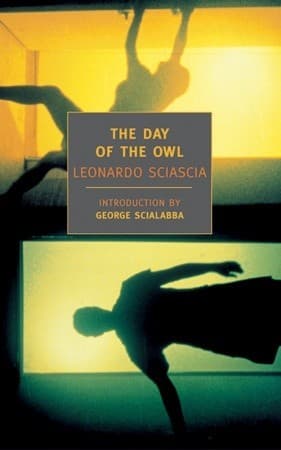
Synopsis
Covers the whole plot, including the ending.
- Difficulty
- Medium
- Pacing
- Moderate
- Mood
- Atmospheric, Suspenseful, Realistic, Melancholy
- Read it if
- You enjoy classic Italian crime fiction, a deep dive into the historical workings of the Mafia, or a procedural mystery with a strong sense of place and political commentary.
- Skip it if
- You prefer fast-paced action thrillers with clear-cut resolutions and heroes who always win, or if you dislike open-ended conclusions.
The Day of the Owl Plot Summary
Covers the whole plot, including the ending.
The Murder in the Piazza
In a small Sicilian town, the day begins with a murder. Salvatore Colasberna, a building contractor, is shot dead in the piazza while running to catch a bus. The bus driver, Pizzuco, and a passenger, Mariano Arena, claim not to have seen anything, despite the clear view. Captain Bellodi, a Carabinieri officer from Parma, is assigned to the case. He quickly sees the omertà, the code of silence, as witnesses either feign ignorance or deny seeing anything. Bellodi, an outsider unfamiliar with the deep-rooted Mafia presence, is determined to uncover the truth, which he senses is tied to the local criminal organization.
Initial Interrogations and Obstacles
Bellodi begins by questioning the bus driver, Pizzuco, and the passenger, Arena. Both men offer vague, contradictory, or false testimonies, claiming to have been distracted or to have seen nothing. Bellodi's frustration grows as he encounters the fear and complicity of the townspeople. He learns that Colasberna had recently refused to use materials from a specific supplier, suggesting a Mafia protection racket. This refusal, Bellodi deduces, was likely the motive for the murder. He also discovers that Colasberna had been a member of a cooperative, suggesting a conflict of interest with established Mafia operations.
The Informant's Tip
Amidst the silence, Bellodi receives an anonymous letter. It is from Rosa Nicolosi, the wife of a lime kiln worker named Paolo Nicolosi. The letter states that Paolo had seen the murder and knew the killer, but was too scared to speak. Bellodi immediately sends his men to find Paolo. However, before they can reach him, Paolo Nicolosi disappears. This disappearance confirms Bellodi's belief that he is dealing with an organized and ruthless criminal network, capable of silencing witnesses before they can even be interviewed.
The Disappearance of Paolo Nicolosi
Bellodi's fears are confirmed when Paolo Nicolosi's body is found, shot, in a nearby lime kiln. The discovery of Nicolosi's murder sends a message to anyone considering cooperating with authorities. Bellodi realizes that the Mafia's reach extends beyond the immediate crime scene, and that they are actively working to obstruct his investigation. This second murder, linked to the first, provides Bellodi with evidence of a sophisticated criminal organization at play, capable of eliminating potential threats. He understands that the stakes have been raised.
Pizzuco's Confession and the Arrests
Under intense questioning, the bus driver, Pizzuco, breaks. He confesses to having seen the murder and identifies the two perpetrators: Diego Spina and Rosario Pizzuco (a distant relative of his). Pizzuco reveals that Spina was the shooter and that Rosario Pizzuco was an accomplice. Armed with this testimony, Bellodi orders the arrest of both men. This breakthrough is a victory against the omertà, and Bellodi feels hope that he can dismantle the criminal enterprise operating in the town.
Bellodi's Interrogation of Diego Spina
Captain Bellodi personally questions Diego Spina, the alleged killer. Spina, a man with a known criminal past, remains silent, refusing to confess or implicate anyone. Bellodi uses psychological tactics, presenting Spina with the evidence and Pizzuco's testimony. While Spina says nothing, Bellodi observes his physical reactions — a slight tremor, a flicker in his eyes — which, to the experienced investigator, show hidden guilt and fear. Despite the lack of a verbal confession, Bellodi is convinced he has the right man, and that Spina is a key player in the local Mafia structure.
The Mafia's Counter-Offensive
As Bellodi's investigation gains traction, the local Mafia boss, Don Mariano Arena, mobilizes his network. Arena, a respectable figure, operates behind the scenes, pulling strings and influencing various levels of society and government. He subtly begins to create doubt about Bellodi's methods and the credibility of his witnesses. Anonymous letters and rumors circulate, questioning Pizzuco's reliability and suggesting Bellodi is overstepping his authority. The Carabinieri headquarters in Palermo also starts receiving calls and veiled threats, showing the Mafia's far-reaching influence.
The Political Pressure
The political pressure on Bellodi increases. His superiors, influenced by Don Mariano Arena's connections, begin to subtly discourage his zealous pursuit of the case. They suggest that the evidence is circumstantial, that Pizzuco is unreliable, and that Bellodi is creating unrest. Bellodi, however, remains firm, refusing to yield to these veiled threats and hints of transfer. He understands that his career, and perhaps his life, are at stake, but his sense of justice and duty compels him to continue his fight against the criminal organization.
The Release of the Suspects
Despite Bellodi's evidence, the political machinery orchestrated by Don Mariano Arena achieves its goal. Due to 'insufficient evidence' and 'unreliable testimony' — excuses manufactured by corrupt officials — Diego Spina and Rosario Pizzuco are released from custody. This decision is a blow to Bellodi, who sees his hard work and the pursuit of justice undermined. He realizes the Mafia's power, capable of manipulating the legal system and ensuring their operatives remain free, even with strong evidence.
Bellodi's Transfer and Reflection
As anticipated, Captain Bellodi is transferred out of Sicily, removing him from the investigation. Before his departure, he has a final encounter with Don Mariano Arena, who subtly asserts his power and the futility of Bellodi's efforts. Bellodi reflects on the Mafia, a 'straight line' connecting all aspects of Sicilian society, from the lowest peasant to the highest levels of government. Though defeated, Bellodi's resolve remains. He understands that while he lost this round, the fight against the Mafia is far from over, and he carries with him a deeper understanding of its power.
Principal Figures
Captain Bellodi
Protagonist
A determined Carabinieri officer from Parma, investigating a Mafia murder in Sicily.
Captain Bellodi is a young, intelligent, and idealistic Carabinieri officer from northern Italy, specifically Parma. He is an outsider to Sicily and its deeply entrenched culture of omertà and Mafia control, which initially makes him underestimate its power. However, his strong sense of justice and his sharp investigative skills drive him to relentlessly pursue the truth behind Salvatore Colasberna's murder, despite facing immense pressure and a wall of silence. He is characterized by his logical approach, his refusal to be intimidated, and his growing understanding of the insidious nature of the Mafia.
Relationships: Don Mariano Arena (Antagonist, representing the Mafia's power); Pizzuco (Key witness, initially uncooperative but later provides crucial testimony); Rosa Nicolosi (Informant whose letter provides a lead)
Don Mariano Arena
Antagonist
The powerful, seemingly respectable local Mafia boss.
Don Mariano Arena is the quintessential Sicilian Mafia boss, presented as a man of respectability and influence within the community. He operates from the shadows, manipulating events and people through an intricate network of connections, rather than direct violence. He embodies the 'straight line' of the Mafia, intertwining legitimate business with criminal enterprise. His power extends to political and judicial spheres, allowing him to undermine Bellodi's investigation from a distance. He is a master of subtle intimidation and societal control, representing the pervasive and almost untouchable nature of the Mafia.
Relationships: Captain Bellodi (Chief antagonist, orchestrating the obstruction of Bellodi's investigation); Diego Spina (Subordinate and alleged killer, protected by Arena's network)
Salvatore Colasberna
Mentioned
The murdered building contractor whose death initiates the investigation.
Salvatore Colasberna is the initial victim of the murder that sets the entire plot in motion. He is a small building contractor who, by refusing to use certain suppliers and being part of a cooperative, unknowingly defies the local Mafia's authority. His murder in the town piazza is a public display of power and a warning to others. Although he is dead before the story truly begins, his actions and the circumstances of his death are central to Bellodi's understanding of the Mafia's control over local commerce and daily life.
Relationships: Captain Bellodi (Investigator of his murder)
Pizzuco
Supporting
The bus driver and key witness who eventually breaks the code of silence.
Pizzuco is the bus driver who witnesses Colasberna's murder. Initially, like all others, he adheres to the omertà, claiming to have seen nothing. He is a fearful man, deeply ingrained in the local culture of silence and intimidation. However, under Bellodi's persistent and strategic interrogation, his fear of the authorities eventually outweighs his fear of the Mafia, and he provides a crucial testimony identifying the killers. His decision to speak is a rare crack in the wall of silence, offering Bellodi a fleeting hope of justice.
Relationships: Captain Bellodi (Interrogator and recipient of his testimony); Diego Spina (Identified as the killer); Rosario Pizzuco (Identified as the accomplice and distant relative)
Paolo Nicolosi
Supporting
A lime kiln worker who witnesses the murder and is subsequently silenced.
Paolo Nicolosi is a humble lime kiln worker who, according to his wife's anonymous letter, witnessed Salvatore Colasberna's murder and knew the identity of the killer. Before Bellodi can reach him, Nicolosi disappears, and his body is later found, confirming he was murdered to prevent him from testifying. His fate serves as a stark reminder of the Mafia's ruthless efficiency in eliminating potential threats and reinforcing the code of silence, further complicating Bellodi's investigation and demonstrating the extreme dangers faced by anyone who dares to challenge the organization.
Relationships: Rosa Nicolosi (His wife, who attempts to aid the investigation); Captain Bellodi (Investigator attempting to find and protect him)
Rosa Nicolosi
Supporting
Paolo Nicolosi's wife, who anonymously informs Bellodi about her husband's knowledge.
Rosa Nicolosi is the terrified wife of Paolo Nicolosi. Driven by a desperate hope for justice or perhaps protection for her husband, she anonymously sends a letter to Captain Bellodi, indicating that Paolo witnessed Colasberna's murder and knew the killer. Her act of courage, though anonymous, is a pivotal moment in the investigation, providing Bellodi with his first concrete lead. Despite her bravery, her husband is ultimately murdered, underscoring the extreme risks and the tragic futility of challenging the Mafia's power.
Relationships: Paolo Nicolosi (Her husband); Captain Bellodi (Recipient of her anonymous letter)
Diego Spina
Supporting
The alleged killer of Salvatore Colasberna, a known criminal.
Diego Spina is identified by Pizzuco as the primary shooter in Salvatore Colasberna's murder. He is a known criminal, part of Don Mariano Arena's network, and embodies the executive arm of the Mafia. During Bellodi's interrogation, Spina maintains a staunch silence, adhering strictly to the omertà. Despite Bellodi's certainty of his guilt, Spina is eventually released due to political interference, illustrating the Mafia's ability to protect its members and subvert justice. He represents the tangible face of the criminal element Bellodi is fighting.
Relationships: Captain Bellodi (Interrogator and antagonist); Don Mariano Arena (His protector and boss); Pizzuco (Witness who identifies him)
Rosario Pizzuco
Supporting
The accomplice in Colasberna's murder and distant relative of the bus driver.
Rosario Pizzuco is identified by the bus driver Pizzuco as the accomplice in Salvatore Colasberna's murder. He is a distant relative of the bus driver and part of the local criminal network. Like Diego Spina, he is arrested based on the bus driver's testimony but is eventually released due to the same political pressures orchestrated by Don Mariano Arena. His involvement reinforces the idea of interconnectedness within the Mafia's operations and its ability to protect its own, even when directly implicated in serious crimes.
Relationships: Captain Bellodi (Investigator); Pizzuco (Witness who identifies him and a distant relative); Diego Spina (His accomplice)
Mariano Arena (Bus Passenger)
Supporting
A passenger on the bus, initially claiming not to have seen the murder.
Mariano Arena is one of the initial 'witnesses' on the bus during Salvatore Colasberna's murder. He claims to have seen nothing, adhering to the omertà. His testimony is vague and unhelpful, typical of the widespread fear and complicity in the town. He is distinct from Don Mariano Arena, the Mafia boss, but his initial silence is indicative of the pervasive influence of the Mafia on ordinary citizens, who choose self-preservation over civic duty. His brief appearance highlights the immediate challenge Bellodi faces.
Relationships: Captain Bellodi (Interrogator)
Themes & Insights
The Pervasiveness of the Mafia
The novel shows how the Mafia is not just a criminal gang but a systemic force in all levels of Sicilian society. From the initial murder over a building contract, through the silencing of witnesses like Paolo Nicolosi, to the political interference that leads to the release of suspects, the Mafia's 'straight line' of influence is evident. Don Mariano Arena, the respectable boss, shows how power is used through fear and corruption, making it nearly impossible for an outsider like Bellodi to challenge effectively.
“'The straight line,' he thought, 'the straight line that links the first murder to the second, that connects the small contractor to the head of the Mafia. It's all one and the same thing, a single, vast, intricate network.”
Omertà and the Culture of Silence
The code of silence, omertà, is a central theme, acting as the primary barrier to justice. From the bus driver Pizzuco and passenger Mariano Arena who claim to see nothing, to the general terror that prevents anyone from speaking out, the novel shows how this cultural norm protects the Mafia. The murder of Paolo Nicolosi, a potential witness, is a reminder of the consequences of breaking this code. Bellodi's struggle is largely against this wall, showing the psychological and social control the Mafia exerts over the community.
“''They saw nothing, they heard nothing, they know nothing.' It was the usual litany, the litany of silence, of fear, of complicity.”
Justice vs. Power
The core conflict of the novel is the struggle between Captain Bellodi's pursuit of justice and the Mafia's power. Bellodi, representing the law, uses logic and evidence, but these are not enough against an organization that can manipulate political structures and instill fear. The release of Diego Spina and Rosario Pizzuco, despite Bellodi's strong case, symbolizes the triumph of entrenched power over legal justice. The theme explores the disillusionment that comes from realizing the limits of the law in the face of such corruption.
“''One day,' Bellodi thought, 'justice will prevail.' But that day seemed very far off, lost in the mists of a Sicily that refused to change.”
The Outsider's Perspective
Captain Bellodi, from Parma in northern Italy, is an outsider to the Sicilian context. His initial naivety about the Mafia's true power and his shock at the omertà allow the reader to experience the frustrating reality of fighting such an organization. His perspective shows the cultural differences and the historical factors that make the Mafia so resilient. Through Bellodi's eyes, the reader gains a clearer, often disheartening, understanding of the challenges faced when confronting a criminal enterprise intertwined with a region's identity.
“He was an outsider, a northerner, and he understood that the silence around him was not just fear, but a way of life, an ancient, impenetrable wall.”
Corruption and Impunity
The novel exposes the corruption within the political and judicial systems that gives the Mafia impunity. Don Mariano Arena's ability to influence high-ranking officials leads directly to the release of arrested suspects and Bellodi's transfer. This demonstrates that the Mafia's power is not solely based on violence, but on its capacity to infiltrate and manipulate legitimate institutions. The theme shows the tragic reality that justice can be bought, twisted, or denied when powerful figures are involved, leaving common people vulnerable and the law ineffective.
“He understood then that the threads of the web reached far beyond the town, touching the highest levels, making justice a mere word.”
Plot Devices & Literary Techniques
Omertà (Code of Silence)
A cultural and criminal code that silences witnesses and protects the Mafia.
Omertà is not just a plot element but a fundamental narrative device that drives the conflict. It creates the primary obstacle for Captain Bellodi, as nearly every witness he encounters adheres to this code, refusing to speak or actively lying to protect the Mafia. The breaking of omertà by Pizzuco is a momentary triumph, while the subsequent murder of Paolo Nicolosi reinforces its deadly power. This device immerses the reader in the suffocating atmosphere of fear and complicity that defines the Mafia's control, making Bellodi's investigation a slow, arduous battle against an unseen enemy.
The Outsider Protagonist
Captain Bellodi's perspective highlights the alien nature of the Mafia's world.
Captain Bellodi's role as an outsider from Parma is a crucial narrative device. His fresh perspective, initially unburdened by the ingrained fear and cultural norms of Sicily, allows him to question what others accept as normal. This device serves to explain the intricacies of the Mafia's operations and the omertà to the reader, as Bellodi himself slowly learns and grapples with them. His shock and disillusionment mirror the reader's own potential reactions, making the pervasive corruption and the Mafia's power more impactful and understandable.
The 'Straight Line' Metaphor
A recurring image representing the Mafia's interconnectedness and pervasive reach.
The metaphor of the 'straight line' is used by Captain Bellodi to describe the Mafia's seamless connection between seemingly disparate events and individuals. It signifies the organization's overarching structure, where a small murder, a local boss, and high-level political corruption are all linked in a continuous, unbroken chain of influence and control. This device helps the reader grasp the systemic nature of the Mafia, illustrating that it is not a series of isolated crimes but a unified, powerful entity operating with strategic intent, making it incredibly difficult to dismantle.
The Unseen Hand of Power
The Mafia's influence is largely exerted indirectly, through political and social manipulation.
This device emphasizes that the Mafia's true power lies not in overt violence, but in its ability to manipulate institutions and individuals from behind the scenes. Don Mariano Arena rarely acts directly but orchestrates events through his vast network of connections, applying political pressure, spreading rumors, and influencing judicial decisions. This subtle, pervasive control makes the Mafia an elusive and formidable adversary, as Bellodi often finds himself fighting against forces he cannot directly confront, leading to the ultimate frustration of his efforts.
The Day of the Owl Quotes
“In Sicily, the truth is not always the truth.”
“The mafia is not a criminal organization; it is a state of mind.”
“Silence is the first law of the mafia.”
“Justice is a luxury that not everyone can afford.”
“Fear is the currency of power.”
“In this land, every man is an island, and every island is a fortress.”
“The owl sees in the dark, but it cannot see the truth.”
“Corruption is not a vice; it is a necessity.”
“To understand Sicily, you must first unlearn everything you know.”
“The dead speak only through the living, and the living are afraid to listen.”
“Power does not corrupt; it reveals.”
“In the shadow of the law, the mafia grows.”
“A man's word is his bond, but in Sicily, bonds are made to be broken.”
“The investigation is a mirror, and in it, we see only ourselves.”
Quiz
10 questions on the plot and the characters. Each answer comes with a short explanation.
Question 1
What happens to Salvatore Colasberna at the beginning of the novel?
- He is arrested for Mafia involvement
- He is shot dead while running to catch a bus
- He disappears after witnessing a crime
- He confesses to the police about Mafia activities
Show answer
B. He is shot dead while running to catch a bus The novel opens with Salvatore Colasberna being murdered in the piazza of a small Sicilian town as he runs to catch a bus, which sets off Captain Bellodi's investigation.
Question 2
Who is the detective investigating the murder in 'The Day of the Owl'?
- Inspector Montalbano
- Captain Bellodi
- Commissioner Attilio
- Sergeant Sciascia
Show answer
B. Captain Bellodi Captain Bellodi is the detective who is new to his job and determined to prove himself by investigating the murder, suspecting Mafia involvement from the start.
Question 3
What major obstacle does Captain Bellodi face during his investigation?
- Lack of forensic evidence
- A wall of silence from the townspeople
- Interference from rival police forces
- The victim's family refusing to cooperate
Show answer
B. A wall of silence from the townspeople Bellodi encounters an 'unbreachable wall of silence' from the community, a classic Mafia tactic of omertà (code of silence) that hinders his investigation.
Question 4
What does the 'surprise turn' in the investigation lead Bellodi to discover?
- A political conspiracy involving high officials
- A series of nasty crimes linked to the Mafia
- That the victim was involved in drug trafficking
- A secret love affair that motivated the murder
Show answer
B. A series of nasty crimes linked to the Mafia A surprise development in the case puts Bellodi on the track of multiple crimes connected to Mafia activities, expanding the scope of his investigation beyond the initial murder.
Question 5
Why is Captain Bellodi's investigation being monitored by observers?
- To ensure he follows proper police procedures
- To keep the truth about Mafia activities from coming out
- To protect Bellodi from personal threats
- To gather information for a newspaper report
Show answer
B. To keep the truth about Mafia activities from coming out Various observers, both near and far, monitor Bellodi's investigation with the shared concern of suppressing the truth about Mafia operations, reflecting the pervasive influence of organized crime.
Question 6
What theme does 'The Day of the Owl' primarily explore through its plot?
- Romantic relationships in small towns
- The workings and influence of the Mafia
- Technological advances in detective work
- Historical events in Sicily
Show answer
B. The workings and influence of the Mafia The novel is described as 'a mesmerizing description of the Mafia at work,' focusing on how organized crime infiltrates and controls Sicilian society.
Question 7
How does Captain Bellodi's status as 'new to his job' affect the investigation?
- It makes him overconfident and prone to errors
- It leads him to be more determined to prove himself against the Mafia
- It causes him to rely heavily on local informants
- It results in his quick promotion during the case
Show answer
B. It leads him to be more determined to prove himself against the Mafia Bellodi's inexperience and desire to prove himself drive his relentless pursuit of the truth, contrasting with the complacency or corruption of more established figures.
Question 8
What literary device is emphasized by the novel's 'beautifully paced' structure?
- Flashbacks revealing character backgrounds
- Suspense and gradual revelation of clues
- Poetic descriptions of Sicilian landscapes
- Humorous dialogues between characters
Show answer
B. Suspense and gradual revelation of clues The pacing builds suspense as Bellodi uncovers clues and faces obstacles, mirroring the slow, methodical unraveling of Mafia secrets in a tight narrative structure.
Question 9
In the context of the novel, what does the 'wall of silence' symbolize?
- The isolation of small-town life in Sicily
- The Mafia's control through fear and omertà
- Bellodi's personal struggles with communication
- Government censorship of police investigations
Show answer
B. The Mafia's control through fear and omertà The 'wall of silence' represents the Mafia's enforcement of omertà, a code of silence that prevents witnesses from cooperating with authorities, showcasing their power over the community.
Question 10
Which aspect of the Mafia's operations does the novel highlight as particularly insidious?
- Their use of advanced weaponry
- Their ability to monitor and suppress investigations through widespread complicity
- Their involvement in international drug trade
- Their public demonstrations of power
Show answer
B. Their ability to monitor and suppress investigations through widespread complicity The novel emphasizes how the Mafia's strength lies not just in violence, but in its pervasive influence that allows it to monitor and stifle investigations through a network of complicit observers, making justice elusive.
The Day of the Owl FAQ
What is 'The Day of the Owl' about?
The novel follows Captain Bellodi, a newly appointed detective investigating the murder of a man shot while running to catch a bus in a small Sicilian town. Bellodi suspects Mafia involvement but faces a wall of silence from the community, leading him to uncover a series of connected crimes while being monitored by powerful observers determined to suppress the truth.
Why should I read 'The Day of the Owl'?
It's a concise, masterfully paced thriller that offers a chillingly realistic portrayal of how the Mafia operates through intimidation and silence in Sicilian society. Sciascia's sharp prose and psychological depth make it both a compelling mystery and a profound social commentary on corruption and power.
What is the background/setting of 'The Day of the Owl'?
Set in a small, unnamed Sicilian town in mid-20th century Italy, the novel depicts a closed society where Mafia influence permeates daily life. The setting emphasizes isolation, distrust, and the oppressive atmosphere that enables criminal enterprises to thrive unchecked.
What are the most memorable quotes?
Key quotes include Bellodi's reflection, 'In Sicily, the truth is not only stranger than fiction, it is often more dangerous,' and observations about silence as a weapon, such as 'The wall of silence is thicker than any prison wall.' These lines encapsulate the novel's themes of obscured truth and systemic corruption.
What writing style does Leonardo Sciascia use?
Sciascia employs a spare, precise, and economical prose style that mirrors the clinical detachment of an investigation. His narrative is tightly paced, with minimal exposition, focusing on dialogue and subtle details to build tension and highlight the psychological weight of silence and complicity.
What minor details add significant meaning?
Small details like the victim running to catch a bus—a mundane act—underscore how violence disrupts ordinary life. The repeated mentions of 'observers' monitoring Bellodi, often without direct interaction, subtly emphasize the pervasive surveillance and control exerted by the Mafia and its allies.
What are some subtle foreshadowing moments?
Early in the investigation, Bellodi notes how witnesses' eyes 'slide away' when questioned, foreshadowing the impenetrable silence he will face. The description of the town's 'calm surface' hiding 'dark currents' hints at the deeper crimes and conspiracies he will uncover.
What unexpected character connections exist?
Characters who initially seem unrelated—such as local businessmen, officials, and even some witnesses—are gradually revealed to be interconnected through Mafia ties or fear. These hidden networks illustrate how the corruption extends beyond obvious criminals into the fabric of the community.
What are unspoken character motivations?
Bellodi is driven not just by duty but by a personal need to prove himself in a hostile environment, reflecting his outsider status. Many townspeople remain silent out of deep-seated fear of retaliation, while others are motivated by complicity or benefit from the Mafia's shadow economy.
What psychological complexities do characters exhibit?
Bellodi grapples with frustration and isolation as his idealism clashes with systemic corruption. The townspeople display a complex mix of fear, resignation, and passive resistance, showing how survival in a Mafia-dominated society requires psychological compromise and moral ambiguity.
What are the major emotional turning points?
Key emotional shifts include Bellodi's growing realization that the silence is orchestrated, not accidental, leading to anger and determination. The moment he identifies a pattern in the crimes brings a mix of triumph and dread, as he understands the scale of opposition he faces.
How do relationship dynamics evolve?
Bellodi's relationships with locals deteriorate from cautious cooperation to open hostility as his investigation threatens the status quo. His interactions with superiors and observers become increasingly strained, revealing institutional complicity and isolating him further in his pursuit of justice.
Which parts remain ambiguous or open-ended?
The novel leaves ambiguous the full extent of the Mafia's network and the ultimate fate of some conspirators. Bellodi's personal future and the long-term impact of his investigation are not resolved, reflecting the ongoing, insidious nature of the corruption he confronts.
What are controversial scenes or decisions?
Bellodi's decision to pursue Mafia suspects despite clear warnings and lack of support can be seen as heroic or recklessly naive. Scenes where townspeople choose silence over truth spark debate about moral responsibility versus self-preservation in oppressive systems.
'The Day of the Owl' ending explained: how it ends & what it means
The novel ends with Bellodi's investigation stymied by the entrenched wall of silence and institutional barriers, implying that the truth remains suppressed. This conclusion suggests that individual efforts against systemic corruption are often futile, highlighting the Mafia's enduring power and the complicity of broader society.
About the author
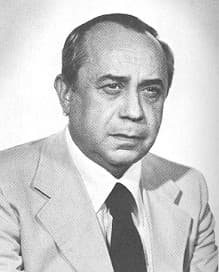
Leonardo Sciascia was an Italian author known for his contributions to literature, particularly in the realm of fiction. His notable work, "The Day of the Owl," explores themes of crime and corruption in Sicilian society. Sciascia's writing often reflects his critical perspective on social and political issues in Italy.
Similar books
- The Godfather
Mario Puzo
4.4 (335k) average on GoodreadsThrillerExplores the intricate power structures and brutal realities of the Mafia with a focus on its internal workings and societal impact.
- The Name of the Rose
Umberto Eco
4.1 (301k) average on GoodreadsHistorical FictionFeatures a meticulous detective figure unraveling a complex mystery within a specific historical and cultural setting, facing institutional resistance.
- Angels & Demons
Dan Brown
3.9 (2.7M) average on GoodreadsThrillerA Harvard symbologist races through Rome's ancient sites, deciphering cryptic clues to unmask the Illuminati and stop a vengeful plot to destroy the Vatican with a stolen antimatter weapon.
- Gone Girl
Gillian Flynn
4.1 (2.3M) average on GoodreadsThrillerA wife's sudden disappearance on her fifth anniversary reveals a web of lies and psychological warfare, exposing the secrets within a seemingly perfect marriage.
- The Girl on the Train
Paula Hawkins
3.9 (2.1M) average on GoodreadsThrillerA woman’s fascination with a seemingly perfect couple she watches from her daily train commute leads her into a dark investigation when she witnesses something that shatters their idyllic image.
- The Da Vinci Code
Dan Brown
3.9 (1.9M) average on GoodreadsThrillerA symbologist and a cryptologist race through European landmarks, deciphering ancient codes and uncovering a conspiracy that could rewrite the foundations of Christianity.






Enjoyed the summary?
A summary gives you the shape of the book. The book itself has the detail, the examples and the voice.
Find The Day of the Owl on AmazonAs an Amazon Associate, BookBrief earns from qualifying purchases. How we're funded