
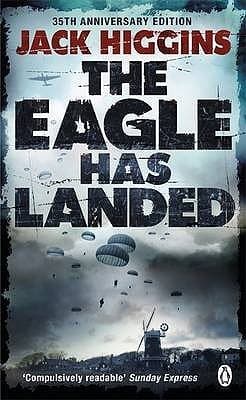
Synopsis
Covers the whole plot, including the ending.
- Difficulty
- Medium
- Pacing
- Fast
- Mood
- Suspenseful, Tense, Gritty, Action-packed
- Read it if
- You enjoy classic WWII thrillers with a focus on detailed commando operations and moral complexities.
- Skip it if
- You prefer modern, high-tech espionage or strictly historically accurate accounts without fictionalized major events.
The Eagle Has Landed Plot Summary
Covers the whole plot, including the ending.
The Genesis of Operation Eagle
In November 1943, Heinrich Himmler, head of the SS, receives a secret report from Admiral Canaris, his intelligence chief, detailing Winston Churchill's planned visit to the Norfolk village of Studley Constable. Against Canaris's advice, Himmler sees a chance for a propaganda win and orders 'Operation Eagle' – a mission to abduct Churchill. He gives the task to Colonel Max Radl, a brilliant but disgraced Luftwaffe intelligence officer, giving him two weeks. Radl, despite his doubts, begins to plan, understanding the immense stakes.
Assembling the Team
Colonel Radl, under pressure, finds the right operative: Oberst Kurt Steiner, a decorated paratrooper officer imprisoned on Alderney for trying to save Jewish women from the SS. Radl secures Steiner's release, offering him a chance for redemption and a key role. Steiner, a man of honor, accepts, wanting to serve his country despite his dislike for Nazi ideology. Radl also recruits Liam Devlin, an IRA gunman with knowledge of Britain, along with a unit of paratroopers, all fluent in English and trained in commando tactics.
Infiltration and Initial Contact
Steiner's team, disguised as Polish Free Army paratroopers for a training exercise, lands near Studley Constable during a storm. Their cover story allows them to operate without immediate suspicion. Liam Devlin, parachuted in earlier, contacts local Irish sympathizers, getting a safe house and local intelligence. The first part of the operation goes smoothly, with villagers unaware of their new 'allies'. However, the 'Poles'' disciplined and somewhat distant manner starts to bother some observant locals.
A Fatal Misstep
The planned deception turns tragic during a church service. A young girl, Jenny Himmler (no relation to Heinrich), sees one of Steiner's men, Corporal Jager, try to rescue another child from a broken water mill wheel. Jager, in his heroic act, accidentally shows his German uniform under his Polish disguise. To keep their cover, Jager's superior, Captain Altmann, shoots Jenny. Other villagers witness this, revealing the Germans' true identities and intentions. The peaceful village is filled with terror and resistance.
The Hostage Situation
After their identities are revealed and Jenny Himmler dies, Steiner and his men consolidate their position. They round up the villagers and barricade themselves in the church, taking everyone hostage. This changes the mission from a covert abduction to a desperate siege. Steiner, despite disliking such measures, knows he must control the population to prevent them from alerting authorities. The villagers, including Pamela Vereker and Father Vereker, are trapped, facing a deadly enemy in their sanctuary.
British Counter-Intelligence Reacts
In London, Colonel Pitts of British Intelligence gets troubling reports from Studley Constable, first dismissed as local quirks. However, Churchill's visit time and the village's sudden silence raise flags. Working with Joanna Grey, an intelligence officer, Pitts pieces together information. They uncover the truth: a German commando unit is in Studley Constable, and Churchill is in danger. Pitts mobilizes a Commando unit, led by Captain Clark, to the village, unaware of the enemy's exact nature or the hostage situation.
The Siege Intensifies
Captain Clark's British Commandos arrive at Studley Constable, ready for a fight but not for the entrenched, highly trained German paratroopers. A brutal firefight starts around the church. Steiner's men, using their training and defensive position, cause heavy casualties for the British. The battle is fierce, with losses on both sides. Inside the church, hostages hear the war, while Steiner tries to control the situation and keep his men focused on the objective amid the violence.
Liam Devlin's Escape and Mission Continuation
As the battle continues around the church, Liam Devlin, using his cunning and local knowledge, slips away. He understands that the main objective – Churchill's abduction – is now at risk if they stay trapped. Devlin, guided by his mercenary principles and loyalty to the mission, heads towards the nearby manor house where Churchill is staying. He plans to complete the mission himself or create a diversion for Steiner. His escape shows the fragmented nature of the German operation and the individual determination of its key players.
The Final Confrontation at the Manor
After a tough battle, Steiner, with a few remaining men, breaks out of the church and reaches the manor house, following Devlin. He confronts the man he believes to be Winston Churchill, only to find a convincing body double, Colonel Corcoran, put there for security. The real Churchill had left earlier. This discovery shatters Operation Eagle, making all their sacrifices futile. Steiner, faced with this truth, must make a final, desperate decision.
Steiner's Last Stand
Realizing the mission is a failure and that Colonel Corcoran is a decoy, Steiner, an honorable man, makes a selfless choice. Rather than let the decoy be killed by his desperate men or captured by the British, he protects Corcoran. In a final shootout, Steiner is killed, ending Operation Eagle. His death is a tragic end for a man who, despite serving the Nazi regime, kept a strong moral compass. Liam Devlin, seeing the mission's collapse, escapes into the English countryside, a survivor of the failed plot.
The Eagle Has Landed Characters
Oberst Kurt Steiner
Protagonist
A highly decorated German paratrooper officer leading Operation Eagle.
Steiner is a man of immense courage, honor, and professionalism, deeply dedicated to his soldiers and his duty. Despite his service to Nazi Germany, he despises the regime's atrocities, as evidenced by his imprisonment for trying to save Jewish women. He is a brilliant tactician and leader, respected by his men. His moral compass is constantly at odds with the brutal demands of his mission, making him a complex and tragic figure. He carries out orders with efficiency but never loses his sense of humanity.
Relationships: Colonel Max Radl (Superior officer, recruiter for the mission); Liam Devlin (Mission partner, professional respect despite ideological differences); His paratroopers (Loyal and respected commander)
Liam Devlin
Supporting
An Irish Republican Army (IRA) gunman and mercenary, assisting Operation Eagle.
Devlin is a cynical, intelligent, and highly capable mercenary with a deep-seated hatred for the British. He is a survivor, driven by his own code of conduct and a keen sense of self-preservation. Fluent in several languages and possessing extensive knowledge of the English countryside, he is an invaluable asset to Steiner's team. Despite his mercenary nature, he exhibits moments of surprising wit and even a reluctant respect for Steiner. He is a man of action, preferring direct confrontation to political maneuvering.
Relationships: Oberst Kurt Steiner (Mission partner, professional respect); Molly Prior (Brief romantic/flirtatious interest)
Colonel Max Radl
Supporting
The German intelligence officer who plans Operation Eagle.
Radl is a brilliant but disgraced Luftwaffe intelligence officer, known for his meticulous planning and strategic mind. He is a career soldier, loyal to his country but not necessarily to the Nazi party's ideology. He is under immense pressure from Himmler to succeed, and his career (and life) depends on the mission's outcome. He exhibits a detached professionalism, capable of great ruthlessness in pursuit of his objectives, yet he also recognizes Steiner's moral character.
Relationships: Heinrich Himmler (Superior officer, source of immense pressure); Oberst Kurt Steiner (Subordinate chosen for his skills)
Heinrich Himmler
Antagonist
The head of the SS, who orders the abduction of Winston Churchill.
Himmler is portrayed as a ruthless, power-hungry, and fanatical Nazi leader. He is the ultimate authority behind Operation Eagle, driven by a desire for a spectacular propaganda victory to impress Hitler. He shows no regard for human life or the moral implications of his orders, viewing the mission purely in terms of political gain. His character embodies the cold, calculating evil of the Nazi regime.
Relationships: Colonel Max Radl (Subordinate, instrument of his will); Adolf Hitler (His ultimate superior, whom he seeks to impress)
Colonel Pitts
Supporting
A British intelligence officer investigating the events in Studley Constable.
Colonel Pitts is a sharp, experienced, and dedicated British intelligence officer. He is initially skeptical of the fragmented reports but quickly recognizes the gravity of the situation once the pieces begin to fit together. He is methodical and determined, representing the calm, professional face of Allied counter-intelligence. He is driven by a strong sense of duty to protect his country and its leaders.
Relationships: Joanna Grey (Colleague, assistant in intelligence gathering); Captain Clark (Subordinate, commanding the British Commando unit)
Joanna Grey
Supporting
A British intelligence officer assisting Colonel Pitts.
Joanna Grey is an intelligent and capable female intelligence officer, working closely with Colonel Pitts. She is astute and plays a crucial role in analyzing the incoming information and identifying the threat posed by the German commandos. Her presence highlights the growing role of women in intelligence during wartime and she demonstrates a keen intellect in a male-dominated field.
Relationships: Colonel Pitts (Colleague, partner in intelligence analysis)
Pamela Vereker
Supporting
A strong-willed young woman in Studley Constable.
Pamela is the spirited and resourceful daughter of the local vicar, Father Vereker. She is courageous and defiant, refusing to be intimidated by the German occupiers. She plays a significant role in attempting to resist the Germans and protect her fellow villagers. Her character embodies the resilient spirit of the British people in the face of invasion and occupation.
Relationships: Father Vereker (Daughter); Liam Devlin (Brief, tense encounter)
Jenny Himmler
Mentioned
A young village girl whose death exposes the German deception.
Jenny is a innocent young girl from Studley Constable. Her tragic and accidental death at the hands of Captain Altmann, one of Steiner's men, is the pivotal moment that exposes the German paratroopers' true identities and intentions. Her death serves as a catalyst, transforming the covert mission into an open conflict and a desperate hostage situation. She represents the innocent civilian cost of war.
The Eagle Has Landed Themes
The Nature of Duty vs. Morality
This theme is key to Kurt Steiner's character. He is a professional soldier, bound by duty, yet he dislikes the Nazi regime's atrocities. His actions, like saving Jewish women and protecting the decoy Churchill, show this inner conflict. The novel explores the difficult choices individuals make when professional obligations clash with personal ethics, showing that individual morality can exist even within a monstrous system. Radl also deals with this, following Himmler's orders despite his own doubts about the mission's feasibility and ethics.
“There are some things, Major, that even a professional soldier does not do.”
The Deception of Appearance
Operation Eagle relies on deception – German paratroopers disguised as Polish allies. This theme is explored through their careful disguise, fake accents, and attempts to blend in. The initial success of the deception shows how easily appearances can mislead. However, the incident at the water mill, where a German uniform is accidentally seen, breaks this illusion, showing that even careful deceptions are fragile and can be undone by unforeseen events, leading to disaster. The use of a Churchill body double further highlights this theme.
“We are Poles, my friend. Not Germans.”
The Unpredictability of War
Despite careful planning by Colonel Radl, the mission quickly falls into chaos and unforeseen events. The accidental exposure of the Germans' identities, Jenny Himmler's death, and the hostage situation are all unpredictable elements that derail the original plan. The novel emphasizes that even perfectly conceived military operations can be undone by small human errors or random chance. The discovery of the Churchill double reinforces this, showing how intelligence can be flawed and plans based on incorrect assumptions, leading to immense sacrifice for no gain.
“No plan survives first contact with the enemy.”
Courage and Resistance of Ordinary People
The villagers of Studley Constable, initially quiet, show courage and resilience against the German invaders. Figures like Pamela Vereker and Father Vereker resist their captors, despite being unarmed civilians. Their determination to protect each other and alert authorities shows that heroism is not only for soldiers. Their collective bravery in the face of overwhelming force highlights the spirit of ordinary people in extraordinary circumstances, making them unlikely heroes in the war effort.
“We are English, sir. And we will not be bullied.”
The Futility of Fanaticism
The novel subtly criticizes the fanaticism of figures like Himmler, whose ambition for a propaganda coup leads to a costly and pointless mission. While Steiner and Radl are professional soldiers, Himmler's ideological zeal starts the entire operation. The ultimate failure of Operation Eagle, due to a body double and unforeseen complications, shows the futility of grand, ideologically driven schemes when faced with the realities of war and counter-intelligence. The loss of life on both sides for a non-existent target powerfully illustrates this theme.
“A spectacular coup, Radl. A propaganda victory that will echo through history.”
Plot Devices & Literary Techniques
The MacGuffin
Winston Churchill's presence as the central, sought-after object.
The 'MacGuffin' in this story is Winston Churchill himself. The entire plot revolves around the German commandos' mission to abduct him. However, the twist reveals that the 'Churchill' at the manor is a body double, making the true MacGuffin the *idea* of Churchill's presence, rather than the actual person. This misdirection serves to drive the plot forward and create tension, even though the ultimate object of desire turns out to be a decoy, leading to the mission's tragic futility.
Dramatic Irony
The audience knows the Germans are disguised, while the villagers do not.
Dramatic irony is heavily employed, particularly in the early stages of the German infiltration. The audience is aware that Steiner's men are German paratroopers disguised as Polish allies, while the unsuspecting villagers of Studley Constable welcome them as comrades. This creates a pervasive sense of tension and unease, as the reader anticipates the inevitable moment when the deception will be uncovered, and the peaceful village will descend into conflict. The irony heightens the suspense, making every interaction between the Germans and the villagers fraught with unspoken danger.
The Red Herring
The initial focus on the church as the main battleground, distracting from the true target.
The siege of the church, where Steiner's men hold the villagers hostage and engage in a prolonged firefight with British Commandos, acts as a red herring. While it's a significant and intense part of the plot, it distracts both the British forces and, to some extent, the reader, from the true, albeit mistaken, objective: the manor house where 'Churchill' is staying. Liam Devlin's escape from the church to pursue the target independently helps to shift the focus, revealing that the church siege, while critical for survival, was not the ultimate point of the mission.
The Unreliable Narrator (Implied)
The historical framing of the 'discovery' of the mission's details.
While not a first-person unreliable narrator, the book employs a subtle form of this device through its historical framing. The story is presented as a 'reconstruction' of a highly secret, almost mythical event, pieced together years later. This framing device creates a sense of mystery and suggests that the 'official' history might be incomplete or misleading. It allows for dramatic license and encourages the reader to question the absolute truth of the events, hinting that the full story of such a covert operation might never be fully known, adding to the intrigue and legend surrounding Operation Eagle.
The Eagle Has Landed Quotes
“The wind was rising, and the sea was a cold, hard grey, stretching to a horizon that promised nothing but more of the same.”
“There are some men who are born to be soldiers, and some who are born to be leaders. And then there are a very few who are born to be both.”
“It was a foolish thing to do, but then, most brave things are.”
“You can always tell a professional, even when he's pretending not to be.”
“The only thing worse than a plan that fails is no plan at all.”
“War is a dirty business, and no one gets out of it with clean hands.”
“He had the kind of eyes that had seen too much, and forgotten nothing.”
“Sometimes, the simplest solution is the one that no one expects.”
“Fear can make a man do strange things, but courage can make him do even stranger.”
“The best way to hide something is in plain sight.”
“History, like war, is written by the victors. But the truth, sometimes, has a way of leaking out.”
“He knew the smell of death, and it was in the air, cold and metallic, like old blood.”
“There are no heroes in war, only survivors and the dead.”
“The world was full of men who talked, and a few who did.”
“He had a way of looking at you as if he knew all your secrets, and found them mildly amusing.”
Quiz
10 questions on the plot and the characters. Each answer comes with a short explanation.
Question 1
What is the primary objective of the Nazi paratrooper mission in 'The Eagle Has Landed'?
- To assassinate King George VI
- To abduct Winston Churchill
- To destroy a critical British radar installation
- To steal Allied war plans
Show answer
B. To abduct Winston Churchill The entire Nazi operation, conceived by Hitler and Himmler, revolves around the audacious plan to kidnap Winston Churchill from British soil.
Question 2
Who is the leader of the German paratrooper team tasked with the mission?
- Colonel Max Radl
- Heinrich Himmler
- Kurt Steiner
- Liam Devlin
Show answer
C. Kurt Steiner Kurt Steiner, an ace German agent and paratrooper, is handpicked to lead the commando unit responsible for the abduction attempt.
Question 3
In what month and year does the main mission of 'The Eagle Has Landed' take place?
- October 1942
- November 1943
- December 1944
- September 1943
Show answer
B. November 1943 The book explicitly states that the mission takes place in November of 1943, as detailed in the novel's premise.
Question 4
What disguise do Steiner's men initially use to infiltrate the English village?
- British Home Guard
- Polish paratroopers
- American soldiers
- Irish volunteers
Show answer
B. Polish paratroopers Steiner's unit disguises themselves as Polish paratroopers on a training exercise to avoid suspicion and blend into the local English community.
Question 5
Who is the IRA gunman who aids Steiner's team on the ground?
- Sean Dillon
- Liam Devlin
- Michael Ryan
- Patrick Kelly
Show answer
B. Liam Devlin Liam Devlin, an experienced IRA operative with a strong anti-British sentiment, provides crucial local knowledge and assistance to Steiner's mission.
Question 6
What critical mistake by a German soldier reveals their true identity to the villagers?
- Speaking German loudly in public
- Attempting to steal food from a local shop
- Saving a child from drowning in a mill race
- Being caught with a German-issue weapon
Show answer
C. Saving a child from drowning in a mill race During a heroic act to save a child, a German paratrooper's uniform is torn, revealing a German Iron Cross underneath, exposing their deception.
Question 7
What is the name of the quiet English village where the German paratroopers land?
- Little Puddleton
- Studley Constable
- Upper Slaughter
- Lower Wapping
Show answer
B. Studley Constable The story centers around the peaceful village of Studley Constable, whose residents unknowingly become pivotal in thwarting the Nazi plot.
Question 8
Who is the character who initially plans and orders the abduction mission from the German side?
- Adolf Hitler and Hermann Göring
- Heinrich Himmler and Hitler
- Reinhard Heydrich and Albert Speer
- Erwin Rommel and Karl Dönitz
Show answer
B. Heinrich Himmler and Hitler The mission is explicitly stated to be ordered by Hitler himself and planned by Heinrich Himmler, highlighting the high-level involvement.
Question 9
What is the ultimate fate of Winston Churchill in the context of the mission, as revealed at the end of the book?
- He is successfully abducted by Steiner's team.
- He is killed in the ensuing firefight.
- He was never actually present at the location the Germans attacked.
- He escapes just moments before the Germans arrive.
Show answer
C. He was never actually present at the location the Germans attacked. A major twist reveals that the 'Churchill' at the manor house was a double, and the real Winston Churchill was never in danger at that specific location.
Question 10
What theme is most strongly emphasized by the actions of the Studley Constable residents?
- The futility of resistance against overwhelming force.
- The importance of individual heroism and ordinary people rising to extraordinary challenges.
- The inherent cowardice of civilians in wartime.
- The moral ambiguity of wartime actions.
Show answer
B. The importance of individual heroism and ordinary people rising to extraordinary challenges. The residents, initially unaware and unprepared, become 'unlikely heroes' who stand against the Nazi threat, embodying the theme of ordinary people demonstrating immense courage.
The Eagle Has Landed FAQ
What is the primary objective of the Nazi paratrooper mission in 'The Eagle Has Landed'?
The primary objective is to abduct Winston Churchill from his temporary residence in Studley Constable. This mission, codenamed 'Eagle', is ordered by Hitler and Himmler with the aim of crippling the Allied war effort and potentially forcing a peace treaty.
Who are the key figures leading the Nazi operation?
The operation is led by Oberst Kurt Steiner, a highly decorated and disillusioned Fallschirmjäger officer, and aided on the ground by Liam Devlin, an experienced Irish Republican Army gunman and fervent anti-British nationalist. Both are instrumental in executing the meticulous plan.
Where does the majority of the action take place?
The majority of the action unfolds in and around the fictional quiet Norfolk village of Studley Constable, England. This seemingly idyllic setting becomes the unexpected battleground where the Nazi paratroopers clash with local Home Guard and eventually American Rangers.
What initial disguise do Steiner's men use to infiltrate Studley Constable?
Steiner's men initially infiltrate Studley Constable disguised as Polish paratroopers on a training exercise. This allows them to move freely and establish their position within the village, exploiting the local's sympathy for Allied forces.
What critical mistake exposes the Germans' true identity?
The Germans' true identity is exposed when one of Steiner's men, trying to save a young girl from a runaway mill wheel, reveals his German uniform and language. This act of heroism, though compassionate, shatters their carefully constructed deception.
How does Joanna Grey assist the Nazi mission?
Joanna Grey, a German sleeper agent living in Studley Constable, provides crucial intelligence and logistical support to Steiner's team. She uses her local knowledge and connections to facilitate their movements and confirm Churchill's presence, proving invaluable to the mission's initial success.
What is the significance of the St. Mary's Church tower in the climax?
The St. Mary's Church tower serves as a crucial strategic point for Steiner's snipers and later as a final stand for his remaining men. Its elevated position offers a commanding view of the village and the manor, becoming a focal point of the intense firefight.
What is the ultimate fate of Kurt Steiner?
Kurt Steiner is ultimately killed during the intense confrontation, having successfully reached and fatally shot the decoy Churchill. Despite his initial disillusionment, he carries out his duty to the very end, dying a soldier's death in the pursuit of his mission.
How does Liam Devlin escape at the end of the book?
Liam Devlin, despite his involvement, manages to escape the chaos and British pursuit. He slips away, aided by his cunning and knowledge of the local terrain, and is later implied to continue his life as an IRA operative, showcasing his enduring elusiveness.
Discuss Kurt Steiner's internal conflict and his motivation to carry out the mission.
Steiner is depicted as a highly principled soldier disillusioned by Nazi atrocities, having been demoted for trying to save Jewish civilians. Despite his moral objections to the regime, his unwavering loyalty to his men and his professional duty as a soldier compel him to execute the mission with precision and determination.
How does Liam Devlin's character embody a complex form of patriotism?
Liam Devlin's patriotism is complex, rooted in his fierce Irish nationalism and hatred for the British, rather than an allegiance to Nazism. He views the mission as an opportunity to strike a blow against Britain, aligning himself with the Germans out of shared antagonism, not shared ideology.
Analyze the psychological impact of the Germans' disguise on the villagers.
The Germans' disguise as Polish paratroopers initially evokes sympathy and trust from the villagers, who are eager to assist Allied forces. This deception creates a profound sense of betrayal and shock when their true identity is revealed, shattering their perception of safety and community.
How does Molly Prior's character challenge traditional gender roles in wartime narratives?
Molly Prior, though seemingly a simple villager, demonstrates remarkable courage and resourcefulness, playing a crucial role in alerting authorities and directly confronting the Germans. Her actions challenge the passive roles often assigned to women in wartime stories, portraying her as an active participant in the resistance.
What is the author's message regarding heroism and duty, particularly through Steiner's arc?
The author suggests that heroism and duty can exist independently of political alignment. Steiner, despite serving a morally reprehensible regime, acts with a strong sense of duty and honor towards his men, embodying a tragic figure whose personal code transcends the wickedness of his cause.
How does the book's ending twist redefine the entire mission's success?
The book's ending reveals that the Churchill in Studley Constable was a decoy, meaning Steiner's mission, while executed with deadly precision, ultimately failed its primary objective. This twist recontextualizes the entire narrative, highlighting the futility of their sacrifice despite their valiant efforts.
Discuss the moral ambiguity presented by characters like Steiner and Devlin.
Both Steiner and Devlin operate in a morally grey area; Steiner is an honorable soldier serving an evil cause, while Devlin is a freedom fighter allied with a tyrannical power. The book forces readers to confront the complexities of war, where 'good' and 'evil' are not always clear-cut, and motivations are multifaceted.
What broader historical implications does the book explore, despite being fictional?
The book explores the 'what if' scenario of a successful Nazi abduction of Churchill, highlighting the immense psychological and strategic impact such an event could have had on the war. It delves into the desperation of the Axis powers and the constant threat faced by Allied leaders, grounding its fiction in historical plausibility.
How does the novel build suspense and maintain reader engagement?
The novel masterfully builds suspense through its meticulous planning details, the constant threat of discovery for the Germans, and the escalating tension in Studley Constable. The shifting perspectives, from German infiltrators to unsuspecting villagers and eventually American Rangers, keep the reader engaged and invested in the unfolding drama.
About the author
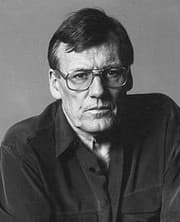
Jack Higgins is a British author known for his work in the thriller genre. He is particularly recognized for his novel "The Eagle Has Landed," which features a fictional World War II plot involving a German plot to kidnap Winston Churchill. Higgins has published numerous works of fiction throughout his career, gaining a significant readership.
Similar books
- The Guns of Navarone
Alistair MacLean
4.1 (16k) average on GoodreadsThrillerFeatures a daring commando mission against overwhelming odds during WWII.
- Eye of the Needle
Ken Follett
4.2 (129k) average on GoodreadsThrillerA WWII spy thriller with a cat-and-mouse chase and high stakes.
- Angels & Demons
Dan Brown
3.9 (2.7M) average on GoodreadsThrillerA Harvard symbologist races through Rome's ancient sites, deciphering cryptic clues to unmask the Illuminati and stop a vengeful plot to destroy the Vatican with a stolen antimatter weapon.
- Gone Girl
Gillian Flynn
4.1 (2.3M) average on GoodreadsThrillerA wife's sudden disappearance on her fifth anniversary reveals a web of lies and psychological warfare, exposing the secrets within a seemingly perfect marriage.
- The Girl on the Train
Paula Hawkins
3.9 (2.1M) average on GoodreadsThrillerA woman’s fascination with a seemingly perfect couple she watches from her daily train commute leads her into a dark investigation when she witnesses something that shatters their idyllic image.
- The Da Vinci Code
Dan Brown
3.9 (1.9M) average on GoodreadsThrillerA symbologist and a cryptologist race through European landmarks, deciphering ancient codes and uncovering a conspiracy that could rewrite the foundations of Christianity.






Enjoyed the summary?
A summary gives you the shape of the book. The book itself has the detail, the examples and the voice.
Find The Eagle Has Landed on AmazonAs an Amazon Associate, BookBrief earns from qualifying purchases. How we're funded