

Synopsis
Covers the whole plot, including the ending.
- Difficulty
- Medium
- Pacing
- Moderate
- Mood
- Suspenseful, Dark, Tense, Vengeful
- Read it if
- You enjoy corporate thrillers with a locked-room mystery setup and a focus on psychological tension and moral comeuppance.
- Skip it if
- You prefer fast-paced action over character-driven suspense and don't like stories about cutthroat corporate environments.
The Escape Room Plot Summary
Covers the whole plot, including the ending.
The Invitation to the Escape Room
Vincent, Jules, Sylvie, and Sam, four executives from the investment bank Stanhope & Sons, are called to a mandatory team-building exercise. They go to an old building in Manhattan. Inside an old service elevator, a recorded message tells them they are in an escape room designed to test their teamwork and problem-solving. The elevator soon breaks, plunging them into darkness. The first tasks involve finding clues about their past dealings and Stanhope & Sons, showing them the true nature of the 'game'.
Sara Hall's Introduction and Rise
Mixed with the present-day elevator ordeal are flashbacks showing the early career of Sara Hall. She was a bright MBA graduate who joined Stanhope & Sons years ago. She quickly stood out with her intelligence and work ethic, getting the attention of senior management. Sara was hopeful and eager to succeed in finance, unaware of the cutthroat culture and moral compromises ahead. Her early interactions with the four trapped executives, then her peers or superiors, show their complex professional relationships.
The First Clues and Rising Tension
As the elevator goes down and the air thins, the executives find more clues. These are not general puzzles but specific references to their careers and the firm's controversial practices. They find a hidden compartment with a dossier on Sara Hall, confirming her disappearance is key to the game. The initial fun of a 'team-building exercise' fades, replaced by fear and suspicion. Vincent, Jules, Sylvie, and Sam start accusing each other, realizing the game master knows intimate details of their professional lives and their part in past unethical dealings.
Sara's Initial Struggles and Moral Dilemmas
Flashbacks show Sara struggling with the misogynistic environment at Stanhope & Sons. She faces inappropriate comments and is often overlooked despite her work. More importantly, she is drawn into morally questionable financial schemes by her superiors, including Vincent, Jules, and Sam. Sara initially resists, her ethics clashing with the firm's 'win at all costs' mentality. She sees the ruthless tactics of her colleagues and the pressure to prioritize profit over integrity, forcing her to make difficult choices about her career and values.
The Second Floor: Financial Irregularities
The elevator stops at a 'second floor,' a metaphorical level. Here, new clues force the executives to face a massive financial fraud Stanhope & Sons orchestrated and covered up. The clues point to shell corporations, insider trading, and market manipulation, all practices they were involved in or ignored. The weight of their past actions sinks in, and the executives realize the escape room is a form of judgment. The game master's knowledge of these hidden crimes makes them increasingly desperate and paranoid.
Sara's Discovery and Confrontation
In the past, Sara Hall carefully uncovers the full extent of Stanhope & Sons' fraud. She gathers evidence, realizing many colleagues, including Vincent, Jules, and Sam, are deeply involved. Driven by justice, Sara confronts her superiors, threatening to expose the firm. This puts her in danger, as the powerful executives want to protect their reputations and assets. Her decision to act becomes a turning point, sealing her fate and setting up her eventual disappearance.
The Third Floor: The Death of a Junior Analyst
The elevator goes to the 'third floor,' where clues concern the death of a junior analyst named Simon. It is revealed that Simon, under immense pressure and exhaustion from the firm, died by suicide. The executives must acknowledge their roles in creating the toxic work environment that contributed to Simon's death: their demands, lack of support, and a culture of silence. This revelation hits hard, making them face the human cost of their ambition beyond just financial wrongdoing. The air continues to thin, and their physical and mental states worsen.
Sara's Final Stand and Disappearance
Flashbacks show Sara Hall preparing to go public with her evidence against Stanhope & Sons. She backs up files, contacts journalists, and makes plans. However, just as she is about to expose the firm, she mysteriously disappears. The circumstances are vague in the flashbacks, leaving the reader to wonder if she fled, was silenced, or met a worse fate. Her absence is the central mystery the trapped executives must confront, directly linking to the purpose of their escape room.
Confessions and Betrayals in the Elevator
As oxygen runs out and the situation becomes life-threatening, the four executives break down. They confess their individual roles and complicity in Sara Hall's disappearance and the firm's unethical practices. Vincent admits to suppressing evidence, Jules to manipulating Sara's assignments, Sylvie to spreading rumors, and Sam to orchestrating a smear campaign against her. The confessions are full of blame and betrayal, as each tries to shift responsibility while revealing the full extent of their collective guilt. Their 'team' is exposed as a fragile alliance built on self-interest.
The Revelation of the Game Master
In a twist, the game master reveals their identity: Sara Hall. She is not dead, but orchestrated the escape room as revenge and justice. She faked her death and spent years planning this retribution, gathering evidence and building the elaborate escape room to trap her former colleagues. Her voice, initially distorted, now rings clear, detailing her suffering and the planning behind their predicament. The executives are stunned, realizing the depth of her resolve and the true scale of their punishment.
The Final Test and a Glimmer of Hope
Sara Hall presents the terrified executives with a final, seemingly impossible choice: only one can escape, and they must collectively decide who it will be. This test of their character pushes them to their limits. Oxygen is nearly gone, and panic sets in. The choice forces them to confront their deepest fears and the true meaning of their ambition. They realize their survival depends on a moral decision they have long avoided, reflecting the values they trampled throughout their careers.
The Aftermath and Justice
The book ends by showing the aftermath of Sara's revenge. While the exact fate of each executive in the elevator is somewhat ambiguous, the moral and legal consequences of their actions are brought to light. Sara Hall, having achieved her goal of exposing Stanhope & Sons and bringing her former tormentors to justice, disappears again, this time on her own terms. The firm faces public scrutiny and legal repercussions, marking a shift in power and retribution for the systemic corruption that defined their world. Sara's actions are a powerful statement against corporate greed.
The Escape Room Characters
Sara Hall
Protagonist/Antagonist
The brilliant, ethical analyst who orchestrates the escape room for revenge.
Sara Hall is initially a bright, ambitious, and ethically driven MBA graduate who joins Stanhope & Sons. She possesses a keen intellect and a strong moral compass, which initially clash with the cutthroat and misogynistic culture of Wall Street. Over time, she becomes disillusioned and then enraged by the firm's corruption and the complicity of her colleagues. Her drive for justice transforms into a meticulous and patient quest for revenge, culminating in her orchestrating the elaborate escape room. She is resourceful, intelligent, and deeply wounded by her past experiences.
Relationships: Vincent (Former superior, complicit in her downfall); Jules (Former superior, complicit in her downfall); Sylvie (Former peer/superior, complicit in her downfall); Sam (Former superior, chief architect of her downfall)
Vincent
Antagonist
The senior executive driven by ambition and a desire to maintain his position.
Vincent is a high-ranking executive at Stanhope & Sons, characterized by his ruthless ambition and a calculated demeanor. He is adept at navigating the corporate ladder, prioritizing his career advancement above all else. He is complicit in the firm's unethical practices and actively participates in sidelining Sara Hall when she threatens to expose their corruption. Vincent embodies the detached, self-serving nature of the Wall Street elite, initially trying to maintain control and deny culpability even as the escape room traps him. He represents the systemic indifference to human cost.
Relationships: Sara Hall (Former subordinate, target of his suppression); Jules (Colleague, rival, uneasy ally); Sylvie (Colleague, rival, uneasy ally); Sam (Colleague, rival, uneasy ally)
Jules
Antagonist
A sharp, aggressive executive who contributes to the toxic workplace.
Jules is another senior executive, known for her sharp intellect and aggressive, often cutthroat, approach to business. She is a woman who has fought hard to succeed in a male-dominated industry and, in doing so, has adopted many of its harsh characteristics. She is quick-witted and initially tries to assert dominance within the elevator, but her facade cracks under duress. Jules played a role in isolating Sara Hall and perpetuating the toxic work environment, believing it was necessary for survival and success in their world. She represents the 'survival of the fittest' mentality.
Relationships: Sara Hall (Former subordinate, contributed to her isolation); Vincent (Colleague, rival, uneasy ally); Sylvie (Colleague, rival, uneasy ally); Sam (Colleague, rival, uneasy ally)
Sylvie
Antagonist
An executive who prioritizes self-preservation and avoids direct confrontation.
Sylvie is a more outwardly polished and seemingly less aggressive executive, but her ambition is no less potent. She is characterized by her self-preservation instincts and a tendency to avoid direct conflict while still benefiting from the firm's corrupt practices. Sylvie often plays a more subtle role in Sara Hall's downfall, through passive complicity, spreading rumors, or failing to intervene. She embodies the 'see no evil, hear no evil' aspect of corporate culture, where silence and inaction contribute to systemic problems. Her fear is palpable as the game progresses, revealing her deep-seated anxieties.
Relationships: Sara Hall (Former peer/subordinate, passively contributed to her marginalization); Vincent (Colleague, rival, uneasy ally); Jules (Colleague, rival, uneasy ally); Sam (Colleague, rival, uneasy ally)
Sam
Antagonist
The most overtly malicious executive, directly responsible for much of Sara's suffering.
Sam is arguably the most overtly malicious and ruthless of the four executives. He is depicted as a cunning and manipulative individual who actively orchestrates schemes to benefit himself and the firm, regardless of the ethical cost. Sam is directly responsible for many of the actions that led to Sara Hall's isolation, defamation, and eventual disappearance. He embodies the darkest aspects of corporate greed and power. Within the elevator, he is often the most resistant to admitting guilt, resorting to aggression and denial until the very end, showcasing his lack of remorse.
Relationships: Sara Hall (Former subordinate, primary antagonist in her downfall); Vincent (Colleague, rival, uneasy ally); Jules (Colleague, rival, uneasy ally); Sylvie (Colleague, rival, uneasy ally)
Simon
Mentioned
A junior analyst whose tragic death highlights the firm's toxic culture.
Simon was a junior analyst at Stanhope & Sons who, under immense pressure and exhaustion from the firm's relentless demands and toxic work environment, tragically committed suicide. His death serves as a critical plot point, revealing another layer of the firm's moral bankruptcy and the human cost of its 'win at all costs' mentality. Simon's story is used by Sara Hall to further expose the executives' culpability and the systemic issues within Stanhope & Sons. His fate underscores the destructive power dynamics at play.
Relationships: Vincent (Superior, contributed to his pressure); Jules (Superior, contributed to his pressure); Sylvie (Superior, contributed to his pressure); Sam (Superior, contributed to his pressure)
Mr. Stanhope
Supporting
The figurehead of Stanhope & Sons, representing the ultimate corporate authority.
Mr. Stanhope is the patriarch and founder of Stanhope & Sons, representing the ultimate authority and the entrenched power structure of the investment bank. While not directly involved in the escape room, his influence and the culture he fostered are pervasive throughout the narrative. He embodies the old guard of Wall Street, where ruthless ambition and profit-seeking often supersede ethical considerations. He is the architect of the environment that allowed the corruption to flourish and Sara Hall to be marginalized. He represents the systemic problem.
Relationships: Sara Hall (Employee, victim of his firm's culture); Vincent (Employee, protégé of his firm's culture); Jules (Employee, protégé of his firm's culture); Sylvie (Employee, protégé of his firm's culture); Sam (Employee, protégé of his firm's culture)
The Escape Room Themes
Corporate Greed and Corruption
The novel carefully examines corporate greed and the corruption it creates in the high-stakes world of Wall Street. Stanhope & Sons is a place where profit is valued above all else, leading to unethical financial schemes, insider trading, and market manipulation. The executives — Vincent, Jules, Sylvie, and Sam — are all involved, driven by ambition and the desire for wealth and power. Sara Hall's initial idealism is destroyed by this environment, and her quest for justice shows the human cost of unchecked greed, as seen in Simon's tragic fate. The escape room is a direct result of their collective moral failure.
“Money was oxygen. It was the only thing that mattered.”
Revenge and Justice
At its heart, 'The Escape Room' explores revenge and the pursuit of justice. Sara Hall, wronged and nearly destroyed by her colleagues and the firm, meticulously plans an elaborate scheme for retribution. Her goal is not just personal vendetta, but a broader desire to expose systemic corruption and hold those who thought themselves untouchable accountable. The escape room is a metaphorical and literal court, where the executives must face their past actions and consequences. Sara's change from victim to cunning arbiter of justice reflects a human need for balance when formal systems fail.
“Justice, she realized, wasn't always served in a courtroom. Sometimes, it was built, brick by agonizing brick, in the dark.”
Dehumanization and Toxic Workplace Culture
The novel clearly shows how a toxic workplace culture can dehumanize people and erode moral boundaries. Stanhope & Sons creates an environment where employees are seen as expendable, competition is fierce, and empathy is a weakness. Sara Hall experiences sexism, gaslighting, and professional sabotage. The tragic story of Simon, the junior analyst who dies by suicide, highlights the extreme pressure and lack of support within the firm. The executives, trapped in the elevator, are stripped of their power and forced to confront how their actions contributed to this dehumanizing system, revealing their own vulnerability. The escape room ultimately forces them to regain some humanity, or perish.
“They were all cogs in a machine, she knew, but some cogs were designed to crush others.”
Truth and Deception
The plot of 'The Escape Room' is driven by truth and deception. The escape room itself is a deception, hiding Sara Hall's true intentions and identity. Throughout the story, the executives have built their careers on lies, cover-ups, and manipulating information. Flashbacks show how Sara's attempts to uncover the truth about the firm's corruption were met with deceit. The escape room forces the trapped executives to peel back layers of their self-deception and confront uncomfortable truths about their past actions, ultimately revealing the consequences of their lies. The search for 'what happened to Sara Hall?' is a quest for truth.
“The truth was a weapon, and she had spent years sharpening it.”
Consequences of Ambition
The novel explores the destructive consequences of unchecked ambition. The four executives in the elevator — Vincent, Jules, Sylvie, and Sam — are all driven by a desire to climb the corporate ladder, accumulate wealth, and wield power. This ambition leads them to make morally compromising decisions, engage in unethical practices, and contribute to Sara Hall's downfall. The escape room is the ultimate consequence, a direct result of their relentless pursuit of success at any cost. It forces them to confront the human wreckage left in their wake and the personal price they paid for their professional triumphs, showing that ambition, without ethics, can lead to ruin.
“Ambition was a fire, and sometimes, it burned everything in its path, including the one who lit it.”
Plot Devices & Literary Techniques
The Escape Room as a Metaphor
The physical escape room serves as a symbolic representation of the characters' entrapment and moral reckoning.
The escape room itself is the central plot device, functioning not merely as a setting but as a powerful metaphor. The malfunctioning elevator, the dwindling oxygen, and the escalating physical and psychological pressure mirror the moral and ethical 'trap' the executives created for themselves through their corporate greed and complicity. It symbolizes their inescapable past, the suffocating consequences of their actions, and the confined space of their own guilt. The 'floors' of the elevator represent different layers of their past crimes, forcing them to descend deeper into their collective consciousness and confront their darkest secrets.
Dual Timelines (Flashbacks)
Alternating narratives between the present-day escape room and Sara Hall's past.
The novel employs a dual timeline structure, alternating between the present-day ordeal of the four executives trapped in the elevator and flashbacks detailing Sara Hall's career at Stanhope & Sons and her eventual disappearance. This device slowly reveals the backstory, building suspense and gradually unveiling the reasons for Sara's revenge. It allows the reader to piece together the puzzle alongside the trapped characters, understanding the context of the clues and the depth of the executives' culpability. The parallel narratives converge as Sara's identity as the game master is revealed, making the past directly inform the present predicament.
Limited Perspective and Unreliable Narration
The narrative primarily focuses on the trapped executives, initially hiding the game master's identity and true motives.
For much of the present-day narrative, the story is told from the limited, alternating perspectives of the four trapped executives. This creates an atmosphere of paranoia and uncertainty, as their individual biases, denials, and fear color their interpretations of events and each other. The true identity and motives of the game master (Sara Hall) are deliberately withheld, creating suspense and allowing the reader to experience the same confusion and terror as the characters. This limited perspective enhances the mystery and impact of the final reveal, as the 'unreliable' understanding of the situation from the executives' point of view is shattered.
Symbolism of Oxygen Deprivation
The diminishing oxygen in the elevator symbolizes the moral decay and encroaching judgment.
The dwindling oxygen supply within the confined elevator serves as a powerful symbol. Physically, it represents the immediate threat to the executives' lives and amplifies their panic and desperation. Metaphorically, it symbolizes the moral suffocation caused by their corrupt actions, the 'air' of integrity and ethics having been slowly depleted by their greed. As the oxygen diminishes, their facades crumble, their secrets are exposed, and their true, desperate selves emerge, reflecting how their moral compass has been starved over time. It signifies the point of no return and the looming judgment for their sins.
The Escape Room Quotes
“There are always two sides to every story. Sometimes three. Or four. Or five.”
“The greatest trick the devil ever pulled was convincing the world he didn't exist. The greatest trick the stock market ever pulled was convincing people it wasn't gambling.”
“Every puzzle has a solution. You just have to find the right way to look at it.”
“The only thing worse than being trapped is being trapped with people you can't trust.”
“Some secrets are better left buried. Others demand to be unearthed.”
“Power doesn't corrupt. It reveals.”
“You can never truly know someone until you see how they act when everything is on the line.”
“Revenge is a dish best served cold, but sometimes it's better served with a side of justice.”
“The truth is rarely simple, and often inconvenient.”
“Fear can make people do terrible things, but it can also make them reveal who they truly are.”
“In the world of high finance, the sharks don't just swim; they circle, and they wait.”
“Sometimes, the most dangerous weapon isn't a knife or a gun, but a secret.”
“The past has a way of catching up to you, no matter how fast you run or how far you hide.”
“There's a fine line between ambition and obsession, and it's easy to cross.”
Quiz
10 questions on the plot and the characters. Each answer comes with a short explanation.
Question 1
Which of the following characters is NOT among the four high-flyers trapped in the escape room elevator?
- Vincent
- Jules
- Sara
- Sylvie
Show answer
C. Sara Vincent, Jules, Sylvie, and Sam are the four high-flyers trapped in the elevator. Sara Hall is the 'shining star' whose disappearance is central to the mystery, but she is not in the elevator with them.
Question 2
What is the primary setting for the corporate team-building exercise that turns deadly?
- A locked conference room
- A secluded cabin in the woods
- A locked elevator
- A simulated trading floor
Show answer
C. A locked elevator The characters are ordered to participate in an exercise that requires them to escape from a locked elevator, which becomes the central, deadly setting.
Question 3
What is the name of the 'shining star' whose disappearance is a key mystery in the book?
- Sarah Johnson
- Sara Hall
- Sylvia Hayes
- Samantha Bell
Show answer
B. Sara Hall The biggest mystery to solve in the lethal game is 'What happened to Sara Hall? Once a young shining star—now gone but not forgotten'.
Question 4
What industry do Vincent, Jules, Sylvie, and Sam work in?
- Real Estate
- Tech Start-ups
- Wall Street Finance
- Corporate Law
Show answer
C. Wall Street Finance The characters work in 'the lucrative world of Wall Street finance where deception and intimidation thrive'.
Question 5
What is described as the primary motivation for the high-flyers in their careers?
- Achieving work-life balance
- Making a positive social impact
- Getting rich
- Fostering team collaboration
Show answer
C. Getting rich The text states, 'Getting rich is all that matters, and they'll do anything to reach the top.'
Question 6
Which character, besides Vincent, Jules, and Sylvie, completes the quartet of high-flyers trapped in the elevator?
- Mark
- Sam
- David
- Peter
Show answer
B. Sam The four high-flyers are identified as Vincent, Jules, Sylvie, and Sam.
Question 7
What characteristic is highlighted as prevalent in the Wall Street finance world the characters inhabit?
- Transparency and honesty
- Collaboration and mentorship
- Deception and intimidation
- Innovation and risk-taking
Show answer
C. Deception and intimidation The description states their world is 'where deception and intimidation thrive'.
Question 8
As the team-building exercise progresses, what begins to be revealed among the trapped participants?
- Their hidden talents for problem-solving
- Dark secrets of their team
- Their true loyalty to the company
- Their personal aspirations outside of work
Show answer
B. Dark secrets of their team The text states, 'dark secrets of their team begin to be laid bare' as they are trapped.
Question 9
What is the ultimate stakes for the characters once they realize the 'game' is no longer just an exercise?
- Their careers and reputations
- Their financial bonuses
- Their lives
- Their positions within the company
Show answer
C. Their lives The final sentence of the synopsis explicitly states, 'This is no longer a game. They’re fighting for their lives.'
Question 10
The corporate team-building exercise is initially presented as a task to achieve what specific outcome?
- To identify future leaders
- To assess individual performance under pressure
- To escape from a locked elevator
- To solve a series of financial puzzles
Show answer
C. To escape from a locked elevator The exercise 'requires them to escape from a locked elevator', initially presented as a team-building task.
The Escape Room FAQ
What is the core premise of 'The Escape Room'?
Four ruthlessly ambitious Wall Street finance professionals—Vincent, Jules, Sylvie, and Sam—are trapped in a corporate team-building escape room within a locked elevator. As they attempt to escape, the exercise quickly devolves into a deadly game that forces them to confront their cutthroat past and the dark secrets surrounding the disappearance of a former colleague, Sara Hall.
Who are the four main characters trapped in the elevator, and what are their defining traits?
The four main characters are Vincent, Jules, Sylvie, and Sam, all high-flying, ambitious individuals at Stanhope & Sons. Vincent is the senior, calculating leader; Jules is fiercely competitive and pragmatic; Sylvie is intelligent and observant, often feeling overlooked; and Sam is the youngest, eager to prove himself but harboring secrets.
What is the significance of the locked elevator setting in the story?
The locked elevator serves as a claustrophobic and symbolic setting, forcing the characters into close quarters where their usual corporate facades crumble. It physically restricts their escape, mirroring how their past actions and secrets mentally trap them, making confrontation inevitable and intensifying the psychological pressure.
Who is Sara Hall, and why is her fate central to the plot?
Sara Hall was a promising young star at Stanhope & Sons, a former colleague of the trapped quartet, who mysteriously disappeared. Her fate is central because the 'escape room' is designed specifically to expose the truth about what happened to her, revealing the moral compromises and betrayals the characters committed on their climb to the top.
How does the 'escape room' transition from a team-building exercise to a fight for survival?
The 'escape room' transitions from a routine exercise when the puzzles begin to directly implicate the characters in Sara Hall's disappearance, revealing incriminating evidence and forcing them to confess their roles. The stakes become lethal as the game masters manipulate the environment, making it clear that their lives, not just their careers, are on the line.
What specific clues or puzzles within the elevator hint at Sara Hall's past?
The puzzles within the elevator are meticulously crafted to reference specific events, emails, and conversations related to Sara Hall's time at Stanhope & Sons. These include cryptic messages on screens, manipulated documents, and audio recordings that replay key moments leading up to her disappearance, forcing the characters to relive their complicity.
Are there any subtle foreshadowing elements regarding the true nature of the 'game'?
Yes, subtle foreshadowing includes the overly elaborate nature of the 'team-building' exercise, the unusual security protocols, and the immediate, intense focus on past office dynamics rather than generic problem-solving. The initial discomfort and shared glances among the characters also hint at a collective unspoken past related to Sara Hall.
How do the character's internal monologues reveal their hidden guilt or complicity?
The internal monologues of Vincent, Jules, Sylvie, and Sam frequently reveal their rationalizations, anxieties, and fragmented memories concerning Sara Hall. These thoughts expose their individual roles in marginalizing, betraying, or simply ignoring Sara, showing their attempts to justify their actions or suppress their guilt, even before the full truth is revealed.
What psychological tactics do the game masters use to break down the characters?
The game masters employ psychological tactics such as isolation, forced confession, public shaming, and manipulation of information. They create an environment of paranoia and distrust among the characters, turning them against each other by revealing individual secrets and forcing them to confront their deepest fears and moral failings.
How does the novel explore the psychology of ambition and corporate ruthlessness?
The novel deeply explores ambition by portraying the characters' willingness to prioritize career advancement over ethics, empathy, and human connection. It shows how the corporate culture at Stanhope & Sons fosters a ruthless environment where deception, backstabbing, and moral compromises are not just tolerated but rewarded, leading to tragic consequences for individuals like Sara Hall.
Is there a specific character whose redemption arc is more prominent or complex than others?
Sylvie's redemption arc is arguably the most prominent. While all characters are complicit, Sylvie's initial reluctance and later insights into the corporate culture, combined with her internal struggle against her own self-preservation instincts, offer a more nuanced path towards acknowledging her role and seeking a form of atonement, setting her apart from the more hardened Vincent or Jules.
What is the overarching message about justice and accountability in the corporate world?
The novel delivers a stark message about the lack of conventional justice and accountability in the corporate world, suggesting that such systems often fail to punish those who commit moral wrongs for profit. The 'escape room' itself becomes an extra-legal mechanism for delivering a form of vigilante justice, highlighting the desperation for retribution when official channels prove inadequate.
Could the 'game' have been designed by someone other than Sara Hall's direct family or friends?
While the obvious suspects are Sara Hall's loved ones seeking vengeance, the possibility exists that the game was designed by a disgruntled former employee or a collective of individuals affected by Stanhope & Sons' unethical practices. This broader interpretation suggests a systemic critique rather than purely personal revenge, expanding the scope of accountability.
How does the ending challenge traditional notions of 'winning' or 'losing' in a thriller?
The ending challenges traditional notions by making survival itself a morally ambiguous victory, if at all. Even if characters escape the physical trap, they are left with the indelible psychological scars of their confessions and betrayals. The 'game' isn't about physical escape, but about confronting their moral bankruptcy, making 'winning' a hollow concept.
What themes does the book explore regarding the corrupting influence of wealth and power?
The book explores how the pursuit of immense wealth and power at Stanhope & Sons corrupts individuals, leading them to sacrifice their integrity, empathy, and even human lives. It demonstrates how a corporate culture driven solely by profit can desensitize people to the suffering of others, making them complicit in morally reprehensible actions for personal gain.
Is the 'escape room' a metaphor for the characters' own entrapment in their lives and choices?
Absolutely. The physical entrapment in the elevator serves as a powerful metaphor for the characters' own psychological and moral entrapment. Their ruthless ambition and past choices have created a cage of guilt, fear, and consequence from which they cannot truly escape, even if they leave the elevator alive.
How does the narrative structure, with its alternating timelines, enhance the mystery?
The narrative structure, which alternates between the present-day elevator ordeal and flashbacks to Sara Hall's time at Stanhope & Sons, enhances the mystery by gradually revealing pieces of the puzzle. This slow drip of information builds suspense, allowing the reader to piece together Sara's story alongside the characters, making the eventual revelations more impactful and shocking.
What role does corporate culture play in the tragedy of Sara Hall?
Corporate culture at Stanhope & Sons plays a pivotal role in Sara Hall's tragedy by fostering an environment of intense competition, sexism, and a 'dog-eat-dog' mentality. This culture encouraged the characters to view Sara as a rival to be eliminated, rather than a colleague, ultimately leading to her isolation, harassment, and eventual disappearance.
About the author

Megan Goldin is an author known for her fiction, particularly in the thriller genre. Her notable work, "The Escape Room," explores themes of deception and survival in a high-stakes setting. Goldin's writing often combines intricate plots with psychological depth.
Similar books
- Then She Was Gone
Lisa Jewell
4.0 (209k) average on GoodreadsThrillerFeatures a mystery surrounding a missing person and dark secrets resurfacing.
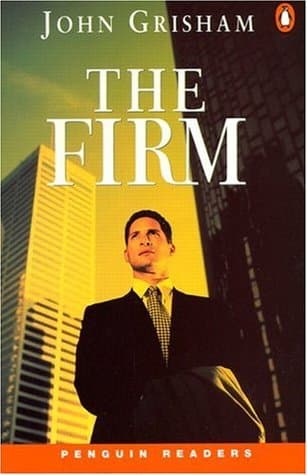
- The Firm
John Grisham
4.1 (43k) average on GoodreadsThrillerWhile both novels feature protagonists uncovering corruption within a powerful organization, "The Firm" focuses on legal malfeasance and the protagonist's desperate flight from a dangerous conspiracy. "The Escape Room" grounds its suspense in the psychological torment and moral reckoning within a confined, deadly game, with the corporate setting itself being the trap, rather than an external threat from the firm's clients. Goldin's narrative is more claustrophobic and directly confrontational within the corporate structure.
- Angels & Demons
Dan Brown
3.9 (2.7M) average on GoodreadsThrillerA Harvard symbologist races through Rome's ancient sites, deciphering cryptic clues to unmask the Illuminati and stop a vengeful plot to destroy the Vatican with a stolen antimatter weapon.
- Gone Girl
Gillian Flynn
4.1 (2.3M) average on GoodreadsThrillerA wife's sudden disappearance on her fifth anniversary reveals a web of lies and psychological warfare, exposing the secrets within a seemingly perfect marriage.
- The Girl on the Train
Paula Hawkins
3.9 (2.1M) average on GoodreadsThrillerA woman’s fascination with a seemingly perfect couple she watches from her daily train commute leads her into a dark investigation when she witnesses something that shatters their idyllic image.
- The Da Vinci Code
Dan Brown
3.9 (1.9M) average on GoodreadsThrillerA symbologist and a cryptologist race through European landmarks, deciphering ancient codes and uncovering a conspiracy that could rewrite the foundations of Christianity.





Enjoyed the summary?
A summary gives you the shape of the book. The book itself has the detail, the examples and the voice.
Find The Escape Room on AmazonAs an Amazon Associate, BookBrief earns from qualifying purchases. How we're funded