

Synopsis
Covers the whole plot, including the ending.
- Difficulty
- Medium
- Pacing
- Fast
- Mood
- Chilling, Suspenseful, Dark, Unsettling, Psychological
- Read it if
- You enjoy unreliable narrators, deeply unsettling psychological thrillers, and stories that explore the darkest corners of the human mind and family dynamics.
- Skip it if
- You prefer clear-cut mysteries with straightforward protagonists or are sensitive to graphic violence and disturbing themes.
The Good Son Plot Summary
Covers the whole plot, including the ending.
The Awakening and the Discovery
Yu-jin, 26 and suffering from epilepsy and memory issues, wakes to a strange metallic smell and a phone call from his older brother, Yu-min, who mentions their mother tried to call him last night. Yu-jin finds his mother's room door ajar and the bed empty. Downstairs, he discovers his mother's body in a pool of blood, her throat slit. He has no memory of the previous night, only a vague impression of his mother's voice calling his name. Overwhelmed, Yu-jin struggles to process the horror and his own blankness about what happened.
The Cover-Up and the Missing Knife
Instead of calling the police, Yu-jin is overcome by an impulse to clean the scene. He mops up the blood, washes his mother's body, and places it in the bathtub. His actions are driven by a desperate need to control the situation and perhaps protect himself from an unknown truth. He then begins a frantic search for the murder weapon, believing it to be a knife from their kitchen. He recalls a conversation with his mother about a missing knife, further fueling his suspicion and fear about his own involvement.
Yu-min's Arrival and Growing Suspicion
Yu-min, concerned after not being able to reach their mother, arrives at the duplex. Yu-jin tries to act normal, claiming their mother went out early for a walk. However, Yu-min's persistent questions and observations begin to chip away at Yu-jin's composure. Yu-min notices the unusual cleanliness of the house and Yu-jin's agitated state. Tension between the brothers grows as Yu-min expresses his worry about their mother's absence, while Yu-jin tries to keep his gruesome secret hidden.
A Flashback and a Troubled Past
As Yu-jin struggles with his memory gaps, he experiences a vivid flashback to his childhood. He remembers a traumatic incident involving a dog and his mother's reaction, hinting at a history of violence and his mother's overprotective nature. These fragmented memories suggest a dysfunctional family dynamic and raise questions about his relationship with his mother. The flashbacks also highlight the unreliability of Yu-jin's memory, making it harder for him to distinguish between reality and his own distorted perceptions.
The Confession and the Police
Unable to maintain the charade, Yu-jin confesses to Yu-min that their mother is dead. He reveals where he hid the body and his actions to clean the scene. Overwhelmed, Yu-min helps Yu-jin move the body out of the bathtub. Together, they create a story to tell the police: that their mother was murdered by an unknown assailant during a home invasion. This shared secret binds them, but also deepens the web of deceit, making it harder to uncover the truth of what really happened that night.
The Police Investigation and Inconsistencies
Detectives arrive and begin their investigation, quickly noticing inconsistencies in Yu-jin's and Yu-min's story. The lack of forced entry, the unusual cleanliness of the house, and Yu-jin's vague answers raise red flags. The police are suspicious of Yu-jin's memory loss and his calm demeanor, which conflicts with the image of a grieving son. Yu-jin feels pressure mounting as the detectives' questions become more pointed, forcing him to confront the possibility that they suspect him.
The Aunt's Visit and Family Secrets
Yu-jin's aunt, his mother's sister, visits the duplex. During her visit, she shares details about his mother's difficult past, including her marriage to Yu-jin's father, who was abusive. The aunt also reveals that Yu-jin's father was killed in an accident years ago, an event shrouded in mystery. These revelations provide a piece of the family puzzle, suggesting a history of violence and trauma that has impacted Yu-jin and his mother, and potentially sheds light on the current tragedy.
The Confrontation and the Truth About His Father
Driven by the aunt's revelations, Yu-jin confronts Yu-min, demanding to know the full truth about their father's death. Yu-min, under pressure, finally reveals that their mother killed their abusive father in self-defense years ago, and they covered it up to protect her. This confession shatters Yu-jin's understanding of his family and his mother, revealing a past built on violence and secrecy. The truth about his father's death shifts Yu-jin's perception of his mother from victim to perpetrator, foreshadowing a similar dynamic in the present.
The Final Flashback and the Unveiling of the Killer
A series of intense seizures and fragmented memories finally come together, revealing the horrifying truth to Yu-jin. He remembers the events of the previous night with chilling clarity: an argument with his mother about his medication, his growing resentment, and a sudden, violent outburst where he slit her throat with a knife. The metallic smell, the missing knife, and his mother's final call for his name were all tied to his own actions. The realization that he is the murderer, and that his memory loss was a psychological defense mechanism, is devastating.
The Motive and the Mother's Guilt
Yu-jin understands his motive. His mother, consumed by guilt and fear after killing his father, had become overly controlling. She manipulated his epilepsy, encouraging his dependence on her and preventing him from living an independent life, all under the guise of protection. Yu-jin's repressed rage, fueled by years of this psychological imprisonment and his mother's subtle reminders of his 'sickness,' finally erupted. He sees how his mother's actions, born from her own trauma, inadvertently led to his violent breakdown.
Yu-min's Dilemma and the Aftermath
Yu-min is left to deal with the shocking truth about his brother. He realizes Yu-jin's memory loss was not a complete fabrication, but a genuine psychological block. He also understands his own role in enabling their mother's control and the family's cycle of secrets. Yu-min must now decide whether to protect his brother, who is clearly disturbed, or to let the truth come out. The aftermath leaves him in a moral dilemma, facing the destruction of his family and the devastating impact of their shared past.
The Final Confrontation with Himself
With the truth fully revealed, Yu-jin faces the full weight of his actions. The facade of the 'good son' shatters, leaving him confronting the monster he has become. He understands the psychological impact of his epilepsy, his mother's overbearing love, and the family's dark secrets. He is left with the terrifying knowledge that he is capable of extreme violence, and that his own mind is dangerous and unreliable. The novel concludes with Yu-jin's bleak acceptance of his identity as a murderer and the irreversible consequences of his actions.
The Good Son Characters
Yu-jin
Protagonist
A young man with epilepsy and memory issues who discovers his mother murdered.
Yu-jin is a 26-year-old man suffering from epilepsy, which frequently causes memory gaps. He lives with his mother in Seoul and struggles with a sense of stagnation and dependence. Initially presented as a confused and vulnerable individual, his true nature is gradually revealed to be far more complex and disturbing. He is deeply affected by his mother's overprotective nature and her subtle manipulation, leading to a profound internal conflict and repressed rage. His journey is one of self-discovery, leading to the horrifying realization of his own capacity for violence.
Relationships: Mother (Deeply complex and ultimately destructive; a suffocating, manipulative love that leads to resentment and violence.); Yu-min (Older brother who initially tries to protect Yu-jin but is ultimately forced to confront his brother's true nature.); Aunt (Mother's sister; a source of hidden family history and truth.)
Mother
Victim/Antagonist
Yu-jin's murdered mother, whose past actions profoundly shaped her sons' lives.
Yu-jin's mother is initially presented as a victim, but her character is gradually revealed to be a complex, controlling figure. Haunted by her own past trauma of killing Yu-jin's abusive father, she became overly protective and manipulative, particularly towards Yu-jin. She used his epilepsy as a means to keep him dependent and close, preventing him from pursuing an independent life. Her love, though seemingly well-intentioned, was ultimately suffocating and contributed to Yu-jin's repressed rage. Her death is the catalyst for the entire narrative.
Relationships: Yu-jin (Suffocating, controlling, and ultimately destructive; a cycle of trauma and resentment.); Yu-min (More straightforward, less overtly controlling than with Yu-jin, but still part of the family's web of secrets.); Father (Abusive husband whom she killed in self-defense, an event that shaped her subsequent behavior.)
Yu-min
Supporting
Yu-jin's older brother, who tries to protect him and navigate the family's secrets.
Yu-min is Yu-jin's older brother, a seemingly more stable and responsible figure. He is initially concerned about his brother's well-being and their mother's disappearance. He tries to help Yu-jin cover up the murder, driven by a sense of family loyalty and perhaps a desire to avoid scandal. As the truth unravels, Yu-min is forced to confront the dark secrets of his family and the true nature of his brother. He represents the moral compass that is constantly challenged by the horrific events and his complicity in the cover-up.
Relationships: Yu-jin (Protective, but ultimately complicit in covering up the truth; a complex brotherly bond tested by murder.); Mother (Respectful, but aware of her controlling tendencies and the family's secrets.)
Aunt
Supporting
The mother's sister, who provides crucial insights into the family's past.
The aunt is the sister of Yu-jin's mother. She visits after the 'discovery' of the murder and, through her conversations with Yu-jin, reveals critical details about the family's past. She sheds light on the mother's difficult marriage to Yu-jin's abusive father and the circumstances surrounding his death. Her role is primarily to provide exposition and context, helping Yu-jin (and the reader) piece together the fragmented history that led to the present tragedy. She represents a connection to the past that Yu-jin's mother had tried to suppress.
Relationships: Mother (Sister; aware of her sister's past trauma and the secrets she kept.); Yu-jin (Nephew; provides him with crucial information about his family's history.)
Father
Mentioned
Yu-jin's deceased father, whose abusive nature led to his death and shaped the family's future.
Yu-jin's father is never seen alive in the novel, having been killed years prior. He is depicted as an abusive and violent man, whose actions deeply traumatized Yu-jin's mother. His death, initially shrouded in mystery, is later revealed to have been at the hands of Yu-jin's mother in self-defense. His legacy of violence and the subsequent cover-up are central to understanding the dysfunctional dynamics of the family and the mother's overprotective behavior towards Yu-jin. His presence is felt through the lingering trauma he inflicted.
Relationships: Mother (Abusive husband; his death at her hands led to her subsequent guilt and control.); Yu-jin (Biological father; his abusive nature and death indirectly shaped Yu-jin's life and mental state.); Yu-min (Biological father; also affected by the trauma of his father's abuse and death.)
Detectives
Supporting
The investigators probing the mother's murder, who quickly detect inconsistencies.
The detectives are the law enforcement officers assigned to investigate the mother's murder. They are astute and observant, quickly noticing the anomalies at the crime scene and the inconsistencies in Yu-jin's and Yu-min's fabricated story. They serve as an external force of pressure, gradually closing in on the truth and forcing Yu-jin to confront his own memories. Their persistent questioning and skeptical demeanor are crucial in driving the plot forward and escalating the psychological tension.
Relationships: Yu-jin (Interrogators; suspicious of his memory loss and demeanor.); Yu-min (Interrogators; also question his narrative.)
The Good Son Themes
The Unreliability of Memory
Yu-jin's epilepsy causes frequent memory gaps, making him an unreliable narrator of his own life and the events surrounding his mother's death. This theme is central as Yu-jin tries to piece together what happened, often misinterpreting flashbacks or having crucial details missing. The unreliable memory creates suspense and forces the reader to question Yu-jin's innocence, ultimately revealing that his amnesia is a psychological defense mechanism against a horrifying truth. For example, his initial inability to recall cleaning the crime scene or the actual murder is a manifestation of this theme.
“My memory was Swiss cheese, full of holes, and I was terrified of what might be lurking in the dark spaces.”
The Destructive Nature of Overprotective Love
Yu-jin's mother, traumatized by her past, shows an intense, suffocating form of love towards him. She manipulates his epilepsy to keep him dependent, preventing him from living an independent life. This 'love' is born out of guilt and fear, but it ultimately cripples Yu-jin emotionally and psychologically, fostering resentment and rage. This theme is evident in how she subtly discourages his attempts to find a job or move out, always emphasizing his 'fragility' and need for her care, culminating in his violent outburst.
“She wanted me to be weak. She needed me to be weak, so she could be strong.”
The Cycle of Violence and Trauma
The novel reveals a cycle of violence within the family. Yu-jin's father was abusive, leading to his mother killing him in self-defense. This act, and the subsequent cover-up, deeply impacted the mother, leading to her controlling behavior. This control, in turn, fuels Yu-jin's repressed rage, ultimately leading to him murdering his own mother. The trauma of the past is not resolved but passed down, resulting in new acts of violence. The revelation of the father's death and the mother's guilt exemplifies this theme.
“The past wasn't just behind us. It was inside us, a poison waiting to erupt.”
Identity and Self-Deception
Yu-jin grapples with his identity throughout the novel, initially seeing himself as a victim of his condition and circumstances. His 'good son' persona is a facade, both for himself and for others. The gradual uncovering of the truth forces him to confront the dark aspects of his own nature and the capacity for evil within him. His initial denial and attempts to create an alternative narrative are examples of self-deception, which eventually shatters, leaving him with a horrifying, yet true, understanding of who he is.
“I had been living a lie, not just to others, but to myself. The monster wasn't out there; it was me.”
The Nature of Evil
The novel explores whether evil is inherent or a product of circumstance and trauma. Yu-jin's actions are horrific, but the narrative looks into the psychological factors that contributed to his breakdown: his epilepsy, his mother's suffocating control, and the family's history of violence. The book suggests that evil can emerge from a combination of vulnerability, repression, and inherited trauma, blurring the lines between victim and perpetrator. Yu-jin's eventual understanding of his own motives, rather than a simple 'bad seed' explanation, highlights this complex theme.
“Was I born this way, or did she make me this way?”
Plot Devices & Literary Techniques
Unreliable Narrator
Yu-jin's memory gaps and psychological state make him an untrustworthy source of information.
Yu-jin serves as the primary unreliable narrator. His epilepsy causes memory loss, and his psychological trauma leads to repression and self-deception. This device is crucial for building suspense and mystery, as the reader is constantly questioning Yu-jin's perceptions and recollections. It allows the author to slowly reveal the truth through fragmented flashbacks and Yu-jin's internal struggle, ultimately leading to a shocking twist when the narrator himself is revealed to be the perpetrator, having suppressed the memory of his crime.
Flashbacks and Fragmented Memories
Sudden, often disturbing, recollections that slowly piece together the past.
Throughout the novel, Yu-jin experiences vivid, yet incomplete, flashbacks to his childhood and the night of the murder. These fragmented memories are initially confusing and disorienting, but they serve as crucial clues that gradually unveil the family's dark history and Yu-jin's own role in the crime. They are triggered by sights, sounds, or even conversations, acting as a slow-motion reveal that builds psychological tension and allows the reader to experience Yu-jin's journey of discovery alongside him.
Red Herring
Misleading clues or information designed to divert attention from the true culprit.
The initial setup of the crime scene, Yu-jin's amnesia, and the fabricated story about an unknown assailant all function as red herrings. The narrative initially points towards an external killer or even Yu-min as a potential suspect, diverting attention from Yu-jin himself. The missing knife, initially sought as evidence against an 'outsider,' becomes a red herring that ultimately points back to Yu-jin. These diversions heighten the mystery and make the final revelation more impactful by challenging the reader's initial assumptions.
Dramatic Irony
The audience knows more about the situation than some characters, especially Yu-jin himself.
Dramatic irony is subtly employed throughout the story, particularly in the early stages when Yu-jin is actively cleaning up the crime scene and hiding the body, while the reader may suspect his involvement even before he does. As Yu-jin struggles to remember, the reader gains an increasing sense of dread and suspicion about his actions, fueled by the inconsistencies and the context provided by other characters. This creates a powerful tension, as the reader anticipates Yu-jin's horrifying self-discovery.
The Good Son Quotes
“The memory of the blood, the smell, the silence—it was all there, vivid as a fresh wound.”
“I was a good son. I always was. So why did I feel like a monster?”
“The truth was a beast, and it was gnawing at me from the inside.”
“Sometimes, the most dangerous lies are the ones you tell yourself.”
“The world outside seemed to hum with a normal rhythm, oblivious to the chaos inside me.”
“Fear was a cold hand gripping my throat, squeezing the air out of me.”
“Every secret was a brick in the wall I was building around myself.”
“My mother’s ghost wasn’t just in my head; it was in the house, in the walls, in the very air I breathed.”
“The monster wasn't under my bed; it was looking back at me from the mirror.”
“You can't outrun what's inside you.”
“The silence of the house was more terrifying than any scream.”
“I was a puppet, and someone else was pulling the strings, or maybe I was pulling my own.”
“The past isn't just history; it's a living, breathing thing that can still bite you.”
“Sometimes, the only way to find the light is to walk through the darkest parts of yourself.”
Quiz
10 questions on the plot and the characters. Each answer comes with a short explanation.
Question 1
What is the first thing Yu-jin discovers upon waking up on the morning his mother is found dead?
- A note from his mother
- A strange metallic smell
- His brother at the door
- His mother's phone ringing
Show answer
B. A strange metallic smell Yu-jin wakes up to a strange metallic smell, which is the first unsettling detail of the morning.
Question 2
Where does Yu-jin find his mother's body?
- In her bedroom
- In the kitchen
- At the bottom of the stairs
- In the living room
Show answer
C. At the bottom of the stairs He discovers her murdered body lying in a pool of blood at the bottom of the stairs.
Question 3
What medical condition has Yu-jin suffered from for most of his life, affecting his memory?
- Amnesia
- Narcolepsy
- Seizures
- Schizophrenia
Show answer
C. Seizures The synopsis states Yu-jin has suffered from seizures for most of his life, often leading to memory issues.
Question 4
What is Yu-jin's initial reaction to finding his mother's body, before he fully processes the situation?
- He immediately calls the police.
- He tries to clean up the blood.
- He feels a sense of detachment and confusion.
- He faints from shock.
Show answer
C. He feels a sense of detachment and confusion. Yu-jin's initial reaction is often characterized by a disturbing detachment and a struggle to comprehend the reality of what he's seeing, indicative of his psychological state.
Question 5
Who calls Yu-jin on the morning of his mother's death, asking if everything's alright?
- His aunt
- His brother
- His girlfriend
- A neighbor
Show answer
B. His brother The story begins with a phone call from his brother, inquiring about their mother after missing her call.
Question 6
What is the primary theme explored through Yu-jin's three-day search?
- The pursuit of financial gain
- The search for romantic love
- The mysteries of mind and memory, and family truth
- The challenges of urban living
Show answer
C. The mysteries of mind and memory, and family truth The synopsis highlights that the book explores 'the mysteries of mind and memory, and the twisted relationship between a mother and son, with incredible urgency.'
Question 7
What faint impression does Yu-jin have about his mother from the night before her death?
- Her singing a lullaby
- Her calling his name
- Her watching TV
- Her leaving the house
Show answer
B. Her calling his name He has a faint impression of his mother calling his name, which later he questions if it was for help or begging for her life.
Question 8
What is the central psychological conflict Yu-jin faces throughout the narrative?
- Overcoming a fear of heights
- Reconciling his past memories with the present reality and his own potential guilt
- Deciding on a career path
- Dealing with a difficult landlord
Show answer
B. Reconciling his past memories with the present reality and his own potential guilt The core of the thriller is Yu-jin's frantic search to uncover what happened and learn the truth about himself and his family, heavily tied to his unreliable memory and potential role in the crime.
Question 9
The description compares 'The Good Son' to 'The Talented Mr. Ripley' and 'The Bad Seed'. What common element do these comparisons suggest about the protagonist, Yu-jin?
- He is a wealthy socialite.
- He is an unassuming detective.
- He harbors a dark, potentially psychopathic, interior beneath a seemingly normal exterior.
- He is a victim of circumstance with no agency.
Show answer
C. He harbors a dark, potentially psychopathic, interior beneath a seemingly normal exterior. Both 'The Talented Mr. Ripley' and 'The Bad Seed' feature protagonists who appear innocent or charming but possess a chilling, amoral, or psychopathic nature, hinting at Yu-jin's true character.
Question 10
What is the significance of the title 'The Good Son' in the context of the story's themes?
- It literally describes Yu-jin's exemplary behavior throughout the book.
- It highlights the ironic contrast between Yu-jin's perceived role and his potentially sinister actions or true nature.
- It refers to Yu-jin's brother, who is genuinely good.
- It is a metaphor for the family's strong moral values.
Show answer
B. It highlights the ironic contrast between Yu-jin's perceived role and his potentially sinister actions or true nature. Given the psychological thriller nature and the exploration of a 'twisted relationship between a mother and son,' the title 'The Good Son' is likely deeply ironic, contrasting with Yu-jin's potential guilt and disturbed psyche.
The Good Son FAQ
What is the central mystery Yu-jin faces at the beginning of the book?
Yu-jin wakes up to discover his mother's brutally murdered body at the bottom of their stairs, covered in blood. He has no memory of the previous night and is plagued by a metallic smell, struggling to piece together what happened and whether he might be responsible due to his memory gaps.
Who are the key family members involved in Yu-jin's life?
Yu-jin lives with his mother, who is a famous swimmer. He also has an older brother, Yu-min, who lives separately but maintains contact. Their father is deceased, and his mother's sister, Aunt Hye-won, is also a significant figure in his life.
What medical condition does Yu-jin suffer from, and how does it impact the plot?
Yu-jin suffers from seizures, which often lead to significant memory loss, particularly around the time of an episode. This condition is crucial to the plot because it makes him an unreliable narrator and casts doubt on his innocence, as he cannot account for his whereabouts or actions during critical periods.
What is the significance of the 'metallic smell' Yu-jin frequently mentions?
The metallic smell is a recurring sensory detail that Yu-jin associates with the crime scene and his fragmented memories of the night. It's a key indicator of blood and violence, serving as a constant, unsettling reminder of the murder and his potential involvement.
What role does Yu-min, Yu-jin's brother, play in the story?
Yu-min initially calls Yu-jin about their mother's missed calls, unknowingly triggering the discovery of the body. He later becomes involved in the investigation, offering a different perspective on their mother and Yu-jin's past, and ultimately revealing crucial family secrets.
What is the truth about Yu-jin's 'seizures' and his medical history?
It is revealed that Yu-jin's 'seizures' are not solely neurological but are often intertwined with his psychopathic tendencies and violent outbursts. The memory gaps are a manifestation of his dissociative state and his mind's way of compartmentalizing his brutal actions, rather than just a side effect of epilepsy.
What is the significance of the family's past and the death of Yu-jin's father?
Yu-jin's father died under suspicious circumstances, which his mother always attributed to an accident. The truth is that Yu-jin, as a child, was responsible for his father's death, pushing him down the stairs. This early act of violence sets a precedent for his later actions and his mother's desperate attempts to cover for him.
How did Yu-jin's mother try to 'cure' him of his violent tendencies?
Yu-jin's mother, desperate to suppress his psychopathic nature, secretly administered powerful sedatives and other medications to him throughout his life. She believed these drugs would control his violent impulses and keep him 'normal,' but they also contributed to his memory issues and emotional blunting.
What is the true story behind the 'dog incident' that Yu-jin vaguely remembers?
The 'dog incident' was not an accident but an act of cruelty by a young Yu-jin, who intentionally harmed the family pet. This event was a significant red flag for his mother, confirming her fears about his dark nature and prompting her to take drastic measures to control him.
How does Yu-jin's upbringing contribute to his psychological state?
Yu-jin was raised by a mother who was both fiercely protective and deeply fearful of him, constantly trying to control his true nature. This created a suffocating, secretive environment that fostered his psychopathy, as he learned to manipulate and hide his true self while being denied genuine emotional connection and accountability.
Discuss the 'good son' facade Yu-jin maintains and its psychological implications.
Yu-jin meticulously crafts a 'good son' persona, appearing polite and compliant, which is a classic psychopathic trait allowing him to blend in and avoid suspicion. This facade is a sophisticated defense mechanism, designed to manipulate those around him and conceal his violent impulses, making him appear harmless while internally he harbors dark thoughts.
How does memory, or the lack thereof, function as a psychological tool for Yu-jin?
Yu-jin's 'memory loss' is not merely a symptom of his seizures but a psychological coping mechanism for his psychopathy. It allows him to dissociate from his violent acts, maintaining a distorted self-image where he is not responsible. This selective amnesia helps him avoid guilt and continue his patterns of behavior.
Explore the complex and twisted mother-son relationship at the heart of the novel.
The relationship between Yu-jin and his mother is a toxic blend of love, fear, and manipulation. His mother loves him deeply but is terrified of his true nature, leading her to enable and cover up his violence. Yu-jin, in turn, sees her as both a protector and an obstacle, manipulating her love to serve his own ends.
Is Yu-jin a purely evil character, or are there moments of genuine humanity?
Yu-jin is predominantly depicted as a psychopath, lacking empathy and remorse, especially for his violent actions. While he occasionally expresses fleeting confusion or a desire for normalcy, these are often self-serving or superficial, making it difficult to find genuine humanity beneath his carefully constructed facade. His core nature remains deeply disturbing.
To what extent is Yu-jin a product of nature vs. nurture?
The novel suggests a strong 'nature' component to Yu-jin's psychopathy, implying a predisposition to violence from a young age. However, his mother's extreme 'nurture' – her enabling, covering up, and medicating – undoubtedly exacerbated and shaped his condition, preventing him from developing any moral compass or accountability.
What is the significance of the title, 'The Good Son,' given Yu-jin's true nature?
The title is deeply ironic, highlighting the stark contrast between Yu-jin's public persona and his monstrous true self. It reflects the facade he presents to the world and the desperate hope his mother harbored for him, emphasizing the tragic deception and the ultimate failure of that 'good son' image.
Does the ending offer any hope for Yu-jin's redemption or recovery?
The ending offers little to no hope for Yu-jin's redemption. It firmly establishes his psychopathic nature and his continued manipulation, suggesting that he is beyond recovery or remorse. The final revelations solidify his identity as a remorseless killer, reinforcing the chilling reality of his condition.
How does the author use the unreliable narrator to enhance the thriller aspect?
The author expertly uses Yu-jin's unreliable narration to create constant suspense and disorientation. By filtering events through his fragmented, self-serving memory, the reader is constantly questioning what is real, who to trust, and what Yu-jin's true intentions are, making the journey to the truth far more unsettling and thrilling.
About the author

You-Jeong Jeong is a South Korean author known for her fiction. Her notable work, "The Good Son," explores themes of family and morality through a psychological lens. Jeong's writing often delves into complex human emotions and relationships.
Similar books
- Gone Girl
Gillian Flynn
4.1 (2.3M) average on GoodreadsThrillerKnown for its unreliable narration, psychological twists, and dark domestic themes.
- The Silent Patient
Alex Michaelides
4.1 (507k) average on GoodreadsThrillerWhile both "The Good Son" and "The Silent Patient" are psychological thrillers centered on a shocking crime and a character's journey to uncover the truth, they differ in their narrative approach. "The Silent Patient" relies heavily on a more traditional mystery structure, with a therapist attempting to unlock the secrets of a mute patient. "The Good Son," conversely, is primarily an internal journey of self-discovery and confrontation, with the protagonist himself being the primary, albeit unreliable, investigator of his own actions and past. Jeong's novel is arguably more unsettling due to its direct immersion into the perpetrator's fractured mind.
- Angels & Demons
Dan Brown
3.9 (2.7M) average on GoodreadsThrillerA Harvard symbologist races through Rome's ancient sites, deciphering cryptic clues to unmask the Illuminati and stop a vengeful plot to destroy the Vatican with a stolen antimatter weapon.
- The Girl on the Train
Paula Hawkins
3.9 (2.1M) average on GoodreadsThrillerA woman’s fascination with a seemingly perfect couple she watches from her daily train commute leads her into a dark investigation when she witnesses something that shatters their idyllic image.
- The Da Vinci Code
Dan Brown
3.9 (1.9M) average on GoodreadsThrillerA symbologist and a cryptologist race through European landmarks, deciphering ancient codes and uncovering a conspiracy that could rewrite the foundations of Christianity.
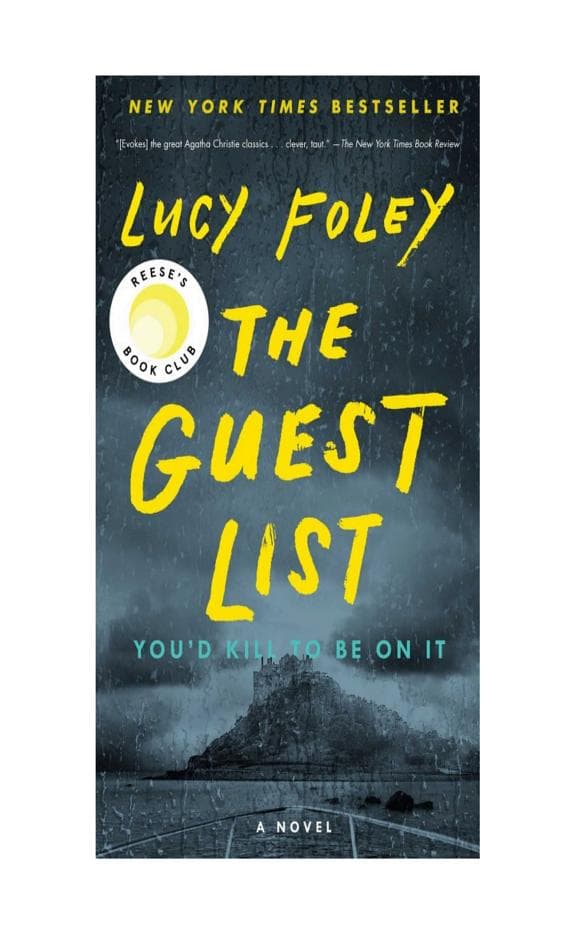
- The Guest List
Lucy Foley
3.8 (1.3M) average on GoodreadsThrillerOn a remote Irish island, a glamorous wedding descends into a deadly whodunnit when a guest is found murdered, trapping everyone with their secrets as a storm rages.





Enjoyed the summary?
A summary gives you the shape of the book. The book itself has the detail, the examples and the voice.
Find The Good Son on AmazonAs an Amazon Associate, BookBrief earns from qualifying purchases. How we're funded