
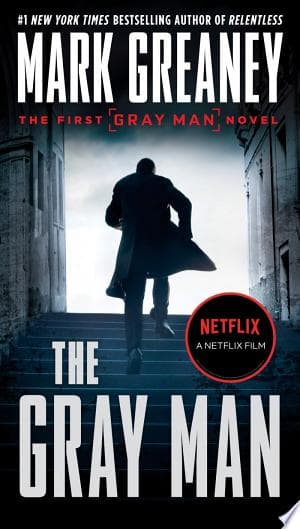
Synopsis
Covers the whole plot, including the ending.
- Difficulty
- Easy
- Pacing
- Fast
- Mood
- Action-packed, Suspenseful, Gritty, Intense
- Read it if
- You love high-octane, globe-trotting spy thrillers with non-stop action and a morally ambiguous protagonist.
- Skip it if
- You prefer character-driven narratives over plot-driven action, or are looking for a slow-burn mystery.
The Gray Man Plot Summary
Covers the whole plot, including the ending.
The Betrayal in Damascus
The novel starts with Court Gentry, a former CIA operative known as the Gray Man, on a mission in Damascus, Syria. He kills a target, but immediately after, his extraction team, led by CIA officer Matthew Fitzroy, attacks him. Gentry realizes he has been set up and is now a target. He escapes the ambush, killing several former colleagues. This event destroys his already weak trust in the agency and confirms he is now a rogue agent, hunted by the organization he once served. His escape is brutal and shows his deadly skills and quick thinking under pressure.
A New Contract and the Hunt Begins
Back in the United States, Lloyd, a defense contractor who planned the attempt on Gentry's life, learns Gentry survived. Lloyd wants to get a laptop with evidence that Gentry unknowingly has. He gets Suzanne Brewer, a high-ranking CIA officer, to lead the hunt for Gentry. Lloyd also sends a team of skilled mercenaries, including the Patrice, to track Gentry across Europe, offering a large reward for his capture or death. This starts the global hunt for the Gray Man, with powerful forces against him.
The Barcelona Escape
Gentry, now in Barcelona, tries to hide and understand why he is targeted. He contacts an old associate, but his location is quickly found. A fierce gun battle starts, forcing Gentry to fight many assassins sent by Lloyd. He shows his combat skills, killing his pursuers with precise movements, but gets hurt. During the chaos, he realizes how big the operation against him is and the resources his enemies have. He understands that hiding will not be enough; he must find the truth behind the betrayal to survive.
Protecting the Children
Gentry learns that Matthew Fitzroy, the CIA officer who led the Damascus ambush, has a wife, Margaret, and two young daughters, Claire and Kate. Lloyd's operatives hold them hostage in a compound in France. Lloyd uses them to control Fitzroy, who also has important information. Despite Fitzroy's betrayal, Gentry feels he must protect innocent lives, especially children. He decides to change his plans from escaping to a daring rescue mission, knowing it will put him directly in the path of Lloyd's forces.
Infiltrating the Compound
Gentry plans and carries out an infiltration, breaching the heavily guarded French chateau where Margaret and the girls are held. He uses his stealth, tactical skill, and knowledge of security to get past the defenses. He encounters many armed guards and fights them in close quarters, systematically removing threats. His main goal is to get the family out without harming them, which makes his mission more complex and risky. The rescue is tense and violent, pushing Gentry to his limits.
The Escape and the Pursuit
After getting Margaret, Claire, and Kate, Gentry arranges their escape from the compound. This starts a large chase by Lloyd's forces, including Patrice, across rural France and into Switzerland. Gentry uses different vehicles and evasive moves, constantly adapting to the threat. The journey is dangerous, as they are relentlessly hunted. Gentry must balance protecting the family with his own survival, making hard choices and fighting multiple skirmishes to keep them safe from their pursuers.
The Truth About the Sierra Program
As they travel, Gentry begins to understand Lloyd's full conspiracy. He learns that the laptop he had contained evidence of Lloyd's illegal activities, including killing political figures and manipulating global conflicts for money, all done through corrupt parts of the CIA's Sierra program. Fitzroy, who was at first involved, had doubts and tried to expose Lloyd, leading to his family's capture. Gentry realizes he is not just a rogue agent, but a key part in exposing a large, dangerous network.
Confrontation with Patrice
The chase ends in several intense fights with Patrice, Lloyd's chief enforcer. Patrice is as skilled and ruthless as Gentry, making their encounters brutal and personal. Their final fight is violent and long, where both men push their limits. Gentry eventually outmaneuvers and defeats Patrice, but with much effort and injury. This win shows Gentry's combat skills and his resolve to protect the family, removing one of his most dangerous threats.
The Swiss Safe House and the Laptop
Gentry and the family finally reach a safe house in Switzerland. There, Gentry accesses the encrypted data on the laptop. The contents confirm his suspicions: a detailed record of Lloyd's illegal operations, including assassinations, arms dealing, and bribing high-ranking government officials worldwide, all hidden within the Sierra program. The information is explosive and undeniable, implicating Lloyd and several powerful figures within the CIA and global politics. This discovery strengthens Gentry's resolve to expose the truth.
The Final Showdown with Lloyd
Gentry, using the laptop's information, sets up a final confrontation with Lloyd. He lures Lloyd into a trap, exposing his crimes to the authorities and ensuring he cannot escape justice. The confrontation is tense, with Lloyd trying to manipulate and bribe Gentry, but Gentry stands firm. He ensures that Lloyd's criminal enterprise is dismantled and the evidence is secured, ending the threat Lloyd posed to global security and to Gentry. The resolution of this main conflict gives Gentry a sense of closure.
The Aftermath and Loose Ends
With Lloyd neutralized and the evidence secured, Gentry ensures Margaret and her daughters are safely reunited with Matthew Fitzroy, who is now free to work with authorities. Gentry, having fulfilled his duty, again disappears into the shadows. While the immediate threat is gone, he knows his life as the Gray Man will always be solitary and dangerous. He remains a target for other corrupt elements within the intelligence community, forcing him to always be careful. The ending leaves Gentry's future open, highlighting his ongoing status as a hunted man.
The Gray Man Characters
Court Gentry (The Gray Man)
Protagonist
A former CIA operative turned freelance assassin, now hunted by his former agency.
Court Gentry is a highly skilled, pragmatic, and morally complex former CIA operative. He possesses unparalleled combat skills, a keen intellect, and an uncanny ability to disappear and operate in the shadows. Despite his profession as a 'kill agent,' he operates under a strict moral code, refusing to harm innocents and often acting as a protector for the vulnerable. He is driven by a desire for justice and survival, and a deep-seated distrust of authority figures, especially after being betrayed by the Sierra program. His past as an orphan and his experiences in covert operations have made him a solitary figure.
Relationships: Matthew Fitzroy (Former colleague and betrayer, later a reluctant ally whose family Gentry protects.); Lloyd (Primary antagonist, the orchestrator of the plot to kill Gentry and retrieve the laptop.); Margaret Fitzroy (Woman Gentry protects, wife of Matthew Fitzroy.); Claire & Kate Fitzroy (Children Gentry protects.)
Lloyd
Antagonist
A ruthless and powerful defense contractor, the mastermind behind the conspiracy.
Lloyd is the primary antagonist, a cunning and utterly amoral defense contractor. He orchestrates a vast global conspiracy involving assassinations, arms dealing, and the manipulation of international conflicts for immense personal profit. He views people as expendable assets and is driven solely by greed and power. His ruthlessness knows no bounds, as evidenced by his willingness to target Gentry and hold Fitzroy's family hostage. He operates with impunity, leveraging his wealth and influence to control elements within the CIA and other intelligence agencies. He is a master manipulator, preferring to work from the shadows.
Relationships: Court Gentry (His target, who unwittingly possesses incriminating evidence.); Patrice (His chief enforcer and most trusted operative.); Suzanne Brewer (CIA officer he manipulates to assist in hunting Gentry.)
Matthew Fitzroy
Supporting
A compromised CIA officer who initially betrays Gentry but later becomes an unwitting pawn.
Matthew Fitzroy is a CIA officer who initially participates in the ambush of Gentry in Damascus. He is a complex character, not entirely evil, but compromised by Lloyd's manipulation and threats against his family. He possesses critical information about Lloyd's operations and the Sierra program's corruption. His actions are driven by a desperate attempt to protect his wife and daughters, even if it means betraying a former colleague. He is deeply conflicted and ultimately seeks redemption by cooperating with Gentry to expose Lloyd.
Relationships: Court Gentry (Former colleague, initially betrayed him, but later reliant on him for his family's safety.); Margaret Fitzroy (His wife, held hostage by Lloyd.); Claire & Kate Fitzroy (His daughters, held hostage by Lloyd.)
Patrice
Antagonist
Lloyd's highly skilled and brutal chief enforcer.
Patrice is Lloyd's primary enforcer, a ruthless and exceptionally dangerous mercenary. He is a formidable adversary, possessing combat skills that rival Gentry's. Patrice is fiercely loyal to Lloyd and carries out his orders with cold efficiency and a complete lack of remorse. He is relentless in his pursuit of Gentry and the Fitzroy family, often employing extreme violence. His character serves as a physical manifestation of the immediate threat Gentry faces, and their confrontations are some of the most intense in the novel. He is a professional killer, driven by loyalty and the thrill of the hunt.
Relationships: Lloyd (His employer, to whom he is fiercely loyal.); Court Gentry (His primary target and rival in combat.)
Suzanne Brewer
Supporting
A high-ranking CIA officer manipulated by Lloyd.
Suzanne Brewer is a high-ranking CIA officer who is initially tasked with hunting Gentry. She is ambitious and appears to be competent, but she is also unknowingly or willingly manipulated by Lloyd, who uses her position and resources within the agency to further his agenda. She represents the corruptible elements within the intelligence community that Lloyd exploits. While not inherently evil, her actions contribute to Gentry's predicament, highlighting the pervasive nature of Lloyd's influence. She is focused on agency protocols and capturing Gentry, without fully understanding the larger conspiracy.
Relationships: Lloyd (Her de facto superior in the hunt for Gentry, though she believes she is working within agency parameters.); Court Gentry (Her primary target, whom she believes to be a rogue threat.)
Margaret Fitzroy
Supporting
Matthew Fitzroy's wife, held hostage by Lloyd's forces.
Margaret Fitzroy is the wife of Matthew Fitzroy and the mother of Claire and Kate. She is an innocent caught in the crossfire of Lloyd's conspiracy. Despite the terrifying circumstances of her captivity, she demonstrates remarkable resilience and courage, primarily driven by her desire to protect her daughters. She represents the innocent victims of the geopolitical games played by powerful figures. Her vulnerability and the threat to her life motivate Gentry to act as a protector, adding a crucial emotional dimension to his character.
Relationships: Matthew Fitzroy (Her husband.); Claire & Kate Fitzroy (Her daughters.); Court Gentry (Her rescuer and protector.)
Claire Fitzroy
Supporting
Matthew and Margaret's eldest daughter, held hostage.
Claire is one of Matthew and Margaret Fitzroy's two young daughters, caught in the terrifying ordeal of being held hostage by Lloyd's operatives. She is a child, vulnerable and scared, but also resilient. Her presence, along with her younger sister Kate, serves as a powerful motivator for Court Gentry, highlighting his moral code and his willingness to risk everything to protect innocent lives. Her innocence contrasts sharply with the brutal world Gentry inhabits, emphasizing the stakes of his mission.
Relationships: Margaret Fitzroy (Her mother.); Kate Fitzroy (Her sister.); Court Gentry (Her rescuer.)
Kate Fitzroy
Supporting
Matthew and Margaret's youngest daughter, held hostage.
Kate is the youngest of Matthew and Margaret Fitzroy's daughters, also held hostage by Lloyd's forces. Like her sister Claire, she is an innocent victim. Her extreme vulnerability further emphasizes the ruthlessness of the antagonists and the moral stakes of Gentry's mission. Her safety is paramount to Gentry, and her presence underscores the humanity that Gentry, despite his 'Gray Man' persona, possesses. She represents the ultimate innocence that Gentry strives to protect in a corrupt world.
Relationships: Margaret Fitzroy (Her mother.); Claire Fitzroy (Her sister.); Court Gentry (Her rescuer.)
The Gray Man Themes
Betrayal and Trust
The novel explores betrayal, especially within covert operations. Court Gentry's own agency, the CIA's Sierra program, betrays him, making him a hunted man. This initial betrayal destroys Gentry's trust in institutions, forcing him to rely only on himself. Matthew Fitzroy's early involvement in Gentry's ambush, driven by threats to his family, complicates the theme. Gentry's choice to protect Fitzroy's family despite the betrayal shows his moral code, suggesting that trust can be rebuilt through shared danger and a common enemy. The conspiracy shows how betrayal can reach high levels of power.
“Once you cross that line, there's no going back. You're either in or you're out. And if you're out, they'll make sure you stay out.”
Moral Ambiguity and Justification
The story takes place in a morally gray world where characters act outside normal laws. Gentry, an assassin, is also a hero who protects innocents. His violent actions are often justified by the greater evil he fights. Lloyd, the villain, believes his actions are justified by profit and power, showing a sharp contrast in moral views. The CIA itself is shown with shades of gray, with corrupt elements like Suzanne Brewer unknowingly or knowingly helping Lloyd, while others are just pawns. The novel makes readers question what 'good' and 'evil' mean when all parties operate in the shadows and do questionable things.
“There's no gray area between killing for a living and killing to stay alive.”
Survival and Resilience
At its heart, The Gray Man is a story of survival. Court Gentry is constantly hunted by powerful enemies, forcing him to use all his skill, intelligence, and physical endurance to stay alive. His resilience is remarkable; he endures injuries, betrayals, and overwhelming odds. This theme also applies to the Fitzroy family, who must find their own strength to survive captivity and the chase. The story highlights the human ability to adapt, fight, and endure against seemingly impossible physical and psychological threats. Gentry's ability to work alone and his will to live are central to this theme.
“He was a ghost, a whisper, a phantom. And phantoms were hard to kill.”
The Price of Power and Corruption
The novel shows how unchecked power and greed lead to corruption. Lloyd, a rich defense contractor, uses his influence to control governments, kill political figures, and exploit global conflicts for money. His actions show the destructive results when power is separated from ethics. Corruption extends into the CIA, with parts of the Sierra program compromised and used for Lloyd's illegal plans. The story is a warning about how easily powerful institutions can be corrupted by self-interested individuals, and the far-reaching impact of such corruption on innocent lives and global stability.
“Money bought loyalty, even in the shadows.”
Plot Devices & Literary Techniques
The MacGuffin: The Laptop
A critical, incriminating laptop that drives the plot.
The laptop Gentry unknowingly possesses is the central MacGuffin. It contains all the incriminating evidence of Lloyd's vast criminal enterprise, including assassinations, arms dealing, and corruption within the CIA. Its existence and the efforts to retrieve it are the primary catalysts for the entire plot, motivating Lloyd to hunt Gentry and compelling Gentry to understand why he's being targeted. The laptop itself isn't what Gentry desires, but its contents are crucial for exposing the conspiracy and bringing the antagonists to justice, making it a powerful narrative driver.
The Unreliable Narrator (Implied)
The shifting perspectives and limited information create suspense.
While not a first-person narrative, the story often aligns with Gentry's limited knowledge, creating an implied unreliable narrative. Gentry initially doesn't know why he's being targeted, and the reader discovers the truth alongside him. This creates a sense of disorientation and suspense, mirroring Gentry's own confusion and isolation. The reader, like Gentry, has to piece together the conspiracy from fragmented information and dangerous encounters, making the revelations more impactful and keeping the stakes high. The 'unreliability' comes from the withheld information and the gradual unveiling of the full, complex truth.
The Chase Sequence
A prolonged, high-stakes pursuit that builds tension.
The novel extensively uses the chase sequence as a primary plot device. From Gentry's initial escape in Damascus to the relentless pursuit across Europe with the Fitzroy family, the narrative is punctuated by continuous, high-octane chases. These sequences not only build immense tension and showcase Gentry's tactical brilliance and survival skills but also serve to advance the plot by forcing confrontations and revealing new information. The prolonged nature of the chase emphasizes the overwhelming odds against Gentry and the relentless determination of his pursuers, driving the narrative forward with urgency.
Moral Dilemma
Gentry's choice to protect innocents despite personal risk.
A significant moral dilemma drives a large portion of Gentry's actions: his decision to protect Matthew Fitzroy's family, despite Fitzroy's initial betrayal and the immense personal risk involved. This choice elevates Gentry beyond a simple mercenary, showcasing his inherent moral compass and his refusal to let innocents suffer. It provides a deeper motivation than mere survival, adding emotional weight to the action. This dilemma forces Gentry to diverge from his typical 'fade into the shadows' protocol, placing him directly in harm's way for a cause beyond his immediate self-interest.
The Gray Man Quotes
“There are no good guys, no bad guys. There's just guys. And they all want something.”
“Every man has a weakness. Find it. Exploit it.”
“The problem with being invisible is that sometimes you actually disappear.”
“He moved like a phantom, a whisper of death in the night.”
“You can't outrun your past, but you can definitely outfight it.”
“Fear is a weapon. Use it wisely.”
“The world is a chessboard, and I'm just a pawn trying not to get taken.”
“Sometimes the best defense is a good offense. Sometimes it's just running like hell.”
“He didn't kill for pleasure, but he didn't lose sleep over it either.”
“Loyalty is a luxury I can't afford.”
“The only thing worse than a bullet in the chest is a bullet you didn't see coming.”
“He was a ghost in a world that didn't believe in them, until they met one.”
“The rules are for other people. Not for us.”
“Every mission is personal, even if you pretend it isn't.”
Quiz
10 questions on the plot and the characters. Each answer comes with a short explanation.
Question 1
What is Court Gentry's codename, by which he is known in the covert realm?
- The Ghost
- The Shadow
- The Gray Man
- The Hunter
Show answer
C. The Gray Man The book's title and description explicitly state that Court Gentry is known as 'The Gray Man'.
Question 2
What is the primary reason Court Gentry becomes a target at the beginning of the novel?
- He failed a mission and embarrassed his superiors.
- He stole sensitive intelligence from the CIA.
- He outlived his usefulness to the powerful forces employing him.
- He betrayed a fellow agent during a critical operation.
Show answer
C. He outlived his usefulness to the powerful forces employing him. The provided text states, 'in their eyes, Gentry has just outlived his usefulness,' indicating this as the reason he becomes a target.
Question 3
Who is the main antagonist pursuing Court Gentry throughout the novel?
- Lloyd Hansen
- Donald Fitzroy
- Suzanne Brewer
- Dani Miranda
Show answer
A. Lloyd Hansen Lloyd Hansen is the ex-CIA operative turned private contractor hired to hunt down Court Gentry.
Question 4
What is Court Gentry's profession or role mentioned in the book's description?
- A military sniper
- A covert operative who accomplishes the impossible
- A deep-cover FBI agent
- A private investigator
Show answer
B. A covert operative who accomplishes the impossible The description refers to Gentry as 'a legend in the covert realm, moving silently from job to job, accomplishing the impossible'.
Question 5
What specific skill is highlighted about Court Gentry in the provided text that makes him a 'legend'?
- His ability to hack any system.
- His talent for disguise and infiltration.
- His consistent success in hitting his target.
- His diplomatic negotiation skills.
Show answer
C. His consistent success in hitting his target. The text explicitly states, 'And he always hits his target. Always,' following the description of him as a legend.
Question 6
What is the key thematic conflict Gentry faces as described in the summary?
- The struggle between loyalty to country and personal freedom.
- The moral dilemma of killing for a living versus killing to survive.
- The choice between a life of solitude and forming new alliances.
- The conflict between following orders and questioning authority.
Show answer
B. The moral dilemma of killing for a living versus killing to survive. The summary concludes with, 'Gentry is going to prove that, for him, there’s no gray area between killing for a living and killing to stay alive,' highlighting this central theme.
Question 7
What is the primary motivation for the 'forces more lethal than Gentry' who target him?
- Revenge for past operations.
- Ideological differences.
- Money and power.
- Protecting national security.
Show answer
C. Money and power. The text states, 'Forces like money. And power. And there are men who hold these as the only currency worth fighting for,' indicating these as their motivations.
Question 8
Which major European city serves as a significant setting for early parts of Court Gentry's escape?
- London
- Paris
- Geneva
- Rome
Show answer
C. Geneva The initial pursuit of Gentry by Hansen's team begins in Geneva, Switzerland, after Gentry's assassination attempt.
Question 9
What is the specific nature of the 'asset' that Court Gentry is tasked with protecting, which ultimately puts him at odds with his former employers?
- A defector from a hostile government.
- The niece of his former handler, Fitzroy.
- A scientist with critical nuclear codes.
- A journalist with incriminating evidence.
Show answer
B. The niece of his former handler, Fitzroy. Gentry's mission evolves into protecting Claire Fitzroy, the niece of his former handler, Donald Fitzroy, who is targeted because of her uncle's knowledge.
Question 10
What organization is Lloyd Hansen ultimately working for when he hunts Gentry?
- A rogue faction within the CIA.
- A private military contractor hired by a powerful, shadowy group.
- The Russian SVR.
- An international terrorist syndicate.
Show answer
B. A private military contractor hired by a powerful, shadowy group. Lloyd Hansen is an ex-CIA operative now working for a private security firm (Sierra International) on behalf of the powerful group that wants Gentry eliminated.
The Gray Man FAQ
What is the core premise of 'The Gray Man'?
The Gray Man introduces Court Gentry, a former CIA operative who now works as an off-the-books assassin. The plot kicks off when his former employer, the CIA, decides he has become a liability and puts a kill order on him, forcing Gentry to fight for his life against his former colleagues.
Who is Court Gentry and what is his background?
Court Gentry, also known as the Gray Man, is a highly skilled assassin who previously worked for the CIA's Special Activities Division. He was trained in various combat techniques, espionage, and survival skills, making him an almost unstoppable force in the covert world, even after he left the agency.
Who is Lloyd Hansen and what is his role in the story?
Lloyd Hansen is a ruthless and ambitious former CIA operative, now working for a private security firm, who is tasked with hunting down Court Gentry. He serves as Gentry's primary antagonist, orchestrating a global manhunt and demonstrating a willingness to use extreme measures to achieve his objective.
What prompts the CIA to turn against Court Gentry?
The CIA turns against Court Gentry because he possesses sensitive information that could expose illegal activities conducted by high-ranking officials within the agency. His knowledge makes him a significant liability, leading them to issue a kill order to silence him permanently.
Where does the story primarily take place?
The narrative of 'The Gray Man' spans multiple international locations, reflecting Gentry's global reach and the extensive manhunt against him. Key action sequences occur across various European cities, highlighting the intricate web of intelligence and pursuit.
Are there any subtle hints about Gentry's past beyond his CIA service?
The book subtly hints at Court Gentry's past before the CIA, suggesting a difficult upbringing or a background that made him uniquely suited for covert operations. His detached demeanor and exceptional survival instincts are often attributed to experiences that predated his recruitment into the agency.
What is the significance of the 'Gray Man' moniker?
The 'Gray Man' moniker signifies Court Gentry's ability to operate undetected, blending into the background and leaving no trace. It reflects his ghost-like efficiency and his talent for disappearing after completing a mission, making him a legend in the covert world.
Are there any hidden connections between characters that aren't immediately obvious?
While not explicitly stated early on, there are underlying connections between some of the secondary characters and the broader conspiracy against Gentry, suggesting that the betrayal runs deeper than just a simple kill order. Certain individuals have hidden agendas tied to the sensitive information Gentry possesses.
How does Court Gentry cope with the psychological toll of his profession?
Court Gentry copes with the psychological toll of his profession through a profound sense of detachment and a focus on survival. He rarely allows emotions to cloud his judgment, viewing his targets as objectives rather than individuals, which enables him to carry out his deadly tasks with precision.
What psychological traits make Lloyd Hansen such an effective antagonist?
Lloyd Hansen's effectiveness as an antagonist stems from his ruthless ambition, his lack of empathy, and his strategic cunning. He is highly intelligent and manipulative, willing to sacrifice anyone to achieve his goals, which makes him a formidable and truly dangerous adversary for Gentry.
How does the book explore themes of loyalty and betrayal?
The book deeply explores themes of loyalty and betrayal through Court Gentry's experience of being hunted by his former employers, the CIA. It delves into the breakdown of trust within covert operations and questions the true meaning of loyalty when an organization turns on its own assets.
What is the psychological impact on Gentry of being declared 'outlived his usefulness'?
Being declared to have 'outlived his usefulness' has a profound psychological impact on Gentry, challenging his identity and purpose. It forces him to confront his mortality and the ephemeral nature of his value to an organization, shifting his focus from mission execution to pure self-preservation.
Is Court Gentry a hero or an anti-hero?
Court Gentry is best interpreted as an anti-hero. While he operates outside the law and has a morally ambiguous profession, his actions are often driven by a sense of justice or self-preservation against corrupt forces, making him a complex character who defies simple categorization.
Does the book suggest that the CIA is inherently corrupt, or just certain individuals?
The book suggests that while the CIA as an institution has its noble objectives, certain high-ranking individuals within it are deeply corrupt and willing to abuse their power. It paints a picture of a system vulnerable to manipulation by those seeking personal gain or to cover up illicit activities.
What is the ultimate message about the nature of espionage and covert operations?
The ultimate message about espionage and covert operations is that they are often morally ambiguous, brutal, and unforgiving. The book highlights the disposable nature of operatives and the ruthless pragmatism that governs the intelligence world, where loyalty is fleeting and survival is paramount.
How does the book challenge traditional notions of good versus evil?
The book challenges traditional notions of good versus evil by presenting a protagonist who is an assassin but is also more honorable than the 'good guys' from the government agency hunting him. It blurs the lines, suggesting that morality is often situational and that even 'heroes' can be found in unexpected places.
Is there any symbolism in the title 'The Gray Man'?
The title 'The Gray Man' is highly symbolic, representing Court Gentry's ability to exist in the moral 'gray area' between lawful and unlawful, visible and invisible. It also reflects his emotional detachment and his ability to blend into the background, making him an elusive and formidable operative.
What is the significance of the phrase 'no gray area between killing for a living and killing to stay alive'?
This phrase signifies Court Gentry's forced shift in motivation and his struggle for survival. It highlights that while he previously killed as a profession, he is now fighting for his very existence, eliminating any moral ambiguity in his actions as he battles against those who seek to end his life.
About the author

Mark Greaney is an American author known for his work in the thriller genre. He is best recognized for his series featuring the character Court Gentry, particularly in "The Gray Man," which has garnered a significant following. Greaney has also written "Armored," showcasing his talent for crafting engaging fiction.
Similar books
- I Am Pilgrim
Terry Hayes
4.3 (126k) average on GoodreadsThrillerFeatures a highly skilled, lone operative on a global mission against a formidable adversary.
- Orphan X
Gregg Hurwitz
4.1 (34k) average on GoodreadsThrillerFollows a former black ops agent using his skills to help others while being hunted by his past.
- The Bourne Identity
Robert Ludlum
4.0 (397k) average on GoodreadsThrillerA highly trained operative on the run, trying to uncover a conspiracy and his own past.
- Killing Floor
Lee Child
4.0 (249k) average on GoodreadsThrillerChild's Jack Reacher is also a highly competent, lone wolf, but operates more as an itinerant do-gooder stumbling into trouble within domestic U.S. settings. Greaney's Gentry is a professional operative, a target in a global clandestine world, making the stakes more internationally resonant and the action more overtly espionage-focused. Reacher's moral code is often more black-and-white, while Gentry operates in the 'gray'.
- The Kill Artist
Daniel Silva
4.0 (58k) average on GoodreadsThrillerSilva's Gabriel Allon series offers a more cerebral approach to espionage, with greater emphasis on geopolitical intrigue, art history, and deeper character introspection. Allon is a more psychologically complex and conflicted character. Greaney's 'The Gray Man' prioritizes visceral action, detailed tradecraft, and relentless pursuit over the philosophical and historical depth found in Silva's work.
- Nineteen Eighty-Four
George Orwell
4.2 (5.5M) average on GoodreadsFictionWinston Smith dreams of truth and rebellion in a world where Big Brother watches all, but he confronts the terrifying power of a regime that controls not just actions, but thoughts.



Enjoyed the summary?
A summary gives you the shape of the book. The book itself has the detail, the examples and the voice.
Find The Gray Man on AmazonAs an Amazon Associate, BookBrief earns from qualifying purchases. How we're funded