
Core Idea
- Difficulty
- Easy
- Read it if
- You are looking for a foundational text on sales and personal development presented in an allegorical, inspiring style, or if you need a daily dose of motivation to cultivate positive habits and a resilient mindset.
- Skip it if
- You prefer modern, data-driven sales strategies, or if you are averse to self-help books with a strong spiritual or philosophical undertone and a repetitive, declarative style.
Key Takeaways from The Greatest Salesman in the World
Cultivate Good Habits, Conquer Bad Ones
Habits are the foundation of success and failure; choose them wisely.
Mandino says success is not about natural talent or luck. It is about purposefully building good habits and getting rid of bad ones. He states that people are creatures of habit, and our lives are mostly shaped by the routines we follow. The book's main method involves repeating principles daily to set new, helpful behaviors and to break free from old, limiting patterns. This takes conscious effort and strong commitment to change negative urges into helpful actions, which ultimately changes a person's character and abilities.
“I will form good habits and become their slave. And how will I accomplish this difficult feat? Through these scrolls it will be done, for each scroll contains a principle which will drive a bad habit from my life and replace it with one which will bring me closer to success.”
In the book: The entire structure of the book, where each scroll is to be read three times a day for 30 days, is a practical application of habit formation through repetition. The scrolls themselves contain specific principles designed to replace negative tendencies with positive ones.
Try this: Identify one detrimental habit you wish to break and one positive habit you want to cultivate. For 30 days, consciously practice the desired habit daily, and actively avoid the undesired one, using a mantra or affirmation to reinforce the change.
Related ideas: habit-formation, self-discipline, behavioral-change
Greet Each Day with Love
Embrace the world and its inhabitants with unconditional love to unlock your potential.
Mandino's most important idea for selling is to approach every interaction and every day with love. This is not just romantic love, but a broad, kind feeling towards others, yourself, and the world. He suggests that love calms anger, builds trust, and creates an environment where real connection and influence can grow. By actively choosing to see the good in people and situations, one moves past small complaints and fears, becoming a more appealing and effective person. This idea goes beyond sales to all human interactions, supporting a basic change in how we see things, prioritizing understanding and kindness.
“I will greet this day with love in my heart. For this is the greatest secret of success in all ventures. Muscle can split a shield and even destroy life, but only the unseen power of love can open the hearts of men.”
In the book: Scroll II's central tenet is 'I will greet this day with love in my heart.' It instructs the reader to love all of humanity, all creatures, and even oneself, as a means to overcome fear and bitterness and become a more persuasive force.
Try this: Before starting your day or entering an important meeting, take a moment to consciously choose to approach the situation with an open, loving heart. Actively seek to understand others' perspectives and find common ground.
Related ideas: empathy, interpersonal-skills, positive-mindset
Persist Until You Succeed
Failure is a detour, not a dead end; resilience is the key to overcoming obstacles.
The path to success is rarely straight; it has many setbacks and rejections. Mandino stresses that real success comes not from avoiding failure, but from a strong commitment to keep going when faced with it. He tells readers to think like a 'lion' – persistent, determined, and not stopped by temporary losses. This idea means refusing to take 'no' as a final answer and seeing every problem as a test of your will. It is about getting back up after every fall, learning from mistakes, and continuing to move forward with new energy until you get what you want. This strong spirit separates successful people from those who give up too soon.
“I will persist until I succeed. I was not delivered into this world to be defeated, nor do failure flow in my veins. I am not a sheep waiting to be prodded by my shepherd. I am a lion, and I refuse to talk, to walk, to sleep with the sheep. I will persist until I succeed.”
In the book: Scroll III, 'I will persist until I succeed,' directly addresses the inevitability of rejection and failure in any endeavor, particularly sales. It provides affirmations to cultivate an unyielding spirit, comparing oneself to a 'lion' rather than a 'sheep'.
Try this: When faced with a rejection or setback, instead of giving up, analyze what went wrong, adjust your approach, and try again. Set small, achievable goals to build momentum and reinforce your commitment to persistence.
Related ideas: resilience, grit, perseverance
You Are Your Own Unique Miracle
Recognize and leverage your individuality; there is no one else like you.
Mandino's philosophy promotes the idea that each person is unique and special, with distinct talents, views, and experiences. He tells readers to embrace their individuality instead of trying to be like others. Knowing yourself builds confidence and lets you use your specific strengths in your work and life. Recognizing your unique worth means understanding that your particular mix of skills and personality makes you special. This is not about being arrogant, but a deep appreciation for your own value and potential, which then helps you contribute in ways no one else can.
“I am a miracle. My eyes see that which no other eyes have seen. My brain records that which no other brain has recorded. My tongue speaks words which no other tongue has uttered. My heart experiences emotions which no other heart has known. In all the world, I am a unique creature.”
In the book: Scroll IV, 'I am Nature's greatest miracle,' emphasizes the unparalleled uniqueness of each human being, highlighting distinct fingerprints, brain patterns, and emotional experiences. This scroll encourages self-acceptance and the realization of one's inherent worth.
Try this: List three unique qualities or skills you possess that differentiate you from others. Reflect on how these qualities can be applied to your work or personal goals to achieve greater impact.
Related ideas: self-worth, individuality, personal-branding
Live Each Day as Your Last
Embrace urgency and make the most of every fleeting moment.
This idea is a strong call to action, telling readers to approach each day with a deep sense of urgency and purpose. Mandino suggests that by living as if today is your last, you stop putting things off, focus on what really matters, and put all your energy into every task and interaction. This view sharpens priorities, encourages bold action, and builds a deep appreciation for the present moment. It is about getting the most out out of your time and joy, making sure no day is wasted, and that you say all important words and do all important deeds. This mindset turns regular days into great chances for growth and achievement.
“I will live this day as if it is my last. For what is this life but a test of endurance, a training ground for eternity? If this day is all I have, then I will make it my masterpiece.”
In the book: Scroll V, 'I will live this day as if it is my last,' explicitly instructs the reader to avoid procrastination, focus on the present, and make every action count, as if there will be no tomorrow for correction or completion.
Try this: At the beginning of each day, identify your top three most important tasks or interactions. Approach them with focused intensity, as if these are the only things that truly matter today.
Related ideas: mindfulness, productivity, time-management
Master Your Emotions
Take control of your moods and prevent them from dictating your actions.
Mandino says that controlling emotions is important for lasting success. He knows that moods change, but insists that we can choose how we react to these feelings. This scroll gives practical advice for fighting negative emotions with planned, positive actions. Instead of being controlled by our feelings, we can actively change our state, stopping sadness from causing inaction or anger from ruining relationships. This is not about hiding emotions, but about consciously moving their energy into helpful channels, keeping calm, focused, and effective no matter what inner problems arise.
“I will be master of my emotions. If I feel depressed I will sing. If I feel sad I will laugh. If I feel ill I will double my labor. If I feel fear I will plunge ahead. If I feel inferior I will wear new garments. If I feel uncertain I will raise my voice. If I feel poverty I will think of wealth to come. If I feel incompetent I will recall past success. If I feel insignificant I will remember my goals.”
In the book: Scroll VI, 'I will be master of my emotions,' offers a detailed list of emotional states and corresponding actions to counteract negative feelings (e.g., 'If I feel depressed I will sing'). This demonstrates a proactive approach to emotional regulation.
Try this: When you notice a negative emotion arising, consciously choose a counteracting action from Mandino's list or one of your own. For example, if you feel overwhelmed, take a brief walk or listen to uplifting music.
Related ideas: emotional-intelligence, self-regulation, mindset-shift
Laugh at the World
Embrace humor and perspective to navigate life's challenges with grace.
Mandino suggests that having a sense of humor and being able to laugh, especially at yourself and life's strange parts, is a good way to cope and a secret to lasting success. Laughter gives perspective, making setbacks less serious and building resilience. It stops you from getting lost in worries or failures, allowing for a lighter, more flexible way to face problems. By choosing to find humor, even in tough situations, you can stay positive, reduce stress, and stop despair from taking hold. This is not about making problems seem small, but about facing them with a light spirit that helps find creative solutions.
“I will laugh at the world. For all worldly things shall pass. Only laughter and joy shall remain. And how can I laugh when I am confronted with a mountain of despair? Through this secret alone I will survive, for I know that laughter is the only weapon that can shatter the world's despair.”
In the book: Scroll VII, 'I will laugh at the world,' presents laughter as a powerful tool against despair and failure. It encourages finding humor in all situations, including one's own mistakes, to maintain a positive and resilient spirit.
Try this: When faced with a frustrating situation, consciously try to find something humorous or ironic about it. Practice smiling and laughing more often, even when you don't feel like it, to shift your emotional state.
Related ideas: optimism, stress-management, perspective-taking
Multiply Your Value
Continuously improve yourself; knowledge and skill are your greatest assets.
This idea stresses the importance of always improving yourself and setting goals as the way to increase your personal and professional worth. Mandino supports taking an active approach to growth, where you always try to learn, improve skills, and gain knowledge. This is not about relying on past successes but about setting big goals and working hard towards them, understanding that standing still stops progress. By investing in yourself, you become more capable, more flexible, and finally, more valuable to others and to the world, leading to greater success and happiness. It is a commitment to lifelong learning and personal growth.
“I will multiply my value a hundredfold. And how will I accomplish this? First, I will set goals for the day, the week, the month, the year, and my life. Just as a map is essential to a traveler upon a journey, so is a plan essential to me for reaching my destination.”
In the book: Scroll VIII, 'I will multiply my value a hundredfold,' explicitly discusses setting goals for various timeframes and outlines a process of continuous learning and effort to improve oneself and one's abilities, like a potter perfecting his craft.
Try this: Identify one area where you want to significantly increase your value (e.g., a new skill, deeper knowledge). Set a specific, measurable goal for improvement within the next 90 days and create a plan to achieve it.
Related ideas: personal-growth, goal-setting, lifelong-learning
Act Now!
Procrastination is the thief of opportunity; seize the moment without delay.
Perhaps the most direct and powerful idea, 'Act Now!' is a strong cure for putting things off and not deciding. Mandino says that even the best plans and intentions are useless without immediate action. He stresses that chances are short-lived and that waiting often leads to regret and missed opportunities. This scroll creates a sense of urgency, telling readers to overcome fear, doubt, and slowness by simply starting. It is about breaking big tasks into smaller steps and taking that first, important step, knowing that action builds momentum. This idea changes passive thinking into active creation and achievement.
“I will act now. I will act now. I will act now. Henceforth, I will repeat these words again and again, each hour, each day, until the words become a habit as my breathing. With these words I can change my life, for they are the secret to all success.”
In the book: Scroll IX, 'I will act now,' is a powerful call to overcome procrastination and indecision. It stresses that all great intentions are useless without action and encourages immediate implementation of plans and ideas.
Try this: For a task you've been putting off, break it down into the absolute smallest first step. Then, immediately take that step, even if it feels insignificant. Repeat this process for other tasks.
Related ideas: procrastination, initiative, decision-making
Seek Guidance from Above
Recognize your limitations and ask for divine wisdom and strength.
Mandino ends his scrolls with a humble yet powerful idea: the importance of seeking help beyond yourself. He knows that despite all efforts and habits, some things are beyond our full control, and wisdom can come from a higher source. This is not about giving up responsibility but about knowing your limits and using a deeper source of wisdom and strength. The prayer is not for money but for clarity, direction, and the strength to use the ideas learned. This spiritual part gives a sense of purpose and strength, basing the search for success in something bigger than personal ambition.
“I will pray for guidance. For who is there to guide me but the master of all masters? I am not a king, nor a prophet, nor a seer. I am but a humble salesman. I will pray, but I will not ask for gold or garments or even opportunities. I will pray for guidance.”
In the book: Scroll X, 'I will pray for guidance,' concludes the series of scrolls. It instructs the reader to pray not for material wealth, but for guidance and wisdom to use the principles effectively, acknowledging a higher power.
Try this: Before making a significant decision or embarking on a new endeavor, take a moment for quiet reflection or prayer, asking for clarity, wisdom, and the strength to act correctly.
Related ideas: spiritual-growth, humility, inner-guidance
The Greatest Salesman in the World Quotes
“I will greet this day with love in my heart. And how shall I do this? Henceforth I will look on all things without desire, without lust, without anger, without hatred.”
“I will persist until I succeed. I was not delivered into this world to be defeated, nor do I have failure in my veins. I am not a sheep waiting to be prodded by my shepherd. I am a lion and I refuse to talk, to walk, to sleep with the sheep. I will persist until I succeed.”
“I am nature's greatest miracle. Since the beginning of time never has there been another with my mind, my heart, my eyes, my ears, my hands, my hair, my mouth. None that came before, none that live today, and none that will come tomorrow can walk and talk and move and think exactly like me.”
“I will live this day as if it is my last. For this day is all I have and these hours are now my eternity. I will waste not a moment mourning yesterday's misfortunes, yesterday's defeats, yesterday's aches of the heart.”
“I will multiply my value a hundredfold. And how will I accomplish this? First I will set goals for the day, the week, the month, the year, and my life.”
“I will act now. My dreams are worthless, my plans are dust, my goals are impossible. All are of no value unless they are followed by action.”
“I will laugh at the world. And how can I laugh when all about me are the deserts of despair and the mountains of madness? Through my eyes I will see the good in all things.”
“I will master my emotions. If I feel depressed I will sing. If I feel sad I will laugh. If I feel ill I will double my labor. If I feel fear I will plunge ahead. If I feel inferior I will wear new clothes. If I feel insecure I will raise my voice. If I feel poverty I will think of wealth to come. If I feel incompetent I will remember past success. If I feel insignificant I will remember my goals.”
“I will command my habits and I will be their slave. And how will I accomplish this? I will form good habits and become their slave.”
“I will pray for guidance. I will pray for a new way of life. I will pray for guidance to forgive myself and others.”
“The only difference between those who have failed and those who have succeeded lies in the difference of their habits.”
“Weak habits are too light to be felt until they are too heavy to be broken.”
“Always do more than is required of you.”
“Failure will never overtake me if my determination to succeed is strong enough.”
Quiz
10 questions on the main ideas. Each answer comes with a short explanation.
Question 1
According to the recommended reading structure of 'The Greatest Salesman in the World,' approximately how long should it take to fully engage with the book's teachings?
- One week
- One month
- Ten months
- One year
Show answer
C. Ten months The book explicitly states that if Mandino's suggested reading structure is followed, it would take about 10 months to read and internalize the wisdom of the ancient scrolls.
Question 2
What is the primary role of the ten ancient scrolls in Hafid's journey and the reader's understanding?
- They contain maps to hidden treasures Hafid must find.
- They are historical documents detailing the lives of famous salesmen.
- They provide the principles and habits for achieving success and abundance.
- They are magical artifacts that grant wishes to the possessor.
Show answer
C. They provide the principles and habits for achieving success and abundance. The ten ancient scrolls are the core of the book's teachings, each scroll containing a principle or habit that Hafid, and by extension the reader, must master to transform their life and achieve greatness in sales and life.
Question 3
Who is the protagonist of 'The Greatest Salesman in the World'?
- Pathros
- Hafid
- Erasmus
- Lekash
Show answer
B. Hafid The story centers on Hafid, a poor camel boy who learns the secrets of success and becomes the greatest salesman in the world.
Question 4
Which of the following is NOT one of the core principles typically found within the ancient scrolls?
- I will greet this day with love in my heart.
- I will multiply my value a hundredfold.
- I will follow the latest market trends diligently.
- I will persist until I succeed.
Show answer
C. I will follow the latest market trends diligently. While understanding market trends can be helpful in sales, it is not one of the fundamental, timeless principles articulated in the ancient scrolls, which focus more on internal character, attitude, and habits.
Question 5
What is the significance of the first scroll, 'I will form good habits and become their slave'?
- It emphasizes the importance of physical labor over mental discipline.
- It highlights that success is primarily a matter of luck.
- It establishes habits as the foundational building blocks for all future success and character development.
- It suggests that one should avoid all forms of routine.
Show answer
C. It establishes habits as the foundational building blocks for all future success and character development. The first scroll sets the stage for the entire philosophy, asserting that good habits are the key to overcoming bad ones and are essential for consistent progress and achievement.
Question 6
How does the book describe the path from a poor camel boy to the greatest salesman?
- Through a series of lucky encounters and fortunate inheritances.
- By mastering the principles in the ancient scrolls and applying them daily with persistence.
- By traveling the world to gather unique and rare goods to sell.
- By being born into a family with powerful connections.
Show answer
B. By mastering the principles in the ancient scrolls and applying them daily with persistence. Hafid's transformation is explicitly attributed to his diligent study and application of the wisdom contained within the ancient scrolls, emphasizing personal growth and consistent effort.
Question 7
What is the ultimate purpose of Hafid's wealth and success, as revealed later in the story?
- To live a life of extravagant luxury and leisure.
- To establish a dynasty that will rule the land.
- To pass on the wisdom of the scrolls to a worthy successor, specifically the next 'greatest salesman.'
- To build a grand monument in his own honor.
Show answer
C. To pass on the wisdom of the scrolls to a worthy successor, specifically the next 'greatest salesman.' Hafid's ultimate mission, bestowed upon him by Pathros, is not merely to accumulate wealth but to safeguard the scrolls and eventually pass them on to someone who demonstrates the potential to become the next greatest salesman, thus perpetuating the wisdom.
Question 8
The book suggests that 'what you are today is not important...' in the context of learning how to change your life. What core philosophical argument does this statement support?
- That one's past achievements are irrelevant to future success.
- That personal identity is fluid and can be transformed through the application of new principles and habits.
- That societal status is an illusion and holds no real power.
- That self-reflection is a waste of time and only future actions matter.
Show answer
B. That personal identity is fluid and can be transformed through the application of new principles and habits. This statement underpins the book's self-help philosophy: regardless of one's current circumstances or perceived failures, anyone can transform their life and achieve success by diligently applying the timeless wisdom found in the ancient scrolls, emphasizing the power of personal change.
Question 9
Why does the recommended reading structure involve reading each scroll for an entire month, multiple times a day?
- To ensure the reader memorizes the exact words for public recitation.
- To allow the principles to deeply penetrate the subconscious mind and become ingrained habits and beliefs.
- To impress upon the reader the difficulty of achieving success.
- To fill up the ten-month period with an arbitrary task.
Show answer
B. To allow the principles to deeply penetrate the subconscious mind and become ingrained habits and beliefs. The structured repetition is designed for deep internalization. By reading each scroll aloud three times a day for a month, the principles move beyond mere intellectual understanding to become an integral part of one's thinking, feeling, and acting, effectively changing habits and beliefs.
Question 10
What is the crucial element that Pathros requires Hafid to possess before entrusting him with the scrolls?
- A vast sum of money.
- Exceptional physical strength.
- A burning desire to become rich and powerful.
- A deep and genuine desire to learn and succeed, demonstrating a teachable spirit.
Show answer
D. A deep and genuine desire to learn and succeed, demonstrating a teachable spirit. Pathros tests Hafid's sincerity and desire to learn, looking for a teachable spirit and genuine ambition rather than just a desire for material wealth. This inner drive is seen as essential for truly benefiting from the scrolls' wisdom.
The Greatest Salesman in the World FAQ
What is 'The Greatest Salesman in the World' about?
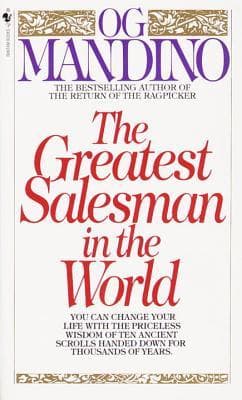
'The Greatest Salesman in the World' by Og Mandino is an allegorical tale about Hafid, a poor camel boy who rises to become a wealthy and influential salesman by following ancient principles. It's a guide to a philosophy of salesmanship and success, emphasizing personal change and the application of timeless wisdom.
What are the core concepts presented in 'The Greatest Salesman in the World'?
The book introduces ten ancient scrolls, each containing a principle for success, such as forming good habits, greeting the day with love, persisting until success, and mastering emotions. These concepts focus on internal transformation and a spiritual approach to achieving goals.
Does the advice in 'The Greatest Salesman in the World' still work in modern sales?
Yes, many readers find the book's principles highly relevant even in contemporary sales and personal development. While the setting is ancient, the focus on persistence, positive attitude, self-improvement, and understanding human nature are timeless strategies applicable to any era.
How long does it take to read 'The Greatest Salesman in the World'?
While the physical book is relatively short, Og Mandino's suggested reading structure involves reading specific scrolls daily for an extended period. If followed as intended, it would take approximately ten months to fully absorb and apply the book's teachings.
What is the significance of the 'ancient scrolls' in the book?
The ancient scrolls are the central device through which Hafid learns the secrets of success and wealth. Each scroll contains a powerful principle or habit, serving as a daily guide for personal transformation and the cultivation of a winning mindset in sales and life.
How is 'The Greatest Salesman in the World' different from other modern sales books?
Unlike many modern sales books that focus on specific techniques, scripts, or market strategies, Mandino's book emphasizes internal change, spiritual principles, and character development. It provides a foundational philosophy for success rather than tactical how-to's, making it more akin to a self-help classic.
Is 'The Greatest Salesman in the World' only for people in sales?
No, while framed around salesmanship, the universal principles of success, perseverance, habit formation, and positive thinking presented in the book apply to anyone seeking personal growth and achievement in any field. Its lessons transcend professional boundaries.
What is the main message of 'The Greatest Salesman in the World'?
The main message is that true success and abundance come from within, through consistent application of positive habits, love, persistence, and mastering one's own emotions. It teaches that by changing oneself, one can change their destiny and achieve greatness.
What are the benefits of following Mandino's unique reading structure?
Following Mandino's structured reading approach, which involves daily repetition of the scrolls, is designed to deeply embed the principles into one's subconscious. This method promotes habit formation and ensures the lessons become an integral part of one's daily life and mindset.
About the author

Og Mandino was an American author known for his work in the self-help and personal development genre. He is best known for "The Greatest Salesman in the World," a guide that combines storytelling with motivational principles. His writings focus on success, positivity, and the power of belief.
Similar books
- Think and Grow Rich
Napoleon Hill
4.2 (218k) average on GoodreadsBusinessBoth are classic self-help books that emphasize the power of mindset, habits, and persistence for achieving success, presented with a philosophical and motivational tone.
- The 7 Habits of Highly Effective People: Powerful Lessons in Personal Change
Stephen R. Covey
4.1 (524k) average on GoodreadsBusinessFocuses on developing character-based habits and principles for personal and professional effectiveness, similar to Mandino's emphasis on habit formation for success.
- Steve Jobs
Walter Isaacson
4.1 (957k) average on GoodreadsBusinessSteve Jobs was a visionary who fused creativity and technology to revolutionize six industries and shape our digital world.
- Freakonomics: A Rogue Economist Explores the Hidden Side of Everything
Steven D. Levitt
4.0 (709k) average on GoodreadsBusinessThis book uses economic principles to reveal the surprising incentives behind everything from drug dealing and real estate to cheating teachers and the decline of crime.
- The Tipping Point: How Little Things Can Make a Big Difference
Malcolm Gladwell
4.0 (690k) average on GoodreadsBusinessMalcolm Gladwell explains how small, targeted actions can start widespread changes in trends, behaviors, and ideas.
- Outliers: The Story of Success
Malcolm Gladwell
4.2 (556k) average on GoodreadsBusinessMalcolm Gladwell argues that true success is not just about individual talent, but about the hidden advantages of culture, opportunity, and unique experiences that shape extraordinary lives.





Enjoyed the summary?
A summary gives you the shape of the book. The book itself has the detail, the examples and the voice.
Find The Greatest Salesman in the World on AmazonAs an Amazon Associate, BookBrief earns from qualifying purchases. How we're funded