
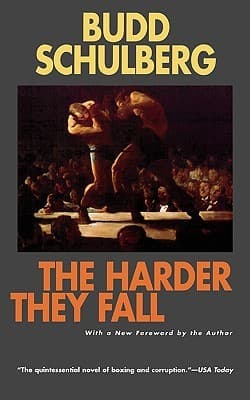
Synopsis
Covers the whole plot, including the ending.
- Difficulty
- Medium
- Pacing
- Moderate
- Mood
- Gritty, Cynical, Tragic, Authentic
- Read it if
- You want a gritty, unflinching look at the dark side of professional sports and the exploitation of innocence.
- Skip it if
- You prefer lighthearted stories or are sensitive to themes of betrayal and systemic corruption.
The Harder They Fall Plot Summary
Covers the whole plot, including the ending.
The Arrival of Toro
Eddie Willis, a sportswriter who has seen better days, is hired by the crooked boxing promoter Nick Benko. Benko's new 'discovery' is Toro Moreno, a giant but gentle Argentine peasant with no boxing skill, whose only real asset is his size. Benko plans to use Toro's imposing build to make him a heavyweight contender through fixed fights, earning a fortune before Toro is inevitably exposed. Eddie, cynical but needing money, takes the job as press agent, tasked with creating a story and selling Toro to the American public, despite knowing the whole thing is a sham. He struggles with his conscience, but the steady paycheck and Benko's pressure keep him in line.
The Setup Fights
With Benko's careful planning, Toro begins a series of fights across the country. Each opponent is chosen and bribed to lose, making Toro seem like a devastating puncher. Eddie Willis, using his writing skills, creates exaggerated headlines and articles, calling Toro a 'Gaucho Superman' and a 'Titan of the Pampas,' overcoming impossible odds. The public, wanting a new boxing sensation, believes the fabricated image. Eddie sees firsthand the brutal workings of the fight game, including the threats used to make sure opponents cooperate. He feels a growing discomfort about his role in deceiving the public and exploiting Toro, who knows nothing of the deceit.
Toro's Growing Fame and Naiveté
As Toro's 'victories' add up, his fame grows rapidly. He is in newspapers, on the radio, and becomes a well-known name. Despite his new celebrity, Toro remains a simple, kind man, dedicated to his family in Argentina. He genuinely believes he is a skilled fighter and that his 'wins' are real, often thanking his opponents for 'giving him a good fight.' This innocence further troubles Eddie, who sees Toro as a victim, not a willing participant in the fraud. Toro's limited English and trusting nature make him an easy pawn for Benko and his associates, who actively hide the truth about his fixed matches.
The Financial Exploitation
Behind the scenes, Nick Benko and his corrupt network take a huge percentage of Toro's earnings. Through inflated training costs, management fees, and other questionable charges, Toro's legitimate income is systematically siphoned away. Eddie Willis, aware of the financial schemes, sees how little of the vast sums generated actually reach Toro. Benko justifies these actions by claiming the costs of promoting a fighter are huge, but it's clear he is building a personal fortune at Toro's expense. Toro, trusting Benko completely, signs whatever documents are put in front of him, believing his manager acts in his best interests.
The Challenge to Champion Buddy Brannen
The time comes for Benko's biggest payoff: a real fight against the heavyweight champion, Buddy Brannen. Brannen is a skilled, powerful boxer, unlike Toro's previous 'opponents.' This fight is not fixed; Benko plans to profit from the large ticket sales and betting. Eddie realizes the true danger Toro faces, understanding that Brannen will expose Toro's lack of skill and likely cause serious injury. The stakes are incredibly high, financially for Benko and physically for Toro. Eddie's internal conflict grows as he struggles with the morality of sending an innocent man into such a brutal, unequal contest.
The Night of the Fight
The championship fight against Buddy Brannen is a gruesome event. From the start, Brannen dominates Toro, showing his complete lack of boxing technique and defense. Toro, despite his strength and resilience, is outmatched. He endures a brutal beating, his face a bloody mess. The crowd, initially interested, watches in horror as Brannen relentlessly pummels the defenseless giant. Eddie Willis, watching from ringside, feels guilt and pity. He knows this is the inevitable result of Benko's plan, and he is a complicit observer to Toro's public humiliation and physical destruction.
The Aftermath and Hospitalization
Toro is rushed to the hospital, severely injured and concussed after the devastating fight. Eddie visits him, seeing the extent of his physical and emotional damage. In the hospital, the full extent of Benko's financial exploitation is revealed. Toro, despite generating millions, is left with almost nothing. His supposed earnings have been systematically stolen, leaving him financially ruined and facing a grim future. Eddie feels a deep sense of responsibility and shame, realizing the true cost of his complicity. Toro's dream of building a better life for his family is shattered, leaving him broken and penniless.
Eddie's Reckoning
Faced with Toro's complete devastation, Eddie Willis can no longer stay silent. He confronts Nick Benko, expressing his disgust and demanding that Toro receive at least some of the money he is owed. Benko, however, is unrepentant, dismissive of Toro's situation, and even threatens Eddie. This confrontation strengthens Eddie's resolve. He decides to expose Benko and the entire corrupt boxing racket to the authorities. This decision marks a turning point for Eddie, as he chooses integrity over complicity, despite the personal risks of going against a powerful figure like Benko.
The Betrayal and Final Departure
Despite Eddie's efforts to expose Benko, the corrupt system is too powerful. Benko, with his connections and influence, avoids serious legal trouble. Toro, deemed an illegal alien after his boxing career ends, is deported back to Argentina, penniless and physically scarred. His dream is utterly shattered, and he returns to the poverty he tried so hard to escape. Eddie, having done what he could, is left with the bitter taste of a system that protects the powerful and crushes the innocent. The ending highlights the pervasive nature of corruption and the difficulty of finding true justice in such a rigged world.
Eddie's Redemption
After Toro's tragic departure, Eddie Willis finds some redemption by writing the true story of Toro Moreno and the corrupt boxing world that exploited him. He puts his guilt, his observations, and his new moral clarity into his writing, exposing the lies, the fixed fights, and the financial exploitation. This act of truth-telling, while not bringing justice for Toro, allows Eddie to reclaim his integrity as a writer and as a man. He accepts the personal and professional consequences of his actions, understanding that speaking truth to power is essential, even if it comes too late for those like Toro.
Principal Figures
Eddie Willis
Protagonist
A cynical but ultimately moral press agent hired to promote Toro Moreno.
Eddie Willis is a former respected sportswriter whose career has fallen on hard times. He is intelligent, observant, and possesses a strong journalistic integrity that has been compromised by his need for work. He initially takes the job as press agent for Toro Moreno out of desperation, knowing full well the scam he's perpetuating. Throughout the story, Eddie grapples with his conscience, witnessing the brutal exploitation of Toro and the pervasive corruption of the boxing world. He is driven by a desire to survive and provide for himself, but ultimately, his inherent sense of right and wrong prevails.
Relationships: Toro Moreno (Exploiter (initially) and sympathetic observer, later advocate); Nick Benko (Employer, antagonist, symbol of corruption); Julie (His estranged wife, representing his former, more principled life)
Toro Moreno
Victim/Protagonist
A naive, gentle, and physically immense Argentine peasant exploited by the boxing racket.
Toro Moreno is a giant of a man, possessing immense physical strength but absolutely no boxing skill or fighting instinct. He is portrayed as incredibly naive, gentle, and trusting, with a simple dream of earning enough money to support his family in Argentina. Toro is oblivious to the fixed nature of his fights and genuinely believes in his manager, Nick Benko. His innocence makes him a tragic figure, a modern Samson whose strength is misused and ultimately destroyed by those around him. He represents the innocent preyed upon by a ruthless system.
Relationships: Eddie Willis (His press agent, who feels increasing guilt over his exploitation); Nick Benko (His manager and primary exploiter); His Family (His primary motivation for fighting and enduring)
Nick Benko
Antagonist
A ruthless, amoral boxing promoter who orchestrates Toro's rise and fall for profit.
Nick Benko is the quintessential corrupt boxing promoter. He is cunning, ruthless, and utterly devoid of moral scruples. Benko sees fighters as commodities and the boxing world as a means to accumulate vast wealth, regardless of the human cost. He is a master manipulator, orchestrating fixed fights, bribing officials, and exploiting the dreams of naive individuals like Toro. Benko represents the raw, predatory capitalism and systemic corruption at the heart of the boxing racket. He is powerful, well-connected, and seemingly untouchable, embodying the forces that crush individuals like Toro.
Relationships: Eddie Willis (His employee, whom he manipulates and threatens); Toro Moreno (His primary victim and source of income); Other Promoters/Managers (Business associates in a corrupt network)
Danny McKeogh
Supporting
Toro's trainer, a former fighter who is complicit in the fraud.
Danny McKeogh is Toro's trainer, a veteran of the boxing world who has seen it all. He's a decent man at heart but is caught in Benko's web, making him complicit in the fraud against Toro. Danny genuinely likes Toro and tries to teach him, despite knowing the fights are fixed. He represents the 'good' people who get sucked into and corrupted by the system, often out of loyalty or fear. He feels a quiet guilt but lacks the power or courage to truly stand up to Benko.
Relationships: Toro Moreno (Trainer, has a genuine affection for him); Nick Benko (Employer, whom he fears and obeys)
Julie
Supporting
Eddie Willis's estranged wife, a voice of conscience.
Julie is Eddie Willis's estranged wife, who represents the moral compass that Eddie has largely abandoned. She is intelligent, principled, and disapproves of Eddie's involvement in the corrupt boxing world. Her presence serves as a reminder of Eddie's past integrity and the values he once held. She challenges Eddie's choices and forces him to confront the ethical implications of his actions, serving as an external manifestation of his internal conflict. She embodies the possibility of a life outside the corrupting influence of the fight game.
Relationships: Eddie Willis (Estranged wife, moral critic)
Buddy Brannen
Supporting
The reigning heavyweight champion, a legitimate and powerful boxer.
Buddy Brannen is the formidable heavyweight champion against whom Toro Moreno has his final, legitimate, and devastating fight. Unlike Toro's previous opponents, Brannen is a skilled, powerful, and legitimate boxer. He represents the authentic, brutal reality of professional boxing, a stark contrast to the fabricated world Benko creates. Brannen is not inherently malicious but is simply doing his job, exposing Toro's lack of skill and delivering a brutal, honest defeat. He is a tool of the plot, serving to reveal the truth about Toro's abilities.
Relationships: Toro Moreno (Opponent in the climactic fight)
Vince Edwards
Supporting
A small-time manager and associate of Benko, involved in the fixed fights.
Vince Edwards is one of Benko's many associates, involved in arranging the fixed fights and handling the more unsavory aspects of the business. He's a pragmatic, often crude character who operates within the morally grey areas of the boxing world. Edwards is complicit in the exploitation of Toro, helping to ensure opponents take a dive and handling the payouts. He represents the pervasive network of individuals who enable and profit from the corruption, highlighting that Benko is not an isolated figure but part of a larger, systemic problem.
Relationships: Nick Benko (Business associate, subordinate); Eddie Willis (Colleague in the promotion scheme)
George
Mentioned
A minor character who helps with the fixed fights.
George is a peripheral character, one of the many cogs in Nick Benko's corrupt machine. He is involved in the logistics of ensuring opponents take a dive in Toro's early fights. George's role is minor but significant in demonstrating the widespread complicity required to maintain the illusion of Toro's boxing prowess. He helps illustrate the depth of the corruption, showing that it extends beyond just Benko to a network of individuals performing various illicit tasks.
Relationships: Nick Benko (Subordinate in the fixed fight operation)
Themes & Insights
Corruption and Exploitation
The novel shows the widespread corruption in professional boxing, from fixed fights and bribed officials to the systematic financial exploitation of fighters. Nick Benko embodies this theme, orchestrating Toro's entire career as a cynical money-making scheme, with no regard for Toro's well-being. The theme is clearly shown through how opponents are paid off, how expenses are inflated to take funds, and how the media is manipulated by Eddie Willis to create a false story. Toro Moreno is the ultimate victim, a symbol of the innocent crushed by a ruthless, profit-driven system. This theme critiques not just boxing, but the larger societal structures that allow such exploitation.
“It wasn't a sport anymore, it was a racket. And Toro was just another piece of meat for the grinder.”
Loss of Innocence and Betrayal
Toro Moreno's story is a tragic tale of lost innocence. He comes to America as a hopeful, naive peasant, genuinely believing in the sport's integrity and his manager's good intentions. His trust is systematically betrayed by Benko, Eddie, and everyone around him, who conspire to deceive him for personal gain. The moment Toro realizes his financial ruin and the truth about his 'career' is a deep loss of his innocence. This theme is mirrored in Eddie Willis's own struggle, as he betrays his journalistic ethics and contributes to Toro's downfall, only to later seek redemption. The novel highlights how systemic corruption can corrupt individuals and destroy the dreams of the innocent.
“He was just a big kid, a simple peasant, and we were all feeding him to the wolves.”
Media Manipulation and Public Deception
The novel powerfully shows how the media can create and control public perception, regardless of the truth. Eddie Willis, as the press agent, is the main tool of this deception, creating sensational headlines and articles that portray Toro Moreno as a boxing sensation. He fabricates a heroic story, turning a clumsy giant into a 'Gaucho Superman' through pure propaganda. This theme critiques the sensationalism and lack of critical review in media, showing how easily the public can be swayed by a compelling, though false, story. The media becomes a complicit partner in the fraud, amplifying the lies for profit and entertainment.
“My job was to lie, to invent, to sell this big, dumb ox to a public that loved a good story, even if it was a complete fabrication.”
Redemption and Moral Responsibility
While Toro's story ends tragically, Eddie Willis's journey explores the possibility of redemption through moral responsibility. Initially involved in the exploitation, Eddie's conscience is increasingly troubled by Toro's suffering. His decision to expose Benko and the corrupt system, despite the personal risks, marks his path toward reclaiming his integrity. This theme suggests that even in deeply corrupt environments, individuals can choose to act morally and try to correct wrongs. Eddie's act of writing the true story serves as his penance and his way of finding meaning in the tragedy, highlighting the power of truth-telling as a path to personal redemption, even when systemic justice is hard to find.
“I had to write it all down, every sordid detail. Maybe then I could finally sleep.”
Plot Devices & Literary Techniques
The Naive Giant
Toro Moreno's character serves as a symbolic representation of innocence and brute strength exploited by a corrupt system.
Toro Moreno is presented as a 'naive giant' – a man of immense physical stature and strength, but with the mind of a simple, trusting child. This device is central to the novel's critique of exploitation. Toro's innocence makes him the perfect victim, unable to comprehend the deceit surrounding him. His physical power, which should be an asset, becomes his greatest vulnerability, as it is precisely this strength that the promoters seek to exploit. His character evokes sympathy and highlights the moral bankruptcy of those who prey on the vulnerable, making the betrayal all the more poignant.
First-Person Narrator (Eddie Willis)
The story is told through the eyes of Eddie Willis, providing an insider's perspective on the corruption and a personal moral struggle.
Using Eddie Willis as the first-person narrator allows the reader direct access to the inner workings of the boxing racket and the moral compromises involved. Eddie is an educated, cynical observer who is initially complicit, making his eventual moral awakening more impactful. His internal conflict between his need for money and his conscience drives much of the story's emotional tension. This narrative choice provides a critical, self-aware lens through which the corruption is viewed, giving the expose a personal and human dimension, rather than a purely objective one.
The Fixed Fight Sequence
The repetitive pattern of fixed fights serves to build tension and underscore the systematic nature of the deception.
The novel employs a recurring sequence where Toro fights a series of pre-arranged opponents who are paid to take a dive. This device is crucial for several reasons: it incrementally builds Toro's false reputation, highlights the pervasive nature of the corruption, and builds a sense of dread for the inevitable, legitimate fight. Each fixed fight further entrenches the lie and deepens Eddie's complicity, making the eventual confrontation with reality (the Brannen fight) even more shocking and devastating. The repetition emphasizes the relentless, calculated nature of the exploitation.
Symbolism of the Ring
The boxing ring serves as a microcosm of society, where power, deception, and brutality play out.
The boxing ring in 'The Harder They Fall' is more than just a sports venue; it's a powerful symbol. It represents a confined space where the rawest forms of exploitation and betrayal unfold under the guise of sport. The 'fight' extends beyond the physical contest to the moral battle within Eddie and the systemic battle against corruption. It symbolizes the arena where innocence is lost, where truth is manipulated, and where individuals are sacrificed for profit, mirroring the broader societal struggles of the powerless against the powerful. The ring is where the illusion is built and ultimately shattered.
The Harder They Fall Quotes
“The bigger they come, the harder they fall.”
“It was a world where men were bought and sold like cattle, where loyalty was a luxury no one could afford.”
“Money talks, and in this racket, it screamed.”
“You learn pretty quick in this game that there are no friends, only associates with varying degrees of larceny in their hearts.”
“He was a manufactured champion, a product of hype and carefully selected opponents.”
“The crowd roared, a beast with a thousand heads, hungry for blood.”
“Every punch was a lie, every round a deception.”
“He had sold his soul for a ringside seat to his own destruction.”
“The truth was a luxury, and in this business, it was always too expensive.”
“His fists were his only language, and they spoke of pain and desperation.”
“They built him up just to tear him down, and they made a fortune doing it.”
“The lights were blinding, the roar deafening, and in the center of it all, a man being sacrificed.”
“He was a puppet, and the strings were pulled by invisible hands with very visible bank accounts.”
“Sometimes you have to choose between a clear conscience and a full wallet.”
Quiz
10 questions on the plot and the characters. Each answer comes with a short explanation.
Question 1
What is the name of the simple Argentine peasant who is ballyhooed by the unscrupulous fight promoter?
- Kid McCoy
- Toro Moreno
- Tony Drake
- Buddy Miles
Show answer
B. Toro Moreno Toro Moreno is the Argentine peasant, a 'modern Samson,' who is brought to America to be exploited by the fight racket.
Question 2
Who is the press agent tasked with promoting Toro Moreno, and initially feels a degree of sympathy for him?
- Nick Latka
- George Fuller
- Eddie Willis
- Gus Dundee
Show answer
C. Eddie Willis Eddie Willis is the press agent who struggles with his conscience as he helps to create the illusion of Toro's boxing prowess.
Question 3
What is the primary method used by the promoters to ensure Toro Moreno's early 'victories'?
- Rigging the judges' scores
- Using performance-enhancing drugs
- Paying opponents to take a dive
- Exploiting Toro's natural strength
Show answer
C. Paying opponents to take a dive The promoters pay off Toro's opponents to 'take a dive,' creating a fabricated winning streak to build his reputation.
Question 4
What is the ultimate fate of Toro Moreno at the end of the novel?
- He becomes a world champion and retires wealthy.
- He dies in the ring from injuries sustained in a fight.
- He is left penniless, brain-damaged, and exploited.
- He exposes the corruption and becomes a boxing commissioner.
Show answer
C. He is left penniless, brain-damaged, and exploited. Toro is ultimately left broke, with severe brain damage, having been completely used and discarded by the fight racket.
Question 5
Which character serves as the primary unscrupulous fight promoter, orchestrating Toro's rise and fall?
- Pop
- Benny Miles
- Nick Latka
- Art Leavitt
Show answer
C. Nick Latka Nick Latka is the cunning and ruthless promoter who sees Toro as nothing more than a commodity to be exploited for profit.
Question 6
What specific physical characteristic of Toro Moreno is often emphasized to highlight his simple, almost childlike nature, despite his imposing size?
- His quiet, contemplative demeanor
- His large, trusting eyes
- His inability to speak English fluently
- His awkward, lumbering gait outside the ring
Show answer
B. His large, trusting eyes Toro's large, trusting eyes are frequently mentioned to underscore his naivety and innocence, making his betrayal even more tragic.
Question 7
What is the central theme that 'The Harder They Fall' relentlessly exposes about the boxing world?
- The glory and honor of athletic competition
- The importance of fair play and sportsmanship
- The systemic corruption, exploitation, and dehumanization of fighters
- The triumph of the human spirit against adversity
Show answer
C. The systemic corruption, exploitation, and dehumanization of fighters The novel is a powerful exposé of the 'fight racket,' highlighting how fighters, especially those like Toro, are exploited and discarded.
Question 8
How does Eddie Willis ultimately react to the full extent of Toro's betrayal and destruction?
- He joins the promoters in celebrating their profits.
- He feels deep guilt and attempts to write an exposé to warn others.
- He becomes a boxing promoter himself, having learned the ropes.
- He leaves the country to escape his involvement.
Show answer
B. He feels deep guilt and attempts to write an exposé to warn others. Eddie's conscience is finally fully awakened, and he resolves to write a book exposing the corruption, seeking some form of redemption.
Question 9
The novel uses the metaphor of 'Samson' to describe Toro Moreno. What aspect of Samson's story specifically resonates with Toro's character and fate?
- His divine strength and moral purity
- His love for a deceptive woman
- His immense physical strength ultimately leading to his downfall through betrayal and exploitation
- His role as a leader of his people against oppressors
Show answer
C. His immense physical strength ultimately leading to his downfall through betrayal and exploitation Like Samson, Toro possesses immense physical power but is ultimately betrayed and destroyed by conniving forces, leading to his tragic end.
Question 10
What is the significance of the title, 'The Harder They Fall,' in the context of the novel's themes?
- It refers to the physical impact of a knockout punch.
- It implies that the bigger a fighter's fabricated rise, the more devastating their inevitable and orchestrated downfall.
- It suggests that only the strongest fighters survive in boxing.
- It is a literal description of Toro's final fight.
Show answer
B. It implies that the bigger a fighter's fabricated rise, the more devastating their inevitable and orchestrated downfall. The title refers to the tragic irony that the more sensationally the promoters build up Toro's false image, the more catastrophic his ultimate collapse and ruin become.
The Harder They Fall FAQ
What is the central premise of 'The Harder They Fall'?
'The Harder They Fall' centers on the tragic rise and fall of Toro Moreno, a naive Argentine giant, who is exploited by unscrupulous boxing promoters and managers. The narrative exposes the rampant corruption within the fight racket as Toro is ballyhooed into a contender through fixed fights, only to be discarded once he's no longer profitable.
Who is Eddie Willis and what is his role in Toro Moreno's story?
Eddie Willis is the cynical and disillusioned press agent hired by Nick Latka to promote Toro Moreno. Initially detached, Eddie grapples with his conscience as he witnesses Toro's exploitation, eventually becoming the moral compass of the story, though he remains complicit for much of the journey.
Who is Nick Latka and what are his motivations?
Nick Latka is the ruthless and manipulative fight promoter who orchestrates Toro Moreno's career. His primary motivation is pure financial gain, and he views Toro not as a human being but as a commodity to be exploited, fixing fights and controlling every aspect of Toro's public image and private life for profit.
What ultimately happens to Toro Moreno at the end of the novel?
Toro Moreno is ultimately left penniless and broken after his final, legitimate fight where he is brutally knocked out. Despite his hard work, all his earnings are stolen by Nick Latka and his associates, leaving Toro to return to Argentina with nothing but the clothes on his back and the emotional scars of betrayal.
How does the novel portray the boxing world of its time?
The novel portrays the boxing world as a deeply corrupt and predatory environment where honesty and integrity are rare. It's a world dominated by con artists, fixers, and exploiters who prey on the dreams and physical prowess of young fighters, highlighting the dark underbelly of professional sports.
Are there any subtle hints early on that Toro Moreno isn't a genuine fighter?
Yes, Eddie Willis, as a veteran press agent, quickly notices Toro's lack of genuine boxing skill during early training sessions and sparring. He often observes Toro's awkwardness and inability to take a punch, which are subtle hints that Toro's 'victories' are orchestrated and not earned through talent.
What is the significance of the 'Samson' comparison in the book's description?
The 'Samson' comparison alludes to Toro Moreno's immense physical strength and his eventual betrayal and downfall. Like Samson, Toro possesses great power, but he is ultimately brought low by the machinations and deceit of others, losing everything he had due to their treachery.
Is there a specific moment where Eddie Willis's conscience truly begins to stir?
Eddie's conscience begins to stir more profoundly when he witnesses Toro's genuine kindness and naivety, especially during interactions with children or when Toro expresses simple hopes. The moment Toro expresses gratitude for Eddie's supposed help, unaware of the deeper manipulations, often pricks Eddie's moral awareness.
How does Toro Moreno's physical size contrast with his personality?
Toro's immense physical size, making him appear formidable and intimidating, stands in stark contrast to his gentle, childlike, and incredibly naive personality. This dichotomy makes his exploitation even more tragic, as his physical power is manipulated by those who recognize his emotional vulnerability.
What psychological impact does the constant deception have on Toro?
The constant deception prevents Toro from ever truly understanding his own reality or the true nature of his career. It fosters a false sense of accomplishment and self-worth based on lies, ultimately leading to a devastating emotional collapse when the truth is finally undeniable and he realizes he's been a pawn.
How does Eddie Willis's cynicism evolve throughout the story?
Eddie Willis's initial cynicism is a defense mechanism developed from years in the corrupt boxing world. Throughout the story, it's challenged by Toro's innocence, causing moments of guilt and self-reflection. While he never fully sheds his cynical view of the world, he develops a stronger moral compass and a desire for redemption.
What psychological tactics does Nick Latka employ to control Toro?
Nick Latka employs psychological tactics such as isolation, manipulation of information, and creating a dependency. He keeps Toro away from anyone who might tell him the truth, feeds him lies about his performance, and controls his finances, making Toro entirely reliant on Latka for his career and well-being.
Is 'The Harder They Fall' primarily a critique of boxing, or does it have broader societal implications?
While a powerful critique of boxing's corruption, the novel has broader societal implications. It serves as an allegory for the exploitation of the innocent and vulnerable by powerful, unscrupulous figures in any industry, reflecting on the darker aspects of human nature and the American Dream corrupted by greed.
Could Toro Moreno have avoided his fate, or was he destined for it given his personality?
It's debatable whether Toro could have avoided his fate. His extreme naivety and trust made him an easy target, suggesting a predisposition to exploitation. However, if he had encountered genuinely honest people or had access to independent advice, his tragic downfall might have been averted, highlighting the role of external forces.
How does the novel's ending reflect on the possibility of redemption for characters like Eddie Willis?
The novel's ending offers a glimmer of redemption for Eddie Willis. By finally exposing the truth and trying to help Toro, Eddie takes a stand against the corruption he was part of. While he cannot undo the past, his actions suggest a moral awakening and a commitment to honesty, offering a nuanced view of redemption.
What is the significance of the title 'The Harder They Fall'?
The title 'The Harder They Fall' directly refers to Toro Moreno's spectacular rise to fame, built on deceit, and his equally dramatic and devastating downfall. It highlights the principle that the higher one is elevated, especially on false pretenses, the more catastrophic their eventual collapse will be.
How does the novel challenge the concept of the 'American Dream'?
The novel challenges the 'American Dream' by showing how it can be perverted and exploited. Toro Moreno, an immigrant seeking a better life, is promised wealth and success, but this dream is used as a tool by Latka to manipulate him, demonstrating that the dream can become a nightmare of exploitation and betrayal.
What role does the media play in Toro Moreno's story?
The media, largely controlled by Eddie Willis and Nick Latka, plays a crucial role in creating and perpetuating the myth of Toro Moreno as a boxing champion. Through fabricated stories and carefully managed publicity, the media is used to deceive the public and build Toro's false image, making it complicit in his exploitation.
About the author
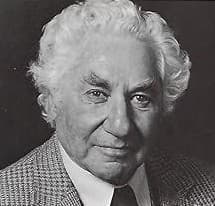
Budd Schulberg was an American screenwriter and novelist, best known for his novel "The Harder They Fall," which explored the dark side of professional boxing. His other notable works include the screenplay for "On the Waterfront," for which he won an Academy Award, and the novel "What Makes Sammy Run?" Schulberg's writing often focused on corruption and the struggles of individuals against powerful systems.
Similar books
- Nineteen Eighty-Four
George Orwell
4.2 (5.5M) average on GoodreadsFictionWinston Smith dreams of truth and rebellion in a world where Big Brother watches all, but he confronts the terrifying power of a regime that controls not just actions, but thoughts.
- The Frozen River
Ariel Lawhon
4.4 (600k) average on GoodreadsFictionIn 1789 Maine, a heroic midwife's diary helps her expose a murder and get justice in a town that wants to silence her.
- A Man Called Ove
Fredrik Backman
4.4 (569k) average on GoodreadsFictionA stubborn widower, who lives by strict rules, finds his quiet world changed by a lively new family next door, making him face his past and find happiness in human connection.
- The Art of Racing in the Rain
Garth Stein
4.2 (452k) average on GoodreadsFictionThrough the eyes of Enzo, a wise and observant dog, a race car driver's family navigates a journey of love, loss, and resilience, learning that life's most important lessons often come in the curves, not just on the straightaways.
- The Colour of Magic
Terry Pratchett
4.0 (425k) average on GoodreadsFictionOn a discworld hurtling through space on the back of a giant turtle, an inept wizard and his naive, walking-luggage-toting tourist embark on a chaotic, belief-fueled journey to the very edge of their flat planet, encountering dragons that only exist if you believe in them.
- The Correspondent
Virginia Evans
4.5 (391k) average on GoodreadsFictionA distinguished lawyer's life of carefully written letters, both sent and unsent, reveals a past heartbreak, making her confront forgiveness and the power of written words.






Enjoyed the summary?
A summary gives you the shape of the book. The book itself has the detail, the examples and the voice.
Find The Harder They Fall on AmazonAs an Amazon Associate, BookBrief earns from qualifying purchases. How we're funded