
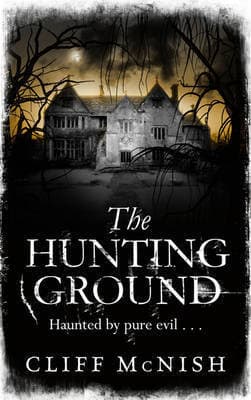
Synopsis
Covers the whole plot, including the ending.
- Difficulty
- Medium
- Pacing
- Moderate
- Mood
- Atmospheric, Chilling, Suspenseful, Dark, Disturbing
- Read it if
- You enjoy atmospheric, genuinely chilling ghost stories with a strong sense of dread and a historical mystery at their core.
- Skip it if
- You dislike horror that focuses on psychological tension and disturbing themes, or prefer less intense supernatural tales.
The Hunting Ground Plot Summary
Covers the whole plot, including the ending.
Arrival at Glebe House
Elliott, his younger brother Ben, and their parents move into the old Glebe House. From the moment they arrive, the house feels heavy. Elliott is sensitive to the cold and the feeling of being watched, while Ben, who has a speech impediment and often keeps to himself, seems unusually drawn to the house, as if it is calling him. Their mother, an artist, tries to ignore the strange things, but even she struggles with the unsettling presence. Their father, busy with renovation plans, initially misses the supernatural signs, focusing instead on the old mansion's decay. The family's new life in Glebe House begins with unease.
The East Wing's Secrets
Elliott's curiosity leads him to the mysterious East Wing, a part of the house sealed off for decades. He finds a hidden entrance and goes inside, discovering a confusing maze of narrow, twisting corridors, small, dark rooms, and dead ends. The East Wing is freezing, and Elliott feels intense fear and despair coming from its walls. He realizes this is not just architecture but a deliberate maze, built for a sinister reason. He also finds an old, leather-bound diary, its pages filled with cryptic entries and unsettling drawings, hinting at a terrible past and the tragic fate of children in the house.
Ben's Growing Obsession
Ben, already a quiet and sensitive child, becomes more captivated by Glebe House, especially the East Wing. He spends hours alone, often whispering to himself or to empty spaces, as if talking to invisible friends. Elliott notices Ben drawing disturbing pictures of children trapped in a maze and hears him humming unsettling nursery rhymes that seem to echo from the house's past. Ben's behavior grows more erratic, and his speech impediment worsens under the house's influence. He seems to connect with the spirits, becoming a target for their game, which alarms Elliott.
The Diary of Eleanor Vance
Elliott reads the old diary he found, learning it belonged to Eleanor Vance, a young girl who lived in Glebe House long ago. Her entries describe a terrifying game played by the master of the house, a cruel man who would 'hunt' children in the East Wing's maze. Eleanor writes how she and other children were lured or forced into the labyrinth, becoming prey in a sadistic sport. The diary reveals their desperate attempts to escape and the tragic fate of many, including Eleanor. Elliott realizes the ghosts haunting Glebe House are these lost children, trapped and reliving their final, terrifying moments.
Mrs. Periwinkle's Warnings
Elliott meets Mrs. Periwinkle, an old woman who lives nearby and knows much about Glebe House's dark history. She has a haunted look and speaks in riddles, hinting at the house's past and the trapped children. Mrs. Periwinkle warns Elliott about the 'Hunters' and the dangers of the East Wing, saying the spirits are not harmless but actively seek new victims. She implies Ben is vulnerable due to his sensitivity and the house's growing hold on him. Her warnings both frighten Elliott and confirm his belief in the house's supernatural threat.
The First Hunt
The ghostly events in Glebe House increase dramatically. Objects move on their own, chilling whispers echo through the halls, and the temperature drops sharply. One night, Elliott feels drawn into the East Wing, where he experiences a terrifying 'hunt.' He feels an unseen presence chasing him through the dark, twisting passages, the air thick with the terror of the trapped children. He hears their cries and feels their panic, realizing he is now part of their eternal game. This experience confirms his understanding of the house's true nature and the immediate danger his family faces, especially Ben.
Ben is Taken
The house fully controls Ben. He disappears into the East Wing, seemingly lured by the spectral children, who promise him a place among them where he won't be teased for his speech. Elliott finds a note from Ben, saying he intends to join his new 'friends.' Desperate, Elliott knows he must enter the maze to save his brother. His parents, now seeing undeniable proof of the supernatural, are initially frozen by fear. Elliott, however, cannot wait. He decides to brave the labyrinth, armed only with courage and the scattered knowledge from Eleanor's diary, to get Ben back from the house's eternal game.
The Labyrinth's Depths
Elliott goes into the East Wing, navigating its confusing passages. He meets the ghostly children, who are both victims and unwitting helpers of the true evil. They try to trick him, lead him astray, and block his path, their forms flickering in the gloom. Elliott feels the chilling presence of the 'Hunters'—the evil adult spirits who keep the game going. He must use his wits and courage to avoid their traps and resist their mind games, all while looking for Ben. The maze itself seems to shift, reflecting the twisted minds of its creators and the endless despair of its trapped inhabitants.
A Plea for Escape
Elliott finally finds Ben deep inside the East Wing. Ben is surrounded by the ghostly children, seemingly happy and content, his speech impediment gone. He sees himself as one of them, free from the problems of the living world. Elliott is horrified by how much Ben has changed, his eyes distant and his spirit almost merged with the spectral realm. Elliott desperately tries to talk sense into Ben, reminding him of their family and shared life, trying to break the house's powerful illusion. This emotional confrontation is a key moment, as Elliott fights not just ghosts, but the house's seductive power over his brother.
Confronting the Master
As Elliott tries to pull Ben away, he faces the main 'Hunter,' the cruel master of Glebe House who designed the maze and started the deadly game. This spectral figure is pure evil, radiating intense cold and fear. The Hunter tries to trap Elliott, drawing him into the eternal game, enjoying the terror of its victims. Elliott must use all his strength and resolve, fueled by his love for Ben, to resist the Hunter's mind attacks and physical forms. This is the ultimate battle for his brother's soul and his family's freedom from the house.
Breaking the Cycle
Using clues from Eleanor's diary and his own instincts, Elliott realizes the hunt can be stopped. He understands the children are trapped by the game and the Hunters' power. He finds a way to disrupt the cycle, perhaps by refusing to follow the rules or by revealing a truth that frees the children from their endless torment. In a climactic moment, Elliott breaks the illusion and exposes the Hunters' true nature, allowing the trapped children to find peace. This act weakens the main Hunter's power and creates a chance to escape.
Escape and Aftermath
With the cycle broken and the children's spirits at rest, Elliott leads a traumatized but living Ben out of the East Wing and out of Glebe House. Their parents, now fully aware of the horrors they endured, are overwhelmed with relief and terror. The family immediately decides to leave Glebe House, abandoning their renovation plans. They escape, but the experience leaves a lasting mark on all of them. Elliott and Ben are changed by their encounter with the supernatural, their bond strengthened by their shared trauma. Glebe House remains, its secrets perhaps quiet, but its history a chilling reminder of the evil that once lived within its walls.
Principal Figures
Elliott
Protagonist
The brave and sensitive elder brother who fights to save his family from Glebe House.
Elliott is a thoughtful and perceptive boy, initially skeptical but quickly attuned to the unsettling atmosphere of Glebe House. He possesses a strong sense of responsibility, especially towards his younger brother, Ben. His intelligence and courage are evident as he uncovers the house's secrets and confronts its supernatural threats. He is driven by his love for Ben and a desperate need to protect his family, pushing past his own fears to face unimaginable horrors. His journey is one of courage, discovery, and ultimately, self-sacrifice.
Relationships: Ben (Devoted older brother, protector); Eleanor Vance (Indirect connection through her diary, a source of guidance); Mrs. Periwinkle (Recipient of her cryptic warnings and guidance)
Ben
Supporting/Victim
Elliott's younger brother, vulnerable to the house's influence due to his sensitivity and speech impediment.
Ben is a quiet, sensitive young boy with a speech impediment, which makes him feel isolated and often misunderstood. He is particularly susceptible to the supernatural energies of Glebe House, becoming a target for the trapped children and the malicious 'Hunters.' The house preys on his loneliness and desire for acceptance, offering him a world where he can speak freely and belong. His innocence and vulnerability make him a tragic figure, almost lost to the spectral realm. His connection to the house is central to the plot's urgency.
Relationships: Elliott (Younger brother, protected by Elliott); The Spectral Children (Drawn to them, sees them as friends); The Hunters (Victim of their game)
Mrs. Periwinkle
Supporting
A mysterious old woman with knowledge of Glebe House's dark past and the ability to communicate with the dead.
Mrs. Periwinkle is an eccentric and enigmatic elderly woman who lives near Glebe House. She possesses a deep, almost psychic, understanding of the house's history and its spectral inhabitants. She serves as a cryptic guide and warning figure for Elliott, providing crucial information and foreshadowing without directly interfering. Her ability to 'talk to the dead' suggests a connection to the supernatural realm, making her a bridge between the living and the spectral. She is a source of ancient wisdom and a symbol of the enduring memory of the house's tragedies.
Relationships: Elliott (Mentor/informant); The Spectral Children (Implied connection, understands their plight)
Eleanor Vance
Mentioned/Supporting
A girl from the past whose diary reveals the horrors of Glebe House.
Eleanor Vance is a character from the past, whose experiences in Glebe House are revealed through her diary. She was one of the children trapped and 'hunted' within the East Wing's maze by the cruel master of the house. Her diary entries are vital to Elliott's understanding of the house's history, the nature of the 'Hunters,' and the fate of the spectral children. She represents the innocent victims of the house's malevolence and serves as a posthumous guide for Elliott, her words providing both warnings and essential clues to breaking the cycle.
Relationships: Elliott (Posthumous guide through her diary); The Hunters (Victim)
The Master / Primary Hunter
Antagonist
The malevolent spirit of the original owner of Glebe House, who created the maze and initiated the deadly 'hunt'.
The Master, or Primary Hunter, is the central antagonist and the source of Glebe House's enduring evil. He was the original owner who designed the East Wing's labyrinth and engaged in a sadistic game of 'hunting' children within its confines. His spirit continues this malevolent cycle, trapping new victims and perpetuating the terror. He is a force of pure sadism, reveling in fear and despair. His presence radiates intense cold and dread, and he seeks to ensnare Elliott and Ben into his eternal game. He represents the ultimate manifestation of the house's dark history.
Relationships: Elliott (Primary adversary); Ben (Target/victim); Eleanor Vance (Past victim)
Elliott's Mother
Supporting
An artistic and initially skeptical parent who eventually confronts the supernatural reality.
Elliott's mother is an artist, initially pragmatic and dismissive of the strange occurrences in Glebe House. She tries to find rational explanations for the unsettling atmosphere and Ben's strange behavior, attributing it to the stress of moving or Ben's imagination. However, as the supernatural activity intensifies and Ben's condition worsens, she is forced to confront the horrifying truth. Her journey is one from disbelief to terrified acceptance, highlighting the psychological toll the house takes on adults. She represents the parental struggle to protect their children from an unseen, incomprehensible threat.
Relationships: Elliott (Mother, initially dismisses his fears); Ben (Mother, deeply concerned for his well-being)
Elliott's Father
Supporting
A practical man focused on renovations, initially oblivious to the supernatural dangers.
Elliott's father is a practical, hands-on man, initially preoccupied with the extensive renovations needed for Glebe House. He views the house as a project and a new beginning, largely ignoring the unsettling atmosphere and his children's growing unease. He is the most resistant to believing in the supernatural, often trying to rationalize strange events. His focus on the tangible aspects of the house makes him slow to grasp the true danger. However, when Ben is taken, his disbelief shatters, revealing his deep love and fear for his family, though he is ultimately less capable of direct action against the supernatural than Elliott.
Relationships: Elliott (Father, struggles to understand his son's fears); Ben (Father, deeply concerned for his safety)
The Spectral Children
Supporting/Antagonistic
The ghost children trapped in Glebe House, both victims and unwitting participants in the 'hunt'.
The Spectral Children are the ghosts of the children who were 'hunted' and died in Glebe House's East Wing. They are forever trapped in a cycle of fear and play, unable to find peace. While they are victims of the 'Hunters,' they also inadvertently perpetuate the game, sometimes luring new children like Ben into their ranks. Their presence is chilling, evoking both pity and terror. They are a constant reminder of the house's tragic past and the enduring power of its malevolent history, their cries and whispers filling the labyrinth.
Relationships: Ben (Lure him into their world); Elliott (Impede and sometimes aid him, representing the house's conflicted nature); The Hunters (Victims and eternal playthings)
Themes & Insights
The Corrupting Power of Place
Glebe House itself is a main character, a malevolent presence that corrupts and traps. Its maze-like East Wing is not just architecture but a physical sign of a twisted mind and continued cruelty. The house preys on the vulnerable, especially Ben, by offering an escape from their problems. It actively influences the living, drawing them into its games and feeding on their fear. The decaying structure reflects the moral decay in its history, showing how evil can become part of a place.
“The house was a living thing, cold and breathing, and it wanted them.”
Loss of Innocence and Childhood Trauma
The novel looks at the deep trauma inflicted on children through the historical 'hunt' in Glebe House. The spectral children are forever trapped in fear, unable to move on, representing lost innocence. Ben's vulnerability and his near-enslavement by the house show how easily childhood can be corrupted when faced with great evil. Elliott's journey forces him to confront the darkest parts of human cruelty and the lasting pain of past wrongs, changing his view of the world.
“They were just children, caught in a game they never asked to play.”
Brotherly Love and Sacrifice
The bond between Elliott and Ben is the emotional center of the story. Elliott's strong love and resolve to save his younger brother drive all his actions, pushing him to face the dangers of Glebe House. His willingness to enter the deadly maze and confront the spirits, despite his own fear, shows the strength of their family connection. This theme highlights how far someone will go to protect a loved one, showing that love can be a strong weapon against even the deepest evil.
“He wouldn't leave Ben. Not ever.”
The Persistence of Evil
The 'Hunters' and their game are not confined to the past; they continue in the present, always seeking new victims. This theme shows how evil, once started, can linger and continue through time, affecting generations. The spirits of the Hunters are not just echoes but active forces, showing that evil can go beyond death and become a lasting presence. The fight against Glebe House is a battle against a deeply rooted, historical evil that refuses to die, highlighting how hard it is to truly escape the past.
“The game never ended, not for them, not for anyone who entered the maze.”
Plot Devices & Literary Techniques
The Labyrinthine East Wing
A physical and psychological maze that traps and disorients.
The East Wing of Glebe House, with its twisting corridors, dead ends, and hidden rooms, serves as a literal and metaphorical labyrinth. Physically, it disorients and traps the characters, making escape difficult. Psychologically, it represents the twisted mind of its creator and the endless cycle of fear and despair for the trapped children. It is the arena for the 'hunt' and the central location for the house's malevolence, embodying the idea of being lost and hunted.
Eleanor Vance's Diary
A historical artifact that reveals the house's dark past and provides crucial clues.
The old, leather-bound diary of Eleanor Vance is a vital plot device. It serves as a window into Glebe House's history, detailing the terrifying 'hunt' and the fate of the children who lived there. For Elliott, it is a source of essential information, providing him with the context and understanding he needs to confront the supernatural threats. It acts as a posthumous guide, allowing a voice from the past to directly influence the present and offer a chance for salvation.
The Hunt
A sadistic game played by the house's spirits, trapping victims in an eternal cycle of fear.
The 'hunt' is the central supernatural mechanism of Glebe House. It's not just a metaphorical chase but a literal game orchestrated by the malevolent 'Hunters,' where children are the prey within the East Wing's maze. This device provides the primary source of conflict and terror, driving the plot forward as Elliott tries to save Ben from becoming a permanent player. It symbolizes the predatory nature of the house's evil and the cyclical nature of its torment, constantly reliving its tragic past.
Ben's Sensitivity/Vulnerability
A character trait that makes him susceptible to supernatural influence, driving the plot's urgency.
Ben's inherent sensitivity and his speech impediment make him particularly vulnerable to the seductive and malevolent forces within Glebe House. This vulnerability is a key plot device, as it provides the primary motivation for Elliott's actions and creates immediate urgency for the narrative. Ben's connection to the spectral children and his gradual assimilation into their world heightens the stakes and underscores the house's power to prey on the innocent and lonely.
The Hunting Ground Quotes
“The past is a hungry beast, always reaching out.”
“Sometimes, the greatest monsters are the ones we can't see.”
“Courage isn't the absence of fear, but the triumph over it.”
“The forest remembers. Every tree, every stone, holds a piece of what happened.”
“There are truths that lie buried, and sometimes it's best they stay that way.”
“A legend is just a story that refused to die.”
“Trust is a fragile thing, easily broken, hard to mend.”
“The whispers of the past are louder than any shout.”
“Even in the darkest places, a flicker of hope can ignite a fire.”
“Knowledge is a weapon, but only if you know how to wield it.”
“The greatest battles are often fought within ourselves.”
“Time has a way of blurring edges, but never truly erasing the truth.”
“Some wounds never heal, they just become part of who you are.”
“The hunt isn't just for prey; sometimes, it's for answers.”
Quiz
10 questions on the plot and the characters. Each answer comes with a short explanation.
Question 1
What is the name of the old and crumbling house that Elliott and Ben move into?
- Blackwood Manor
- Glebe House
- Willow Creek Estate
- East Wing Residence
Show answer
B. Glebe House Elliott and Ben move into Glebe House, which is central to the story's setting and mysteries.
Question 2
What kind of labyrinthine feature is located in the East Wing of Glebe House?
- A secret garden
- A hidden library
- A series of passageways
- An abandoned ballroom
Show answer
C. A series of passageways The East Wing is described as containing a 'hideous labyrinth of passageways devised by a truly twisted mind,' which is a key element of the house's danger.
Question 3
What object provides glimpses into the mansion's past and a terrible tragedy?
- A collection of old photographs
- An ancient map
- An old diary
- A series of letters
Show answer
C. An old diary The synopsis mentions that 'An old diary reveals glimpses of the mansion's past — and of a terrible tragedy,' making it a crucial plot device.
Question 4
What type of supernatural beings do Elliott and Ben discover they are sharing Glebe House with?
- Vampires
- Werewolves
- Ghosts
- Fairies
Show answer
C. Ghosts The description clearly states they 'don't expect to find themselves sharing it with ghosts,' establishing the supernatural element.
Question 5
Who is the main protagonist of the story, alongside his brother Ben?
- Arthur
- Elliott
- George
- Samuel
Show answer
B. Elliott The synopsis introduces the brothers as 'Elliott and his brother, Ben,' with Elliott being the primary viewpoint character implied.
Question 6
What specific characteristic is attributed to the mind that devised the labyrinthine East Wing?
- Brilliant
- Creative
- Twisted
- Eccentric
Show answer
C. Twisted The labyrinth is described as 'devised by a truly twisted mind,' highlighting the malevolent nature behind its creation.
Question 7
What is the overarching threat or danger that Elliott and his family face in Glebe House?
- Financial ruin
- Being trapped and hunted by the dead
- A natural disaster
- A criminal investigation
Show answer
B. Being trapped and hunted by the dead The concluding question in the synopsis asks: 'Or will they be trapped in the maze of corridors, forever hunted by the dead?', directly stating the primary threat.
Question 8
What common element of ghost stories is mentioned by 'The Bookbag' review as being present in 'The Hunting Ground'?
- Friendly poltergeists
- Echoing nursery rhymes
- Dancing spirits
- Singing specters
Show answer
B. Echoing nursery rhymes The Bookbag review specifically mentions 'echoing nursery rhymes' as a creepy element, indicating a key detail of the book's atmosphere.
Question 9
According to the synopsis, what specific characteristic defines the mysterious woman connected to Glebe House?
- She is a historian
- She talks to the dead
- She is the house's owner
- She is a local journalist
Show answer
B. She talks to the dead The synopsis states: 'A mysterious woman talks to the dead,' which is a unique and significant detail about her character.
Question 10
What is the primary emotional effect 'The Hunting Ground' aims to evoke in its readers, as highlighted by multiple reviews?
- Joy and laughter
- Inspiration and hope
- Fear, dread, and terror
- Curiosity and wonder
Show answer
C. Fear, dread, and terror Reviews consistently use words like 'chilling,' 'creepy,' 'spine crawl,' 'heart pound,' 'disturbing,' 'dread and finally outright terror,' all pointing to fear as the primary emotion.
The Hunting Ground FAQ
What is the central premise of 'The Hunting Ground'?
The book follows brothers Elliott and Ben as they move into Glebe House, a dilapidated mansion haunted by sinister ghosts. They uncover the house's tragic past through an old diary and encounter a mysterious woman who communicates with the dead, all while trying to escape the malevolent forces lurking within the East Wing's labyrinthine passages.
Who are the main protagonists of the story?
The primary protagonists are Elliott and his younger brother, Ben. Elliott is the more observant and proactive of the two, often taking the lead in uncovering the house's secrets and trying to protect Ben from its dangers. Ben, being younger, is more vulnerable to the house's influence and relies on Elliott.
What role does Glebe House play in the narrative?
Glebe House is not just a setting but a character itself, a crumbling mansion with a dark history and a malevolent presence. Its labyrinthine East Wing and the spirits within actively hunt the living, making it a central antagonist that traps and torments the family.
What is the significance of the old diary mentioned in the synopsis?
The old diary serves as a crucial plot device, providing glimpses into Glebe House's past and revealing the terrible tragedy that originally cursed the mansion. It helps Elliott piece together the history of the haunting and understand the nature of the spirits he faces.
Who is the 'mysterious woman' who talks to the dead?
The mysterious woman is Mrs. Periwinkle, a local eccentric who has a unique connection to the spiritual world. She acts as a guide and source of information for Elliott, helping him understand the nature of the ghosts and offering cryptic advice on how to combat the evil within Glebe House.
What is the true nature of the 'evil' in the East Wing?
The evil in the East Wing is revealed to be the lingering, malevolent spirits of children who were trapped and died within its maze-like corridors, driven to madness and a desire to ensnare others. They are orchestrated by a truly twisted mind from the past, the original architect of the labyrinth.
Are there any specific historical events or periods hinted at in the book?
While not explicitly stated as a specific historical event, the diary entries and the architectural style of Glebe House, particularly the East Wing's design, suggest a Victorian or late Georgian era tragedy. The 'terrible tragedy' likely involves the neglect or deliberate harm of children during a less regulated period.
How do the 'echoing nursery rhymes' mentioned in a review connect to the plot?
The echoing nursery rhymes are a chilling detail used by the ghostly children in the East Wing to lure and torment Elliott and Ben. They symbolize lost innocence and are twisted into sinister invitations, highlighting the tragic past of the spirits and their current predatory nature.
What is the psychological impact of Glebe House on Elliott and Ben?
Glebe House deeply affects Elliott and Ben, causing escalating fear, paranoia, and a sense of entrapment. Elliott develops a strong sense of responsibility and protectiveness towards Ben, while Ben experiences intense terror and is more susceptible to the house's psychological manipulations, blurring the lines between reality and nightmare.
How does the author use the labyrinthine corridors to reflect the characters' psychological states?
The labyrinthine corridors of the East Wing are a physical manifestation of the characters' psychological entrapment and confusion. As Elliott and Ben navigate the maze, their sense of direction, safety, and sanity erode, mirroring their mounting fear and the feeling of being hunted and lost within their own minds.
What psychological themes are explored through the 'fearsome hunters' and 'lost children' dichotomy?
This dichotomy explores themes of vulnerability, predator-prey dynamics, and the corruption of innocence. The 'lost children' are simultaneously victims of a past tragedy and now 'fearsome hunters,' showing how trauma can transform the victim into a perpetuator of fear, preying on the new inhabitants.
How does Elliott's responsibility for Ben affect his actions and resilience?
Elliott's responsibility for Ben is a major driving force, pushing him to be braver and more resourceful than he might otherwise be. It fuels his determination to find a way out of Glebe House, making him more resilient in the face of terror and compelling him to confront dangers for his brother's sake.
Is the ending of 'The Hunting Ground' definitively resolved, or does it leave room for ambiguity?
The ending offers a degree of resolution regarding the immediate threat to Elliott and his family, but like many good ghost stories, it leaves a lingering sense of the house's enduring power. While they might escape, the psychological scars and the house's fundamental evil suggest its malevolence persists, leaving a chilling ambiguity.
What is the author's message about the nature of evil in the book?
The author suggests that evil can be deeply rooted in a place, born from past human cruelty and suffering, and that it can corrupt even the innocent. The evil in Glebe House is not just an abstract force but a tangible, predatory presence that feeds on fear and traps souls.
How does the book's setting, Glebe House, contribute to its 'chilling' atmosphere?
Glebe House's old, crumbling state, combined with its labyrinthine East Wing, creates an oppressive and claustrophobic atmosphere. The dilapidation suggests decay and neglect, while the maze-like structure physically embodies entrapment and disorienting terror, making the setting itself a source of dread.
What makes 'The Hunting Ground' a 'truly disturbing ghost story' as per reviews?
'The Hunting Ground' is disturbing due to its focus on lost children as both victims and perpetrators, the psychological torment inflicted on the protagonists, and the tangible, inescapable nature of the haunting. The slow build of tension and the relentless pursuit by the spirits create a deep sense of dread.
Does the book offer any hope, or is it purely a tale of terror?
While primarily a tale of terror, the book does offer glimmers of hope through Elliott's resilience, his protective bond with Ben, and the assistance of Mrs. Periwinkle. The struggle for survival itself, and the characters' efforts to overcome the evil, represent a fight for hope against overwhelming darkness.
How does the concept of being 'hunted by the dead' elevate the horror beyond typical ghost stories?
Being 'hunted by the dead' elevates the horror by making the ghosts active, predatory antagonists rather than passive presences. This creates a constant, relentless threat, transforming the story into a survival horror where the characters are not just haunted but actively pursued and cornered, increasing the stakes and terror.
Similar books
- The Woman in Black
Susan Hill
3.7 (48k) average on GoodreadsHistorical FictionFeatures a classic, isolated haunted house with a pervasive sense of dread and a tragic backstory.
- The Haunting of Hill House
Shirley Jackson
3.8 (162k) average on GoodreadsThrillerExplores a malevolent house that preys on its inhabitants' minds, with a focus on psychological horror.
- A Head Full of Ghosts
Paul Tremblay
3.8 (46k) average on GoodreadsThrillerBlurs the lines of reality and features a family trapped in a terrifying, possibly supernatural situation.
- A Monster Calls
Patrick Ness
4.3 (208k) average on GoodreadsFantasyBoth The Hunting Ground and A Monster Calls explore difficult themes for young adults, particularly the confrontation with overwhelming forces and internal struggles. However, A Monster Calls is more overtly allegorical, using its fantastical element (the monster) as a direct manifestation of grief and truth. McNish's 'Master' is a more external, ancient evil, though it also preys on psychological vulnerabilities. A Monster Calls is also more focused on the emotional processing of loss, while The Hunting Ground leans more into psychological horror and escape from literal captivity.
- Harry Potter and the Sorcerer's Stone
J.K. Rowling
4.5 (7M) average on GoodreadsFantasyRescued from a miserable life under the stairs, an orphaned boy discovers he's a wizard destined for a magical school, where he uncovers a dangerous secret tied to the dark wizard who murdered his parents.
- The Hunger Games
Suzanne Collins
4.3 (6.4M) average on GoodreadsFantasyIn a future where children fight to the death on live television, Katniss Everdeen volunteers for the arena, turning a death sentence into a fight for survival and a spark of rebellion.



Enjoyed the summary?
A summary gives you the shape of the book. The book itself has the detail, the examples and the voice.
Find The Hunting Ground on AmazonAs an Amazon Associate, BookBrief earns from qualifying purchases. How we're funded